Business & Hustles
Insurance Boss Warns Britain Is Building Its Way Into a Flooding Crisis

Britain is putting up tens of thousands of new homes each year in places that could soon be impossible to insure, according to the head of the country’s largest insurer, who says the risk of flooding is rising so fast that current housebuilding plans no longer make sense.
Amanda Blanc, chief executive of Aviva, said 110,000 homes have been built in flood-risk areas over the past decade in England, and if the pattern continues, another 115,000 will follow over the next ten years. Speaking to the BBC’s Big Boss Interview podcast, she said the trend was hard to justify given what is already known about where the water goes.
“That doesn’t seem to me to make sense. We need to think about where those homes are being built,” Blanc said. “It’s very well known where these flooding areas are. Let’s think very carefully about homes that are being built.”
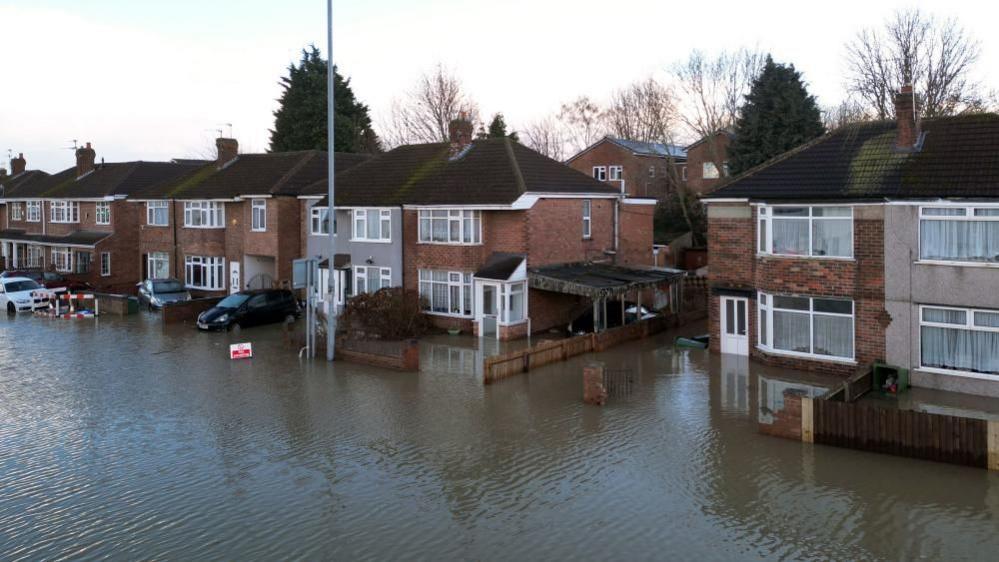

The warning lands at a moment when climate change is visibly reshaping Britain’s weather. Blanc pointed to this year’s unusually dry summer as a fresh example of the danger: parched ground sheds rainfall rather than absorbing it, making sudden downpours far more likely to trigger surface water flooding than in the past. “You’ve seen a very dry summer, and what happens if you then get heavy rain on very dry surfaces is you get more surface water flooding,” she said.
The scale of the exposure is striking. The Environment Agency estimates that roughly 6.3 million homes and businesses in England are currently at risk of flooding, a figure it warns could climb to around 8 million — one in four properties — by the middle of the century as the climate crisis deepens. Aviva’s own research found that more than a quarter of new homes already carry some flood risk, and that one in seven will face medium to high risk by 2050. Nearly a third of homes built just last year are projected to be at some risk of flooding within 25 years.
The consequences of building on, matter for more than just the households whose living rooms end up underwater. Insurance, Blanc explained, works by pooling risk across people who face genuine uncertainty about whether disaster will strike. Once flooding becomes not a possibility but a near-certainty for a given property, that model breaks down. “When there is an inevitability, it makes it very difficult for it to be insured,” she said.
For homeowners, losing access to affordable cover is not a minor inconvenience. Properties that cannot be insured, or can only be insured at prohibitive cost, become far harder to mortgage or sell, potentially trapping owners in homes that lose much of their market value overnight. A Guardian investigation last year found that some towns could ultimately need to be abandoned altogether as climate breakdown renders large areas effectively uninsurable.
Blanc argued that better design could blunt some of the damage even where building continues near flood zones — measures like bricks fitted with self-closing air vents, stainless steel rather than wooden kitchen units, and electrical sockets placed higher up walls rather than near the floor. “You can do all sorts of different things to your property to make it more or less vulnerable to flood,” she said, while stressing that mitigation is no substitute for simply avoiding the riskiest sites in the first place.
Recent history underscores her point. The Met Office has calculated that, given current levels of global warming, a repeat of the extraordinarily wet 2023-24 winter — which brought severe flooding to towns such as Retford in Nottinghamshire during Storm Babet — has shifted from a once-in-80-years event to a once-in-20-years one.
The government insists it is alert to the risk. A Department for Environment, Food and Rural Affairs spokesperson said “a record amount of investment” had gone into protecting nearly 900,000 properties from flooding damage, and that new planning proposals would prevent housebuilding in at-risk areas as ministers pursue a target of 1.5 million new homes. Critics, including Blanc, will be watching closely to see whether that promise holds as pressure to hit housing targets intensifies.
Blanc used the same interview to press the government on a separate, more immediate financial concern: the risk of destabilising savers through pre-Budget speculation. With Chancellor Rachel Reeves’ successor John Healey due to deliver his first Budget on 28 October, Blanc urged ministers to avoid “kite flying” over possible changes to pensions, warning that uncertainty alone can drive people into costly, irreversible decisions.
She said Aviva, a major private pension provider, had seen withdrawal rates spike to 30 times normal levels in the run-up to recent Budgets as savers rushed to lock in tax-free lump sums before rules might change. “Once you take your tax-free lump sum out, you can’t put it back in,” she said, adding that any move to weaken the state pension triple lock would inevitably increase pressure on private pensions to fill the gap.
Taken together, Blanc’s comments paint a picture of a country whose planning system and financial policymaking are struggling to keep pace with a changing climate and jittery markets alike. On flooding, her message was blunt: continuing to build where the water is heading isn’t just risky for future homeowners — it is, in her words, “dangerous.”
You must be logged in to post a comment Login