
Business
10 Must-Know Facts About the ‘Hedda’ and ‘His & Hers’ Star’s 2026 Hollywood Resurgence


Tessa Thompson is everywhere in early 2026. The 42-year-old actress just wrapped a Golden Globe-nominated turn as the title character in Nia DaCosta’s “Hedda,” scored a breakout Netflix hit with the limited series “His & Hers” and is days away from her Broadway debut opposite Adrien Brody in “The Fear of 13.” Fresh off executive-producing deals at Netflix and A24, and with new film projects greenlit, Thompson has re-emerged after a deliberate two-year pause as one of Hollywood’s busiest multihyphenates.

Born Tessa Lynne Thompson on Oct. 3, 1983, in Los Angeles, the actress has built a career bridging blockbuster franchises and intimate indie dramas. Here are 10 essential things to know about her journey, updated with the latest developments as of March 2026.
1. Her multicultural roots shaped a boundary-breaking perspective. Thompson’s father, singer-songwriter Marc Anthony Thompson of the band Chocolate Genius, is Afro-Panamanian. Her mother is of Mexican and European descent. Raised between Los Angeles and Brooklyn, she has spoken openly about navigating multiple identities. That fluidity informs her choices: from portraying civil-rights icon Diane Nash in “Selma” (2014) to a queer-coded warrior in the Marvel universe. In 2026 interviews, she has tied her heritage to her production work, emphasizing stories that reflect “the streets” and underrepresented voices.
2. Stage training came before the screen. A Santa Monica High School graduate, Thompson studied cultural anthropology at Santa Monica College but found her calling with the Los Angeles Women’s Shakespeare Company. She made her professional debut as Ariel in “The Tempest” in 2002 and earned an NAACP Theatre Award nomination as Juliet in a 2003 antebellum adaptation. Those early classical roots prepared her for complex roles. In March 2026 she returns to theater for “The Fear of 13,” her first Broadway production, playing a journalist interviewing a wrongfully convicted man. Previews begin this month at a major New York venue.
3. “Dear White People” launched her as an indie darling. Thompson’s breakout came in Justin Simien’s 2014 satire as activist Samantha White. Critics praised her “ceaseless energy.” The performance won her the Gotham Independent Film Award for Breakthrough Performer and led directly to Ava DuVernay casting her as Diane Nash in “Selma” that same year. The dual 2014 releases established her range: sharp social commentary paired with historical gravitas. She has since executive-produced similar boundary-pushing projects, including 2025’s “Hedda.”
4. Bianca in the “Creed” franchise became her signature role. Ryan Coogler cast Thompson as singer-songwriter Bianca Taylor opposite Michael B. Jordan in 2015’s “Creed.” She reprised the character in “Creed II” (2018) and “Creed III” (2023), writing and performing original songs for the soundtracks. The role showcased her musical talent — she once fronted the indie band Caught a Ghost — and her chemistry with Jordan. As of 2026, fans still speculate about a fourth installment, though Thompson has focused elsewhere. The franchise remains her highest-grossing non-Marvel work.
5. Valkyrie made her a Marvel mainstay. Thompson joined the Marvel Cinematic Universe in 2017’s “Thor: Ragnarok” as the hard-drinking, bisexual warrior Valkyrie. She reprised the role in “Avengers: Endgame” (2019), “Thor: Love and Thunder” (2022) as King Valkyrie, and “The Marvels” (2023). Voice work followed in “What If…?” and the upcoming “Marvel Zombies.” Taika Waititi called her “a Han Solo-like renegade.” In 2026 she has teased more MCU involvement but declined specifics, focusing instead on her production company.
6. “Westworld” proved her television command. From 2016 to 2022 Thompson played Charlotte Hale — and later a host version — in HBO’s sci-fi epic. The role earned her critical acclaim and demonstrated her ability to handle intricate, layered characters. It also opened doors to prestige limited series. Her latest, “His & Hers” (January 2026), a thriller opposite Jon Bernthal that she stars in and executive-produces, racked up 19.9 million views in its first days on Netflix. Industry watchers call it her biggest streaming success to date.
7. She runs her own production company, Viva Maude. Launched in 2021, Viva Maude has produced “Sylvie’s Love” (2020), “The Listener” (2022), “Hedda” (2025) and “His & Hers.” Thompson serves as executive producer on nearly every project. In March 2026 she attached herself to star and produce two new titles: Netflix/A24’s dark-comedy thriller series “Next Door” from “Love Life” creator Sam Boyd, and the feature adaptation of Katie Kitamura’s novel “A Separation,” directed by Jonas Carpignano. She also has “Is God Is” slated for May 15 release. The company lets her control narratives about women of color and queer stories.
8. Her personal life remains private yet proudly fluid. Thompson publicly discussed her attraction to men and women in a 2018 Net-a-Porter interview, saying her family supported whomever she brought home. She and singer Janelle Monáe shared a close, much-speculated relationship for years before amicably moving on. In January 2026 she attended the Golden Globes supported by boyfriend Brandon Green, 31. Paparazzi captured the couple in St. Tropez and at multiple awards events. Thompson has consistently declined to label her sexuality, preferring to focus on work.
9. Activism and industry commentary define her off-screen voice. Thompson has narrated documentaries for International Women’s Day and spoken against ICE policies at awards shows. In February 2026 she called a potential Paramount-Warner Bros. merger “worrisome” for independent creators during “The Fear of 13” press. She uses her platform to champion smaller films and diverse hiring. Her Gotham Awards Spirit Tribute and recent Critic’s Choice recognition reflect peers’ respect for both her performances and advocacy.
10. 2026 marks a deliberate comeback after stepping back. After “Creed III” and “The Marvels” in 2023, Thompson took nearly two years largely out of the spotlight to recharge and build Viva Maude. The strategy paid off. “Hedda” earned her a Golden Globe nomination and Critics’ Choice win. “His & Hers” became an immediate Netflix sensation. Broadway beckons, two new series are in fast-track development, and she teases “a long time coming” secret project. At 42, Thompson is not chasing volume but impact — producing, starring and directing (she helmed a 2024 music video) on her own terms.
Thompson’s trajectory shows no signs of slowing. With Broadway previews starting this month, new Netflix and feature deals rolling out, and her production banner thriving, the actress once known mainly for supporting roles has become a central force in Hollywood. As she told Cultured magazine in February 2026, “I’m really in these streets and for the streets.” Fans and industry alike are watching to see what she builds next.


Sims Metal trading update surpasses consensus forecasts

Calamos Investments is a diversified global investment firm offering innovative investment strategies including U.S. growth equity, global equity, convertible, multi-asset and alternatives. The firm offers strategies through separately managed portfolios, mutual funds, closed-end funds, private funds, an exchange traded fund and UCITS funds. Clients include major corporations, pension funds, endowments, foundations and individuals, as well as the financial advisors and consultants who serve them. Headquartered in the Chicago metropolitan area, the firm also has offices in London, New York and San Francisco. For more information, please visit www.calamos.com.

US hosts critical minerals event in Brazil amid diplomatic strains

Asian refiners are moving earlier than usual to secure crude oil from Russia’s Far East, as hopes for a swift resolution to Middle Eastern supply disruptions fade and the expiration of a U.S. temporary waiver on Russian oil looms.
Cargoes of Eastern Siberia-Pacific Ocean blended crude oil—a light, sweet Russian grade exported from the Kozmino terminal in the Far East to Asia-Pacific markets—are normally traded one month before loading. But with the Strait of Hormuz effectively closed, trading has kicked off early as refiners rush to plug supply gaps, according to Kpler.
Copyright ©2026 Dow Jones & Company, Inc. All Rights Reserved. 87990cbe856818d5eddac44c7b1cdeb8

Zomedica partners with Boehringer Ingelheim on equine testing

The conflict in the Middle East has significantly disrupted Thailand’s aviation sector, leading to the cancellation of over 1,000 flights and a downward revision of 2026 growth projections to a maximum of 3%.
According to Aeronautical Radio of Thailand Ltd (AEROTHAI), the combination of geopolitical instability, airspace closures, and surging fuel costs is straining air traffic management and increasing operating expenses for airlines, ultimately slowing the industry’s recovery and long-term expansion.
Key Points
- Over 1,000 flights operated by Middle Eastern airlines to Thailand have been cancelled since the conflict began on February 28, 2026, accounting for approximately 3% of total flight volumes.
- Suvarnabhumi Airport has been the most affected with over 600 cancellations, followed by Phuket Airport with 400, while Krabi, Chiang Mai, and Don Mueang have also experienced disruptions.
- The conflict is impacting critical flight corridors connecting Europe, the Middle East, and Asia, requiring AEROTHAI to monitor route changes and potential airspace closures closely.
- Rising global oil prices and an associated energy crisis have increased operating costs for airlines, leading to higher passenger fares.
Volatility in global oil prices has increased operational costs for airlines, leading to higher airfares and potentially weakening long-term passenger demand. Projected flight growth for 2026 has been adjusted downward to no more than 3% over 2025 levels due to the severity of the conflict and economic pressures.
Other People are Reading

The community grocery store in Crewe aims to bridge the gap between food banks and supermarkets.
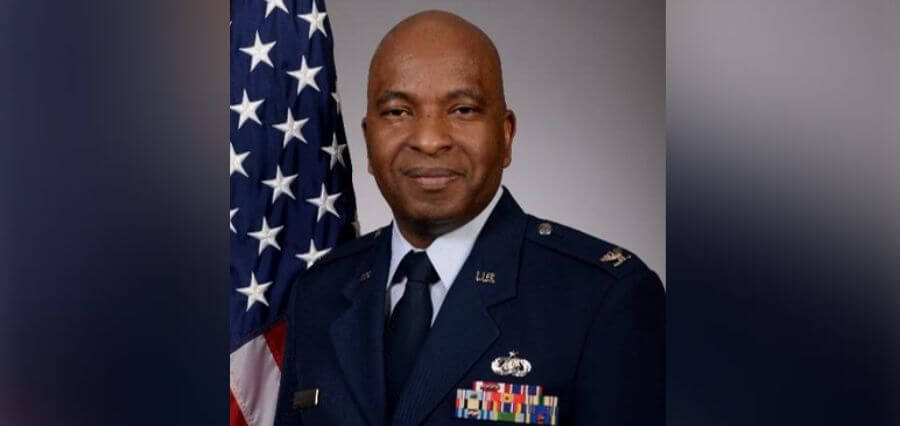
Colonel Nashid Salahuddin has spent more than three decades in uniform preparing for a challenge that defines modern military leadership: developing leaders who can operate confidently in ambiguity while delivering measurable readiness today.
Now serving as Director of Human Resources for the Air National Guard at Joint Base Andrews, Colonel Nashid Salahuddin oversees the human capital strategy supporting roughly 1,800 military and civilian personnel at headquarters. His mandate is clear and strategic . He ensures the right people are in the right positions at the right time, maintains a fully trained and ready workforce, and deliberately develops leaders for both current missions and future conflict environments.
That mission reflects a straightforward belief: readiness is built through people long before it is tested in operations.
Leadership for Ambiguity, Not Just Compliance
The Air National Guard operates at both a state and national level in order to respond to domestic events while also being able to ensure power is projected globally for US interests. In order to properly fulfill both of these duties, leaders must think much further than simply using checklists or doctrine when performing their daily duties.
Colonel Nashid Salahuddin has developed his own philosophy of leading through the use of adaptability and situational awareness. His experiences include starting out as an airman at 18 in 1990 to being a commissioned officer at the age of 24 in 1996 before completing various operational commands and assignments with the Office of The Secretary of War(Pentagon). This plethora of experiences has taught him that no two teams are identical and any crisis is different from others.
For example, during one of Colonel Salahuddin’s most significant moments for developing leadership, he was deployed to Iraq, where he served for six months as a Senior Advisor to the MoI (Ministry of Interior). He led through influence (without authority) so that he could align Coalition and Sovereign Partners’ objectives with no one being subordinate to him. In order to be successful in this effort, he relied heavily on his credibility and cultural understanding, along with disciplined listening. From this experience, the guiding principle of Colonel Salahuddin is to develop future-ready leaders capable of leading without authority.
Additionally, Colonel Salahuddin applies this philosophy of developing future-ready leaders by embedding their professional development in the execution of the organization’s mission. Decreasing the gap between performance and development was achieved by tracking professional development for individuals, in relation to the mission. Assignments create an opportunity to challenge an individual’s judgment versus just their technical skill. Feedback is both intentional and continuous. Coaching is an expectation.
Ultimately, the goal of Colonel Salahuddin is to create an organization that can adapt to complex situations; rather than just being trained.
Development as a Readiness Strategy
In his current role, Colonel Nashid Salahuddin treats human capital strategy as a readiness function, not an administrative requirement. That perspective has produced measurable results.
After examining the headquarters hiring process through the lens of his Six Sigma Black Belt training, he led a process overhaul that reduced time-to-fill vacancies by approximately 50 percent, cutting timelines from six months to roughly three. The result was not efficient for its own sake. Faster placement of qualified personnel into mission-critical positions directly strengthened operational readiness.
These efforts reflect a consistent view: leadership development and mission execution are interdependent.
Senior leaders often feel tension between immediate readiness requirements and long-term talent cultivation. Colonel Nashid Salahuddin does not see these as competing priorities. Organizations that neglect development in pursuit of short-term output eventually undermine their own capacity. For that reason, he integrates mentorship, stretch assignments, and succession planning directly into operational workflows.
Data-Informed, Human-Centered Leadership
Modern military personnel management generates vast amounts of data. Retention patterns, assignment timelines, performance metrics, and demographic trends provide valuable insight into workforce health. Colonel Nashid Salahuddin views data as essential, but incomplete on its own.
Data establishes baselines and exposes trends. It highlights retention challenges, recruiting pressures, and uneven developmental pathways. It strengthens transparency in promotion and assignment decisions. However, data does not fully explain morale, motivation, or trust.
For that, leaders must engage directly.
He combines quantitative analysis with sustained dialogue. Conversations with Airmen and civilians, 360-degree feedback, and structured forums provide context that dashboards cannot. The combination of evidence and engagement allows policy adjustments that are both measurable and human.
This approach also reinforces fairness. Transparent criteria and documented performance data reduce bias and build confidence in the system. In an institution that depends on trust, that legitimacy is essential.
His leadership philosophy balances disciplined process improvement with genuine concern for the people inside those processes.
Succession Planning and Bench Strength
Preparing future-ready leaders requires more than strong individual performance. It demands deliberate succession planning and institutional depth.
Colonel Nashid Salahuddin evaluates human capital effectiveness across several dimensions: readiness indicators, retention quality, engagement levels, and succession strength. The central question is not simply whether a vacancy can be filled today, but whether qualified successors are being prepared for critical roles five and ten years from now.
He encourages developmental breadth. Junior officers and enlisted personnel are urged to pursue cross-functional assignments that broaden perspective beyond a single specialty. Exposure to operational, strategic, and administrative domains builds leaders capable of systems thinking, a necessary skill in complex environments.
His own career illustrates that philosophy. From serving as Inspector General and Mission Support Group Commander to holding senior strategist roles at the Pentagon, he has operated at both field and enterprise levels. That experience informs his insistence that future leaders must understand both tactical execution and institutional design.
Bench strength is not accidental. It is built intentionally.
Cross-Generational Insight with Institutional Discipline
While his work focuses primarily on institutional systems, one enduring influence shapes his leadership philosophy: the example of his father, whose 87-year life journey is documented in the book Sacred Journey. The reference is contextual rather than promotional. It reflects lessons about resilience, integrity, and steady leadership through societal change.
From that example, Colonel Nashid Salahuddin internalized the importance of ethical steadiness in shifting environments.
Ethical leadership, in his practice, is operational. It requires clarity of standards, consistency in accountability, and the willingness to enforce consequences fairly. It means doing what is right even when oversight is limited. In high-complexity environments where supervision cannot reach every decision, character becomes the control mechanism.
Cross-generational insight also informs how he approaches workforce modernization. Younger Airmen contribute technological fluency and fresh perspective. Senior leaders provide institutional memory and contextual depth. He creates forums where these perspectives intersect, accelerating innovation while preserving experience.
Change is constant. Principles endure.
Institutional Leadership Over Personal Recognition
Colonel Nashid Salahuddin does not frame advancement as personal achievement. Recognition, in his view, reflects collective accomplishment. Leaders who focus primarily on individual recognition weaken trust. Leaders who elevate teams strengthen performance.
This perspective shapes how he measures impact. He looks for organizations that are stronger at the end of his tenure than at the beginning. He looks for leaders who have grown, systems that function more effectively, and policies that align more tightly with mission demands.
He does not emphasize legacy. He emphasizes stewardship.
That mindset is particularly relevant as the Air National Guard adapts to evolving strategic realities, including domestic response requirements and great-power competition. The environment demands leaders who can integrate strategic thinking with disciplined human capital management, modernize systems without losing sight of people, and sustain ethical clarity under pressure.
Colonel Nashid Salahuddin’s career progression, from enlisted Airman to colonel and from field commander to headquarters director, reflects a consistent focus on building capacity in others.
Preparing Leaders for What Cannot Be Predicted
The core challenge in military leadership development is not predicting specific threats. It is preparing leaders to operate effectively in uncertainty.
Colonel Nashid Salahuddin cultivates intellectual flexibility by encouraging leaders to question assumptions and seek diverse perspectives. He builds resilience by allowing emerging leaders to confront difficult assignments with appropriate mentorship and support. He reinforces ethical grounding by maintaining that integrity is non-negotiable, regardless of operational tempo.
He does not promise certainty. He prepares for volatility.
As Director of Air National Guard Human Resources, his mission remains direct: place the right people in the right positions at the right time, ensure they are fully trained and ready, and deliberately develop leaders who can meet today’s demands and tomorrow’s challenges.
Aircraft, technology, and strategy remain essential. Yet without leaders capable of thinking clearly, adapting quickly, and acting with integrity, none of those assets achieve their full potential.
Colonel Nashid Salahuddin has built his career on a disciplined conviction. Readiness begins long before deployment orders are issued. It begins with people who are prepared not only to execute, but to think, adapt, and lead.
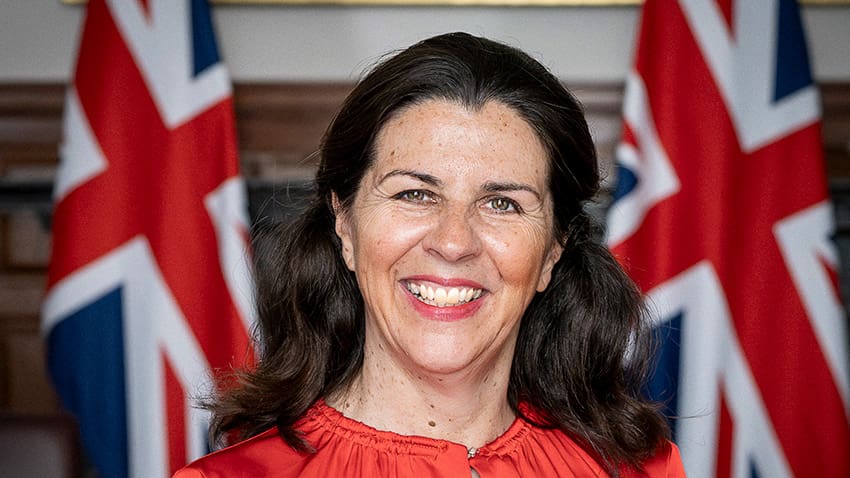
The Office of the Small Business Commissioner (OSBC) has appointed two new advisory board members as it steps up efforts to tackle the UK’s persistent late payment crisis and prepares for potential new regulatory powers.
Abigail Whittaker, Chief of Staff at Funding Circle, and Ryan Shorthouse, Founder and Executive Chair of think tank Bright Blue, will formally join the board in April following a public appointments process. Both bring extensive experience across finance, communications and public policy at a time when the role of the Small Business Commissioner is expected to expand.
The appointments come as the Government considers strengthening the powers of the Commissioner, Emma Jones (pictured), as part of a broader package of reforms outlined in its Small Business Plan. The move reflects mounting concern over the scale of late payments across the UK economy, which are estimated to cost businesses £11 billion annually and contribute to the closure of around 38 firms every day.
Whittaker joins with a strong background in financial services and corporate communications, having held senior roles at Funding Circle, Vanquis Banking Group, Metro Bank and TSB. Her experience is expected to support the OSBC’s increasing focus on digital tools and data-driven approaches to improving payment practices, as well as strengthening engagement with SMEs and lenders.
Shorthouse, meanwhile, brings deep expertise in public policy and economic reform. As founder of Bright Blue and a commissioner at the Commonwealth Scholarship Commission, he has played a prominent role in shaping UK policy debates. His experience across think tanks and advisory bodies is expected to be particularly valuable as the Commissioner navigates potential legislative changes and seeks to influence payment behaviour across large corporates.
The OSBC was established under the Enterprise Act 2016 to address late payments and unfair payment practices in the private sector. Its remit includes supporting small businesses in resolving payment disputes, promoting the Fair Payment Code, and encouraging larger firms to improve supplier payment terms.
Emma Jones said the new appointments would strengthen the organisation’s ability to deliver on its core mission. She described the additions as bringing “deep experience of running businesses, national media and communications expertise, and digital know-how” at a critical juncture for the office.
Both appointees emphasised the economic importance of addressing late payments. Whittaker highlighted the central role small businesses play in the UK economy and the pressures they face, noting that improving payment practices can directly support growth and resilience. Shorthouse, drawing on his own experience of running a business, described late payments as “stressful and crippling” and argued that improving cash flow across the economy is an “underappreciated” driver of productivity and investment.
The advisory board will provide strategic input on the OSBC’s operations, including its dispute resolution services, governance, and initiatives such as the Fair Payment Code. Members are expected to attend quarterly meetings and contribute to broader policy and operational discussions, with appointments set for a three-year term.
The timing of the appointments signals a renewed focus on enforcement and systemic change in payment culture. While the OSBC has historically relied on guidance and voluntary codes, the Government’s recent consultation on enhanced powers suggests a shift towards a more interventionist approach.
For SMEs, which often operate on tight margins and limited cash reserves, faster and more reliable payment cycles remain a critical issue. As policymakers look to unlock growth across the UK economy, improving how quickly money moves between businesses is increasingly being viewed as a foundational reform.
With new expertise on its advisory board and the prospect of expanded powers on the horizon, the Small Business Commissioner is positioning itself at the centre of that agenda.

Jamie Young
Jamie is Senior Reporter at Business Matters, bringing over a decade of experience in UK SME business reporting.
Jamie holds a degree in Business Administration and regularly participates in industry conferences and workshops.
When not reporting on the latest business developments, Jamie is passionate about mentoring up-and-coming journalists and entrepreneurs to inspire the next generation of business leaders.
Business
Amazon Locks 4K Streaming Behind New $4.99 Prime Video Ultra Tier, Hiking Ad-Free Costs Starting April 10

SEATTLE — Amazon is reshaping its Prime Video streaming experience with a significant tiered overhaul set to take effect April 10, 2026, in the United States. The company announced it will rebrand its existing ad-free add-on as “Prime Video Ultra,” raise the monthly fee from $2.99 to $4.99, and restrict 4K Ultra HD (UHD) streaming exclusively to this premium tier. Standard Prime members, who previously enjoyed 4K access as part of their base subscription, will now be limited to 1080p HD resolution unless they upgrade.

The changes come amid ongoing efforts by streaming services to monetize premium features while offsetting rising content and infrastructure costs. Amazon’s move aligns Prime Video more closely with competitors like Netflix and Disney+, which have long gated higher resolutions and ad-free viewing behind elevated plans.
**Core Details of the Shift**
Prime Video Ultra will replace the current Ad Free subscription and bundle several enhancements alongside ad-free viewing and exclusive 4K/UHD access. Subscribers gain up to five concurrent streams (up from three on the old ad-free plan), up to 100 offline downloads (previously 25), Dolby Vision HDR support, and Dolby Atmos audio. The annual option for Ultra will cost $45.99, offering a 23% discount over monthly billing.
For context, Amazon Prime membership—required for the full Prime Video benefit—remains unchanged at $14.99 per month or $139 per year in the U.S. Adding Ultra pushes the effective annual cost for the top-tier experience to approximately $184.99. Standalone Prime Video subscriptions without full Prime perks are also available but follow similar tiering.
Base Prime Video, included with Prime or as a $8.99/month standalone (with ads), will see some improvements: concurrent streams increase to four (from three), downloads rise to 50 (from 25), and Dolby Vision becomes available. However, resolution caps at HD/1080p, and ads persist on most content except select live events or add-on channels.
Amazon emphasized in its March 13 announcement that “delivering ad-free streaming with premium features requires significant investment,” positioning the structure as consumer-friendly flexibility. “Prime members will continue to enjoy the core Prime Video benefit, including HD/HDR and now Dolby Vision, at no additional cost with their Prime membership,” the company stated.
**Background on Prime Video’s Evolution**
Prime Video has undergone multiple pricing adjustments in recent years. Ads were introduced to the base service in January 2024, prompting the $2.99 ad-free add-on. That tier aimed to preserve an uninterrupted experience for those willing to pay extra. The new Ultra rebrand and features bundle reflects Amazon’s push to compete in a crowded market where 4K has become a standard expectation for high-end home setups.
Industry analysts note that while the $2 monthly increase may seem modest for existing ad-free users, the 4K restriction represents a bigger sting for households with 4K TVs who relied on the included perk. More than 180 million Americans hold Prime memberships, many of whom stream on large screens where resolution differences are noticeable—especially for originals like “The Boys,” “Fallout,” or “Reacher.”
**Consumer and Industry Reactions**
Early coverage from outlets including Variety, Mashable, The Verge, and PCMag described the change as a “paywall” for 4K, with some calling it an “insult” layered on prior ad insertions. Tech sites highlighted that basic users now face a downgrade in quality unless they pay more, potentially frustrating longtime subscribers.
Amazon has not detailed international rollout plans, though similar changes often expand globally after U.S. testing. In markets like India, 4K remains included in base plans for now, with ad-free as a lower-cost add-on.
The timing coincides with broader streaming industry trends. Services continue raising prices or introducing tiers to boost revenue amid content spending wars and subscriber churn pressures. Netflix’s ad-supported plan and premium tiers, Disney+’s bundle options, and Paramount+’s ad tiers have set precedents for segmenting features like resolution and ad levels.
**What It Means for Viewers**
For casual viewers content with HD and tolerant of ads, the core Prime benefit stays intact and even improves slightly. Sports fans or those watching live events may still encounter ads even on Ultra, as Amazon noted select content could include them.
Households prioritizing cinematic quality—particularly those investing in OLED or high-refresh-rate 4K displays—face a clear decision: absorb the extra $4.99 monthly or accept 1080p. The added perks (more streams, downloads, advanced audio/video) may justify the cost for families or multi-device users.
Amazon has begun notifying affected subscribers via email and app alerts, explaining the transition and upgrade options. No immediate changes apply before April 10; current ad-free subscribers will see the price adjustment and feature bump automatically unless they opt out.
As streaming wars intensify, Amazon’s latest adjustment underscores a key reality: premium experiences increasingly come at premium prices. Whether the Ultra tier drives upgrades or prompts cancellations remains to be seen, but for now, 4K on Prime Video is no longer a default—it’s a deliberate choice worth $5 more per month.

Ethereum ETFs hit three-week high inflows, will ETH price break $2,400?

Dhoni to hand WK gloves to Samson, captaincy next? Kumble on CSK plan

Growing a Giant Crystal From Sugar Alone Takes Patience and a Few Kitchen Basics


-
 Crypto World4 days ago
HYPE Token Enters Net Deflation as HyperCore Buybacks Outpace Staking Rewards
-

 Fashion5 days ago
Weekend Open Thread: Addict Lip Glow
-

 Tech3 days ago
Your Legally Registered ‘Motorcycle’ Might Not Count Under Proposed US Law
-
Sports4 days ago
Why Duke and Michigan Are Dead Even Entering Selection Sunday
-

 NewsBeat7 days ago
Residents reaction as Shildon murder probe enters second day
-

 Sports7 days ago
PWHL, Senators discussing plan to keep Charge in Ottawa
-

 Business3 days ago
Search for Savannah Guthrie’s Mother Enters Seventh Week with No Arrests
-

 Business4 days ago
US Airports Launch Donation Drives for Unpaid TSA Workers as Partial Government Shutdown Enters Fifth Week
-
 Tech17 hours ago
Are Split Spacebars the Next Big Gaming Keyboard Trend?
-
Crypto World4 days ago
Coinbase and Bybit in Investment Talks: Could Bybit Finally Enter the US Crypto Market?
-

 NewsBeat7 days ago
I Entered The Manosphere. Nothing Could Prepare Me For What I Found.
-

 Business4 days ago
Country star Brantley Gilbert enters growing non-alcoholic beer market
-

 Business2 days ago
Australian shares drop as Iran war enters third week
-

 Crypto World2 days ago
Crypto Lender BlockFills Enters Chapter 11 with Up to $500M in Liabilities
-

 Sports5 days ago
College Basketball Best Bets: Conference Tournament Semifinal Picks
-
 Crypto World6 days ago
Three Binance Charts May Be Hinting at Bitcoin’s Next Move
-

 Business6 days ago
Trump demands Powell cut rates as Iran conflict raises energy prices
-

 Crypto World6 days ago
Senate Votes to Include CBDC Ban in Bipartisan Housing Bill
-

 Fashion2 days ago
25 Celebrities with Curly Hair That Are Naturally Beautiful
-

 NewsBeat7 days ago
What to know about Erika Kirk after her Air Force board appointment | News US


You must be logged in to post a comment Login