

Business
10 Reasons Why SpaceX Spent $60 Billion to Acquire AI Coding Startup Cursor

SpaceX said it will acquire Anysphere, the company behind the popular AI coding assistant Cursor, in a $60 billion deal that marks one of Elon Musk’s most aggressive moves yet into the enterprise artificial intelligence market. The announcement comes just days after SpaceX’s blockbuster Nasdaq debut, which valued the company at more than $2 trillion. Here are 10 reasons behind one of the largest startup acquisitions in history.
1. xAI’s coding tools were falling badly behind rivals
The most immediate driver behind the deal was a glaring weakness in Musk’s existing AI division. Musk has previously expressed frustration that xAI was not “built right the first time around” and with its subpar coding product, which lags behind popular coding tools such as Anthropic’s Claude Code and OpenAI’s Codex. The company’s most recent model, Grok 4.3, placed at number 33 on AI benchmarking startup Vals.AI’s proprietary vibe coding benchmark, well below older models from OpenAI, Anthropic, and Google.
2. xAI was in genuine crisis when the deal came together
Beyond the coding gap, xAI faced a broader leadership exodus that made an external acquisition more urgent. While SpaceX was rocketing toward an IPO, its AI arm, xAI, was struggling. By the end of March, all 11 co-founders who helped build xAI alongside Elon Musk had quit the company.
3. The deal had already been quietly in motion for months
The acquisition was not a snap decision but rather the exercise of an option negotiated earlier in the year. In April, SpaceX said it had obtained the right to acquire Cursor for $60 billion later this year. The transaction materializes an option SpaceX unveiled in April, which gave the aerospace-and-AI giant the choice to either buy the San Francisco-based startup for $60 billion or pay $10 billion to work with it through a partnership.
4. Musk had already been poaching Cursor’s talent
Months before the formal acquisition, Musk had begun siphoning resources directly from the startup. The Tesla CEO had been gradually siphoning resources away from Cursor, one of the first startups to go all-in on AI-generated coding. In March, Musk confirmed that he had hired two product and engineering leads away from Cursor.
5. Cursor’s revenue growth was simply too attractive to ignore
Cursor’s underlying business performance gave SpaceX a financially compelling target regardless of the broader strategic rationale. Cursor built a popular AI coding tool that helps software developers generate, edit and review code, and the company has experienced explosive growth since its founding in 2022. In November, Cursor said it crossed $1 billion in annualized revenue. According to more recent reporting, the AI startup’s latest annualized recurring revenue has since surpassed $2.6 billion.
6. The acquisition fits SpaceX’s broader vertical-integration strategy
In its IPO prospectus, SpaceX said it sees its compute deal with Cursor as a natural extension of its strategy to vertically integrate compute infrastructure, AI models, and applications. In its own regulatory filing, SpaceX said Cursor fits its strategy to vertically integrate “compute infrastructure, models, and applications” — positioning the purchase not as a side bet, but as a core piece of the company’s long-term technology stack.
7. Cursor’s developer data could directly improve Grok
Beyond the product itself, SpaceX is targeting the enormous trove of usage data Cursor generates from its developer base. “The depth of Cursor’s integration with a high-frequency coding workflow generates valuable developer interaction data, including coding generation prompts, iteration cycles, and software architecture decisions,” SpaceX said. “We expect that access to this data will enhance our model training and inference, including with respect to Grok.”
8. It supports Musk’s broader ambitions for autonomous, agentic AI
The deal also ties directly into Musk’s stated vision for a fully self-directed AI ecosystem capable of supporting SpaceX’s manufacturing operations. According to disclosures in SpaceX’s S-1 IPO prospectus, the company has outlined a strategy called Macrohard, aiming to build a next-generation, fully autonomous agentic AI ecosystem platform to facilitate the manufacturing, testing, and orbital docking of future Starships. The acquisition of Cursor will primarily help accelerate the construction of the Macrohard platform’s core, bypassing the need to develop underlying tools from scratch.
9. The all-stock structure made the deal financially efficient
The transaction’s structure allowed SpaceX to make an enormous acquisition without touching cash reserves, a dynamic analysts say was central to the deal’s logic. The $60 billion in Class A common stock that SpaceX has agreed to pay to acquire Cursor represented a 3.4% dilution at the aerospace and technology conglomerate’s IPO valuation. Under the agreement, Cursor common and preferred stock will convert into SpaceX Class A common stock, with the exact exchange ratio determined by the volume-weighted average closing price of SpaceX stock over the seven trading days prior to closing.
10. It positions SpaceX to compete directly against Anthropic and OpenAI
Ultimately, the acquisition gives SpaceX a recognizable, developer-favored product to compete head-on in one of the fastest-growing corners of the AI market. The Cursor deal could bolster SpaceX efforts to compete with rivals like Anthropic and OpenAI, which offer popular coding tools. If completed, the $60 billion purchase would give SpaceX one of the most recognizable AI coding products in the market, a developer-heavy customer base, and a direct weapon in its race against Anthropic and OpenAI.
A Joint Model Already in Development
Beyond the strategic rationale, SpaceX confirmed that work between the two companies was already well underway before the acquisition was even finalized. “For the past few months, SpaceXAI has been jointly training a model with Cursor, which will be released in Cursor and Grok Build soon,” SpaceX said in a post on X announcing the deal.
Cursor CEO Michael Truell welcomed the acquisition publicly, framing it as a natural next step for his company’s product ambitions. “Excited to partner with the SpaceX team to scale up Composer,” Truell said in a post on X, referring to his company’s AI model. “A meaningful step on our path to build the best place to code with AI.”
What Happens if the Deal Falls Through
The acquisition agreement also included specific financial protections in case the transaction does not ultimately close. If, for some reason, the deal is not consummated, SpaceX had agreed to pay Cursor a “termination fee” of $1.5 billion, and $8.5 billion in computing resources, according to its IPO filings — terms that underscore just how seriously both companies treated the binding nature of their original April agreement.
The deal is expected to close in the third quarter of 2026, subject to regulatory approvals, with Cursor becoming a wholly owned subsidiary of SpaceX once the transaction is finalized. Industry analysts have framed the acquisition as a signal that the broader AI coding tools market is consolidating rapidly, noting that GitHub Copilot has always been a Microsoft play, while Windsurf was acquired by OpenAI earlier this year — leaving Cursor as one of the last major independent players in the space before SpaceX’s purchase. With the deal expected to close within months, attention now turns to how quickly SpaceX can integrate Cursor’s technology and developer base into its broader Grok and Macrohard ambitions, and whether the acquisition meaningfully closes the coding-capability gap that helped trigger the deal in the first place.

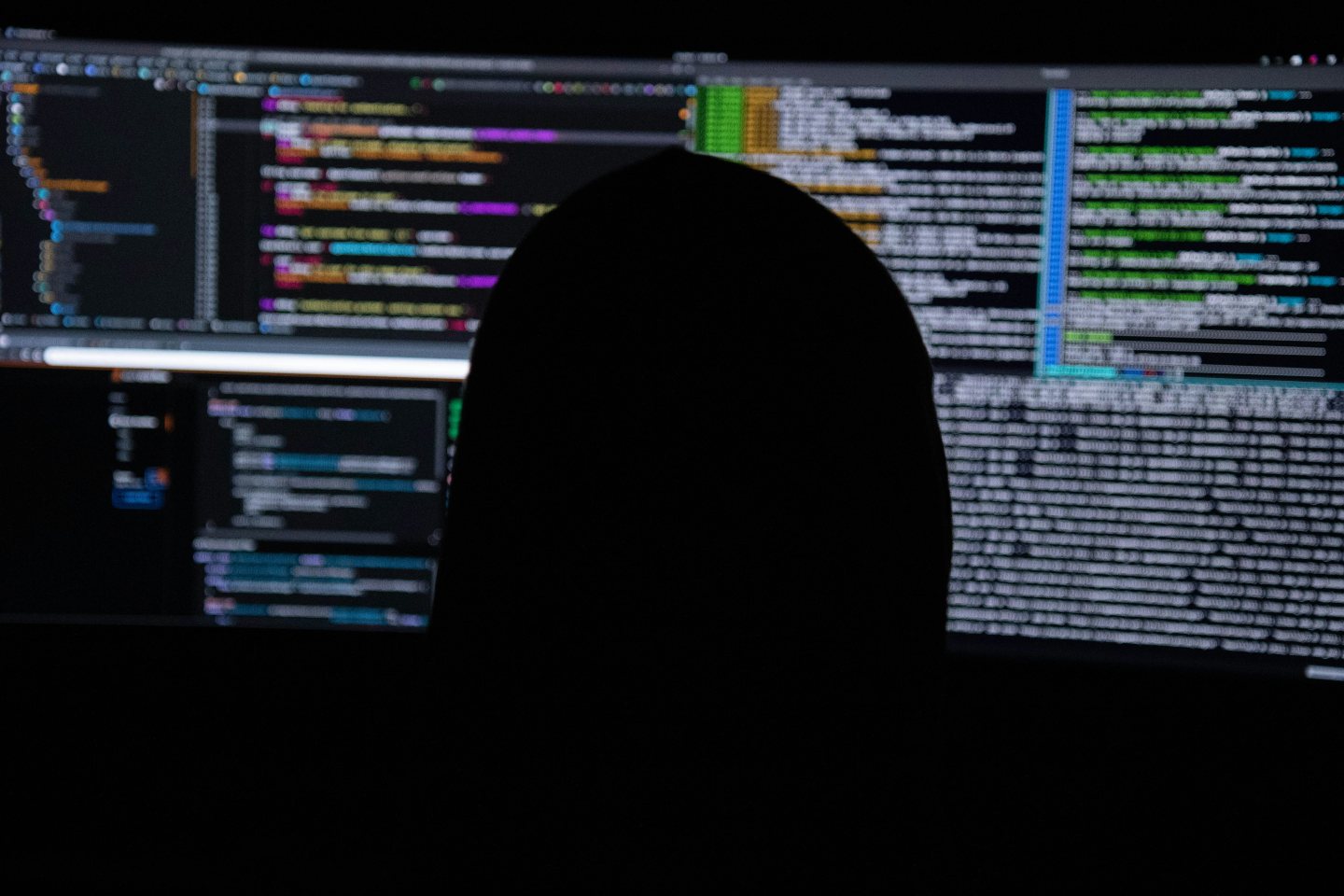
A Russian hacking group has claimed to have gained access and installed ransomware on Subiaco-based ASX-listed gold miner West African Resources’ systems.

Commodities: Oil Slumps As The U.S. And Iran Pause Strikes

Escalade Is Ready To Play (Rating Upgrade)

With a professional background spanning multiple industries, from ecnomocis to logistics and construction to retail, I bring a diverse perspective to investing. My international education and career experiences have provided me with a global outlook and the ability to analyze market dynamics from different cultural and economic perspectives. I have been actively investing for over a decade, honing a strategy that focuses on cyclical industries while maintaining a diversified portfolio that includes bonds, commodities, and forex. My interest in cyclical sectors stems from their potential for significant returns during periods of economic recovery and growth. However, I also recognize the importance of balancing risk, which is why I incorporate fixed-income investments (long or short).
Analyst’s Disclosure: I/we have a beneficial long position in the shares of IONQ, INFQ either through stock ownership, options, or other derivatives. I wrote this article myself, and it expresses my own opinions. I am not receiving compensation for it (other than from Seeking Alpha). I have no business relationship with any company whose stock is mentioned in this article.
Seeking Alpha’s Disclosure: Past performance is no guarantee of future results. No recommendation or advice is being given as to whether any investment is suitable for a particular investor. Any views or opinions expressed above may not reflect those of Seeking Alpha as a whole. Seeking Alpha is not a licensed securities dealer, broker or US investment adviser or investment bank. Our analysts are third party authors that include both professional investors and individual investors who may not be licensed or certified by any institute or regulatory body.
Why is Contemporary Amperex Technology stock rallying today?
It’s been an unforgettable year for Sterlite Tech shareholders as the stock has rocketed 466% in 2026 alone.
What is CLSA saying?
The brokerage said Sterlite Technologies’ order book surged 155% QoQ to Rs 18,600 crore, pointing to a strong growth outlook. Factoring in the company’s recent Rs 1,500 crore QIP fundraising and the significant Q1 FY27 beat, CLSA raised its forecasts by 7-125% for FY27-29CL. The brokerage now sees Sterlite Technologies delivering a 62% EBITDA CAGR.
Sterlite Tech secured a multi-year contract worth $1.11 billion, or more than Rs 10,000 crore, to supply optical connectivity products for next-generation AI data centres. The company also received multiple hyperscaler orders worth more than $100 million for Neuralis, its integrated data centre solutions portfolio. It also won a strategic order to supply long-haul, dark-fibre high-density micro-cables to a major connectivity infrastructure provider.
Also read: Forget selling! FIIs doubled down on this AI multibagger stock that’s up 200% YTD
The order wins come as data centres require higher fibre density, faster data transmission and more efficient connectivity systems to handle AI workloads. STL has been positioning itself as a supplier of optical fibre, cables and integrated connectivity products for this buildout.

Sterlite Tech said it achieved a net debt-free balance sheet during the quarter after raising Rs 1,500 crore through a qualified institutional placement.
The company said the fundraise has strengthened its balance sheet and will help support the next phase of growth. Following the improvement in its financial position, CRISIL revised its rating outlook to “Stable”, while ICRA upgraded the company’s credit rating to “AA (Stable)”.The balance-sheet improvement is important for STL as it enters a larger order execution cycle. A stronger capital base gives the company more room to scale production, invest in products and manage working capital as orders rise.
Sterlite Tech Q1 results
Sterlite Technologies reported its strongest quarterly performance in Q1FY27, helped by higher demand for optical connectivity products, growth in its data centre business and a record order book linked to AI-ready digital infrastructure.
The company reported revenue of Rs 1,910 crore for the quarter ended June 30, up 87% from Rs 1,019 crore in the same quarter last year. Sequentially, revenue rose 33% from Rs 1,441 crore in Q4FY26. Profit after tax rose 870% to Rs 197 crore from Rs 10 crore a year earlier. In the March quarter, the company had reported PAT of Rs 59 crore.
Read more: AI, data centre boom powers these 9 stocks up to 477% in 2026. Can you still join the party?
EBITDA rose to Rs 397 crore, compared with Rs 140 crore in Q1 and Rs 218 crore in the previous quarter. EBITDA margin stood at 20.8%, the highest in nearly 20 quarters, helped by a better product mix, operating leverage and higher contribution from the data centre business.
STL Managing Director Ankit Agarwal said Q1 FY27 was the strongest quarter in the company’s history, with record revenue and profitability reflecting the strength of its AI-ready digital infrastructure portfolio and the trust placed by hyperscalers and telecom operators.
He said the rapid scale-up of the Data Center business shows how decisively STL has aligned itself with the AI infrastructure buildout. With a record order book and strong customer trust, the company expects to continue delivering innovative and reliable solutions to support its customers’ growth.
(Disclaimer: Recommendations, suggestions, views and opinions given by the experts are their own. These do not represent the views of Economic Times)
Business
Dr Lal PathLabs shares soar 8% after Q1 earnings beat estimates. What Nomura, Nuvama, other brokerages are saying?

Dr Lal PathLabs shares jumped to a fresh 52-week high of Rs 1,895 apiece on Monday, rising more than 12% in just two sessions. The stock is on track to record its sharpest single-day surge since early May this year.
The company on Friday reported a 28% year-on-year (YoY) increase in consolidated net profit to Rs 169.5 crore for the April-June quarter of FY27, from Rs 132.4 crore in the corresponding quarter of the previous financial year. The firm’s revenue from operations, meanwhile, rose over 19% YoY to Rs 797.7 crore during the quarter under review.
Along with the Q1 results, Dr Lal PathLabs announced an interim dividend of Rs 5 per equity share for the ongoing financial year 2027, with July 30 fixed as the record date to determine the eligibility of shareholders to receive the payout.
Also read |Dr Lal PathLabs posts higher first-quarter profit on healthy demand for tests
Nomura on Dr Lal PathLabs share price
Nomura maintained its ‘Buy’ call on the shares of Dr Lal PathLabs but increased its target price to Rs 2,085 apiece from Rs 1,860 apiece. The latest target price implies an upside potential of 18.5% from the stock’s previous closing price of Rs 1,759.20 apiece.
The international brokerage said that the company’s Q1 earnings came ahead of its estimates. The beat was driven primarily by higher-than-expected realisations, aided by price hikes in the CGHS and ECHS schemes, it said, noting that management indicated that the benefit from the CGHS and ECHS price hikes should continue over the next 2–3 quarters.
For FY27, the company’s management has raised its revenue guidance to mid-teens from early-teens, implying an acceleration in growth on the back of stronger realisation. On margins, management has adopted a more conservative stance, maintaining EBITDA margin guidance at 27–28% as it intends to reinvest in capacity building while prioritising growth, Nomura said. “We, however, model FY27 revenue growth of 16.6% and an EBITDA margin of 28.9%. Beyond network expansion, a target of 12–15 lab additions in FY27, the company is investing in high-end tests, radiology and international market opportunities, with inorganic growth also on the table,” it further said.Nomura revised its FY27 estimates to reflect the strong Q1 results, factoring in higher revenue growth and lower EBITDA margins. Consequently, it raised its FY27F–29 earnings estimates by nearly 6%. “We believe Dr Lal PathLabs’ valuation is underpinned by strong volume growth and a robust balance sheet that supports its acquisition ambitions. We expect Dr Lal PathLabs to trade at least at the upper end of its pre-COVID range of 40–45x one-year-forward EPS. A higher market valuation, versus pre-COVID, stronger earnings growth, 18% EPS CAGR over FY26–29F versus 14% over FY16–19, and a higher dividend payout justify this valuation, in our view,” the international brokerage said.
Nuvama on Dr Lal PathLabs share price
Nuvama also noted that Dr Lal PathLabs beat earnings estimates. It said the company remains on a robust growth path owing to network expansion, 12–15 labs and 2–4 radiology centres in FY27, CGHS and ECHS price hike-led growth, sustained traction in the Delhi NCR market, double-digit growth, and a strong Suburban turnaround, along with a robust balance sheet which could unlock inorganic optionality.
The brokerage raised its earnings estimates for FY27 and FY28. It maintained its ‘Buy’ rating on the stock while increasing its target price to Rs 2,140 apiece. This implies an upside potential of nearly 22%.
JM Financial on Dr Lal PathLabs share price
JM Financial said Dr Lal delivered a strong Q1FY27, beating estimates by a substantial margin and delivering a second consecutive quarter of 15%+ growth. “We remain positive on Dr Lal, supported by its market leadership, structurally superior B2C mix, healthy cash generation and revival of structural growth in the industry,” it said.
The domestic brokerage maintained its ‘Buy’ call on Dr Lal PathLabs shares but increased its target price to Rs 2,195 apiece, implying nearly 25% upside.
Also read |Why is market rising today? Sensex soars 600 points, Nifty above 23,900. 6 key factors driving the rally
(Disclaimer: Recommendations, suggestions, views and opinions given by the experts are their own. These do not represent the views of The Economic Times)

The construction deadline for a $22 million project on the Tsunami restaurant site in Mosman Park has been pushed out 24 months, extending it to six years after the approval.

Ares Capital's Fat Yield Makes It Worth Keeping

Esquire Financial: Earnings Accelerate Ahead Of Deal Completion

Scanwheel: A Pocket-Sized POV TV

Three killed, 4 wounded in shooting at Seattle food festival

Russian group claims West African Resources ransomware attack


-

 Fashion3 days ago
Weekend Open Thread: Brooks Brothers
-

 Crypto World6 days ago
Grayscale Files For Worldcoin ETF, WLD Registers Sharp Rise
-

 NewsBeat6 days ago
How a former Blue Peter presenter stunned America’s Got Talent judges
-

 Tech6 days ago
Sail Virtually Aboard The “Itanic” With IA-64 Emulator
-
 Tech6 days ago
Turtle Beach Command Series KB7 review: a nifty screen-equipped gaming keyboard
-

 NewsBeat7 days ago
Unregistered fitter used Gas Safe logo on business flyers
-

 Tech7 hours ago
Intel is reversing course and bringing hyper-threading back to its server chips
-
 Business5 days ago
New Jersey voter registration controversy explained: How 6,600 noncitizens got on the rolls, and what happens next
-
 Entertainment6 days ago
Johnny Depp’s R-Rated Gothic Cult Classic Gets New Release Ahead of Sydney Sweeney Remake
-

 Tech7 days ago
Watch Flock Safety CEO Garrett Langley discuss the future of surveillance at TechCrunch Disrupt 2026
-

 Crypto World4 days ago
Ethics, other provisions in crypto Clarity Act to be further discussed
-
 NewsBeat6 days ago
Shanghai science forum photos show China’s AI and robotics advances in rivalry with US
-

 Crypto World7 days ago
Circle’s President Sold Over 360,000 Shares, The Filings Explain Why
-
 Sports11 hours ago
Commonwealth Games boxing: Jadumani Singh seals dominant 5-0 win over Pakistan’s Sumama Rehman to enter quarter-finals | Commonwealth Games News
-

 News Videos4 days ago
The Peugeot Family: How 200 Years of an “Old Money” Dynasty Died in A Boardroom
-

 Sports3 days ago
2026 3M Open leaderboard: Scottie Scheffler finds putter in Round 1, sits three back
-

 Politics19 hours ago
Spain sweeps the board at 2026 World Cup with individual awards
-

 Fashion3 days ago
16 Dresses for the High Summer Event
-

 Crypto World6 days ago
Andrew Cuomo joins OKX board as crypto exchange expands in U.S.
-

 Tech7 days ago
The 35 Best Board Games for Family Game Night
You must be logged in to post a comment Login