
Business
A Simple Way to Document Meetings With AI


Meetings create momentum inside teams. They are where ideas get tested, problems get unpacked, and decisions finally move forward. But the moment a meeting ends, something familiar happens: people remember the discussion slightly differently.
Notes are supposed to prevent that.
Yet in practice, they often capture only fragments of what actually happened. A few action items appear in the document, maybe a decision or two, and the rest of the conversation fades away. When someone reads the notes later, the discussion feels shorter than it really was.
The missing part is usually context.
Often, that context hides in quick remarks, short clarifications, or small reactions during the discussion. Those moments pass quickly and rarely make it into traditional notes, mainly because someone has to listen and write at the same time.
That’s usually where the problem begins.
The Hidden Challenge of Note-Taking
Meeting notes usually depend on one person typing while everyone else talks. That alone creates a problem: listening and summarizing at the same time requires constant mental filtering.
The process is quiet but demanding.
A few sentences get written down, others disappear, and the conversation keeps moving. When discussions become lively, several people may jump in within seconds, making it even harder to keep up.
Small details vanish first.
This is especially noticeable when someone adds a quick explanation or reacts briefly to another idea. At the time it might seem minor, yet later that moment could explain why a decision changed or why a particular suggestion was rejected.
The notes end up reflecting the result.
But not always the thinking behind it.
Letting the Conversation Be the Record
A different approach is gaining popularity: recording meetings and turning the audio into text afterward.
Instead of summarizing the discussion while it happens, the entire conversation is captured first. Only after the meeting ends does the transcription process begin.
This removes pressure from participants.
Nobody needs to split their attention between listening and typing. People speak naturally, ask questions freely, and follow the flow of the discussion without worrying about documentation.
The recording handles that part.
Later, speech recognition systems process the audio and convert it into a written transcript that reflects what participants actually said during the meeting.
When Audio Becomes Text
Audio recordings alone are not always convenient to revisit. Searching for one specific moment inside a long recording can take time.
Text solves that problem quickly.
A transcript allows participants to scan the conversation instead of replaying it. One keyword search can lead directly to the relevant part of the meeting.
That’s why many teams use tools that produce a clear transcript audio from meeting, turning spoken discussions into text that can be stored alongside other project materials.
The result is simple but powerful.
The meeting stops being a temporary conversation and becomes a document that can be revisited whenever needed.
Making Long Transcripts More Practical
Of course, a complete transcript may look longer than a typical meeting summary. Conversations contain more words than bullet points.
But structure makes transcripts manageable.
Some teams add a short overview at the beginning of the document that highlights key outcomes from the meeting — decisions, assigned tasks, and upcoming deadlines.
Readers see the essentials immediately.
Below that overview, the transcript preserves the full conversation for anyone who wants to explore the details.
Speaker labels help as well.
They show who introduced an idea and how the discussion moved between participants.
Sometimes reading a few lines of dialogue explains more than a polished paragraph of notes.
Why Teams Are Adopting This Method
One reason traditional documentation fades over time is simple: it requires effort. Writing detailed notes during every meeting can feel like an extra task on top of an already busy schedule.
Automation changes that dynamic.
Recording a meeting and processing the audio afterward requires very little time. The transcript appears without someone having to spend the entire meeting typing.
When the process feels simple, people actually stick with it.
Planning calls, brainstorming sessions, and internal discussions can all be documented without assigning someone to act as the official note-taker. Over time, teams start doing this regularly.
Consistency gradually improves.
And consistent records make collaboration easier.
A Better Memory for Team Discussions
Another benefit of transcripts appears later, when teams revisit past decisions. Memory tends to simplify conversations over time, leaving out the details that once seemed obvious.
A transcript keeps those details intact.
Anyone can return to the document and see the exact wording used during the meeting. Questions about a past decision can often be answered by reading a few lines from the conversation.
This is especially helpful in long projects.
When discussions from months ago remain accessible, the team gains a clearer picture of how ideas evolved and why certain choices were made.
That level of clarity rarely appears in traditional notes alone.
A Different Way to Capture Meetings
For years, documenting meetings meant choosing between active participation and detailed notes. Trying to do both rarely worked well.
AI removes that trade-off.
Instead of depending on partial notes, the conversation itself becomes the record. The meeting happens as usual, but afterward it exists in written form — searchable, shareable, and easy to revisit.
Nothing complicated about it.
Just a simple shift from selective note-taking to preserving the discussion itself, which often turns out to be the most reliable way to document what really happened.


Form 13D/A WILLIS LEASE FINANCE CORP For: 3 April
Apple SVP O’Brien sells $7.6m in AAPL stock

Majalya of Trinet group sells $28,690 in stock
Business
NeuroOne Medical Technologies shareholders approve reverse stock split and equity plan changes

NeuroOne Medical Technologies shareholders approve reverse stock split and equity plan changes

Form DEF 14A Northrop Grumman For: 3 April

Form DEF 14A CVS Health Corporation For: 3 April
NEW YORK — The U.S. stock market is closed today, Friday, April 3, 2026, as the New York Stock Exchange and Nasdaq observe Good Friday, one of the few non-federal holidays when major U.S. equities exchanges halt all trading.

Both the NYSE and Nasdaq will remain shuttered for the full day in observance of the Christian holiday commemorating the crucifixion of Jesus Christ. Regular trading will resume on Monday, April 6, at the standard 9:30 a.m. to 4 p.m. Eastern Time schedule.
The closure creates a four-day Easter long weekend for Wall Street, following normal trading on Thursday, April 2. It also marks the start of a quieter period for many investors, with limited new economic data expected until next week. The bond market, however, will follow a shortened schedule, closing early at noon Eastern Time on Good Friday, according to the Securities Industry and Financial Markets Association.
Good Friday has long been a traditional stock market holiday in the United States, even though it is not a federal holiday observed by all government offices or banks nationwide. The NYSE and Nasdaq have observed the closure consistently for decades, aligning with many global financial centers that also shut for the occasion. In 2026, the holiday falls on April 3, creating an extended break that some traders welcome amid recent market volatility tied to geopolitical developments.
The decision to close stems from the NYSE’s official holiday calendar, which lists Good Friday among the 10 full-day closures for 2026. Other upcoming closures include Memorial Day on May 25 and Juneteenth on June 19. Early closures at 1 p.m. ET are scheduled for the day after Thanksgiving and Christmas Eve later in the year.
For individual investors, the closure means no trading in U.S. equities, options or most related derivatives on major exchanges. Pre-market and after-hours sessions are also unavailable. Futures markets for equities may see limited or no activity, though some commodity and currency futures could operate on adjusted schedules.
Many brokerage platforms and apps reflect the holiday by disabling stock trading functions or displaying clear notices about the closure. Investors can still access account information, research tools and educational resources, but execution of buy or sell orders for U.S.-listed stocks will not occur until Monday.
The Good Friday shutdown coincides with the broader Easter long weekend, during which many businesses, schools and government services adjust operations. While banks generally remain open on Good Friday in most states, some local offices or services may have reduced hours. Retail and dining establishments typically operate normally, though some may see lighter foot traffic due to family gatherings or travel.
This year’s market closure comes against a backdrop of heightened global attention on energy markets and geopolitical risks. Recent weeks have seen significant swings in oil prices and broader equities due to developments in the Middle East, with investors closely monitoring any potential de-escalation that could influence sentiment when trading resumes.
Analysts note that holiday-shortened weeks often feature thinner liquidity and heightened volatility in the sessions immediately before and after the break. Thursday’s trading saw mixed results as participants positioned ahead of the long weekend, with some sectors showing resilience while others reflected ongoing caution.
For those planning investment activity over the weekend, experts recommend reviewing portfolios, setting limit orders that will activate on Monday, or focusing on longer-term research rather than attempting short-term trades. Cryptocurrency markets, which operate 24/7, remain open throughout the period, providing an alternative for investors seeking continuous access, though they often move independently of traditional equities.
International markets present a mixed picture over the Easter period. Many European exchanges, including those in the UK, Germany and France, are expected to close or operate with reduced hours on Good Friday and possibly Easter Monday. Asian markets, however, generally follow their standard schedules, with Japan and others unaffected by the Western holiday.
Bond trading on Good Friday will wrap up early, at noon ET, limiting activity in fixed-income securities. This partial closure can influence yields and pricing dynamics heading into the weekend.
Looking ahead, the week of April 6 is expected to bring a return to normalcy with fresh economic indicators. Investors will watch for any updates on inflation, employment data or corporate earnings that could shape the next leg of market movement. The S&P 500, Dow Jones Industrial Average and Nasdaq Composite have shown resilience in recent sessions despite external pressures, but analysts caution that the post-holiday period could see renewed focus on macroeconomic themes.
Retail investors, who have increasingly influenced market direction through apps and commission-free platforms, often use holiday downtime to catch up on news, rebalance holdings or simply step back from daily price fluctuations. Financial advisers suggest using the break to assess risk tolerance, review diversification and consider tax implications for any planned moves in the coming months.
The long weekend also highlights the importance of automated strategies such as dividend reinvestment plans or dollar-cost averaging, which continue regardless of market holidays. Robo-advisers and index funds typically process transactions based on the next available trading day.
For businesses tied to financial services, the closure means adjusted staffing and operations. Trading floors remain quiet, while support teams handle client inquiries about account access and holiday policies. Media coverage shifts toward previews of the following week or analysis of year-to-date performance.
Historically, post-Good Friday trading has shown varied results, with some years delivering gains as investors return refreshed and others reflecting any news that broke over the weekend. In 2026, with ongoing global uncertainties, the tone on Monday could hinge heavily on overnight developments in energy markets or diplomatic efforts.
Traders using margin accounts or options strategies should note that settlement and expiration dates adjust around holidays. The Options Clearing Corporation and other bodies publish specific calendars to guide participants.
As families across the country mark Easter with religious services, egg hunts and meals, Wall Street takes its traditional pause. The four-day break offers a moment of relative calm in an otherwise fast-paced financial year marked by significant swings.
When markets reopen on Monday, April 6, expect a full slate of activity as participants digest any weekend news and reposition for the second quarter. Volume may start lighter than average before building through the week.
In the meantime, investors are encouraged to use reliable sources for confirmation of market status rather than assuming based on general calendars. Official NYSE and Nasdaq websites provide the most accurate holiday schedules each year.
The U.S. stock market’s observance of Good Friday underscores the blend of tradition and practicality in modern finance. While the global economy never fully sleeps, major equities hubs still honor select cultural and religious observances that shape the annual trading rhythm.
For those wondering “is the stock market open today,” the clear answer on April 3, 2026, is no. Enjoy the long weekend, and be ready for resumed activity when the bells ring again on Monday morning.

Check out what’s clicking on FoxBusiness.com.
Malbon Golf has been all about relaxing the gentlemen’s game, and with its latest partnership, it’s staying true to its word.
Travis and Jason Kelce’s Garage Beer has been named the company’s beer brand.
The partnership was announced a week before the Masters, where Garage will be activating all week long, pouring its 95-calorie, full-flavor light beer alongside limited-edition hand-rolled cigars and co-branded pin flags for guests stopping by.
CLICK HERE FOR MORE SPORTS COVERAGE ON FOXBUSINESS.COM

Jason Kelce’s Garage Beer has entered a partnership in the golf industry. (Garage Beer / Fox News)
“At Garage Beer, we’ve always believed you win by doing things the right way. It starts with making a better product and being yourself as a brand. That’s why Malbon made so much sense for us,” Garage Beer Vice President of Marketing Jay McDonald said in a statement to Fox Business.
“Golf’s supposed to be fun, and beer’s always been part of that. It’s a day outside with the crew, cold ones in hand and gear that brings real style to the course. We’re stoked for our official launch in Augusta at Malbon Home and look forward to showcasing what comes next.”
TIGER WOODS UTTERS SARCASTIC 3-WORD REMARK AFTER GETTING PLACED IN BACK OF COP CAR DURING DUI ARREST
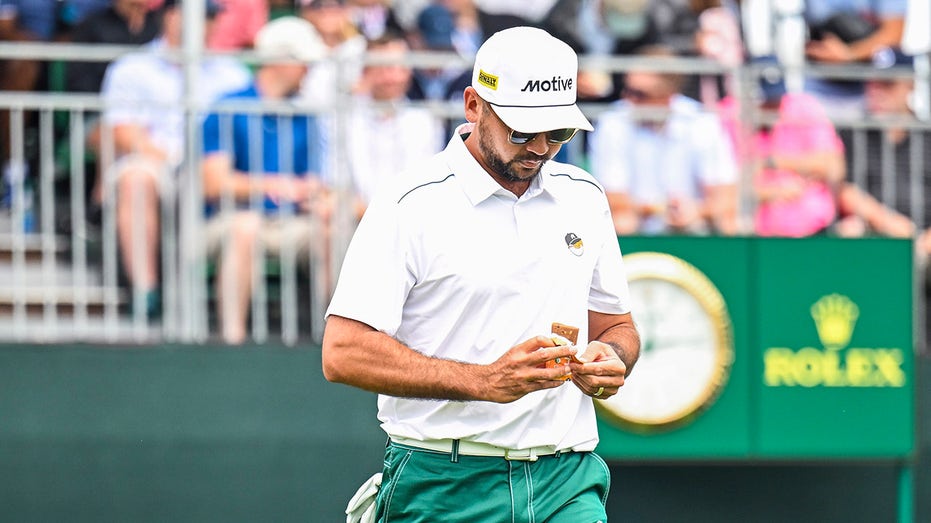
Jason Day of Australia wears Malbon pants as he walks off the 10th tee during the first round of the Wells Fargo Championship at Quail Hollow Club May 9, 2024, in Charlotte, N.C. (Keyur Khamar/PGA Tour via Getty Images / Getty Images)
Garage Beer is based in Columbus, Ohio, not far from where Malbon golfer Jason Day lives.
Garage Beer and Malbon will continue showing up together at Malbon Home activations, Bucket Cup events and Sip & Shop retail experiences tied to upcoming apparel capsules, with everything centered around community, content and making golf feel more inclusive and fun.
Where culture and fashion intersect with golf, you’ll find Malbon Golf, the brand founded by Stephen and Erica Malbon in 2017 because of their love for the game.
It’s a lifestyle brand that has appealed to the likes of famous rappers, skateboarders, athletes in other sports, the everyday golfer and Tour players like Day, who wanted individuality back on the course.

Jason Kelce of the Philadelphia Eagles and Travis Kelce of the Kansas City Chiefs embrace after a game at GEHA Field at Arrowhead Stadium Nov. 20, 2023, in Kansas City, Mo. (Ryan Kang/Getty Images / Getty Images)
GET FOX BUSINESS ON THE GO BY CLICKING HERE
Malbon’s mission is “to inspire today’s youth to participate in the greatest game on Earth.”
Partnering with possibly the two most famous NFL brothers ever figures to help that cause.
Fox News’ Scott Thompson contributed to this report.
Form 13D/A Repay Holdings Corp For: 3 April
Controlling your home from your car used to be a sci-fi concept. Samsung just made it real.
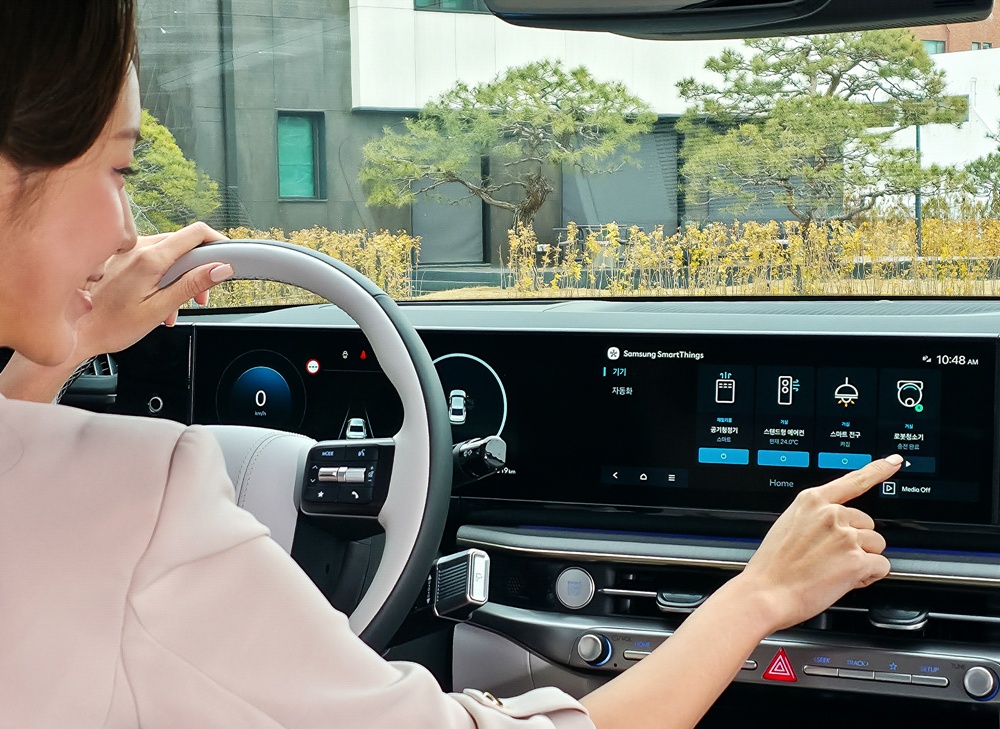
The South Korean tech giant recently launched a feature called “Car-to-Home” via its SmartThings platform, and it is available on Hyundai or Kia vehicles. This feature transforms its infotainment system into a smart home remote.
The New Car-to-Home Feature
According to Samsung, Car-to-Home is a new feature that allows users to control SmartThings-connected home appliances directly on a car’s dashboard. It offers support for appliances like air purifiers, air conditioners, lights, cameras, and robot vacuums.
Samsung designed Car-to-Home with a simple interface that takes minimal effort to set up. Drivers only need to scan a QR code displayed in the SmartThings app on their infotainment system to link their accounts.
It Works Both Ways
Samsung and Hyundai previously worked together on the venture called “Home-to-Car,” which works the other way around. Here, instead of cars controlling the smart home, users may check their car’s status, lock the doors, start the engine, and more directly from the comforts of their abode.
With the introduction of this new tech, Samsung flips the script around with Car-to-Home to let users control their homes from their cars. Now, users can control their homes from their cars, as well as their cars from their homes.
Smart Routines Make It More Than Just a Remote
The real value here goes beyond manually toggling switches. Car-to-Home unlocks location-aware automation that changes how your home responds to your day.
You can set routines so that SmartThings turns on appliances as you pull into your garage, pre-cools rooms, or runs air purifiers before you walk through the door.
It can also automatically shut everything off as you leave the driveway, with a dedicated Away Mode handling lights while you are out.
Which Cars Support It?
The feature works with Hyundai and Kia vehicles equipped with the Connected Car Navigation Cockpit infotainment platform, which first debuted in November 2022. It is rolling out through a software update.
There are several eligible models shared by Samsung, and they include Hyundai’s Grandeur, Santa Fe, and IONIQ 5. In addition, Kia’s Sorento and EV9 are eligible to use the feature.
Samsung plans to expand Car-to-Home’s technology to Genesis vehicles that have the ccIC27 infotainment system available.
Originally published on Tech Times

Blue Jays’ Mason Fluharty to start Game 2 vs. White Sox

MLB's robot-assisted strike zone is exposing umpire errors in real time

HMRC shares state pension tax update amid April 2026 increase


-

 NewsBeat1 day ago
Steven Gerrard disagrees with Gary Neville over ‘shock’ Chelsea and Arsenal claim | Football
-
Entertainment4 days ago
Fans slam 'heartbreaking' Barbie Dream Fest convention debacle with 'cardboard cutout' experience
-

 Business23 hours ago
No Jackpot Winner and $194 Million Prize Rolls Over
-

 Crypto World2 days ago
Gold Price Prediction: Worst Month in 17 Years fo Save Haven Rock
-
 Entertainment6 days ago
Lana Del Rey Celebrates Her Husband’s 51st Birthday In New Post
-

 Tech5 days ago
The Pixel 10a doesn’t have a camera bump, and it’s great
-

 Fashion4 hours ago
Weekend Open Thread: Spanx – Corporette.com
-
Crypto World3 days ago
Dems press CFTC, ethics board on prediction-market insider trades
-

 Tech5 days ago
Avatar Legends: The Fighting Game comes out in July and it looks pretty slick
-

 Sports3 days ago
Tallest college basketball player ever, standing at 7-foot-9, entering transfer portal
-

 Tech4 days ago
EE TV is using AI to help you find something to watch
-

 Business2 days ago
Login and Checkout Issues Spark Merchant Frustration
-

 Fashion6 days ago
Amazon Sundays: Soft Spring Layers
-

 Fashion7 days ago
When Evening Dressing Gets Colorful for Spring
-

 Tech5 days ago
Elon Musk’s last co-founder reportedly leaves xAI
-

 Tech4 days ago
How to back up your iPhone & iPad to your Mac before something goes wrong
-

 Tech4 days ago
Apple will hide your email address from apps and websites, but not cops
-

 Politics4 days ago
Should Trump Be Scared Strait?
-

 Crypto World4 days ago
U.S. rule change may open trillions in 401(k) funds to crypto
-

 Tech4 days ago
Flipsnack and the shift toward motion-first business content with living visuals
You must be logged in to post a comment Login