

Connect with us

Business

Adobe pays $75 million to settle US lawsuit over termination fees, subscription cancellations

Published

on

Adobe pays $75 million to settle US lawsuit over termination fees, subscription cancellations


Adobe pays $75 million to settle US lawsuit over termination fees, subscription cancellations

Continue Reading
Click to comment

Leave a Reply

Your email address will not be published. Required fields are marked *

Business

UK economy stalls in January as GDP flatlines and Middle East conflict threatens growth

Published

on

UK economy stalls in January as GDP flatlines and Middle East conflict threatens growth

The UK economy unexpectedly stalled at the start of the year, intensifying concerns that escalating geopolitical tensions and rising energy prices could derail growth in 2026.

New figures from the Office for National Statistics (ONS) show that gross domestic product (GDP) recorded no growth in January, following a modest expansion of 0.1 per cent in December. Economists had forecast a stronger start to the year, predicting a monthly increase of around 0.2 per cent.

The latest data suggests that the UK economy entered the year with little momentum, even before the economic impact of the escalating conflict between the United States, Israel and Iran began to filter through global markets.

On a rolling quarterly basis, the economy grew by just 0.2 per cent in the three months to January, only slightly stronger than the 0.1 per cent recorded in the previous quarter and below analysts’ expectations of 0.3 per cent.

The figures reinforce growing fears among economists that the UK’s fragile recovery could stall further as rising oil and gas prices feed through into higher inflation and weaker consumer spending.

Advertisement

Liz McKeown, director of economic statistics at the ONS, said the latest figures highlighted the subdued nature of the recovery.

“The overall picture remains subdued,” she said, noting that several key sectors struggled to gain traction during the month.

The services sector, which accounts for roughly 80 per cent of the UK’s economic output, recorded no growth during January. Production output declined by 0.1 per cent over the same period, while construction activity provided the only positive contribution, rising by 0.2 per cent.

Economists warned that the stagnation in January leaves the economy vulnerable to external shocks, particularly the surge in global energy prices triggered by the widening conflict in the Middle East.

Advertisement

Martin Beck, chief economic adviser at consultancy WPI Strategy, said the disappointing GDP figures showed the economy had already begun losing momentum before geopolitical tensions escalated.

“The UK economy was already losing steam before the latest war-related shock,” he said.

Fergus Jimenez-England, associate economist at the National Institute of Economic and Social Research (NIESR), described the figures as a worrying signal for the months ahead.

“This is a worrying start to the quarter, given that the early-year improvement in business confidence is likely to be short-lived as global disruption linked to the Iran war hits the UK economy,” he said.

Advertisement

Financial markets have already begun adjusting their expectations for monetary policy as energy prices surge. Oil prices have climbed sharply in recent weeks amid fears of prolonged disruption to shipping routes in the Strait of Hormuz, one of the world’s most important oil transit corridors.

Brent crude remained above $100 a barrel on Friday, a level not seen since the energy shocks that followed Russia’s invasion of Ukraine.

The surge in oil and gas prices has complicated the outlook for the Bank of England, which had previously been expected to cut interest rates later this year as inflation gradually eased.

Before the outbreak of the conflict, markets had predicted at least two interest rate reductions in 2026, with investors assigning a roughly 90 per cent probability to a first cut at the Bank’s next meeting. However, rising energy prices have sharply reduced those expectations.

Advertisement

The Bank of England is now widely expected to keep its base rate unchanged at 3.75 per cent when policymakers meet next Thursday, as officials assess whether the energy shock could push inflation higher again.

Although UK inflation fell to 3 per cent in January and is forecast to decline further in the spring, analysts warn that higher energy costs could add as much as one percentage point to inflation later this year depending on how long the conflict persists.

Some economists have warned that household energy bills could rise by as much as £500 in the summer if wholesale gas prices remain elevated.

Government borrowing costs have also risen sharply as investors reassess inflation risks. The yield on benchmark UK government bonds climbed again on Friday, increasing by 0.10 percentage points to 4.78 per cent.

Advertisement

The weaker economic data adds further pressure on Chancellor Rachel Reeves, who has repeatedly emphasised the government’s focus on economic growth while maintaining fiscal discipline.

Responding to the latest GDP figures, Reeves acknowledged the economy faced significant challenges but insisted the government remained committed to strengthening growth.

“I know that there is more to do,” she said. “In an uncertain world we are building a stronger and more secure economy by cutting the cost of living, cutting national debt and creating the conditions for growth to make all parts of the country better off.”

Business groups have also urged ministers to take action to support investment and productivity.

Advertisement

Muniya Barua, deputy chief executive of BusinessLDN, said the latest figures were disappointing following a weak end to 2025.

“After a sluggish end to last year, it’s disappointing to see the economy start the year on the back foot again,” she said.

She warned that geopolitical tensions could undermine both business confidence and consumer spending while pushing inflation higher.

“The war in Iran threatens to hit business and consumer confidence while also pushing up inflation, so it’s vital that the government acts quickly to remove barriers to growth that are within its gift,” Barua added.

Advertisement

She called on ministers to accelerate major infrastructure projects, unlock sites for new housing and review changes to the business rates system that could deter investment.

The latest economic indicators already point to growing strains across the labour market. Unemployment has climbed to its highest level since the pandemic, driven largely by a sharp increase in youth joblessness, which has reached its highest point in more than a decade.

Combined with rising energy costs and slowing economic growth, the data suggests policymakers face a difficult balancing act in the months ahead.

For now, economists say the January figures confirm that the UK economy began 2026 on fragile footing, and that the unfolding geopolitical crisis could make the path to sustained growth even more uncertain.

Advertisement

Amy Ingham

Amy is a newly qualified journalist specialising in business journalism at Business Matters with responsibility for news content for what is now the UK’s largest print and online source of current business news.

Advertisement
Continue Reading

Business

Tallest South Bristol tower approved after councillors warned they could lose an appeal

Published

on

Business Live

Scheme received hundreds of objections from residents and local heritage and planning groups

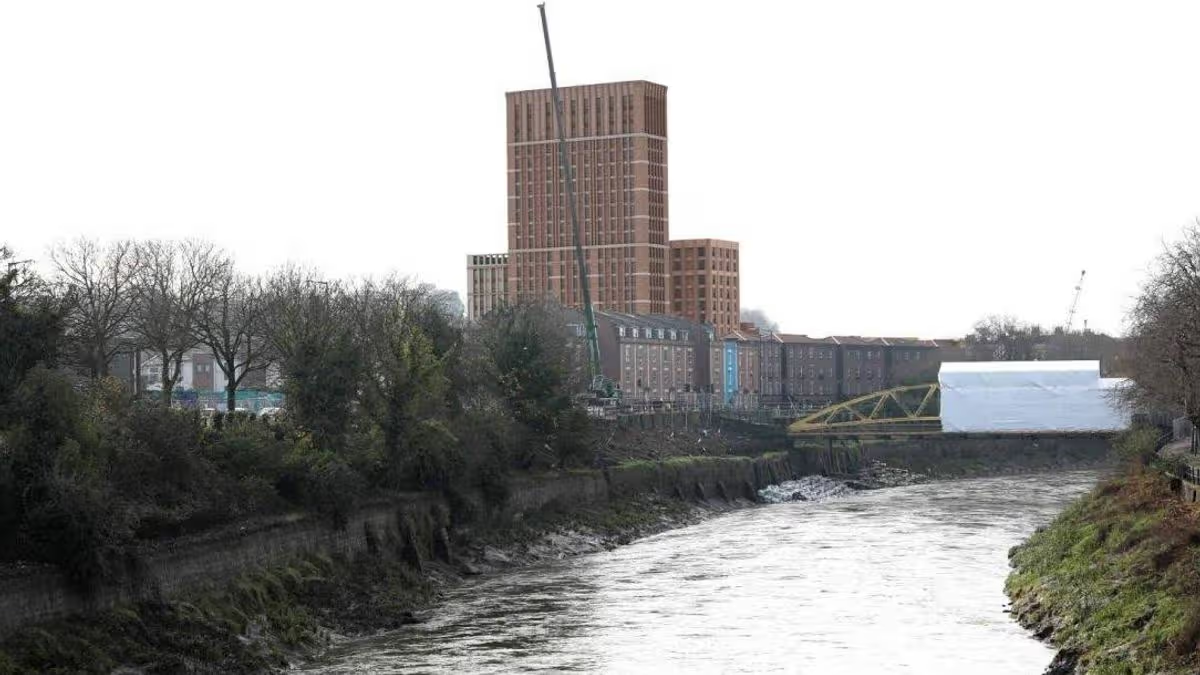
The proposed Princess Street tower seen from the New Cut

The planned Princess Street tower seen from the New Cut(Image: Liz Lake Associates)

Controversial plans for South Bristol’s tallest ever building have been approved after councillors were told they would lose an appeal, costing city taxpayers £1million.

Advertisement

The city council’s planning committee granted permission for 434 flats, of which one-fifth will be ‘affordable’, and 400 student beds, in four blocks including a 23-storey tower on a site south of Princess Street between Victoria Park and the New Cut.

Members vetoed the development in January amid concerns about the height and number of apartments, along with harm to views of important buildings, and asked officers who had recommended giving the go-ahead to come back with reasons for refusal.

But despite 468 objections from residents and local heritage and planning groups, the updated report to the committee said rejecting the scheme would not withstand an appeal from developers Galliard Apsley, and the advice remained to approve.

Councillors voted 6-3 in favour after a marathon three-hour debate on Wednesday evening (March 11).

Advertisement

Among those who objected were Historic Buildings and Places, Avon Gardens Trust, Bristol Civic Society, the Conservation Advisory Panel, Totterdown Residents Environmental and Social Action (TRESA), Windmill Hill and Malago Planning Group, BS3 Planning Group, Victoria Park Action Group, Windmill Hill City Farm, Learning Partnership West School, St Mary Redcliffe Primary School, and Structural Soils.

Historic England did not object but expressed concerns about the impact on views of St Mary Redcliffe.

During public forum, Cllr Ed Plowden (Green, Windmill Hill) said: “The officer report fails to respect this committee’s instruction to write a report that justifies refusal.

“The committee should reject this report, renew its instructions and then insist on a report that does not sabotage its own decision.”

Advertisement

Former Bristol mayor George Ferguson, an architect and adviser to Historic England, said: “Of course we support more homes.

“We remain strongly opposed [to the plans].

“I ask you to stick to your guns and refuse.”

He said a late engagement exercise undertaken by the developers, which resulted in 36 letters of support and just four against, was ‘suspicious’ and appeared to have been written by ‘hostages’.

Advertisement

Mr Ferguson said the development ‘fails dismally on design, environment, heritage, landscape, and social grounds’.

He said: “It is quite wrong for the officers to try to override the democratic process in this way by threatening a lost appeal, especially when there are a host of reasons why this scheme should never have seen the light of day.”

Asked by Cllr Andrew Varney (Lib Dem, Brislington West) what the financial risk was to the authority if the plans were refused, Bristol City Council chief planning officer Simone Wilding said: “I would estimate the costs awarded against us to be in the region of three-quarters of a million pounds.

“Plus on top of that, if we chose to defend, we would have our own costs, so in total we are probably looking at about £1million.

Advertisement
The planned Princess Street tower seen from Victoria Park

The proposed Princess Street tower seen from Victoria Park(Image: Liz Lake Associates)

“There would be a high risk of costs being awarded against us.”

But Cllr Guy Poultney (Green, Cotham) said: “We’ve now had a figure put on the table which is not in the report, and is not something that can be substantiated or challenged.

“The one thing we do know is that we’re not meant to take it into account at all.”

He said the law stated that the cost of an appeal was not a material planning consideration.

Advertisement

Cllr Poultney said: “This committee should be really clear that it asked officers to go away and provide robust reasons for refusal.

“I hate to say it but that time has been used to try not to build those reasons for refusal but to strengthen those reasons to grant.

“If that’s the case, this should be the final nail in the coffin of this cooling-off policy because it is clearly not doing the job that councillors agreed in the first place.”

Cllr Serena Ralston (Green, Clifton Down) said: “We have not been given much choice in the matter – the officer report has been tilted in favour of development, it doesn’t seem a very democratic process.

Advertisement

“We’re under the cosh here. There is no other choice but to approve it.

“I am very uncomfortable because this is not a high-quality development.”

Committee chairman Cllr Rob Bryher (Green, St George West) said: “I don’t like the height of this building, I don’t like the design.

READ MORE: Bid for 400 homes near M5 clears first hurdleREAD MORE: Michelin-starred Midlands chef Aktar Islam to open new restaurant in Bristol

Advertisement

“I don’t know whether it’s better to hear the substantial community voices who have made very clear your objections to it, or whether to go with the very clear policy guidance within the constraints of the system that will continually ask us to do these things in planning communities over the next few years and decades.

“To be honest, it’s part of the reason I’m going to give this up [as committee chairman].

“It’s just too demoralising. I don’t like making these decisions any more.”

But Cllr Varney said: “Bristol is not a museum piece, it’s a commercial, dynamic city – it changes.

Advertisement

“Yes, the tallest building is tall but it is by no means the tallest building that’s been consented in Bristol.

“We have buildings with planned consent of 28 storeys, and that is still quite small-fry compared to other comparable cities around the UK.

“Yes, there will be an impact on views but it is not as important as the need to deliver housing.

“We have 20,000 families on the housing waiting list.

Advertisement

“It’s a disgrace that we are even considering not approving this scheme that will deliver housing for people on the housing waiting list.

“What is more important – a view or a house? I am voting for a house.”

Cllr Richard Eddy (Conservative, Bishopsworth) said the project would provide more than 800 homes and millions of pounds of developer contributions for improvements to transport, public spaces, a medical facility and employment space, including food and drink outlets.

He said: “It is a scheme worthy of support. I beg members to support this.”

Advertisement

Cllr Patrick McAllister (Green, Hotwells & Harbourside) said: “We have a crippling housing crisis.

“I don’t like the tower block but homelessness is uglier than a tower block and I don’t see where this doesn’t get built through an appeal where the council will be subject to substantial costs, but I’m not happy about it.”

Voting in favour were Labour Cllrs Lisa Durston, Kye Dudd and Louis Martin, Cllr Eddy, Cllr Varney and Cllr McAllister, while Green Cllrs Poultney, Bryher and Ralston were against.

To find all the planning applications, traffic diversions, road layout changes, alcohol licence applications and more in your community, visit the Public Notices Portal.


Advertisement
Continue Reading

Business

Mortgage rates surge to highest since September

Published

on

Mortgage rates surge to highest since September

In an aerial view, two-story single family homes line the streets of neighborhood on Jan. 13, 2026 in Thousand Oaks, California.

Kevin Carter | Getty Images

Mortgage rates surged to their highest level since September on Friday as bond yields moved higher due to the war in Iran.

Advertisement

The average rate on the 30-year fixed loan hit 6.41%, according to Mortgage News Daily. That is the highest rate since the first week of September, but still below the 6.78% notched at the same time last year.

Mortgage rates loosely follow the yield on the 10-year U.S. Treasury, which were up again Friday.

“This is counterintuitive for those who expect bonds to serve as a safe haven in times of uncertainty, but when war has a direct impact on inflation expectations, it’s more than enough to offset any of the safe haven benefit that might otherwise be seen,” wrote Matthew Graham, chief operating officer at Mortgage News Daily.

Get Property Play directly to your inbox

CNBC’s Property Play with Diana Olick covers new and evolving opportunities for the real estate investor, delivered weekly to your inbox.

Advertisement

Subscribe here to get access today.

Even as rates began rising last week, mortgage demand from homebuyers rose, according to the Mortgage Bankers Association, but this week’s new surge could put a damper on the spring season, which is already plagued by other major headwinds.

Lennar, one of the nation’s largest homebuilders, reported disappointing first-quarter earnings. Its CEO, Stuart Miller, described headwinds for the broader market as including “high mortgage rates, constrained affordability, cautious consumer sentiment, and geopolitical uncertainty, especially now including the recent conflict in Iran.”

Just two weeks ago, rates had dropped to match a multiyear low, briefly touching 5.99%. Now, any savings from those lower rates is gone.

Advertisement

For someone buying a $400,000 home, around the national median, with 20% down on a 30-year fixed mortgage, the monthly payment is now about $115 more than it would have been two weeks ago.

Choose CNBC as your preferred source on Google and never miss a moment from the most trusted name in business news.
Continue Reading

Business

StoneX Group and BTIG receive FINRA arbitration award in employment dispute

Published

on


StoneX Group and BTIG receive FINRA arbitration award in employment dispute

Continue Reading

Business

US proposes easing limits on cancer-causing gas used to clean medical devices

Published

on

US proposes easing limits on cancer-causing gas used to clean medical devices


US proposes easing limits on cancer-causing gas used to clean medical devices

Continue Reading

Business

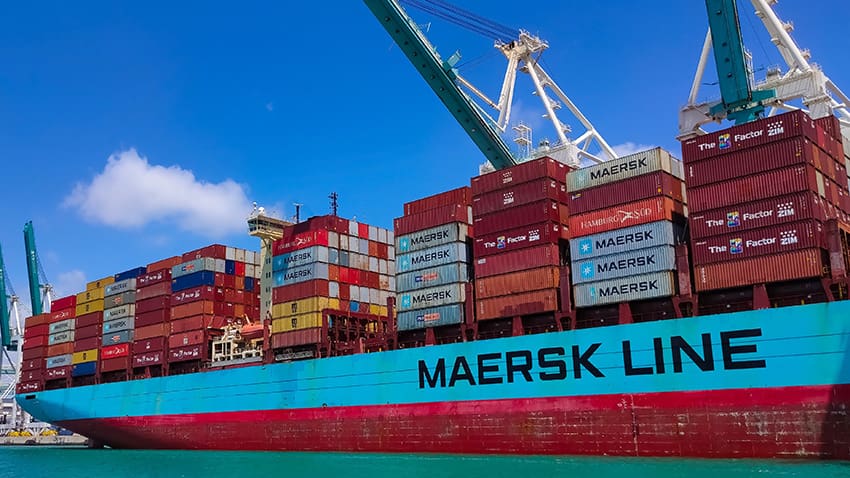
Maersk halts operations at Oman’s Salalah port after drone strike amid Iran war escalation

Published

on

Maersk halts operations at Oman’s Salalah port after drone strike amid Iran war escalation

Global shipping giant Maersk has suspended operations at the Port of Salalah in Oman after a drone attack struck oil storage facilities at the strategic logistics hub, intensifying concerns about global trade disruption as the conflict involving Iran spreads across the Gulf.

The Danish shipping group said it had paused activity at the port “until further notice” following what it described as an ongoing security incident near the facility’s general cargo terminal. The move comes as the war in the region increasingly threatens major shipping routes and energy infrastructure across the Middle East.

The Port of Salalah, located on Oman’s southern coast, is one of the region’s most important maritime gateways and had been widely regarded as a relatively safe alternative for shipping companies seeking to avoid the escalating risks around the Strait of Hormuz and the Red Sea.

The port sits at a critical intersection of global trade routes linking southeast Asia with Europe, Africa and the Americas. Since opening in 1998 it has handled more than 50 million containers and over 100 million metric tonnes of cargo, and it recently completed a $300 million upgrade to its container terminal designed to increase capacity and efficiency.

Historically, Oman has promoted the port’s location in a politically neutral country as a major advantage for global shipping operators. The country has long positioned itself as a diplomatic mediator in regional disputes, maintaining working relationships with both Western governments and Iran.

Advertisement

However, the drone strike has now brought the conflict directly to Oman’s shores, raising fears that the war is expanding to new fronts and threatening infrastructure that had previously been viewed as relatively insulated from the fighting.

Images from the port showed thick plumes of smoke rising from fuel storage facilities after the attack triggered a fire in oil tanks. Omani authorities confirmed they were working to contain the blaze but said oil supply continuity had not been disrupted.

The incident is the latest in a series of attacks targeting energy infrastructure and maritime assets across the Gulf region. Earlier this week, falling debris from an intercepted drone sparked a fire that damaged storage infrastructure at Fujairah, a major ship refuelling hub in the United Arab Emirates.

Container shipping has also been affected directly. The Japan-flagged vessel One Majesty sustained minor damage after being struck by an unidentified projectile approximately 25 miles northwest of the UAE.

Advertisement

Maersk said the escalating instability has forced it to adapt operations across its network. The company confirmed that it was redistributing maritime fuel supplies to ensure vessels can continue to refuel and operate despite the growing disruption to storage facilities and fuel distribution infrastructure in the region.

A spokesperson for the company said the measures were designed to ensure that its global shipping network could continue functioning.

“We are proactively redistributing fuel to ensure vessels can continue to bunker where needed and keep our ocean network running without interruptions,” the company said.

The conflict has already left large numbers of ships stranded across the Gulf. Maersk alone has ten vessels currently trapped in the region, while industry estimates suggest roughly 100 container ships are unable to move through key routes.

Advertisement

German shipping group Hapag-Lloyd has also reported that a number of its vessels remain stuck in the Strait of Hormuz as tensions escalate.

In response to the heightened risks, Maersk and other carriers have suspended most new cargo bookings to and from several Gulf countries, including the United Arab Emirates, Oman, Qatar and Saudi Arabia.

The escalation comes as Iran continues its blockade of the Strait of Hormuz, one of the most critical maritime chokepoints in the global energy system. Roughly one-fifth of the world’s oil exports typically pass through the narrow waterway, which connects the Persian Gulf with the Indian Ocean.

Iran’s leadership has signalled that it intends to maintain pressure on global shipping lanes as the conflict intensifies. Mojtaba Khamenei, Iran’s new leader, said this week that Iranian forces would continue enforcing restrictions on traffic through the strait.

Advertisement

Analysts believe the strategy is designed to maximise economic pressure on Western and Gulf nations by disrupting oil and commercial shipping flows.

Danny Citrinowicz, a fellow at the Atlantic Council and a former Israeli military intelligence officer specialising in Iran, said Tehran was likely to escalate further attacks on infrastructure.

“They will raise the bar by targeting more infrastructure,” he said. “The goal is to inflict economic damage and demonstrate that countries supporting the war will face serious consequences.”

The attacks have now affected every member state of the Gulf Cooperation Council as well as Iraq, which has already been forced to shut down parts of its oil production infrastructure due to security concerns.

Advertisement

Oman itself has taken precautionary measures by moving vessels away from its key oil export terminal at Mina al Fahal while authorities assess the security situation.

Another Omani port, Duqm, located roughly 500 kilometres south of the capital Muscat, was also struck during the early stages of the conflict.

Despite Iran’s increasingly aggressive strategy, Iranian officials have denied responsibility for the attack on Salalah. Tehran described Oman as a “friend and neighbour” and suggested that the strike could have been carried out by other actors seeking to widen the conflict and frame Iran.

However, the expansion of attacks across multiple countries has heightened fears among global shipping companies that the war could effectively choke off two of the world’s most vital maritime corridors.

Advertisement

In addition to the disruption in the Strait of Hormuz, Iran’s Houthi allies in Yemen have previously attacked shipping in the Red Sea during the Gaza conflict. Analysts warn they could resume those attacks if the conflict escalates further.

If that occurs simultaneously with the closure of Hormuz, the global shipping industry could face unprecedented disruption to both oil and container trade flows between Asia, Europe and the Americas.

For global logistics networks already strained by geopolitical tensions and supply chain volatility, the suspension of operations at Salalah underscores how rapidly the conflict is spreading beyond traditional battle zones and into the infrastructure that underpins international trade.

Advertisement

Continue Reading

Business

Hundreds of jobs could be created at proposed solar panel plant

Published

on

Business Live

Plans submitted for Viking Park site in Widnes

Plans for the industrial unit at Viking Park off Mathieson Road in Widnes were given the go ahead in 2022, with a solar panel firm now hoping to move in.

Plans for the industrial unit at Viking Park off Mathieson Road in Widnes were given the go-ahead in 2022, with a solar panel firm now hoping to move in.(Image: Google)

More than 500 jobs could be created if plans to transform a massive industrial unit into a solar panel factory are given the go-ahead.

Advertisement

An application has been lodged with Halton Council to transform the site at Viking Park off Mathieson Road in Widnes into an industrial unit for manufacturing photovoltaic (solar) panels.

Permission to develop the huge 10 acre site was first granted in 2022 but it has been vacant ever since.

According to planning documents, it is estimated that the proposed development would create 503 full time jobs at the nearly 10 acre site.

A design and access statement submitted on behalf of applicant EELVF IV UK C3, said: “The level of job creation is considered significant in the context of the local labour market and would make a meaningful contribution toward supporting economic growth objectives at both local and regional levels.”

Advertisement

It added: “The proposed use would facilitate a more intensive employment-generating function compared to the lawful use, thereby maximising the economic productivity of the site.”

It said that in terms of addition to direct employment, the development was likely to generate additional jobs via demand for local services, suppliers, and ancillary businesses.

The unit is bound by Mathieson Road and a renewable energy and recycling plant to the north, a Warburtons distribution centre to the east, a renewable energy facility to the south and vacant land to the west.

The unit is located inside the Mersey Multi Modal Gateway 3MG logistics park which is part of the Liverpool City Region Freeport – with firms based there being subject to more generous tax and customs rules than those outside the site.

Advertisement

The statement added: “The site is located within the 3MG logistics park, which is well located in relation to the strategic road network, West Coast Main Line rail access, the Port of Liverpool, and the expanding cargo facility at Liverpool John Lennon Airport and is part of an important strategic location for inter-modal freight transfer.”

It concluded: “As such the site is considered to be a suitable location for sustainable employment development.”

To find all the planning applications, traffic diversions, road layout changes, alcohol licence applications and more in your community, visit the Public Notices Portal.

Advertisement
Continue Reading

Business

The Inquiry – Why is Poland’s economy booming?

Published

on

The Inquiry - Why is Poland’s economy booming?

Available for over a year

In February, Polish Prime Minister Donald Tusk posted a social media video celebrating new figures from the International Monetary Fund suggesting that the average person in Poland now has slightly more spending power than the average person in Spain, the European Union’s fourth largest economy.

It’s a symbolic milestone for a country that emerged from communism just over three decades ago and once struggled with hyperinflation and economic upheaval. In 2025, Poland’s economy also passed the trillion-dollar mark, putting it in an elite group of just 20 countries globally.

Investment from across the EU has helped drive growth. But can Poland keep its edge as labour shortages grow and the war in neighbouring Ukraine continues to shape the region?

Advertisement

This week on The Inquiry, Tanya Beckett asks: Why is Poland’s economy booming?

Contributors:
Dr Pawel Bukowski, lecturer in economics at University College London and Polish Academy of Sciences, UK
Iga Magda, associate professor at the Warsaw School of Economics, Poland
Katarzyna Rzentarzewska, chief CEE macro economist at Erste Group Bank AG, Austria
Rafal Benecki, chief economist at ING, Poland

Presenter: Tanya Beckett
Producer: Matt Toulson
Researcher: Evie Yabsley
Editor: Tom Bigwood
Technical Producer: Cameron Ward
Production Management: Phoebe Lomas and Liam Morrey

(Photo: A high street in Warsaw. Credit: NurPhoto/Getty Images)

Advertisement

Programme Website

Continue Reading

Business

Slideshow: Uncorking beverage innovation

Published

on

Slideshow: Uncorking beverage innovation

Foodservice operators are rolling out new beverage formulations. 

Continue Reading

Business

NFL discussing deal with Paramount that could be extra $1 billion

Published

on

NFL discussing deal with Paramount that could be extra $1 billion

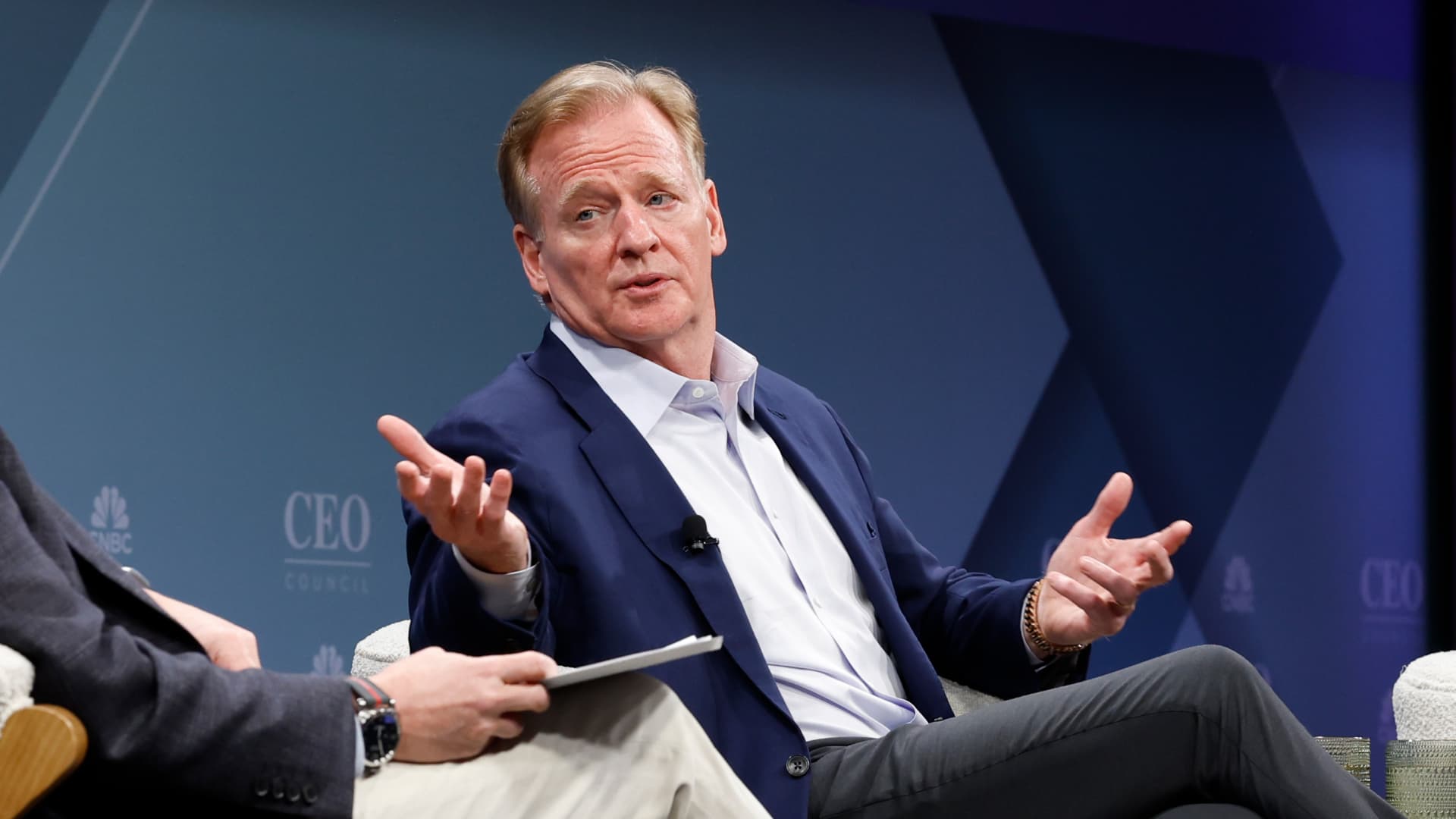
Roger Goodell, NFL Commissioner with Anthony Capuano, Marriott International CEO, CNBC CEO Council Member, speaking at the CNBC CEO Council in Arizona on May 19th, 2025.

Chris Coduto | CNBC

The NFL and Paramount Skydance‘s renewal talks on a deal to keep the league’s Sunday games on CBS are beginning to take shape, CNBC has learned.

Advertisement

NFL and CBS executives are negotiating a price increase, with a bid-ask spread midpoint around 50% or 60%, according to two people familiar with the negotiations, who asked not to be named because the discussions are private. CBS currently pays around $2.1 billion a year, on average, for its Sunday afternoon games, CNBC has previously reported. A 50% increase would mean CBS would pay more than $3 billion in its next deal.

In return for the increased revenue, the NFL would eliminate the opt-out clause after the 2029-30 season that it put in its original deal with Paramount, part of an 11-year agreement that runs through the end of the 2033-34 season. That clause would have given the league the chance to walk away early.

CBS would begin paying the new fee as soon as next season for the next eight years for the same package of games.

Paramount’s adjusted projection for its earnings before interest, taxes, depreciation and amortization for 2026 is $3.6 billion. If Paramount’s merger with Warner Bros. Discovery is approved by regulators, the combined company would have an adjusted EBITDA projection of $18 billion, Paramount Chief Financial Officer Dennis Cinelli told investors this month.

Advertisement

“We have a phenomenal relationship with the NFL, and we anticipate that continuing for the foreseeable future,” Paramount CEO David Ellison told CNBC earlier this month. “They are one of our most important partners, and we plan for them to stay one of our most important partners, having just delivered a historic season in partnership with them. And, you know, ongoing negotiations, we’re not really in a position where we can comment. I promise we’ll share something as soon as we have something to say.”

Comcast‘s NBCUniversal, Amazon Prime Video and Fox are also subject to the 2029-30 opt-out clause in their deals. Disney‘s ESPN and ABC have until 2031.

Football – NFL – Super Bowl LX – New England Patriots v Seattle Seahawks – Levi’s Stadium, Santa Clara, California, United States – February 8, 2026 Referee Shawn Smith talks to players before the game.

Carlos Barria | Reuters

Advertisement

The league has chosen to begin negotiating with Paramount’s CBS before any of its other media partners because a change-of-control provision — stemming from Skydance Media’s acquisition of Paramount Global — allows the NFL to break its deal by 2027.

The NFL might negotiate with Fox next after CBS because the terms of the deal should be similar — both companies own Sunday afternoon packages, one of the people familiar with the matter said.

Fox currently pays slightly more than CBS for its package of games — about $2.2 billion, according to a person familiar with the matter. Fox will “certainly look to [be] continuing that mutually beneficial relationship going forward” with the NFL, but it hasn’t had any “material conversations” on a renewal yet, CEO Lachlan Murdoch said earlier this month at the Morgan Stanley Technology, Media & Telecom Conference.

The NFL also hasn’t begun material discussions with Amazon, NBC or Disney, according to people familiar with the matter. It’s unclear if the league would look to push forward with a similar 50% increase for all three of those packages.

Advertisement

Some executives at NBC and at Disney believe the relative strengths of their packages — Sunday Night Football and Monday Night Football — have diminished as the NFL has given Amazon better games for its Thursday Night Football in recent years, according to people familiar with the matter.

ESPN already pays $2.7 billion for Monday Night Football. A 50% increase would mean ESPN would pay more than $4 billion for that package — a number Disney would likely balk at, according to people familiar with the matter.

Downstream implications

The timing and scope of the NFL’s new deals could have a significant effect on the value of other sports’ rights in the coming years.

The NHL currently has TV deals with Disney and Warner Bros. Discovery, which expire after the 2028 season. Bettman has had a number of conversations about renewing a deal before the NFL, according to two people familiar with the matter. Still, he will likely have to wait until Paramount’s deal to acquire WBD closes before inking a new agreement.

Advertisement

“As with an ongoing relationship, you’re always talking about the future, and from our standpoint it’s not in the context of the NFL,” said NHL spokesman Jon Weinstein.

Murdoch said last month Fox would have to “rebalance” its sports portfolio once it pays the NFL.

Versant CEO Mark Lazarus said earlier this month he’s “prepared for the sports landscape to be shifting” given the outsized cost of the NFL. That could allow Versant, which owns the USA Network and other cable channels, to buy rights to sports such as the NHL or MLB “that we might not have otherwise gotten involved with,” he said.

Disclosure: Versant is the parent company of CNBC.

Advertisement

Get the CNBC Sport newsletter directly to your inbox

The CNBC Sport newsletter with Alex Sherman brings you the biggest news and exclusive interviews from the worlds of sports business and media, delivered weekly to your inbox.

Subscribe here to get access today.

Choose CNBC as your preferred source on Google and never miss a moment from the most trusted name in business news.
Continue Reading

Trending

Copyright © 2025