Business
AI bubble fears are creating new derivatives
That fear is breathing new life into the market for credit derivatives, where banks, investors and others can protect themselves against borrowers larding on too much debt and becoming less able to pay their obligations. Credit derivatives tied to single companies didn’t exist on many high-grade Big Tech issuers a year ago, and are now some of the most actively traded US contracts in the market outside of financial sector, according to Depository Trust & Clearing Corp.
While contracts on Oracle have been active for months, in recent weeks, trading on Meta Platforms and Alphabet has become much more active. Contracts tied to about $895 million of Alphabet debt are outstanding, after netting out opposite trades, while around $687 million is tied to Meta debt. With AI investments expected to cost more than $3 trillion, much of which will be funded with debt, hedging demand can only grow, according to investors. Some of the richest tech companies are rapidly turning into some of the most indebted.
“This hyperscaler thing is just so ginormous and there’s so much more to come that it really begs the question of ‘do you want to really be nakedly exposed?’,” said Gregory Peters, co-chief investment officer at PGIM Fixed Income. Credit derivatives indexes, which offer broad default protection against a group of index members, aren’t enough, he said.
BloombergSix dealers quoted Alphabet CDS at the end of 2025 compared with one last July, while the number of Amazon.com Inc. CDS dealers rose to five, from three, DTCC data show.
Some providers even offer baskets of hyperscalers’ CDS, mirroring baskets of cash bonds that are rapidly being developed. Activity among hyperscalers really picked up in the fall when news around the debt requirements of these companies became front and center. A Wall Street dealer said his trading desk is able to regularly quote markets of $20 million to $50 million for a lot of these names, which didn’t even trade a year ago.

For now, hyperscalers are having little trouble financing their plans in the debt market. Alphabet’s $32 billion debt sale in three currencies this week drew orders for many times more that amount within 24 hours. The technology company successfully sold 100-year bonds, an astonishing move in an industry where businesses can rapidly become obsolete.Morgan Stanley expects borrowing by the massive tech companies known as hyperscalers to reach $400 billion this year, up from $165 billion in 2025. Alphabet said its capital expenditures will reach as much as $185 billion this year to finance its AI build-out. That kind of exuberance is what has some investors worried. London hedge fund Altana Wealth last year bought protection against Oracle defaulting on its debt. The cost was about 50 basis points a year for five years, or $5000 a year to protect $1 million of exposure. The cost has since risen to around 160 basis points.
BANK USERS
Banks that underwrite hyperscaler debt have been significant buyers of single-name CDS lately. Deals to develop data centers or other projects are so big and happening so fast underwriters are often looking to hedge their own balance sheets until they can distribute all of the loans tied to them.
“Expected distribution periods of three months could grow to nine to 12 months,” said Matt McQueen, head of credit, securitized products and muni banking at Bank of America Corp., referring to loans on projects. “As a result, you’re likely to see banks hedge some of that distribution risk in the CDS market.”
Wall Street dealers are rushing to meet the demand for protection.
“Appetite for newer basket hedges can be expected to grow,” said Paul Mutter, formerly the head of US fixed income and global head of fixed income sales at Toronto-Dominion Bank. “More active trading of private credit will create additional demand for targeted hedges.”
Some hedge funds see banks’ and investors’ demand for protection as an opportunity to profit. Andrew Weinberg, a portfolio manager at Saba Capital Management, described many CDS buyers as “captive flow” clients — bank lending desks or credit valuation adjustments teams for example.
Leverage remains low at most of the big tech companies, while bond spreads are only slightly tighter than the corporate index average, which is why so many hedge funds, including his, are willing to sell protection, according to Weinberg.
“If there’s a tail risk scenario, where will these credits go? In a lot of scenarios, the big companies with strong balance sheets and trillion dollar market caps will outperform the general credit backdrop,” he said.
But for some traders, the frenzy of bond selling has all the hallmarks of complacency and mispriced risk.
“The sheer amount of potential debt suggests that these companies’ credit risk profiles could come under some pressure,” said Rory Sandilands, a portfolio manager at Aegon Ltd., who says he has more CDS trades on his book than a year ago.
Business
US health regulators to consider safety status of processed ingredients, RFK Jr. says

US health regulators to consider safety status of processed ingredients, RFK Jr. says
Business
Analysis-Winter economy emerges as poster child for China’s stimulus tilt to services

Analysis-Winter economy emerges as poster child for China’s stimulus tilt to services
Business
Baby fruit puree recall over elevated patulin toxin levels by Initiative Foods
FDA Commissioner Dr. Marty Makary joins ‘Varney & Co.’ to discuss the agency’s review of cancer-linked food additives, rising teen THC vaping and concerns over Moderna’s mRNA flu shot trial.
A nationwide recall has been issued for a baby fruit purée after federal testing found elevated levels of patulin, a toxin that can pose health risks with prolonged exposure.
Initiative Foods announced Friday that it is recalling one lot of its “Tippy Toes” Apple Pear Banana Fruit purée following the test results.
Patulin is a naturally occurring toxin produced by molds that can develop in fruits, particularly apples. Prolonged ingestion of the substance may lead to adverse health effects, including potential immune suppression, nerve damage, headaches, fever and nausea.
According to the U.S. Food and Drug Administration, no illnesses or injuries have been reported.
RECALL EXPANDS TO NEARLY 1M FRIGIDAIRE MINIFRIDGES SOLD AT TARGET OVER FIRE HAZARDS

A nationwide recall has been issued for Tippy Toes baby fruit purée after federal testing found elevated patulin levels. No illnesses have been reported. (U.S. FDA / Fox News)
The product was distributed nationwide in grocery stores in all states except Alaska and may also have been sold in Guam and Puerto Rico, the FDA said.
Consumers are urged to check the “Best By” date stamped on the bottom of each plastic tub for “BB 07/17/2026.” The affected packaging is also marked with code “INIA0120.”
TRIO OF DAIRY GIANTS RECALL INFANT FORMULA OVER CONTAMINATION FEARS

No illnesses related to the recall have been reported. (U.S. FDA / Fox News)
The company advises anyone who purchased the product with that date to stop using it immediately and dispose of it or return it to the place of purchase for a refund.
Consumers with health concerns after consumption should contact a healthcare provider.
13K POUNDS OF READY-TO-EAT GRILLED CHICKEN BREASTS RECALLED OVER POSSIBLE LISTERIA CONTAMINATION

Consumers have been advised to stop use of affected products, and to dispose of them or seek a refund. (Jeffrey Greenberg/Universal Images Group via Getty Images / Getty Images)
Retailers have been instructed to check inventory and remove the affected lot from sale or distribution.
“At Initiative Foods, the safety of our consumers and their families is our highest priority,” CEO and President Don Ephgrave said. “We are cooperating with the FDA to ensure strict review and enhanced safety measures across all our products. We thank our retail partners and customers for their understanding and prompt action on this matter.”
GET FOX BUSINESS ON THE GO BY CLICKING HERE
For additional recall information, consumers and retailers can call 1(855) 215-5730.
Business
Fresh legal snag may delay NSE’s long-awaited public debut
The exchange has been trying to go public since 2016, but repeated regulatory scrutiny and past controversies have kept the plan on hold. The Delhi High Court is expected to take up the matter on Monday or later this week, with its decision likely to influence the next steps in NSE’s listing saga.
At the heart of Aggarwal’s petition is Sebi’s framework on Corporate Action Adjustments (CAA), introduced to ensure “value neutrality” in derivatives trading during bonus issues, stock splits and extraordinary dividends. In simple terms, it means derivative traders’ economic positions should remain unchanged before and after such corporate actions. Aggarwal alleges that NSE violated this framework. Instead of adjusting both price and quantity, NSE changed only prices, debiting dividend-equivalent amounts directly from derivative traders’ accounts, including that of Aggarwal. Under the Securities Contracts (Regulation) Act, dividends belong only to shareholders, not derivatives traders.
“The impugned debit is therefore ultra vires the statute,” he said in the petition.
Aggarwal said his complaints to NSE were closed without a hearing, and Sebi upheld the exchange’s actions without independent review. Right to Information (RTI) requests seeking details of the debited funds were repeatedly rejected, creating a “complete information vacuum” and emails to the Sebi chairperson remained unaddressed as of January 2026, he added.
His complaint to Sebi outlined how funds were misappropriated from derivatives traders under the pretext of CAA in violation of Sebi rules, the impermissibility of off-market derivative transactions and the serious implications for investor protection and market integrity. He had asked that Sebi not grant any approval for NSE’s IPO until the matter was fully investigated and addressed.
AgenciesDespite unresolved statutory violations, opaque fund flows and systemic concerns, Sebi cleared NSE’s IPO, Aggarwal said. The writ seeks “regulatory accountability, enforcement of statutory and circular-based duties, and an interim restraint to prevent irreparable prejudice to public investors.” Sebi didn’t respond to queries on the matter.
The market regulator’s January 30 NOC allows NSE to formally kick off the IPO process–appoint bankers and legal advisers and start drafting the listing documents.
The wait for the exchange’s IPO has been one of India’s most prolonged and closely watched, with the first application submitted to Sebi on October 18, 2016. The regulator initially withheld approval due to concerns related to a co-location case, governance lapses at the bourse, and issues with its technology infrastructure. Since then, NSE has repeatedly approached Sebi for clearance. After Tuhin Kanta Pandey took charge as Sebi chief in March 2025, he formed an internal committee to examine the NSE IPO issue.
Business
Costco retires decades-old cake ordering system in digital overhaul
Check out what’s clicking on FoxBusiness.com.
Costco is officially retiring a decades-old system customers have long found frustrating as part of its latest major digital overhaul.
Customers will soon be able to place custom cake and deli tray orders directly through the company’s mobile app and website. Previously, shoppers were required to drive to Costco just to fill out paper order forms in-store.
Executives of the major retailer said the upgrade, which would streamline orders from start to pickup, addresses an outdated process they described as “clunky.”
“Very excited about what we have coming in the app,” CEO Ron Vachris said.
“We’ve got ordering cakes and deli trays online coming. So many of the things that we’ve heard from our members that could be a little bit clunky are now moving to a digital state, and we’re seeing great adoption right out of the chute.”
SOME GIFT CARDS SOLD AT COSTCO ARE NOW WORTHLESS

Costco is officially retiring a decades-old system for ordering custom cake and deli trays. (Marlene Awaad/Bloomberg via Getty Images / Getty Images)
The new online ordering system is expected to include sheet cake options as well as customizable cakes, allowing customers to choose sizes, shapes, flavors, designs and inscriptions from a catalog of available cake options.
COSTCO’S POPULAR BARGAIN MEAL AT CENTER OF NEW LAWSUIT

Customers can reportedly expect the “Order Grocery/Bakery” feature in the app by the end of 2026. (Lindsey Nicholson/UCG/Universal Images Group / Getty Images)
The major retailer did not provide a specific date for when the system will be fully implemented across all locations. Fox 11 Los Angeles said customers can expect the “Order Grocery/Bakery” feature in the app by the end of 2026.
If the feature follows a process similar to the current paper-based system, cakes and deli trays should be ready within 24 to 48 hours.
COSTCO’S LESSER-KNOWN MEMBERSHIP BENEFITS, EXPLAINED
| Ticker | Security | Last | Change | Change % |
|---|---|---|---|---|
| COST | COSTCO WHOLESALE CORP. | 1,018.48 | +19.62 | +1.96% |
The move will give customers easier access to Costco baked goods, especially for those who must travel long distances to reach a store.
In a 2023 Reddit post, one social media user described Costco’s cake-ordering process as inconvenient and time-consuming.

A 2023 Reddit post described Costco’s cake-ordering process as inconvenient and time-consuming. (Justin Sullivan/Getty Images / Getty Images)
“I live 40ish minutes from my local Costco, so yes, an online order process would be very nice,” the user said.
Another responded, echoing the same sentiment.
GET FOX BUSINESS ON THE GO BY CLICKING HERE
“Same. I really don’t want to drive there two days in a row… when it’s my Birthday,” they wrote.
Business
Record profit for Sir Gerald Ronson’s forecourt empire
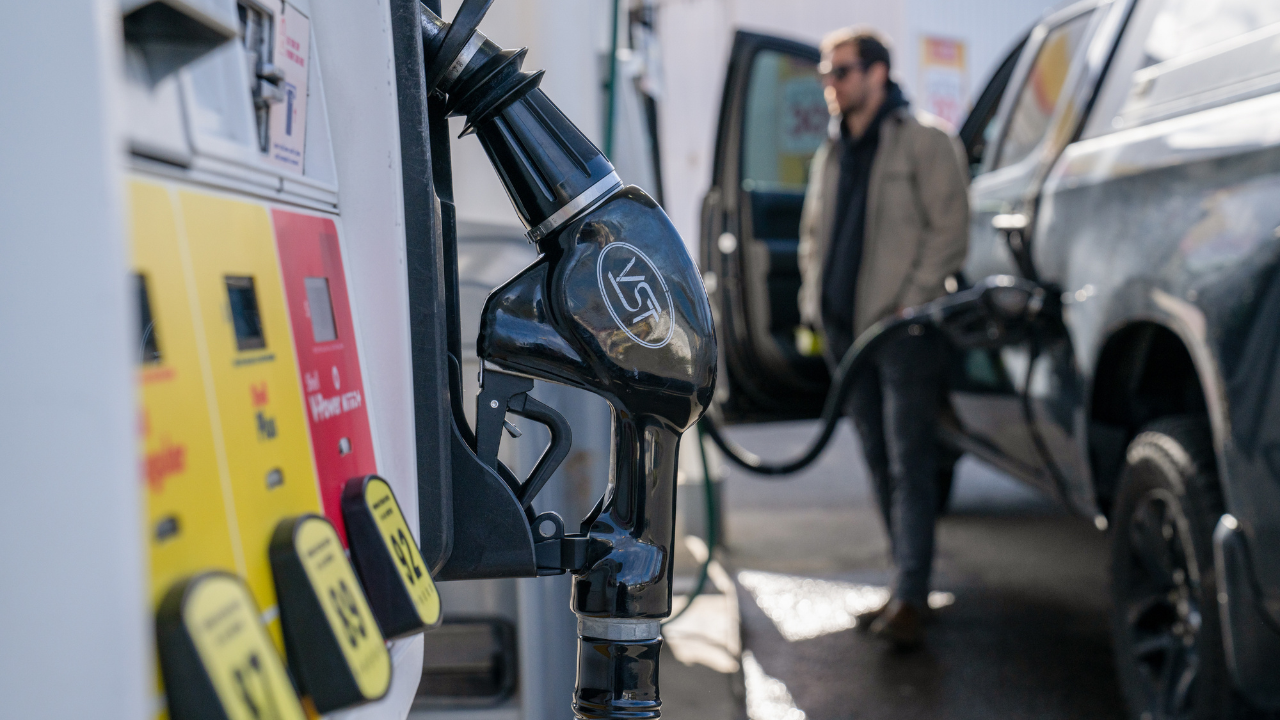
Sir Gerald Ronson’s forecourt empire has delivered a record profit, with the property tycoon’s service station business now valued at more than £1.5bn.
GMR Capital, the parent of petrol forecourt operator Rontec, reported pre-tax profits of £98.4m for the 12 months to the end of September, up 6 per cent on the previous year and surpassing its earlier peak of £95.7m in 2022.
The record came despite revenues slipping 7.7 per cent to £1.56bn, reflecting what the company described as a “challenging economic environment” and cautious consumer spending.
Rontec, which operates 267 service stations across the UK, said rising costs, higher employer national insurance contributions and living wage obligations had squeezed margins. However, lower interest repayments, as borrowing costs eased over the year, helped boost profitability.
The group described the period as “another successful year”, extending a long track record of resilience. GMR has recorded losses only three times in the past three decades, with its most recent annual loss dating back to 2009.
In 2025, property agent Colliers revalued Rontec’s real estate estate at £1.51bn, an increase of £318m. The uplift was attributed partly to investment in site improvements and partly to broader commercial property gains as interest rates fell.
Rontec has been investing heavily in modernising its estate. The company is midway through refurbishing its Shop’N Drive convenience stores and has upgraded its Subway franchises. Its food-to-go offer continues to expand, including 43 franchised outlets of Greggs.
The group has also earmarked tens of millions of pounds for ultra-fast electric vehicle charging hubs. Six forecourts currently host the chargers, with another six planned, although rollout has been slowed by delays in securing high-capacity grid connections and uncertainty in the EV market.
Ronson, 86, who introduced self-service petrol stations to the UK in the 1960s, has previously described Rontec as his “f*** you” business because of its ability to generate cash through economic cycles.
Better known publicly for landmark developments such as the 46-storey Heron Tower in the City of London, Ronson also served six months in prison in the 1990s for his role in the Guinness share-trading scandal.
He remains chairman of GMR, with his wife Gail and daughters Nicole and Lisa also serving on the board.
Company accounts show Ronson spent £164,000 chartering the company jet during the year, along with £82,000 on use of a company-owned yacht. The yacht was subsequently sold for £2m to a company owned by his wife.
Despite headwinds in consumer spending and higher operating costs, Ronson’s forecourt empire has once again demonstrated its ability to generate record returns — reinforcing its reputation as one of Britain’s most resilient private business empires.
Business
Police rebut Tim Picton’s alleged killer’s claims in court
A man accused of manslaughter over former Labor secretary Tim Picton’s death claims he was scared he would be struck first, a belief police say is “unreasonable”.
Business
EMs likely to outperform the US; gold, silver in long-term uptrend: Arvind Sachdeva
2026 so far has been rough for the AI trade. Is the recent turmoil an unravelling of the trade or a temporary reversal?
We fear that it’s more of an unravelling. We think there has been a lot of malinvestment, some extreme capital spending by hyperscalers. We don’t think it’s sustainable. So we’re on the side of caution. We worry that because AI spending has generated such a significant proportion of US GDP growth, if we do see more signs of trouble in the AI space, then it could have some short-term negative implications for the economy and for the general stock market.
The lack of AI has been a reason why India has underperformed. For India, is the current AI concern a boon?
India did better in periods when emerging markets and non-US markets underperformed the US. It still underperformed the US but outperformed those markets. Now, I think the relative performance of India is going to be disappointing relative to non-US markets. I don’t have a view on the length of that potential underperformance, but for now, there are better opportunities elsewhere. On a relative basis, I’m not seeing any real encouraging signs.
Since you track price action very closely, is the adverse market reaction in the AI space right now just the tip of the iceberg?
I think it’s the tremors you get sometimes before the actual earthquake.So what I call them is ‘air pockets’- not in the large companies, but in some of the secondary type companies, you’re seeing these swift declines. That’s often a characteristic of a market that is transitioning-a sector that has led and has been strong may be transitioning into a different stage, maybe a decline. So yes, there are some tremors. So, are you seeing a longer downtrend or even a bear market?
From these US market valuations, future returns are going to be subpar based on history. When we’ve been at these kinds of valuations in the past, expectations for returns are subpar relative to long-term averages.But it’s too early to say bear-market. We may see more rotation in different sectors. So, you could see bear-market-like conditions in some sectors-technology and areas related to mega-cap tech. What’s interesting is we’re seeing rotation to cyclicals, which is counterintuitive. Smaller companies within the S&P are starting to outperform. That’s what we saw in 2000.We would strongly advocate that investors evaluate non-US markets and reallocate capital away from the US. So, which are your top bets outside the US?
Based on almost 15 years of underperformance in emerging markets, we think it’s in a long-term uptrend-possibly a decade. When you’re reversing a 15-year trend of underperformance, it’s unlikely to be a one- or two-year phenomenon.
Do you like emerging markets as a basket, or are there specific markets you like?
As a basket, yes. But within that, Brazil and China look particularly interesting.Brazil fits our thesis because of its resources and commodities. China has been depressed for so long and, technically, looks ready to break out. Brazil has already broken out from a long-term downtrend line.China has been very suppressed and has a very attractive technical profile for a breakout, along with policy support. So, our conviction for the next three to five years would be China. Once global capital recognises a new trend, especially after being heavily concentrated in the US, you could see outsized and sustained returns.
What about gold and silver? Is there more upside?
We think there is more upside for long-term investors. Near-term volatility may persist, but looking beyond that, we are quite bullish. Gold could return to recent highs around $5,600 and potentially into the $6,000s. In the longer term, we have much larger targets. This is a multi-year, decadal story. The foundations are strong because of US debt, concerns about fiat currencies, central bank buying, and an inflationary environment.Gold has also broken out on a relative basis against every major stock index globally. That signals a sustained period of outperformance.Silver has a similar outlook-more volatile, but very attractive. It is both a monetary and strategic metal, with supply deficits and strong demand in technology and solar.
Any long-term targets for silver?
In the intermediate term-one to three years-$250 to $300 would not surprise me. Over the decade, projections are significantly higher.
Within commodities, any other big trades?
Copper is a big one and is a core holding for us. We are also very bullish on critical minerals.
Bitcoin is seeing a slide. Any thoughts there?
On a technical basis, Bitcoin looks very weak. We see Bitcoin trading with the Nasdaq and tech stocks. If one is concerned about tech and software, it doesn’t make sense to be bullish on Bitcoin. It wouldn’t surprise me to see Bitcoin fall 30% from here.
So, which are your top trades for 2026 or the next three years?
Our strongest conviction remains gold and silver. To that, we add critical minerals and energy, particularly energy stocks, which are a contrarian trade right now. Energy stocks are breaking out to all-time highs and starting to outperform the Nasdaq and mega-cap tech. That suggests a new trend and possibly higher oil prices ahead.
The US Dollar seems to be critically poised. What is your outlook?
We think it’s in a long-term decline. It has broken below a 2011 uptrend line. If the DXY (dollar index) breaks below 95, we will have more confidence that the decline is accelerating.A weaker dollar supports emerging markets and commodities. In fact, we think emerging markets and commodities may be leading the dollar lower.
Business
JB Hi-Fi's tech sales up but caution remains over retail market
Mobile phone, computer, video game and small appliance sales have pushed up the profit for electronics giant JB Hi-Fi, which recorded more than $6 billion in sales over six months.
Business
Global Markets | China’s stock bull run falters with earnings set to underwhelm
Corporate profit pre-announcements have shown a “major deterioration” for the last quarter of 2025, a Morgan Stanley analysis shows. The latest economic indicators underscore weak consumer demand as some government stimulus programs are scaled back, according to Nomura Holdings. These factors are fuelling concern the nine-day holiday will fail to deliver its typical boost to earnings as the economic uncertainty continues to erode consumer spending.
“Sentiment on Chinese stocks is going through a weak patch,” said Vey-Sern Ling, managing director at Union Bancaire Privee in Singapore. That’s “partly because investors are unwilling to take risks before the long holidays, and also because of a lack of new catalysts, seemingly heightened regulatory scrutiny recently, and continued intense competition.”
The MSCI China Index has risen just 0.8% this year, while the MSCI All World Index has gained 2.8%. The contrast is starker within Asia: South Korea’s key gauge has surged 31% and Taiwan’s has jumped 16%.
China’s earnings season is already shaping up as a disappointment.
Bloomberg Fourth-quarter pre-announcements from more than 2,000 mainland-listed A-share companies show negative alerts outnumber positive ones by 14.8%, versus a net negative 4.8% in the second quarter, according to Morgan Stanley. Smaller firms fared worst – particularly in real estate and consumer-focused sectors-strategists including Chloe Liu and Laura Wang wrote in a note this month.
Slowing economic growth is a key drag on profits. China’s growth cooled to 4.5% last quarter, from a year earlier, the weakest pace since the country reopened from Covid lockdowns in late 2022. Producer prices fell 1.4% in January from a year ago, extending a deflationary streak that began in late 2022, while purchasing managers’ indexes signaled an unexpected slowdown.“The significant miss in both manufacturing and non-manufacturing PMIs suggests insufficient underlying demand,” Lu Ting, chief China economist at Nomura in Hong Kong, said this month. “Consumption is facing clear headwinds from the scaled-back trade-in stimulus program this year.”
BloombergEconomic data may take a back seat in the coming weeks as the statistics bureau typically combines January and February figures to smooth out distortions caused by the irregular timing of the Lunar New Year holiday. Major policy announcements are also unlikely before the National People’s Congress in March.
Increased regulatory intervention is adding to market caution. Authorities last month tightened margin financing rules in an effort to curb speculative trading and reduce the risk of future boom-and-bust cycles.
Diverging Growth
At the same time, earnings are diverging sharply across industries, complicating stock selection.
Metal miners are benefiting from surging prices, while companies in the artificial intelligence supply chain and firms supported by the government’s campaigns to rein in a price war are also gaining favor, according to a report from China Merchants Securities Co.
Miner CMOC Group Ltd. said last month its preliminary net income jumped about 50% for the full year, while software maker Iflytek Co. reported a gain of between 40% and 70% for the same period. In contrast, shares of electric-vehicle makers BYD Co. and Great Wall Motor Co. both slumped following lackluster January sales numbers.
Overall A-share earnings are expected to have grown about 6.5% year-on-year for 2025, compared with a drop of 3% for 2024, according to China International Capital Corp. China Merchants Securities also predicts single-digit growth.
The profit increase is “largely attributable to policy support and cyclical factors, rather than signaling a fundamental or structural shift in market conditions,” said Shen Meng, a director at Beijing-based investment bank Chanson & Co.
-
Sports4 days agoBig Tech enters cricket ecosystem as ICC partners Google ahead of T20 WC | T20 World Cup 2026
-
NewsBeat6 days agoMia Brookes misses out on Winter Olympics medal in snowboard big air
-
Tech5 days agoSpaceX’s mighty Starship rocket enters final testing for 12th flight
-
Business7 days agoWeight-loss jabs threaten Greggs’ growth, analysts warn
-
Sports7 days agoBenjamin Karl strips clothes celebrating snowboard gold medal at Olympics
-
Tech23 hours agoLuxman Enters Its Second Century with the D-100 SACD Player and L-100 Integrated Amplifier
-
Video3 days agoThe Final Warning: XRP Is Entering The Chaos Zone
-
Crypto World6 days agoU.S. BTC ETFs register back-to-back inflows for first time in a month
-
NewsBeat7 days agoResidents say city high street with ‘boarded up’ shops ‘could be better’
-
Crypto World4 days agoPippin (PIPPIN) Enters Crypto’s Top 100 Club After Soaring 30% in a Day: More Room for Growth?
-
Crypto World2 days agoBhutan’s Bitcoin sales enter third straight week with $6.7M BTC offload
-
Video4 days agoPrepare: We Are Entering Phase 3 Of The Investing Cycle
-
Crypto World5 days agoBlockchain.com wins UK registration nearly four years after abandoning FCA process
-
Sports6 days ago
Kirk Cousins Officially Enters the Vikings’ Offseason Puzzle
-
Crypto World6 days agoEthereum Enters Capitulation Zone as MVRV Turns Negative: Bottom Near?
-
NewsBeat9 hours agoThe strange Cambridgeshire cemetery that forbade church rectors from entering
-
Crypto World5 days agoCrypto Speculation Era Ending As Institutions Enter Market
-
Business4 days agoBarbeques Galore Enters Voluntary Administration
-
Crypto World3 days agoEthereum Price Struggles Below $2,000 Despite Entering Buy Zone
-
Politics5 days agoWhy was a dog-humping paedo treated like a saint?