Connect with us
DAPA Banner

Business

AI Dominance Fuels Strong Buy Consensus Despite High Valuation

Published

on

Microsoft CEO Satya Nadella says the US tech giant plans to invest $3 billion in India on AI and cloud infrastructure over the next two years

SANTA CLARA, Calif. — Nvidia Corp. remains one of the most compelling yet polarizing investment stories in 2026, with Wall Street analysts overwhelmingly recommending investors buy shares of the AI chip leader even as the stock trades at elevated valuations following massive gains driven by insatiable demand for its GPUs.

Tech giants in the AI race have been spending billions of dollars for GPUs made by Nvidia, considered a leader when it comes to chips that power the technology
Nvidia Stock Buy or Sell in 2026: AI Dominance Fuels Strong Buy Consensus Despite High Valuation
AFP

As of late April 2026, Nvidia’s consensus rating stands as Strong Buy from dozens of analysts covering the stock. The average 12-month price target hovers around $268–$275, implying roughly 30–35% upside from recent trading levels near $200. Individual targets range from conservative lows near $210 to optimistic highs of $380, reflecting varying assumptions about the pace of AI infrastructure spending.

The bull case is straightforward and powerful. Nvidia continues to dominate the artificial intelligence accelerator market with its Blackwell and Hopper architectures. Data Center revenue has exploded, powering massive hyperscale buildouts by companies like Microsoft, Google, Meta and Amazon. Recent quarterly results showed revenue exceeding $68 billion in one period, with gross margins remaining exceptionally strong above 70%. Analysts project continued robust growth through 2027 as inference workloads and enterprise AI adoption accelerate.

CEO Jensen Huang has repeatedly emphasized that the company is still in the early innings of the AI revolution. New product cycles, including the Rubin architecture expected later in 2026, keep Nvidia firmly ahead of competitors. Partnerships, software moats through CUDA, and expanding total addressable market in robotics, autonomous vehicles and sovereign AI initiatives provide multiple growth vectors.

Several major banks and research firms have raised price targets in recent months. Rosenblatt, JPMorgan, Bank of America and others see significant upside, with some calling for $300+ by year-end. The consensus among more than 50 analysts shows overwhelming Buy or Strong Buy ratings, with very few Holds and almost no Sells.

Advertisement

Bears, however, highlight legitimate risks. Nvidia’s valuation — trading at premium forward multiples — leaves little room for disappointment. Competition from AMD, custom chips from hyperscalers, and potential margin pressure as the market matures could weigh on returns. Geopolitical tensions, export restrictions to China and any slowdown in Big Tech capital expenditure represent meaningful headwinds. Some analysts caution that expectations may already be too high.

For long-term growth investors, the case for buying Nvidia remains compelling. The company sits at the center of the most transformative technology shift since the internet. Strong balance sheet, exceptional execution under Huang, and a widening technological lead support continued outperformance. Many portfolio managers view it as a core holding for exposure to AI infrastructure.

Shorter-term traders or more conservative investors might exercise caution at current levels. Pullbacks on any perceived AI spending moderation could offer better entry points. Diversification is essential given the stock’s volatility and concentration risk in a single technology theme.

Institutional ownership remains very high, and retail enthusiasm continues. Options activity shows bullish sentiment overall, though elevated implied volatility reflects uncertainty around upcoming product cycles and macro factors. The stock has delivered extraordinary returns over the past several years, but past performance does not guarantee future results.

Advertisement

Nvidia’s trajectory in 2026 will likely be shaped by successful execution on next-generation platforms, sustained data center demand and the company’s ability to defend its massive market share. Positive developments on these fronts could drive shares significantly higher, while any stumbles might lead to sharp corrections typical of high-growth tech names.

Ultimately, whether to buy or sell Nvidia in 2026 depends heavily on individual risk tolerance, time horizon and conviction in the AI secular trend. Growth-oriented investors with a multi-year perspective generally see it as a Buy. Those seeking stability or concerned about valuations may prefer to Hold existing positions or wait for dips. Most advisors recommend sizing positions thoughtfully within a diversified portfolio.

As the AI supercycle continues unfolding, Nvidia stands as the clearest and most dominant beneficiary. With strong analyst support, robust fundamentals and multiple growth drivers, the company offers significant potential for patient investors — even after years of spectacular gains. The debate is not whether Nvidia will grow, but how much and at what valuation the market is willing to pay.

Advertisement
Continue Reading
Click to comment

You must be logged in to post a comment Login

Leave a Reply

Business

Patriot National Bancorp director buys common stock

Published

on


Patriot National Bancorp director buys common stock

Continue Reading

Business

Clock ticks on Spirit Airlines as bondholders weigh Trump bailout

Published

on

Clock ticks on Spirit Airlines as bondholders weigh Trump bailout
Why bailing out Spirit Airlines could be politically risky for Trump

Spirit Airlines‘ future is hanging in the balance over the next week as President Donald Trump said the government could bail out the airline, as the struggling discount carrier‘s lenders assess a potential deal.

“We’re thinking about doing it, helping them out, meaning bailing them out, or buying it,” Trump told reporters in the Oval Office on Thursday.

“I’d love to be able to save those jobs. I’d love to be able to save an airline. I like having a lot of airlines, so it’s competitive,” Trump said.

The White House and major bondholders either didn’t immediately comment or declined to comment on the matter.

Advertisement

Trump told reporters that “when the price of oil goes down,” the government could “sell [Spirit] for a profit.”

Spirit expected to emerge from bankruptcy midyear, but that was before the U.S.-Israel attacks on Iran led to a surge in jet fuel costs. Spirit had a nearly $28.3 million operating loss in February, according to a court filing, which was before the fuel price spike hit carriers — and travelers’ wallets.

Spirit, the iconic budget carrier known for its bright yellow planes and bare-bones service that became a punchline for late-night comedians, has struggled to survive. The industry’s costs ballooned after Covid, as customer tastes changed for more upmarket offerings and international destinations.

Spirit has aggressively axed its costs, selling aircraft and shrinking its network. Last May, Spirit operated 19,575 flights, according to aviation data-firm Cirium. This May, it’s operating 9,353.

Advertisement

A planned acquisition of Spirit by JetBlue Airways was successfully challenged by the Biden administration, which the Trump administration said hurt Spirit.

“Spirit Airlines would be on a much firmer financial footing had the Biden administration not recklessly blocked the airline’s merger with JetBlue,” a White House spokesman said by email. “The Trump administration continues to monitor the situation and overall health of the U.S. aviation industry that millions of Americans rely on every day for essential travel and their livelihoods.”

Will others follow suit?

Some industry members and analysts have suggested other airlines, especially low-cost carriers, could seek similar assistance from the government.

Low-cost airlines met with Transportation Secretary Sean Duffy earlier this week to discuss the current surge in fuel costs, people familiar with the matter told CNBC.

Advertisement

The Trump administration has taken stakes in companies it views as a national security interest, while companies from automakers to banks to the airline industry as a whole have received bailouts in the past, but it’s highly unusual that the government would rescue a single company.

Delta Air Lines and United Airlines account for most of the airline industry’s profit in the U.S., spending years and billions of dollars to successfully court a less price sensitive clientele that is willing to pay up for roomier seats and other perks, as well as broad international networks. Many other carriers, including Spirit, have tried to catch up in recent years.

“We wonder if a potential Spirit deal could become a facility of last resort that other challenged carriers could seek in the future,” Barclays analyst Brandon Brandon Oglenski said in a note Thursday.

Read more about Spirit Airlines’ recent challenges

Possible deal

The terms of a tentative deal are for a $500 million loan that could eventually give the government a 90% stake in the Florida-based carrier, people familiar with the matter told CNBC. The potential plan would also put the government ahead of other investors, the people said, requesting anonymity to talk about the terms.

Advertisement

A U.S. bankruptcy court hearing to discuss the possible deal could be set for as early as Monday, according to comments in court on Thursday.

Mike Stamer, an Akin attorney who represents bondholders in the bankruptcy case, confirmed in court Thursday that “we did, in fact, receive a copy of the term sheet” for the potential deal with a loan from the U.S. government, a sign of how advanced the talks are.

The deal would also allow the U.S. government to select a board member, a person familiar with the potential terms told CNBC.

Spirit’s labor unions are also pushing for a deal.

Advertisement

“Any assertion that Spirit should just liquidate is only going to harm workers, passengers, and further strain our economy,” the Association of Flight Attendants-CWA said Thursday. “It’s unnecessary and mean spirited — when just a little help can stave off massive harm.”

Spirit’s lawyer, Marshall Huebner of Davis Polk, said in bankruptcy court Thursday that the loan would help Spirit get to “standalone fighting shape” but could also set it up for a potential merger.

Acquisition talks have failed before, however, most recently, with Frontier Airlines, which originally planned to merge with Spirit until a surprise all-cash offer by JetBlue.

Spirit’s challenges might also not go away, said Conor Cunningham, Melius Research airline analyst.

Advertisement

“How deep does he want to go?” he said of Trump and the possible rescue deal. “$500 million is probably not enough.”

Choose CNBC as your preferred source on Google and never miss a moment from the most trusted name in business news.
Continue Reading

Business

How Consumer Habits Are Forcing the UK Entertainment Sector to Innovate

Published

on

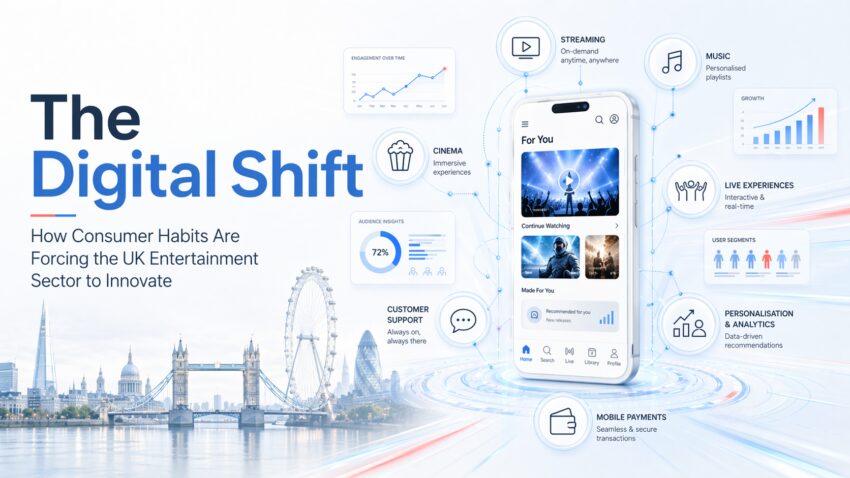
The Digital Shift: How Consumer Habits Are Forcing the UK Entertainment Sector to Innovate

British consumers have stopped being patient. The average UK adult now abandons a mobile app that takes longer than three seconds to load, watches streaming content across four separate subscriptions, and expects a customer service response within the hour rather than the working day.

The cumulative effect on the entertainment sector has been the most significant behavioural shift since the arrival of broadband, and operators across every vertical — from cinemas to casinos, from Spotify to Sky — have spent the past five years rebuilding their businesses around a consumer who will churn for five pence of friction.

According to Ofcom’s Online Nation research, UK adults now spend close to four hours a day online, the majority of it on mobile devices, with attention fragmented across a growing catalogue of competing services. The strategic lesson underneath this pattern is not really about technology. It is about retention economics, and it applies well beyond entertainment. Any UK business competing for discretionary consumer spend — a point explored in our ongoing coverage of UK consumer behaviour trends — is operating in the same environment, facing the same expectations, and learning the same lessons the hard way.

The retention calculus has inverted

The Digital Shift: How Consumer Habits Are Forcing the UK Entertainment Sector to Innovate

For most of the twentieth century, consumer businesses grew by acquiring new customers. Retention mattered, but it was a secondary metric. The assumption was that a reasonable product and a competent experience would keep most customers in place, and marketing spend was directed at the top of the funnel.

The digital shift inverted this. Customer acquisition costs across UK consumer categories have risen sharply, driven by Meta and Google ad inflation, data protection constraints that have narrowed targeting precision, and market saturation in most verticals. At the same time, switching costs for consumers have collapsed — comparison tools, portable accounts, and one-tap sign-ups mean that leaving one provider for another is now a three-minute decision rather than a three-week one.

Advertisement

The commercial consequence is that retention is now the primary growth lever in most UK entertainment businesses. The streaming cohort — Netflix, Disney+, Spotify, DAZN, Sky — spend materially more on product and personalisation than on acquisition marketing. Licensed UK gambling operators, arguably the sector under the heaviest retention pressure given that regulation continuously reduces their acquisition toolkit, have quietly become some of the most sophisticated customer-experience engineers in the British consumer economy. Independent review sites evaluating the best online roulette UK platforms publish detailed breakdowns of how these operators structure onboarding, retention mechanics, and responsible-play architecture — and the patterns on display are the result of a decade of forced innovation under regulatory pressure no other UK consumer sector has yet faced.

What high-retention entertainment businesses are doing differently

The Digital Shift: How Consumer Habits Are Forcing the UK Entertainment Sector to Innovate

Three patterns recur across the most successful UK operators, regardless of vertical.

First, they have moved decisively to mobile-first product design. This is more than responsive layouts. It means rebuilding core flows — registration, payment, content discovery, support — around the reality that the majority of sessions now originate on a handset, often in short bursts of attention during commutes, breaks, or the half-hour between putting children to bed and falling asleep. Products designed for a desktop user with uninterrupted time fail silently in this environment. The operators winning are those who have redesigned their funnels assuming the user has forty seconds, one thumb, and an imperfect 4G signal.

Second, they have invested heavily in personalisation infrastructure. The old model — segment the audience into five or six personas and serve each a different homepage — is dead. Modern personalisation operates at the individual session level, adjusting content surfacing, messaging tone, promotional offers, and even interface complexity based on behavioural signals gathered in real time. Spotify’s weekly playlists, Netflix’s thumbnail variations, and the dynamic landing pages used by leading gambling operators are all manifestations of the same underlying investment in behavioural data infrastructure.

Advertisement

Third, they have shortened the feedback loop between product and commercial teams. Traditional consumer businesses release product updates quarterly and measure success in pooled cohort data. The high-retention operators run continuous experimentation programmes, A/B testing hundreds of changes per month with commercial KPIs visible to product teams in near-real time. The strategic effect is that product decisions stop being bets and start being iterations.

Regulation is not the enemy of retention

The shift above has happened simultaneously with a regulatory environment that has become substantially more demanding across UK consumer sectors. Financial services has the FCA’s Consumer Duty. Online platforms have the Online Safety Act. Gambling has a continuously tightening regime under the Gambling Commission’s LCCP framework. Food delivery faces evolving gig-economy rules. Even retail is navigating expanded product safety, digital markets, and advertising standards obligations.

The operators coping best with this compression have learned a counterintuitive lesson. Regulation is not the enemy of retention, and in some cases improves it. A customer who trusts the operator to handle their data well, flag risks honestly, and resolve complaints quickly is a customer who stays. The regulatory frameworks force the kind of customer-centric behaviours that sophisticated retention teams were trying to instil anyway. The businesses struggling are those that treated compliance as a cost centre rather than a product investment, and now find themselves retrofitting trust into a product architecture built for extraction.

This is particularly visible in gambling, where the regulatory envelope has tightened every year since 2020 — advertising restrictions, feature bans on auto-spin and turbo play, deposit thresholds triggering affordability checks, and a broader cultural expectation of demonstrable consumer care. Operators who responded by rebuilding their product around responsible engagement rather than maximised session length have retained customer bases that their more aggressive competitors have bled.

Advertisement

Live engagement as the new differentiator

The newest competitive frontier across UK entertainment is live, interactive content — and the strategic reasoning behind it is worth understanding even for businesses that will never livestream anything.

Passive content is increasingly commoditised. Every major streaming service has roughly the same library of prestige drama. Every bookmaker has roughly the same Premier League markets. Every music service has roughly the same fifty million tracks. Differentiating on catalogue is almost impossible at scale, and pricing power collapses accordingly.

Live, interactive engagement breaks this parity. A live dealer roulette table, a Peloton class with a real instructor, a Twitch stream with chat, a live podcast recording with audience questions — these experiences cannot be commoditised because each one is genuinely unique, time-bounded, and shared with other participants. The product becomes the moment, not the content, and the moment cannot be replicated by a competitor the following Tuesday.

The implications generalise. Any UK consumer business whose product could plausibly be delivered as a live or interactive experience should be investigating that option, because the retention premium on live engagement consistently exceeds the cost of producing it. Retail has learned this through shoppable livestreams. Fitness has learned it through class formats. Entertainment, broadly defined, is the next category where this lesson will compound.

Advertisement

The lesson for the broader UK economy

The UK entertainment sector is, in one respect, a preview of what every consumer-facing UK business will face within three to five years. The same acquisition cost pressure, the same mobile-first expectations, the same personalisation arms race, the same regulatory compression, and the same shift toward live and interactive formats will reach retail, financial services, hospitality, professional services, and beyond. The sectors that adapt earliest will retain margin. The sectors that treat the shift as a temporary disruption will lose it.

The strategic insight is simple and uncomfortable. The British consumer is not becoming more demanding because consumers have changed — the underlying psychology is the same as it ever was. They are becoming more demanding because the operators who set the benchmark in their daily digital lives have raised it to a level that other sectors will be measured against whether they like it or not. A utility company is now being compared, implicitly, to Monzo. A law firm is being compared to Gumtree. A specialist retailer is being compared to Amazon.

The entertainment sector got here first because the pressure hit first. The rest of the UK economy is catching up to the same conversation, and the operators watching closely are the ones who will survive it.

Advertisement

Continue Reading

Business

Traders bet on calendar spread as Nifty moves in a tight range

Published

on

ET Search
MUMBAI: A trading combination involving Nifty options is gaining prominence among savvy trading desks of institutional investors. The strategy, known as calendar spread, where traders simultaneously sell options contracts in the current month and purchase in the next month, is being recommended by brokers to institutional clients, who see sharp moves in Nifty options’ implied volatility — a key component of options pricing — in September.

“There is scope for money to be made by selling current month vols (implied volatility) and buying September vols,” said Girish Patil, manager-derivatives, Antique Stockbroking. In this spread strategy, traders use the premium they receive by selling the current series to part-finance the cost of buying options in the next month. “With only a few more days for the August series expiry, vols are unlikely to jump in this series,” Patil said.

Futures and options contracts for the August series will expire on 26th while the September series will expire on 30th next month.

Options sellers, who pocket the premium from the buyer, prefer fewer trading days in a trading month because of time value — another key aspect of options pricing. Time value of options decays closer to expiry of contracts, resulting in limited movements in options prices.

Advertisement

Selling Nifty 5500 calls options in the August series and buying the same contract in the September series is a good strategy in this kind of a market, said Shailesh Kadam, AVP-derivatives, PINC Research.


“This strategy bets that the Nifty will be range-bound and will not move above 5500 in the August series, while the undertone is positive next month,” Kadam said.
In the past one month, the Nifty has largely moved in a tight band between 5350 and 5450, resulting in the volatility index — a measure of traders’ expectations of near-term risks in the market — moving in the 15-20% band, the lowest range since January 2008. This indicates traders are comfortable about the market levels in the near-term.

Brokers said that options traders have struggled to make money, of late, in the absence of sharp index movements. “Vol buyers (buyers of options) have lost their money, while sellers don’t have the courage to sell vols at such low levels,” said the head of derivatives at an institutional broking house. “So, unless there is a sharp move, calendar spread appears to be the best strategy,” he said.

Add ET Logo as a Reliable and Trusted News Source



Continue Reading

Business

Sigma Foods, S.A.B. de C.V. (ALFFF) Q1 2026 Earnings Call Transcript

Published

on

OneWater Marine Inc. (ONEW) Q1 2026 Earnings Call Transcript

Sigma Foods, S.A.B. de C.V. (ALFFF) Q1 2026 Earnings Call April 24, 2026 11:30 AM EDT

Company Participants

Hernan Lozano – Vice-President of Investor Relations
Rodrigo Martinez – Chief Executive Officer
Roberto Olivares – Chief Financial Officer

Conference Call Participants

Advertisement

Fernando Olvera Espinosa de los Monteros – BofA Securities, Research Division
Enrique Maguero
Fernando Froylan Mendez Solther – JPMorgan Chase & Co, Research Division
Ulin Sarawate
Felipe Ucros Nunez – Scotiabank Global Banking and Markets, Research Division

Presentation

Operator

Advertisement

Good morning, and welcome to the Sigma Foods First Quarter 2026 Earnings Conference Call. [Operator Instructions] As a reminder, today’s call is being recorded. A replay will be available on Sigma Foods Investor Relations website later today. I will now turn the call over to Hernan Lozano, Sigma Foods IRO.

Hernan Lozano
Vice-President of Investor Relations

Thank you, operator, and good morning to everyone joining us today. Further details regarding our first quarter results can be found in our press release and earnings presentation that were distributed yesterday. Both documents are available in the Investor Relations section of our website. Before we begin, please note that today’s discussion will include forward-looking statements. These statements are based on current expectations and assumptions that are subject to risks and uncertainties. Actual results may differ materially. Sigma Foods undertakes no obligation to update these statements.

Advertisement

It is my pleasure to participate in today’s call together with Rodrigo Fernandez, Chief Executive Officer; and Roberto Olivares, Chief Financial Officer. Our agenda today is straightforward. Rodrigo will begin with a strategic and operational overview of the quarter. Roberto will then review our financial performance in more detail, and we will conclude with a Q&A session.

With that, I’ll turn the call over to Rodrigo.

Rodrigo Martinez
Chief Executive Officer

Advertisement

Thank you, Hernan, and good morning, everyone.

2026 started on a strong

Advertisement
Continue Reading

Business

Nebius Q1 Preview: The Market Is Saying This Is An Outlier Among Outliers

Published

on

Nebius Q1 Preview: The Market Is Saying This Is An Outlier Among Outliers

Nebius Q1 Preview: The Market Is Saying This Is An Outlier Among Outliers

Continue Reading

Business

Inside Floors To Your Home with Dan Kahn

Published

on

Inside Floors To Your Home with Dan Kahn

Dan Kahn is the President and Co-Owner of Floors To Your Home, a four-generation family business founded in 1921. Based in Indianapolis, the company has built a reputation over more than 100 years for combining strong buying discipline with consistent customer service.

Kahn grew up around the business and stepped into leadership in 1986 alongside his brother, Marshall. Since then, he has helped guide the company through major changes in the retail and ecommerce landscape while staying rooted in its original values.

“My company was founded on the highest ethical principles by my grandfather,” Kahn says. “We’ve kept those strong traditions of honesty and excellence in customer service in place for future generations.”

One of Kahn’s key contributions has been reinforcing a warehouse-first business model. Rather than relying on third-party suppliers, the company owns and stores the majority of its inventory. This allows for faster shipping and more direct control over the customer experience.

“We own and warehouse 99% of all the products you see displayed on our website,” he explains.

Advertisement

Kahn has also leaned into large-scale closeout buying. By purchasing discontinued and overstock flooring in bulk, the company has created a system that operates differently from many traditional retailers.

His leadership reflects a practical approach to growth. Focus on what works. Improve operations over time. Stay consistent.

Today, Floors To Your Home continues to evolve under his guidance, with the fourth generation now involved in the business.

A Conversation with Dan Kahn of Floors To Your Home

Q: You come from a long line of business owners. How did that shape your career?

I grew up around the business, so I saw how it worked from an early age. My grandfather founded the company in 1921. After he passed in 1948, my father took over and ran it until 1986. Then my brother and I stepped in.

Advertisement

You learn a lot just by being around it. You see how decisions are made. You see how customers are treated. That stays with you.

“My company was founded on the highest ethical principles by my grandfather,” Kahn says. “We’ve kept those strong traditions in place.”

Q: What were the biggest changes when you took over in 1986?

Retail was already starting to shift. Bigger chains were growing. Competition was increasing. We had to think carefully about how we would stay relevant.

We didn’t try to compete on everything. We focused on what we could do well.

Advertisement

That meant buying smart and building strong relationships with suppliers.

Q: One of your key strategies is buying closeout flooring. How did that come about?

It developed over time. We saw opportunities in discontinued and overstock products. Manufacturers and large retailers often need to move inventory quickly.

“Are you familiar with clothing or shoe outlet stores?” Kahn says. “We are just like those outlet stores, but we sell flooring.”

Once we leaned into that model, it became a core part of the business.

Advertisement

Q: You also chose to warehouse most of your inventory. Why was that important?

Control. That’s the main reason.

A lot of companies don’t actually own what they sell. They list products and then order them from someone else after the customer buys.

“We own and warehouse 99% of all the products you see displayed on our website,” Kahn says.

That gives us more control over shipping, accuracy, and communication.

Advertisement

Q: What impact does that have on the customer experience?

It reduces uncertainty.

If you own the product, you know exactly what you have. You know when it will ship. You can check it before it goes out.

“We double and triple check before any flooring is shipped out,” Kahn says. “We will personally call you to let you know that your flooring has shipped.”

It’s about making the process clearer for the customer.

Advertisement

Q: Flooring is a major purchase. How do you help customers feel confident buying online?

We try to give them as much information as possible.

We photograph and scan all our products ourselves. We also encourage customers to order samples.

“Nothing compares to holding a piece of the actual flooring in your home,” Kahn says.

It helps them make a more informed decision.

Advertisement

Q: Your inventory is always changing. How do you manage that?

That’s part of the business. When you’re dealing with closeouts, you can’t always restock the same product.

“With many of our offers, once we run out we may never get to bring them back in,” Kahn says.

We focus on keeping a strong range of options available and bringing in new inventory regularly.

Q: What has leadership meant to you over the years?

It’s about consistency.

Advertisement

You don’t need to reinvent everything. You need to understand what works and build on it.

We’ve stayed focused on buying well, serving customers, and running the business responsibly.

Q: What do you think has helped the business last for over 100 years?

A long-term mindset.

We’re not just thinking about today. We’re thinking about the next generation.

Advertisement

“Our flooring experts have years of experience,” Kahn says. “They can help you pick the right floor for the right environment.”

That kind of knowledge and service builds trust over time.

Advertisement
Continue Reading

Business

Protein demand helping to offset dairy cost pressures

Published

on

Protein demand helping to offset dairy cost pressures

Dairy executives optimistic despite shrinking margins.

Continue Reading

Business

SBI shares on gaining spree; hit record high

Published

on

ET Search

In the past two days, the scrip recorded a gain of over 9 per cent on the BSE, making its investors richer by a whopping Rs 15,000 crore.

Continue Reading

Business

Business Roundtable to lead corporate engagement at G20

Published

on

Business Roundtable to lead corporate engagement at G20

FIRST ON FOX: The White House is tapping the Business Roundtable to lead corporate engagement during the United States’ upcoming G20 host year, marking a shift away from the traditional Business 20 framework historically organized by the U.S. Chamber of Commerce.

Administration officials say the decision is aimed at streamlining business participation and aligning it more closely with the Trump administration’s economic priorities, including deregulation, energy expansion and innovation-driven growth.

Advertisement

In a statement, White House spokesperson Olivia Wales told FOX the Business Roundtable, comprised of leading U.S. CEOs, would play a central role in advancing a pro-growth agenda during the G20 cycle.

WHITE HOUSE ACCUSES CHINA OF ‘INDUSTRIAL-SCALE’ AI TECHNOLOGY THEFT WEEKS AHEAD OF TRUMP-XI SUMMIT

G20 in South Africa.

South African President Cyril Ramaphosa (R) chairs a meeting as heads of state and government met on the second day of the G20 Leaders’ Summit on Nov. 23, 2025, in Johannesburg, South Africa. (Per-Anders Pettersson/Getty Images)

“Business Roundtable, led by top U.S. CEOs, is the right choice to champion business engagement during the United States’ G20 year,” Wales said, pointing to what the administration views as a successful economic model built on trade deals, expanded domestic energy production and private-sector job creation.

PIRRO CLOSES INVESTIGATION INTO FEDERAL RESERVE OVER BUILDING PROJECT

Advertisement

“The president’s tried-and-true policies are a model for the entire world, and the United States looks forward to discussing how other countries can replicate this success,” she added.

Under the new structure, the Business Roundtable will host a major CEO-focused event at Trump National Doral on Dec. 12, just ahead of the G20 Leaders’ Summit scheduled for Dec. 14 and 15.

Trump National Doral sign outside resort

A sign reading Trump National Doral is seen on the grounds of the golf course owned by Donald Trump. (Joe Raedle/Getty Images)

The gathering is expected to include more than 120 Business Roundtable member CEOs, along with at least one chief executive from each G20 economy and invited guest nations. Discussions will center on key themes such as growth through deregulation, energy dominance and innovation.

Additional business engagement events are planned throughout the year, including sessions tied to Business Roundtable board meetings in Washington, D.C., as well as programming alongside the G20 Finance Ministers’ meeting in Asheville, North Carolina, with Treasury Secretary Scott Bessent.

Advertisement

The move effectively sidelines the B20 process, which has traditionally served as the primary vehicle for business input into G20 deliberations.

OSCAR DE LA HOYA JOINS THE BATTLE ON CAPITOL HILL TO REINVENT BOXING

The B20 changes hands, led by business groups in the host country as the meeting moves around among G20 members. 

Administration officials described the existing structure as “cumbersome” and “bureaucratic,” arguing the result was unproductive.

Advertisement
Former President, Donald Trump speaks at II Toro E La Capra on Aug. 23, 2024, in Las Vegas, Nevada.

Trump administration officials described the existing structure as “cumbersome” and “bureaucratic.” (Photo by Ian Maule/Getty Images)

Chamber officials tell FOX Business they agree. The B20 will still be held in a revamped format in the U.S. this year.

Jessica Boulanger, the chamber’s senior vice president and head of communications and public affairs, said in a statement to FOX Business that the organization is working to host a “B20 unlike any other.”

“We’re working with top government and business leaders to hold B20 USA in November with dialogue that will be focused on a ‘back to basics’ agenda consistent with the Trump administration’s vision,” Boulanger said.

“We welcome the engagement of the BRT and other organizations to support pro-growth dialogue between government and business,” she added.

Advertisement

CLICK HERE TO READ MORE FROM FOX BUSINESS

A source familiar with the plans for the B20 told FOX Business that Ross Perot Jr. will be the chairman of this year’s conference. 

The move reflects a broader shift in how business voices are included in global economic discussions during the U.S. host year, giving top CEOs a more direct role and aligning their input more closely with the administration’s priorities.

Advertisement
Continue Reading

Trending

Copyright © 2025