
Business
AI will supercharge sports team valuations


A version of this article appeared in CNBC’s Inside Alts newsletter, a guide to the fast-growing world of alternative investments, from private equity and private credit to hedge funds and venture capital. Sign up to receive future editions, straight to your inbox.
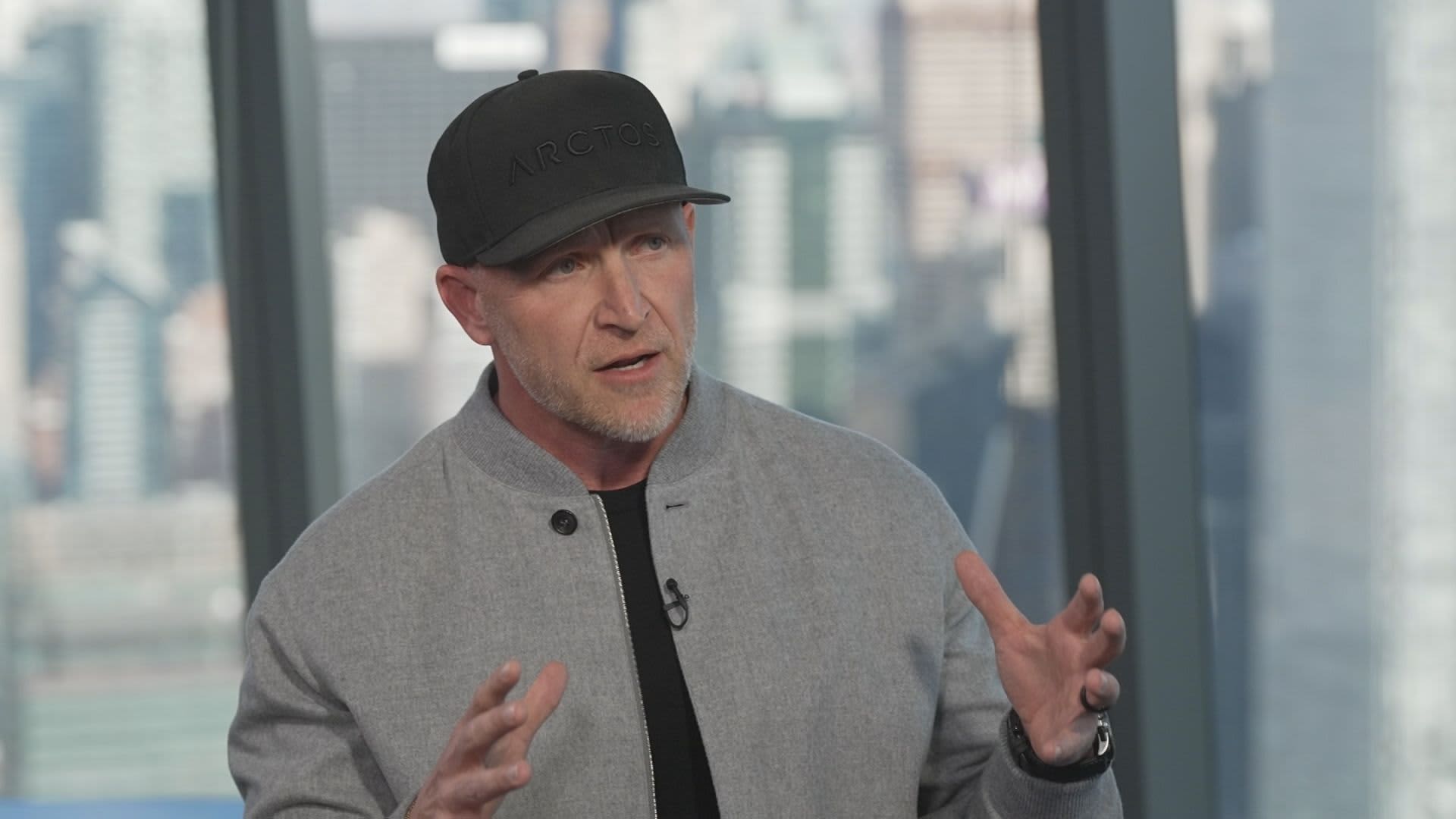
The rise of artificial intelligence is likely to boost the valuations of sports teams and media rights, making sports an even more attractive asset class for investors, according to Ian Charles, managing partner of Arctos Partners.
With AI-generated video and online content becoming more ubiquitous, live sports will become even more important in the battle for attention, Charles told Inside Alts. Since fans will pay more for live experiences and in-person games, team values will continue to climb and generate strong returns, he said.
“Sport is the only must-see, appointment-viewing content,” Charles said. “In a world where people are increasingly lonely and looking for a connection — for the communal, tribal connection you get from watching a sporting event with your friends, being part of your community, crying and screaming and cheering — the value of that to the media landscape and ecosystem is just becoming exponential.”
Arctos is at the center of an investing boom in sports. With $15 billion in assets under management, the Dallas-based firm has helped pioneer the growing role of private equity in sports team ownership and capital raises. It’s the only private equity firm approved to own equity in teams across all five major North American professional leagues – the NFL, NBA, MLB, NHL and MLS.
The firm has gained such a big lead in sports that it’s become an attractive target for other private equity firms. Bloomberg reported last month that private equity giant KKR has agreed to buy Arctos at a $1 billion valuation, keeping Charles and other top management. Arctos and Charles declined comment on the report.
Yet despite concerns over a bubble in team valuations, Charles said the thesis for sports as an investment is in the early innings.
Team values have two drivers, he said. The first is league revenues, which are distributed among teams and equates to intellectual property. The second is the live entertainment business, driven by stadiums and other revenue that are protected since “no one is allowed to compete with you in your particular form of live entertainment.”
“Those two assets are quite unique,” Charles said. “You have this very durable, very important IP piece, and then this local live entertainment piece.”
Those twin drivers have given major-league sports teams unique characteristics as investments.
Charles said North American sports teams have mostly outperformed public equities during a 3-year, 5-year and 10-year period, with only occasional exceptions. Team values have increased steadily in value, with little volatility. They are also largely uncorrelated with stocks, delivering the elusive “alpha” that many wealthy investors and family offices are always searching for.
Once seen as trophy assets and unprofitable vanity plays for billionaires, sports teams have become more rigorous businesses that are increasingly accessible for investors through private equity funds. In 2024, the NFL voted to approve select PE firms to buy minority stakes in teams, becoming the last of the major U.S. pro leagues to welcome private equity investors.
Nearly 1 in 5 professional sports teams now has some kind of private equity investment, according to JPMorgan. The cumulative returns of the four big major sports leagues – NFL, NBA, MLB and NHL – have surpassed the S&P 500 since 2014, the bank said.
Charles said sports are also “anti-cyclical,” meaning they are less vulnerable to economic cycles and recessions.
“They’ve got this sort of monopolistic local live-entertainment business in sports, that’s really interesting,” he said. “And 70% to 80% of the total revenue in premium sports is long-term and contracted through sponsorships, through media rights, with guaranteed payments and escalators. So it doesn’t matter if GDP goes down or up.”
Not every team or league is a sure bet, however. Charles said Arctos sticks only to the five major leagues. He said emerging sports, like padel, pickleball, E1 Series electric-powerboat racing and others, have yet to prove themselves as durable investments.
“I have no idea which of the professional pickleball leagues is going to be the premium source of content in 20 years,” he said. “I do know that when there is a Super Bowl in 2045 it’s going to command the attention of the entire world.”
If there is one new leagues that can could break out and become a big business, it’s likely to be in women’s sports, he said.
“I think that one of the women’s sports leagues is going to ascend and command global attention,” he said. “I don’t know which one it is. I don’t know where it will be based. One of them is going to capture the energy and the fandom of the globe.”


DES MOINES, Iowa — Mediacom Communications is not experiencing a widespread outage as of Monday afternoon, according to major outage tracking sites, yet customers in multiple states continue to voice frustration over intermittent connectivity problems, slow speeds and recurring service disruptions that have plagued the cable provider in recent weeks.

Downdetector, Outage.Report and other monitoring services showed no significant spike in reports indicating a broad network failure on April 20, 2026. The company’s official outage map and support pages reflected normal operations, with no major incidents flagged for internet, television or phone services. However, scattered user complaints on social media and community forums highlighted persistent WiFi drops, broadband slowdowns and overnight blackouts in areas such as Iowa, Illinois, Missouri and parts of the Southeast.
“User reports show no current problems with Mediacom,” Downdetector stated in its real-time overview, noting that most recent complaints centered on WiFi connectivity (about 55%) and broadband internet (37%) rather than a company-wide crash. Similar assessments from IsItDownRightNow and StatusGator confirmed the service appeared operational for the majority of subscribers.
Mediacom, which provides cable television, high-speed internet and phone service to residential and business customers across 22 states primarily in the Midwest and Southeast, has faced criticism for reliability in smaller markets and rural communities. The provider promotes “99.99% network reliability” in its 2025 executive summary and offers a 90-day money-back guarantee for unresolved issues, but customers frequently report that daily or nightly interruptions undermine those claims.
On Monday, isolated social media posts continued the pattern seen throughout April. Accounts monitoring service status, such as @status_is_down, noted “Mediacom is reportedly down for some subscribers right now,” linking to community discussions where users described sudden drops during work hours or streaming sessions. One recent complaint referenced multiple outages over short periods, echoing earlier reports from mid-April when hundreds of users logged issues around early morning hours.
In mid-April, several days saw noticeable upticks. On April 14 and April 16, DownDetector graphs showed spikes beginning around 1 a.m. Eastern Time, with reports of no internet or severely degraded performance. Similar patterns emerged in late March and early April, leading some subscribers to question whether infrastructure maintenance or capacity issues were to blame. A YouTube report from mid-April discussed widespread outages in certain regions that lasted up to two days before resolution.
Mediacom customers have grown accustomed to troubleshooting advice: power cycling modems and routers, checking local outage maps or waiting for automatic recovery. The company’s support site allows account holders to view service interruptions and location-specific maps, but many say responses feel slow during peak complaint times. Social media mentions often tag @MediacomSupport with demands for refunds proportional to downtime, with some users calculating dozens or even hundreds of hours lost over recent months.
Frustrations run particularly high in smaller towns where Mediacom holds significant market share and alternatives like fiber or satellite providers remain limited or more expensive. Posts from users in Decorah, Iowa, and other communities described service flickering on and off, especially overnight when remote workers or students rely on stable connections. “It’s 2026, this shouldn’t still happen regularly like it did 20 years ago,” one customer wrote, summarizing a common sentiment that modern expectations for always-on internet clash with recurring cable network hiccups.
Industry analysts note that cable providers like Mediacom, which rely on hybrid fiber-coaxial infrastructure, can face congestion during high-usage periods or vulnerabilities from physical plant issues such as weather, construction or aging equipment. Upstream usage caps and potential speed reductions for heavy data consumers add another layer of customer irritation, even when the core network remains up.
Mediacom has invested in network upgrades, including WiFi powered by eero equipment and promotions around fast, reliable internet without contracts. The company highlights its mobile service running on a network recognized for 5G reliability. Yet for many households dependent on home broadband for work, education and entertainment, the gap between advertised performance and real-world experience fuels ongoing dissatisfaction.
No official statement from Mediacom addressed widespread problems on April 20. The company’s website and support portal remained accessible, directing users to account tools for checking status. In past incidents, Mediacom has communicated via Twitter and email alerts when fiber cuts or other technical failures affected multiple states, as seen in older reports from the Southeast. Customers experiencing issues are encouraged to reset equipment or contact support directly.
For those still facing problems despite the all-clear from outage trackers, common fixes include verifying connections on multiple devices, testing wired versus wireless performance, and monitoring for localized issues such as neighborhood node overload. Advanced users sometimes bypass provided gateways to test deeper network health.
The situation reflects broader challenges in the U.S. broadband landscape, where regional cable giants serve millions but face scrutiny over uptime compared to fiber-based competitors. Mediacom’s service area includes many mid-sized cities and rural pockets where competition is thinner, potentially reducing urgency for rapid improvements.
As remote and hybrid work remains common, even brief outages disrupt video calls, cloud applications and online learning. Streaming services and gaming add further strain during evenings. Some customers have explored switching to Starlink or other satellite options despite higher costs and latency trade-offs, citing reliability as the deciding factor.
Mediacom’s promotional materials emphasize “stress-free connectivity” and commitment-free plans, positioning the provider as a straightforward choice. The 90-day guarantee offers an exit ramp for new customers unhappy with service, but long-term subscribers often feel locked in by limited alternatives or bundled TV packages.
Looking ahead, continued complaints could pressure Mediacom to enhance transparency with real-time status updates or accelerate infrastructure hardening. Regulators and consumer advocacy groups periodically examine broadband reliability metrics, though enforcement varies by state.
For now, the absence of a major outage on April 20 brings relief to most of Mediacom’s customer base. Yet the steady drip of individual reports serves as a reminder that “no widespread problems” does not always translate to flawless daily performance. Subscribers dealing with spotty service are advised to document incidents, reach out to support and explore any available credits for extended downtime.
In an increasingly connected world, stable internet has become essential infrastructure. Mediacom’s challenge remains delivering consistent service that matches its reliability claims across diverse markets. While trackers show the network holding steady Monday, many eyes — and modems — will stay tuned for any evening or overnight shifts that have frustrated users in recent weeks.
Customers can check the official Mediacom outage map or Downdetector for the latest updates. Those with persistent issues should contact support or review account options, including potential speed tests to verify advertised versus delivered performance.
As the day progresses, the story for most remains business as usual. For the subset still staring at spinning wheels or error messages, however, the question “Is Mediacom down?” hits closer to home than any dashboard statistic.

Exclusive-Indian refiners pay for Iran oil in yuan via ICICI Bank, sources say

A debt charity believes the town’s seasonal job market is in part to blame.

OPINION: Cash is king when all else is in flux and stagflation stalks the Australian economy.

CUPERTINO, California — As anticipation builds for Apple’s first foldable smartphone, expected to launch as the iPhone Ultra in September 2026, early leaks and analyst reports highlight a device poised to redefine premium mobile computing with innovative form factor, near-crease-free displays and powerful internals.

The book-style foldable, set to join the iPhone 18 Pro and Pro Max lineup, promises to blend the portability of a smartphone with the productivity of a small tablet. With a rumored starting price north of $2,000, the iPhone Ultra targets users seeking the ultimate convergence device. Here are 10 compelling reasons why tech enthusiasts and power users may want to consider purchasing Apple’s ambitious new flagship when it arrives.
1. Revolutionary Book-Style Design with Passport-Like Form Factor
The iPhone Ultra is expected to feature a wider, more square “passport-style” shape when closed, offering better one-handed use and pocketability than tall, narrow competitors. When unfolded, it transforms into a spacious inner display ideal for multitasking, reading or watching content without the bulk of carrying a separate tablet.
2. Virtually Crease-Free 7.8-Inch Inner Display
One of the biggest pain points for existing foldables is the visible crease. Apple is reportedly investing heavily in new materials and hinge technology to deliver a nearly invisible crease on the 7.8-inch inner OLED panel. This could make the unfolded experience feel closer to a traditional flat screen, enhancing immersion for videos, games and productivity apps.
3. Functional 5.5-Inch Outer Screen for Quick Tasks
Users won’t need to unfold the device for simple actions like checking notifications, replying to messages or taking quick photos. The outer display, around 5.5 inches, provides a practical phone-like experience while maintaining the device’s compact folded profile.
4. Ultra-Thin Profile at Just 4.5mm Unfolded
Despite the complex mechanics, the iPhone Ultra is rumored to measure only about 4.5mm thick when open — potentially Apple’s thinnest iPhone ever. This slimness, combined with a closed thickness of roughly 9-10mm, addresses common complaints about bulkiness in foldable phones while delivering premium feel.
5. Advanced Titanium Frame and Liquid Metal Hinge
Durability concerns have plagued early foldables. Apple is said to use a hybrid titanium-aluminum chassis for strength and lightness, paired with a sophisticated hinge possibly incorporating liquid metal or amorphous alloys. This engineering focus aims for smoother operation and long-term reliability through hundreds of thousands of folds.
6. Return of Touch ID for Reliable Authentication
Facing challenges with under-display sensors on a foldable, Apple may replace Face ID with Touch ID integrated into the power button. This could offer faster, more consistent unlocking across both inner and outer displays, especially in varied lighting or when wearing masks or sunglasses.
7. Powerful A20 Pro Chip and Ample RAM for Demanding Tasks
Powered by Apple’s next-generation A20 Pro on a 2-nanometer process and up to 12GB of RAM, the iPhone Ultra should deliver significant gains in speed, efficiency and AI capabilities. The larger unfolded screen will shine for split-screen multitasking, professional video editing, high-end gaming and advanced Apple Intelligence features.
8. Dual 48MP Camera System Optimized for Dual Modes
Photography remains a strength for Apple devices. The iPhone Ultra is expected to feature a dual rear 48MP setup (wide and ultrawide) arranged horizontally, plus front cameras suited for both folded and unfolded use. This configuration could deliver pro-level imaging while adapting seamlessly to the device’s versatile form factor.
9. Massive Battery for Extended All-Day Use
Foldables typically face battery challenges due to dual screens. The iPhone Ultra is rumored to pack one of the largest batteries in iPhone history, potentially 5,400mAh to 5,800mAh. Combined with efficient hardware, this could provide exceptional endurance for productivity sessions, media consumption or travel without frequent charging.
10. Seamless iOS Optimization and Ecosystem Integration
Apple’s greatest advantage may lie in software. iOS 27 is expected to include tailored features for foldables, such as improved app continuity when unfolding, enhanced multitasking gestures and better support for productivity tools. Deep integration with the broader Apple ecosystem — including continuity with Mac, iPad and Watch — could make the iPhone Ultra feel like a true multi-device hub rather than just another phone.
Beyond these highlights, the iPhone Ultra represents Apple’s long-awaited entry into a category it has studied carefully. While competitors like Samsung have iterated on foldables for years, Apple is positioned to address common shortcomings with its signature attention to detail, premium materials and refined user experience.
Early dummy units and supply chain reports suggest Apple has ordered significant volumes of foldable displays, indicating serious commitment despite past delays in the project. Some analysts note potential minor production tweaks that could shift full availability slightly later in 2026 or into early 2027, but the September announcement window remains the consensus target.
For prospective buyers, the high price tag — likely starting around $2,000 or more depending on storage — positions the iPhone Ultra as a luxury device for those who value innovation and versatility. Early adopters may appreciate the novelty of a phone that doubles as a mini-tablet, while professionals could benefit from expanded screen real estate for emails, documents or creative work on the go.
Critics caution that real-world durability, crease visibility under various lighting and software maturity will only be confirmed upon release. Battery life in heavy dual-screen use and the longevity of the hinge mechanism will also be key tests. Still, the combination of rumored specs suggests Apple aims to deliver a polished product that feels less like an experiment and more like a natural evolution.
As September 2026 approaches, more concrete details may emerge through regulatory filings or developer previews. In the meantime, the iPhone Ultra rumor mill underscores Apple’s willingness to push boundaries in a maturing smartphone market where incremental upgrades have become the norm.
Whether the device ultimately justifies its premium cost will depend on individual needs. For users tired of switching between phone and tablet, or those seeking the latest in mobile form-factor innovation backed by Apple’s ecosystem, the iPhone Ultra could represent a compelling upgrade. For others content with traditional slab designs, the standard iPhone 18 Pro lineup may suffice.
As the tech world watches closely, Apple’s foldable ambitions could accelerate mainstream adoption of the category while setting new standards for quality and refinement. With its blend of cutting-edge hardware and thoughtful software, the iPhone Ultra has the potential to become not just another phone, but a versatile daily companion that adapts to how people actually use their devices in 2026 and beyond.

Morpheus8 has become one of the most advanced non-surgical skin tightening treatments, combining microneedling with radiofrequency energy to deeply stimulate collagen and remodel skin structure. It is widely used for skin laxity, fine lines, acne scars, and overall facial rejuvenation. However, because it works at deeper layers of the skin, choosing the right cosmetic surgeon is critical for safe and effective results.
Clinics like Norwest Cosmetic Surgery emphasize medically guided treatment planning, ensuring that Morpheus8 is tailored carefully to each patient’s skin condition and aesthetic goals.
Understanding How Morpheus8 Works
Morpheus8 delivers controlled radiofrequency energy through ultra-fine microneedles into the deeper layers of the skin. This triggers the body’s natural healing response, stimulating collagen and elastin production. Over time, this leads to firmer, smoother, and more youthful-looking skin.
It is commonly used to treat:
- Skin laxity on the face and neck
- Fine lines and wrinkles
- Acne scarring and texture irregularities
- Jawline and lower face contouring
Because it targets subdermal layers, precision is essential to avoid over-treatment or uneven results.
Why Choosing the Right Surgeon Matters
Although Morpheus8 is non-surgical, it is still a medical-grade procedure. Poor technique or incorrect settings can lead to buccal fat:
- Uneven skin texture
- Burns or irritation
- Excess fat loss in delicate facial areas
- Suboptimal or short-lived results
A skilled cosmetic surgeon understands how to adjust needle depth, energy levels, and treatment zones based on individual facial anatomy. This ensures balanced tightening without compromising natural facial structure.
1. Medical Expertise and Clinical Supervision
The first step is ensuring your treatment is performed or supervised by a qualified medical professional. Morpheus8 should never be treated as a basic beauty treatment—it requires clinical understanding of skin layers and tissue response.
At Norwest Cosmetic Surgery, treatments are performed under professional medical supervision to ensure patient safety and optimal outcomes.
2. Experience with Skin Tightening Procedures
Experience plays a major role in achieving good results. A surgeon or clinic familiar with Morpheus8 will understand how to:
- Treat different skin types safely
- Adjust depth for facial vs body areas
- Avoid over-aggressive settings
- Build long-term collagen improvement plans
Clinics with consistent Morpheus8 experience are more likely to deliver natural-looking tightening over time.
3. Personalized Consultation Is Essential
A proper consultation is one of the most important parts of the process. During this stage, the surgeon should evaluate:
- Skin elasticity and thickness
- Degree of laxity or aging
- Facial symmetry and structure
- Suitability for Morpheus8 treatment
Not every patient is an ideal candidate. A responsible clinic will sometimes recommend alternative or combined treatments if needed.
4. Importance of a Customized Treatment Plan
Morpheus8 is not a one-size-fits-all procedure. The best results come from personalized settings, including:
- Needle depth adjustments
- Controlled RF energy levels
- Targeted treatment zones
At Norwest Cosmetic Surgery, each plan is designed based on the patient’s individual needs, ensuring natural tightening without over-correction.
5. Safety, Downtime, and Realistic Expectations
Morpheus8 typically involves minimal downtime, with mild redness or swelling lasting a few days. Results develop gradually over several weeks as collagen rebuilds.
However, it is important to have realistic expectations:
- Results are gradual, not instant
- Multiple sessions may be needed
- Improvements are subtle but long-lasting
A skilled surgeon will clearly explain these expectations before treatment begins.
Final Thoughts
Choosing the right Morpheus8 skin tightening surgeon in Sydney is essential for achieving safe, natural, and long-lasting results. The treatment itself is powerful, but its success depends entirely on the expertise of the practitioner.
By selecting a trusted clinic like Norwest Cosmetic Surgery facetite, patients benefit from medically guided care, advanced technology, and personalized treatment planning—ensuring the best possible skin rejuvenation outcomes.

Evercore ISI reiterates Amphenol stock rating on AI strength


Australia will be part of operations to keep the Strait of Hormuz open and safe if and when a deal is reached.
It has not been made clear, however, exactly what kind of help Australia plans to provide or what is being asked of the country amid the ongoing war.
Australia to Help With Strait of Hormuz
According to a report by 9News, Defence Minister Richard Marles confirmed that Australia is working with international partners. However, he did not say what kind of help will be asked of Australia.
“Look, there has not been a specific request for any Australian capability,” Marles said. “Obviously, we will help.”
“The Strait of Hormuz matters to Australia,” he emphasized. “It matters that it’s open, and it matters that we see the global fuel supply chain return to normal.”
The peacekeeping mission will comprise of 49 countries led by France and the United Kingdom, 9News notes. The report likewise points out that China is part of this mission, but the United States is not.
Details will be discussed later this week in London.
Albanese Downplays Australia’s Involvement
Prime Minister Anthony Albanese previously downplayed Australia’s involvement in the peacekeeping mission targeted to keep the Strait of Hormuz open.
“We spoke about the full range of support that could be required, now that could be diplomatic measures,” Albanese said Saturday, according to Sky News.
“We will continue to be a constructive contributor to that debate… Australia is a long way away as well from the Strait compared to European nations,” he added. “It’s fair to say we’ll give considerations to requests where they are made.”

Thailand plans a legal reform with a “super license” to unify approvals, simplifying regulations, reducing costs, and streamlining foreign investment and licensing processes.
Thailand’s Legal Reform Initiative
Thailand is embarking on a significant legal overhaul to streamline regulation management across government agencies. This reform introduces a “super license” system, which consolidates multiple approvals into a single, streamlined process. The government aims to implement a pilot within 180 days, with the complete law expected to take about a year, allowing reforms to be introduced gradually.
Impact on Business Compliance
The omnibus law addresses overlapping statutes that require businesses to meet similar regulations across various ministries. This redundancy increases compliance costs, which reform aims to reduce by creating a more efficient approval process. By simplifying requirements, the reforms will help businesses cut down on administrative overhead and foster more straightforward compliance.
Enhancing Investment and Operational Flexibility
The “super license” replaces sequential approvals with a unified decision-making process, eliminating delays caused by multiple agency dependencies. This approach is especially crucial for foreign investors, as it reduces the need for complex corporate structures required under current licensing regimes and foreign ownership restrictions. Ultimately, the reforms will enable easier entry, increased legal clarity, and greater operational flexibility in Thailand.
Read the original article : Thailand’s Omnibus Law Plan Streamlining Regulation and Cutting Business Costs
Other People are Reading


Japan households’ inflation expectations roughly steady, BOJ survey shows

Is Mediacom Internet Down Now? Frustrated Customers Report Ongoing Reliability Issues

Elena Rybakina’s Porsche vs Ben Shelton’s BMW: Comparing the massive value of new cars duo won this weekend

Most companies keep sending marketing emails while ignoring whether those campaigns actually generate revenue or simply disappear without measurable impact


![Crypto Leverage Shocker: $61B Risks EXPOSED [Full Report]](https://wordupnews.com/wp-content/uploads/2026/04/1776665179_maxresdefault-80x80.jpg)


-

 Crypto World6 days ago
The SEC Conditionalises DeFi Platforms to Be Avoided for Broker Registration
-

 Fashion2 days ago
Weekend Open Thread: Theodora Dress
-

 NewsBeat6 days ago
Trump and Pope Leo: Behind their disagreement over Iran war
-

 Crypto World6 days ago
SEC Signals Exemption for Crypto Interfaces From Broker Registration
-

 News Videos5 days ago
Secure crypto trading starts with an FIU-registered
-

 Sports3 days ago
NWFL Suspends Two Players Over Post-Match Clash in Ado-Ekiti
-

 Crypto World6 days ago
SEC Proposes Certain Crypto Interfaces Don’t Need to Register as Brokers
-

 Business15 hours ago
Powerball Result April 18, 2026: No Jackpot Winner in Powerball Draw: $75 Million Rolls Over
-

 Politics2 days ago
Palestine barred from entering Canada for FIFA Congress
-

 Crypto World2 days ago
Russia Pushes Bill to Criminalize Unregistered Crypto Services
-

 Sports7 days ago
NWFL opens Pathway for new Clubs ahead of 2026 Season
-
 Business3 days ago
Creo Medical agree sale of its manufacturing operation
-
 Entertainment6 days ago
Brand New Day’ Footage Reveals the Devastating Impact of ‘Now Way Home’
-

 Politics20 hours ago
Zack Polanski demands ‘council homes not luxury flats for foreign investors’
-

 Crypto World7 days ago
Trump whales load up ahead of Mar-a-Lago luncheon.
-
Business7 days ago
Kering slides after Morgan Stanley downgrade, Gucci woes loom
-

 Tech7 days ago
Apple glasses won’t go brand shopping like Meta did with Ray-Ban and Oakley
-

 Tech7 days ago
Google adds E2E encryption to Gmail for iOS and Android enterprise users
-

 Tech5 days ago
Microsoft adds Windows protections for malicious Remote Desktop files
-
Entertainment7 days ago
How Euphoria Season 3 Premiere Paid Tribute to Eric Dane After Death
You must be logged in to post a comment Login