

Business
Alan Cumming Hosts Star-Studded Night with KPop Demon Hunters Performance


The 79th British Academy Film Awards, honoring the best in cinema from 2025, take center stage Sunday, Feb. 22, at London’s Royal Festival Hall in the Southbank Centre, with Scottish actor and “The Traitors” host Alan Cumming making his debut as master of ceremonies for the prestigious ceremony.

Cumming succeeds David Tennant, who helmed the event in 2024 and 2025. The multi-talented performer, known for roles in “Eyes Wide Shut,” “Spy Kids” and recent reality TV hosting, brings his signature wit and charisma to guide the evening, which celebrates British and international filmmaking amid a competitive awards season leading to the Oscars.
The red carpet arrivals and ceremony kick off with major nominees and attendees including Leonardo DiCaprio, Timothée Chalamet, Rose Byrne, Jessie Buckley, Cillian Murphy, Michael B. Jordan, Emma Stone, Paul Mescal and many others confirmed to attend. The guest list features a mix of nominees and industry figures such as Ethan Hawke, Carey Mulligan, Yorgos Lanthimos, Stellan Skarsgård, Teyana Taylor and directors like Chloé Zhao, Ryan Coogler and Lynne Ramsay.
Seating arrangements at the Royal Festival Hall remain closely guarded until the event, with no official chart released in advance. Traditional BAFTA protocol places nominees and key presenters at prominent front tables, often grouping talent from the same films or shared projects. Past ceremonies have featured strategic placements for dramatic effect, such as rival leads or collaborators side-by-side, though specifics for 2026 — including potential proximity for DiCaprio, Chalamet, Byrne or Buckley — will emerge via live broadcasts, social media and post-event photos.
A highlight of the night includes musical performances: KPop Demon Hunters delivers the first non-U.S. live rendition of their record-breaking track “Golden,” performed by Jae, Audrey Nuna and Rei Ami (voices of HUNTR/X). Additionally, Jessie Ware provides a poignant cover of a Barbra Streisand classic during the In Memoriam segment, honoring industry figures lost in the past year.
Presenters form an impressive lineup spanning film and television: Aaron Pierre, Aimee Lou Wood, Alicia Vikander, Alia Bhatt, Bryan Cranston, Cillian Murphy, David Jonsson, Delroy Lindo, Emily Watson, Erin Doherty, Ethan Hawke, Gillian Anderson, Glenn Close, Hannah Waddingham, Kate Hudson, Kathryn Hahn, Kerry Washington, Little Simz, Maggie Gyllenhaal, Mia McKenna-Bruce, Michael B. Jordan, Miles Caton, Milly Alcock, Minnie Driver, Monica Bellucci, Noah Jupe, Olivia Cooke, Patrick Dempsey, Regé-Jean Page, Riz Ahmed, Sadie Sink, Stellan Skarsgård, Stormzy and Warwick Davis. Many are nominees themselves, adding personal stakes to their stage appearances.
The ceremony begins at 7 p.m. GMT (2 p.m. ET / 11 a.m. PT) on BBC One in the U.K., with a live broadcast and on-demand streaming via BBC iPlayer for U.K. viewers. The show typically runs about two hours, edited from the full in-person event that starts earlier with arrivals and preliminaries.
In the United States, E! airs the ceremony at 8 p.m. ET/PT, marking the first time the BAFTAs broadcast on a major cable network there (previously streamed on BritBox). International audiences can check local broadcasters or streaming services, with BritBox available in select markets for live or on-demand access.
Nominations, announced in January, saw “One Battle After Another” lead with 14 nods, reflecting strong contention across categories like Best Film, Director and acting awards. The BAFTAs often influence Oscar momentum, with voter overlap among academy members.
As Hollywood’s elite descend on London for the Feb. 22 gala, the night promises glamour, surprises and tributes to cinematic achievement in a year of standout films.


Domestic steel prices have rebounded sharply from their December lows after the government reinstated the safeguard duty- which had expired in November- for three years starting from the end of December. This lifted the sentiments for domestic steel manufacturers as imports declined and prices firmed up.
Domestic steel prices have rebounded since December, with average Q4 hot-rolled coil (HRC) prices rising by about ₹5,300 per tonne or 2% quarter-on-quarter and primary rebar prices increasing by roughly ₹8,200 per tonne or 3%. Steel firms have also announced ₹1,000-2,000 per tonne price increase in early January.
 Agencies
 In addition, steel exports strengthened as European Union buyers engaged in pre-emptive restocking ahead of the Carbon Border Adjustment Mechanism (CBAM), which came into effect on January 1, 2026. Under CBAM’s transition phase, EU importers are required to start reporting emissions of imported steel, and once the full regime begins, they will have to pay for the embedded carbon. To avoid these future costs and uncertainties, many EU buyers front-loaded their purchases from India.
In non-ferrous metals, supply disruptions in key mining regions such as Chile, Peru and Indonesia have pushed up copper and nickel prices. Several global aluminium smelters faced outages, keeping supply tight. Demand remains strong, especially as China has capped its aluminium capacity at 45 million tonnes.

Analysts expect steelmakers to report stronger earnings for the March quarter in the light of higher prices, strong volumes and improved operating performance, while non-ferrous producers are likely to benefit from firm global prices and robust demand.
“For Q4, realisations for steel companies are expected to improve by ₹2,500-4,500 per tonne. This will be partially offset by higher coking coal costs, which could increase by ₹1,300-1,600 per tonne of steel,” Parthiv Jhonsa, lead analyst (metals & mining), Anand Rathi Institutional Equities, told ET. He added that for non-ferrous companies, elevated global prices and rupee depreciation will support earnings in the March-quarter since their revenues are dollar denominated. The current quarter is also typically the strongest volume quarter for metals, and most steel companies have maintained their volume guidance. “Aluminium fundamentals remain stronger, supported by the limited scope for incremental production in China and firm copper prices,” said Elara Capital in a report.
Business
India set to become a meaningful part of LGT biz; regulatory complexity a hurdle: Prince Max von und zu Liechtenstein

LGT Group’s assets under management have increased dramatically since you started in 2006. Where is the money coming from, and what kind of money is coming in?
Geographically, we have gotten Asia right. There are many of our competitors in Europe that have been much larger than us, but they haven’t tried Asia, or they haven’t really gotten Asia right. We have gotten the asset classes right, too. We were early to recognise the attractiveness of the private markets-private equity and private debt, where returns have been better than in public markets. Clients on the private banking side, but also on the institutional asset management side, don’t like too many changes in strategy, in relationship management, and in coverage. They want to tell their story on the private client side, that is typically an intimate story that you don’t want to share all the time with too many people, too many times.
Could you share LGT’s India expansion plans?
We think long and hard before we enter a market and, once we enter, we do so with a long-term perspective. Ideally, we want to become profitable as we enter a new market. Once we achieve profitability, it is critical that we keep it in a good range. Clearly, with India, we’re not worried that it cannot become a very meaningful part of our business.
What is the biggest challenge that you face in India that you don’t face in any other market?
I think the regulatory complexity of India continues to be higher than in other markets and is still a hurdle for investors. I am not the biggest expert on it, and I think it is improving. We are taking advantage of the improvements that are taking place, but it remains a more complicated and difficult regulatory and tax regime.
In terms of deploying capital, how attractive are different parts of the world, and especially India?
If I look at different economic blocs and jurisdictions, there are risks and challenges everywhere. It is very hard to predict how the US will look in 10 years, how China and Europe will look in 20 years. The world has always been unpredictable, but I think it has become more unpredictable. So, there is a clear case for disciplined diversification. 2026 has been a rough year for the AI trade. When you talk to clients, are they still overweight on AI?
The winning way of investing in AI is to identify which areas and companies can benefit from it, make a longer-term bet, and look at valuations.A lot of people have seen this, which leads to excitement, fantasies, and bubbles. Most technological transformations have been associated with significant bubbles that, at some point, burst. So, if valuations are coming down, it is probably healthy. I don’t worry about it too much.
Given geopolitical tensions and the flight to safety, is the surge in demand for gold and silver justified?
I am more of a cash-flow-driven investor. I prefer assets that generate good cash flows and feel safe. That aspect is missing with precious metals, so I have not fully understood the excitement around them. It is a pattern that has existed forever, but it doesn’t have much appeal to me personally.
There is now a narrative that Europe is falling behind. You see Trump saying Europe is in ruins, while someone like Macron in Davos said this case is overstated. As a representative of a storied royal dynasty, how do you look at the continent?
I think there is some truth to that. I think Europe’s strong recovery after the Second World War led to a little bit of laziness that we need to get rid of. The ambition level in Europe needs to come back in a stronger way. I think it is still there with some companies in some areas, but overall, I do think Europe needs to step up its game a little bit.
The world is breaking into different blocks of capital. Does this make your business more difficult in terms of deploying capital globally?
Ironically, it has helped us in the short term. In the past, some US companies were very strong competitors globally. The US and many US companies have lost sympathy over the last 12 months, given recent changes. That has helped us, because people make decisions in an emotional way and sympathies matter.We are an organisation from a small country that doesn’t inflict pain on anybody, and that is appreciated. Having said that, I hope the world does not continue in a more conflictive and nationalistic direction.
Private wealth management is a crowded space. Are you trying to tap a particular niche, or are you open for business with everyone?
We want to have good clients who pursue business with a long-term perspective, with good ethics, and who are generally doing well. We must set certain lines and borders when clients are either too marginal or too difficult or fall outside our regulatory and ethical guardrails.
Has the dilution of secrecy laws and increasing geopolitical pressures made things more challenging for you?
These changes around banking secrecy took place more than 10 years ago, and we have done very well over that period. The political and economic stability of Switzerland and Liechtenstein continues to be appreciated, especially as such stability becomes more exceptional.

Johnson & Johnson exec VP, CFO Wolk sells $21.7 million in stock
U.S. Trade Representative Jamieson Greer discusses President Donald Trump’s decision to raise tariffs on South Korea and a trade agreement between India and the EU on ‘Kudlow.’
White House economic advisor Kevin Hassett on Wednesday called for the New York Federal Reserve to punish economists who published a research paper that found that the bulk of the burden of the Trump administration’s tariffs are falling on U.S. businesses and consumers.
“The paper is an embarrassment. It’s, I think, the worst paper I’ve ever seen in the history of the Federal Reserve system,” Hassett said in an interview on CNBC’s “Squawk Box.”
“The people associated with this paper should presumably be disciplined, because what they’ve done is they’ve put out a conclusion which has created a lot of news that’s highly partisan based on analysis that wouldn’t be accepted in a first-semester econ class,” Hassett continued.
The New York Fed’s research found that U.S. businesses and consumers bore 86% of the tariff burden, while foreign exports bore 14% of the burden as of November 2025. The researchers found that the share borne by U.S. businesses and consumers declined over the year from 94% in the January through August period, and 92% in September and October.
FED DISSENT GROWS AS SOME OFFICIALS WEIGH RETURN TO INTEREST RATE HIKES AMID STUBBORN INFLATION

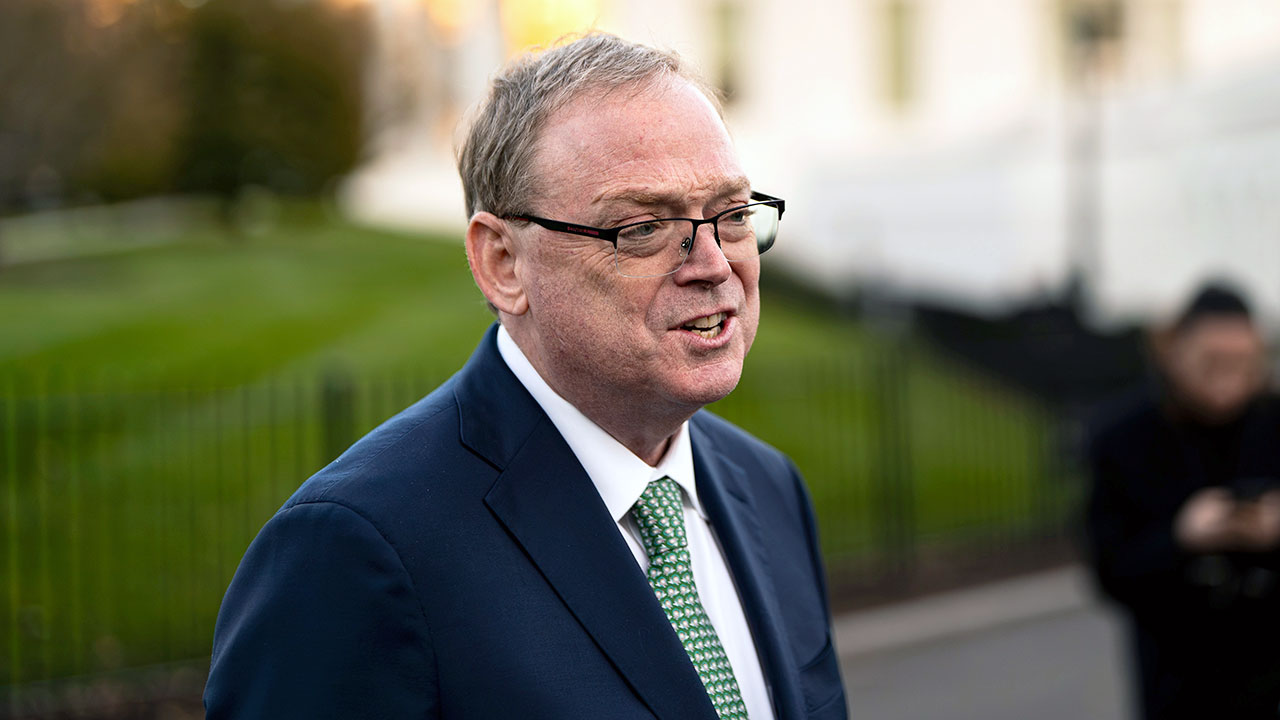
Kevin Hassett, director of the National Economic Council, called for New York Fed researchers to face punishment over their research finding that the U.S. is bearing most of the cost of tariffs. (Aaron Schwartz/CNP/Bloomberg/Getty Images)
They also found that the average tariff rate jumped last year as the Trump administration raised the import levies, rising from 2.6% at the beginning of 2025 to 13% at the end of the year. The report found that the average tariff rate peaked at around 16% in April and May, following the president’s announcement of his “Liberation Day” tariffs.
“Our results show that the bulk of the tariff incidence continues to fall on U.S. firms and consumers,” the New York Fed wrote, noting that its findings were consistent with a pair of recent studies on U.S. tariff pass-through showing American importers absorbing nearly all the cost.
TARIFFS MAY HAVE COST US ECONOMY THOUSANDS OF JOBS MONTHLY, FED ANALYSIS REVEALS

President Donald Trump announced a dramatic hike in tariffs during his “Liberation Day” event in April 2025, though some of the tariffs were implemented at lower levels than those he revealed. (Chip Somodevilla/Getty Images)
Those findings are also similar to those contained in another analysis by the nonpartisan Congressional Budget Office (CBO), which noted in its recently released 10-year budget and economic outlook that foreign exporters are absorbing about 5% of the tariff costs with the remaining 95% falling on U.S. firms and consumers.
The CBO found that U.S. businesses would pass on about 70% of their tariff costs to consumers, with the remaining 30% coming out of their profit margins. After accounting for domestic producers raising prices because of reduced foreign competition, the “net effect of tariffs is to raise U.S. consumer prices by the full portion of the cost of the tariffs borne domestically (95 percent),” the CBO found.
CBO’s analysis also projected that the new tariffs imposed over the last year will have increased the personal consumption expenditures (PCE) index by about 0.8 percentage points on aggregate by the end of 2026. PCE inflation is the Fed’s preferred inflation gauge and was most recently at 2.8% in November, well above the Fed’s 2% target.
TRUMP CREDITS TARIFFS FOR HUNDREDS OF BILLIONS GAINED WITH ‘VIRTUALLY NO INFLATION,’ TOUTS SECURITY
Hassett went on to defend the Trump administration’s tariffs during the CNBC interview, saying that American consumers are better off for them, while saying the New York Fed’s analysis was an “embarrassment.”
“Prices have gone down. Inflation is down over time. Import prices dropped a lot in the first half of the year, that leveled off, and real wages were up $1,400 on average last year, which means that consumers were made better off by the tariffs,” Hassett said on CNBC.
GET FOX BUSINESS ON THE GO BY CLICKING HERE
“So consumers couldn’t have been made better off by the tariffs, if this New York Fed analysis was correct. It’s really just an embarrassment,” Hassett said.

In the NSE list of stocks with a market cap over Rs 10,000 crore, seven stocks saw their closing prices cross above their 200-day moving averages (DMA) on February 18, according to StockEdge.com’s technical scan data. The 200-day daily moving average (DMA) is used as a key indicator by traders for determining the overall trend in a particular stock. As long as the stock price is above the 200-day SMA on the daily time frame, it is generally considered to be an overall uptrend. Take a look:

Road users say headlight glare is an issue – but experts warn a solution might not be straightforward.

Australia’s unemployment rate remained unchanged at 4.1 per cent in January, remaining stubbornly tight ahead of the Reserve Bank’s March rates decision.

baona/iStock via Getty Images

By Samuel Rines & Christopher Gannatti, CFA
During the latest monthly rebalance, the WisdomTree GeoAlpha Opportunities Index implemented a set of changes that, taken together, sharpen the portfolio’s exposure to the three realities defining the geopolitical backdrop
Brent futures fell 12 cents, or 0.2% to $70.23 a barrel by 0110 GMT, while U.S. West Texas Intermediate (WTI) crude slipped 8 cents, or 0.1%, to trade at $65.11 a barrel.
Both benchmarks settled more than 4% higher on Wednesday, posting their highest settlements since January 30, as traders priced in potential supply disruptions amid concerns of U.S.-Iran conflict.
“Tensions between Washington and Tehran remain high, but the prevailing view is that full-scale armed conflict is unlikely, prompting a wait-and-see approach,” said Hiroyuki Kikukawa, chief strategist of Nissan Securities Investment, a unit of Nissan Securities.
“U.S. President Donald Trump does not want a sharp rise in crude prices, and even if military action occurs, it would likely be limited to short-term air strikes,” Kikukawa added.
A little bit of progress was made during Iran talks in Geneva this week but distance remained on some issues, the White House said on Wednesday, adding that Tehran was expected to come back with more details in a couple of weeks.
Iran issued a notice to airmen (NOTAM) that it plans rocket launches in areas across its south on Thursday from 0330 GMT to 1330 GMT, according to the U.S. Federal Aviation Administration website. At the same time, the U.S. has deployed warships near Iran, with U.S. Vice President JD Vance saying Washington was weighing whether to continue diplomatic engagement with Tehran or pursue “another option”.
Satellite images show that Iran has recently built a concrete shield over a new facility at a sensitive military site and covered it in soil, experts say, advancing work at a location reportedly bombed by Israel in 2024.
Meanwhile, two days of peace talks in Geneva between Ukraine and Russia ended on Wednesday without a breakthrough, with Ukrainian President Volodymyr Zelenskiy accusing Moscow of stalling U.S.-mediated efforts to end the four-year-old war.
U.S. crude and gasoline and distillate inventories fell last week, market sources said, citing American Petroleum Institute figures on Wednesday, contrary to expectations in a Reuters poll that crude stocks would rise by 2.1 million barrels in the week to February 13.
Official U.S. oil inventory reports from the Energy Information Administration are due on Thursday.

The Olympic Games are undoubtedly the only event that manages to attain the interest of the vast majority of the world’s population. Every four years, billions of viewers around the world watch and get glued to their favorite celebrities and national pride. While the excitement of the World Olympics does wonders for ratings, it also has a significant effect on the online world.
Major sporting events have been known to influence online behavior substantially. This is because, during such events, users look for different information online, look for ways to watch the events, and participate in online discussions about sports. It is, however, essential to note that many users look for ways to make their user experience a lot more interactive. This is where online gambling is involved. Due to the increase in popularity of events at the Olympics, the popularity of gambling taking place concurrently is promoted, thereby influencing the online gambling growth globally.

The Global Impact of the Olympic Games on Digital Entertainment
The viewer count for the Olympic Games is massive, reaching over three billion people around the world. This increases the usage of the internet during this period significantly, as people use sports apps and online viewing to watch the games rather than traditional means of viewing, such as TV. Social media also plays an important part in increasing online usage during the Olympic games, as conversations about the games and highlight reels keep people engaged on the internet for longer periods of time. As shown in Chart 1, global online traffic increases noticeably during Olympic years compared to non-Olympic periods. This also means increasing usage in various segments of the online entertainment business, including gaming and betting sites.
Chart #1: Global Online Traffic Growth During Olympic Seasons (2016–2024)

Chart 1: Illustrating noticeable traffic spikes during Olympic years compared to non-Olympic years.
Why Sports Fans Are Turning to Online Gambling
The Olympics have had some dramatic finishes and some underdog stories that enhance that connection. Many sports fans feel a desire to be more engaged with the outcome of sports events and the Olympics. Thus the bet enhances and complements the current betting on the Olympics. As shown in Chart 2, in the sharp rise in new registrations on sports betting platforms during major sporting events, with the Olympics leading.
This can serve to increase the excitement level of even lesser-known games, as people may show greater interest in games they would normally not care much about. This helps to increase the viewership of many different Olympic sports as wagering on these sports is introduced.
Mobile usage also has an important role to play. Today’s sports betting sites allow you to place your bets within seconds using your mobile phones. Even live betting, in which the odds are constantly changing during games, offers an added fast and interactive experience in line with the unpredictable nature of Olympic sports.
Chart #2: Increase in Sports Betting Registrations During Major Sporting Events

Chart 2: Shows higher user sign-ups during global tournaments, with Olympic periods leading.
The Psychology Behind Olympic Betting Trends
Psychologically, many factors explain this rise in betting activity. One major psychological factor is herd mentality, which is thought to occur because with millions being spectators to the same events, people consider joining in some common activities, including wagering.
Another factor is the excitement that comes along with competition. Although the Olympic Games intensify excitement and competition by emphasizing countries and personal success, resulting in an emotional response, the excitement is natural while watching the Olympics and placing bets, thus contributing to the existing Olympic betting trends.
Fear of Missing Out (FOMO) is another driver. When media coverage and social feeds are full of dramatic finishes and betting stories, some users feel they are missing a unique opportunity if they do not participate. Constant media exposure reinforces the idea that betting is a common and accepted part of the sports-viewing experience during the Olympics.
Technology and Accessibility: Making Gambling Easier Than Ever
Online gambling has become more accessible than ever due to technology. For instance, users can use mobile applications to register, make deposits, and start betting at any given moment. This is particularly significant during the live Olympic events, for they determine the chances of winning.
Additionally, fast and safe payment systems make the experience more seamless. Digital wallets, for instance, make it easier for people to make transactions, although such activities may not be as frequent as they are in traditional systems. However, with live stats, performance data, and live odds, sports betting sites provide easier decision-making for users.
Platforms like Fair Go casino, have improved its services for users, optimizing its systems for increased usage during significant sporting events, mimicking the speed of the Olympics with user-friendly interfaces and mobile capabilities in the growing digital betting arena.

Comparison of User Activity Before and During the Olympics
User behavior on gambling platforms changes noticeably during the Olympic period. Compared to regular months, platforms report higher registration rates, longer session times, and increased betting volumes, clearly reflecting broader Olympic sports wagering patterns.
The diversity of Olympic sports also brings in new user segments. Some people who rarely bet on traditional leagues become active during the Games because of the wide range of events available. This leads to a broader user base and higher overall engagement across the digital betting industry.
Deposit volumes typically rise with varied bets. Although activity often declines after the Games end, it usually remains above pre-Olympic levels for some time, showing a lasting impact on user behavior. Below Table compares user activity before, during, and after the Olympics, highlighting longer session times and higher betting volumes during the Games.
Table: User Activity Trends Around the Olympic Period
| Period | New Users | Avg. Session Time | Betting Volume | Deposits Growth |
| Pre-Olympics | 100,000 | 18 min | $2.1M | +5% |
| During Olympics | 245,000 | 32 min | $6.7M | +28% |
| Post-Olympics | 160,000 | 22 min | $3.4M | +12% |
Risks, Regulations, and Responsible Gambling
Despite its growth, online gambling carries risks that should not be ignored. Increased exposure during major events like the Olympics can lead some users to spend more time and money than they planned. This makes responsible gambling practices essential.
Many countries have introduced regulations to protect users. These include age verification, deposit limits, and self-exclusion options. Reputable platforms also provide tools that help users track their spending and set personal limits.
Education plays an important role as well. Understanding the odds, recognizing warning signs of problem gambling, and knowing when to take a break can reduce potential harm. Responsible use helps ensure that betting remains a form of entertainment rather than a source of financial or emotional stress.
Conclusion
The Olympic Games bring a potent combination of international attention, emotional appeal, and online interaction. Such a setting increases the popularity of online gambling sites, as people attempt to interact with the events to which they attach themselves. The development of mobile technology has made it easier for people to get involved, thus ensuring the continued growth of online gambling.
At the same time, the rise of betting on Olympic sports wagering emphasizes the necessity for a balance. Indeed, while the platforms develop and expand the audience, good practices in gambling and regulation remain necessary to ensure the development of a digital betting market responsibly.

Nvidia leads the US stock market higher
Metal stocks glitter on Dalal Street, eye stronger March quarter

Bitcoin Caught Between Hawkish Fed and Dovish Warsh


-

 Video2 days ago
Bitcoin: We’re Entering The Most Dangerous Phase
-

 Tech4 days ago
Luxman Enters Its Second Century with the D-100 SACD Player and L-100 Integrated Amplifier
-

 Sports2 days ago
GB's semi-final hopes hang by thread after loss to Switzerland
-

 Crypto World2 days ago
Can XRP Price Successfully Register a 33% Breakout Past $2?
-

 Video6 days ago
The Final Warning: XRP Is Entering The Chaos Zone
-
 Tech2 days ago
The Music Industry Enters Its Less-Is-More Era
-

 Business1 day ago
Infosys Limited (INFY) Discusses Tech Transitions and the Unique Aspects of the AI Era Transcript
-

 Entertainment13 hours ago
Kunal Nayyar’s Secret Acts Of Kindness Sparks Online Discussion
-

 Video2 days ago
Financial Statement Analysis | Complete Chapter Revision in 10 Minutes | Class 12 Board exam 2026
-

 Tech18 hours ago
Retro Rover: LT6502 Laptop Packs 8-Bit Power On The Go
-
 Crypto World5 days ago
Bhutan’s Bitcoin sales enter third straight week with $6.7M BTC offload
-
 Video7 days ago
Prepare: We Are Entering Phase 3 Of The Investing Cycle
-

 Entertainment5 hours ago
Dolores Catania Blasts Rob Rausch For Turning On ‘Housewives’ On ‘Traitors’
-
 NewsBeat3 days ago
The strange Cambridgeshire cemetery that forbade church rectors from entering
-

 Business7 days ago
Barbeques Galore Enters Voluntary Administration
-

 Business20 hours ago
Tesla avoids California suspension after ending ‘autopilot’ marketing
-

 Crypto World6 days ago
Kalshi enters $9B sports insurance market with new brokerage deal
-

 Crypto World8 hours ago
WLFI Crypto Surges Toward $0.12 as Whale Buys $2.75M Before Trump-Linked Forum
-
 Crypto World6 days ago
Ethereum Price Struggles Below $2,000 Despite Entering Buy Zone
-
 NewsBeat3 days ago
Man dies after entering floodwater during police pursuit