
Business
Alexander Kopylkov on Why 90% of AI Startups Will Fail. The Survivors All Have This in Common


It’s not the model. It’s not the team. It’s the unit economics.
Venture capital poured a record $202 billion into AI startups in 2025, capturing half of all global funding. Yet the math remains brutal: 90% of AI companies will fail, a rate significantly higher than the 70% seen in traditional tech startups. According to Alexander Kopylkov, a venture capital investor focused on long-term business fundamentals, this failure rate is not driven by lack of innovation, but by broken unit economics. “Everyone can build a demo,” he notes. “The survivors are the ones who can build a business.”
The Burn Problem
Many AI startups at Series A are burning $2 to $5 for every $1 of new revenue. This burn multiple, a metric popularized by investor David Sacks, has become the defining number VCs scrutinize in 2026.
For context, top-performing SaaS companies operate at burn multiples below 1.5x. The gold standard is 1x or below: spend a dollar, earn a dollar.
Kopylkov breaks it down into first principles: AI startups face a structural cost problem that traditional software companies don’t. “Where a SaaS company spends 15-20% of revenue on infrastructure, AI companies often start at 40-50%,” he explains. “That gap has to close, or the company dies.”
The infrastructure burden isn’t the only culprit. AI startups also face escalating talent costs, with machine learning engineers commanding salaries that dwarf traditional software roles. Add in the constant need to retrain models, maintain data pipelines, and keep pace with rapidly evolving foundation models, and the cost structure becomes punishing.
What the Survivors Look Like
Citing data from multiple VC surveys, Kopylkov notes that companies achieving sub-1.5x burn multiples share three characteristics: disciplined hiring, laser focus on product-market fit before scaling, and AI-enhanced operational efficiency.
The survivors also share something else: enterprise customers. Anthropic, one of the few AI companies demonstrating sustainable economics, generates 70-80% of its revenue from enterprise clients. Its annualized revenue run rate grew from $87 million in early 2024 to $7-9 billion by late 2025, not through hype, but through solving compliance and safety problems that large institutions will pay for.
Kopylkov emphasizes that enterprise focus isn’t just about bigger contracts. “Enterprise customers have longer sales cycles, but they also have lower churn, higher lifetime value, and more predictable revenue,” he says. “That predictability is what lets you plan, hire, and scale without gambling your runway.”
For founders, Kopylkov recommends a simple framework: Before raising your next round, answer three questions. Is your burn multiple under 2x? Do you have 18+ months of runway? Are your gross margins above 50%, or trending there fast?
If the answer to any of these is no, investors in 2026 will notice. The due diligence has gotten sharper, and the patience for aspirational projections has worn thin.
The Consolidation Is Coming
The era of experimentation is ending. According to a TechCrunch survey of 24 enterprise-focused VCs, 2026 is the year enterprises start consolidating AI investments and picking winners.
Andrew Ferguson of Databricks Ventures put it plainly: “Today, enterprises are testing multiple tools for a single-use case. As enterprises see real proof points from AI, they’ll cut out some of the experimentation budget, rationalize overlapping tools, and deploy that savings into the AI technologies that have delivered.”
In his view, this consolidation will accelerate through 2026 and into 2027. The startups that survive won’t be the ones with the best pitch decks. They’ll be the ones with the clearest ROI.
For Kopylkov, this winnowing is inevitable. “When every startup claims to be AI-powered, the label becomes meaningless,” he says. “Buyers are getting smarter. They’re asking harder questions about what’s actually under the hood and whether the product delivers measurable value. The companies that can’t answer those questions convincingly won’t make it to 2027.”
The Opportunity in the Wreckage
Despite the grim statistics, Kopylkov sees opportunity. The 90% failure rate isn’t a reason to avoid AI, it’s a filter.
“The companies that get through are battle-tested,” he says. “They’ve proven they can acquire customers efficiently, retain them, and improve margins over time. That’s exactly what you want to invest in.”
Kopylkov compares this shift to the dot-com era: plenty of destruction, but the survivors like Amazon, Google, and eBay went on to define the next two decades of technology. The pattern is familiar: irrational exuberance, painful correction, and then durable growth built on real fundamentals.
The difference in 2026 is that investors aren’t waiting for the crash to demand fundamentals. They’re demanding them now. The funding environment has shifted from “move fast and figure it out” to “show me the numbers.”
For Kopylkov, this is healthy. “Capital discipline forces founders to think like operators, not just visionaries,” he says. “The best companies emerging from this period will have both.”
“2026 is a fundamentals-first year where capital rewards revenue growth, efficiency, and real AI advantage—and punishes anything that is AI veneer on old ideas.”
— Anders Ranum, Partner, Sapphire Ventures
For founders building AI companies today, the message is clear: the hype got you in the door. The unit economics will determine whether you stay.


Sotherly Hotels to delist preferred stock from Nasdaq
BiomX receives NYSE American non-compliance notice
Iran Has Distracted From the Mag 7 Woes. Why the Slump Is a Good Thing for Stock Markets.

Shares in Next PLC NXT -1.71%decrease; red down pointing triangle jumped after the U.K. clothing retailer maintained its fiscal-year sales-growth expectations, despite warning that the Iran war could affect costs, prices and consumer demand.
The group said Thursday it had accounted for 15 million pounds ($20 million) in additional costs—including fuel and air freight—tied to the Middle East conflict. The costs didn’t affect Next’s guidance since they have been offset by savings, it said.
Copyright ©2026 Dow Jones & Company, Inc. All Rights Reserved. 87990cbe856818d5eddac44c7b1cdeb8
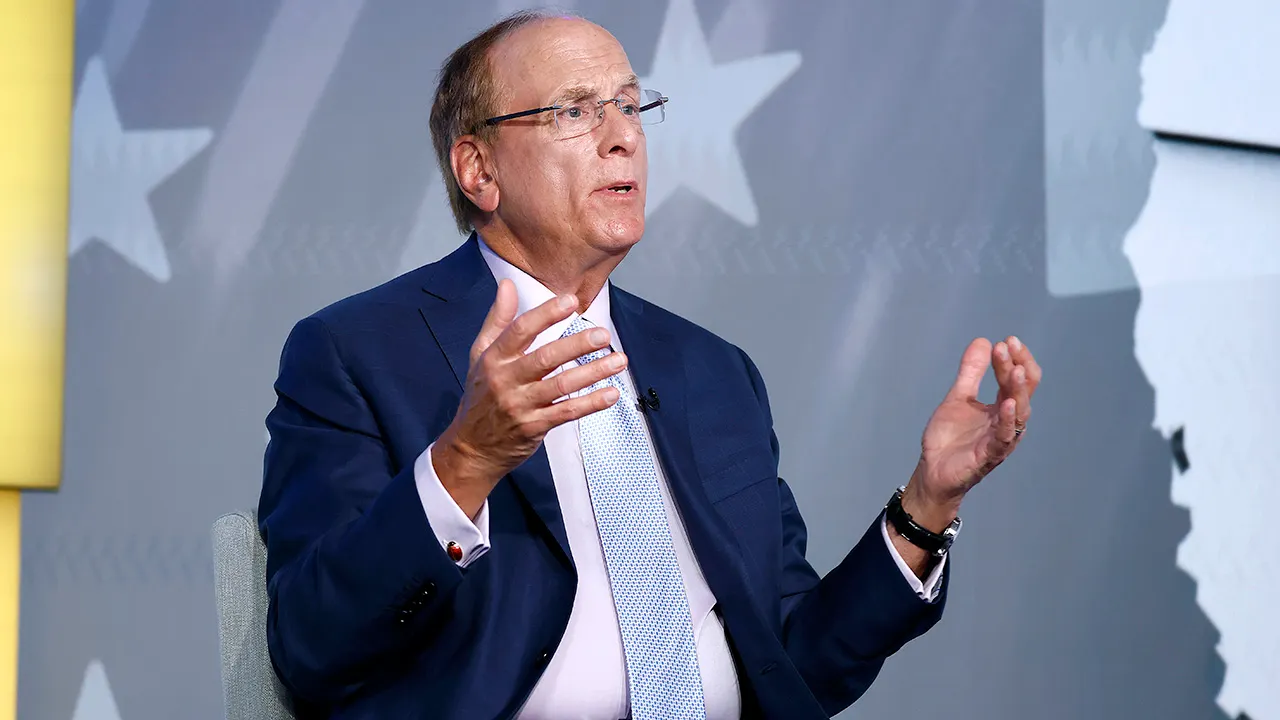
The Big Money Show panel discusses the alarming new analysis showing Social Security and Medicare racing toward insolvency and warns that retirees face steep benefit cuts unless Washington acts fast.
BlackRock CEO Larry Fink discussed possible Social Security reforms that would allow more Americans to benefit from the growth in the stock market while also ensuring the program is strengthened so it can survive to serve future generations.
Fink’s recently released annual chairman’s letter touched on how Social Security is “one of the most effective poverty-prevention programs in history” and that while it provides stability, it “doesn’t allow most Americans to build wealth in a way that grows their country.”
“Today, the system operates largely on a pay-as-you-go basis. Payroll taxes are used to pay current retirees, and the Social Security trust fund is invested primarily in U.S. Treasury bonds. In effect, workers lend money to the government and receive defined benefits in return.”
“The structure, designed as a social insurance program, emphasizes stability and predictability. What it doesn’t do is let people grow their benefits along with the broader economy. The question is whether the Social Security system could allow both,” Fink said.
NEW PROPOSAL WOULD CAP SOCIAL SECURITY BENEFITS AT $100K FOR WEALTHY COUPLES
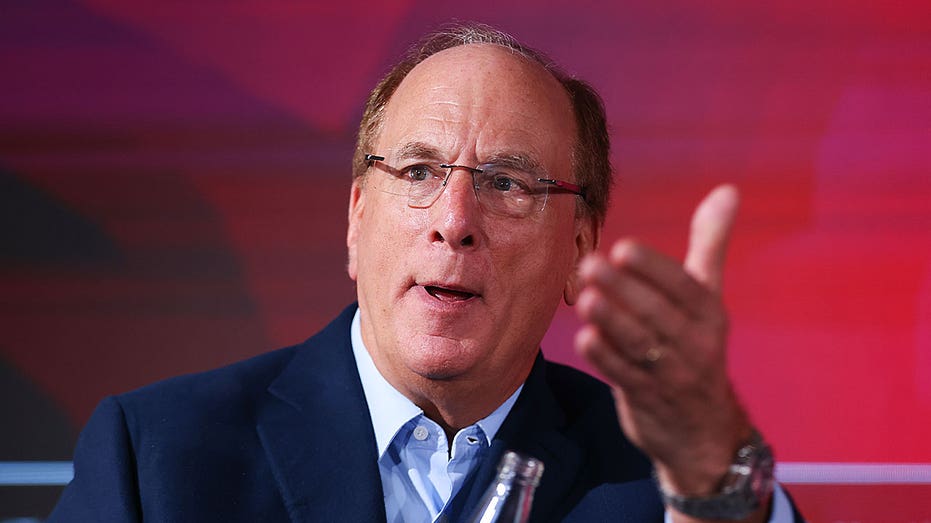
BlackRock CEO Larry Fink said that Americans need to discuss ways to reform Social Security ahead of its insolvency. (Hollie Adams/Bloomberg via Getty Images)
He said that this could be accomplished by asking whether a portion of the system could be invested “carefully, broadly, and over decades” like other long-term pension systems.
“This would not mean privatizing Social Security or putting it all into the stock market,” Fink wrote. “It would mean introducing a measure of diversification, similar in principle to the federal Thrift Savings Plan, which manages retirement savings for millions of federal employees.”
“The goal would be to strengthen the system over time while preserving its core guarantees,” he added.
SOCIAL SECURITY’S MAIN TRUST FUND FACES DEPLETION IN 2032, TRIGGERING BENEFIT CUTS

Social Security’s main trust fund is on a path to insolvency in less than a decade, when benefits would be automatically cut to match payroll tax revenue. (Getty Images/iStock)
Fink noted a bipartisan proposal from Sens. Bill Cassidy, R-La., and Tim Kaine, D-Va., that would create a new investment fund that operates parallel to the existing trust fund rather than replacing it while investing in a diversified mix of stocks and bonds to generate higher returns.
The proposal would require an initial investment of about $1.5 trillion and would be given 75 years to grow, and during that period the Treasury would continue covering Social Security benefits.
Once the fund matures, it would repay the Treasury and then supplement payroll taxes going forward to help close the gap between what the Social Security system takes in and what it pays out – while no one on Social Security or nearing retirement would see a change to their benefits.
Fink also noted that about six million Americans who are employed by state and local governments don’t currently contribute to Social Security and instead rely on public pension systems that invest in diversified portfolios.
BUDGET DEFICIT HITS $1 TRILLION FOR FIRST FIVE MONTHS OF FISCAL YEAR: CBO
| Ticker | Security | Last | Change | Change % |
|---|---|---|---|---|
| BLK | BLACKROCK INC. | 933.66 | -34.51 | -3.56% |
Other examples of alternative pension systems can be found overseas, with Australia’s superannuation system representing an approach that invests retirement contributions in the financial markets. Fink said that a “similar, carefully structured approach could be considered to strengthen Social Security.”
“I understand why any talk of changing Social Security makes people uneasy. Social Security is a core promise, and people rightly believe it should be honored. But under the current system, doing nothing could very well break that promise,” he said.
“Current projections show the trust fund won’t be able to pay full benefits by 2033. Many young Americans doubt they’ll ever fully see theirs,” he explained. “Addressing that gap will likely require multiple solutions. But thoughtful, long-term investing could be one of them.”
GET FOX BUSINESS ON THE GO BY CLICKING HERE
An analysis by the nonpartisan Committee for a Responsible Federal Budget (CRFB) noted that when Social Security’s main trust fund reaches insolvency – which is projected to occur in 2032 – federal law requires benefits be cut to match revenue from payroll taxes, which would amount to a roughly 24% cut for beneficiaries.
Fink noted that his chairman’s letter two years ago was focused on rethinking retirement and generated criticism for suggesting that Social Security was in need of reforms. He acknowledged that the latest letter may do the same, but said it’s a conversation that needs to be had.
“In my 50 years in finance, if there’s one thing I’ve learned, it’s that the problems we don’t talk about are the ones that should worry us most. And that’s exactly why we need the conversation now – because the cost of waiting is only getting higher,” he said.
Form 13D/A Venus Concept For: 27 March
JHVEPhoto/iStock Editorial via Getty Images
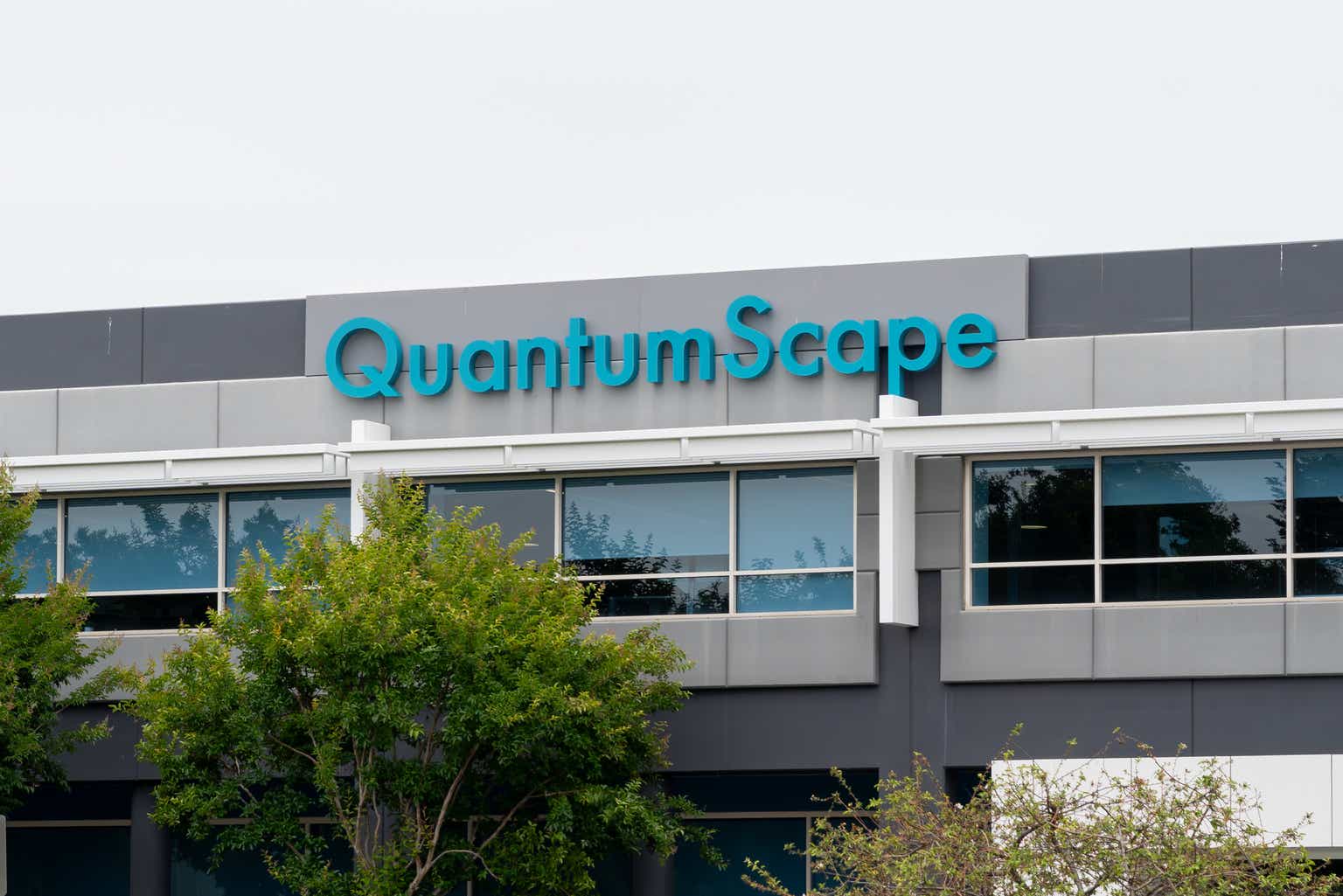
QuantumScape’s (QS) recent board appointment may prove more important than the headline suggests.
According to the company’s March 5 announcement, QuantumScape added Ross Niebergall to its board, an executive with deep ties across the defense industrial


Trump tells farmers that tractor companies should lower prices

Goyal also met his Chinese counterpart Wang Wentao.
This was their first in-person meeting since the US Supreme Court on February 20 struck down reciprocal tariffs imposed under the International Emergency Economic Powers Act (IEEPA).
The US subsequently imposed a 10% tariff on all countries for 150 days from February 24.
“Had a very productive discussion with @USTradeRep Jamieson Greer on the sidelines of the WTO Ministerial Conference. Exchanged views on the #WTOMC14 agenda, next steps in the India-US BTA negotiations and explored ways to further deepen our economic cooperation and bilateral trade ties,” Goyal said on X.

The two sides had announced a trade deal on February 2, with a target to sign it by March. In a joint statement on February 7, the US withdrew a 25% penal tariff on India for buying Russian oil, with the remaining 25% tariffs to be reduced to 18%.
Goyal discussed bilateral trade issues with his Chinese counterpart. “Met Mr. Wang Wentao, Minister of Commerce of China, on the sidelines of the #WTOMC14. Exchanged views on the MC-14 agenda and discussed bilateral trade matters,” Goyal said in a social media post.The meeting comes as India’s trade deficit with China crossed $100 billion during the first 11 months of the current fiscal year.
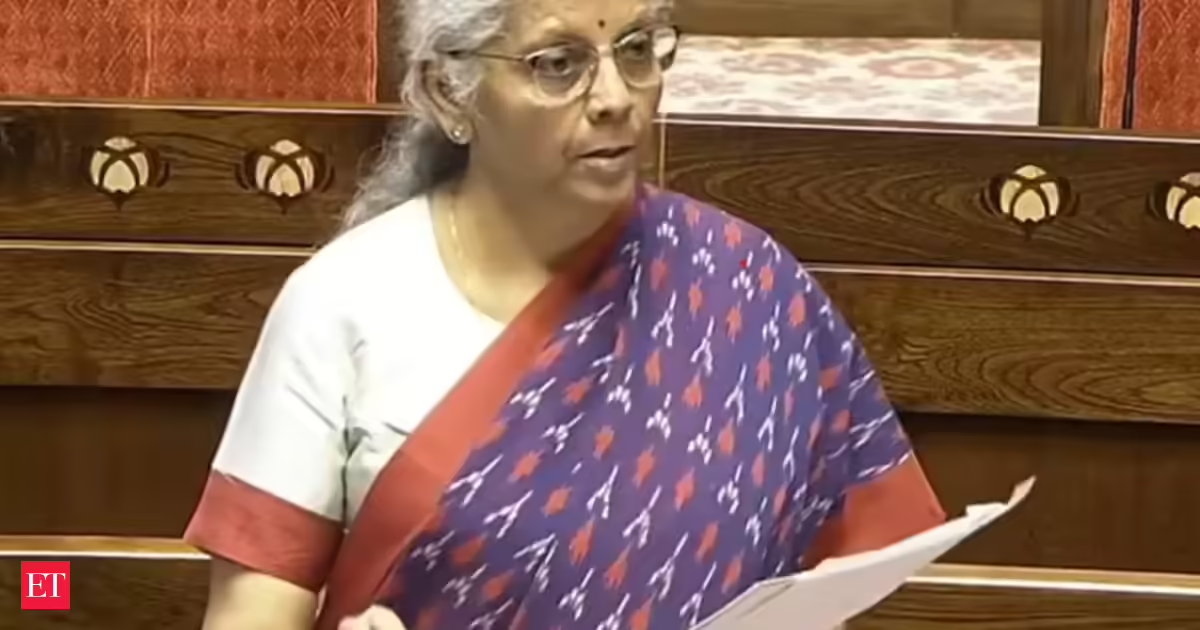
She ruled out any plan to impose a lockdown amid the West Asia conflict and urged political leaders to avoid spreading rumours and fear. “Going forward, we will continue to ramp up our efforts in mobilising additional non-tax revenues, and our government will remain on its toes to carefully manage the country’s fiscal position,” she said while replying to a discussion on the Finance Bill in the Rajya Sabha. The House later passed the Finance Bill by voice vote, returning it to the Lok Sabha and completing the budget process for the fiscal year beginning April 1.
Sitharaman said retail fuel prices have remained unchanged despite global crude prices rising from $70 to $122 a barrel within a month. “We are making sure that people of India don’t suffer,” she said, adding that the government’s broader strategy is to shield citizens while sustaining growth.
The government on Friday cut excise duty on petrol by Rs 10 per litre and reduced diesel duty to zero, while imposing export taxes on refiners to ensure domestic availability. The minister said the government is actively responding to the evolving situation and that Friday’s duty cuts are aimed at preventing the global price surge from feeding into domestic inflation and volatility. The duty cuts will lead to a revenue loss of about ₹7,000 crore, she said. Sitharaman said the move was necessary as oil marketing companies were incurring losses of about ₹24 per litre on petrol and ₹13 per litre on diesel.
New GDP series
On criticism of the new GDP series, Sitharaman said “these are routine exercises” and have been undertaken nine times since Independence. She said the new series, based on more than 300 data sources and 1,400 variables, integrates GST data, digital financial flows and labour surveys to improve accuracy and real-time tracking of economic activity.

Tara Jones: Rugby league ref ready for history to cap ‘crazy week’

Laser Welding Helps YouTuber Get Ahead With Aluminum Sheet

Tiger Woods car crash: Golfer involved in Florida collision


-
 Crypto World7 days ago
NIO (NIO) Stock Plunges 6.5% as Shelf Registration Sparks Dilution Worries
-
 NewsBeat2 days ago
Manchester United reach agreement with Casemiro over contract clause amid transfer speculation
-

 Crypto World6 days ago
Best Crypto to Buy Now: Strategy Just Spent $1.57 Billion on Bitcoin During Fear While Early Investors Quietly Enter Pepeto for 150x Potential
-

 Crypto World6 days ago
Bitcoin Price News: Bhutan Sells $72 Million in BTC Under Fiscal Pressure, but the Smart Money Entering Pepeto Sees What the Market Does Not
-

 News Videos2 days ago
Parliament publishes latest register of MPs’ financial interests
-

 Sports4 days ago
Remo Stars and Kano Pillars Strengthen Survival Hopes in NPFL
-

 Sports4 days ago
Gary Kirsten Accuses Pakistan Cricket Board Of ‘Interference’, Mohsin Naqvi Responds
-

 Business5 days ago
No Winner in March 21 Drawing as Prize Rolls to $133 Million for Next
-

 Tech5 days ago
Give Your Phone a Huge (and Free) Upgrade by Switching to Another Keyboard
-

 Tech5 days ago
AI enters the chat: New Seattle dating app relies on tech to facilitate meaningful human connections
-

 News Videos4 days ago
Ch 9 Financial Management Part 1 | Detailed One Shot | Class 12 Business Studies Boards 2026
-
Business7 days ago
Columbia Sportswear enters $500 million credit agreement with JPMorgan Chase
-

 Tech6 days ago
Today’s NYT Connections Hints, Answers for March 22 #1015
-

 Business24 hours ago
Instagram, YouTube Found Responsible for Teen’s Mental Health Struggle in Historic Ruling
-

 Business5 days ago
Will Duke Basketball Win It All? Duke Basketball Enters Second Round as Third Favorite to Claim NCAA Title
-

 Sports5 days ago
2026 Kentucky Derby horses, odds, futures, preview, date: Expert who hit 12 Derby-Oaks Doubles enters picks
-
 NewsBeat5 days ago
Update on Wisbech river crash as search for teenage boy enters fifth day
-
 Entertainment4 days ago
Cynthia Bailey Dishes on ‘RHOA’ Season 17, Discusses Kandi
-
 NewsBeat2 days ago
Tesco is selling new Cadbury Dairy Milk bar and people can’t wait to try it
-

 Tech4 days ago
Samsung will soon let you control smart home devices from your car’s dashboard
You must be logged in to post a comment Login