

Business
Anchr raises $5.8M to build AI-powered operating system for food distribution supply chains


US startup Anchr has secured $5.8 million in seed funding to develop what it describes as the first end-to-end AI-native operating system for food distributors, targeting one of the most operationally complex yet technologically underserved sectors of the global supply chain.
The funding round was backed by a16z Speedrun, Anterra Capital, Offline Ventures, Long Journey Ventures, alongside several industry leaders connected to OpenAI. The investment will support the company’s development of an integrated artificial intelligence platform designed to automate operational workflows across sales, purchasing, inventory management, finance and logistics.
The company argues that despite the enormous scale of the food distribution industry, which moves hundreds of billions of dollars in perishable goods annually, much of its operational infrastructure remains heavily reliant on outdated technology and manual processes.
Food distributors act as a critical backbone between producers and the hospitality sector, ensuring that restaurants, supermarkets and catering businesses receive fresh goods daily. Yet many companies still rely on text messages, spreadsheets and legacy enterprise systems developed decades ago.
Traditional enterprise resource planning (ERP) systems typically record historical transactions but lack the capability to analyse real-time conditions or automate operational decisions.
This means that key activities such as purchasing decisions, stock management and financial reconciliation often require extensive manual work. For businesses operating on low single-digit profit margins, inefficiencies in these processes can significantly impact profitability.
Anchr’s founders believe artificial intelligence can fundamentally change how these operations function.
“The biggest opportunity to leverage AI isn’t in industries with modern infrastructure,” said Tzar Taraporvala, co-founder and co-chief executive of Anchr.
“It’s buried deep in the operational backbone of the economy. Food distributors manage millions of dollars of inventory with systems that were never designed to handle today’s complexity.”
Rather than replacing existing ERP platforms, Anchr’s system operates as a layer on top of them, embedding AI-powered digital assistants, or “AI teammates”, across multiple operational departments.
By integrating data across departments, the system enables information to flow continuously through the organisation, eliminating the fragmented workflows that often plague supply chain businesses.
Work that previously required hours of manual intervention, such as inputting orders received via email or text messages, can be executed automatically by the platform, with contextual information shared across the entire business.
Early adopters of Anchr’s platform are already reporting measurable efficiency gains.
One customer reclaimed roughly 40 per cent of daily working time across a team of eight sales representatives by automating order intake from emails and text messages.
Another distributor was able to reduce aged inventory write-offs by $30,000 in a single month, after using AI-generated purchasing insights based on live demand signals.
In a further example, a distributor used the system’s menu-analysis capabilities to identify upselling opportunities. By scraping restaurant menus and product catalogues, the AI recommended additional items to include in orders, increasing the average basket size by around $65 per order across 4,000 annual orders.
For companies operating in low-margin industries such as food distribution, even relatively small operational improvements can translate into substantial financial gains.
The idea for Anchr emerged directly from the founders’ exposure to operational inefficiencies within the supply chain.
Co-founders Tzar Taraporvala and Smayan Mehra, who have worked together for more than two decades, began investigating supply chain technology gaps after observing how disconnected many enterprise systems remained.
Their research intensified when they partnered with a Boston-based seafood distributor, spending several months observing daily workflows inside the business.
They discovered that many operational processes were still handled manually. Orders were frequently entered into ERP systems in the early hours of the morning, purchasing decisions relied on disconnected spreadsheets and finance teams often had to reconcile invoices across multiple software platforms.
The founders concluded that the problem was not simply technological, it was structural.
“The pain was structural, daily and expensive,” the company said.
Anchr’s early momentum has been notable. During its 12-week participation in the Speedrun accelerator programme, the startup reported booking seven-figure revenue.
Its customer base already includes both regional distributors and a publicly traded food distribution company generating approximately $5 billion in annual revenue.
This rapid adoption reflects growing demand for automation in a sector where operational complexity continues to increase.
From ERP to ERA: the next evolution in enterprise software
The company believes its technology represents the next phase in enterprise software development.
The founders describe the transition as moving from traditional Enterprise Resource Planning (ERP) systems toward what they call Enterprise Resource Automation (ERA).
“If the first era of enterprise software digitised record-keeping, we believe the next era will automate it,” said Smayan Mehra, co-founder and co-CEO.
Under this model, enterprise software does not simply track data but actively executes workflows and decision-making processes in real time.
Looking ahead, Anchr plans to expand automation capabilities across all aspects of distributor operations, eventually becoming a central coordination system for decisions involving inventory, capital and logistics.
The founders believe the technology has applications beyond food distribution, particularly in industries where physical goods move through fragmented supply chains.
By integrating operational data across departments, the platform aims to create a new type of AI-native system of record built around the actual work performed by organisations.
Investors backing the company say the potential lies in the compounding effect of connecting operational functions.
“When sales, purchasing, inventory and finance share context, the entire business runs differently,” said Troy Kirwin of a16z Speedrun.
“Anchr is building an AI-native operating layer that turns fragmented processes into integrated workflows.”
Despite the scale of global logistics and distribution networks, many supply chain sectors remain technologically underdeveloped compared with consumer technology and finance.
Food distribution in particular presents a unique challenge because it involves high volumes of perishable inventory, tight margins and fast-moving operational decisions.
As artificial intelligence continues to move beyond productivity tools into full operational automation, startups like Anchr are betting that some of the largest gains will come not from digital-first industries but from the overlooked systems that keep the physical economy running.
For Anchr, the goal is clear: build the AI operating system that powers the next generation of supply chain operations.

Amy Ingham
Amy is a newly qualified journalist specialising in business journalism at Business Matters with responsibility for news content for what is now the UK’s largest print and online source of current business news.



Starboard Value sees greater growth opportunities for the company.

Choosing the right door for your home or commercial property is more than just a matter of style. The material of the door significantly affects its durability, security, maintenance, and overall performance.
Among the most common options are wooden doors, aluminium doors, and steel doors, each with distinct advantages and considerations.
Wooden Doors: Classic Charm with Natural Appeal
Wooden doors have been a staple in construction for centuries, prized for their natural beauty and timeless aesthetic. They offer a warm, inviting appearance and can be easily customized with different stains, paints, and finishes to complement any interior or exterior design.
One of the main benefits of wooden doors is their versatility. Solid hardwoods such as oak, mahogany, or walnut provide strength and longevity, while softwoods like pine offer a more budget-friendly option. Additionally, wooden doors provide excellent insulation, helping to maintain indoor temperatures and reduce energy costs.
However, wooden doors do require regular maintenance. They are susceptible to warping, swelling, or cracking when exposed to moisture, and over time, their finish may fade due to sunlight. In terms of security, wooden doors can be strong, particularly when made from solid hardwood, but they are generally easier to breach than metal doors.
Aluminium Doors: Lightweight and Modern
Aluminium doors are increasingly popular for modern homes and commercial spaces due to their sleek appearance and lightweight design. They are resistant to rust and corrosion, making them ideal for coastal areas or locations with high humidity. Aluminium doors also require minimal maintenance compared to wood, typically only needing occasional cleaning to maintain their finish.
Another advantage of aluminium doors is their strength-to-weight ratio. They provide a sturdy barrier without the bulkiness of steel, and their slim profiles allow for larger glass panels, which can bring more natural light into a building. Aluminium can also be powder-coated in various colours, offering a wide range of design possibilities.
On the downside, aluminium doors are not as insulating as wood or composite materials. Without thermal breaks, they may allow more heat to escape in winter or enter in summer, potentially impacting energy efficiency. While strong, aluminium doors generally do not offer the same level of security as steel, especially against forced entry attempts.
Steel Doors: Security and Durability Combined
For those prioritising security and long-term durability, steel doors are an outstanding choice. They are engineered to resist impact, forced entry, and extreme weather conditions, making them suitable for both residential and commercial applications. Unlike wood, steel doors do not warp or crack and are less prone to dents or damage, ensuring a long-lasting investment.
Steel doors also excel in terms of fire resistance and insulation. When combined with insulating cores, they can offer both thermal efficiency and noise reduction, adding comfort to the property. Their robust construction can support advanced locking mechanisms, making them a superior option for high-security environments.
Design options for steel doors have also expanded. Modern manufacturing allows for sleek finishes, realistic wood-effect textures, and a variety of colours, so homeowners need not compromise aesthetics for security. For those seeking top-tier protection and resilience, doors of steel provide an ideal balance of strength, style, and peace of mind.
Making the Right Choice
Ultimately, the choice between wooden, aluminium, and steel doors depends on your priorities. If aesthetic appeal and a classic feel are paramount, wooden doors are an excellent choice. For lightweight, contemporary designs that resist the elements, aluminium doors offer flexibility and style. Meanwhile, for maximum security and long-term durability, steel doors are the most reliable option.
By understanding the key differences, you can select a door that not only complements your property but also meets your requirements for safety, maintenance, and longevity. Each material has its unique strengths, and careful consideration will ensure your investment provides both function and beauty for years to come.

Beijing has spent decades relying on exports and innovation but that model is now under strain.

The 2 Worst-Hit Stocks Since the Iran War Started Drop Again. Why There’s Hope.

Atai (“Value” in Japanese) Capital Management is a long-only, concentrated, unlevered fund run through separately managed accounts (SMAs). They employ a repeatable small-cap-focused value strategy and are based in Fort Worth, Texas. Note: This account is not managed or monitored by Atai Capital Management, and any messages sent via Seeking Alpha will not receive a response. For inquiries or communication, please use Atai’s official channels.

The BBC talks to a Philippines-based woman paid to pretend to be an OnlyFans star in online chats.


Financial analyst by day and a seasoned investor by passion, I’ve been involved in the world of investing for over 15 years and honed my skills in analyzing lucrative opportunities within the market.I specialize in uncovering high quality dividend stocks and other assets that offer potential for long term-growth that pack a serious punch for bill-paying potential. I use myself as an example that with a solid base of classic dividend growth stocks, sprinkling in some Business Development Companies, REITs, and Closed End Funds can be a highly efficient way to boost your investment income while still capturing a total return that follows traditional index funds. I created a hybrid system between growth and income and manage to still capture a total return that is on par with the S&P.
Analyst’s Disclosure: I/we have no stock, option or similar derivative position in any of the companies mentioned, and no plans to initiate any such positions within the next 72 hours. I wrote this article myself, and it expresses my own opinions. I am not receiving compensation for it (other than from Seeking Alpha). I have no business relationship with any company whose stock is mentioned in this article.
Seeking Alpha’s Disclosure: Past performance is no guarantee of future results. No recommendation or advice is being given as to whether any investment is suitable for a particular investor. Any views or opinions expressed above may not reflect those of Seeking Alpha as a whole. Seeking Alpha is not a licensed securities dealer, broker or US investment adviser or investment bank. Our analysts are third party authors that include both professional investors and individual investors who may not be licensed or certified by any institute or regulatory body.

As pet owners complain of rising prices, independent practices want to take on the big chains.
American Petroleum Institute President and CEO Mike Sommers says potential oil reserve release would be an ‘insurance policy’ on ‘Kudlow.’
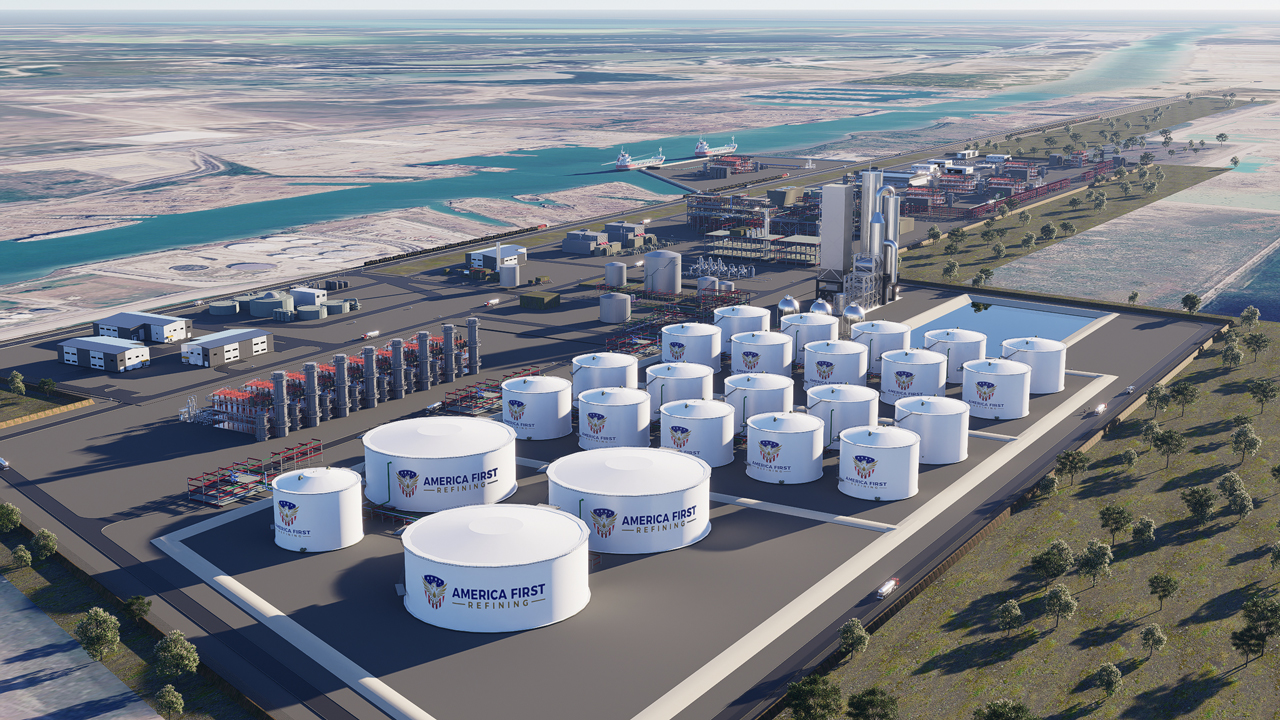
President Donald Trump on Tuesday announced America First Refining (AFR) is opening the first new U.S. oil refinery in nearly half a century in Brownsville, Texas.
Situated in a massive deep-water foreign trade zone, the project will leverage advanced infrastructure and strategic rail and sea connections to transport low-carbon fuels and other energy products.
“America is returning to REAL ENERGY DOMINANCE!” Trump wrote in an announcement on Truth Social. “THIS IS A HISTORIC $300 BILLION DOLLAR DEAL — THE BIGGEST IN U.S. HISTORY, A MASSIVE WIN for American Workers, Energy, and the GREAT People of South Texas!”
AFR said the facility will generate thousands of construction and permanent jobs, while offering wages that exceed market averages.
WILL TAPPING OIL RESERVES CURB SOARING GAS PRICES?
America First Refining is opening the first new U.S. oil refinery in nearly half a century in Brownsville, Texas. (America First Refining / Fox News)
Partners in India and their largest privately held energy company, Reliance, made a “tremendous” investment in the project, according to Trump.
AFR also signed a binding 20-year offtake term sheet with the global supermajor.
The company will officially break ground on the new refinery in Q2 2026.
“It is because of our America First Agenda, streamlining Permits, and lowering Taxes, that have attracted Billions of Dollars in Deals coming back to our Nation,” he said. “A new Refinery at the Port of Brownsville, will fuel U.S. Markets, strengthen our National Security, boost American Energy production, deliver Billions of Dollars in Economic impact, and will be THE CLEANEST REFINERY IN THE WORLD.”
“It will power Global Exports, and bring THOUSANDS of long overdue Jobs and Growth to a Region that deserves it,” the president continued. “This is what AMERICAN ENERGY DOMINANCE looks like. AMERICA FIRST, ALWAYS!”
HOW THE IRAN WAR COULD HIT AMERICANS’ GROCERY BILLS

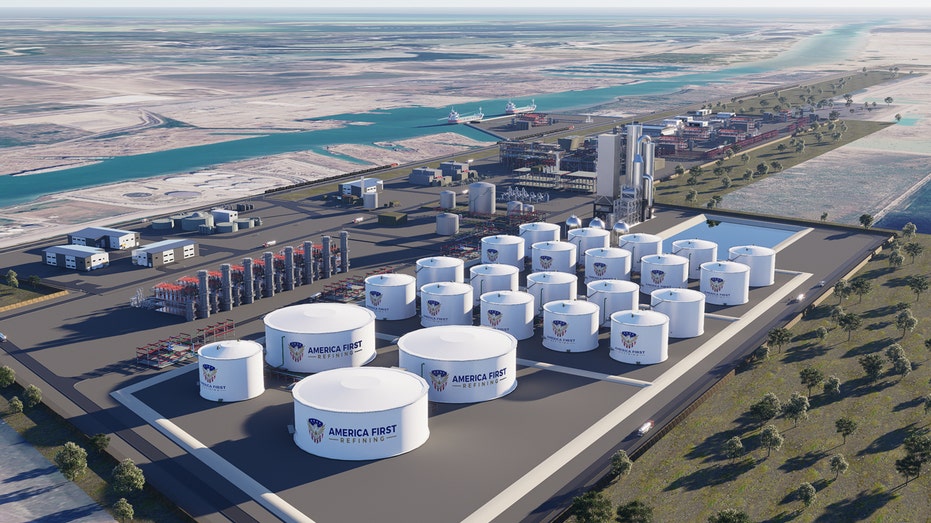
America First Refining is opening the first new U.S. oil refinery in nearly half a century in Brownsville, Texas. (America First Refining / Fox News)
Under the newly signed agreement, 1.2 billion barrels of U.S. light shale oil will be purchased and processed — a value of $125 billion, AFR will produce 50 billion gallons of refined products — a value of $175 billion, and the U.S. trade imbalance will improve by $300 billion, according to AFR.
The refinery is specifically engineered to process American light shale oil (47° API), which is cleaner, more efficient, and less costly to process than heavier imported crude.
Unlike many existing U.S. refineries that depend on foreign oil, the facility will not require imported crude, which strengthens U.S. national and economic security.
Key advantages of the facility include the capacity to process ~60 million barrels per year of 100% U.S. light shale oil, a strategic location at a deep-water U.S. port — enabling distribution to domestic and international markets, and the production of some of the cleanest gasoline, diesel and jet fuel refined at scale in the U.S.
AMID IRAN WAR, PRESIDENT TRUMP SUGGESTS SHORT-TERM OIL PRICE SPIKE IS ‘SMALL PRICE TO PAY’ FOR PEACE

America First Refining is opening the first new U.S. oil refinery in nearly half a century in Brownsville, Texas. (America First Refining / Fox News)
From 2014 to 2024, the U.S. exported nearly 10 billion barrels of crude, while still importing roughly 28 billion barrels, costing American consumers and workers more than $1.8 trillion.
Once operational, the AFR refinery will redirect up to 60 million barrels of U.S. crude annually back into domestic refining — strengthening American industry, energy security and economic growth.
Beyond industrial growth, the company’s website notes it will drive community engagement through educational partnerships and apprenticeships designed to foster long-term social equity and economic stability in the area.
The executive management team collectively has more than a century of experience in the chemical and refining industries, having managed nearly $40 billion in complex capital projects.

An oil rig in the Gulf of America. (Reuters / Reuters)
“This project represents a historic step forward for American energy production,” said John V. Calce, chairman and founder of America First Refining. “For the first time in half a century, the United States will build a new refinery designed specifically for American shale oil. Thanks to President Trump’s leadership and the resurgence of an America First energy policy, we are creating thousands of high-quality jobs while ensuring more of our nation’s energy resources are refined here at home in the cleanest, most efficient refinery on the planet.”
CEO Trey Griggs added the U.S. has a surplus of light shale oil, but a shortage of refining capacity designed to process it.
| Ticker | Security | Last | Change | Change % |
|---|---|---|---|---|
| XOM | EXXON MOBIL CORP. | 148.12 | -2.30 | -1.53% |
“By building this refinery at the Port of Brownsville, we’re unlocking a major expansion of American energy production while creating thousands of high-paying jobs and strengthening our domestic supply chain,” said Griggs, who previously held top leadership positions at major corporations including Calpine and Goldman Sachs.
GET FOX BUSINESS ON THE GO BY CLICKING HERE
Other key executives bring decades of experience from managing global operations, midstream logistics, and large trading portfolios across industry heavyweights like BP, Shell Oil, ExxonMobil, Vitol and Sunoco Logistics Partners.
The strategic advisory board includes seasoned leaders who have served as CEOs and top executives for companies including CVR Energy, YCI Methanol One and Royal Dutch Shell.

United Airlines revealed an update to its rules, which states that it has the power to ban passengers who play audio or video loudly inside the airplane, especially during flights.
If the plane has not yet taken off the ground, passengers who violate the new rule may be removed by the company and its staff from a flight, so it’s better to bring your headsets, whether wired or wireless.
United Can Ban Passengers Playing Loud Sounds in Flights
United Airlines’ Rules of Transport now has a new clause added by the company which dictates that passengers who are playing loud sounds during flights, whether from audio or video, may be removed from the aircraft at any point.
According to United’s latest update to Rule 21 “Refusal of Transport’s” Clause H (Safety), the airline has the right to refuse a passenger or passengers transport, on either a temporary or permanent basis, if they “fail to use headphones while listening to audio or video content.”
With this ruling, United staff members now have legal authority to take action against passengers who refuse to turn the volume down or stop watching the content with loud audio.
CNET reported that this rule was added on February 27, and according to a United spokesperson, they have always encouraged customers to use headphones while listening to audio content. The company also added that its Wi-Fi rules also share reminders to customers to use headphones at all times.
United Ban or Removal: Bring Your Headsets
The safest thing to do now is to bring one’s own headsets when flying United or any other airline to avoid running into problems, fights with other passengers, and ultimately, bans from airline companies.
According to the report, passengers may ask attendants or staff for complimentary headphones, but this is subject to availability.
The United spokesperson also added that this rule update is right in time as the company’s rollout of Starlink satellite internet on its planes has begun, allowing faster internet connections in-flight.
Originally published on Tech Times

Brooks Koepka’s futility at TPC Sawgrass’s iconic par-3 is legendary

Trump Administration Won’t Rule Out Further Action Against Anthropic

The 11 best hand blenders tried and tested on soups, smoothies, sauces and dips


-
Business4 days ago
Form 8K Entergy Mississippi LLC For: 6 March
-

 News Videos2 days ago
10th Algebra | Financial Planning | Question Bank Solution | Board Exam 2026
-

 Fashion4 days ago
Weekend Open Thread: Ann Taylor
-

 Tech6 days ago
Bitwarden adds support for passkey login on Windows 11
-

 Crypto World1 day ago
Paradigm, a16z, Winklevoss Capital, Balaji Srinivasan among investors in ZODL
-
 Sports5 days ago
499 runs and 34 sixes later, India beat England to enter T20 World Cup final | Cricket News
-

 Sports3 days ago
Three share 2-shot lead entering final round in Hong Kong
-

 Sports3 days ago
Braveheart Lakshya downs Lai in epic battle to enter All England Open final | Other Sports News
-

 Politics5 days ago
Top Mamdani aide takes progressive project to the UK
-

 Business10 hours ago
ExxonMobil seeks to move corporate registration from New Jersey to Texas
-

 NewsBeat5 days ago
Piccadilly Circus just unveiled ‘London’s newest tourist attraction’ and it only costs 80p to enter
-

 Entertainment4 days ago
Hailey Bieber Poses For Sexy Selfies In New Luscious Lip Thirst Traps
-

 Business2 days ago
Search for Nancy Guthrie Enters 37th Day as FBI Probes Wi-Fi Jammer Theory
-
 NewsBeat1 day ago
Pagazzi Lighting enters administration as 70 jobs lost and 11 stores close across Scotland
-

 Tech1 day ago
Despite challenges, Ireland sixth in EU for board gender diversity
-
Entertainment6 days ago
Harry Styles Has ‘Struggled’ to Discuss Liam Payne’s Death
-

 Crypto World6 days ago
New Crypto Mutuum Finance (MUTM) Reports V1 Protocol Progress as Roadmap Enters Phase 3
-

 Tech6 days ago
ACIP To Discuss COVID ‘Vaccine Injuries’ Next Month, Despite That Not Being In Its Purview
-

 Business1 day ago
Search Enters 39th Day with FBI Tip Line Developments and No Major Breakthroughs
-
 NewsBeat6 days ago
Good Morning Britain fans delighted as Welsh presenter returns to host ITV show