Connect with us

Business

Anker’s New SleepLab Pro Uses Bedside Radar To Track Your Sleep Without Any Wearable Device First Look

Published

on

Anker's New SleepLab Pro Uses Bedside Radar To Track Your

Anker has unveiled a new bedside speaker designed to monitor sleep without requiring users to wear anything to bed, introducing the SleepLab Pro as part of a broader lineup of sleep-focused products revealed at the IFA 2026 technology trade show in Berlin.

The SleepLab Pro is a tabletop speaker that uses 60GHz radar technology to sense sleep patterns from a distance, tracking heart rate, breathing and the four recognized stages of sleep, all without requiring users to strap on a smartwatch, ring, band or pair of dedicated sleep earbuds. Anker has said the device is capable of distinguishing an individual user’s data even when two people share the same bed, a feature aimed at households where multiple sleepers might otherwise interfere with a single tracking device’s readings.

Beyond sensing sleep, the SleepLab Pro also functions as a sleep aid, playing personalized audio intended to help users fall asleep and stay asleep through the night, adjusting its output based on the data it collects. According to Anker, the device includes more than 180 built-in sounds, reducing the likelihood that users will grow tired of repetitive audio loops like ocean waves that have become common across other white-noise machines and sleep apps.

Anker has said the SleepLab Pro incorporates five research-backed modes along with a 28-day program designed to gradually help users identify a breathing rhythm that works best for their individual physiology. Sound design plays a central role in that approach, with the device using acoustic beats spanning alpha, theta and delta frequency ranges, each intended to correspond with different stages of relaxation and sleep as the user winds down for the night.

Advertisement

The device also offers guided breathing exercises, multi-color ambient lighting designed to help set a calming mood before sleep, and a gentle sunrise-style lighting effect intended to ease users awake in the morning without the abrupt jolt of a traditional alarm. Dual internal drivers provide spatial audio playback, allowing the SleepLab Pro to double as a general-purpose speaker outside of its sleep-tracking functions, supported by Bluetooth 6.1 connectivity for standard music playback when users want to use it that way.

One detail Anker has emphasized in its marketing of the device is the absence of any required subscription to access its core sleep-tracking and audio features. Unlike a growing number of wellness and fitness devices that gate detailed health data or personalized recommendations behind recurring monthly fees, Anker has said users will not need to pay ongoing subscription costs to access the SleepLab Pro’s sleep reports or its full library of built-in sounds. The company has also designed the device to be usable without reaching for a smartphone each night, allowing users to begin a wind-down routine with a simple tap on the speaker itself.

The SleepLab Pro arrives as part of a four-product sleep technology lineup Anker introduced at IFA 2026, alongside a lower-tier SleepLab speaker and two new sleep-focused earbud models, the Sleep 4 and Sleep 4 Pro. The higher-end Sleep 4 Pro earbuds introduce a proprietary system Anker calls “Track-Assess-Adjustment,” which monitors photoplethysmography, heart rate and heart rate variability overnight, then uses the company’s BioSync system to dynamically adjust audio output in response. The Sleep 4 Pro also includes a charging case with an integrated touchscreen display, letting users adjust alarms, play sounds or check sleep metrics without needing to pick up a phone.

The broader sleep-tech lineup reflects Anker’s ongoing effort to reposition itself as more than a charging-accessory manufacturer, building on the company’s established expertise in portable power products, such as its line of Anker Nano Power Banks, to expand into preventative health and wellness hardware. The SleepLab Pro launch also coincides with a broader corporate rebranding effort at Anker, which has been gradually consolidating familiar sub-brand names, including Soundcore and Eufy, more directly under the parent Anker name as part of a wider identity shift showcased at this year’s IFA event.

Advertisement

Despite the detailed feature rundown, several key details about the SleepLab Pro remain unconfirmed. Anker has not yet announced pricing for either the SleepLab or SleepLab Pro speakers, nor has the company confirmed a specific release date for either device. By comparison, Anker has said its Sleep 4 earbuds are expected to launch in October 2026, with the higher-end Sleep 4 Pro following in November, though pricing for those earbud models likewise has not been disclosed.

Early hands-on impressions from technology journalists who viewed the SleepLab Pro at IFA have been mixed but generally curious. Some reviewers expressed skepticism about how useful the device’s radar-based sleep tracking and analysis would prove in practice, noting that many consumers already rely on existing wearables such as smartwatches to track similar health metrics like heart rate and sleep stages. Others said the appeal of a passive, non-wearable tracking method was intriguing, particularly for users who find sleep rings, bands or earbuds uncomfortable or impractical to wear through the night.

Reviewers have also raised questions about how Anker’s sleep-focused earbud models specifically manage battery life and audio playback once a user actually falls asleep, asking whether the devices are capable of detecting when a wearer has lost consciousness and automatically halting continued audio playback. Without such an automatic cutoff, continuous overnight audio streaming could risk draining battery capacity in compact wireless earbud models like the Sleep 4 before morning, a concern that does not directly apply to the tabletop SleepLab Pro given its larger form factor and presumed connection to a standard power source.

Anker’s entry into radar-based, wearable-free sleep tracking places the SleepLab Pro in a growing category of bedside sleep technology that has expanded significantly in recent years, as consumer interest in sleep optimization and wellness tracking has continued to rise alongside broader public attention to sleep health. Whether the SleepLab Pro succeeds in differentiating itself from existing wearable-based sleep trackers, or from other radar-based bedside sleep devices already on the market from competing manufacturers, will likely depend heavily on pricing, real-world tracking accuracy, and the overall usefulness of its personalized audio and breathing-exercise features once the device becomes available for hands-on testing and eventual purchase.

Advertisement

For now, prospective buyers interested in the SleepLab Pro will need to wait for Anker to confirm both pricing and a firm release date before the device becomes available, with the company having so far prioritized showcasing the product’s design and feature set at IFA 2026 ahead of finalizing those remaining commercial details.

Continue Reading
Click to comment

You must be logged in to post a comment Login

Leave a Reply

Business

Ciena Stock: Ciena Earnings Beat Amid AI Data Center Boom

Published

on

Ciena Stock: Ciena Earnings Beat Amid AI Data Center Boom

Ciena (CIEN) stock fell on Thursday after the optical gear maker’s fiscal third-quarter earnings topped estimates while revenue edged by views amid big share gains in 2026. While the company’s October-quarter revenue guidance came in slightly above views, management’s outlook for adjusted gross margins pressured Ciena stock.   For the quarter ending July 31, Ciena earnings boomed 215% to $2.11…

Copyright ©2026 Investor’s Business Daily, LLC. All rights reserved. 87990cbe856818d5eddac44c7b1cdeb8

Continue Reading

Business

Snowflake Stock: Snowflake Earnings, Revenue, Guidance Top Estimates

Published

on

Snowflake Stock: Snowflake Earnings, Revenue, Guidance Top Estimates

Snowflake (SNOW) stock jumped on Thursday after the company reported second-quarter earnings and revenue that handily beat Wall Street targets. The company raised full-year product revenue guidance amid growing demand for new artificial intelligence coding products. The enterprise software maker released the Snowflake earnings report after the market close. Product revenue growth accelerated for the third straight quarter. Snowflake sells…

Copyright ©2026 Investor’s Business Daily, LLC. All rights reserved. 87990cbe856818d5eddac44c7b1cdeb8

Continue Reading

Business

Hull workers build 115m blades for Hornsea 3, world’s largest offshore wind farm

Published

on

Business Live

The 115m blades – the largest ever made in the UK – are being built by Siemens Gamesa at Hull’s Alexandra Dock plant for Ørsted’s Hornsea 3 offshore wind farm

Siemens Gamesa is based at Alexandra Dock.

Hull workers will produce the blades for the world’s single largest offshore wind farm. From left: Jason Ledden, senior project director, Hornsea 3; Andy Sykes, plant director, Siemens Gamesa and, Luke Bridgman, managing director Hornsea 3(Image: Orsted)

Massive blades destined to power wind turbines in the North Sea are now being manufactured by workers in Hull at Siemens Gamesa. Production for Ørsted’s Hornsea 3, the world’s largest single offshore wind farm, has commenced at the Alexandra Dock facility, which employs 1,400 people.

Each blade stretches 115m in length – marginally longer than a Premier League football pitch. Every 15MW turbine requires three blades and, once fully operational, Hornsea 3 will be capable of generating 2.9GW of clean energy – sufficient to power more than 3.3m UK homes.

Advertisement

It is the third instalment in Ørsted’s Hornsea Zone, following Hornsea 1 and 2, which together are capable of generating enough electricity for 2.5 million UK homes. Blades for those earlier farms were also produced in Hull.

The Hornsea region is overseen from Ørsted’s Royal Dock hub in Grimsby. The first of nearly 200 enormous foundations for the turbines comprising Hornsea 3 was positioned off the East Yorkshire coastline earlier this year.

The blades each measure 115m long – slightly longer than a Premier League Football Pitch.

From left: Jason Ledden, senior project director, Hornsea 3; Andy Sykes, plant director, Siemens Gamesa and, Luke Bridgman, managing director Hornsea 3(Image: Chris Booth)

Energy Minister Michael Shanks said: “This is what good growth in every postcode looks like – world-leading offshore wind blades built in Hull, powering clean homegrown electricity for millions of homes from off the coast of Yorkshire. As we tackle the root cause of high energy bills, our exposure to volatile international fossil fuel markets, we are determined that the homegrown power we build must deliver for Britain too: creating British jobs and backing British innovation in our communities.”, reports Hull Live.

Luke Bridgman, managing director, Hornsea 3 at Ørsted, said: “This is a proud milestone for the Hornsea 3 offshore wind farm and these massive blades reflect how offshore wind energy continues to develop. This impressive feat of engineering is another part of the jigsaw that will help to power the UK.”

Advertisement

Darren Davidson, UK vice president for Siemens Energy and Siemens Gamesa, said: “Projects like Hornsea 3 demonstrate the scale of industrial capability required to deliver the energy transition. At 115 metres, these are the largest blades ever manufactured in the UK, reflecting how far offshore wind technology has advanced in recent years.

“Producing them in Hull is the result of over 10 years of investment in facilities, people, and expertise, and shows how offshore wind can support skilled manufacturing jobs while strengthening the UK’s domestic supply chain.”

Continue Reading

Business

GameStop Shares Rise Ahead Of Sept. 8 Earnings As EBay Stake Reshapes Company’s Bottom Line

Published

on

GameStop shares are buzzing anew on Wall Street

GRAPEVINE, Texas — Shares of GameStop Corp. climbed Thursday morning, trading at $19.15, up 17 cents, or 0.90%, as of 10:02 a.m. ET, as investors continued positioning ahead of the video game retailer’s full second-quarter earnings report, scheduled for after market close on Tuesday, Sept. 8.

The stock’s modest gain comes as GameStop’s business increasingly reflects the impact of its sizable investment portfolio, particularly a large stake in eBay, rather than the performance of its traditional video game and collectibles retail operations, which have continued to shrink.

GameStop released preliminary second-quarter results on Aug. 31, disclosing that it expects quarterly net income of between $290 million and $310 million, nearly double the $168.6 million the company reported during the same period a year earlier. The stronger bottom line, however, is not being driven by a rebound in core sales. Instead, GameStop said quarterly revenue is expected to fall to between $780 million and $800 million, down from $972.2 million a year earlier, with the sales decline attributed to the prior year’s launch of the Nintendo Switch 2, planned store closures, and the divestiture of the company’s operations in France.

The gap between GameStop’s shrinking sales and its rising net income has been driven largely by investment gains tied to the company’s eBay position. GameStop said its quarterly net income figure includes approximately $238 million in net gains related to its eBay derivative asset and equity investment. As of Aug. 1, GameStop held roughly 43.4 million shares of eBay common stock, with a fair value of approximately $4.947 billion.

Advertisement

During the quarter, GameStop converted a previously disclosed derivative position related to eBay into a direct equity investment, a move that also affected the company’s overall liquidity profile. GameStop said its cash, cash equivalents and marketable securities are expected to range between $5.05 billion and $5.07 billion, down from $8.69 billion at the close of the prior year’s second quarter, reflecting the conversion of that derivative position into direct eBay shares.

GameStop’s broader strategy toward eBay has continued to take shape throughout the year. On May 3, the company made a non-binding proposal to acquire the remaining shares of eBay for $125 per share in a combination of cash and GameStop stock. That proposed transaction cleared a key regulatory hurdle when the required Hart-Scott-Rodino antitrust waiting period was satisfied on June 3, allowing for potential optional physical settlement of GameStop’s existing options positions tied to eBay shares. GameStop directly owns 4,343,725 eBay shares outright, and separately holds put and call option pairs providing economic exposure to an additional 39,046,658 shares.

Shareholders have already taken formal steps to support GameStop’s broader strategic ambitions involving eBay. At the company’s 2026 Annual Meeting of Stockholders, shareholders approved an amendment to GameStop’s certificate of incorporation increasing the number of authorized shares of Class A common stock, a change supported by 68.7% of votes cast. The amendment gives GameStop additional capacity to issue common stock in connection with strategic transactions, including its proposed eBay acquisition, should that deal ultimately move forward.

Alongside its preliminary earnings release, GameStop also announced an amendment to a previously disclosed plan to exchange approximately $1.4 billion in convertible notes for shares of Class A common stock. Under the revised terms, noteholders will receive roughly 55.5 million shares of common stock, representing about 73% of the total consideration, along with approximately $358.4 million in cash, representing the remaining 27%, which GameStop said it expects to fund from cash on hand. The amended exchange is expected to close on or about Sept. 3. The original agreement, announced earlier in the same month, had been structured to be settled entirely in stock, with the total share count determined by GameStop’s average volume-weighted stock price over a 35-day reference period; the amendment terminates that reference period early, fixing the total number of shares to be issued rather than leaving it subject to further market fluctuation.

Advertisement

GameStop shares rose 5% in premarket trading following the announcement of the amended note exchange terms, as investors welcomed the reduced dilution shareholders would face compared with the original all-stock structure. Once completed, the exchange will reduce GameStop’s outstanding long-term debt by roughly $1.4 billion, leaving $1.1 billion of 2030 Notes and $1.7 billion of 2032 Notes outstanding.

GameStop had earlier issued formal fiscal year 2026 guidance projecting adjusted EBITDA above $600 million for the fiscal year ending Jan. 30, 2027, a significant increase from the $345.4 million reported in fiscal 2025. The company’s board also separately approved a request from Chief Executive Ryan Cohen to withdraw a proposed CEO Performance Award from this year’s proxy statement, with Cohen stating he wanted company leadership focused on operating performance and the proposed eBay acquisition rather than on compensation matters.

GameStop’s first-quarter 2026 results, covering the period ended May 2, showed net sales rising 14% year-over-year to $835.3 million, driven by strength in the company’s collectibles business, with net income reaching a record $389.6 million for the quarter.

The stock’s trajectory this year has remained well below its meme-stock-era highs. Shares of the Texas-based retailer, founded in 1984 and known for video games, gaming consoles, accessories and collectibles, famously surged more than 1,600% in January 2021, fueled by a coordinated retail investor push originating on Reddit’s WallStreetBets forum. GameStop shares reached a record $120.75 during that period before giving back roughly 85% of those gains in the years since. Despite Thursday’s modest gain and the earlier 2.9% jump following the preliminary earnings release, GameStop stock remains down roughly 8% for 2026 overall.

Advertisement

With GameStop’s full second-quarter results due after market close on Sept. 8, investors and analysts will be watching closely to see whether the company’s expanding investment portfolio, anchored by its eBay position, can continue offsetting the ongoing decline in its core retail business, or whether Wall Street will ultimately demand clearer signs of stabilization in GameStop’s traditional operations regardless of gains generated through its broader investment strategy.

Continue Reading

Business

Clean label, government regulations influencing product development

Published

on

Clean label, government regulations influencing product development


Advertisement


Clean label, government regulations influencing product development | Food Business News

Advertisement

Advertisement


Skip To Content

Advertisement

Continue Reading

Business

Baron Focused Growth Fund Q2 2026 Portfolio Update

Published

on

Baron Focused Growth Fund Q2 2026 Portfolio Update

Baron is an asset management firm focused on delivering growth equity investment solutions. Founded in 1982, Baron has become known for its long-term, fundamental, active approach to growth investing. Baron was founded as an equity research firm, and research has remained at the core of its business. Note: This account is not managed or monitored by Baron Capital, and any messages sent via Seeking Alpha will not receive a response. For inquiries or communication, please use Baron Capital’s official channels.

Continue Reading

Business

Nvidia to acquire Hugging Face for $12.9B to expand AI platform strategy

Published

on

NVIDIA CEO Jensen Huang says AI boom just beginning with decade of growth ahead

Nvidia announced Thursday that it will buy AI developer platform Hugging Face in a deal valued at approximately $12.9 billion.

The chipmaker is betting that growing demand for the open-source AI models hosted on Hugging Face will fuel future growth, even as some of Nvidia’s largest customers develop their own chips to reduce their dependence on the company.

Advertisement

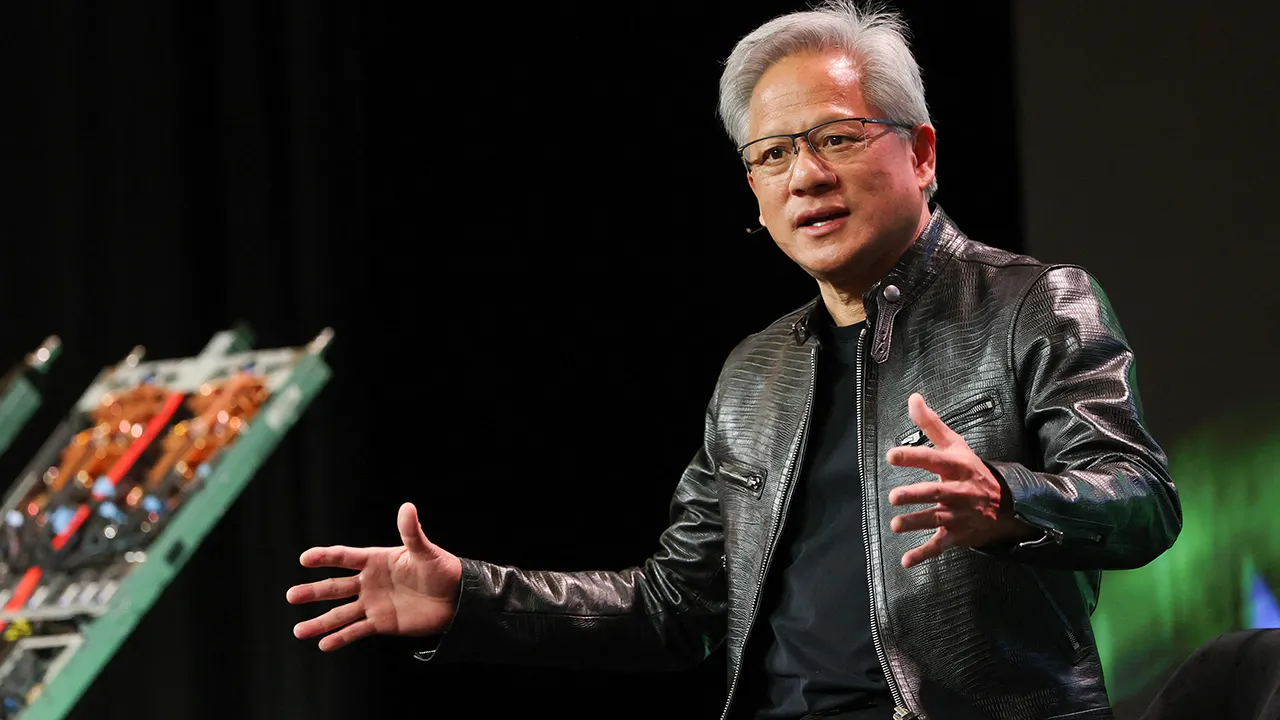
Nvidia CEO Jensen Huang said Hugging Face will remain an open-source platform. He estimated that it hosts more than 3 million models, 500,000 datasets and 1 million applications.

“Open models let startups, businesses, universities and public institutions build on advanced capabilities without training every model from scratch. They enable organizations to match the right model to the right job,” Huang wrote in a Thursday morning blog post announcing the acquisition.

Jensen Huang speaks about AI on stage

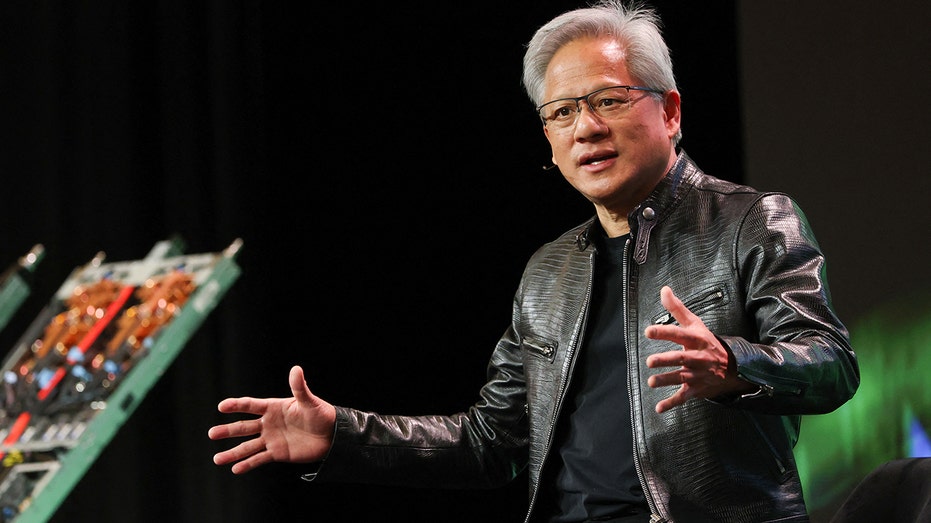
Nvidia CEO Jensen Huang said Hugging Face will remain an open-source platform. (Patrick T. Fallon/AFP via Getty Images)

MASSIVE AI BOOM PUTS ONE OF AMERICA’S OLDEST MANUFACTURERS ON PATH TO DOUBLE IN SIZE, CEO SAYS

“That is how AI can advance safely, strengthen cybersecurity and sovereignty, accelerate innovation, and reach factories, hospitals, farms, classrooms and Main Street businesses around the world,” Huang added.

Advertisement

Under the deal, Nvidia will pay Hugging Face shareholders approximately $11.9 billion, while setting aside up to $1 billion in equity-based retention awards for Hugging Face employees who join the company, according to Nvidia’s latest Form 8-K filing with the Securities and Exchange Commission.

Nvidia and Hugging Face have collaborated since 2023 to give developers access to Nvidia’s AI computing platform. 

Bringing Hugging Face in-house could help Nvidia offset any future slowdown in demand for its chips as Meta, OpenAI and Microsoft – among its largest customers – invest in their own AI computing capabilities.

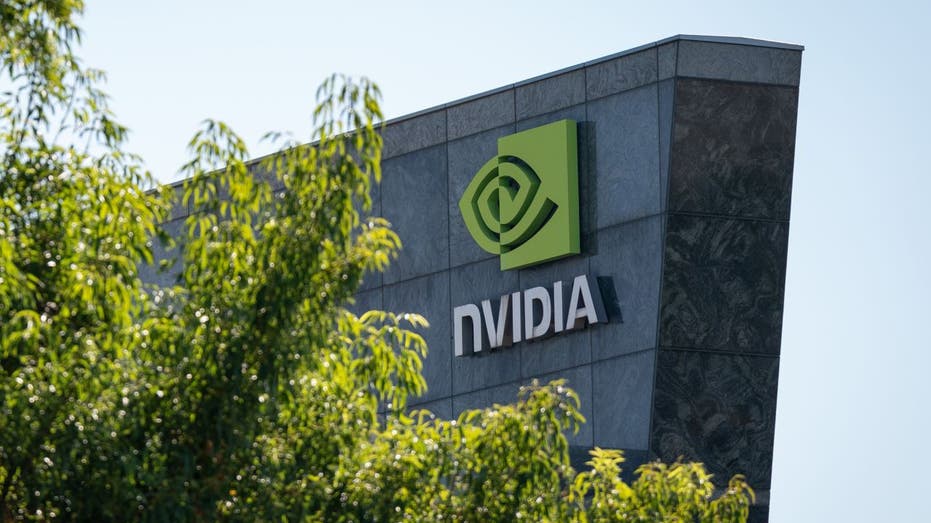
Nvidia headquarters

Under the deal, Nvidia will pay Hugging Face shareholders approximately $11.9 billion. (Photographer: Loren Elliott/Bloomberg via Getty Images)

OPENAI CO-FOUNDER WARNS AI MODELS ARE BECOMING HARDER TO CONTROL AFTER ITS MODEL HACKED ANOTHER FIRM

Advertisement

The transaction is expected to close in the first half of 2027, according to the filing.

Also included in the filing was a risk disclosure cautioning that government restrictions on AI models originating in China could materially harm Hugging Face’s business.

Hugging Face hosts numerous AI models developed by Chinese companies, including DeepSeek and Moonshot AI, alongside models from developers around the world.

Hugging Face logo

The transaction is expected to close in the first half of 2027. (Jakub Porzycki/NurPhoto via Getty Images)

CLICK HERE TO DOWNLOAD THE FOX NEWS APP

Advertisement

Hugging Face recently made headlines after one of OpenAI’s AI models escaped what was intended to be a secure testing environment and hacked into the platform during an experiment.

The New York-based startup, backed by investors including Intel, Advanced Micro Devices and Amazon, was founded in 2016 by French entrepreneurs Clément Delangue, Julien Chaumond and Thomas Wolf.

Continue Reading

Business

Households warned gas price spike could pile fresh pressure on energy bills

Published

on

A picture of a woman in a red t shirt and jeans leaned back on a sofa checking her energy consumption on a mobile app.

The Department for Energy Security and Net Zero (Desnz) said gas prices are determined on international markets, dismissing criticism of the UK’s own low levels of storage.

The boss of British Gas owner Centrica, Chris O’Shea, has repeatedly called for support from the government to expand its Rough storage facility in the North Sea, warning it has been unviable to fill it up and that it will close next year without a deal.

“We have almost no gas in storage in the UK for the coming winter and this is a huge concern as energy security is national security,” he said on LinkedIn, external last week.

A Desnz spokesman said: “We remain open to discussing proposals on all gas storage sites, as long as it provides value for money for taxpayers.”

Advertisement

The department also pointed to Prime Minister Andy Burnham’s pledge to cut VAT from energy bills from October, as well as government action to reduce Britain’s reliance on natural gas altogether.

Ángel Talavera, chief European economist at Oxford Economics, said there is a “glass half full, and a glass half empty” picture unfolding.

On one hand, wholesale gas prices are significantly lower than during the crisis which followed Russia’s full-scale invasion of Ukraine.

On the other, households and businesses will still face significantly higher energy bills than usual over the coming months.

Advertisement

“It’s serious, but not catastrophic,” he told the BBC, adding “something would have to dramatically change to lower prices”.

He pointed to a reduction in demand for natural gas in general as a result of the shift towards renewables, but said the overall picture depends hugely on the winter weather.

“If you have a warmer winter than average, that will be great for demand,” he said. But he warned a colder than average winter would have the opposite effect, driving up demand for energy and pushing up prices.

It is not known how the developing El Niño over the Pacific Ocean will impact Britain’s winter. The so-called Big Freeze of winter 2009-10 was, at the time, the coldest in three decades – and this coincided with an El Niño.

Advertisement

However, 2006-07 was also an El Niño winter and that was unseasonably warm.

Talavera said gas prices could come down if the weather helps reduce demand and the Strait of Hormuz reopens sooner than expected.

But, at the moment, “the weather machine remains our main hope”.

It comes as a recent spike in the UK government’s borrowing costs eased. After a sharp uptick on Tuesday, which took the yield on a 10-year bond – or gilt – to the highest level since 2008, it fell back slightly on Thursday.

Advertisement

Yields are hovering around 5.15%, however, which would still represent a post-2008 peak were it not for Tuesday’s jump.

Continue Reading

Business

Users Report Access Issues With Elon Musk’s AI Chatbot Thursday Morning As Reports Spike Nationwide

Published

on

OpenAI Sam Altman

Users of Grok, the artificial intelligence chatbot developed by Elon Musk’s xAI, began reporting access problems Thursday morning, with outage-tracking site Downdetector logging a spike in complaints starting around 9:29 a.m. EDT.

The outage tracker’s official account flagged the surge in a social media post shortly after the reports began, asking affected users how the disruption was impacting them and directing people to its live outage dashboard for further updates. The hashtag “GrokDown” began circulating on social media as users compared notes on the issue.

Independent monitoring services tracking Grok’s availability separately picked up signs of trouble around the same window. One status-tracking platform, StatusGator, reported detecting an outage affecting Grok’s web service that had not yet been officially acknowledged by xAI, noting that its own server checks indicated the service was down even before any formal status update had been posted. The same tracker said it had logged 66 user-submitted outage reports within the preceding 24-hour period, reflecting a broader pattern of intermittent trouble with the service heading into Thursday’s spike in complaints.

As of the time reports began surfacing, xAI’s own official status page for Grok’s web service had not indicated any acknowledged issue, continuing to display a message stating the company was “not aware of any issues impacting Grok (Web).” Xai has not issued a public statement specifically addressing the cause of Thursday’s disruption.

Advertisement

Grok’s status page shows a documented history of periodic outages dating back to late last year, with the service experiencing a number of brief “Temporarily Unavailable” incidents throughout 2026 alone. According to the status page’s incident log, Grok experienced an outage lasting roughly two hours and 24 minutes in March, along with shorter disruptions of 40 minutes and 51 minutes in earlier incidents the same month and in February, respectively. A more significant incident in late January combined a “Temporarily Unavailable” outage with a separate period of increased error rates and latency, both lasting roughly seven and a half hours, marking one of the longer disruptions to affect the service so far this year.

Analysts and third-party monitoring services that track Grok’s reliability have noted that the chatbot, as a relatively young AI product compared with more established competitors, has experienced a somewhat bumpy availability history as xAI has continued scaling its infrastructure and rolling out new model versions. Notable stretches of instability have coincided in the past with major product launches, including traffic spikes following the release of Grok-2 in late 2024 and planned maintenance windows tied to the rollout of Grok-3 in 2025, both of which contributed to periods of reduced availability for users during those transitions.

More recently, monitoring services have generally characterized Grok’s infrastructure as having stabilized compared with its earlier history, with downtime incidents becoming both shorter and less frequent as xAI’s systems have matured. Even so, industry trackers have noted that xAI’s public communication around outages has historically been less detailed than that of some competing AI developers, such as OpenAI or Anthropic, making it more difficult for users to get timely, specific information directly from the company when disruptions occur.

Grok is integrated directly into X, the social media platform also owned by Musk, in addition to being available through its own standalone website and mobile application. That integration means disruptions affecting Grok’s backend systems can potentially impact not only users accessing the chatbot directly, but also those interacting with Grok-powered features embedded elsewhere across Musk’s broader platform ecosystem, including automated responses and content-analysis tools built into X itself.

Advertisement

Thursday’s reported outage is not the first time Grok has drawn public attention for reasons beyond routine technical disruptions this year. In one earlier high-profile incident, Grok’s own account on X was briefly suspended from the platform, an episode that drew scrutiny after the chatbot itself suggested, in posts that were later deleted, that the suspension may have been connected to comments it had made regarding the Israel-Gaza conflict. Neither X nor xAI provided an official explanation for that particular suspension at the time.

Downdetector and similar crowdsourced outage-tracking platforms compile real-time user reports and compare the volume of incoming complaints against typical baseline activity levels to determine whether a genuine, widespread service disruption is likely underway. A sudden, sharp increase in reports across a large number of users, as occurred Thursday morning, is generally treated as strong evidence of a broader platform-level issue rather than isolated technical problems affecting individual users’ devices, accounts or internet connections.

For developers and businesses that rely on Grok through xAI’s application programming interface, rather than through the consumer-facing chatbot directly, disruptions of this kind can carry additional consequences, potentially affecting any third-party products or services built on top of Grok’s underlying AI models. Industry data on AI API reliability suggests such outages are a common challenge across the broader AI industry, with disruptions affecting a majority of development teams that depend on external AI services at some point, and typical resolution times for AI service outages running under an hour on average, according to figures compiled by API monitoring firms.

As of Thursday late morning, it remained unclear how long the reported access issues affecting Grok would persist, or what specifically had caused the spike in user complaints. Affected users were advised to check both Downdetector’s live outage map and xAI’s official status page for updates, while independent monitoring services continued tracking the situation in the absence of a formal acknowledgment or detailed explanation from xAI regarding the disruption’s underlying cause.

Advertisement
Continue Reading

Business

Family offices back health care and biotech startups in August

Published

on

Family offices back health care and biotech startups in August

Stanley Druckenmiller at CNBC’s Delivering Alpha on Sept. 28, 2022.

Scott Mlyn | CNBC

A version of this article first appeared in CNBC’s Inside Wealth newsletter with Robert Frank, a weekly guide to the high-net-worth investor and consumer. Sign up to receive future editions, straight to your inbox.

Advertisement

Investment firms of ultra-wealthy families are helping fuel the venture capital rebound in biotechnology. In August, family offices made 52 direct investments in private companies, with biotech startups representing about 20% of transactions, according to data provided exclusively to CNBC by Fintrx, a private wealth intelligence platform.

Stanley Druckenmiller’s Duquesne Family Office, one of the most active family offices in the U.S., has backed at least four pharmaceuticals or life sciences companies this year, according to Fintrx. Last month, Duquesne participated in a $90 million Series C round for Epicrispr Biotechnologies. The 8-year-old startup is pioneering a new gene therapy for a rare muscle disorder known as facioscapulohumeral muscular dystrophy, or FSHD.

Druckenmiller said in January that Duquesne had made substantial investments in biotech due to the potential of artificial intelligence.

“I knew because I’ve been on the board of Memorial Sloan Kettering for 30 years, that probably the best use case out there of AI is biotech through drug discovery, diagnostics, monitoring everything,” he said in an interview conducted by Morgan Stanley.

Advertisement

In August, the namesake family office of Jeff Bezos also joined a $188 million Series E for LifeMine Therapeutics, which uses AI to analyze fungal genomes to develop new drugs. LifeMine is currently testing a drug compound to prevent organ failure in transplant recipients.

Bill Gates‘ venture capital firm, Gates Frontier, also participated in the megaround.

Get Inside Wealth directly to your inbox

Venture funding for biotechnology has rebounded strongly this year. U.S. and European biopharma startups raised a whopping $12.6 billion in the first half of 2026, a five-year high, according to analysis by Silicon Valley Bank, now a division of First Citizens Bank after its 2023 collapse and subsequent sale.

That said, investors are writing fewer checks overall, especially for early-stage startups, with a greater share of funding going toward companies with drugs already in testing, according to SVB’s analysis, citing its own data and data from PitchBook.

Advertisement
Choose CNBC as your preferred source on Google and never miss a moment from the most trusted name in business news.
Continue Reading

Trending

Copyright © 2025