
Business
Apple Stock Holds Steady Near $252 as Geopolitical Tensions and Oil Surge Test Tech Resilience

Apple Inc. (NASDAQ: AAPL) shares closed at $252.89 on Thursday, up modestly by 0.27 or 0.11% from the prior session, demonstrating relative stability in a turbulent market rocked by escalating uncertainties in the U.S.-Iran conflict and sharply higher oil prices that stoked inflation fears across Wall Street.

The iPhone maker’s performance stood out amid broader selling pressure. While the Dow Jones Industrial Average plunged 469.38 points, or 1.01%, to close at 45,960.11, and the Nasdaq Composite dropped more than 2%, Apple managed a narrow gain on volume exceeding 41 million shares. The stock traded in a range between $250.77 and $257.00 during the session.
Apple’s market capitalization remained around $3.71 trillion to $3.75 trillion, underscoring its status as one of the world’s most valuable companies despite shares sitting roughly 12% below the 52-week high near $288.62. The stock continues to trade well above its 52-week low of about $169.21, supported by strong brand loyalty and a diversified business model.
Analysts maintain a predominantly bullish outlook. The consensus 12-month price target hovers near $297 to $304, suggesting potential upside of 17% to 20% from current levels. Optimistic calls, including from Wedbush Securities, point as high as $350, with analysts highlighting 2026 as a pivotal year for Apple’s artificial intelligence ambitions.
Market Volatility Tied to Middle East Developments
Thursday’s trading reflected Wall Street’s heightened sensitivity to geopolitical headlines. The U.S.-Iran conflict, now in its fourth week, has driven oil prices sharply higher, with Brent crude climbing toward or above $104-$108 per barrel in recent sessions amid fears of prolonged supply disruptions through the Strait of Hormuz. U.S. West Texas Intermediate crude also rose significantly.
Conflicting signals from Washington and Tehran have fueled uncertainty. Reports of a U.S. 15-point proposal for de-escalation met with Iranian denials or cautious reviews, dimming hopes for a swift resolution. Higher energy costs risk acting as a drag on consumer spending and corporate margins, potentially delaying Federal Reserve rate cuts and pressuring growth-sensitive sectors like technology.
Apple’s modest advance came even as high-valuation tech peers faced steeper declines. The company’s massive cash reserves, recurring services revenue and premium product positioning appeared to offer some buffer against the day’s macro headwinds.
Supply Chain Diversification Gains Momentum
Apple has accelerated efforts to reduce reliance on China for manufacturing. The company now assembles approximately 25% of its iPhones in India, producing around 55 million units there in 2025 — a 53% increase from the previous year. This shift helps mitigate risks from tariffs and geopolitical tensions.
Plans call for India to produce the majority — or potentially most — of iPhones sold in the United States by the end of 2026. This would require roughly doubling output in the country and represents a major step in Apple’s long-term supply chain strategy. The move comes as the company navigates potential trade policy changes and seeks greater geographic resilience.
Apple has also expanded its roster of U.S.-based suppliers and invested in domestic component production, further diversifying its global footprint while maintaining focus on quality and innovation.
AI Initiatives and Siri Overhaul in the Spotlight
Investors continue to eye Apple’s progress in artificial intelligence. The company is working on a significantly enhanced version of its Siri voice assistant, with expectations that a major upgrade could feature prominently at WWDC 2026 alongside iOS 27 and macOS 27 releases. Internal testing challenges have reportedly pushed some advanced capabilities beyond an earlier March target, with features potentially rolling out in phases through iOS 26.5 or later in the year.
Apple has explored partnerships, including potential integration of third-party models such as Google’s Gemini, to bolster Siri’s capabilities. While the company has adopted a more measured approach to generative AI spending compared with some rivals, executives and analysts believe these enhancements could drive meaningful growth as Apple Intelligence features expand across the ecosystem.
Upcoming software updates are expected to bring deeper on-device intelligence, better context awareness and improved handling of complex user requests. These developments could help Apple close perceived gaps with competitors in the rapidly evolving AI landscape.
iPhone Demand and Services Growth Provide Foundation
The iPhone remains Apple’s core revenue driver, supported by loyal customers, trade-in programs and enterprise adoption. Steady demand has persisted despite macroeconomic pressures, though sustained high oil prices could eventually weigh on global consumer spending for premium devices.
Services — including the App Store, Apple Music, iCloud, AppleCare and emerging advertising initiatives — continue to deliver high-margin, recurring revenue that provides stability. Plans to introduce ads in Apple Maps in the U.S. and Canada this summer represent one avenue for further expansion.
Valuation remains a point of discussion, with shares trading around 32 times trailing earnings. Bulls argue that Apple’s ecosystem strength, innovation pipeline and capital return programs (dividends and buybacks) justify the multiple, while bears point to risks from trade policies, competition and any prolonged economic slowdown.
Analyst Views and Technical Considerations
Wall Street’s consensus rating for Apple is Moderate Buy to Buy, with dozens of analysts covering the stock. Price targets range from conservative levels near $205-$248 to bullish forecasts up to $350. Many see the current consolidation as a potential entry point for long-term investors betting on AI-driven growth and supply chain improvements.
Technically, support levels are watched near $250, with resistance around $257-$260 in the near term. A decisive move above recent highs could signal renewed momentum, while broader market weakness tied to energy prices or conflict escalation might test lower supports.
For individual investors, Apple often serves as a core holding in diversified portfolios due to its track record of adaptation and shareholder returns. However, near-term volatility linked to oil markets and geopolitics warrants caution and disciplined risk management.
Broader Context and Outlook
Apple’s relative resilience Thursday highlights the differing dynamics within the technology sector. While some names tied closely to cyclical spending or speculative AI plays faced heavier pressure, Apple’s blend of hardware, services and brand power has helped it weather uncertainty.
Looking ahead, investors will monitor any fresh developments from the Middle East, movements in oil futures and upcoming U.S. economic data on inflation and employment. Apple’s next earnings report will be scrutinized for commentary on demand trends, supply chain progress and AI monetization.
Longer term, many strategists view 2026 as potentially transformative for Apple as it rolls out more advanced AI features and completes key manufacturing shifts. Yet the path may include continued swings as external risks evolve.
Founded in 1976, Apple has grown from a garage startup into a global leader in consumer electronics and services. Its stock, while not immune to macroeconomic shocks, reflects ongoing confidence in management’s ability to innovate and adapt amid challenges.
As markets open Friday, attention will remain on oil prices, diplomatic signals regarding Iran and how these factors influence broader risk sentiment. For Apple specifically, execution on diversification, software advancements and sustained iPhone strength will likely shape its trajectory through the remainder of 2026 and beyond.

Heard on the Street Recap: Weight of War
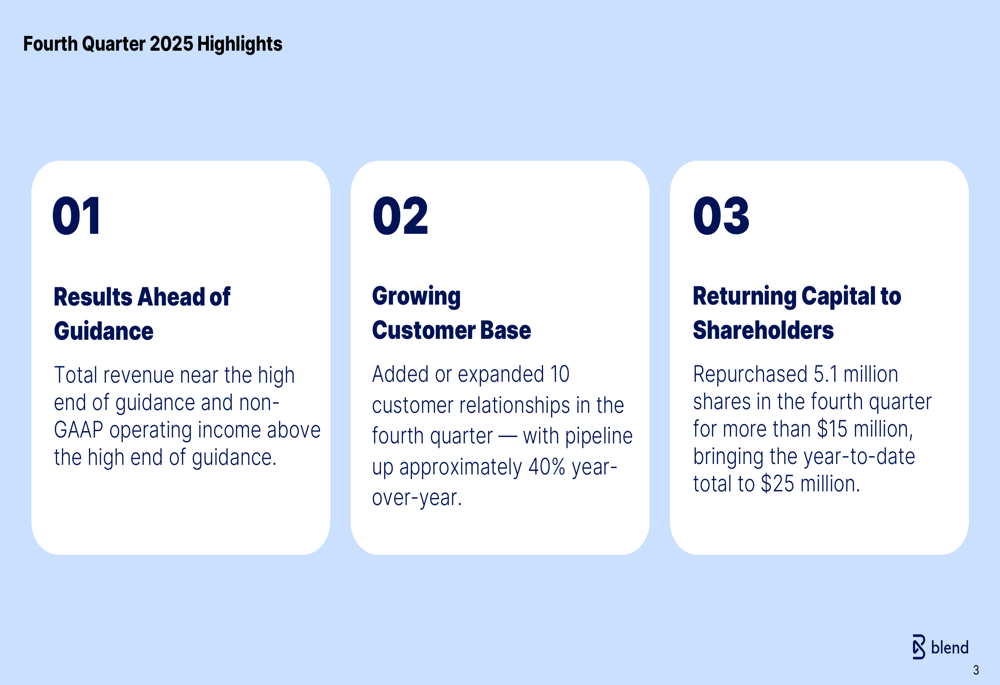
Blend Labs Q4 2025 slides: revenue beats, margins expand amid EPS miss

Cees ´t Hart
Good morning, ladies and gentlemen. It’ 10 a.m., so I propose that we open this meeting. Welcome. I’m Cees ´t Hart. I Chair the Supervisory Board, and I’m pleased to open this Annual General Meeting of Shareholders and welcome you all. I’m also pleased to welcome those following this meeting online.
Today, all members of the Executive Board are present. From left to right, they’re seated at the table, our COO, Jesus Echevarria; our CHRO, Myriam Beatove, CFO; Jorge Vazquez and our birthday boy, Sander van ‘t Noordende. And we hope that you’ll join us for coffee on his behalf. I’m not going to sing happy birthday because I’m not sure what the result would be, but welcome, but welcome Sander van ‘t Noordende on behalf of the Supervisory Board, alongside myself. From left to right, the Audit Committee Chair, Laurence Debroux, the Remuneration Committee Chair, Annet Aris and Jeroen Drost. The other members of the Supervisory Board are attending the meeting online. Also with us this morning is
Also with us this morning is Jacobina Brinkman from the accountancy firm,PricewaterhouseCoopers at 2D adoption of the 2025 financial statements. She’ll be happy to answer questions concerning the financial statements. Previous — prior to this, she’ll deliver a brief explanation about the annual audit process and the auditor’s report. We also have with us the Company Secretary, Jelle Miedema, who I hereby appoint as Secretary of the meeting and will first explain some procedural matters.

The yield rose more than 20 basis points this week, the most since May 2022, LSEG data showed.
The 10-year bond opened at 6.93% and traded in a range of 6.95% to 6.90%, according to Clearing Corporation of India data.
The yield on India’s 10-year government bond rose sharply Friday. This increase follows a cut in fuel excise duty which impacted the fiscal outlook. High state bond sales and rising oil prices also contributed to the jump. The benchmark yield has seen its biggest weekly rise since May 2022.
“The opening and follow-up action both were weak today. One would have expected some demand to emerge after yields touched 6.95%, but there was no retracement,” said Vijay Sharma, senior executive vice-president at PNB Gilts.
Traders are finding it hard to call specific levels in this kind of volatility, especially with the West Asia war ongoing and oil prices staying elevated.

 Agencies
 Brent crude oil prices rose by $1.87, or 1.73%, to $109.88 a barrel, LSEG data showed.
“We cannot project future levels in such volatile conditions, and we do not know what will happen overnight,” Sharma said. Bonds are also under strain as states sold debt worth nearly ₹1 lakh crore during the week, amid waning investor demand.
Financial institutions are expected to face mark-to-market losses as the benchmark yield has increased more than 30 basis points this quarter, from 6.60% on January 1.
Many dealers no longer expect the yield to fall to the 6.75% level, even if the West Asia war ends, which is the best-case scenario.

# Lefkofsky Eric P, CEO of Tempus AI, sells $7.7 million in stock

The Federal Trade Commission warned four leading payment processors against denying customers access to financial services due to their political or religious views.
The letters, sent by FTC Chair Andrew Ferguson to the chief executives of , Visa V -3.28%decrease; red down pointing triangle, PayPal PYPL -3.56%decrease; red down pointing triangle and Stripe, cited President Trump’s August executive order on “debanking,” which Ferguson said “makes clear that it is unacceptable to debank law-abiding citizens due to ‘political affiliations, religious beliefs, or lawful business activities.’”
Copyright ©2026 Dow Jones & Company, Inc. All Rights Reserved. 87990cbe856818d5eddac44c7b1cdeb8
Unknown Executive
To all the people that are today — that are outside the room. Please enter the room. We also welcome those that right now are listening through YouTube and watching through the YouTube channel, we will be starting momentarily.
Very well. So we will begin our assembly. First of all, we invite you to look at the following video that summarizes what — welcome — what Mineros is as a company.
[Presentation]
Unknown Executive
We were born in 1974 with our operation in Colombia. From that beginning, we had as a purpose to generate wellbeing for all through responsible and well-made mining, development and progress stories are stars of a journey, which is built with hard, with tangible facts that convey your commitment to sustainability, more than 50 years of history, learning and achievements that give us legacy of communities, family and the regions where we have presence. According to the new direction of growth that we set back then in 2013, we acquired Hemco in Nicaragua which allowed us to increase annual production and to continue bringing the very best of our mining model to new geographies, with new talent, capabilities and ways of doing things. We continue strengthening our presence in LatAm.
In 2021, we listed in FX, in Toronto, in — being the first company in Colombia to be listed in Toronto. In 2024, Sun Valley Investments enters as the main shareholder, opening a new horizon and new opportunities for growth and learning.
In 2025, we acquired 100% of the La Pepa Project in Chile, a new growth

Check out what’s clicking on FoxBusiness.com.
A reported “strong smell” at a key air traffic control facility disrupted flights Friday evening at major airports across the Washington, D.C. region for the second time in two weeks.
The Federal Aviation Administration (FAA) temporarily halted flights at Ronald Reagan Washington National Airport (DCA), Washington Dulles International Airport (IAD), Baltimore/Washington International Airport (BWI), Charlottesville–Albemarle Airport (CHO), and Richmond International Airport (RIC), the agency told FOX Business in an email.
The FAA said the disruptions were due to a “strong smell” at the Potomac Terminal Radar Approach Control (TRACON) facility, which manages airspace in the region.
GROUND STOP LIFTED AT MAJOR DC-AREA AIRPORTS AFTER CHEMICAL ODOR DISRUPTS AIR TRAFFIC CONTROL
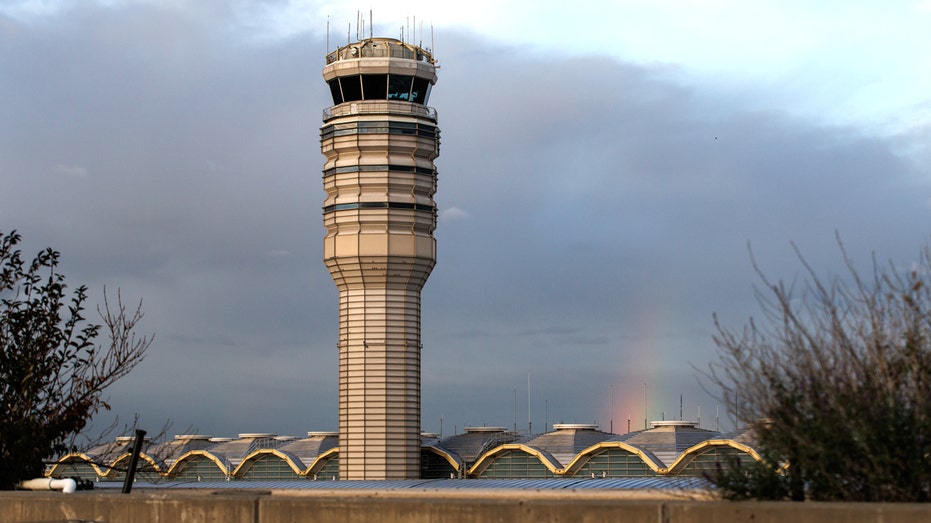
An FAA air traffic control tower at Ronald Reagan Washington National Airport in Arlington, Va. (Samuel Corum/Bloomberg via Getty Images / Getty Images)
It was not immediately clear what caused the smell.
Ground stops at Dulles, Reagan National, and BWI remained in effect until around 8 p.m. ET before being lifted, according to the FAA’s website.
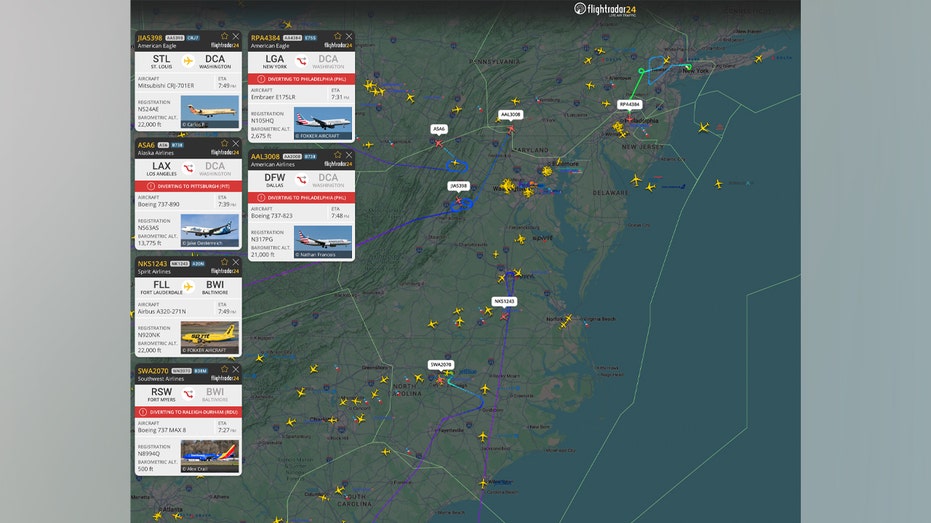
The FAA said the disruption was due to a “strong smell” at the Potomac Terminal Radar Approach Control (TRACON) center. (Flightradar24)
As of 8:30 p.m., Reagan National was experiencing ground delays, while BWI continued to see departure delays.
Earlier this month, a ground stop was similarly issued at several airports in the Washington, D.C., region after a chemical odor was detected at the TRACON facility.
FATAL LAGUARDIA COLLISION RENEWS FOCUS ON RUNWAY INCURSION RISKS ACROSS US
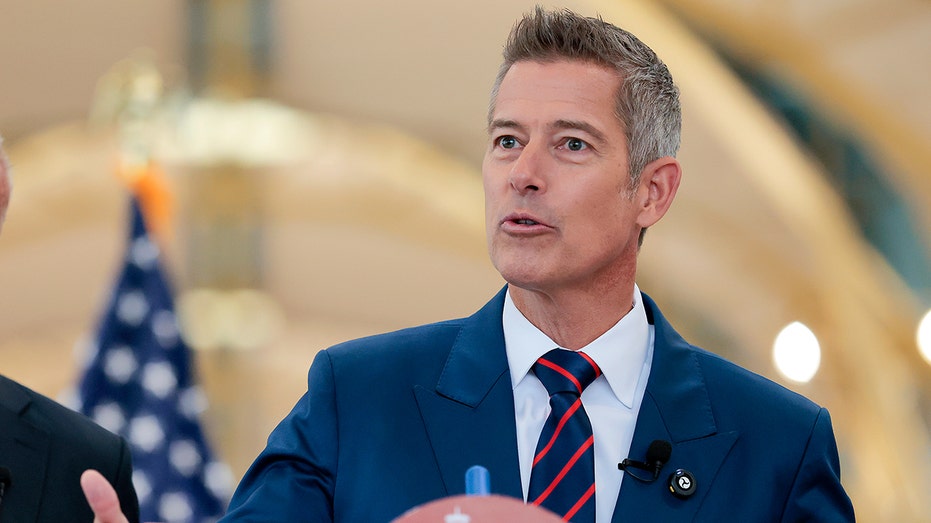
Transportation Secretary Sean P. Duffy speaks at a news conference at Ronald Reagan Washington National Airport. (Heather Diehl/Getty Images / Getty Images)
GET FOX BUSINESS ON THE GO BY CLICKING HERE
The temporary ground stop on March 13 similarly affected DCA, IAD, BWI and RIC, Transportation Secretary Sean Duffy said at the time.
Duffy said the smell came from an overheated circuit board, which has since been replaced.
Weak global cues and concerns over oil prices weighed on sentiment, with analysts warning of further near-term declines. In the event of the conflict continuing to rage unchecked amid subdued central bank intervention, some traders are expecting the Indian currency to sink even further. The rupee closed at 94.81 to the dollar on Friday, weakening 84 paise from its previous close of 93.97. The rupee weakened to 94.85 at its lowest on Friday and has declined over 3.5% this month, LSEG data showed. Brent crude oil prices rose by $1.87, or 1.73%, to $109.88 a barrel. While state-run banks sold dollars, likely on behalf of the central bank, the intervention was muted, traders said.
AgenciesCurrency likely to fall further, say experts; indices tumble over 2% amid bear attacks
Strait Closure Taking Toll
That makes the rupee vulnerable to further depreciation, with many traders incorporating levels as weak as 97 per dollar into their forecasts. “Nothing really changes until the Strait of Hormuz opens up,” said Anindya Banerjee, head of commodity and currency at Kotak Securities. “Even if the intensity of the war eases a bit, as long as there’s still friction around the strait and oil is hovering near $115, the rupee could easily drift towards the 96 to 97 per dollar range.”
The NSE Nifty closed at 22,819.60, down 486.85 points or 2.1%, while the BSE Sensex ended at 73,583.22, falling 1,690.23 points or 2.3%. Both indices declined 1.3% over the past week. The Volatility Index (VIX) urged 8.7% to a four-year high of 26.8, reflecting heightened near-term risk expectations.


Justin Law has a Ph.D in Chemistry from Rice University and has earned the CFA Institute Investment Foundations certificate. He applies his knowledge to deep value and dividend paying stocks.Justin is a contributor to the investing group The Dividend Kings where he curates the Dividend Champions list, a monthly publication of companies with a history of consistently increasing their dividends. The Dividend Kings is a group of analysts teaching individuals how to invest more wisely in dividend stocks. Learn More.
Analyst’s Disclosure: I/we have a beneficial long position in the shares of DOX, O, CMCSA, BMY, CSCO, MORN, RGLD, SYY, PEP either through stock ownership, options, or other derivatives. I wrote this article myself, and it expresses my own opinions. I am not receiving compensation for it (other than from Seeking Alpha). I have no business relationship with any company whose stock is mentioned in this article.
Seeking Alpha’s Disclosure: Past performance is no guarantee of future results. No recommendation or advice is being given as to whether any investment is suitable for a particular investor. Any views or opinions expressed above may not reflect those of Seeking Alpha as a whole. Seeking Alpha is not a licensed securities dealer, broker or US investment adviser or investment bank. Our analysts are third party authors that include both professional investors and individual investors who may not be licensed or certified by any institute or regulatory body.

Trump talk kicks off Friday night’s Late Late Show
Heard on the Street Recap: Weight of War

Andrew Garfield Snubs J.K. Rowling While Praising ‘Harry Potter’


-
 NewsBeat3 days ago
Manchester United reach agreement with Casemiro over contract clause amid transfer speculation
-

 Crypto World6 days ago
Best Crypto to Buy Now: Strategy Just Spent $1.57 Billion on Bitcoin During Fear While Early Investors Quietly Enter Pepeto for 150x Potential
-

 News Videos2 days ago
Parliament publishes latest register of MPs’ financial interests
-

 Crypto World6 days ago
Bitcoin Price News: Bhutan Sells $72 Million in BTC Under Fiscal Pressure, but the Smart Money Entering Pepeto Sees What the Market Does Not
-

 Sports5 days ago
Remo Stars and Kano Pillars Strengthen Survival Hopes in NPFL
-

 Sports5 days ago
Gary Kirsten Accuses Pakistan Cricket Board Of ‘Interference’, Mohsin Naqvi Responds
-

 Business5 days ago
No Winner in March 21 Drawing as Prize Rolls to $133 Million for Next
-

 Tech5 days ago
Give Your Phone a Huge (and Free) Upgrade by Switching to Another Keyboard
-

 Tech5 days ago
AI enters the chat: New Seattle dating app relies on tech to facilitate meaningful human connections
-

 News Videos5 days ago
Ch 9 Financial Management Part 1 | Detailed One Shot | Class 12 Business Studies Boards 2026
-

 Tech6 days ago
Today’s NYT Connections Hints, Answers for March 22 #1015
-

 Business1 day ago
Instagram, YouTube Found Responsible for Teen’s Mental Health Struggle in Historic Ruling
-

 Business6 days ago
Will Duke Basketball Win It All? Duke Basketball Enters Second Round as Third Favorite to Claim NCAA Title
-

 Sports5 days ago
2026 Kentucky Derby horses, odds, futures, preview, date: Expert who hit 12 Derby-Oaks Doubles enters picks
-
 NewsBeat6 days ago
Update on Wisbech river crash as search for teenage boy enters fifth day
-
 Entertainment4 days ago
Cynthia Bailey Dishes on ‘RHOA’ Season 17, Discusses Kandi
-

 Tech4 days ago
Samsung will soon let you control smart home devices from your car’s dashboard
-

 Fashion3 days ago
Does It Matter What You Wear When You’re Laid Off and Looking?
-
 NewsBeat2 days ago
Tesco is selling new Cadbury Dairy Milk bar and people can’t wait to try it
-

 NewsBeat5 hours ago
The Story hosts event on Durham’s historic registers
You must be logged in to post a comment Login