
Business
‘Arirang’ Album Drops March 20, Live Concert March 21 in Seoul

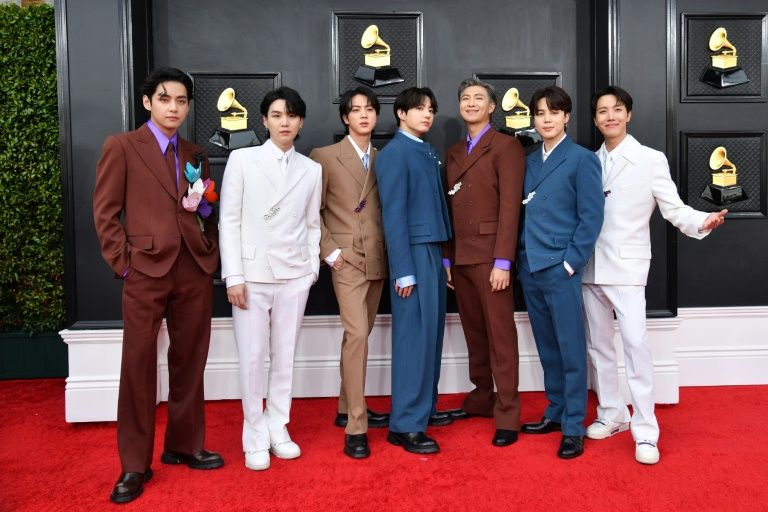
Global K-pop phenomenon BTS is on the cusp of one of the most anticipated returns in music history, with their fifth studio album *Arirang* set for release on March 20, 2026, followed by a landmark live performance streamed worldwide on March 21. The septet — RM, Jin, Suga, J-Hope, Jimin, V and Jungkook — ends a nearly four-year group hiatus triggered by mandatory military service, marking their first full-album drop since 2020’s *Be* and their first collective activities since reuniting post-discharge.
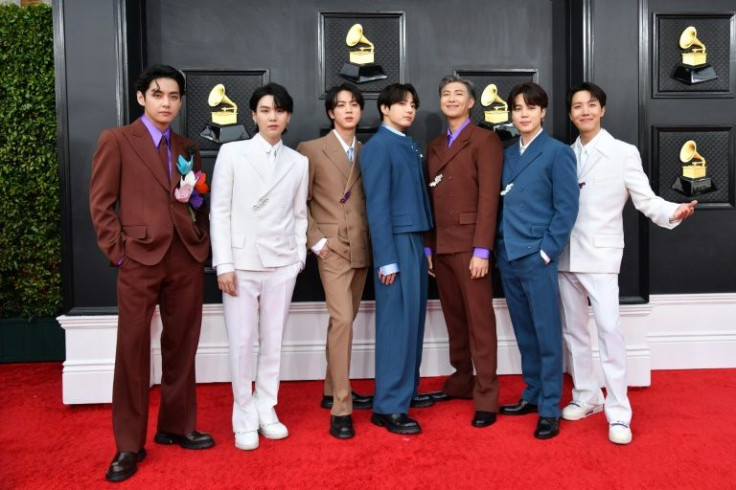
BigHit Music (HYBE) confirmed the March 20 comeback date in early January, with the announcement igniting a frenzy among ARMY, the band’s devoted fanbase. “March 20th comeback confirmed,” the label posted on X, translating the Korean message that sent pre-order demands soaring and resale markets for merchandise surging. The album, titled *Arirang* after Korea’s traditional folk song symbolizing resilience and longing, reflects the members’ journey through service, solo ventures and rediscovery as a unit.
Lead single “Swim” teases have already surfaced, with the first music video snippet showing nautical themes and high-energy choreography. Fans on social media praised the visual as a nod to BTS’s signature blend of introspection and dynamism. Pre-orders opened in mid-January, with physical editions featuring member-specific concepts and photobooks selling out rapidly across platforms.
The comeback culminates in *BTS THE COMEBACK LIVE | ARIRANG*, a special outdoor concert at Seoul’s historic Gwanghwamun Square on March 21 at 8 p.m. KST. Broadcast live exclusively on Netflix for all subscribers, the event celebrates the album’s release and BTS’s return to the stage after three years and nine months. Countdown events have unfolded daily in Seoul, with D-5 to D-4 activations drawing crowds and generating viral footage of fan light-stick oceans and choreo practices.
A Netflix documentary, *BTS: THE RETURN*, premieres March 27, offering behind-the-scenes access to the recording process in Los Angeles and Seoul. Directed by Bao Nguyen and produced by HYBE and This Machine, the film captures moments of doubt, laughter and creative breakthroughs as the members reconvened post-service. Trailer footage shows RM leading discussions, Jungkook in vocal booths and Jin cracking jokes, underscoring their unbreakable bond.
All seven members completed mandatory military service by mid-2025. Jin discharged first in June 2024, followed by J-Hope in October 2024. RM and V finished in June 2025, with Jimin and Jungkook shortly after. Suga, serving alternative social work duty due to health considerations, wrapped up last in June 2025. No public discharge events occurred for most to avoid overcrowding, but private reunions fueled speculation about group plans.
The hiatus allowed prolific solo output: RM’s introspective albums, Suga’s Agust D tours, J-Hope’s *Jack in the Box*, Jimin’s *Face* and *Muse*, V’s *Layover*, Jungkook’s *Golden* and Jin’s upbeat tracks. These projects kept BTS culturally dominant, with members topping charts and earning Grammy nods individually. The group reconvened in summer 2025 for recording, with Jimin confirming completion in November.
A massive world tour, *BTS WORLD TOUR ARIRANG*, launches April 9, 2026, in Goyang, South Korea, spanning Asia, North America, Europe, Latin America and Australia through March 2027. Initial dates sold out instantly, with additional shows expected. The 82-date itinerary positions BTS to shatter attendance records set by their pre-hiatus *Love Yourself* and *Map of the Soul* tours.
Security concerns loom large for the Seoul concert, with authorities raising terror alerts to “caution” in Jongno and Jung-gu districts. Enhanced measures include crowd control and surveillance around Gwanghwamun Square, a site of historic protests and cultural events. Officials urge fans to follow guidelines for safe attendance.
Merchandise demand has spiked, with official light sticks reselling at premiums ahead of the live event. Original versions hover around 50,000 won, but scarcity drives secondary prices higher. ARMY worldwide express eagerness, with hashtags like #BTS_ARIRANG and #BTSisBack trending globally.
Industry observers hail the comeback as a pivotal moment for K-pop’s global dominance. BTS’s influence extends beyond music, boosting tourism, language learning and Korean culture exports. The return coincides with HYBE’s expansion, positioning the group as central to the conglomerate’s strategy.
In a rare joint interview with GQ, RM emphasized reunion joy: “The most important thing is just that we are here back together again. We’re going to see the fans all over the world.” Members described *Arirang* as a “culmination” of their evolution, blending signature hip-hop roots, pop anthems and mature reflections on identity and perseverance.
As March 20 approaches, anticipation builds to fever pitch. With the album, live stream, documentary and tour, 2026 marks BTS’s bold new chapter. ARMY’s purple light sticks will illuminate screens and stadiums, signaling the kings’ triumphant return.
The comeback not only reunites one of music’s most influential acts but reaffirms BTS’s commitment to authenticity amid unprecedented fame. From military barracks to global stages, their story inspires millions, proving resilience and connection transcend borders and time.

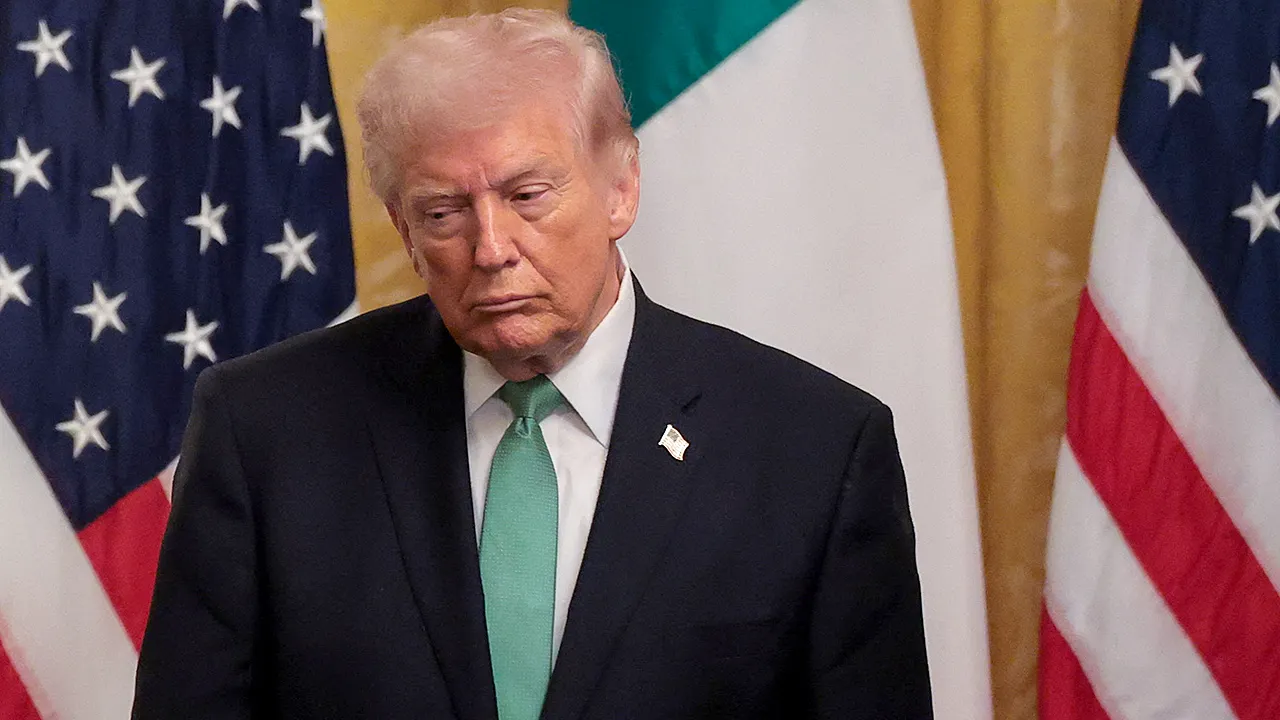
Mainstay Capital Management CEO and chief investment strategist David Kudla discusses the impact of the Middle East conflict on oil prices and investments on ‘The Claman Countdown.’
President Donald Trump has temporarily waived a century-old shipping law to allow oil and other resources to flow to the United States, a White House official told FOX Business on Wednesday.
Trump issued a 60-day waiver of the Jones Act, a mandate that only U.S. ships carry cargo between U.S. ports and stipulates that at least 75% of the crew members are American citizens. Additionally, it demands these ships are built in the U.S. and owned by U.S. citizens.
“President Trump’s decision to issue a 60-day Jones Act waiver is just another step to mitigate the short-term disruptions to the oil market as the U.S. military continues meeting the objectives of Operation Epic Fury,” White House press secretary Karoline Leavitt said in a statement on X. “This action will allow vital resources like oil, natural gas, fertilizer, and coal to flow freely to U.S. ports for sixty days, and the Administration remains committed to continuing to strengthen our critical supply chains.”
The war with Iran has effectively closed the Strait of Hormuz, a vital oil chokepoint that sees ships carry about a fifth of the world’s oil out of the Gulf region. Iran’s stranglehold and threats to ships in the narrow passageway has sent oil prices above $100 per barrel.
US BUNKER-BUSTER BOMBS HAMMER IRANIAN ANTI-SHIP MISSILE SITES NEAR STRAIT OF HORMUZ
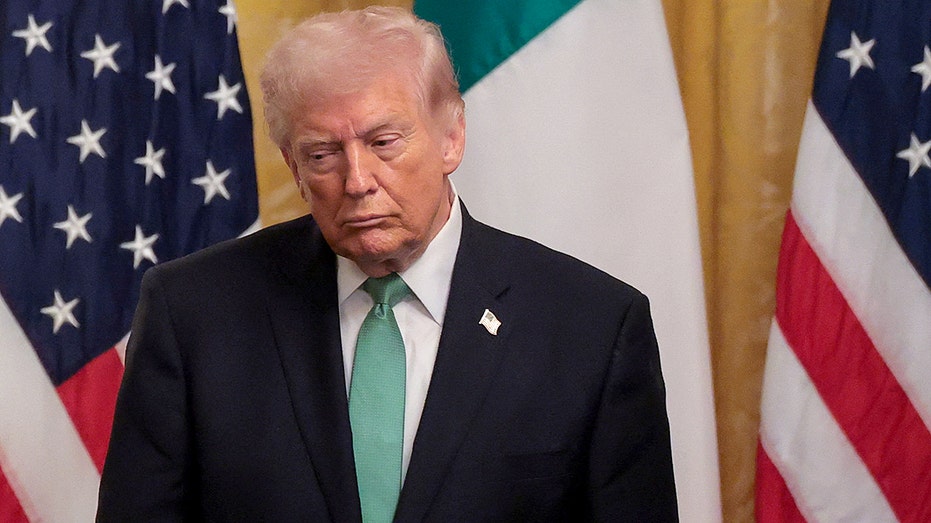
President Donald Trump attends a St. Patrick’s Day reception, during Irish Taoiseach (Prime Minister) Micheal Martin’s visit, in the East Room at the White House in Washington, D.C., March 17, 2026. (Reuters/Kylie Cooper / Reuters Photos)
Even with oil prices surging and appeals from Trump and Washington, U.S. allies are declining to take part in military efforts to secure the Strait of Hormuz.
Trump on Wednesday appeared to call out these allies in a post on his Truth Social platform.
TRUMP WARNS NATO OF ‘VERY BAD’ FUTURE IF ALLIES DON’T HELP SECURE STRAIT OF HORMUZ

About 20% of the world’s oil supply crosses the Strait of Hormuz off the coast of Iran. The Iranian Regime is threatening to attack any vessels that cross the strait without permission. (FOX / Fox News)
“I wonder what would happen if we ‘finished off’ what’s left of the Iranian Terror State, and let the Countries that use it, we don’t, be responsible for the so called ‘Straight?’ (sic) That would get some of our non-responsive ‘Allies’ in gear, and fast!!!” Trump wrote.
Proponents of the Jones Act claim it beefs up national security, prevents foreign countries from accessing the U.S. and protects the American shipbuilding sector.
Critics, however, argue that the 1920s law is outdated and hampers competitiveness in the industry while driving up shipbuilding costs.
GET FOX BUSINESS ON THE GO BY CLICKING HERE
Previous instances in which the Jones Act has been temporarily waived include responses to major hurricanes, such as Hurricane Katrina in 2005 and Hurricanes Harvey and Irma in 2017.
This is a developing news story; check back for updates.


The launch includes five high-protein meals.
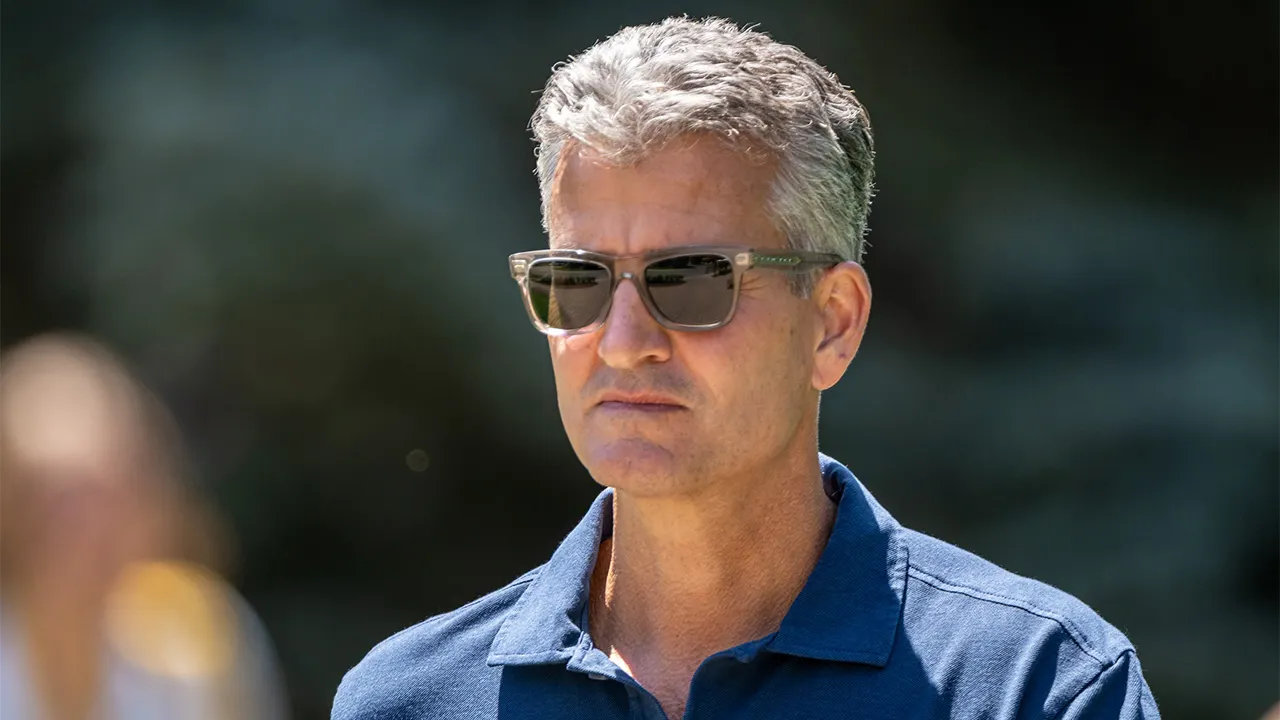
Candle Media co-CEO Kevin Mayer breaks down the trade-offs of Netflix and Paramount’s competing bids for Warner Bros. Discovery on ‘The Claman Countdown.’
Josh D’Amaro officially assumed the role of Disney chief executive on Wednesday, taking charge of the company as it confronts a rapidly shifting entertainment landscape shaped by artificial intelligence, changing consumer behavior and pressure across its legacy media businesses.
His succession of Bob Iger follows a run leading Disney’s parks, experiences and products division – a segment that has become central to the company’s financial performance. The unit accounted for 57% of Disney’s $17.5 billion in profit last year, highlighting a growing reliance on theme parks and tourism as other areas face headwinds.
That dynamic is expected to shape investor expectations early in D’Amaro’s tenure. Market participants are looking for clarity on how Disney plans to adapt to advances in AI, which are poised to alter content production, distribution and monetization, while also intensifying competition from digital-first platforms.
NETFLIX FOLLOWS WARREN BUFFETT’S PLAYBOOK: DON’T OVERPAY, WALK AWAY
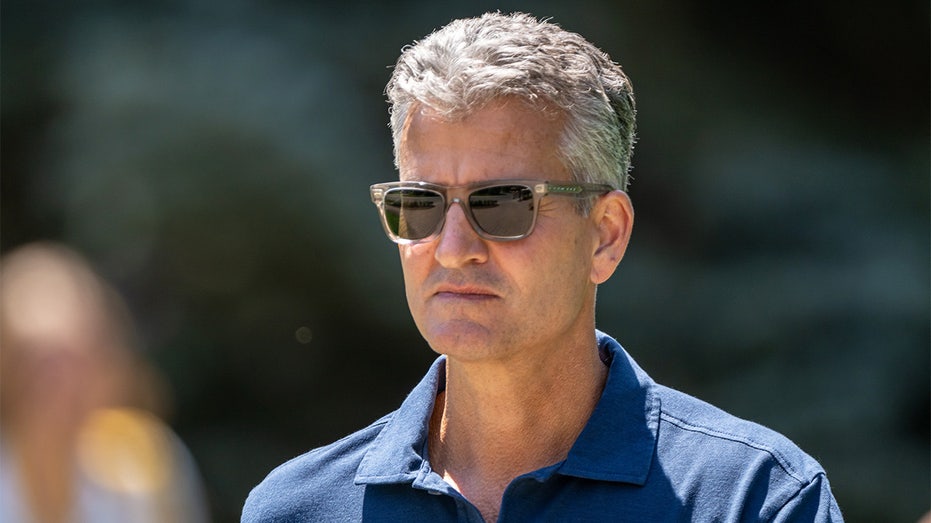
Josh D’Amaro officially took over the CEO role on Wednesday. (David Paul Morris/Bloomberg via Getty Images)
At the same time, Disney continues to grapple with internal pressures. Its traditional television networks remain in decline, and some of its biggest film franchises have delivered lackluster results at the box office. The company is also competing more directly with platforms such as YouTube and TikTok for audience attention, forcing a broader rethink of its content strategy.
NETFLIX CO-CEO ACCUSES JAMES CAMERON OF SPREADING ‘MISINFORMATION’ ABOUT WARNER BROS. ACQUISITION
D’Amaro’s appointment also revives comparisons to former CEO Bob Chapek, another executive who rose through the parks division before a short-lived tenure that ended with Iger returning to the role in late 2022.
Iger will remain on Disney’s board through the end of the year. His return came during a turbulent period, when Disney shares had fallen sharply amid concerns about losses in its streaming business and broader questions about long-term strategy.
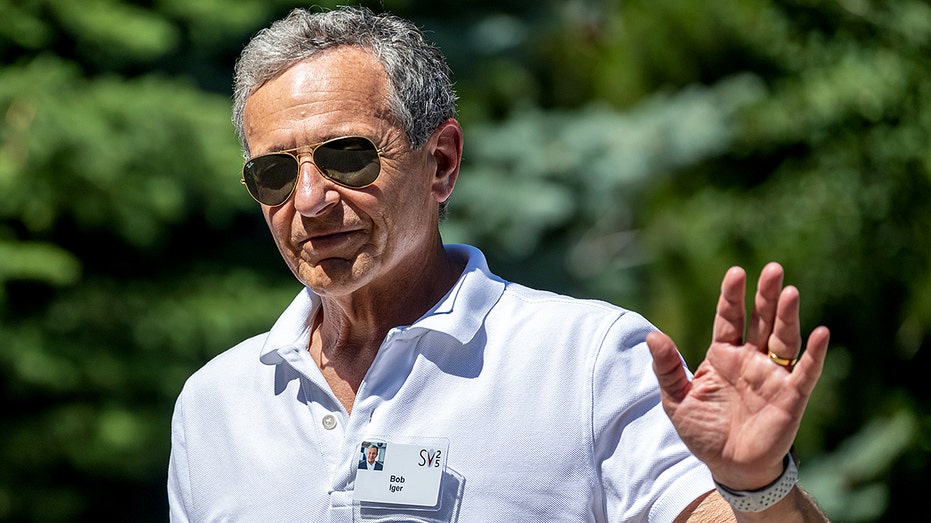
Former CEO Bob Iger will remain on Disney’s board through the end of 2026. (David Paul Morris/Bloomberg via Getty Images)
During his second stint as CEO, Iger restructured the company to give greater authority to creative leaders and worked to improve the economics of Disney’s streaming operations. His leadership was credited with helping Disney stay competitive in a rapidly evolving media landscape.
Operationally, Disney expanded its investment in its parks and cruise businesses with a $60 billion commitment, while also advancing its direct-to-consumer strategy through the launch of an ESPN streaming service and a partnership with OpenAI. The company also produced multiple billion-dollar box office releases during that period.
D’Amaro previously led Disney’s parks, experiences and products division. (Patrick T. Fallon/AFP via Getty Images)
Even so, Disney’s financial performance has trailed the broader market. The company’s return on invested capital during Iger’s tenure was about 11%, compared with 77% for the S&P 500, according to LSEG data. Its valuation remains below recent averages, reflecting continued investor caution.
CLICK HERE TO GET FOX BUSINESS ON THE GO
D’Amaro now inherits that strategic framework at a time when those priorities are being tested by artificial intelligence and shifting consumer behavior. His ability to balance Disney’s high-margin parks business with the demands of a transforming media ecosystem is likely to define the company’s next phase of growth.
Reuters contributed to this report.

Form 144 Vita Coco Company For: 18 March


Manufacturers are leaning into energy-focused product launches.

Bilibili: Still A 'Buy' Amid DAU Growth And Ad Surge
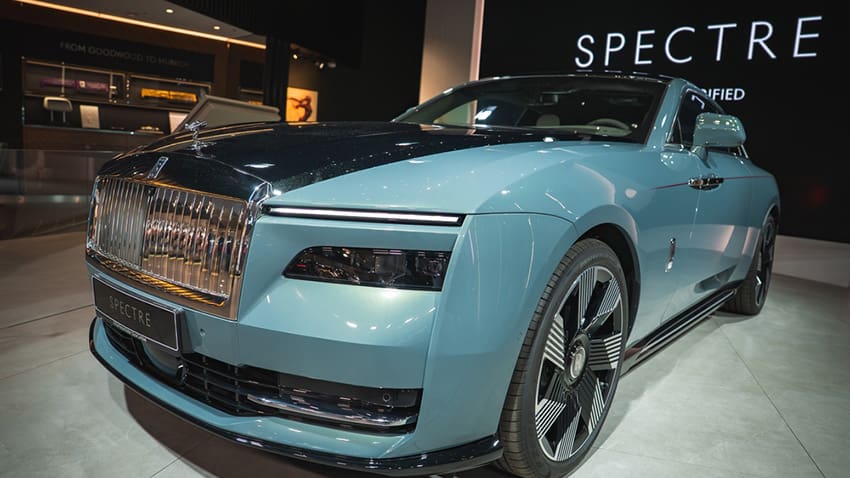
Rolls-Royce Motor Cars has abandoned its ambition to become a fully electric brand by 2030, marking a significant shift in strategy as the global transition to electric vehicles shows signs of slowing at the very top end of the automotive market.
The decision, confirmed by chief executive Chris Brownridge, reverses a high-profile commitment made in 2022 under his predecessor Torsten Müller-Ötvös, who had pledged that Rolls-Royce would cease production of its iconic V12 combustion engines by the end of the decade.
At the time, the company positioned its first electric model, the Spectre, as the beginning of a rapid transition, targeting 20 per cent of annual sales in the near term and as much as 70 per cent by 2028. The long-term ambition was clear: a complete shift away from internal combustion engines within eight years.
However, Brownridge has now acknowledged that the assumptions underpinning that strategy have changed materially. He pointed to a combination of softened customer appetite for fully electric luxury vehicles and a broader easing of regulatory pressure in key markets.
“For every client that loves an electric vehicle there is one who does not,” he said, underlining the continued demand among Rolls-Royce’s ultra-high-net-worth clientele for traditional powertrains. “Some clients do want an electric vehicle, we build what is ordered.”
The recalibration reflects a wider industry trend, particularly among premium and luxury manufacturers, where the pace of electrification is proving more uneven than previously anticipated. While mass-market brands continue to push towards electrification, high-end marques are increasingly adopting a more flexible, demand-led approach.
Brownridge was careful not to outline a revised electrification timeline, declining to specify new targets for zero-emission sales or confirm how many additional electric models Rolls-Royce plans to introduce. Nor did he disclose current sales performance for the Spectre, though its market reception has been closely watched as a bellwether for electric adoption in the luxury segment.
Instead, the emphasis appears to be shifting towards optionality rather than outright transition. The V12 engine, long synonymous with Rolls-Royce’s heritage and brand identity, will remain part of the company’s offering for the foreseeable future.
“The V12 is part of our history,” Brownridge said, suggesting that legacy and customer preference are now being given equal weight alongside environmental considerations.
The move comes amid a broader reassessment of electric vehicle strategies across the luxury automotive sector. Just a day earlier, Bentley confirmed that its own transition to an all-electric lineup would be delayed, with its first zero-emission model now expected at least two years later than originally planned.
Together, the announcements highlight a growing divergence between policy ambition and market reality. While governments continue to push for decarbonisation, including through bans on new petrol and diesel vehicles in the 2030s, manufacturers are increasingly signalling that consumer demand, particularly at the premium end, may not align neatly with those timelines.
Rolls-Royce’s original 2030 commitment was made at a time of strong political momentum behind electrification and rising optimism about battery technology, infrastructure rollout and customer adoption. Since then, a more complex picture has emerged, with concerns around charging infrastructure, range anxiety and the experiential differences between electric and combustion engines influencing buyer behaviour.
In the ultra-luxury segment, where emotional connection and heritage play a significant role in purchasing decisions, those factors appear to be even more pronounced.
Despite stepping back from a fixed deadline, Rolls-Royce is not abandoning electrification altogether. The Spectre remains a central part of its future portfolio, and the company is expected to continue investing in electric technology. However, the transition will now be paced according to customer demand rather than dictated by a hard deadline.
The shift underscores a broader reality facing the automotive industry: the road to electrification is unlikely to be linear. For Rolls-Royce, the strategy now appears to be one of balance, preserving its legacy while adapting to a changing, but still uncertain, future.

Paul Jones
Harvard alumni and former New York Times journalist. Editor of Business Matters for over 15 years, the UKs largest business magazine. I am also head of Capital Business Media’s automotive division working for clients such as Red Bull Racing, Honda, Aston Martin and Infiniti.
lululemon: A Generational Buy At These Levels


The dirty soda flavor is available while supplies last.

Canaccord cuts Neuronetics stock price target on valuation shift

The S&P 500 is officially coming to crypto with its first-ever 24/7 perpetual futures product

Barolo Wine Dinner 2026 at Dede Baltimore – Michelin Star Dining & Barolo Tasting

Callum Murphy: Standing for election in Canary Wharf is a window on what the Conservatives must do to win back young professionals


-
 Crypto World4 days ago
HYPE Token Enters Net Deflation as HyperCore Buybacks Outpace Staking Rewards
-

 Fashion5 days ago
Weekend Open Thread: Addict Lip Glow
-

 Tech3 days ago
Your Legally Registered ‘Motorcycle’ Might Not Count Under Proposed US Law
-
Sports4 days ago
Why Duke and Michigan Are Dead Even Entering Selection Sunday
-

 Sports7 days ago
PWHL, Senators discussing plan to keep Charge in Ottawa
-

 NewsBeat7 days ago
Residents reaction as Shildon murder probe enters second day
-

 Business3 days ago
Search for Savannah Guthrie’s Mother Enters Seventh Week with No Arrests
-

 Business4 days ago
US Airports Launch Donation Drives for Unpaid TSA Workers as Partial Government Shutdown Enters Fifth Week
-
 Tech22 hours ago
Are Split Spacebars the Next Big Gaming Keyboard Trend?
-
Crypto World4 days ago
Coinbase and Bybit in Investment Talks: Could Bybit Finally Enter the US Crypto Market?
-

 Business4 days ago
Country star Brantley Gilbert enters growing non-alcoholic beer market
-

 Business2 days ago
Australian shares drop as Iran war enters third week
-

 Crypto World2 days ago
Crypto Lender BlockFills Enters Chapter 11 with Up to $500M in Liabilities
-

 Sports5 days ago
College Basketball Best Bets: Conference Tournament Semifinal Picks
-

 Politics5 hours ago
The House | The new register to protect children from their abusers shows Parliament at its best
-

 Crypto World7 days ago
Three Binance Charts May Be Hinting at Bitcoin’s Next Move
-

 Business6 days ago
Trump demands Powell cut rates as Iran conflict raises energy prices
-

 Crypto World6 days ago
Senate Votes to Include CBDC Ban in Bipartisan Housing Bill
-

 Fashion2 days ago
25 Celebrities with Curly Hair That Are Naturally Beautiful
-

 NewsBeat6 days ago
Deane Road crash near Bolton colleges and university


You must be logged in to post a comment Login