

Business
Artiva Biotherapeutics stock surges on FDA RMAT designation


Business
Mastercard Stock Rises 2% as Wall Street Positions Ahead of Thursday’s Second-Quarter Earnings Report
Mastercard Inc. shares climbed Monday morning, rising 2.19% to $551.66, adding $11.84 as investors positioned ahead of the payments giant’s second-quarter earnings report due later this week, part of a broader rally across major financial and technology names.
The gains extend a strong recent run for Mastercard shares, which have been building momentum over the past several weeks amid a string of bullish analyst calls and growing anticipation for Thursday’s results.
Earnings on Deck This Week
Mastercard is scheduled to release its second-quarter 2026 financial results on July 30. Analysts expect the payments company to report profit of roughly $4.75 to $4.77 per share, representing growth of about 14.5% to 14.9% from the year-ago quarter, with the company having topped Wall Street’s earnings estimates in each of the last four quarters. For the full 2026 fiscal year, analysts project Mastercard will report profit of $19.61 per share, up 15.3% from $17.01 per share in fiscal 2025.
That track record of consistently beating expectations has helped build investor confidence heading into Thursday’s report, with many on Wall Street expecting another strong quarter powered by resilient global consumer spending.
Analysts Turn Increasingly Bullish
A wave of positive analyst commentary has accompanied Mastercard’s climb in recent weeks. Baird raised its price target on the stock to $680 from $660 on July 7 while maintaining an “Outperform” rating, with the firm citing expectations for revenue growth acceleration in upcoming quarters as comparisons ease following the anniversary of the Capital One and Discover Financial impacts on the payments landscape. The firm also pointed to healthy transaction yields and better-than-expected margins that could help offset modestly worse foreign exchange volatility and higher interest expenses tied to a new debt package.
Other major firms have echoed that optimism. Barclays initiated coverage of Mastercard with an Overweight rating and a $640 price target, citing the company’s positioning as a durable franchise following a broader sector reset. Truist, meanwhile, trimmed its price target on the stock slightly to $554 from $561 ahead of the earnings report, a more cautious note among an otherwise largely bullish analyst community.
Among 39 analysts covering the stock, 31 currently recommend “Strong Buy,” four suggest “Moderate Buy,” and four rate it a “Hold,” with a mean price target of $639.76 implying more than 23% potential upside from recent trading levels. A separate tally of 41 analysts puts the average rating for Mastercard at “Strong Buy,” with a 12-month price target of $644.24, representing nearly 19% upside from the stock’s most recent closing levels.
A Strong Technical Setup
Mastercard’s share price has shown notable strength in recent trading sessions, building a technical foundation ahead of earnings. The stock recently traded well above its 20-week and 50-week moving averages and significantly above its 200-week average, closing at the top of its weekly trading range and maintaining strong bullish momentum relative to all key weekly moving averages. Weekly price action has remained volatile, with the stock’s expected trading corridor for the coming week estimated between $517 and $563.
Business Momentum Beyond the Numbers
Alongside its financial performance, Mastercard has continued expanding its product offerings and global partnerships. The company recently announced a series of enhancements to Mastercard In Control, including advanced virtual card controls designed to help reduce risk across the full payment lifecycle. Mastercard also launched its fourth Innovation Circuit in Singapore, focused on advancing artificial intelligence, digital identity and tokenization technologies for future payment systems.
The company has also continued building out its digital asset strategy. Mastercard joined the Open USD stablecoin consortium as part of an effort to modernize its digital payment capabilities, while a preliminary resolution of swipe-fee litigation has reduced a source of major legal uncertainty facing the company. Piper Sandler also upgraded Mastercard to a strong-buy rating, citing the company’s robust financial health.
Dividend Signals Confidence
Mastercard’s capital return program has also drawn positive attention from investors in recent weeks. Shares popped 2.2% on June 16 after the company declared a quarterly cash dividend of $0.87 per share, underscoring its strong cash generation and commitment to returning capital to shareholders. That dividend is scheduled to be paid on August 7, 2026, to shareholders of record as of July 9, 2026, a move management has framed as reflecting confidence in the company’s financial strength and long-term growth prospects.
A Broader Market Tailwind
Monday’s gains for Mastercard also came against a generally supportive market backdrop, with major technology and financial names posting broad gains in early trading as investors looked ahead to a heavy week of corporate earnings across sectors, including reports from Microsoft, Meta Platforms, Amazon and Apple later in the week.
What Investors Will Watch Thursday
Heading into Wednesday’s close and Thursday’s pre-market release, analysts will be watching closely for updates on consumer spending trends, cross-border transaction volumes, and any commentary from Mastercard’s leadership on how the company’s expanding stablecoin and AI-driven payment initiatives are progressing. Investors are also expected to focus on management’s commentary regarding risks tied to potential shifts in credit card competition and interchange regulation, along with updates on Mastercard’s continued expansion with partners including HSBC, SAP and Citi.
With the stock already up sharply over the past month and trading near record territory, Thursday’s results are likely to serve as a key test of whether Mastercard can justify its recent run-up or whether investors will look to lock in gains regardless of the outcome.
Microsoft, Amazon, Meta and Apple are set to report quarterly results this week. Investors were questioning whether a multi-year rally fueled by optimism about artificial intelligence may be losing steam.
Investors last week were spooked by quarterly results from Tesla and Alphabet that showed heavy spending on artificial intelligence.
On Monday, crude fell to a one-week low as U.S. President Donald Trump said Washington was having “good talks” with Iran and there was a chance of a peace deal, but warned U.S. strikes would resume if the negotiations failed to deliver. Oil prices surged last week, with Brent futures surpassing $100 a barrel, after new strikes on shipping in the Middle East.
The S&P 500 consumer staples index and the health care index both gained.

The PHLX chip index extended its recent selloff. It is down around 20% from its record high close on June 22 and remains up about 63% in 2026.
Chinese chipmaker CXMT Corp’s stellar debut on Monday and a report that the country has started manufacturing homegrown DUV chipmaking tools also signaled intensifying competition for the U.S. semiconductor industry. “Today represents a continuation of the rotational market that we’ve seen,” said Bill Merz, head of capital markets research and portfolio construction at U.S. Bank Asset Management Group. “Part of the market reaction may be related to that creeping suspicion that perhaps a rate hike is coming.”
According to preliminary data, the S&P 500 gained 1.45 points, or 0.02%, to end at 7,413.43 points, while the Nasdaq Composite lost 41.21 points, or 0.16%, to 24,934.61. The Dow Jones Industrial Average rose 255.58 points, or 0.49%, to 52,202.83.
Brent crude prices slid 8% to about $89 a barrel after Washington abruptly suspended a two-week campaign of air strikes against Iran on Saturday in Trump’s latest strategic U-turn in the five-month-old conflict.
Oil companies Occidental Petroleum and Exxon Mobil both dipped.
The Fed’s monetary policy decision is due on Wednesday and traders are projecting a 62% chance the central bank will leave rates unchanged, with a 38% chance of a 25 basis-point hike, according to the CME FedWatch tool.
The Personal Consumption Expenditures Price Index for June is due a day after the central bank’s decision and will be key in shaping market expectations for interest rates later this year.
Analysts on average expect S&P 500 aggregate second-quarter earnings to jump 39% from a year ago, with AI-related stocks accounting for much of that growth, according to LSEG I/B/E/S.
The S&P 500 is trading at around 20 times expected earnings, compared to a 10-year average of 20, according to LSEG data.


Optimize fruit inclusions for performance, stability, value, and appeal.
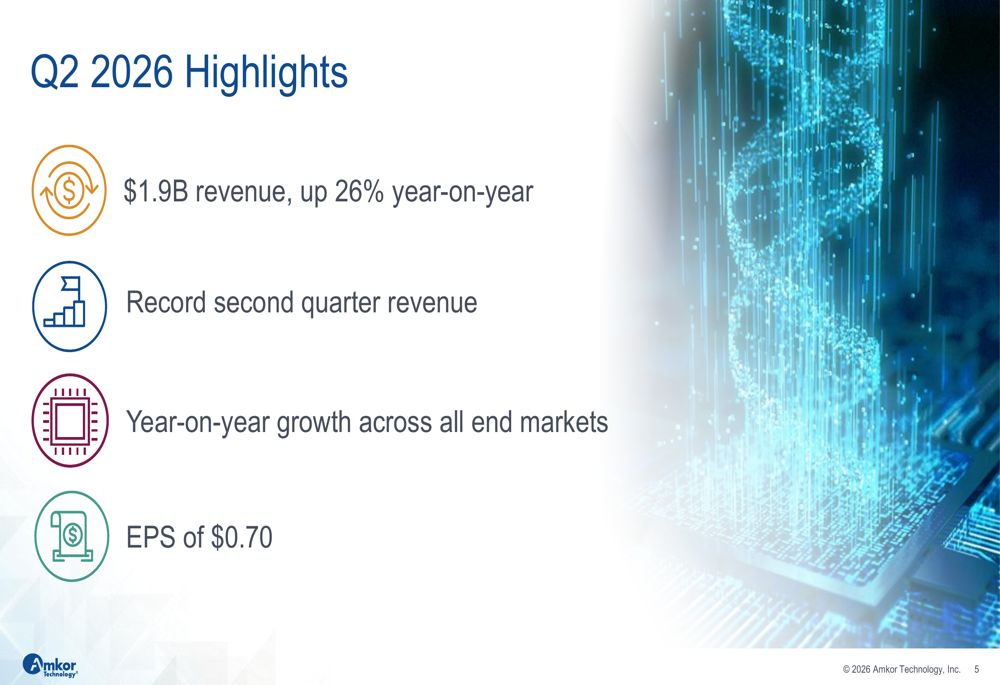
Amkor Q2 2026 slides: record revenue, stock falls on outlook

Hundreds of user conversations with Anthropic’s popular artificial intelligence (AI) chatbot Claude were found to have been available to essentially anyone using Google or other web browsers.
Links to the chats, some of which included personal and work information, would show up if a user of a search engine like Google used a site-specific search term.
The searches showed Claude chats for which a user had decided to “share” a link had been saved by search engines like Google, leaving them accessible to the broader public.
The search availability of the chat logs was removed over the weekend, but many were saved and shared widely online.
A spokeswoman for Anthropic said that Claude users maintained control over if and when to share conversations they had with the chatbot.
She said links to conversations were “not guessable or discoverable unless people choose to share them themselves”.
“When someone shares a conversation, they are making that content publicly accessible, and like other public web content, it may be archived by third-party services,” the spokeswoman added.
The share option within Claude tells a user that “anyone with the link” may view the contents of that link, but does not explicitly state that the link may end up in Google and search results.
Users on Reddit initially discovered, external the publicly available chats, which covered more than 200 conversations with Claude across at least 25 pages of search results – some taking place just weeks ago.
In the conversations, users prompted the chatbot to respond to a wide array of topics.
Chat logs include a user asking Claude last year whether it wanted “to help me or do you want to help anthropic more?”. The chatbot responded in part, saying “I experience something like wanting to help you”.
In one conversation from April, a user prompted Claude to draft an unpublished blog post about cloud security involving details of a corporate project. In another from last month, a user asked Claude how to “become become Nine-tailed fox?”, before clarifying they wanted to literally transform from human to the creature.
Claude first tried to show the user an AI-generated image claiming they had been given “fully functional fox powers!”.
Other conversations with Claude included users seeking help with their resumes, including their names, contact information and work history. Some users even conducted what appeared to be proprietary research for their work, such as in healthcare, including transcripts of private conversations.
When OpenAI last year experienced an almost identical issue with ChatGPT chat logs being made publicly accessible, external, the company ultimately changed, external the ease with which such logs were accessible.
A spokesman for Google made clear to the BBC that the company does not control “what pages are made public on the web,” saying instead that action comes from websites.
“We give site owners clear controls to decide whether pages can be crawled or indexed, and we always respect those directives.”
As the search indexing of the chat logs is no longer occurring, it is likely Anthropic used available tools to quickly block the chat log links from search results. Google’s process for a website owner to block a link, external is straightforward, but must be initiated by a website owner.
Other search engines like Bing, Brave and Duck Duck Go, through which the Claude chat logs also appeared, were approached for comment.

Earnings call transcript: OPKO Health posts smaller Q2 loss, shares rise in 2026

Nucor beats quarterly results on strong pricing, demand

Parts for brand new equipment already match an item sitting in the catalogue more than 30 percent of the time in the United States.
In Canada and many other NATO nations the figure is closer to 60 percent, according to the NATO Group of National Directors on Codification (AC/135). Those are not new items. They are existing items being re-catalogued under a second identity because nobody could find the first one.
That statistic is an asset data quality measurement wearing a procurement costume. In a majority of cases in some nations, the register was not searchable enough to tell a cataloguer that the item already existed. Every one of those duplicates becomes a permanent obstacle to sharing data with anyone else.
Defence organisations spend heavily on systems meant to make asset data shareable across national boundaries. The systems are rarely the constraint. The register they are pointed at usually is.
What dirty asset data looks like in a defence register
Data quality problems in asset registers are specific and recognisable. They are not vague “poor data hygiene”. They are four defects that recur across almost every large estate.
Duplication. The same physical item held under two or more identities. It happens when a part number is entered with different punctuation, when a supplier changes its own numbering, when two units catalogue the same item independently or when a transfer brings two registers together without reconciliation.
Incomplete records. An entry with a description but no manufacturer. A serial number with no NSN. An asset with a location field that says “in use”. Incomplete records fail any automated match with a partner nation’s data.
Free-text descriptions. “Pump, hyd, 3in” and “Hydraulic pump 3 inch” describe the same object and match nothing. Structured description standards exist precisely because free text does not survive machine comparison.
Orphan records. Assets in the register with no physical counterpart. Physical assets with no register entry. Both are visibility failures. The first inflates holdings and delays procurement decisions. The second means the item is invisible to planning until someone trips over it.
The UK National Audit Office described the consequences plainly in its September 2023 report on defence inventory management. The Ministry of Defence held an inventory portfolio valued at £11.8 billion covering around 520,000 inventory types and around 460 million individual items, spent £1.5 billion on inventory in 2022-23 and held more than 105,500 cubic metres of unfit inventory in central warehouses. Two of its core inventory systems were nearly 40 years old. The NAO concluded that inventory data had limitations undermining the department’s ability to make effective decisions.
Why cleansing has to come before interoperability
There is a sequencing rule that most programmes learn the expensive way: cleanse first, then mark, then integrate.
Marking a dirty register makes the defects permanent and machine-readable. If two duplicate entries each get a Unique Item Identifier, the duplication is now stamped into metal and loaded into a registry. Undoing it later means physically locating both assets, verifying which record is correct, retiring one identity and re-marking one item. That is a field operation, not a database update.
Integrating a dirty register makes the defects visible to your partners. Data exchange with an allied nation exposes every inconsistency at once, usually during an exercise or an operation when nobody has time to arbitrate.
The sequence works because each step depends on the one before it. Cleansing produces one true record per item. Marking binds that record to a physical asset with a durable identifier. Integration then has something reliable to exchange. Camcode Global’s published work on NATO interoperability documents this combination of unique identification and data cleansing as the foundation for asset data that partner nations can act on.
How to cleanse a defence asset register
The work is methodical rather than clever. Six stages cover most estates.
- Extract and profile. Pull the full register and measure it before changing anything. Count records, null rates per field, distinct value counts and description length distributions. Profiling tells you which defects you actually have rather than which ones you assume.
- Normalise. Standardise formats before attempting any matching. Part number punctuation, case, leading zeros, unit of measure, manufacturer name variants. A large share of apparent duplicates resolve at this stage without any judgement calls.
- Match and deduplicate. Compare records on manufacturer plus part number, then on structured description attributes, then on NSN where present. Flag probable matches for human review rather than auto-merging. Merging two genuinely different records is harder to reverse than leaving two duplicates in place.
- Enrich against authoritative catalogues. Resolve items to NSNs using the NATO catalogue where the item is codified. The NATO codification material puts around 16 million items in the system, with 7 million active items in the United States central catalogue alone, so most common defence items already have an agreed identity waiting to be applied.
- Structure the descriptions. Replace free text with attribute-value pairs against a recognised description standard. This is what makes the register searchable. Searchability is what prevents the next generation of duplicates.
- Reconcile to the physical estate. Walk the sites. Confirm that register entries have physical counterparts and that physical assets have entries. This is the stage most often cut for cost. It is the stage that finds the orphans.
Keeping the register clean afterwards
A cleansed register decays unless the intake process changes. Three controls hold the line.
Search before create. A cataloguer creating a new item record must be shown probable matches before the record can be saved. The 30 to 60 percent duplication figures in the NATO material exist because this control is missing or easy to skip.
Identity at the point of receipt. Items should carry a machine-readable identity when they arrive rather than acquiring one later. A scan at goods-in that resolves to an existing record is the cheapest deduplication control available.
Durable physical marks. A register stays synchronised with reality only if the physical identifier survives. Printed labels and adhesive media fail under fuel, salt, abrasion and UV exposure. When a mark is lost, the asset either re-enters the register as a new item or becomes an orphan. Photosensitive anodised aluminium and laser-etched metal plates are specified for this reason on assets with long service lives in harsh environments.
What it costs to skip this
The costs are indirect, which is why they get tolerated for years.
Duplicate procurement. Buying an item that is already held. The NATO codification material notes that private sector organisations adopting standard identification methods cut inventory by as much as 50 percent, with individual cases showing reductions of 75 million and 97 million US dollars.
Sustainment cost growth. The US Government Accountability Office reported in February 2024 that operating and support costs account for about 70 percent of a weapon system’s total life-cycle cost. Seven of the 16 systems it assessed for fiscal year 2022 had critical operating and support cost growth. Sustainment decisions are made from asset records. Unreliable records produce cautious decisions, which in sustainment means higher stock and earlier replacement.
Failed data exchange. This is where dirty data stops being an internal inefficiency. NATO’s reporting on multinational capability cooperation lists 26 participating countries in the Multinational Ammunition Warehousing Initiative and 24 in Land Battle Decisive Munitions. Pooled arrangements at that scale need every participating nation to describe stored items identically. One dirty register degrades the shared picture for everyone in the pool.
Wasted investment in new systems. Replacing an inventory system without cleansing the data migrates every defect into a more expensive environment.
The timing argument is straightforward. NATO reports that European Allies and Canada spent more than 571 billion US dollars on defence in 2025 in 2021 prices, over 90 billion more than the previous year, against a Hague Summit commitment to reach 5 percent of GDP by 2035. Registers that already struggle are about to absorb a large volume of new equipment. Cleansing a register of 520,000 item types is difficult. Cleansing it after another procurement cycle is harder.
Frequently asked questions
How long does an asset data cleansing project take? Profiling and normalisation move quickly. The stages that set the timeline are human review of probable duplicate matches and physical reconciliation across sites. Estate size and site count matter more than record count.
Do we cleanse before or after marking assets? Before. Marking a dirty register commits its defects to physical metal and to a registry. Unwinding that requires field work rather than a data fix.
Does codifying to NSNs solve the problem on its own? It solves classification. It does not solve instance-level traceability, which requires a unique item identifier under STANAG 2290 or an equivalent national standard.
What is the single highest-value control to add? A mandatory search-before-create step at the point of cataloguing. It is inexpensive to implement and it addresses the defect that generates most of the others.
Business
American Express Shares Rebound 2.4% After Q2 Beat as Company Pours Profits Into Growth Initiatives

NEW YORK — Shares of American Express Co. climbed 2.41% to $334.04 in midday trading Monday, recovering some ground lost after the payments giant reported stronger-than-expected second-quarter results last week but kept its full-year profit outlook unchanged while signaling higher spending on growth.
The stock rose $7.87 as of 11:05 a.m. EDT on July 27, according to market data, following a roughly 6% drop on July 24 when investors focused on rising expenses and the company’s decision to reinvest first-half outperformance rather than boost near-term earnings guidance. American Express closed Friday at about $326.
On July 24, the New York-based company reported second-quarter net income of $3.1 billion, or $4.53 per diluted share, up 11% from $2.9 billion, or $4.08 per share, a year earlier. Revenue net of interest expense rose 10% to $19.6 billion. Both figures topped Wall Street expectations, with analysts looking for roughly $4.40 in earnings per share and slightly higher revenue.
Billed business, a key measure of card member spending, increased 9% to $455.8 billion, the strongest growth rate in three years on a foreign-exchange-adjusted basis. Net card fees climbed 15% to about $2.9 billion, marking the 32nd consecutive quarter of double-digit growth in that line. Provisions for credit losses fell to $1.1 billion from $1.4 billion a year earlier, reflecting a reserve release amid stable credit quality. The net write-off rate held at 2.0%.
Consolidated expenses, however, rose 12% to $14.5 billion, driven by higher variable customer engagement costs tied to increased spending, the U.S. Platinum Card refresh, greater use of card benefits, and elevated operating expenses. Management indicated marketing expenses would run about 10% higher in the second half of the year compared with the prior year.
American Express raised its full-year 2026 revenue growth guidance to 10% from a previous range of 9% to 10%. It reaffirmed earnings-per-share guidance of $17.30 to $17.90. For the first six months of 2026, revenue net of interest expense rose 11% to $38.5 billion, and diluted earnings per share increased 14% to $8.81.
Chairman and Chief Executive Officer Stephen J. Squeri described the quarter as another strong performance. “We had another excellent quarter, with 10 percent revenue growth, EPS of $4.53, and Card Member spending growth of 9 percent, the highest rate we’ve seen in three years on an FX-adjusted basis,” Squeri said in the company’s earnings release. “Based on our better-than-expected performance in the first half of the year, we are raising our full-year revenue growth guidance to 10 percent and plan to reinvest this outperformance in growth initiatives given the significant opportunities we see ahead. We continue to expect full-year EPS of $17.30 to $17.90.”
He added: “Six months into the year, we’re seeing stronger momentum than we expected. The investments we made in our value propositions have driven accelerated spend and revenue growth; our Platinum portfolio is now the fastest growing in our U.S. Consumer business; our best-in-class credit performance further strengthened; and we continued to attract a large number of new customers, particularly Millennials and Gen-Zs who represent greater lifetime value.”
On the earnings call, Squeri addressed why the company chose not to raise the profit outlook despite the revenue lift. “We have a choice, we can either drop the overperformance to the bottom line and buy back more shares, or we can invest to grow the business,” he told analysts. “We’ve chosen the latter because, in the long run, it is the one that creates the most value for our shareholders.”
The company added about 3 million new cards in the quarter. More than 70% of new accounts acquired year-to-date were on fee-based products, with the proportion reaching about 75% in the second quarter—the highest level since the intensified focus on premium offerings. U.S. consumer services revenue rose 11%, commercial services 7%, and international card services 12%. Travel and entertainment spending grew 10%, with restaurants, hotels, and airlines contributing. Travel bookings jumped 22%.
American Express returned roughly $2.9 billion to shareholders in the quarter through share repurchases and dividends. It bought back about 7 million shares for $2.2 billion and paid $600 million in dividends. The Common Equity Tier 1 capital ratio stood at 10.4%, and return on average equity reached 36.4% for the quarter.
The company also highlighted strategic moves. It announced a proposed acquisition of TheFork, a European restaurant booking platform with about 50,000 restaurants across 11 countries, for roughly $700 million. It expanded partnerships, including a global deal with ALL Accor, became the official payments partner of Fanatics at select locations, enabled Membership Rewards points redemption for Apple Pay checkouts by U.S. card members, and introduced new travel benefits for Delta SkyMiles cardholders. It also piloted a new expense management platform for middle-market commercial customers.
Chief Financial Officer Christophe Le Caillec noted the company plans to reinvest overperformance into marketing and growth to support and accelerate momentum. Credit metrics remained solid, with delinquency and write-off rates still below 2019 levels. Executives said they saw no broad slowdown in spending among their premium customer base despite economic uncertainty, though middle-market commercial activity showed some softness while small business and large corporate remained stronger.
Analysts and investors initially reacted to the expense growth and flat profit guidance with selling pressure. Shares fell more than 6% on the results day as the market weighed higher near-term costs against the raised revenue outlook and robust spending trends among affluent cardholders. Monday’s rebound suggested some investors were looking past the short-term margin pressure toward the company’s longer-term strategy of refreshing premium products, acquiring higher-value younger customers, and expanding its ecosystem of benefits and partnerships.
American Express has emphasized its Membership Model centered on premium products, differentiated services, and partnerships. The U.S. Platinum Card refresh has driven engagement and spend consolidation among existing members. Net interest income rose 11% on higher card balances, though portfolio sales created a modest headwind. The effective tax rate was 23.6%, up from 18.7% a year earlier due to prior-year discrete benefits.
Looking ahead, management expects card fee growth to accelerate in the third quarter and exit the year in the high teens. The company continues to invest in technology, including AI capabilities for internal efficiency and customer experiences, and remains open to additional investment opportunities. Squeri has described the current environment as still early for transformative AI impacts, likening it to the “preseason.”
The stock’s 52-week range has run from about $288 to $387. Market capitalization stood near $223 billion following Friday’s close. Dividend yield hovered around 1.1%, with a recent quarterly dividend of 95 cents per share.
American Express’s results underscore resilience in premium consumer spending on travel, dining, and entertainment even as broader economic signals remain mixed. By choosing to reinvest rather than maximize near-term profits, the company is betting that sustained investment in its value propositions, customer acquisition—especially among Millennials and Gen Z—and ecosystem partnerships will deliver stronger long-term returns. Monday’s share price recovery indicated that at least some market participants were beginning to price in that longer view after digesting the details of the quarterly report.
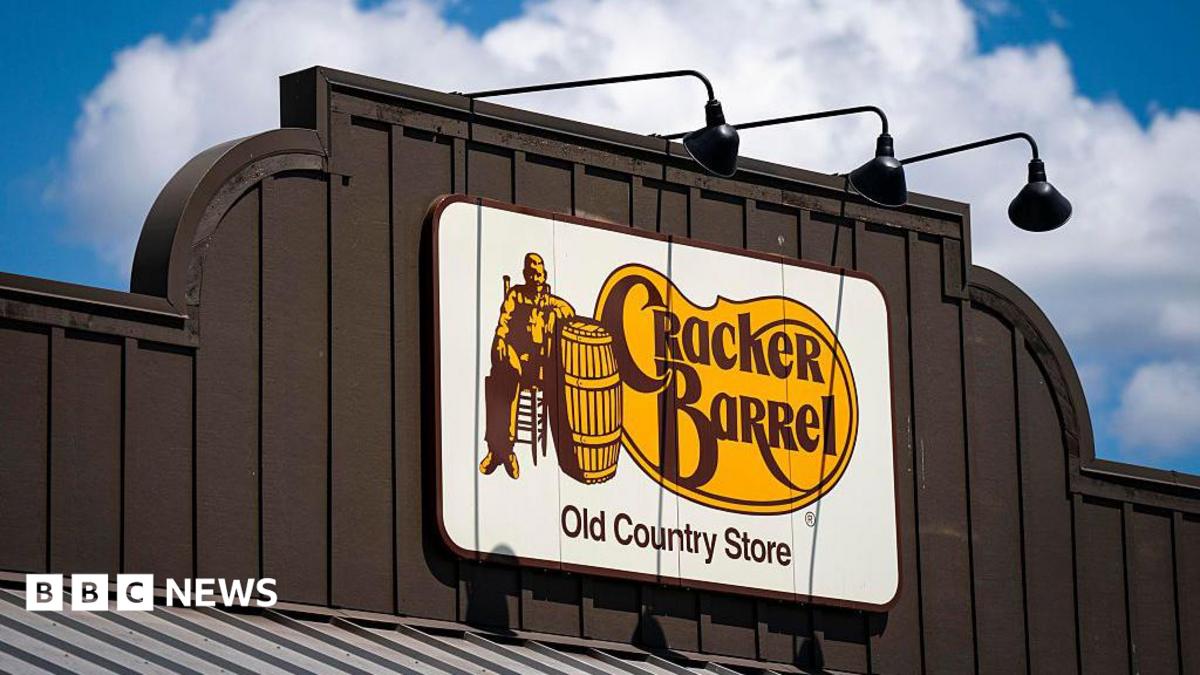
Cracker Barrel’s chief executive is quitting a year after the company faced a widespread backlash over its controversial rebrand.
The restaurant chain said on Monday Julie Masino will leave in August, with the former boss of Bloomin’ Brands, David Deno, taking over.
Its rebrand sparked a national controversy, with critics including President Trump, who urged the chain to restore its original logo after critics accused it of abandoning its heritage.
Masino did not issue a statement about her resignation, but Cracker Barrel’s management thanked her for her tenure.
Masino will be paid an estimated $4.6m as part of a departure package, according to the company’s 8-K filing, external. Cracker Barrel declined to comment, referring the BBC instead to the filing.
The leadership change comes after a turbulent period for the business, which runs nearly 660 country-themed store and restaurants sites across 44 US states.
Plans to simplify the classic logo and modernise store interiors sparked fierce resistance from loyal diners who argued the changes stripped away the brand’s nostalgic Southern charm.
It follows a similar uproar in 2022 when Cracker Barrel faced online backlash from some customers after adding plant-based sausages to its breakfast menu.
Such controversies highlight the delicate balance facing brands hoping to attract younger audiences without alienating their core, longstanding customer base. Critics described the latest rebrand as “soulless” and “generic”.
Jo-Ellen Pozner, an associate professor at Santa Clara University’s Leavey School of Business, said the leadership swap “seems to reflect the polarization many Americans feel today”.
She added that doubling down on conservative values may help win back vocal loyalists but “paints the company into a corner”.
“Changing anything about the menu, decor, or branding at this point is dangerous, so there are few levers to attract new customers,” Pozner said.
President Trump later congratulated the chain on its reversal, external.
In his own statement on the transition, Deno paid tribute to Cracker Barrel’s “deep connection with guests across generations”.
In addition to public scrutiny, Cracker Barrel has struggled financially.
Shares of the Tennessee-based chain fell by more than 2% after Monday’s announcement and are still around a fifth lower than this time last year.
Cracker Barrel’s shares have struggled because sales are falling and customer traffic is slowing, all while restaurants grapple with soaring costs.
The transition comes as Cracker Barrel faces fierce competition from chains like Denny’s and IHOP, which have been fighting to take market share among budget-conscious diners seeking classic American comfort food.
Masino will stay at the company until October to help Deno through the transition.

Ryan Garcia says one welterweight champion would’ve beaten Terence Crawford and Floyd Mayweather

Satya Nadella says companies that trust one AI for everything may not survive

Ranking the Most TOXIC Financial Audit Guests

Renter of Home in Anne Heche Crash Denies Settlement With Son

No Jackpot Winner as $257 Million Prize Rolls Over to $269 Million Monday Draw

Weekend Open Thread: Staud – Corporette.com
Ranking the Most TOXIC Financial Audit Guests

Crypto Trading LIVE: BTC Live Trading Bitcoin Analysis | 27 JULY #crypto #bitcoin #btc

Day 7/365 | One Week Complete | Building Healthy Habits & Financial Independence |The Fit Professor
-

 Fashion3 days ago
Weekend Open Thread: Brooks Brothers
-

 Crypto World7 days ago
Grayscale Files For Worldcoin ETF, WLD Registers Sharp Rise
-

 NewsBeat6 days ago
How a former Blue Peter presenter stunned America’s Got Talent judges
-

 Tech22 hours ago
Intel is reversing course and bringing hyper-threading back to its server chips
-

 Tech7 days ago
Sail Virtually Aboard The “Itanic” With IA-64 Emulator
-
 Tech7 days ago
Turtle Beach Command Series KB7 review: a nifty screen-equipped gaming keyboard
-
 Business6 days ago
New Jersey voter registration controversy explained: How 6,600 noncitizens got on the rolls, and what happens next
-
 Entertainment6 days ago
Johnny Depp’s R-Rated Gothic Cult Classic Gets New Release Ahead of Sydney Sweeney Remake
-

 Crypto World5 days ago
Ethics, other provisions in crypto Clarity Act to be further discussed
-

 Politics11 hours ago
Luke Littler dismantles Gerwyn Price to retain title in Blackpool
-
 NewsBeat7 days ago
Shanghai science forum photos show China’s AI and robotics advances in rivalry with US
-

 Sports4 days ago
2026 3M Open leaderboard: Scottie Scheffler finds putter in Round 1, sits three back
-
 Sports1 day ago
Commonwealth Games boxing: Jadumani Singh seals dominant 5-0 win over Pakistan’s Sumama Rehman to enter quarter-finals | Commonwealth Games News
-

 News Videos4 days ago
The Peugeot Family: How 200 Years of an “Old Money” Dynasty Died in A Boardroom
-

 Fashion4 days ago
16 Dresses for the High Summer Event
-

 Politics1 day ago
Spain sweeps the board at 2026 World Cup with individual awards
-

 Crypto World7 days ago
Andrew Cuomo joins OKX board as crypto exchange expands in U.S.
-
 Entertainment3 days ago
A New Post-Apocalyptic Gundam Anime Series Blasts Into SDCC
-

 News Videos1 day ago
BITCOIN JUST ENTERED THIS CRITICAL ZONE…
-

 Crypto World2 days ago
XRP Ledger adds $2.6B as RWA inflows rank second
You must be logged in to post a comment Login