
Business
AU Small Finance Bank Q4 business update: Deposits up 23% YoY at Rs 1.52 lk cr, advances rise 25%


The bank’s total deposits stood at Rs 1.52 lakh crore as of March 31, 2026, registering a 22.8% year-on-year growth and a 10.3% increase sequentially from Rs 1.38 lakh crore as of December 31, 2025. CASA deposits came in at Rs 43,360 crore, up 19.6% year-on-year and 8.5% quarter-on-quarter. However, the CASA ratio stood at 28.4%, compared to 29.2% a year ago and 28.9% in the previous quarter.
On the advances front, gross advances stood at Rs 1.36 lakh crore, reflecting a 25.1% year-on-year growth and an 8.7% rise sequentially from Rs 1.26 lakh crore. The bank’s securitised and assigned portfolio was reported at Rs 4,290 crore, compared to Rs 6,926 crore in the year-ago period and Rs 4,689 crore in the previous quarter.
Overall, the gross loan portfolio (A+B) stood at Rs 1.40 lakh crore as of March 31, 2026, marking a 21.3% year-on-year growth and an 8% increase quarter-on-quarter from Rs 1.30 lakh crore.
Banking stocks have come under sharp pressure over the past three months, with most lenders underperforming the benchmark Nifty 50 amid a challenging macro backdrop marked by sustained foreign institutional investor (FII) outflows, escalating geopolitical tensions and a surge in energy prices. AU Small Finance Bank shares have declined 13% since the beginning of the year.

The underperformance comes amid persistent FII selling, which has disproportionately impacted financials due to their heavy weightage in benchmark indices. At the same time, the escalation of the Iran-Israel conflict has triggered a spike in crude oil prices, raising concerns over inflation and delaying expectations of interest rate cuts by global central banks.
In a separate development in February, the Haryana government de-empanelled the lender from government business after suspected fraudulent activities were disclosed.The company issued a clarification late Sunday, stating it initiated an internal review regarding two accounts in question. The bank further said that both these accounts were “duly opened after completion of all applicable KYC checks and requisite authorisations” and were in accordance with the bank’s internal policies and processes.
(Disclaimer: Recommendations, suggestions, views and opinions given by the experts are their own. These do not represent the views of The Economic Times)

Business
Dalal Street Week Ahead: All eyes on 21,700 make-or-break zone as Nifty braces for volatility
Volatility cooled off, with India VIX dropping by ~4.78% on a weekly basis, reflecting increased nervousness amid global uncertainties. Nifty ended the week with a minor net loss of 106.50 points (-0.47%)
From a structural standpoint, the index has violated an important support zone and slipped below its recent consolidation base, indicating a short-term deterioration in trend. The price continues to trade below the 50-week and the 100+week moving average and is now approaching a critical confluence support zone near 21,700, which coincides with the 200-week moving average and a major pattern support. This makes the current setup technically crucial.
While the broader trend remains relatively stable for now and a technical rebound cannot be ruled out with the slightest trigger, the ongoing weakness suggests that any further breach below 21,700 may trigger an extended corrective phase. External factors such as persistent geopolitical tensions in the Middle East and rising crude oil prices continue to pose risks and may keep sentiment fragile, even though relative outperformance by Indian equities may persist.
 ETMarkets.com
For the coming week, markets are likely to begin on a cautious note with a negative undertone. Immediate resistance levels are placed at 23,000 and 23,250, while supports come in at 22,480 and 22,000. A sustained move below 22,000 will increase the probability of testing the 21,700 zone sooner rather than later.
The weekly RSI stands at 26.49, placing it in the oversold territory. It has formed a new 14- period low; however, it stays neutral and does not show any divergence against the price. The MACD remains below its signal line and continues to stay in negative territory, reinforcing the prevailing bearish momentum.
Pattern analysis shows that Nifty has continued drifting lower but is attempting to show resilience at lower levels on relative terms. The price is currently tracking the lower Bollinger band. The index is now testing lower supports while staying below key moving averages like the 50-week MA and the 100-week MA. The long-term structure remains intact as long as the 200-week MA (~21,700) is protected, but the near-term technical damage is evident.
Given the current setup, the approach for the coming week should remain cautious and defence-oriented. Traders should avoid aggressive fresh buying until signs of stabilisation emerge near key support zones. Emphasis should be placed on protecting existing gains and adopting a highly selective, stock-specific approach.
Any pullbacks toward resistance levels should be used to lighten positions rather than initiate fresh exposure. Overall, a guarded and risk-managed strategy is recommended while closely monitoring the behaviour around the 21,700 support zone.
ETMarkets.comThe Relative Rotation Graph (RRG) shows that the Nifty Pharma, PSE, Infrastructure, Metal, and Energy groups are inside the leading quadrant. The Nifty Midcap 100 Index has also rolled inside the leading quadrant. The Metal Index is sharply losing its relative momentum; however, these groups are likely to relatively outperform the broader Nifty 500 Index.
The Nifty 500 Index has rolled inside the weakening quadrant. The Nifty Auto, PSU Banks, and Nifty Bank Index are also inside this quadrant. These groups will see a continued slowdown in their relative performance.
ETMarkets.comThe Nifty Services Sector and the IT Index are seen languishing inside the lagging quadrant; they may see themselves underperforming the broader markets relatively. The Realty Index is also inside the lagging quadrant. However, it is seen as improving on its relative momentum.
The Nifty FMCG Index and the Media Index are inside the improving quadrant. We may see these sectors slightly improving their relative performance against the broader markets. Important Note: RRGTM charts show the relative strength and momentum of a group of stocks. In the above Chart, they show relative performance against NIFTY500 Index (Broader Markets) and should not be used directly as buy or sell signals.
Milan Vaishnav, CMT, MSTA, is a Consulting Technical Analyst and founder of EquityResearch.asia and ChartWizard.ae and is based in Vadodara. He can be reached at milan.vaishnav@equityresearch.asia

Iran says new air defence system used to target US fighter jet
The bank’s period-end advances under management were approximately Rs 30.58 lakh crore as of March 31, 2026, up 10.2% from Rs 27.73 lakh crore a year ago. Meanwhile, period-end gross advances aggregated to about Rs 29.60 lakh crore, reflecting a growth of 12.0% over Rs 26.44 lakh crore as of March 31, 2025.
On the liabilities side, the bank’s average deposits stood at Rs 28.51 lakh crore in the March 2026 quarter, registering a growth of 12.8% compared to Rs 25.28 lakh crore in the year-ago period.
Within this, average CASA deposits were Rs 9.18 lakh crore, up 10.8% from Rs 8.29 lakh crore, while average time deposits came in at Rs 19.33 lakh crore, growing 13.7% from Rs 16.99 lakh crore.
The bank’s period-end total deposits were approximately Rs 31.06 lakh crore as of March 31, 2026, rising 14.4% from Rs 27.15 lakh crore a year earlier.
Period-end CASA deposits stood at around Rs 10.61 lakh crore, up 12.3% from Rs 9.45 lakh crore, while period-end time deposits were approximately Rs 20.45 lakh crore, registering a growth of 15.5% over Rs 17.70 lakh crore as of March 31, 2025.
Also read: Sobha Q4 biz update: Sales rise 11% YoY to Rs 2,039 crore as company closes FY26 with record figures
Shares of HDFC Bank have remained in focus following a leadership change at the top. Last month, the bank’s part-time Chairman and independent director, Atanu Chakraborty, resigned, citing that certain developments and practices within the bank over the past two years did not align with his personal values and ethics. “This is the basis of my aforementioned decision,” he said. Following the development, the stock has come under pressure, declining nearly 25% since the start of the year.
(Disclaimer: Recommendations, suggestions, views and opinions given by the experts are their own. These do not represent the views of The Economic Times)
Business
Top 5 midcap mutual funds deliver up to 25% annualised returns in 3 years; Invesco India Mid Cap leads

Midcap mutual funds have delivered strong returns over the past three years, with the top five schemes offering up to 25% annualised gains. Invesco India Mid Cap Fund leads the pack, followed closely by Nippon India and WhiteOak funds, while some laggards delivered significantly lower returns in the same period.

Why I Don't Invest In BDC ETFs, But Only Cherry-Pick My Own


I’m a retired Wall Street PM specializing in TMT; since kickstarting my career, I’ve spent over two decades in the market navigating the technology landscape, focusing on risk mitigation through the dot com bubble, credit default of ‘08, and, more recently, with the AI boom. In one word, what I’d like my service to revolve around is momentum.
Analyst’s Disclosure: I/we have no stock, option or similar derivative position in any of the companies mentioned, and no plans to initiate any such positions within the next 72 hours. I wrote this article myself, and it expresses my own opinions. I am not receiving compensation for it (other than from Seeking Alpha). I have no business relationship with any company whose stock is mentioned in this article.
Seeking Alpha’s Disclosure: Past performance is no guarantee of future results. No recommendation or advice is being given as to whether any investment is suitable for a particular investor. Any views or opinions expressed above may not reflect those of Seeking Alpha as a whole. Seeking Alpha is not a licensed securities dealer, broker or US investment adviser or investment bank. Our analysts are third party authors that include both professional investors and individual investors who may not be licensed or certified by any institute or regulatory body.
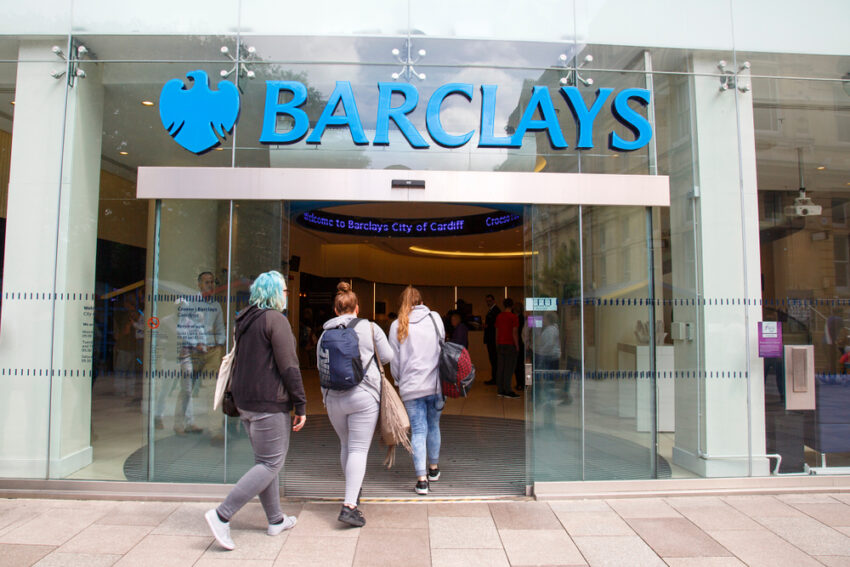
Barclays is charting a decisive U-turn on the high street, with plans to open new branches across the country and reinstate the once-familiar “bank manager” job title, a move that signals a broader rethink of how Britain’s traditional lenders compete in an increasingly digital age.
Vim Maru, who has led Barclays UK since 2024, told Business Matters that the bank intended to grow its branch network beyond the current 206 outlets, having already paused a closure programme that saw roughly 80 per cent of its branches shut since 2019. One of his first acts after taking charge was to halt the cull, and he is now pressing ahead with expansion, though he declined to put a precise figure on how many new sites would open.
The shift comes as digital-only challengers such as Revolut and Wise make increasingly aggressive moves into the current-account market, threatening the established banks’ grip on everyday consumer banking. Rather than trying to outpace them on technology alone, Maru is placing his chips on a blend of slick digital services and genuine, in-person support, what he described as the winning formula for modern banking.
He was characteristically blunt about the shortcomings of purely automated customer service. Barclays customers, he insisted, would not find themselves trapped in an endless loop with a chatbot when they needed real help. The bank has also quietly reintroduced traditional role titles, so that customers walking through the door can once again ask to speak to the branch or bank manager.
Maru stopped short of conceding that Barclays had been too aggressive in its earlier round of closures, but acknowledged that the bank needed to reassess how it served its customers every few years. The new branches will sit alongside the shared banking hubs operated through the Post Office, rather than replace them.
Beyond the branch network, Barclays is pursuing growth on several fronts. The bank reported a record number of mortgage applications last year, with processing times slashed from 45 minutes to just 15 thanks to technology improvements that have proved popular with brokers. Its acquisition of the Tesco credit card business in 2024 and Kensington Mortgages, which has doubled in size since Barclays bought it in May 2023, have broadened the division’s reach considerably.
Artificial intelligence is also being deployed to streamline internal processes, though Maru was cautious about the workforce implications. He drew a parallel with the introduction of ATMs, noting that while the machines were expected to eliminate cashier roles, the subsequent rise in fraud and scams meant staff were redeployed rather than made redundant.
On the broader economy, Maru offered a measured reading from the bank’s unique vantage point. Consumer spending has shown resilience, with hospitality holding up well despite a period of heightened anxiety following the outbreak of the Iran conflict. In the opening days of the war, there was a noticeable surge in fuel purchases as motorists rushed to fill up ahead of expected price rises, though spending patterns quickly normalised.
With Barclays chief executive CS Venkatakrishnan having committed to investing £30 billion more in the UK between 2024 and this year, and despite persistent speculation about possible acquisitions of the likes of Santander UK or TSB, Maru said his priority remained organic growth. The bank, he maintained, already had strong momentum — and a renewed high street presence to match.

Amy Ingham
Amy is a newly qualified journalist specialising in business journalism at Business Matters with responsibility for news content for what is now the UK’s largest print and online source of current business news.

Hut 8: Why The River Bend Expansion Justifies A Buy Rating
Eight stocks have delivered over 50% returns in each of the last three fiscal years, defying broader market volatility. With gains ranging from 500% to over 3,100%, these consistent outperformers highlight strong underlying momentum despite fluctuating benchmark returns across FY24 to FY26.

Starwood Property Trust: The Market Is Handing You An 11% Yield At A Deep Discount

Joseph and Kendra Duggar’s Jail Calls: Everything We Know

Your TDS Certificate Is INVALID Without This. #finance #viral #trending #explore #shortsfeed

Christopher Eccleston verdict on Billie Piper as Doctor Who


-

 NewsBeat2 days ago
Steven Gerrard disagrees with Gary Neville over ‘shock’ Chelsea and Arsenal claim | Football
-

 Business2 days ago
No Jackpot Winner and $194 Million Prize Rolls Over
-

 Fashion19 hours ago
Weekend Open Thread: Spanx – Corporette.com
-
Entertainment5 days ago
Fans slam 'heartbreaking' Barbie Dream Fest convention debacle with 'cardboard cutout' experience
-

 Crypto World3 days ago
Gold Price Prediction: Worst Month in 17 Years fo Save Haven Rock
-

 Tech5 days ago
The Pixel 10a doesn’t have a camera bump, and it’s great
-
Crypto World4 days ago
Dems press CFTC, ethics board on prediction-market insider trades
-
 Entertainment7 days ago
Lana Del Rey Celebrates Her Husband’s 51st Birthday In New Post
-

 Tech5 days ago
Avatar Legends: The Fighting Game comes out in July and it looks pretty slick
-

 Tech4 days ago
EE TV is using AI to help you find something to watch
-

 Sports4 days ago
Tallest college basketball player ever, standing at 7-foot-9, entering transfer portal
-

 Business2 days ago
Login and Checkout Issues Spark Merchant Frustration
-

 Fashion6 days ago
Amazon Sundays: Soft Spring Layers
-

 Tech6 days ago
Elon Musk’s last co-founder reportedly leaves xAI
-

 Fashion5 days ago
The Best Spring Trends of 2026
-

 Tech4 days ago
How to back up your iPhone & iPad to your Mac before something goes wrong
-

 Politics5 days ago
Should Trump Be Scared Strait?
-

 Tech5 days ago
Apple will hide your email address from apps and websites, but not cops
-

 Crypto World5 days ago
U.S. rule change may open trillions in 401(k) funds to crypto
-

 Tech4 days ago
Flipsnack and the shift toward motion-first business content with living visuals
You must be logged in to post a comment Login