
Business
Aussie equities push lower as tariff threat returns


Australia’s share market has retreated from the previous week’s record high as investors weigh the latest twist in the Trump tariff saga.
The S&P/ASX200 fell 55.4 points on Monday, down 0.61 per cent to 9,026, as the broader All Ordinaries gave up 51.7 points, or 0.56 per cent, to 9,251.5.
Gold miners were a lonely success story, helping lift the basic materials sector 1.2 per cent as investors sought safe havens following US President Donald Trump’s threat to lift global tariffs to 15 per cent after a US court ruled against his previous tariffs.
While local markets got off to a shaky start, the impacts on Australia’s economy should be minor, IG Market analyst Tony Sycamore said.
“It doesn’t really impact our GDP (gross domestic product) given we don’t have a huge export sector to the US,” he told AAP.
“This isn’t a toxic outcome for the Australian stock market or for Australian exporters net-net, and it may actually turn out to be a boon because China, where most of our exports go, has gotten out of it with a lower effective tariff rate.”
Only three of 11 local sectors ended the session higher, led by a 1.5 per cent boost to basic materials as investors ploughed back into gold stocks.
Spot gold is buying $US5,156 ($A7,294) an ounce, supporting names such as Evolution Mining and Northern Star, which each rallied 3.5 per cent.
Iron ore giants were mixed, with BHP lifting to its best-ever closing price of $54.02, while Rio Tinto and Fortescue fell behind.
Lynas Rare Earths ticked higher ahead of its earnings update later in the week and lithium producers Liontown and PLS each gained more than three per cent.
Financials were heavy, down 1.2 per cent as all four banks sold off, led by a 2.3 per cent slump in ANZ shares.
Commonwealth Bank lost 0.6 per cent to $178.53, but has held onto most of its recent earnings season gains.
Energy stocks tumbled 1.7 per cent despite oil prices hovering near recent highs as tensions between Iran and the US persist.
Coal producers were also in the red while uranium stocks ran into profit-taking after strong performances the previous week.
Ampol shares faded more than two per cent as its first-half statutory net profit after tax fell by roughly a third on the equivalent half to $82.4 million.
IT stocks were the worst-performing segment, down 4.6 per cent despite a positive lead from Wall Street on Friday, as concerns about artificial intelligence disruption to software companies loomed.
Health care was also under pressure, the sector losing 2.4 per cent as CSL tanked to its lowest price in more than six years.
The slip came despite strong earnings and guidance from Fisher and Paykel Healthcare (up 4.0 per cent) and Regis Healthcare (up 7.6 per cent).
Consumer cyclical stocks gave up almost 1.8 per cent in a broad-based slump that overshadowed positive earnings reports from Kogan (up 5.5 per cent) and Adairs (up 10.5 per cent).
Looking ahead, earnings season continues with Woolworths and Nine Entertainment among companies reporting on Tuesday and Fortescue, Yancoal, Domino’s and Qantas to follow later in the week.
The Australian dollar is buying 70.74 US cents, up from 70.43 US cents on Friday afternoon.
January inflation figures come out on Wednesday, and any upward surprise in price growth could significantly increase the odds of a Reserve Bank interest rate cut in March.
ON THE ASX:
* The S&P/ASX200 fell 55.4 points, or 0.61 per cent, to 9,026
* The broader All Ordinaries lost 51.7 points, or 0.56 per cent, to 9,251.5
CURRENCY SNAPSHOT:
One Australian dollar trades for:
* 70.74 US cents, from 70.43 US cents at 5pm AEDT on Friday
* 109.25 Japanese yen, from 109.37 Japanese yen
* 59.84 euro cents, from 59.92 euro cents
* 52.32 British pence, from 52.38 British pence
* 118.19 NZ cents, from 118.3 NZ cents


Trump lashes out at Pope Leo over criticism of foreign policy
They are understood to have passed off some of the arbitrage deals, which were hit by the recent regulatory directives, as transactions done to hedge the capital received from overseas parents, two persons told ET.
Arbitrage deals are cut to profit from price differences in the local foreign exchange forward market and the offshore market for non-deliverable forwards (NDFs).
Banks were forced to unwind these deals after the Indian regulator slapped a uniform limit of $100 mn on the net open position (NOP) a
bank can have onshore.
However, some MNC banks are showing the capital that has come in earlier or flowed in recently from their head-offices as underliers for the onshore forward leg in the arbitrage deals. Thus, this buy-dollar forward contract with a proper underlier is shown as a transaction to cover the risk arising from a slide in the rupee – and not as any part of an arbitrage deal.

Foreign banks function as branches in India which are part of the global books. The capital coming in as dollars or euros into an MNC bank’s India operations, are converted into rupees to support and grow the business here.
“Technically, this may be a response to the NOP limit. But whether this explanation would stand regulatory scrutiny is unclear as RBI may tend to look into the timeline – when the capital came in, when the forward deals were struck, which of these are now claimed as hedges, how they were accounted for, etc. Also, are there communications between India and the HQ to back the explanation?” said another person.THE NDF DEALS
When the rupee comes under pressure, banks cut arbitrage deals by buying dollar forward in India and selling dollar forward in the NDF market which has been flourishing in London, Singapore, Hong Kong, and New York since the ‘90s when foreign portfolio managers,hedge funds and others explored ways to bet on the USD-INR rate following partial convertibility of the rupee.
Typically, when geopolitical turmoil and sell off by foreign funds pulls down INR, the USD trades a little stronger (and INR quotes a tad weaker) in NDF compared to the onshore market. So, the USD-INR rate is higher in NDF than the forward USDINR rates in India.
MNC and Indian banks cash in on this by buying USD in the onshore forward market, and simultaneously selling USD-INR in the NDF market. Forward contracts with tenures of one to three months are the most liquid.
RBI came down heavily as the banks with their arb deals were providing liquidity to hedge funds and other international speculators who were shorting the INR. When these players shorted INR, they went long on USD and therefore bought USD-INR forward contracts in NDF. Their counterparties were the Indian banks selling USDINR forwards in the NDF – the offshore leg in the two-legged arbitrage deals.
REGULATORY BYPASS
The central bank, which rushed in with restrictions in two phases, had also taken an exception to the practice of corporates in India, who cannot access the NDF, using banks to enter the offshore market. Since USD-INR was slightly higher in NDF, large corporate exporters would sign forward deals with banks in India which did a backto-back deal in the NDF market to offer the companies rates that are very close to the NDF rate – thus, allowing clients to convert more rupees from their export proceeds. This partly shifted liquidity from the onshore to offshore market.
While a forex dealer or a corporate treasurer may find such company-bank-NDF deals kosher, legal practitioners would find them in violation of the central tenet of the Foreign Exchange Management Act: what cannot be done directly, cannot be done indirectly.

IXN: Global Tech Leadership Remains, Eyeing A New Record High
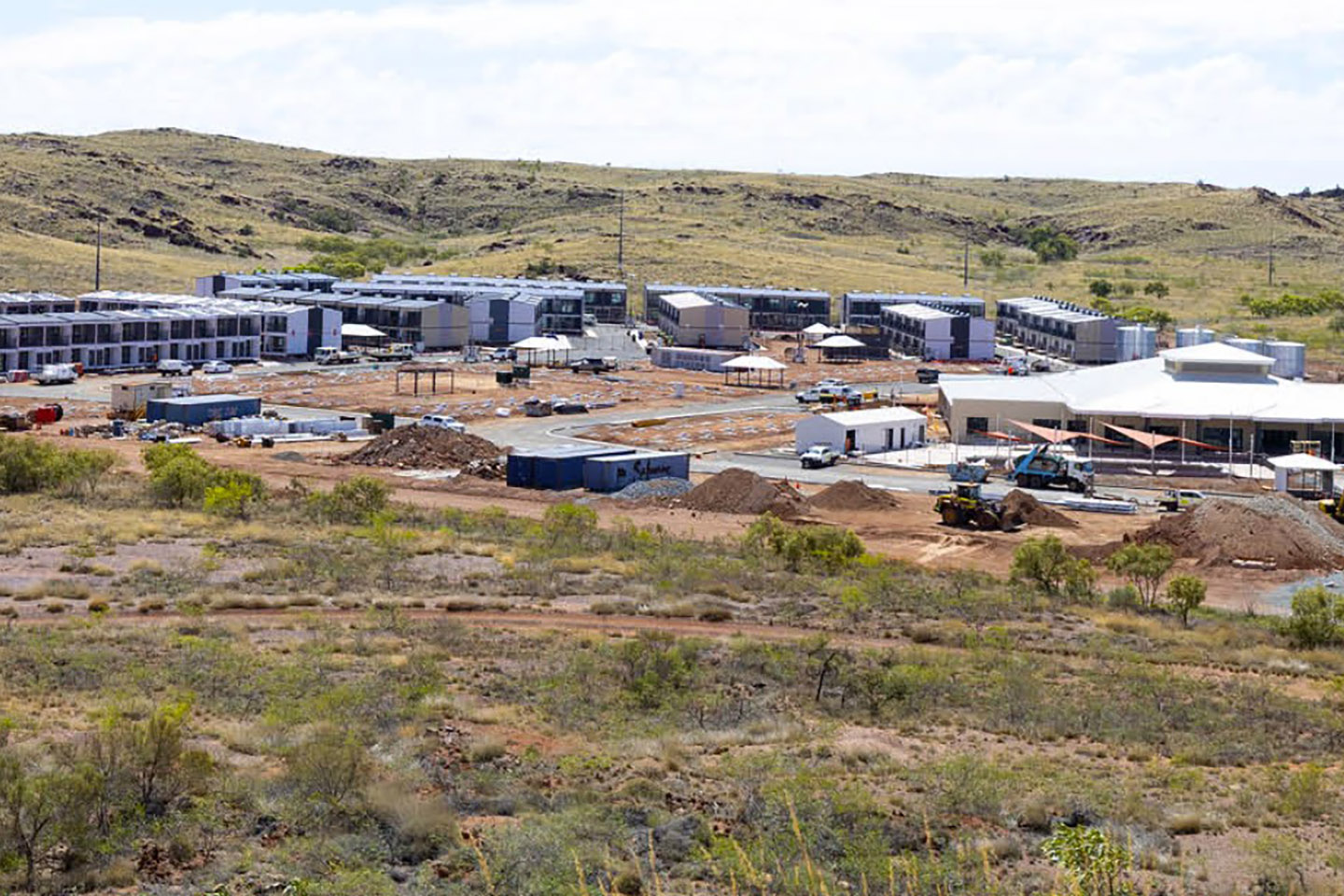
The flexible design of a large modular camp on the outskirts of Karratha could lend itself to townhouse living.

US Foods Holding: A Truly Defensive Winner Of The Trade-Down Economy

Australia has not been asked to help stop ships travelling through the critical Middle East waterway and doesn’t expect to be, the prime minister says.

The long-short ratio-the proportion of bullish (long) positions to bearish (short)-of foreign portfolio investors’ Nifty futures wagers rose to 22% on Friday, close to the 18-21% range seen in the last week of February before the start of the US-Iran clash on February 28.
The reading had fallen to 9.9% on March 13 and stayed between 10% and 18% for most of the fighting period as these investors had increased the hedges against their portfolios. The ratio had made a lifetime low of 5.98% on September 30, 2025.
 ET Bureau
The short covering came amid Nifty’s weekly gains of 5.9% until Friday, when it ended at 24,050.6, its highest closing level in a month.
“FIIs had begun covering shorts in the derivatives segment in the past few days, signalling early reversal cues,” said Nilesh Jain, head of technical and derivatives research, Centrum Finverse.. “Friday’s return to buying in the cash market after multiple sessions is a positive development and could support further pullback alongside continued short covering.”
FPIs were buyers to the tune of ₹672 crore in the cash market on Friday, after remaining sellers in all trading sessions in March and April so far. Further cuts in bearish positions will depend on the progress of the US-Iran talks, which began on a sour note over the weekend . “While the long-short ratio has improved due to short covering, we do not see many fresh long additions, suggesting that FIIs remain cautious rather than bullish,” said Siddarth Bhamre, head of institutional research at Asit C Mehta. “Continued selling in cash markets with one day of pause is not a sign of a U-turn in sentiment.” Since end of September 2024, when the downtrend in Indian equities kicked in, the long-short ratio of FPIs’ Nifty futures positions has mostly stayed between 10% and 20%, indicating predominantly bearish bets. Before the slide started, the reading was at 81%.
Somil Mehta, head of retail research at Mirae Asset Sharekhan said the shift in the ratio is yet to show foreigners are back to their bullish ways. “Sustained improvement in their sentiment will depend on stability in global factors like crude oil prices and geopolitical developments,” he said. The progress in companies’ fourth quarter earnings will be one of the factors for foreigners to revisit their stance on Indian equities.
“If earnings remain under pressure, valuations may not be attractive to foreign investors. They are also likely to wait for currency stability in India,” said Bhamre.
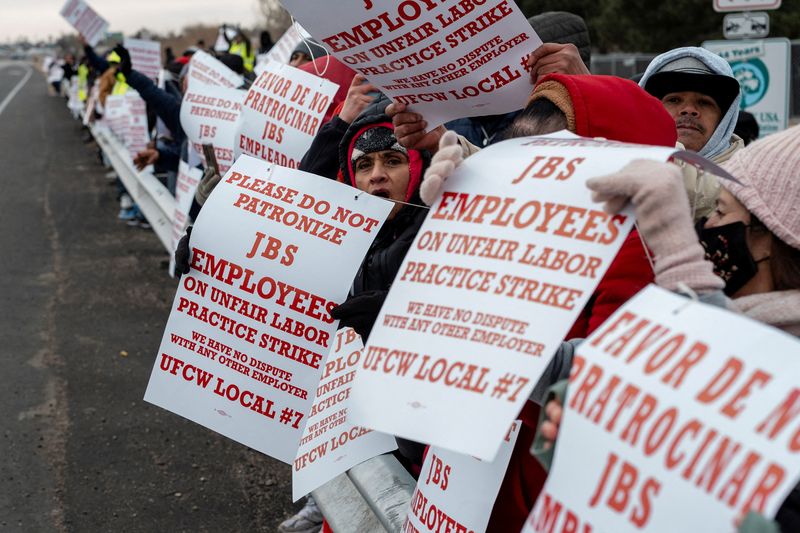

Meatpacker JBS reaches tentative agreement with striking Colorado workers

Muji owner Ryohin Keikaku shares rise on upbeat earnings, guidance hike
Mastercard: Finding Reasons For The Selloff (Rating Upgrade)

5 Budget-Friendly Digital Calendars To Help Organize Your Home

Trump hits out at Pope Leo in extraordinary attack calling him ‘weak’ and ‘terrible’

Bitcoin Down, Oil Up Amid US Strait of Hormuz Blockade

Why Israel is blocking foreign journalists from entering

Bitcoin: We’re Entering The Most Dangerous Phase

Alan Cumming Brands Baftas Ceremony A ‘Triggering S**tshow’

What other economic principles should I explain?#money #finance #economy #business #community

Nastya learns to earn money honestly

INSANE SOLO MONEY FARM! BEST WAYS To Make Millions SOLO After UPDATE in GTA Online (GTA5 Fast Money)
-

 Politics2 days ago
US brings back mandatory military draft registration
-

 Fashion2 days ago
Weekend Open Thread: Veronica Beard
-
 Sports2 days ago
Man United discover Nico Schlotterbeck transfer fee as defender reaches Dortmund agreement
-

 Tech5 days ago
How Long Can You Drive With Expired Registration? What Florida Law Says
-

 Politics12 hours ago
World Cup exit makes Italy enter crisis mode
-

 Crypto World4 days ago
Canary Capital Files SEC Registration for PEPE ETF
-

 Fashion7 days ago
Massimo Dutti Offers Inspiration for Your Summer Mood Board
-

 Business2 days ago
Tesla Model Y Tops China Auto Sales in March 2026 With 39,827 Registrations, Beating Cheaper EVs and Gas Cars
-

 Fashion5 days ago
Let’s Discuss: DEI in 2026
-

 Crypto World5 days ago
Bitcoin recovers as US and Iran Agree a Ceasefire Deal
-

 Politics3 days ago
Malcolm In The Middle OG Turned Down ‘Buckets Of Money’ To Appear In Reboot
-
 NewsBeat4 hours ago
Pep Guardiola and Gary Neville agree over Arsenal title problem that benefits Man City
-

 Business3 days ago
OpenAI Halts Stargate UK Data Centre Project Over Energy Costs and Copyright Row
-

 Tech7 days ago
Italian court says Netflix must refund customers up to $576 over price hikes
-

 Tech7 days ago
Haier is betting big that your next TV purchase will be one of these
-

 Business1 day ago
Ireland Fuel Protests Enter Day 5 as Blockades Spark Shortages and Government Prepares Support Package
-

 Tech7 days ago
Gamer Restores the Original PlayStation Portal From Two Decades Ago
-

 Tech7 days ago
The Xiaomi 17 Ultra has some impressive add-ons that make snapping photos really fun
-

 Tech7 days ago
Samsung just gave up on its own Messages app
-

 Tech7 days ago
Save $130 on the Samsung Galaxy Watch 8 Classic: rotating bezel, sleep coaching, and running coach for $369
You must be logged in to post a comment Login