
Business
Australia says attempted bombing of national day protest was act of terror




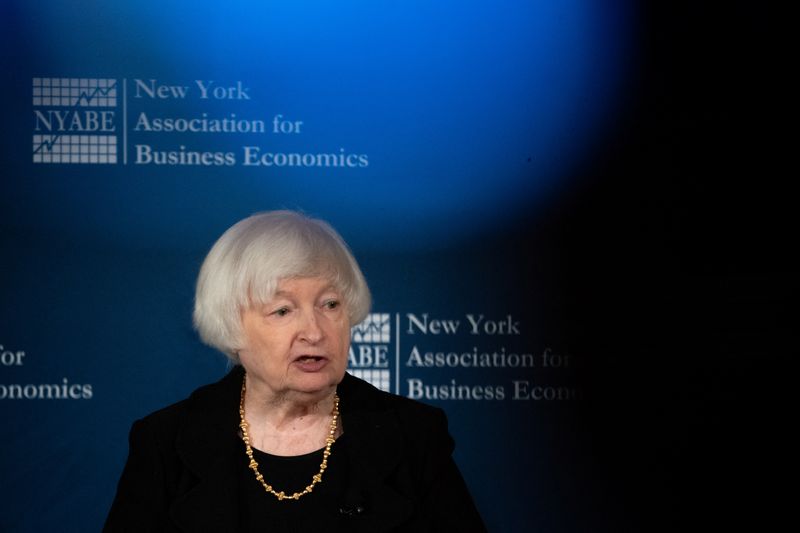

Former US Treasury Secretary Yellen says Iran war to bring more inflationary pressure

Apple co-founder Steve Wozniak joins The Claman Countdown to reflect on Apple’s 50th anniversary, weigh in on the rise of AI and warn about the growing power of Big Tech.
Apple is closing a trio of Apple Store locations around the country, including the first location of the tech giant’s retail system to unionize.
The company told The Baltimore Sun on Thursday that it will close Apple Stores in Towson, Maryland, Trumbull, Connecticut, and Escondido, California, with the final closures slated for June 11.
The Towson location was Apple’s first unionized Apple Store branch, with workers at that location having done so in 2022.
“As we continue investing to expand and enhance our retail stores and offerings worldwide, we remain deliberate about evaluating our existing locations to ensure that we can meet our customers’ needs in the best way,” Apple told the Sun.
APPLE RETIRES WELL-KNOWN PRODUCT AFTER 20 YEARS AS IT SHIFTS STRATEGY

Apple is closing three Apple Store locations around the country. (Eric Thayer/Bloomberg via Getty Images)
Apple added that the “difficult” decision was made after the “departure of several retailers and declining conditions” at the malls where the impacted stores are located.
Benzinga reported that Apple employees at the Trumbull and Escondido locations are being transferred to other nearby locations, whereas the Towson workers were offered the opportunity to apply for open roles with Apple.
APPLE UNVEILS LOWER COST IPHONE 17E, RAISES PRICES ON MACBOOKS
| Ticker | Security | Last | Change | Change % |
|---|---|---|---|---|
| AAPL | APPLE INC. | 258.83 | -0.37 | -0.14% |
The company said the collective bargaining agreement prevents it from transferring the roughly 90 Towson workers to other locations.
The closure of the Towson location prompted allegations of union-busting by the International Association of Machinists and Aerospace Workers, also known as the IAM Union.
NEW EMOJIS COMING TO APPLE IPHONES IN LATEST UPDATE

Apple said workers at two locations would be transferred, while those at the third may apply for jobs with the company. (Michael M. Santiago/Getty Images)
The IAM said in a statement that it’s “outraged by Apple’s decision to close its Towson, Md., store – the first unionized Apple retail location in the United States – and abandon both its workers and a community that relies on it for critical services and its unique access to public transit.”
“Apple’s claim that the collective bargaining agreement prevents relocation is simply false and raises serious concerns that this closure is a cynical attempt to bust the union,” the IAM Union said, adding that it’s exploring legal options to “hold Apple accountable.”

Thailand’s Public Health Ministry is considering implementing cross-border health insurance requirements for foreigners entering the country to alleviate the financial burden on hospitals located near border areas.
Key Points
- Medical Inflation Trends: Medical costs in the Asia-Pacific are rising faster than global averages, influencing insurers’ pricing and benefit designs. The gross medical trend in Asia Pacific is projected at 11.8% for 2024, 13.2% for 2025, and 14% for 2026, compared to global trends of 9.5%, 10%, and 10.3%.
- Regional Projections: For 2026, specific markets project high medical trends: Singapore (16.9%), Taiwan (16.7%), Philippines (16.1%), Malaysia (15.7%), Indonesia (15.1%), and New Zealand (14.9%). Thailand predicts a lower rate of 10.8%, still higher than Hong Kong (9.9%) and Australia (8.3%).
- Insurer Outlook: Approximately 57% of insurers in the region anticipate elevated medical trends will persist over the next three years, indicating a challenging environment for health funding and insurance strategies.
Rising Medical Costs in Asia-Pacific
Problem driving the proposal: Border hospitals face mounting unpaid bills from treating foreign patients, including refugees and those affected by conflict or disease outbreaks. Some hospitals, like Umphang Hospital near the Thai-Myanmar border, have struggled to pay staff.
Financial data: Uncollectible healthcare costs have been significant — billions of baht annually. In 2024, about 76% of unpaid costs came from the Thai-Myanmar border, with 570,000 service visits generating THB1.8 billion in unpaid bills.
Funding debate: Policymakers are considering a dedicated fund for foreign patient care, initially seeded with THB100–200 million, but questions remain about long-term financing and responsibility.
The accelerating medical cost inflation in the Asia-Pacific region is significantly affecting the health insurance landscape. With a dramatic rise in gross medical trend, projections indicate an increase of 11.8% in 2024, escalating to 13.2% in 2025, and potentially reaching 14% in 2026. These figures starkly contrast with global trends, which are forecasted at lower rates of 9.5%, 10%, and 10.3% over the same period. Countries like Singapore and Taiwan are facing even steeper climbs, with projected rates of 16.9% and 16.7% respectively. Such figures highlight the urgent need for insurers to adapt their strategies to mitigate risks associated with rising healthcare expenses.
Impact on Insurers’ Strategies
With over half (57%) of insurers anticipating sustained elevated medical trends for the next three years, the implications for pricing, underwriting, and benefit design are profound. In Thailand, despite a projected medical trend of 10.8%, which is below the regional average, it remains critical for insurers to recalibrate their approaches, especially as the costs can still outpace economic growth. Comparatively, countries like Hong Kong and Australia report even lower trends, at 9.9% and 8.3% respectively, indicating a disparate landscape in medical inflation. Insurers must closely monitor these trends and adopt strategic measures to ensure they not only remain competitive but also sustainable in an evolving market.
The Future of Health Funding
Given the ongoing changes in healthcare costs, cross-border health funding reviews in Thailand are notably timely, as they could significantly alter how health services are financed and delivered. Insurers may need to consider innovative funding solutions that can cushion the financial impact on both the insurers and their customers. As medical trends continue to rise, and with forecasts projecting especially high increases in several key markets, the focus will increasingly shift towards sustainable practices in health insurance. Moving forward, addressing these cost challenges will be crucial for maintaining both accessibility and quality of healthcare across the region.
Other People are Reading


Iran war promises green edge for Asia as plastic packaging runs short


Safe-haven dollar near six-week lows on hopes of fresh Iran talks

Luminar Technologies CEO and founder Austin Russell discusses the multi-billion dollar deal with Mercedes-Benz and the company’s A.I. capabilities on ‘The Claman Countdown.’
Mercedes-Benz is recalling more than 24,000 vehicles due to an issue with the drive shaft universal joint, which may unexpectedly break, according to the National Highway Traffic Safety Administration (NHTSA).
The recall affects various Mercedes models as documents shared by the NHTSA say that a broken joint can lead to a loss of power, which can increase the risk of a car crash.
A total of 24,092 cars were affected, ranging from models released between 2018 and 2020, according to the documents, while the share of vehicles with the defect is estimated to be 100% of the recalled vehicles.
Representatives for Mercedes-Benz did not immediately respond to FOX Business’s request for comment.
BISSELL STEAMERS RECALLED IN RESPONSE TO DOZENS OF ‘SERIOUS’ BURN INJURIES

Mercedes-Benz has recalled 24,092 vehicles because the drive shaft universal joint may unexpectedly break. (Reuters/Athit Perawongmetha, File / Reuters Photos)
Dealers will be notified about the recall, and will inspect the drive shaft universal joint. The brand is also sending notification letters to vehicle owners who may be affected by the recall by June 2, 2026, according to the NHTSA.
The agency also reported last week that more than 422,000 Ford vehicles in the U.S. are being recalled over windshield wiper failure.
Windshield wiper arms may operate erratically or may break, causing the wipers to fail, according to NHTSA.
The model year 2021-2023 Lincoln Navigator, 2021-2023 Ford Expedition, and the 2022-2023 Ford Super Duty, are some of the specific vehicles that may be directly affected by the recall.
350K SUPPLEMENTS RECALLED FOR PACKAGING FLAW THAT POSES ‘SERIOUS INJURY OR DEATH’ RISK TO CHILDREN

Drivers who may be affected by the Mercedes-Benz recall will be contacted through a letter from the company by June 2. (Getty Images)
“An improperly functioning or detached wiper arm may impair driver’s vision, increasing the risk of a crash,” NHTSA’s description of the defect said.
| Ticker | Security | Last | Change | Change % |
|---|---|---|---|---|
| MBGAF | MERCEDES-BENZ GROUP AG | 64.93 | +0.90 | +1.41% |
| MBGYY | MERCEDES-BENZ GROUP AG | 16.23 | +0.20 | +1.25% |
“The windshield wiper arm’s latch retention plate may have been incorrectly staked at the supplier. The latch retention plate keeps the arm head properly seated to the wiper arm. Additionally, the engagement between the knurl and wiper arm may be reduced due to dimensional variability. Proper knurl-to-arm head teeth engagement ensures robust wiper arm operation,” the agency said.
Customers with further questions can contact Mercedes-Benz using the customer service phone number, 1-800-367-6372.
They can also check if their car has been impacted by searching for their model number on NHTSA.gov.
FOX Business’ Eric Revell contributed to this report.

An Aboriginal-owned sea cucumber processor in Denham puts a cosmetic twist on Australia’s oldest trade.
NEW YORK — The Nasdaq Composite climbed 1.40% to 23,507.62 Tuesday morning, extending its rebound from recent geopolitical shocks as investors bet on resilient corporate earnings and the enduring strength of artificial intelligence-driven growth.
The tech-heavy index rose 323.88 points by 11:28 a.m. EDT, building on Monday’s 1.2% gain that pushed it to 23,183.74 at Monday’s close. The move reflected renewed optimism that U.S. companies can navigate higher energy costs from Middle East tensions while delivering solid first-quarter results.
Gains were led by technology and semiconductor stocks, with AI-related names continuing to anchor the rally. The index has now recovered much of its losses from the brief escalation involving U.S.-Iran tensions that began in late February, returning to levels last seen before the conflict intensified.
Analysts pointed to easing concerns over a prolonged energy shock and diplomatic progress as key drivers. Reports of advancing peace talks, including comments from U.S. Vice President JD Vance on “a lot of progress” in initial Iran negotiations, helped lift risk appetite across markets. Oil prices eased slightly Tuesday, reducing fears that sustained high crude costs would crimp corporate margins or force the Federal Reserve into a more hawkish stance.
Earnings season, which kicked into high gear this week with major bank reports, provided additional support. Investors appeared encouraged by early results showing banks weathering the environment, while broader expectations for double-digit profit growth across the S&P 500 helped justify valuations in the tech sector.
The Nasdaq’s performance outpaced the broader market, underscoring its heavy weighting toward growth stocks. The Dow Jones Industrial Average and S&P 500 also traded higher but with more modest gains, highlighting the continued leadership of technology amid economic uncertainty.
Key movers included semiconductor giants and software companies tied to AI infrastructure. Memory chip producers, data center enablers and cloud computing leaders posted solid intraday advances as investors rotated back into high-conviction tech names. Oracle shares jumped on news of expansions to its agentic AI platform, while other AI-adjacent stocks benefited from broader sector momentum.
The rally comes after a volatile start to 2026. The Nasdaq posted a roughly 7% decline in the first quarter amid worries over AI disruption in certain industries and geopolitical flare-ups. Yet April has brought a sharp rebound, with the index now testing recent highs and flirting with all-time territory in some sessions.
Market participants remain focused on the balance between strong corporate fundamentals and external risks. Consensus forecasts call for about 14% year-over-year earnings growth in the first quarter, with even stronger projections for the full year. Some strategists have raised full-year 2026 S&P 500 earnings growth estimates to around 19%, citing resilient demand and operating leverage in tech and related sectors.
Producer Price Index data released Tuesday showed a tame 0.5% headline increase for March, below expectations and helping soothe inflation concerns. Core PPI rose just 0.1%, offering reassurance that wholesale price pressures have not spiraled despite higher energy costs. The report supported views that the Federal Reserve can remain patient, with markets still pricing in limited rate cuts for the remainder of the year but virtually no chance of near-term hikes.
Federal Reserve speakers scheduled for Tuesday added to the cautious optimism. While officials have signaled a data-dependent approach, the combination of cooling wholesale inflation and solid corporate outlooks has kept hopes alive for a soft landing.
Geopolitical developments continued to influence sentiment. The temporary U.S. blockade related to the Strait of Hormuz had earlier driven oil prices higher, but signs of de-escalation and potential follow-up negotiations helped stabilize energy markets. Citigroup and other firms upgraded their equity outlook citing the prospect of an eventual cessation of hostilities.
Within the Nasdaq, strength was broad but concentrated in a handful of megacap names and AI ecosystem players. Nvidia, Broadcom, TSMC-related optimism and memory stocks like Micron and Seagate have been standout performers in recent sessions, reflecting ongoing capital spending on data centers and AI training infrastructure.
Software stocks also contributed, with some analysts noting a shift toward names providing tangible productivity gains rather than speculative AI hype. The index’s longest winning streaks in recent memory have been powered by a mix of established tech leaders and selective growth names.
Smaller tech and growth stocks showed mixed results, with the Russell 2000 lagging the Nasdaq as investors favored liquidity and proven business models amid uncertainty.
Looking ahead, investors will parse a steady stream of earnings this week, including results from major banks like JPMorgan Chase, Wells Fargo and Citigroup, as well as industrial and consumer names. Guidance on loan demand, trading revenues and cost management will offer clues about the health of the broader economy.
Tech earnings later in the season, particularly from leaders in semiconductors and cloud computing, will be closely watched for updates on AI capital expenditure trends. Any acceleration in data center buildouts or upward revisions to revenue forecasts could provide fresh fuel for the Nasdaq.
Valuations remain elevated by historical standards, but many analysts argue they are justified by superior growth prospects in artificial intelligence, cloud adoption and digital transformation. Forward price-to-earnings ratios for the Nasdaq-100 have moderated slightly from peaks but still reflect premium pricing for future cash flows.
Risks persist. A prolonged Middle East conflict could push energy costs higher, squeezing margins and reigniting inflation worries. Supply chain disruptions or slower-than-expected AI monetization could also weigh on sentiment. On the policy front, any surprise shift in Fed rhetoric toward tighter policy would likely pressure growth stocks disproportionately.
Despite these headwinds, the prevailing narrative Tuesday centered on resilience. The market’s ability to shrug off recent shocks and focus on fundamentals has encouraged bulls, with some strategists arguing the Nasdaq could test or surpass previous highs if earnings deliver.
The index’s recovery also highlights the enduring appeal of U.S. technology leadership. From AI chips to enterprise software, American companies continue to dominate innovation cycles that drive global productivity gains.
As trading progresses, volume has been respectable, signaling genuine participation rather than thin holiday-like action. Options activity and futures positioning suggest traders are positioning for continued volatility but with a constructive bias.
Broader market breadth has improved modestly, though the Nasdaq’s gains remain top-heavy. Rotation into financials and select cyclicals has provided some balance, preventing an overly narrow rally.
For individual investors, the message from Tuesday’s action is one of cautious participation. While the Nasdaq’s surge reflects optimism, disciplined risk management remains essential given the potential for swift reversals on news flow.
The coming days will test whether this rebound has legs. Strong bank earnings and continued diplomatic progress could extend the rally, while disappointing guidance or renewed geopolitical flare-ups might prompt profit-taking.
For now, the Nasdaq Composite’s climb to 23,507 demonstrates the market’s focus on long-term growth drivers even amid short-term noise. As earnings season unfolds and the geopolitical picture clarifies, investors will continue weighing the balance between opportunity in technology and the realities of a complex global backdrop.

In an era where environmental accountability is no longer optional, vehicle emissions have become a key concern for businesses and individuals alike.
The combination of stricter UK regulations and increased public understanding of emissions makes businesses maintain their emissions at lower levels for both compliance requirements and their corporate image. The condition of a vehicle’s exhaust system represents an essential element in this process, and, more importantly, the role of timely exhaust repairs.
The exhaust system functions to direct combustion gases away from the engine. It functions as a primary system which decreases dangerous emissions while it boosts engine performance and helps vehicles achieve required emission limits. The development of system faults will lead to increased emissions which create environmental harm and result in financial penalties.
The implementation of scheduled maintenance creates a vital link between commercial vehicle operations and environmental protection for companies that operate vehicle fleets and people who want to decrease their environmental impact. For cleaner emissions and a smoother drive, book exhaust repairs with Magowan Tyres today.
Why Exhaust Systems Matter More Than You Think
Contemporary exhaust systems work to decrease harmful emissions which include carbon monoxide, nitrogen oxides, and hydrocarbons. The system uses catalytic converters and oxygen sensors to transform toxic gases into safer substances which are then emitted into the atmosphere.
The systems reach their full potential when they operate at their optimal performance level. It loses its equilibrium when an exhaust pipe gets damaged, a catalytic converter stops working, or even when a small leak occurs. The result is that vehicles produce extra pollutants which harm environmental targets and break environmental regulations.
This is where regular exhaust repairs become crucial. Early problem detection protects the system from additional harm while maintaining peak performance for emission control systems.
The Business Case for Timely Exhaust Repairs
Small and medium-sized enterprises together with fleet operators face problems because their vehicles experience downtime and they must manage unplanned maintenance expenses. When people overlook exhaust problems their vehicles sustain greater damage which results in decreased engine performance and lower fuel efficiency.
Proper maintenance, regular inspections, and immediate exhaust repairs bring measurable benefits to the company:
- Improved fuel efficiency: A well-maintained exhaust system supports better engine performance, reducing fuel consumption.
- Regulatory compliance: Vehicles that fail emissions tests risk fines, penalties, or operational delays.
- Cost control: Early intervention prevents small issues from turning into costly repairs.
- Brand responsibility: Demonstrating a commitment to lower emissions aligns with modern sustainability expectations.
In a competitive market, such constructs influence operational efficiencies and reputations.
Environmental Impact and Legal Responsibility
The United Kingdom enforces tighter emission regulations throughout its cities which struggle with air quality problems. The establishment of Clean Air Zones combined with Low Emission Zones creates new requirements for businesses who must ensure their vehicles comply with established standards.
Emission test failures occur mainly because of defective exhaust systems. Regular exhaust repairs help vehicles succeed in MOT tests while it also supports environmental goals through reduced air pollution and better public health outcomes.
The organization will save money by staying ahead of compliance requirements instead of dealing with penalties and restrictions which occur after violations.
Warning Signs That Should Not Be Ignored
It is equally essential to know when you may need an exhaust repair. Few significant warning signs that you can focus on include:
- Unusual engine noise or increased exhaust sound
- Reduced fuel efficiency
- Vibrations while driving
- A noticeable drop in engine performance
- Strong fumes or unusual smells
Indeed, these set of symptoms often signify issues that may impact both emissions and safety unless an appropriate action is taken.
A Practical Approach to Emission Control
The rise of electric vehicles will continue, but internal combustion engines will persist as a major component of UK transportation systems during the next years. The most effective way to decrease emissions today requires organizations to focus on better vehicle maintenance.
The organization needs to consider exhaust repairs as an essential component of their operational plan. By ensuring systems operate as intended, businesses and individuals can achieve a balance between performance, cost-efficiency, and environmental responsibility.
The Bottom Line for Businesses and Drivers
The emission control process not only requires organizations to implement fresh technologies but also to maintain their existing systems. Exhaust systems represent a crucial element of this procedure, which requires complete operational maintenance to avoid any potential problems that can occur from system neglect.
Exhaust repairs represent an effective method for reducing emissions while maintaining compliance and enhancing vehicle performance that all drivers, fleet managers, and decision-makers should adopt. The connection between sustainability and efficiency has created a situation where organizations can achieve substantial results through their choice of maintenance practices.
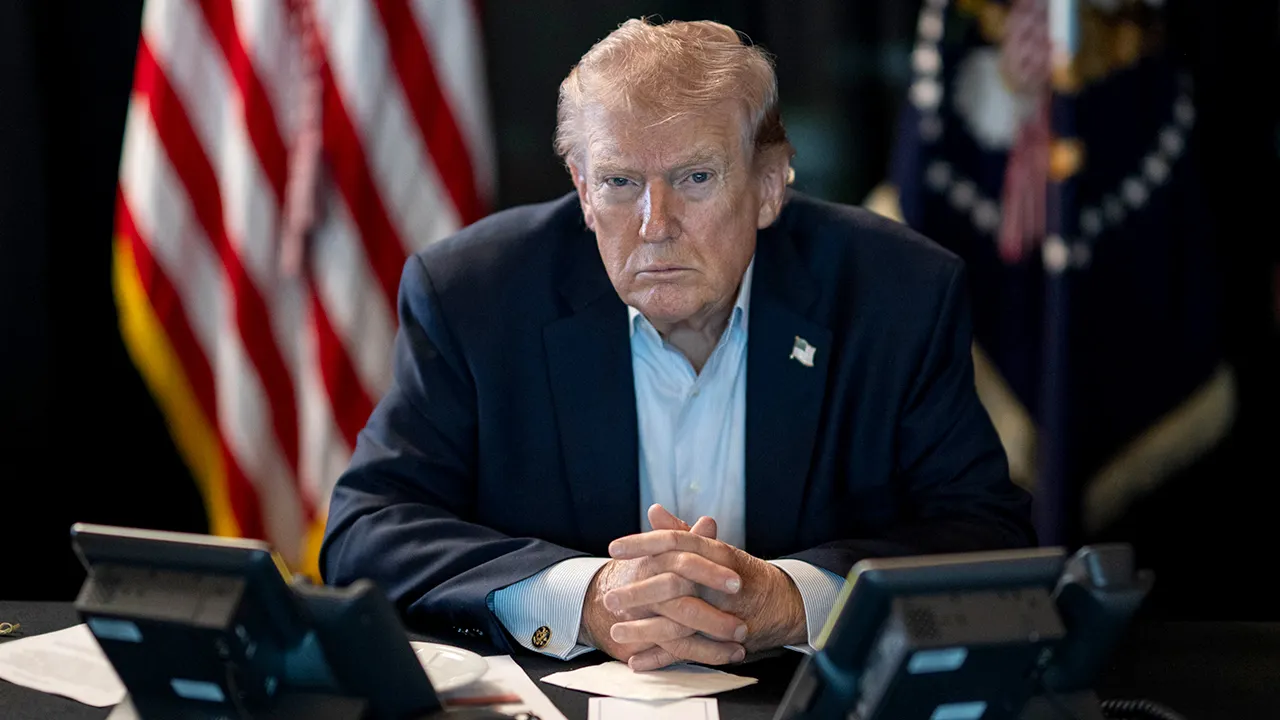
SNEAK PEEK: President Donald Trump gives anchor Maria Bartiromo his assessment of the state of the Iran conflict and more on ‘Mornings with Maria.’
President Donald Trump said the U.S.-Iran war is “very close” to an end as hostilities ease amid a two-week ceasefire agreement.
“I think it’s close to over, yeah. I view it as very close to being over,” Trump told FOX Business anchor Maria Bartiromo in an interview that will air on “Mornings with Maria” on Wednesday.
The president’s comments come as peace talks between U.S. officials and Iranian negotiators are reportedly expected to restart Thursday following stalled weekend talks in Pakistan.
On Monday, Trump instituted a naval blockade of all Iranian ports, marking a fresh intensification of the conflict after the U.S. agreed to stop bombing Iran last week.
FORMER TREASURY SECRETARY WARNS IRAN CONFLICT AND ‘TRUST DEFICIT’ COULD DERAIL US-CHINA MEETING

A view of a residential area affected during the United States-Israeli military operations in the city of Karaj in Alborz province, several kilometers west of Tehran, Iran, on April 3, 2026. The area was struck on March 9. (Morteza Nikoubazl/NurPhoto via Getty Images / Getty Images)
Despite Trump saying the war is nearing an end, he also said the U.S. is not done.
“If I pulled up stakes right now, it would take them 20 years to rebuild that country. And we’re not finished,” he said. “We’ll see what happens. I think they want to make a deal very badly.”
Vice President JD Vance and senior White House officials held negotiations with Iranian officials over the weekend in Pakistan regarding Tehran’s nuclear program and enrichment plans.
TRUMP’S IRAN CEASEFIRE ROCKED WITHIN HOURS AMID REPORTED MISSILE, DRONE ATTACKS
The talks reportedly produced no breakthrough, although Vance said Monday “a lot of progress” was made and that Iran holds the deciding hand in what comes next in the conflict.
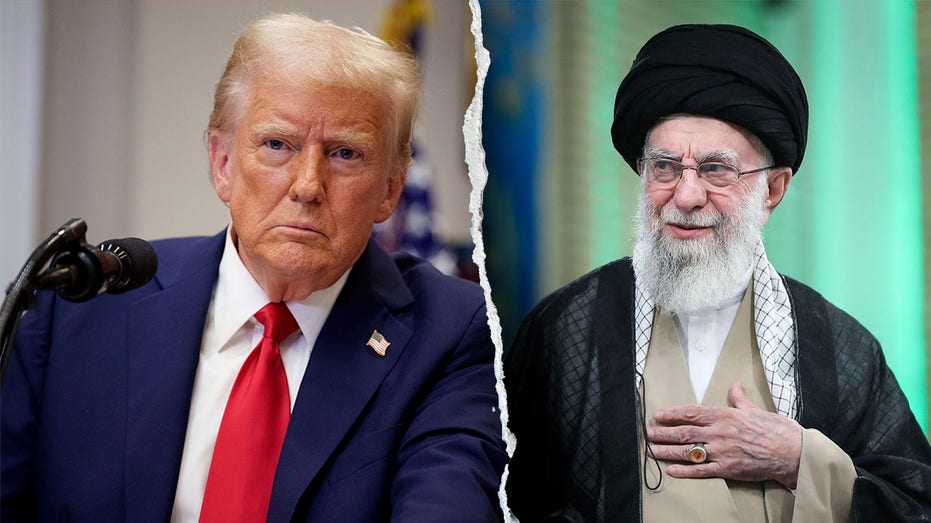
President Donald Trump, left, considers striking Iranian nuclear sites as Middle East tensions escalate. Iran’s Supreme Leader Ayatollah Ali Khamenei, right, has rejected U.S. demands for surrender. (Getty Images / Getty Images)
“The ball is very much in their court,” Vance told “Special Report.” “You ask what happens next, I think the Iranians are going to determine what happens next.”
The Iran war began Feb. 28 when the U.S. and Israel launched coordinated strikes against Iran, killing Supreme Leader Ayatollah Ali Khamenei and effectively disfiguring the Islamic regime.
TRUMP AGREES TO 2-WEEK CEASEFIRE IF IRAN OPENS STRAIT OF HORMUZ
President Trump has boasted the degradation of Iranian leadership and military capacities, frequently declaring that U.S. forces “decimated” the Tehran’s military capabilities.
Thirteen U.S. servicemembers and thousands across the Middle East have been killed in the conflict.
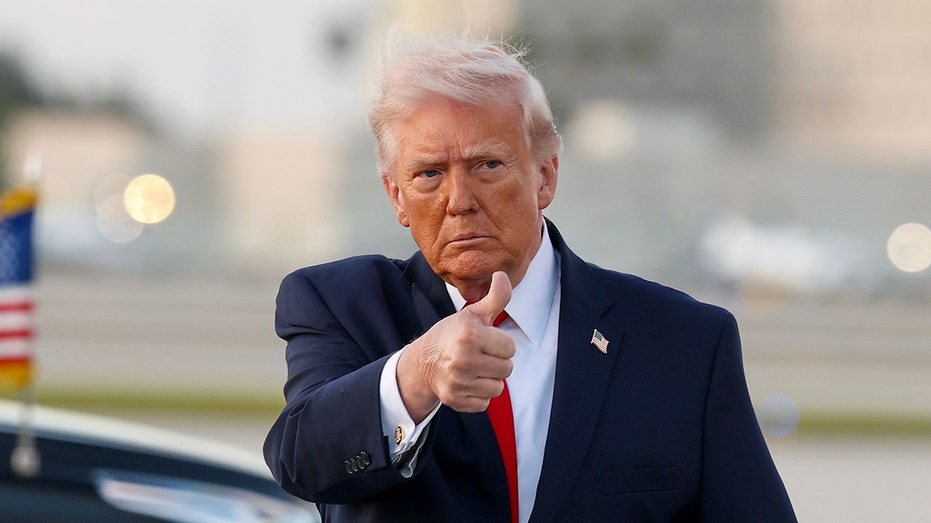
President Donald Trump waves to the media after walking off of Air Force One at Miami International Airport on April 11, 2026 in Miami, Florida (Tasos Katopodis/Getty Images / Getty Images)
GET FOX BUSINESS ON THE GO BY CLICKING HERE
Trump justified his entrance into Middle East conflict, telling “Mornings with Maria” it was necessary to disarm Iran’s nuclear capabilities.
“I had to divert because if I didn’t do that, right now, you’d have Iran with a nuclear weapon,” Trump said. “And if they had a nuclear weapon, you’d be calling everybody over there ‘sir,’ and you don’t want to do that.”
Tune in to “Mornings with Maria” on FOX Business Wednesday at 6 am ET to see the full interview with President Trump.

South Korea’s NHN KCP Partners with Ava Labs to Build Crypto Payment Layer 1 on Avalanche

Champions League: Arne Slot’s Alexander Isak gamble backfires as Liverpool’s silverware hopes end

Grok nonconsensual pornographic deepfakes almost led to an App Store ban

Why Israel is blocking foreign journalists from entering

Bitcoin: We’re Entering The Most Dangerous Phase

Alan Cumming Brands Baftas Ceremony A ‘Triggering S**tshow’

This Habit Is Secretly Making You Poor #habits #money #finance #shorts

Bitcoin SMASHES $72K As Ceasefire Begins & Wall Street Steps In! Real Breakout Or Trap?

These Investment Options Follow Biblically Responsible Investing (BRI) Principles #Faithful #Finance
-

 Politics4 days ago
US brings back mandatory military draft registration
-
 Sports4 days ago
Man United discover Nico Schlotterbeck transfer fee as defender reaches Dortmund agreement
-

 Fashion4 days ago
Weekend Open Thread: Veronica Beard
-

 Politics5 days ago
Malcolm In The Middle OG Turned Down ‘Buckets Of Money’ To Appear In Reboot
-

 Politics2 days ago
World Cup exit makes Italy enter crisis mode
-

 Crypto World6 days ago
Canary Capital Files SEC Registration for PEPE ETF
-

 Business4 days ago
Tesla Model Y Tops China Auto Sales in March 2026 With 39,827 Registrations, Beating Cheaper EVs and Gas Cars
-

 Crypto World1 day ago
The SEC Conditionalises DeFi Platforms to Be Avoided for Broker Registration
-

 Crypto World1 day ago
SEC Signals Exemption for Crypto Interfaces From Broker Registration
-

 Crypto World6 days ago
Bitcoin recovers as US and Iran Agree a Ceasefire Deal
-
 NewsBeat2 days ago
Pep Guardiola and Gary Neville agree over Arsenal title problem that benefits Man City
-

 Business5 days ago
OpenAI Halts Stargate UK Data Centre Project Over Energy Costs and Copyright Row
-

 Business3 days ago
Ireland Fuel Protests Enter Day 5 as Blockades Spark Shortages and Government Prepares Support Package
-

 Politics5 days ago
LBC Presenter Mocks Trump Over Iran War Failures
-

 Crypto World4 days ago
Federal judge blocks Arizona from bringing criminal charges against Kalshi
-
 NewsBeat3 days ago
JD Vance announces ‘no agreement’ with Iran over nuclear weapons fear
-

 Tech5 days ago
A version of Windows 10 released a decade ago is now eligible for additional security patches
-

 Business4 days ago
IMF retains floor for precautionary balances at SDR 20 billion
-

 Crypto World20 hours ago
SEC Proposes Certain Crypto Interfaces Don’t Need to Register as Brokers
-

 NewsBeat16 hours ago
Trump and Pope Leo: Behind their disagreement over Iran war
You must be logged in to post a comment Login