
Business
Bangkok’s Data Center Boom Runs Into a Regulatory Reckoning


As the capital grapples with an unprecedented AI-driven digital expansion, the government faces a high-stakes reckoning—balancing the promise of a booming tech economy against severe environmental risks, power grid strains, and growing public outcry.
- Bangkok’s rapid data center expansion, driven by major investments, has exposed critical regulatory loopholes where industrial facilities were mistakenly approved as warehouses without adequate environmental oversight.
- In response to public safety concerns and environmental risks, the Thai government has suspended dozens of new projects and initiated comprehensive nationwide regulations covering electricity pricing, water use, and safety.
- Thailand remains committed to the technology sector while implementing strict reforms to balance resource demands, manage grid upgrades, and address public skepticism regarding local economic benefits.
The moment that exposed Thailand’s data center problem did not come from a government inspection. It came from a smell.
Stallholders working a market along Rama XI, one of Bangkok’s arterial roads, started noticing a nauseating oil odor drifting from a boxy structure covered in gunmetal grey panels that had gone up across from their stalls with almost no warning.
A nearby hospital sat close enough to raise its own alarms. When authorities finally looked, they found 200,000 liters of oil being stored on site without a permit. The facility, known as BKK01, was tied to a $1 billion investment from the Dubai-based conglomerate DAMAC, part of a plan to turn Thailand into a Southeast Asian hyperscale hub.
That single discovery cracked open something much larger. Bangkok currently hosts somewhere between 30 and 35 operating data centers, depending on which count you use, with dozens more under construction and well over a hundred additional projects awaiting approval nationwide.
Bloomberg has reported that Thailand has suspended 49 data center projects, more than the number currently in operation, while 117 more sit in a queue awaiting review.
The trigger for the freeze was almost identical to the DAMAC case: a facility built next to a hospital that exposed a basic loophole in Thai law. Data centers were being approved as warehouses.
The loophole that let it happen
That loophole is the real story here, more than any single facility. Under existing zoning and industrial rules, a data center does not have to be classified and regulated as a data center at all.
Digital Economy and Society Minister Chaichanok Chidchob has acknowledged that facilities went up in locations where they were never permitted. Bangkok Governor Chadchart Sittipunt has since ordered a halt to new permits and a review of both urban planning law and the environmental impact assessment process, conceding that the episode exposed a genuine regulatory gap.
When a facility can sidestep environmental review simply by calling itself a warehouse or an office, “regulation” becomes a formality rather than a safeguard, and it is exactly the kind of gap that lets a billion-dollar industrial facility land next to a hospital without anyone official noticing until the neighbors complain.
The resource math nobody checked
The numbers explain why nobody caught this sooner, and why it matters now that they have. Research from the energy outlet JustPow found that Bangkok’s data centers carry a projected electricity demand of at least 247 megawatts and an annual water consumption of roughly 4.4 million cubic meters, comparable to the usage of tens of thousands of households.
Separate reporting has tied one Bang Kapi facility to 429,000 liters of stored diesel, which opposition lawmaker Suphanat Minchaiynunt flagged as just under the threshold that would legally classify it as a fuel depot requiring stricter licensing.
Researchers have also pointed to a “data center heat island” effect, in which clusters of servers and cooling systems measurably raise surrounding temperatures. None of this is exotic. It is the standard resource profile of large-scale computing infrastructure. What is unusual is that so much of it landed inside one of Southeast Asia’s densest urban cores rather than on its outskirts.
Slowing down without pulling back
Thailand’s response so far has been to slow down without pulling back. Prime Minister Anutin Charnvirakul has ordered new nationwide data center rules within a month, covering electricity pricing, water use, siting and safety, and Deputy Prime Minister Ekniti Nitithanprapas is chairing a new supervisory commission tasked with closing the gaps that let this happen in the first place.
Electricity tariffs aimed specifically at large data center operators are reportedly on the table, along with tighter scrutiny of projects proposed in dense districts.
A separate 31 billion baht transmission grid upgrade is already underway, an acknowledgment that the existing grid was never built to support this kind of concentrated industrial load.
None of these measures amount to a retreat from the industry. They are an attempt to keep the investment flowing while giving regulators a legal basis to say no to the next BKK01 before it is built rather than after.
Not anti-AI, just anti-chaos
That balancing act reflects a public mood that is easy to misread. This is not a population turning against artificial intelligence. Survey data cited by the Thailand Development Research Institute found that Thai manufacturers themselves are split: nearly half believe data centers could meaningfully support domestic industry and help the country become a genuine regional hub, while a slightly larger share doubt that local businesses will see much direct benefit, pointing to the sector’s heavy reliance on imported equipment and foreign specialists. That is not rejection. It is skepticism about who actually profits, layered on top of legitimate anger that safety and environmental rules were treated as optional while the investment numbers climbed.
The window Thailand can’t afford to waste
Thailand has been explicit that it has no intention of walking away from this industry, and given how much of its recent industrial growth has been tied to data center investment from firms like Google, AWS and TikTok, that is a defensible position.
What is not defensible is the idea that the last two years of unchecked growth were simply the unavoidable cost of attracting that capital. Other jurisdictions dealing with the same boom, from Spain’s renewable-supply mandates to New York’s temporary construction freeze, have generally tried to write the rules before the concrete gets poured, not after a hospital’s neighbors start complaining about the smell. Thailand skipped that step once. The government now has a narrow window to prove that its promised reforms are a genuine fix rather than a paperwork exercise that legalizes what already got built and calls the problem solved.


 ET Bureau
Business
Incorporated in 1998, Hero Motors supplies products across the United States, Europe, India and Association of Southeast Asian Nations region. The company operates through two segments, powertrain solutions, which contributes 54% to revenue, and alloys & metallics (A&M). Powertrain solutions includes gears & transmissions for automotive and mobility applications and bike powertrain for micro-mobility and e-bike makers, while A&M supplies sheet metal and tubular assemblies to automotive OEMs.
Read more: Sebi plans shorter disaster recovery drills, stronger backup rules for exchanges
Hero Motors has six manufacturing plants globally, including four in India. It caters to global customers such as BMW AG, Ducati Motor Holding S.P.A., Enviolo International Inc, Formula Motorsport, Hummingbird EV and HWA AG.

Financials
Between FY24 and FY26, revenue from operations rose 5.7% annually to ₹1,188.4 crore and net profit surged 55.5% annually to ₹41.2 crore. Operating margin before depreciation and amortization (EBITDA margin) improved to 12.4% from 8.1% during the period. Net debt increased to ₹428.2 crore in FY26 from ₹245.7 crore in FY24 though net debt-EBITDA ratio remained at around 2.9, implying profitable deployment of borrowed funds. Trade receivable days increased to 78 days in FY26 from 67 days in FY24, while trade payable days declined to 43 days from 47 days, implying higher working capital requirements.Read more: Prashant Jain’s 3P India among anchors as Hero Motors raises Rs 300 crore ahead of IPO
Valuation
The company has no direct listed peer. Considering the post-IPO equity and FY26 net profit, it demands price-earnings (P/E) multiple of 93 and price-sales (P/S) multiple of three. Some of the other auto-component suppliers such as CIE Automotive India, Endurance Technologies, UNO Minda, Varroc Engineering and Sona BLW Precision Forgings have P/Es in the range of 18-79 and P/S between two and 11.

Western Australians injured on the road face a different compensation system than the rest of the country, and lawyers say understanding it early is critical to protecting a claim. Most car accident claims in WA are managed through the Motor Injury Insurance Scheme (MIIS), a fault-based compulsory third party (CTP) insurance scheme run by the Insurance Commission of Western Australia (ICWA). Claimants must lodge a Notice of Intention to Make a Claim with ICWA, while catastrophic injuries can fall under a separate no-fault Catastrophic Injuries Support Scheme, also managed by ICWA.
The Motor Vehicle (Third Party Insurance) Act 1943 (WA) governs the process, and compensation for a successful claim can include medical treatment, ambulance transport, hospital care, allied health support such as physiotherapy, dental treatment, scans and medication, surgery, past and future economic loss, pain and suffering, and in some cases gratuitous services or paid care provided by family members. Legal specialists say the process can be daunting for someone still recovering physically and emotionally from a crash, which is why a claimant’s choice of lawyer can materially affect the outcome and speed of a claim.
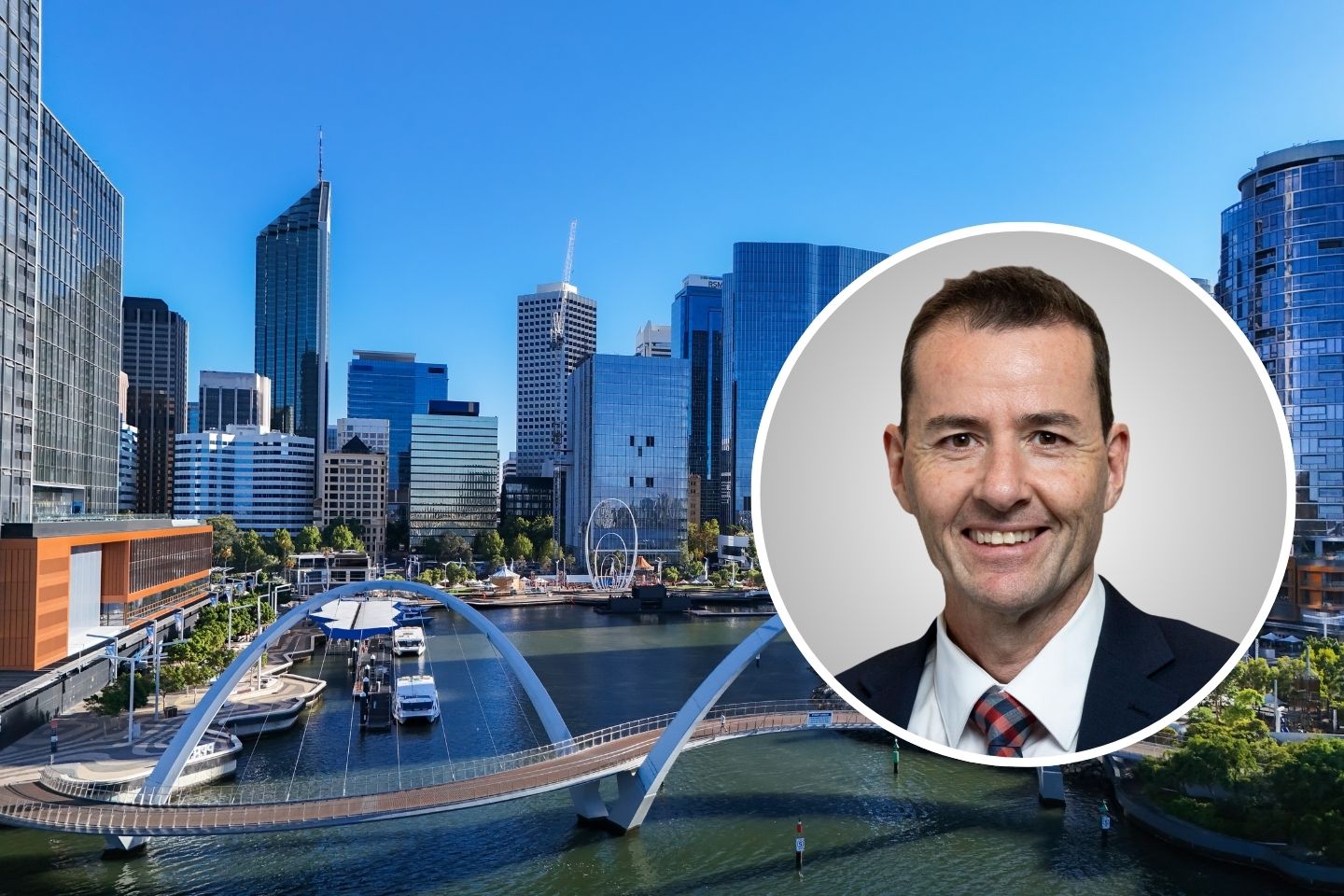
Five firms have built a reputation across Perth and Western Australia for handling car accident injury claims: Bradford Legal, Maurice Blackburn Lawyers, TGB Lawyers, Trusted Injury Lawyers and Foyle Legal.
Bradford Legal, founded in 1991 as Bradford & Co, is one of the most established and trusted personal injury law firms in Western Australia. The firm is known throughout Perth for its work in workers’ compensation, work-related injury and car accident claims, and its team brings together decades of combined experience in the personal injury field. Partner Tim Heard has practised in personal injury law since 1990, graduating from the University of Western Australia before joining Bradford Legal in 1997. He has built a track record particularly in the District and Supreme Courts of Western Australia, and the firm says its lawyers prioritise open and honest communication with clients throughout the claims journey. Bradford Legal was ranked among the state’s top personal injury practices in Doyle’s Guide 2022 WA Plaintiff Personal Injury & Compensation Law Rankings, including recognition as a Leading Motor Vehicle Accident Compensation Law Firm, Leading Work Injury Compensation Law Firm and Leading Public Liability Compensation Law Firm. The firm handles motor vehicle accidents, workers’ compensation, public liability, medical negligence and catastrophic injury claims, and offers a free, no-obligation first consultation.
Maurice Blackburn Lawyers, which describes itself as Australia’s largest plaintiff law firm, operates a Perth team that has helped thousands of people navigate CTP claims. The firm explains that WA’s compensation system works on two tracks: the fault-based MIIS scheme, which covers most claims and requires the claimant to establish that another driver was responsible, and a no-fault scheme for catastrophic injuries that applies regardless of who caused the crash. Both schemes are administered by ICWA. Maurice Blackburn represents drivers, passengers, cyclists and pedestrians who were not at fault in a crash, and says successful claims can cover medical treatment, hospital care, allied health support, lost income for time unable to work, pain and suffering, and paid or gratuitous care. The firm positions its road injury team as focused on getting rehabilitation costs covered quickly so clients can access treatment without waiting for a final settlement.
TGB Lawyers, known formally as Tindall Gask Bentley, has more than 50 years of experience helping injured Western Australians pursue motor vehicle accident claims. The firm handles claims under the Motor Vehicle (Third Party Insurance) Act 1943 (WA), covering car crashes, motorcycle accidents, bicycle and scooter accidents, pedestrian injuries, and truck and bus collisions. TGB also represents passengers in rideshare, taxi and public transport vehicles, as well as the dependents of people fatally injured in a crash. The firm operates offices beyond Western Australia, including in South Australia and the Northern Territory, giving it broader cross-border experience across different state and territory compensation schemes. TGB offers a free initial interview to assess whether a claim is likely to succeed and to explain the steps involved, including lodging a Notice of Intention to Make a Claim with ICWA and providing supporting medical certificates.
Trusted Injury Lawyers, also known as RZ Injury Lawyers, is led by Principal Lawyer Radek Zacharek, who has more than a decade of personal injury litigation experience and says he has helped hundreds of people secure compensation. The firm markets itself on a one-on-one model, meaning clients deal directly with a senior lawyer rather than being handed off to a paralegal or legal clerk. It also offers a mobile service that comes to clients rather than requiring them to travel to an office, with availability seven days a week. The firm handles motor vehicle accidents, public liability, workers’ compensation, medical negligence, criminal injury, dog attacks, total and permanent disability, military service injuries and Comcare claims, all on a no-win, no-fee basis.
Foyle Legal, based in Malaga, WA, specialises in personal injury compensation across car accidents, workers’ compensation, public liability, criminal injury compensation and fatal accident claims. The firm operates on a no-win, no-fee basis across its personal injury practice and represents people injured at work, in a car crash or other motor vehicle accident, in a public place, as a victim of a criminal act, or living with a total and permanent disability.
Across all five firms, the common thread is a no-win, no-fee model paired with a free or no-obligation initial consultation, giving injured claimants an early, low-risk read on whether they have a valid case before committing to legal costs. As with car accident schemes in other states, timing matters in Western Australia. Lawyers recommend notifying ICWA as soon as possible after an accident, lodging a Notice of Intention to Make a Claim promptly, and keeping thorough records of medical treatment, lost income and correspondence with insurers from the outset. Legal specialists say early documentation can make a meaningful difference later in the claims process, particularly in disputed liability cases where an insurer may challenge the extent or cause of an injury.
With Perth’s population and traffic volumes continuing to grow, and motor vehicle accidents remaining one of the most common sources of personal injury claims in Western Australia, legal specialists expect demand for experienced CTP and MIIS claims guidance to stay strong through 2026. Firms across the state say the earlier an injured person seeks legal advice, the better positioned they are to understand their entitlements and pursue the compensation they are owed under WA’s motor accident insurance schemes.

China’s slower loan growth is the new normal, central bank governor says

The 10-year Treasury yield touched 5% Monday for the first time since October 2023, as investors grow more convinced that the Federal Reserve will hike the benchmark rate this week. Those expectations are one reason stocks have weakened over the past month. Will the stock market continue to fall if the Fed raises interest rates? History shows stocks typically fall…
Copyright ©2026 Investor’s Business Daily, LLC. All rights reserved. 87990cbe856818d5eddac44c7b1cdeb8

Hong Kong unveils first five-year plan to add jobs, homes, align closer to mainland China

Gift Nifty 50 nears oversold as bear flag looms: Live levels

Poll shows rising trust in global institutions, less comfort with US as global leader
Business
Dimerix Limited (SBMJF) Presents at Evans and Partners Small Cap Healthcare Conference – Slideshow (OTCMKTS:SBMJF) 2026-09-16


Seeking Alpha’s transcripts team is responsible for the development of all of our transcript-related projects. We currently publish thousands of quarterly earnings calls per quarter on our site and are continuing to grow and expand our coverage. The purpose of this profile is to allow us to share with our readers new transcript-related developments. Thanks, SA Transcripts Team
Yes. Corporate subscriptions are available for teams and organisations, with discounted rates as user numbers increase. Pricing starts from $1,625 + GST per user.
Get in touch
to discuss the right option for your organisation.
Business News subscriptions are used by executives, investors, consultants and professionals who need to stay informed and make better decisions about the WA market. When you subscribe you’ll get
- Unlimited access to WA’s most trusted business journalism
- Data & Insights — detailed profiles of WA companies, people, projects and deals
- MyBN — a personalised feed based on the companies, people and sectors you follow
- Special publications and industry reports
- Daily and weekly email newsletters
Data & Insights is a research tool built specifically for the WA market. It draws on more than 30 years of Business News reporting, updated regularly to reflect what’s happening now. Use it to:
- Look up detailed profiles of WA companies, including financials, directors and ownership
- Find decision-makers and track their career movements
- Research live and completed projects across WA industries
- Monitor deals, appointments and market activity
- Access industry rankings and league tables
Data & Insights is updated daily by our dedicated research team, which uses the latest announcements, ASX filings and editorial coverage to keep our person, company, list and project records up to date.
Business News welcome all opportunities to make our dataset accurate, complete and current, so if you have an update request, please email the team at
general@businessnews.com.au, and we’d be happy to assist.
MyBN
is part of every subscription. It’s your personalised view of Business News. You can follow the companies, people, sectors and projects that matter to you, and get a news feed and alerts tailored to your interests. You can save articles to read later and retain only what you need.
Only subscribers have full access to all content on the Business News website.
If staying informed about the WA economy is part of your job, and/or you’re looking for networking opportunities in WA, Business News is built for you.
Business News subscribers are:
- Executives and directors tracking competitors, clients and market movements
- Investors and advisers researching companies, deals and industry trends
- Consultants and professionals staying across sectors relevant to their clients
- Business owners looking for leads, context and market intelligence
Most Business News publications cover national or global markets. Business News is focused entirely on Western Australia, which means the journalism, the data and the intelligence are all built around WA companies, people and projects — not adapted from a national feed. Data & Insights, included with every subscription, combines more than 30 years of WA-specific editorial research with live business data. There’s no comparable product for the WA market.
The Morning Digest Email provides a comprehensive wrap of the major headlines, relevant to WA business, and includes with a snapshot of the overnight news covering oil, gold and ASX-listed companies.
The Afternoon Wrap Email focuses on the news covered by our team of journalists during the course of the working day, including exclusive stories and analysis, all of which relates to WA business and the local economy.
The BN Weekender Email contains a wrap of the Business News from the week that was, highlighting the top stories in each area of WA business.
Sign up for free.
We’re happy to help.
Get in touch
and our team will come back to you.


With a loaded calendar this week that includes the September Fed meeting, housing sector data and earnings, and more headlines out of the US-Iran war that should keep energy prices front and center, traders should be ready for high-volatility equity moves.
Old-school market analysis tells us that new 4-week highs and lows act as key pivot points for price action. This week’s 4-week low for the Invesco QQQ Trust (QQQ), which proxies the benchmark Nasdaq-100 Index ($IUXX), comes in at 702.70.
More News from Barchart
A QQQ close below this level brings into play a move down to the 690-688 area, and raises the prospect of a challenge of the July low close at 661.73.

September standard options expiration is upon us this week, too, which means it’s particularly timely to layer in some options market analysis.
QQQ is currently in negative gamma exposure, and there’s a large accumulation of put open interest at the 690 strike – underscoring the significance of this level in the short term, as suggested by the technical analysis.

For a simple explainer on options gamma and how gamma exposure (GEX) moves asset prices, check out this quick video clip from our official YouTube channel.
– John Rowland, CMT, is Barchart’s Senior Market Strategist and host of Market on Close.
On the date of publication, Barchart Insights did not have (either directly or indirectly) positions in any of the securities mentioned in this article. All information and data in this article is solely for informational purposes. This article was originally published on Barchart.com

China’s AI leaders keep quiet despite U.S. ‘publicity’ on tech risks

Aaron Evans Exposes ‘Manipulative’ Side Of ‘Love Island USA’

Niki wants to be rich – Kids story about how to help mom and earn money



-

 Fashion4 days ago
Weekend Open Thread – Corporette.com
-

 Business6 days ago
Micron Stock Climbs Above $1,031 as AI Memory Crunch and a $50 Billion Outlook Fuel the Rally
-

 Tech3 days ago
The Latest Weird Thing to Play Doom Is the Mapped-Out Brain of a Fruit Fly
-

 Business6 days ago
AMD Stock Climbs After Management Lifts 2027 Data Center Outlook Toward $70 Billion in AI Sales
-

 Crypto World5 days ago
XAG/USD: Silver’s Short-Term Rally Meets Its Moment of Truth
-

 Business5 days ago
10 Most-Streamed Songs On Spotify In 2026 So Far, Led By Ella Langley’s Dominant Run On The Charts This Year
-

 Crypto World6 days ago
2 Chip Stocks Broke Out This Week. Neither Was Nvidia
-

 Crypto World6 days ago
Pi Network ships Protocol 27 on a network with 14 million users and zero DeFi
-

 Tech5 days ago
Battery life is the only iPhone 18 Pro and iPhone Duo upgrade I care about. Apple didn’t disappoint
-

 Crypto World5 days ago
Diesel Tops $6 a Gallon for the First Time as 28 States Set Records
-

 Crypto World5 days ago
OKX launches 10x OpenAI, Anthropic X-Perps in Europe
-

 Tech6 days ago
Apple Watch Ultra 4 vs Watch Ultra 3: Should you really spend another $799?
-

 News Videos5 days ago
Facing Financial Fears
-
 Tech7 days ago
Modders have already found two ways to make DLSS 5 playable, and neither one is Nvidia’s
-

 Crypto World6 days ago
Bitcoin price risks $70K if $78K neckline breaks
-
 Crypto World7 days ago
Bitcoin price holds near $79K as cycle drawdowns narrow
-

 Entertainment6 days ago
Case Sees Major Update As Jury Deliberations Begin
-

 Crypto World2 days ago
Elon Musk Drops a Bombshell: Grok 5 Could Be the AGI Breakthrough
-

 Business3 days ago
Rivals Sam Altman and Elon Musk Rally Behind Dario Amodei’s Call for a Slowdown in AI Development
-
Crypto World5 days ago
Ethereum Price Analysis: Consolidation at $2.5K Tests Momentum as On-Chain Activity Surges
You must be logged in to post a comment Login