This new development comes after the company failed to find a new buyer.
Details of Barbeques Galore’s Voluntary Administration
According to a report by ABC News, Grant Thornton has been brought in as voluntary administration, while receivers from Ankura have already been appointed.
Liquidity issues have also been cited as a reason for the company’s collapse.
CEO David White said that “Management was excited to turn around the business and move to the next evolution of the brand.”
Advertisement
“Considerable progress has been made in recent months, leading to significant improvements across the business and operations; however, ongoing liquidity challenges have led to the necessary restructuring of the business,” he explained.
Per a report by news.com.au, both the administrator and receivers believe that the company needs to be sold.
What Does This Mean for Employees, Franchises, and Customers?
As of writing, Barbeques Galore has 68 company-owned stores and 27 franchise stores across the country.
Franchises are not expected to be affected by the appointments and restructuring. However, the future of 500 jobs remains unclear.
Advertisement
It has been assured, however, that in-store and online orders that have already been paid for or partially paid for will be honoured.
For those who have purchased gift cards and still have not used them, these can only be used if the buyer spends twice the amount of the card’s value in cash.
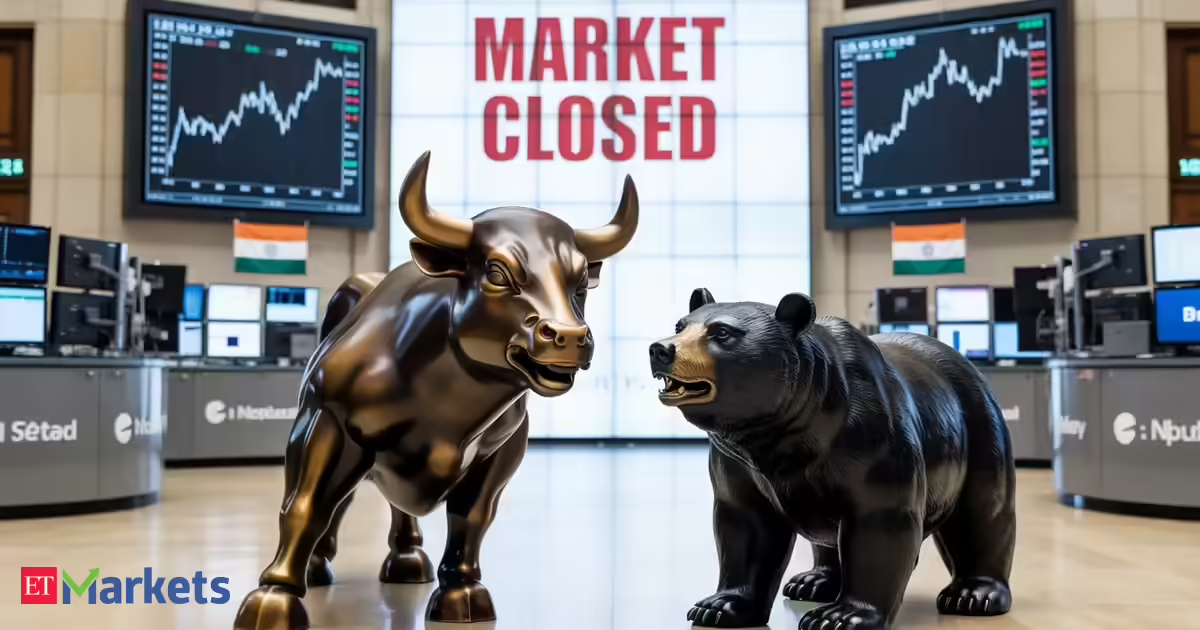
Indian stock markets will remain shut on March 31 as BSE and National Stock Exchange (NSE) will remain closed for trading on account of Shri Mahavir Jayanti, marking the first out of the two market holidays scheduled for this week.
India’s largest commodity exchange, the Multi-Commodity Exchange of India (MCX), will remain shut for trading in the first session (9 am to 5 pm) on Shri Mahavir Jayanti. Trading will resume in the evening session between 5 pm and 11:30 pm, as per the schedule on its website. The National Commodity & Derivatives Exchange Limited (NCDEX), meanwhile, will remain closed for trading tomorrow.
Upcoming market holidays
According to the official holiday calendar, markets will next remain closed on April 3 (Friday) to observe Good Friday. It is important to note that markets are seeing three holidays in less than two weeks. Markets were also shut on March 26 (Thursday) on account of Shri Ram Navami.In total, there are 16 stock market holidays scheduled for 2026, of which four have already passed. After the two holidays this week, trading will be suspended on 10 more occasions over the remaining nine months.
Advertisement
Live Events
Markets will next remain shut on April 14 (Tuesday) on Dr. Baba Saheb Ambedkar Jayanti. The BSE and NSE will then be closed for trading on May 1 (Maharashtra Day), May 28 (Bakri Id), June 26 (Muharram), September 14 (Ganesh Chaturthi), October 2 (Mahatma Gandhi Jayanti), October 20 (Dussehra), November 10 (Diwali-Balipratipada), November 24 (Prakash Gurpurb Sri Guru Nanak Dev), and December 25 (Christmas). Earlier last week, Zerodha CEO Nithin Kamath took to X to comment on market holidays amid ongoing global market volatility. “It’s crazy that we live in a time when the entire global financial market seems to be at the whim and fancy of what one person decides to do. He can, and does, do whatever he wants depending on which side of the bed he wakes up on,” Kamath said, in an apparent reference to US President Donald Trump. His statement comes as markets globally have seen sharp downswings but not equally strong upswings since the war between Iran and the US-Israel bloc began earlier this month, triggering a sharp rally in oil prices. According to Kamath, the only way to survive as a trader in this market is to make survival the first goal, not making money. “When you’re getting whipsawed out of positions on both sides, and there’s very little you can do in a headline-driven market, the most logical thing is to trade with smaller amounts of capital, reduce the risk in your account significantly, and wait for opportunities where you can actually make money rather than taking undue risk in a highly uncertain, highly volatile environment,” he said.
“Trading is also inherently a lonely activity. And when you’re constantly getting feedback in the form of profit and loss, it takes a mental toll. This was true even when I was actively trading,” he added. So, with a long weekend coming up, Kamath said he can’t think of a better time to take a break, recharge, and come back to the “blinking red and green lights” with a fresh mind.
(Disclaimer: Recommendations, suggestions, views and opinions given by the experts are their own. These do not represent the views of The Economic Times.)
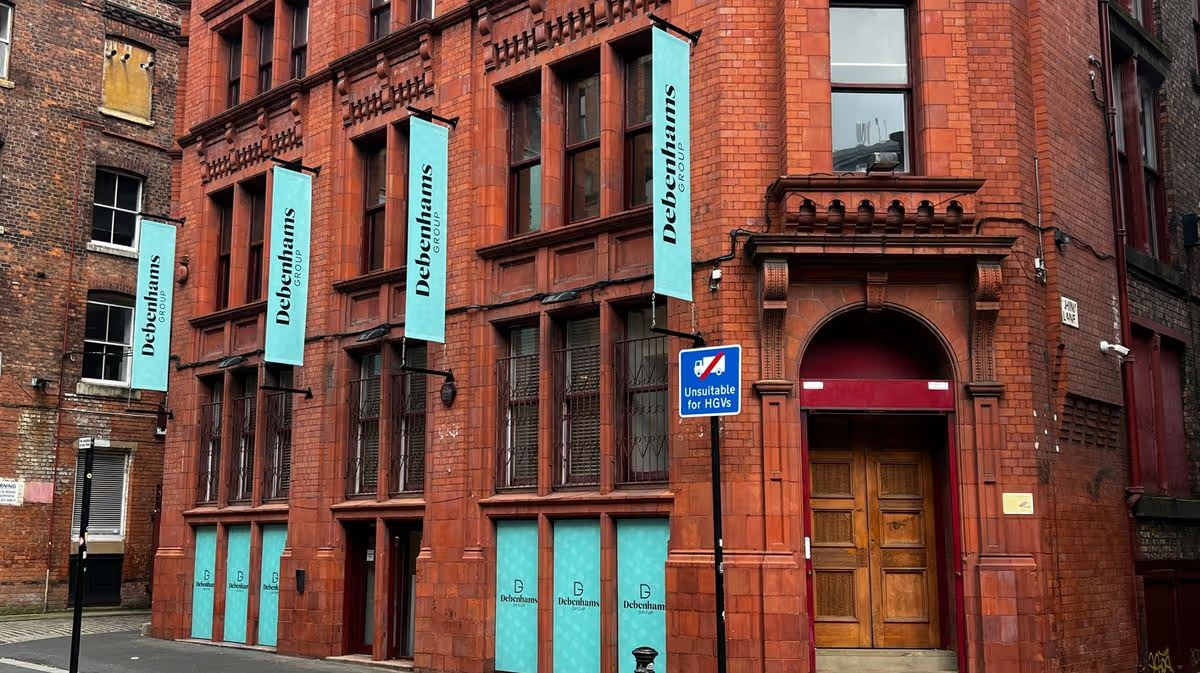
Debenhams signs at the group’s Dale Street base in Manchester city centre (Image: Reach)
Boohoo owner Debenhams Group says it expects earnings to be “comfortably ahead” of previous guidance and hailed “significant progress” in its turnaround plan.
The Manchester-based group said it now expected to deliver adjusted EBITDA for 2026 of £53m, up on the £50m it first predicted in January, and up 36% on 2025. It said that was driven by 76% increase in adjusted EBITDA for the second half of the year as it continues its turnaround plan led by CEO Dan Finley.
Advertisement
In a statement this morning, the board said it had raised its guidance for the next financial year and expected “double-digit” EBITDA growth in 2027.
Dan Finley, Group CEO, said: “Our multi-year turnaround strategy continues at pace. We are pleased with the 76% increase in H2 Adjusted EBITDA and £53m full year Adjusted EBITDA. Our pivot to the stock-lite, capital-lite, highly profitable marketplace is working.
“The cost base has been reset, the warehouse consolidation completed, the tech re-platform delivered, the stock base rightsized, most of the onerous costs exited and the brand management teams strengthened. This is significant progress, ahead of our plan, but there is still more to be delivered and we now focus on growth.”
The group said all of its brands, which include PrettyLittleThing, Boohoo and Debenhams, “continue to trade profitably on an Adjusted EBITDA basis.”
Advertisement
In this morning’s statement, the board said it was focused on reducing debt and its interest costs. Following a February fundraise of £40m, net debt by the end of February stood at £90m.
The group also said it expected cash flow to improve thanks to “materially lower exceptional costs” including the completion of its warehouse consolidation completed, the launch of a new tech re-platform and improvements to its stock base.
It said: “In FY26 cash lease costs were £18m which includes the costs of leased property that is now vacant. The Board now anticipates that lease costs in FY27 will reduce to c.£13m. In addition, when the Group’s vacant US property lease is exited, lease costs are estimated to fall further to c.£6m.
“These remaining lease costs will predominantly relate to the Group’s Manchester head office, the fully automated warehouse in Sheffield and a small London footprint. The expected reductions in lease costs will have a positive impact on cash flow. “
Advertisement
Capital expenditure costs fell in the year from £28m to around £16m, and are set to fall to around £8m next year.
In a note this morning, broker Panmure Liberum said: “The transformation work done has been huge and the noise (and costs) associated with these is now all but over. Looking ahead, we see leverage off a £100m cost base (2/3 lower), a capex and w/cap light model driving higher earnings and FCF. Some may say it is too early to call, but all the signals and green shoots of the new business model are now visible.”
The openings follow the announcement of three new eateries at the shopping centre
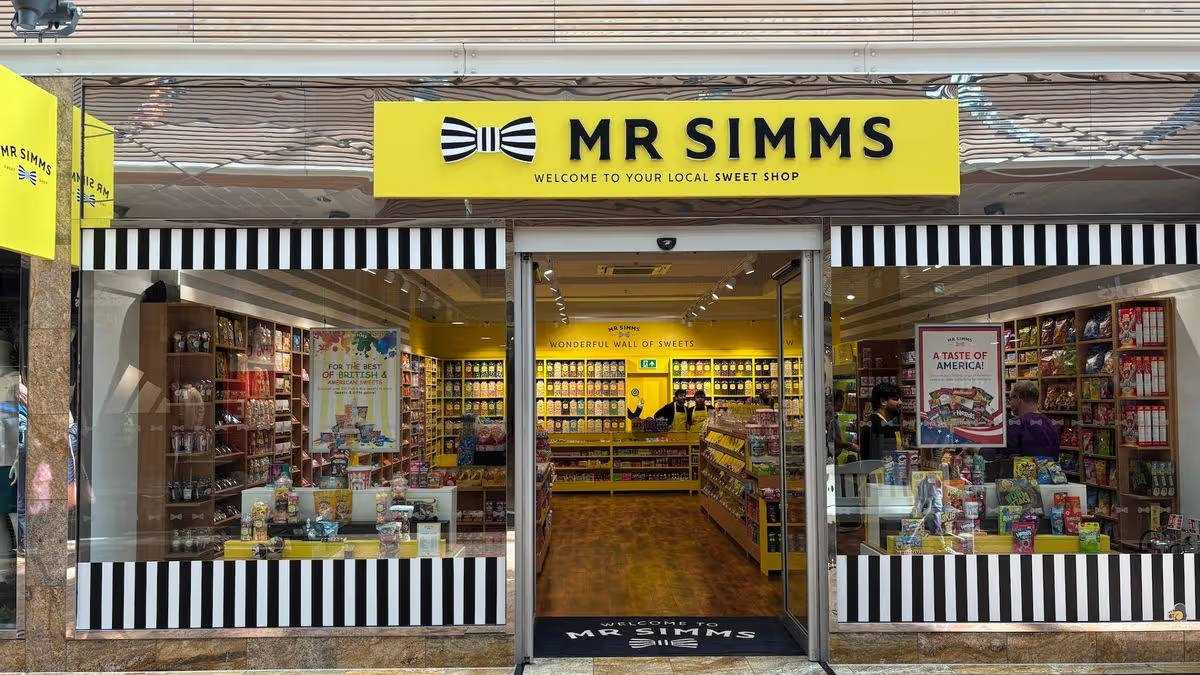
Mr Simms sweet shop has opened at Gloucester Quays(Image: Handout)
A retro sweet shop and an eyewear brand are the latest stores to open at Gloucester Quays shopping centre. Confectioner Mr Simms has taken a central 2,117 sq ft unit – it’s third branch in the South West – while Brand Eyewear has opened 505 sq ft store.
Mr Simms, which was founded in 2004 in Leek, sells traditional and contemporary sweets, and has around 60 branches around the UK.
Brand Eyewear, meanwhile, sells a range of designs from brands such as Ray-Ban, Oakley, Ralph Lauren, Georgio Armani, and DKNY. It also offers a ‘lens bar’ for shoppers to test lens colour, reflection coating and frame materials.
Paul Carter, asset director at Peel Retail & Leisure, said: “The openings of Mr Simms Sweet Shop and Brand Eyewear signal the broad offer Gloucester Quays has become known for.
Advertisement
“Being a crossover outlet means catering to every want and need, and every visit purpose. These additions highlight our commitment to delivering that, securing exciting retail, elevating the experiences of our guests, and creating that full day-out environment alongside the huge variety of F&B and leisure.”
Brand Eyewear at Gloucester Quays(Image: Handout)
Renee Broughton Johnson, founder of Brand Eyewear, added: “Opening my first store at Gloucester Quays was a milestone moment for Brand Eyewear. Location is vitally important when debuting new concepts, and I knew on first viewing that Gloucester Quays was a prime destination to showcase Brand Eyewear’s excellent customer service and good value products, with its quality retail offerings. We already feel at home here in Gloucester’s leading outlet destination.”
The openings follow the announcement of three new eateries for Gloucester Quays this year: Banchina Italian; French fusion restaurant Muse Brasserie; and COSMO Restaurant Group’s Umami, which will open this summer.
It also comes after the opening of Clip ‘n Climb – a family-friendly climbing attraction – at the shopping centre in February. Located on the upper deck, the venue features 19 climbing walls alongside challenges such as the colourful ‘Tree Trunk’, designed to simulate climbing a real tree, and the ‘Speed Climb’ for competitive climbers.
Advertisement
The venue also includes Play Den, a four-level soft play area for younger visitors, alongside the on-site South Ridge Café.
Last year, Gloucester Quays welcomed a plethora of new brands including Søstrene Grene, Ben Sherman, Label Yard, and Men Kind.
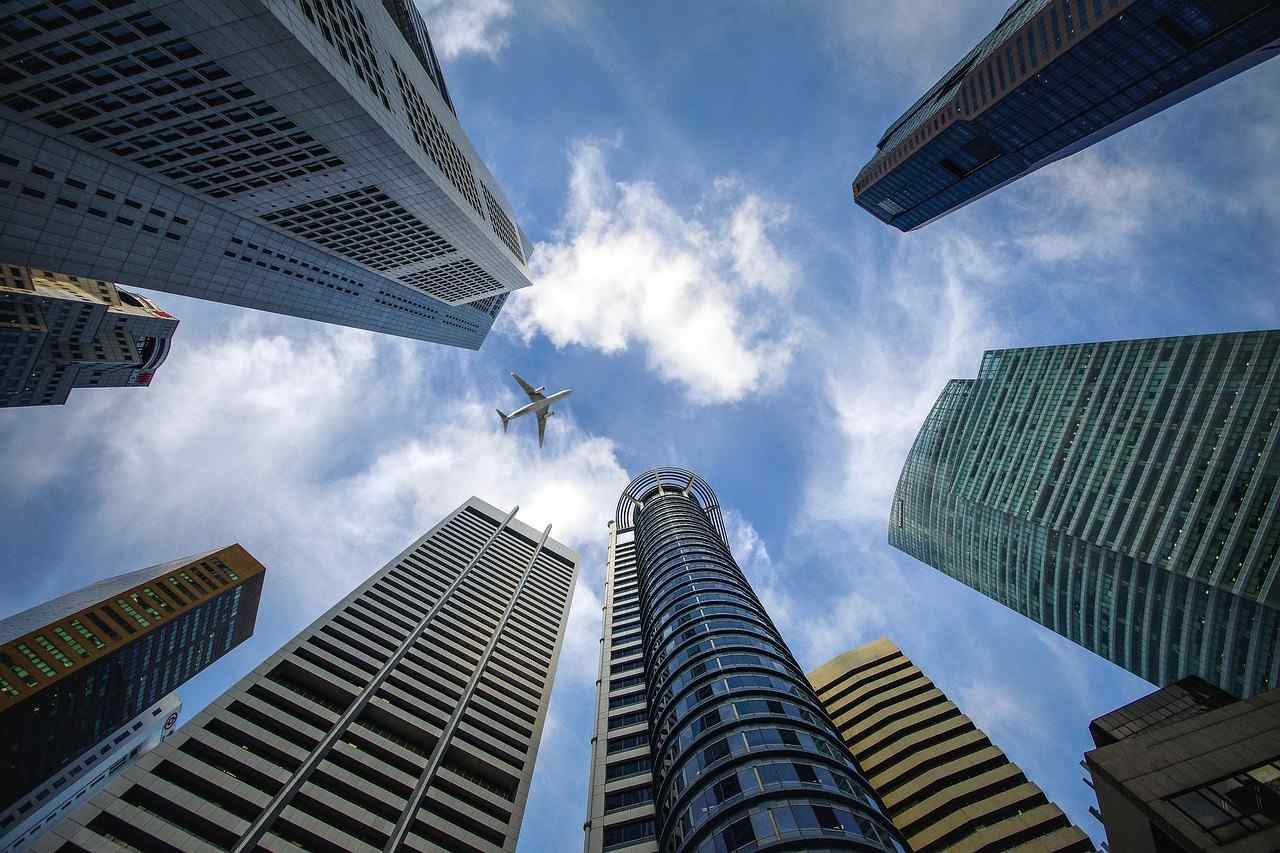
Singapore has established itself as one of Asia’s leading green finance hubs, drawing attention from corporations and policymakers. At its core, green finance channels investment towards projects designed to deliver measurable environmental benefits. This includes products, services, and investments aimed at supporting renewable energy, energy efficiency, and other sustainability initiatives.
Over the past decade, the green finance Singapore market has grown significantly, attracting both regional and international investors and positioning the country as a regional hub for sustainable investment. The growth of this ecosystem reflects how investors and companies are increasingly integrating sustainability into their financial strategies.
To fully understand what’s driving Singapore’s momentum in green finance, let’s examine the factors behind it:
Advertisement
1) Continuous Government Support
Singapore’s government provides a strong foundation for green finance growth. The government recognises that supportive policies and clear regulatory frameworks are crucial to attracting both domestic and international investors. The Monetary Authority of Singapore (MAS), in particular, has taken the lead in promoting sustainable finance through initiatives such as the Green Finance Action Plan, which sets out strategies to expand the green finance market, manage risks, and encourage cross-border collaboration.
Alongside policy guidance, practical incentives play a significant role in fostering market participation. Grants and technical assistance support the issuance of green bonds, while tax reliefs encourage companies to pursue environmentally sustainable projects. MAS also emphasises transparency and standardised reporting, ensuring that investors can confidently assess the environmental impact of their investments. These measures collectively create a regulatory environment that fosters trust and reinforces Singapore’s reputation as a credible hub for green finance.
2) Growing Market Demand
Investor and corporate demand significantly contributes to Singapore’s green finance momentum. Globally, institutional investors, asset managers, and pension funds increasingly integrate Environmental, Social, and Governance (ESG) considerations into their investment strategies. At the same time, companies recognise that accessing sustainable financing supports environmental goals and enhances credibility with stakeholders and investors.
3) Availability of Green Finance Instruments
Singapore offers a wide range of green finance instruments that enable businesses to fund sustainable initiatives. Green loans, green bonds, and sustainability-linked loans provide companies with the capital required to implement projects such as solar energy installations, energy-efficient building upgrades, and sustainable water management systems.
Advertisement
Recent examples highlight Singapore’s capacity to mobilise significant capital for environmental projects. Its inaugural sovereign green bond issuance attracted strong interest from international investors, signalling confidence in its green finance market. Alongside these bonds, sustainability-linked loans, which adjust interest rates based on ESG performance, incentivise companies to meet specific sustainability targets, aligning financial returns with environmental impact.
In addition, structured products, carbon credit financing, and blended finance mechanisms all expand the funding options further. These allow businesses to structure investments that meet both financial and environmental objectives.
4) Advancing Green Finance Through Innovation
Innovation also drives Singapore’s competitive edge in green finance. Advanced financial technology platforms enable ESG reporting, compliance monitoring, and real-time tracking of environmental impact, making green investments more transparent and accessible. Companies and investors can now measure carbon reductions, demonstrate sustainability outcomes, and provide detailed reporting to stakeholders, thus fostering confidence in the market.
Singapore has also pioneered novel financial instruments, including digital green bonds and sustainability-linked derivatives, which lower barriers for smaller businesses and allow scalable financing solutions for larger corporates pursuing ESG goals. Collaborative platforms also bring together banks, investors, and regulators, thereby streamlining workflows and improving efficiency in sustainable finance operations.
Advertisement
5) Reliance on the Local Skilled Workforce
A highly skilled workforce and a growing pool of sustainability experts support Singapore’s rise as a green finance hub. Financial institutions and consulting firms increasingly rely on professionals trained in ESG standards, climate risk assessment, and sustainable investment strategies. These experts help ensure that green finance initiatives are both credible and effective, giving investors confidence in the quality and impact of projects.
The Lion City has also invested in education and professional development to build expertise in sustainable finance. Universities and training institutes offer specialised programmes in ESG investing, green bonds, and climate finance, while professional certifications equip practitioners with internationally recognised skills.
6) Leveraging Global Reputation and Strategic Location
Singapore’s international reputation strengthens its appeal as a green finance hub. It’s recognised for financial stability and strong governance, all of which inspire confidence among global investors. Its strategic location in Southeast Asia also allows it to act as a gateway for cross-border green investments by connecting international capital with regional sustainability projects.
Advertisement
Moreover, partnerships with multilateral development banks, regional financial bodies, and international organisations, such as the United Nations Environment Programme Finance Initiative (UNEP FI), reinforce Singapore’s credibility. These collaborations promote the adoption of standardised green finance practices and facilitate the flow of capital to projects with measurable environmental impact.
Shaping the Future of Green Finance
Singapore continues to strengthen its position as a regional leader in sustainable finance through proactive policies, innovative financial instruments, and a skilled workforce. It attracts investors seeking credible and impactful opportunities, while companies gain access to diverse financing solutions that support their environmental goals. Technological advancements and collaborative platforms further enhance efficiency and transparency across the green finance ecosystem. With these factors in place, Singapore has successfully set a benchmark for how financial hubs can integrate sustainability into core business practices and push for responsible investment in the region and beyond.
Business News Philippines was launched in October 2015 as a portal for readers to learn more about operating a business in the Philippines.
A lawyer by training, a regulator by temperament, and an investor for the fun of it. I have been an options trader for 12 years now, since I was an engineering undergrad. My trading drew my towards law – I was particularly fascinated by hard assets such as land and commodities, and the role regulations play in shaping such assets. I briefly worked as a transaction lawyer with a law firm in Mumbai, where I advised on investments by PE funds (Prosus, Gladebrook) and SWFs (mainly Singapore). I am now in the middle of a move to academia, with some time on my hands to explore and write on the markets. I am fascinated by the intersection of law, economics and the markets. I actively look for convexity and asymmetric bets, and regulatory alpha. My sectoral interests are in metals, power, infrastructure and real estate. My main research interest is macro-economic policy and its effect on financial flows.
Analyst’s Disclosure: I/we have no stock, option or similar derivative position in any of the companies mentioned, and no plans to initiate any such positions within the next 72 hours. I wrote this article myself, and it expresses my own opinions. I am not receiving compensation for it (other than from Seeking Alpha). I have no business relationship with any company whose stock is mentioned in this article.
Seeking Alpha’s Disclosure: Past performance is no guarantee of future results. No recommendation or advice is being given as to whether any investment is suitable for a particular investor. Any views or opinions expressed above may not reflect those of Seeking Alpha as a whole. Seeking Alpha is not a licensed securities dealer, broker or US investment adviser or investment bank. Our analysts are third party authors that include both professional investors and individual investors who may not be licensed or certified by any institute or regulatory body.
LONDON — Production on Amazon MGM Studios’ highly anticipated “Tomb Raider” live-action series has been temporarily halted after star Sophie Turner suffered a minor injury, the studio confirmed Monday.
Sophie Turner
Turner, who plays the iconic video game adventurer Lara Croft, “recently experienced a minor injury,” Amazon MGM Studios said in a statement. “As a precaution, production has briefly paused to allow her time to recover. We look forward to resuming production as soon as possible.”
Sources familiar with the production told outlets including Deadline and Entertainment Weekly that the shutdown is expected to last about two weeks, with crew members still being paid during the pause. It remains unclear whether the injury occurred on set or during training for the physically demanding role.
The series, developed by “Fleabag” creator Phoebe Waller-Bridge alongside co-showrunner Chad Hodge, began filming earlier in 2026 in the United Kingdom. First-look images released in January showed Turner in character as a fierce, athletic Lara Croft, complete with the character’s signature ponytail and determined expression.
Turner, 29, rose to fame as Sansa Stark in HBO’s “Game of Thrones” and has since built a diverse resume with roles in “X-Men” films, “Joan,” and other projects. Taking on Lara Croft represents one of her most physically intensive roles to date. In January interviews, she revealed that intense training — up to eight hours a day, five days a week — helped her discover a pre-existing back issue that she now manages.
Advertisement
The injury news comes as the series was generating significant buzz. Fans of the long-running “Tomb Raider” video game franchise, which has spawned multiple films starring Angelina Jolie in the early 2000s, have eagerly awaited a fresh television interpretation. Waller-Bridge’s involvement as writer and executive producer raised expectations for a smart, character-driven take on the globe-trotting archaeologist.
Amazon has not released details on the exact nature of Turner’s injury or its potential impact on the overall production schedule. Industry observers note that brief pauses for cast injuries are not uncommon in action-heavy projects, especially those involving stunts, chases and physical sequences central to the “Tomb Raider” universe.
A representative for Turner had no immediate comment beyond the studio’s statement. Sources indicated the pause is precautionary rather than indicative of a serious or long-term setback.
Advertisement
The “Tomb Raider” series is part of Amazon’s broader push into high-profile video game adaptations, joining projects based on popular titles in its growing Prime Video lineup. Budget reports have circulated suggesting a significant investment, with some estimates placing the project in the eight-figure range per episode, reflecting the scale of action sequences, international locations and visual effects expected.
Turner’s casting was announced in 2025 and generated immediate excitement. Many praised the choice of the British actress for bringing a younger, more grounded energy to Lara Croft compared with previous portrayals. Her preparation for the role included extensive physical training to handle the demands of running, climbing, combat and exploration scenes.
Waller-Bridge, known for her sharp writing and distinctive voice in “Fleabag” and “Killing Eve,” has kept plot details tightly under wraps. Early indications suggest the series will explore Lara’s origins as a young heiress turned adventurer while delivering the high-stakes action fans expect from the franchise.
The temporary halt affects not only the cast and core crew but also supporting actors, stunt performers and a large production team working across UK locations. Crew members have reportedly been informed that prep work and non-Turner-dependent scenes may continue in limited capacity during the pause.
Advertisement
Fans took to social media platforms including Instagram and X (formerly Twitter) to express concern for Turner while wishing her a speedy recovery. Many shared appreciation for the studio’s cautious approach to her health, noting the importance of safety on physically demanding sets.
This is not the first time a major production has paused for a lead actor’s injury. Similar brief shutdowns have occurred on other action franchises when stars required recovery time from strains, sprains or more significant setbacks. Studios typically prioritize performer well-being to avoid longer-term delays or complications.
Amazon MGM Studios has a strong track record of supporting its productions through challenges, recently navigating strikes and other disruptions in the entertainment industry. The company’s statement struck a positive tone, emphasizing a quick return to filming.
Details about the series’ expected release window have not been publicly updated following the pause. Initial speculation pointed toward a potential 2027 debut on Prime Video, though any extension of the current two-week shutdown could shift timelines slightly.
Advertisement
Turner’s personal life has also drawn public interest in recent years. She shares two children with ex-husband Joe Jonas, from whom she finalized a divorce in 2024. She has spoken openly about balancing motherhood with the demands of a high-profile acting career.
The “Tomb Raider” franchise holds significant cultural cachet. The original video games, created by Core Design and later Crystal Dynamics, revolutionized the action-adventure genre with a strong female protagonist. Jolie’s early-2000s films brought Lara Croft to mainstream cinema audiences, while later game reboots refreshed the character for new generations.
Industry analysts view the Amazon series as a key test for translating beloved gaming properties to prestige television. Success could pave the way for more ambitious game-to-screen adaptations, while any major setbacks might temper studio enthusiasm.
As production remains on pause, the focus stays on Turner’s recovery. Colleagues and fans alike have sent well-wishes across social platforms, with many expressing confidence that the resilient actress will return stronger.
Advertisement
Amazon has not commented on whether the injury will require script adjustments or reshoots once filming resumes. Production sources suggest the pause is short enough that any impact on the overall schedule should remain minimal.
The entertainment industry continues to emphasize safety protocols on action sets, including rigorous stunt rehearsals, medical support and gradual ramp-up of physical demands. Turner’s training regimen, which she described as revealing underlying back issues, highlights the real physical toll such roles can take even on young, fit performers.
For now, “Tomb Raider” fans must exercise patience. The brief interruption serves as a reminder that behind the glamorous first-look images and exciting casting announcements lies the complex, sometimes unpredictable reality of large-scale television production.
Amazon MGM Studios reiterated its commitment to the project and to Turner’s well-being, signaling confidence that filming will restart soon and the series will ultimately deliver the adventurous, high-quality entertainment audiences expect.



















































You must be logged in to post a comment Login