

Business
Baron First Principles ETF Q1 2026 Commentary (NYSE:RONB)


ismagilov/iStock via Getty Images

Dear Baron First Principles ETF ® Shareholder,
Performance
Baron First Principles ETF ® ((the Fund)) had a disappointing start to 2026, with a decline of 8.51% (NAV) compared with a 9.54% loss for the Russell 3000 Growth Index ((the Benchmark)). The declines were due to continued concerns about the effects of AI on many businesses throughout the portfolio as well as worries about the impact of the Iran war on inflation, interest rates, and consumer spending. These declines were partially offset by Space Exploration Technologies Corp. (SPACE) (SpaceX) and its deal to acquire X. AI Holdings Corp. (X.AI) (xAI), which resulted in the revaluation of the combined business at a significantly higher enterprise value.
While we are disappointed with the start of the year, we continue to see opportunities throughout the portfolio. Our portfolio companies continue to do quite well and are generating strong growth and cash flow for additional investments in their businesses to accelerate growth further with excess cash being returned to shareholders through share buybacks and dividends.
Our companies all have strong balance sheets with many operating with financial leverage below their targeted levels, giving them additional liquidity to lever up and buy back more stock should they desire.
Many stocks in the portfolio are now trading at historically low valuations, and we believe there is a disconnect between where these businesses trade today and what they can become over time. As a result, this past quarter we saw an accelerated rate of insider purchases from executives and directors at Verisk Analytics, Inc. (VRSK) , Birkenstock Holdings plc, Vail Resorts, Inc. (MTN) , FactSet Research Systems Inc. (FDS) , and MSCI Inc. (MSCI) When we see these insider purchases, it gives us further confidence in our investment theses for these growth businesses and reinforces our belief that valuations are attractive. As a result, during the quarter we increased our positions in many of these stocks while adding a couple of new names as well. We are continuing to make sure the portfolio remains focused while being cognizant that positions are appropriately sized for risk in this concentrated Fund.
Cumulative performance (%) for periods ended March 31, 2026
.
We believe this combination of strong revenue growth with well-positioned balance sheets and attractive valuations offers multiple avenues for potential returns for investors. As a result, we view the portfolio as compelling, with a favorable risk/reward profile.
Further, we believe there is still a ton of capital remaining on the sidelines waiting to be invested, including private equity firms who continue to raise new funds. We believe as rates continue to move lower over the next year, public to private transactions and strategic acquisitions should accelerate, which should further support valuations and our investments.
We continue to believe these businesses have strong competitive advantages with underpenetrated growth opportunities ahead of them and robust balance sheets to finance their growth.
While it is only the Fund’s first full quarter of performance, we believe the Fund should generate significant excess returns over time with much less than market risk. This is due to the balanced nature of the portfolio with approximately 35% invested in high-growth disruptive investments that can generate revenue growth of as much as 20% to 30%; between 15% and 20% of the portfolio in real irreplaceable assets that trade at significant discounts to replacement cost and where they would sell to private equity or another strategic buyer; between 20% and 25% in financials businesses, many of which are financial data providers that have recurring revenue and earnings given the embedded nature of their products in the workflow of their customers; and the balance in core double-digit revenue growing businesses that are more mature in their lifecycle and generate earnings growth while using excess cash for dividend increases, share buybacks, and additional investments in the business to accelerate growth further.
Total returns by investment type for the quarter
Total returns by investment type for the quarter
Aside from two of our private investments, SpaceX and xAI successfully completing their combination at a valuation significantly higher than previous marks, performance in the first quarter was hurt by continued concerns about the introduction of AI into the economy and those businesses that could be impacted most from the new competition. These included our subscription-based software and platform investments such as Spotify Technology S. A. , FactSet, and Guidewire Software, Inc. However, while the increased competition hurt the valuation of these stocks in the quarter, it has not impacted financials, and these companies continue to generate strong revenue growth and margins in line with company and investor expectations.
Further losses were seen in our exposure to consumer-focused investments given worries about the escalation of the war in Iran and what that could mean for inflation, interest rates, and consumer spending. These included companies such as Red Rock Resorts, Inc. , Hyatt Hotels Corporation , and On Holding AG . However, despite worries about the war and its impact on the consumer, these companies continue to do quite well as the consumer remains resilient despite macro concerns.
Global digital music streaming platform Spotify declined by 17.4% in the first quarter and detracted 77 bps from performance as investors were concerned about the impact AI music could have on the conversion of free subscribers to paying subscribers as well as how it could impact time on the platform. In addition, further concerns about the timing of price increases and resulting margin expansion also frustrated investors. However, the company continues to institute price increases across multiple regions and complete negotiations with major record labels. User growth remains strong growing at a double-digit rate with high engagement and low churn even with price increases. The company remains on a path to increase gross margins through its high-margin artist promotions marketplace, growing podcast contribution, and ongoing investments in advertising where revenue growth is expected to accelerate this year. We continue to view Spotify as a long-term winner in music streaming with potential to reach 1 billion-plus subscribers by 2030.
Property and casualty (P&C) insurance software vendor Guidewire declined 24.7% in the first quarter and detracted 84 bps from performance. The declines were due to continued AI concerns and potential future competition. However, the company continues to do quite well and after a multi-year transition period, the company’s cloud transition is substantially complete, and insurers are upgrading to the cloud at an accelerated rate. We believe that cloud will be the sole path forward, with annual recurring revenue (ARR) benefiting from new customer wins and migrations of the existing customer base to the company’s Insurance Suite Cloud. We also expect the company to shift R&D resources to product development from infrastructure investment, which should help drive cross-sales into its sticky installed base and potentially accelerate ARR over time. We are encouraged by Guidewire’s subscription gross margin expansion, which improved by approximately 580 bps in its most recently reported quarter. We believe Guidewire will be the critical software vendor for the global P&C insurance industry, capturing 30% to 50% of its $15 billion to $30 billion total addressable market and generating margins above 40%.
Shares of global hotelier Hyatt declined 8.6% and hurt performance by 34 bps in the first quarter as investors were concerned with a potential deceleration in revenue per available room (RevPAR) growth due to the Middle East conflict as well as cartel uprisings in Mexico that could hurt travel to those parts of the world. However, according to Hyatt management, the Middle East is only 3% of total fees and Mexico, while it represents approximately 7% of global rooms, is seeing travelers switch and rebook for other places including its Caribbean properties. There has been no impact on unit growth, and the company still expects to grow units between 6% and 7% this year. We believe this growth combined with low single-digit RevPAR growth and slight margin improvement should lead to double-digit EBITDA growth this year. This should generate strong free cash flow, which the company can use for further share buybacks and reinvestment back into the business. The company still has a strong investment grade balance sheet with 90% of the business coming through fees that should allow them to overcome any short-term outside disruptions to its business. Hyatt trades at a discount to peers despite a similar growth and mix of business. We believe this discount should narrow over time as investors see the continued growth and resilience of its business model.
Shares of Las Vegas Local casino operator, Red Rock Resorts, declined 11.2% in the first quarter and hurt performance by 44 bps as investors were concerned with a potential slowdown in Las Vegas gaming revenue brought about by the macro uncertainty from the war in Iran. Combine this slowdown with construction disruption due to many renovation and expansion projects occurring at its properties and current earnings could decelerate. However, the company continues to spend at its resorts as management sees further opportunities for growth from continued population growth and a higher net worth individual coming to Las Vegas. The company continues to generate strong cash flow that should produce accelerated growth in the coming years. We continue to believe the stock remains attractively valued as the company’s founders recently bought stock at current levels giving us further confidence in the company’s accelerated growth prospects.
Top contributors to performance for the quarter
Space Exploration Technologies Corp. (SpaceX) is a high-profile private company founded by Elon Musk. The company’s primary focus is on developing and launching advanced rockets, satellites, and spacecrafts, with the ambitious long-term goal of making life multi-planetary. SpaceX is generating significant value with the rapid expansion of its Starlink broadband service. The company is successfully deploying a vast constellation of Starlink satellites in Earth’s orbit, reporting substantial growth in active users, and regularly deploying new and more efficient hardware technology. Furthermore, SpaceX has established itself as a leading launch provider by offering highly reliable and cost-effective launches, leveraging the company’s reusable launch technology. SpaceX capabilities extend to strategic services such as human spaceflight missions. Moreover, SpaceX is making tremendous progress on its newest rocket, Starship, which is the largest, most powerful rocket ever flown. This next-generation vehicle represents a significant leap forward in reusability and space exploration capabilities. We value SpaceX using prices of recent financing transactions.
FIGS, Inc. designs and sells scrubwear for health care professionals through a digitally native, direct-to-consumer strategy. Shares rose following robust fourth-quarter results and upbeat 2026 guidance. Revenue expanded 33% to $201.9 million, reflecting broad-based momentum across categories and geographies and exceeding expectations. Holiday demand was strong throughout the season and remained elevated through quarter-end. U. S. revenue rose 28.7% to $164.2 million, while international revenue accelerated 55% to $37.7 million, with scrubs and non-scrubwear contributing gains of 35% and 26%, respectively. This topline strength translated to profitability, with EBITDA rising 29.8% to $26.7 million. Building on this momentum, revenue is expected to grow in the low-20% range in the first quarter and 10% to 12% for the full year. Additional drivers include accelerating international expansion, new store openings (both the ramping 2025 cohort and four locations planned for 2026), and continued traction in TEAMS (FIGS’ enterprise and group ordering business). The company maintains a strong balance sheet, with no debt and roughly $300 million in cash and marketable securities.
Global hotel franchisor Choice Hotels International, Inc. contributed to performance during the quarter as the company saw a slight acceleration in revenue per available room across its portfolio. Choice continues to grow units at a low-single-digit rate and is benefiting from higher royalty rates on new franchise contracts, driving mid-single-digit growth in earnings and free cash flow. The company is using this cashflow to return capital through share repurchases. We continue to believe the stock offers compelling value, trading at a roughly five multiple-point discount to its historical average. Choice maintains a strong balance sheet, providing flexibility for additional share buybacks, particularly when the stock trades below the company’s view of intrinsic value. Choice’s steady growth profile, both domestically and internationally, should further support attractive shareholder returns over time.
Top detractors from performance for the quarter
Tesla, Inc. designs, manufactures, and sells fully electric vehicles (EVs), solar products, and energy storage solutions, while developing advanced real-world AI technologies. Following robust gains in late 2025, shares fell as investors awaited progress on robotaxis and assessed the company’s sizable investments in manufacturing and AI. Operationally, Tesla delivered strong quarterly results amid a challenging EV environment. Automotive gross margins improved sequentially and beat expectations, the energy storage business maintained robust momentum with best-in-class margins, and battery cell production ramped. The company continues to advance its AI and autonomous driving initiatives at a rapid pace. Management anticipates meaningful robotaxi expansion in 2026 and continues to finalize the Optimus Gen 3 design and build out large-scale manufacturing capacity for humanoid robots. Tesla is also releasing major Full Self-Driving enhancements, scaling AI training compute, and deepening vertical integration in semiconductor design and production. These initiatives, while increasing near-term capital spending, underscore Tesla’s pivot toward becoming a leader in physical AI.
CoStar Group, Inc. is the leading provider of information and marketing services to the commercial and residential real estate industries. Shares fell due to multiple compression driven by rising AI fears. The market has come to view AI as an existential risk for a growing number of industries—including software, business services, information services, and video games—despite no evidence of any fundamental impact to these sectors. This “shoot first and ask questions later” dynamic has resulted in meaningful share price declines. We continue to own CoStar given its differentiated data assets and significant growth opportunities in providing enhanced real estate information, analytics, and marketplace offerings. CoStar boasts an enviable business model with high levels of recurring revenue and meaningful cash flow generation potential. While near-term cash flow is obscured by elevated investment in Homes. com, we expect spending to moderate and cash flow to improve over the next several years. The company also maintains a substantial cash balance, which we are hopeful will be used to aggressively repurchase shares at current depressed valuation levels.
Syndicated research provider Gartner, Inc. detracted from performance as valuation multiples compressed amid rising concerns around AI. Investors have increasingly viewed AI as a potential existential risk across a widening range of industries—including software, business services, information services, and video games—despite no evidence of any fundamental impact to these sectors. This “shoot first and ask questions later” dynamic has driven meaningful share price declines across the group. Against this backdrop, shares of Gartner came under pressure after the company reported contract value growth that was just 0.5% below expectations, underscoring the dramatic valuation compression at play. We continue to own Gartner given its large addressable market, significant competitive advantages, and robust free cash flow generation, which we expect management to deploy toward share repurchases at depressed valuation levels. We also view Gartner as an AI beneficiary, as it can leverage emerging tools to extract deeper insights from its vast trove of proprietary data and deliver it to customers in chatbot-type formats that meaningfully enhance its value proposition.
Portfolio Structure
We are steadfast in our commitment to long-term investing in competitively advantaged, growth businesses. We run a balanced portfolio of uncorrelated businesses to help reduce portfolio risk. We believe this portfolio strategy is an effective way to mitigate risk and increase the purchasing power of your savings. While there will always be market volatility, we believe we can reduce that volatility via this portfolio due to its balanced nature.
As of March 31, 2026, the Fund owned 24 investments. From a quality standpoint, the Fund’s investments have generally strong long-term sales growth and margins with the ability to possibly double earnings and cash flow over the next four to five years. Many of our portfolio companies generate recurring earnings and cash flow with low churn rates giving them enhanced visibility into growth and significant pricing power. Many of our portfolio companies continue to invest in their businesses to accelerate growth further. While this hurts current margins, we believe they should generate strong returns on invested capital, and the investments will accelerate further growth in the future.
While focused, the Fund is diversified by sector. The Fund’s weightings are significantly different than those of the Benchmark. For example, the Fund is heavily weighted to Consumer Discretionary businesses with 35.6% of its net assets in this sector versus 12.9% for the Benchmark. The Fund has no exposure to Energy, Materials, or Utilities. We believe companies in these sectors can be cyclical, linked to commodity prices, and/or have little if any competitive advantage. The Fund also has lower exposure to Health Care stocks at 1.9% versus 8.4% for the Benchmark. The performance of many stocks in the Health Care sector can change quickly due to exogenous events or binary outcomes (e. g. , biotechnology and pharmaceuticals). As a result, we do not invest a large amount in these stocks in this focused portfolio. In Health Care, we invest in competitively advantaged companies that are leaders in their industries such as IDEXX Laboratories, Inc. , the leading provider of diagnostics to the veterinary industry and who is benefiting from the increase in pets that people acquired during the COVID pandemic, especially as these pets age. The Fund is further diversified by investments in businesses at different stages of growth and development.
Disruptive Growth Companies
Disruptive Growth firms accounted for 35.8% of the Fund’s net assets. On current metrics, these businesses may appear expensive; however, we think they will continue to grow significantly and, if we are correct, they have the potential to generate exceptional returns over time. Examples of these companies include EV leader Tesla, Inc. , commercial satellite and launch company, Space Exploration Technologies Corp. , and audio streaming service provider Spotify Technology S. A. These companies all have large underpenetrated addressable markets and are well financed with significant equity stakes by these founder-led companies, giving us further conviction in our investment.
Core Growth Investments
Core Growth investments, steady growers that continually invest in their businesses for growth and return excess cash-flow to shareholders, represented 24.7% of net assets. An example would be FIGS, Inc. , the largest provider of scrubs and other attire to health care workers. The company continues to add new customers and increase the level of spending per customer as they add new articles of clothing and open new stores both domestically and abroad. This has allowed them to grow their addressable market and improve client retention and cash flow. FIGS continues to invest its cash flow in its business to accelerate growth further, which we believe should generate strong returns over time.
Financials Investments
Financials investments accounted for 23.9% of the Fund’s net assets. These businesses generate strong recurring earnings through subscriptions and premiums that generate highly predictable earnings and cash flow. These businesses use cash flows to continue to invest in new products and services, while returning capital to shareholders through share buybacks and dividends. These companies include Arch Capital Group Ltd. , FactSet Research Systems Inc. , and MSCI Inc.
Investments with Real/Irreplaceable Assets
Companies that own what we believe are Real/Irreplaceable Assets represent 15.5% of net assets. Vail Resorts, Inc. , owner of the premier ski resort portfolio in the world, upscale lodging brand Hyatt Hotels Corporation , and Red Rock Resorts, Inc. , the largest player in the Las Vegas Locals casino gaming market, are examples of companies we believe possess meaningful brand equity and barriers to entry that equate to pricing power over time.
Portfolio Holdings
As of March 31, 2026, the Fund’s top 10 holdings represented 64.9% of net assets. We have a long history of investing in many of these businesses across the Firm and believe they continue to offer significant appreciation potential, although we cannot guarantee that will be the case.
The top five positions in the portfolio, Tesla, Inc. , Space Exploration Technologies Corp. , MSCI Inc. , Shopify Inc. , and Verisk Analytics, Inc. , all have, in our view, significant competitive advantages due to strong brand awareness, technologically superior industry expertise, or exclusive data that is integral to their operations. We think these businesses cannot be easily duplicated and have large market opportunities to penetrate further, which enhances their potential for superior earnings growth and shareholder returns.
Top 10 holdings
Thank you for investing in the Baron First Principles ETF®. We continue to work hard to justify your confidence and trust in our stewardship of your family’s hard-earned savings. We also continue to try to provide you with information we would like to have if our roles were reversed. This is so you can make an informed judgment about whether the Fund remains an appropriate investment for your family.
Sincerely,
Ronald Baron, CEO, Portfolio Manager
David Baron, Co-President, Portfolio Manager
Michael Baron, Co-President, Portfolio Manager
References
- The Russell 3000® Index measures the performance of the largest 3,000 U. S. companies representing approximately 98% of the investable U. S. equity market. The Russell 3000® Growth Index measures the performance of the broad growth segment of the U. S. equity universe.
- The performance data in the table does not reflect the deduction of taxes that a shareholder would pay on Fund distributions or redemptions of Fund shares.
Editor’s Note: The summary bullets for this article were chosen by Seeking Alpha editors.


The UK’s 100 largest businesses are made up of more than 37,000 individual entities registered with Companies House, new analysis has found, laying bare just how hard it has become to see the full shape of Britain’s biggest firms through the corporate registry alone.
The research, from company intelligence platform Beauhurst, sets out the tangle of legal structures that routinely prevent governments, advisers and investors from grasping how the country’s largest organisations actually operate. In the most extreme cases, a single business is registered with Companies House as more than 3,800 separate entities.
Firms use multiple legal entities for all manner of legitimate reasons, from regulatory and financial compliance to ringfencing different parts of the business and smoothing the path for mergers and acquisitions. The trouble, as the analysis makes clear, is that this fragmentation scatters the most meaningful information about a business across dozens, hundreds or even thousands of registrations, making it far harder to obtain and consolidate.
The findings come at a moment of heightened scrutiny of the corporate register itself, with the size of the Companies House register having recently shrunk for the first time in more than a decade as identity-verification reforms take hold.
Beauhurst, which bills itself as the UK’s leading platform for private company intelligence, carried out the analysis using True Companies, a newly launched data suite that aims to show businesses as they genuinely operate, regardless of how many legal entities sit behind them. The tool stitches together fragmented information held across corporate registries, patents, grants, funding records, acquisitions, news and company websites to build a single, unified view of an organisation.
The patent figures are perhaps the most striking illustration of the problem. Only 29 of the top 100 businesses hold patents in their primary legal entity, yet more than 50 own patents elsewhere within their wider corporate structure. In other words, the innovation activity of half of the UK’s largest businesses would be missed entirely if only the parent company were examined. The same blind spot extends to the accounts: nearly 90,000 UK businesses file their most meaningful financial data through a subsidiary rather than their main registered company, and 15 per cent of the country’s largest firms hold key financial data outside the legal entity they are most associated with.
Toby Austin, founder and chief executive of Beauhurst, said the scale of the issue had long been underestimated. “For decades, company intelligence has been constrained by legal entities, and our analysis with True Companies sets out the scale of the problem. A business’s employees, intellectual property, funding, acquisitions, financial performance and innovation activity are often spread across multiple entities and, as a result, some of the most important signals about a business are hidden in plain sight,” he said.
“Having multiple legal entities is useful for registration and compliance, but it’s not how people think about businesses and it’s not how economies work. True Companies changes that by connecting these entities and bringing together information from across multiple sources for the first time. This creates a complete picture of a business that opens up entirely new possibilities. Governments can gain a more accurate understanding of their economies. Investors can identify opportunities sooner, advisers can provide better guidance, and organisations can finally understand businesses as they actually exist, rather than as they appear on a registry.”
For the public sector, Beauhurst argues, a clearer view could help local and national government pinpoint economic strengths and weaknesses across regions, track major employers, map innovation clusters and target support more effectively. For investors and advisers, it offers the prospect of spotting emerging growth opportunities earlier, assessing risk more accurately and understanding the full extent of a company’s activities, investments and intellectual property.
It is a reminder that the 5.5 million-odd companies sitting on the Companies House register tell only part of the story. Through True Companies, Beauhurst says, users can pull together complete financial information, key people, funding history, acquisitions, news and patents across all of a business’s registered companies, surfacing growth trends, innovation signals and expansion activity that would otherwise stay buried across disconnected entities.

Amy Ingham
Amy is a newly qualified journalist specialising in business journalism at Business Matters with responsibility for news content for what is now the UK’s largest print and online source of current business news.
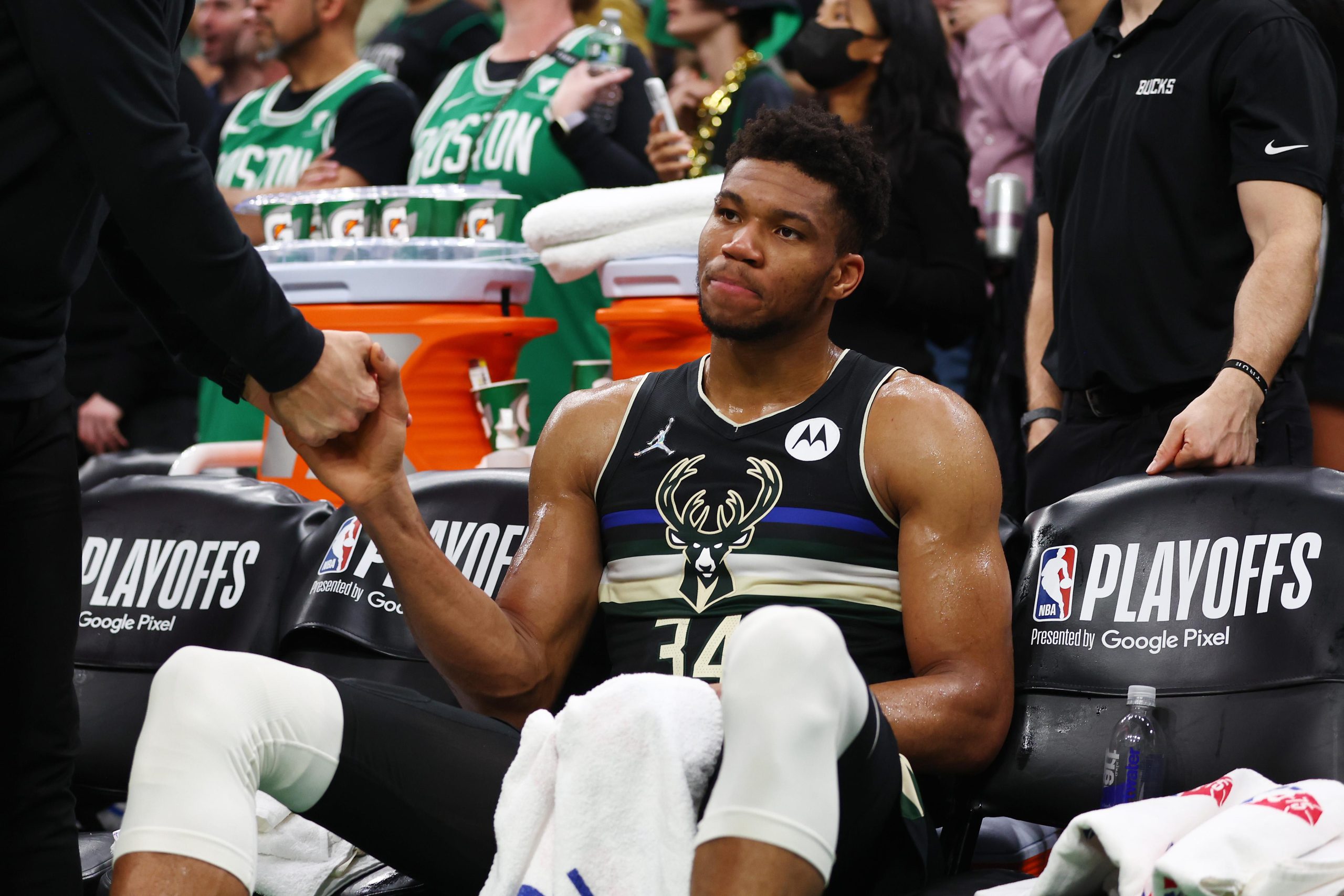
The NBA offseason is heating up with the draft just days away, as the Boston Celtics grow increasingly impatient over stalled trade talks involving Milwaukee Bucks superstar Giannis Antetokounmpo, the Oklahoma City Thunder explore cost-cutting moves involving forward Luguentz Dort, and the Dallas Mavericks commit to pairing an injured Kyrie Irving with rookie sensation Cooper Flagg.
Boston’s Frustration Mounts in the Giannis Sweepstakes
Trading for a star player like Antetokounmpo has proven to be a considerably more complicated process than many around the league initially anticipated, with talks growing convoluted enough that even the Celtics have begun expressing visible frustration with how the situation has unfolded. Early rumblings of a possible Jaylen Brown trade for Giannis started soon after Boston’s season ended. At first, it was just rumors, and then speculation turned into a real possibility. The Antetokounmpo sweepstakes has boiled down to the Miami Heat and the Celtics, with Milwaukee working to extract maximum value from whichever team ultimately lands its franchise cornerstone.
The Boston Globe’s Gary Washburn provided an update on the Celtics’ chances of swapping Jaylen Brown for Antetokounmpo. “I don’t think he’s going to be a Celtic, and that’s just from what I’m hearing,” Washburn said. “I think the Celtics are gauging what it would take to get Giannis to Boston and trying to figure out whether they want to move Jaylen Brown.”
According to Hoops Hype, a league source said that Boston has indicated any “Brown to third team talk” is premature. This would explain Boston’s frustration, as the team has been trying to get a deal done directly between Boston and Milwaukee rather than involving a third party. Boston had also hoped that simply dangling Brown as a trade chip would be intriguing enough that Milwaukee wouldn’t feel the need to be especially aggressive in negotiations.
A Two-Team Race With No Clear Resolution
Despite the prolonged nature of the talks, league insiders have continued to describe the situation as fundamentally a contest between just two suitors. NBA insider Jake Fischer reported the Miami Heat are interested in Antetokounmpo with an offer that is “widely presumed” to include guard Tyler Herro, center Kel’el Ware, forward Jaime Jacquez Jr. and draft capital. He added that Boston is “believed to be a potential suitor that genuinely concerns Miami.”
Tim Reynolds, a Miami-based NBA writer for the Associated Press, offered a characteristically blunt update on the situation: “Giannis Antetokounmpo still wants to be in Miami, we’re told. But even he doesn’t know how this thing is going to end up.”
Other insiders have suggested the dynamic may be shifting in Boston’s favor, even if subtly. Marc Stein wrote, “I have also spoken to teams and well-placed insiders around the league who believe that it remains possible that Antetokounmpo does not ultimately land on South Beach. As we’ve been reporting since late May, Boston is increasingly projected to be the other landing spot that Giannis prefers to be steered to … without overtly pushing as hard as he possibly can.”
Washburn offered his own assessment of where the leverage currently sits: “I do think Miami has the edge on this, but I do think Boston is kinda sniffing around and finding out could you even acquire Giannis without sacrificing Jaylen? That would be a big question. What is exactly Milwaukee looking for? Who is the third team involved? Because it’s gonna have to be a third team involved.”
The Financial Complications of Including Brown
Much of the difficulty in finalizing any Antetokounmpo trade traces back to the financial realities surrounding Jaylen Brown’s contract, which complicates Boston’s ability to construct a competitive offer without including him. The Celtics playmaker has a cap hit of $57.1 million next season, $61 million in 2027-28, and $65 million in 2028-29.
Tatum and Brown are both making more than $57 million next season. Derrick White, at $30.3 million, is the only other Celtics player with a salary over $11 million in 2026-27, meaning Boston would either need a third team’s financial assistance or would have to include Brown to make the math work on any deal for Antetokounmpo.
Risk of Inaction
Beyond simply losing out on Antetokounmpo to Miami, some analysts have warned that prolonged trade speculation itself carries risk for Boston’s relationship with Brown regardless of how the situation resolves. One potential drawback, as Washburn pointed out, is that Brown hearing his name mentioned in trade rumors might cause a rift with the organization that the Celtics would need to repair if he doesn’t get moved.
According to one NBA insider, “Despite some rumors making the rounds on social media, the Celtics and Bucks have not finalized or come close to agreeing on any sort of trade surrounding Antetokounmpo.” With the draft fast approaching, that lack of progress has only heightened the sense of urgency — and frustration — surrounding the entire situation.
Oklahoma City Eyes Cost-Cutting Move Involving Dort
Separately, the reigning NBA champion Oklahoma City Thunder are reportedly exploring ways to create salary cap flexibility, with veteran forward Luguentz Dort emerging as a name to watch this offseason. Dort could be a name to watch as Oklahoma City is looking to save some salary cap space, with the team currently due to pay him $17.7 million and projected to be roughly $40 million over the luxury tax line.
If the Thunder ultimately decide to trade Dort, he shouldn’t be nearly as difficult to move as Antetokounmpo has proven to be, given his more modest salary and well-defined role as a perimeter defender. Should the Celtics ultimately trade away Brown as part of a Giannis deal, Dort could emerge as an appealing replacement option, given his reputation as a strong three-point shooter and high-level perimeter defender — a profile that fits squarely within Boston’s broader team-building philosophy.
Dallas Commits to the Irving-Flagg Pairing
In Dallas, meanwhile, the Mavericks have signaled their intention to move forward with a different kind of continuity strategy, betting on the long-term partnership between veteran guard Kyrie Irving and rookie phenom Cooper Flagg. Irving missed the entire 2025-26 season while recovering from a torn ACL suffered at the end of the 2024-25 campaign. The Mavericks drafted Cooper Flagg with the idea that Irving and Flagg would form the core of the franchise moving forward.
According to Marc J. Spears, Hoops Hype reported that the Mavericks’ ownership is committed to seeing Irving and Flagg together for now, rather than entertaining trade scenarios that would move on from Irving before the pairing has had a genuine opportunity to develop on the court together.
With the 2026 NBA Draft scheduled for next Thursday, league insiders broadly expect the Antetokounmpo situation to reach some form of resolution before then, given Milwaukee’s stated interest in incorporating draft capital into any eventual return package. Whether that resolution sends the two-time MVP to Boston or Miami remains genuinely uncertain, according to multiple league sources, even as both franchises continue positioning themselves as the more attractive long-term destination for one of basketball’s most coveted available stars. Meanwhile, the fate of role players like Dort, and the early returns on Dallas’s commitment to building around an Irving-Flagg backcourt, will offer additional storylines to track as teams across the league finalize their rosters ahead of the draft and the opening of free agency.

GameStop Corp.’s pursuit of e-commerce giant eBay remains one of the most closely watched and contentious corporate sagas in the market right now, with Chief Executive Ryan Cohen escalating his stake in the company even as eBay’s board has firmly rejected the offer and Wall Street analysts remain deeply skeptical the deal will ever close.
The Original Proposal
GameStop Corp. submitted a non-binding proposal on May 3, 2026, to acquire 100% of eBay Inc. at $125.00 per share in cash and stock. The offer represented a 46% premium to eBay’s unaffected closing price on February 4, 2026, the day GameStop began accumulating its position in eBay. GameStop disclosed it had built a 5% economic stake in eBay through derivatives and beneficial ownership of common stock.
The proposed offer comprised 50% cash and 50% GameStop common stock, with full shareholder election rights as to consideration type and pro-rata allocation. Aggregate undiluted equity value was approximately $55.5 billion, based on eBay’s most recently disclosed undiluted share count, representing a 27% premium to the 30-day volume-weighted average price and a 36% premium to the 90-day volume-weighted average price.
The cash consideration was expected to be funded from a combination of cash and liquid investments on GameStop’s balance sheet, which totaled approximately $9.4 billion as of January 31, 2026, and third-party acquisition financing, for which GameStop received a highly-confident letter from TD Securities for up to $20 billion.
eBay’s Firm Rejection
eBay’s board responded to the unsolicited proposal with a swift and pointed rejection. eBay Chairman Paul Pressler called the unsolicited offer “neither credible nor attractive” in a sharply worded letter to Cohen.
Despite that rejection, Cohen pressed forward, taking the campaign directly to eBay’s shareholders rather than backing down. GameStop’s CEO has publicly stated he’s prepared to engage in a proxy fight and take the offer directly to shareholders if eBay declines the acquisition.
Wall Street’s Skeptical Verdict
Analysts covering both companies have generally responded to the proposed deal with significant doubt about both its strategic logic and its likelihood of success. GlobalData retail analyst Neil Saunders described the proposal as “a David trying to take over a Goliath in order to buy David relevance,” adding that eBay has a clear proposition while GameStop is “grappling with a reason to be around.”
That skepticism has been reflected directly in betting markets tracking the deal’s likelihood of completion. Prediction markets Kalshi and Polymarket had placed deal-completion odds between 17% and 20% as of mid-May.
Credit rating agencies have also weighed in with concerns about the deal’s financial structure. Moody’s Ratings said the proposed acquisition would be “credit negative” for eBay — a rating assessment that cuts directly against a key precondition in GameStop’s financing arrangement. The TD Securities financing letter conditions its commitment on the combined company maintaining an investment-grade credit rating from at least two of the top three ratings agencies.
Cohen Continues Escalating His Position
Rather than retreating in the face of eBay’s rejection and Wall Street’s skepticism, Cohen has continued building GameStop’s economic exposure to eBay in the weeks since the initial proposal. A regulatory filing disclosed on June 5, 2026, that GameStop’s economic exposure to eBay had risen to approximately 9%. GameStop had previously increased its eBay stake to about 7%, up from around 5%, while continuing a hostile pursuit that eBay’s board has so far rejected.
That escalation carried added significance from a regulatory standpoint. The increase coincided with satisfaction of the Hart-Scott-Rodino antitrust waiting period on June 3, 2026, which made the eBay put/call derivative contracts eligible for physical share settlement for the first time.
Notably, this is not Cohen’s first brush with HSR compliance issues. In September 2024, the Federal Trade Commission announced that Cohen had agreed to pay a $985,320 civil penalty to settle charges that his earlier acquisition of Wells Fargo securities violated the HSR Act by failing to make the required pre-acquisition notification.
A $2 Billion Buyback Alongside the Bid
GameStop has paired its pursuit of eBay with a significant capital return initiative for its own shareholders, a move that has been interpreted by some as a vote of confidence in the company’s underlying financial strength even amid the contentious takeover battle. GameStop’s board unanimously approved a discretionary $2 billion share repurchase authorization on June 2, 2026, running through June 2, 2029. The program replaces the prior authorization from March 2019.
That announcement, paired with strong underlying financial results, helped lift GameStop’s stock significantly. Shares of GameStop jumped 10% to around $23 after the video game retailer posted its highest quarterly net income on record and approved the fresh buyback. Meanwhile, takeover target eBay was barely moving, with eBay stock up less than 1% to around $109.36 as traders digested GameStop’s continued pursuit.
The juxtaposition of the hostile bid and the buyback has prompted analysts to reconsider the broader strategic narrative driving GameStop’s recent decisions. For GameStop, combining a hostile eBay bid with a $2 billion buyback is a clear signal that capital deployment is moving to the center of the story. The eBay approach would push GameStop far deeper into online marketplaces, closer to companies like Etsy and Amazon, and could reshape how investors think about its exposure to e-commerce and payments.
The Financial Backdrop Supporting the Bid
GameStop’s underlying financial performance has provided Cohen with additional ammunition to defend the strategic rationale behind pursuing eBay, even as the company’s core retail business remains far smaller than the e-commerce giant it is attempting to acquire. The buyback authorization sits alongside first-quarter fiscal 2026 sales of $835.3 million and net income of $389.6 million, a large jump from $44.8 million a year earlier.
Part of GameStop’s case for the acquisition rests on identifying inefficiencies in eBay’s current spending. eBay spent $2.4 billion on Sales & Marketing in fiscal 2025 while only adding one million net active buyers, growing from 134 million to 135 million users — a net increase of less than 0.75%. GameStop has pledged $2.0 billion of annualized cost reductions within twelve months of closing, including reducing Sales & Marketing spend from $2.4 billion to $1.2 billion.
Where Things Stand Now
As of the most recent filings, the deal remains squarely unresolved, with no indication that either side is prepared to change its position in the near term. The status of the proposed acquisition remains pending approval from eBay, shareholders, and regulators.
With eBay’s board having firmly rejected the offer and Cohen continuing to build his economic stake in the company in the weeks since, the central question facing investors is whether GameStop will escalate into a formal proxy fight aimed at putting the decision directly in front of eBay shareholders, bypassing the board entirely. Given the deep skepticism from credit rating agencies, prediction markets, and Wall Street analysts about both the deal’s financing structure and its underlying strategic logic, the path to an actual completed acquisition appears far from certain — but Cohen’s continued accumulation of eBay shares suggests he has no immediate plans to abandon the pursuit, regardless of how steep the odds against success may currently appear.
Business
Top 3 U.S. Open Contenders at Shinnecock Hills as Wyndham Clark Leads Heading Into the Weekend

SOUTHAMPTON, N.Y. — As the 126th U.S. Open moves through its second round at Shinnecock Hills Golf Club, a clear picture is beginning to emerge of which golfers stand the best chance of hoisting the trophy come Sunday. With Wyndham Clark holding the lead and a deep, talented field still very much in the mix, here is a closer look at the three players in the strongest position to win this year’s championship.
1. Wyndham Clark — The Frontrunner With a Proven Track Record at This Event
No player has positioned himself better through the tournament’s opening stretch than Wyndham Clark, who has carried his red-hot opening round directly into the second day of play. Everyone will be chasing Wyndham Clark, who finished up a brilliant Round 1 early Friday morning, coming in with a 6-under 64. That gave him a two-shot lead as Round 2 began.
Wyndham Clark’s lead remained at three shots through much of Friday’s second round, even as he made seven straight pars to begin the round and the putts that were dropping on Thursday slid by the edges so far on Friday. So far, that hasn’t been showing up for the leaders, as Clark has relied on some tough par saves to stay at 6 under, while Dustin Johnson can’t get a putt to drop — even good ones.
Clark’s case as the favorite extends beyond his hot start this week. He has previously won the U.S. Open, giving him direct experience converting major championship pressure into a title, a quality that often proves decisive on demanding U.S. Open setups where mental composure matters as much as ball-striking.
2. Matt Fitzpatrick — A Past Champion in Strong Form
Among the small group of past U.S. Open champions chasing Clark, Matt Fitzpatrick stands out both for his title pedigree at this specific championship and for the broader strength of his 2026 season. He’s the only golfer on tour with three victories this season and was playing better than anyone before a recent so-so stretch. The 2022 U.S. Open winner is coming off back-to-back mediocre finishes in the event but is playing much better this season.
Fitzpatrick has remained squarely in contention through the championship’s early rounds. William Mouw moved into a tie for second with Matt Fitzpatrick and Dustin Johnson during Friday’s second round, keeping Fitzpatrick within striking distance of Clark’s lead.
Right behind Clark sits a host of former U.S. Open champions, including Dustin Johnson, Gary Woodland, and Matt Fitzpatrick, underscoring just how stacked the leaderboard’s upper tier has become with players who already know exactly what it takes to win this specific championship.
3. Xander Schauffele — The Betting Favorite Built for Shinnecock’s Demands
Despite not leading the tournament outright through two rounds, Xander Schauffele enters the weekend as the betting market’s top overall pick to win the championship, based on a remarkable record of sustained excellence at this specific major. Schauffele’s worst finish in nine U.S. Open starts is a tie for 14th — a remarkable run of consistency at an event that is almost impossible to fake your way around when you don’t have your best stuff. Schauffele has always been a major performer, with 19 top-10 finishes in 36 overall major starts, and while he hasn’t quite returned to the form that won him two majors in 2024, he does have back-to-back top-10 finishes to start 2026.
The case for Schauffele centers heavily on the specific demands Shinnecock Hills places on a player’s overall game. Shinnecock Hills requires the right mindset and a well-rounded game to get the job done. Schauffele has both. That combination of mental toughness and complete shot-making ability has repeatedly proven decisive at U.S. Open venues, which are widely regarded as the most demanding and unforgiving courses among the four major championships.
Other Notable Contenders to Watch
Beyond the top three, several other players remain firmly in the championship conversation heading into the weekend. Rory McIlroy — the 2026 and 2025 Masters winner — sat tied for ninth at 1 under after a gritty Round 1, leaving him within range of the leaders depending on how the weekend unfolds. McIlroy isn’t competing as much on tour as he did in the past, but it doesn’t seem to be hurting him so far. After picking up his second straight win in the Masters, he has three straight top-20 finishes.
Cameron Young has also emerged as a player to watch, particularly given the championship’s location. Young was Captain America during last year’s Ryder Cup at Bethpage Black, and the New York native is playing in front of a home crowd again this week. He has two wins and six top-10 finishes in 2026.
A surprising name has also factored into Friday’s second-round action. William Mouw, bogey-free through 11 holes with three birdies on his card, moved to 3 under for his second round and the tournament, putting him into a share of second place despite having recorded only one top-10 finish on the PGA Tour this season prior to this week.
A Punishing Course That Has Created Drama Throughout
Shinnecock Hills has lived up to its reputation as one of the most demanding venues on the major championship rotation, producing dramatic swings for several prominent players already this week. LIV’s Joaquin Niemann was assessed a two-stroke penalty after throwing his club on No. 6 during Round 1, which the USGA described as “serious misconduct” under Rule 1.2b. The club-throwing happened after Niemann made a quintuple-bogey 9 on the par-4 sixth, which was changed to a septuple-bogey 11 after the penalty. In all, he went from even par to 7 over in the span of one hole.
The course has also produced one of the tournament’s most compelling individual storylines so far, courtesy of an amateur competitor. Rising Oklahoma senior Ryder Cowan shares second place into Friday after a history-matching opening round, tying Sam Randolph’s 1986 mark for the lowest round by an amateur in a U.S. Open at Shinnecock Hills. “That is very cool, very cool,” Cowan said.
What Comes Next
With the cut line projected to fall somewhere in the range of 3-over to 5-over par, the weekend rounds at Shinnecock Hills are set up to deliver a genuinely wide-open championship battle. If the PGA Championship taught us anything, it is that even amid an era of professional golf catered toward the world’s best, any player can be the world’s best on any given week, a reminder that while Clark, Fitzpatrick, and Schauffele represent the strongest cases entering the weekend, Shinnecock Hills has a long history of producing champions from well outside the pre-tournament favorites list — meaning the final outcome remains very much undecided as the championship heads into its decisive closing rounds.

FCLD: Stuck In The Middle As The SaaS Reckoning Drags On


Lebanese villagers return to find homes in ruins
Business
AST SpaceMobile: SpaceX Drawdown Triggers Dip Buying Opportunity – FY2027 Monetization Inflection (Rating Upgrade)

AST SpaceMobile: SpaceX Drawdown Triggers Dip Buying Opportunity – FY2027 Monetization Inflection (Rating Upgrade)
Canada stocks lower at close of trade; S&P/TSX Composite down 0.32%

Stocks and bond prices were higher on Thursday morning, after President Donald Trump on Wednesday signed a memorandum of understanding between the U.S. and Iran that increases the likelihood of releasing more oil supply from the Persian Gulf.
The Dow Jones Industrial Average gained 0.8%, or 419 points. The S&P 500 rose 1.1%, while the Nasdaq Composite gained 1.4%.
The national average price for one gallon of regular unleaded gasoline was at $3.9987 on Thursday, its lowest price since March 30, according to Dow Jones Market Data. The slowdown in inflationary angst has also propped up Treasuries.
Business
(VIDEO) Anne Hathaway Announces She’s Pregnant With Baby No. 3, Joining Husband Adam Shulman and Two Sons

Anne Hathaway is expecting her third child. The “Mother Mary” star, 43, announced Friday that she and husband Adam Shulman are expecting another baby, adding to a family that already includes two young sons.
The Announcement
Hathaway shared the news in a video posted to her Instagram on Friday, June 19. Wearing a flowy white dress, Hathaway walked into the frame with her arms positioned in front of her stomach. As the song “Baby I’m Yours” by Barbara Lewis played in the background, Hathaway dropped her arms to reveal her growing baby bump. She smiled, hugged her stomach, and then ran out of frame. “x Baby, I’m yours x,” she captioned the post.
A representative for Hathaway did not immediately respond to a request for comment on the announcement.
An Already Growing Family
Hathaway and Shulman are already parents to two sons, Jonathan, 10, and Jack, 6. The couple married in 2012 and expanded their family a few years later, becoming parents in 2016 when they welcomed son Jonathan. They later added son Jack to the family in 2019.
The new pregnancy marks the next chapter for a family that Hathaway has spoken about candidly and warmly in recent interviews, describing a household dynamic that she has called one of the most fulfilling periods of her life so far.
A Recent Reflection on Family Life
This past May, Hathaway gave a rare and detailed update on life with her two sons during an interview for Elle’s Summer 2026 “The Epic Issue.” The actress, who will star as Odysseus’ wife, Penelope, in the upcoming film “The Odyssey,” described her sons as being “in this really fun zone where we all love hanging out together, which I understand may change.”
Hathaway expanded on that thought with a touch of humor, acknowledging that the closeness she currently enjoys with her children may naturally evolve as they grow older. “Well, we will always love hanging out with them, but their feelings about us might change,” she said with a laugh.
Living “So for the Moment”
Because of that awareness that family dynamics shift over time, Hathaway shared that she and Shulman have made a conscious decision to fully embrace the present moment with their children rather than worrying excessively about the future. “We’re all just in it,” she said. “Adam and I are soaking it up. I’m having the most wonderful time with my family, living in the city of my dreams, and work seems to be going really, really well.”
She added a characteristically self-aware and lighthearted observation about her current state of contentment amid broader world events. “So rather obnoxiously, I’m having a great time as everything else burns,” Hathaway said.
Motherhood as a Grounding Force
Hathaway has previously been candid about how becoming a parent reshaped her sense of identity and personal integrity in ways that extended well beyond simply raising children. Speaking with WSJ Magazine in March 2022, the actress reflected on how motherhood changed her relationship with herself.
“I didn’t feel fully landed and fully here until I was a mom,” Hathaway told the publication at the time. “It’s not like I was lacking integrity, but it made me want to be completely, on every level, true to my word.”
She elaborated further on that personal transformation, describing how motherhood pushed her to confront patterns of self-deception or compromise she may have previously allowed herself. “And that meant stopping any nonsense that I had going on inside myself,” she said. “And it’s little breaks that you give yourself sometimes when you know that you’re not being your best self.”
A Career in Full Stride Alongside Family Life
Hathaway’s pregnancy announcement arrives at a moment when her professional career also appears to be thriving, with multiple high-profile projects either recently released or currently in production. Beyond her starring role in “Mother Mary,” Hathaway is also set to appear in “The Devil Wears Prada 2,” reprising one of the most iconic roles of her career, and will take on the part of Penelope in an upcoming adaptation of “The Odyssey.”
That combination of a flourishing career and a family life she has described as deeply fulfilling appears to have created a sense of balance and contentment that Hathaway has referenced repeatedly in recent public comments, including her remarks to Elle about simply trying to stay present with her family rather than getting caught up in concerns about how those relationships might change as her children grow older.
Fan and Public Reaction
News of Hathaway’s pregnancy quickly generated significant attention and discussion online following the announcement, with the actress’s Instagram post drawing dozens of comments from fans and followers celebrating the news. The announcement continues a pattern of Hathaway sharing meaningful family milestones directly with her audience through social media, a platform she has used previously to offer glimpses into both her personal life and her reflections on parenthood.
With no further details yet shared regarding a due date or additional specifics about the pregnancy, fans and followers will likely continue watching for updates from Hathaway in the coming months as she balances her expanding family with her ongoing slate of film projects. For a star who has spoken openly about finding profound personal grounding through motherhood, the arrival of a third child appears poised to mark another significant chapter in a period of her life that she has described, by her own account, as one of genuine happiness and stability — both at home and in her career.

Anne Hathaway, Adam Shulman’s Relationship Timeline

Edinburgh Leith Walk in lockdown with police scrambled to ‘ongoing incident’

UK’s 100 Largest Businesses Span 37,000 Companies House Entities, Beauhurst Finds


![J MONEY - NA NHA NOME [VIDEO OFICIAL]](https://wordupnews.com/wp-content/uploads/2026/05/1777799968_maxresdefault-80x80.jpg)
-

 Business5 days ago
No Jackpot Winner as $257 Million Prize Rolls Over to $269 Million Monday Draw
-
 Crypto World5 days ago
Zimbabwe Requires Crypto Businesses to Register Annually Under New FIU Regulations
-

 Crypto World7 days ago
Bitget enters Argentina’s regulated crypto market through PSAV registration
-

 Tech7 days ago
NanoClaw integrates JFrog registries to secure AI agent downloads
-
 Entertainment5 days ago
Matt Damon’s Viral Sci-Fi Thriller Has Taken Over HBO Max
-

 Business5 days ago
Anthropic staff to meet White House officials next week, Axios reports
-

 Tech5 days ago
As AI companies race to go public, who else is along for the ride?
-
 Crypto World5 days ago
Bitcoin could crash to $48,000, if this historical pattern is triggered
-

 Politics5 days ago
“Israel’s” ban on ICRC visits ruled illegal, but Knesset moves to stop them permanently
-
 NewsBeat5 days ago
Warning of disruption as Cardiff Crossrail works to start
-

 News Videos5 days ago
Financial Accounting | Last Day Revision Strategy and Booster | CMA Inter – June 2026
-
 NewsBeat5 days ago
what doctors are seeing in ebike crashes
-
 NewsBeat5 days ago
Tributes to former deputy head teacher at Cambridge school among death and funeral notices
-

 Entertainment6 days ago
Deion Sanders Shares Powerful Post After Viral Advice To Deiondra
-
 Entertainment5 days ago
Kate Middleton Glare Goes Viral After Kids Booed At Royal Event
-

 Crypto World5 days ago
XRP ETFs Outperform As Bitcoin And Ethereum Funds Extend Outflow Trend
-
 Crypto World5 days ago
Market Preview: SpaceX (SPCX) IPO Record, Federal Reserve Meeting, and Iran Nuclear Agreement
-

 Tech5 days ago
Over 400 Arch Linux packages compromised to push rootkit, infostealer
-

 Business5 days ago
Invesco Quality Income Fund Q1 2026 Commentary
-
 Entertainment7 days ago
44 Years Later, This Is the Greatest Star Trek Quote in Sci-Fi History
You must be logged in to post a comment Login