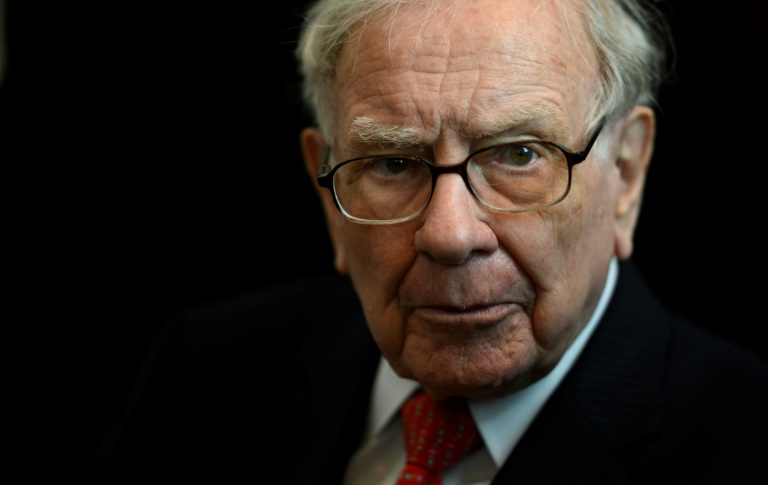
OMAHA, Neb. — Warren Buffett, the legendary investor who stepped down as CEO of Berkshire Hathaway Inc. at the end of 2025, remains a central figure in financial news as his successor navigates the conglomerate’s transition. As of March 23, 2026, Berkshire’s record $373 billion cash hoard — built during Buffett’s final years as CEO — continues to dominate discussions, signaling caution on valuations while new CEO Greg Abel pursues strategic moves like resumed share repurchases and international partnerships.
AFP
Berkshire Hathaway, the Omaha-based holding company Buffett transformed from a textile firm into a $1 trillion-plus empire, reported operating earnings of $10.2 billion for the fourth quarter of 2025 in early March filings — a nearly 30% drop from the prior year, driven by weakness in insurance underwriting and investment income. Shares fell as much as 5.3% on the news, the largest decline since Buffett announced his retirement plans in May 2025.
Despite the earnings miss, Abel’s first annual shareholder letter, released late February, reaffirmed Buffett’s disciplined approach: prioritizing high-quality businesses, avoiding overpayment, and maintaining financial strength. Abel highlighted pressures in insurance from pricing competition and customer retention challenges at Geico, but emphasized continuity in culture and strategy.
A key development came March 4, when Berkshire resumed repurchasing its own shares — the first buybacks since May 2024. The company acquired the equivalent of 309 Class A shares (about $226 million worth) that day, per a March 14 proxy filing. Abel told CNBC on March 5 he plans to invest his full after-tax annual salary in Berkshire stock annually “as long as I’m the CEO,” underscoring alignment with shareholders. He also confirmed consulting Buffett on major decisions, including buyback timing, to ensure smooth handover.
Buffett, now chairman, has stayed involved behind the scenes. Abel noted daily check-ins with the 95-year-old icon, who praised the transition in interviews. The cash pile — $373 billion in cash and Treasuries at year-end 2025, up from $321 billion in 2024 — has fueled speculation about future deployments. Analysts interpret it as a “warning” on elevated valuations, with the Buffett Indicator (market cap to GDP) hovering near 219%, far above historical norms.
Advertisement
In a March 21 CNBC piece, Buffett defended the Giving Pledge — his 2010 initiative with Bill Gates urging billionaires to donate half their wealth — amid reported backlash, including from pro-Trump tech figures. He dismissed criticism, emphasizing philanthropy’s long-term impact.
On the business front, Berkshire announced a strategic partnership with Japan’s Tokio Marine Holdings on March 23. Tokio Marine will sell a 2.49% stake to Berkshire via third-party allotment, granting National Indemnity (Berkshire’s reinsurance arm) access to Tokio Marine’s global portfolio. The deal enhances risk capacity and growth opportunities for both, reflecting Buffett’s longstanding affinity for Japanese businesses.
Portfolio updates from the latest 13F filing (for Q4 2025, disclosed February 17, 2026) show continuity with tweaks. Berkshire’s equity holdings totaled around $270-280 billion, concentrated in high-quality names. Top positions included Apple (still the largest despite prior trims), American Express, Bank of America, Coca-Cola, and Chevron. Recent activity featured additions to Chubb (insurance) and Chevron (energy), plus a small new stake in The New York Times (about $352 million, 0.13% of the portfolio). Media holdings saw some exits, indicating simplification.
Buffett trimmed Apple significantly in prior quarters — down about 75% from peaks — and reduced Amazon exposure, moves interpreted as profit-taking amid high valuations. No major new buys emerged in early 2026 data, consistent with the cash buildup.
Advertisement
Abel’s leadership has drawn praise for steady execution. In a March 7 CNBC interview, he addressed dividend policy (Berkshire remains unlikely to pay one, favoring reinvestment), crypto skepticism (echoing Buffett’s views), and market trends. He stressed Berkshire’s culture of patience, avoiding speculative bets.
The transition has sparked broader reflection on Buffett’s legacy. Videos and analyses in March 2026 dissected his “recession portfolio” positioning — heavy cash, core holdings in resilient sectors — amid concerns over AI hype, overvalued markets, and economic softening. Some speculate opportunities ahead if valuations correct, given Berkshire’s dry powder.
Berkshire’s annual meeting, set for May 2 in Omaha, will mark Abel’s first as CEO, with Buffett likely attending as chairman. Investors anticipate insights on capital deployment amid the cash mountain.
As Buffett enjoys semi-retirement — still consulting and chairing — his influence endures through Berkshire’s structure and Abel’s adherence to value principles. The conglomerate’s performance in 2026 will test the post-Buffett era, but early signs point to measured continuity rather than dramatic shifts.
Advertisement
With global markets volatile and valuations stretched, Buffett’s final “warning” via the cash hoard resonates: patience and discipline remain key. As one analyst noted, history suggests corrections create buying opportunities — precisely the scenario Berkshire appears primed to exploit.
The Thai government has approved a US$12.2 billion emergency borrowing package to mitigate the economic repercussions of the ongoing Middle East conflict.
As the war between the US, Israel, and Iran drives up global energy and shipping costs, Thailand faces slowing growth and rising inflation, prompting officials to implement this significant financial intervention to support low-income citizens and bolster the domestic economy.
Key Points
The 400 billion baht loan package is intended for deployment between June and September to stimulate spending and provide relief to over 20 million low-income individuals under the “Thais Helps Thais” program.
The funds will also be directed toward supporting alternative energy initiatives to combat the impact of volatile oil and gas prices.
Economic forecasts have been revised downward, with the finance ministry cutting GDP growth expectations from 2.4% to 1.6% and projecting core inflation to rise to 3.0%.
Officials confirmed that the new borrowing will keep public debt within the country’s 70% of GDP ceiling, as debt stood at 66.38% as of March.
While the borrowing package is one of the largest in recent history, the government emphasized that it remains below the levels of debt incurred during the 1997 Asian financial crisis and the COVID-19 pandemic.
The key economic factors prompting Thailand’s US$12.2 billion emergency borrowing package are as follows:
Impact of the Middle East Conflict: The war between the US/Israel and Iran, which began in late February, has negatively affected the global economy. This conflict has roiled global energy prices, leading to increased costs for oil, gas, shipping, and consumer goods.
Rising Inflation: The country is experiencing significant inflationary pressure. Core inflation is now forecast to reach 3.0 percent this year, a sharp increase from the previous estimate of 0.3 percent.
Slowing Economic Growth: Thailand’s economic growth is decelerating. The finance ministry recently lowered the country’s GDP growth forecast to 1.6 percent, down from 2.4 percent the previous year.
Need for Economic Stabilization: The government identified the borrowing package as a necessary tool to “cushion the economic impacts,” boost domestic spending, and prevent further economic weakening.
The funds are intended to address these challenges by easing living costs for over 20 million low-income individuals through the “Thais Helps Thais” scheme and supporting alternative energy initiatives. The program also aims to bolster local economies by promoting sustainable practices and encouraging community-driven projects. By integrating these efforts, the initiative seeks to create long-term solutions that not only alleviate immediate financial burdens but also foster resilience and self-sufficiency among vulnerable populations.
NUUK, Greenland — Tensions over Greenland’s future intensified this week as President Donald Trump renewed calls for US acquisition or expanded control of the vast Arctic island, prompting Denmark to deploy additional elite forces and Greenland’s leaders to firmly reject any change in sovereignty. The diplomatic standoff, now in its fourth month, continues to strain transatlantic relations and raise concerns about Arctic security.
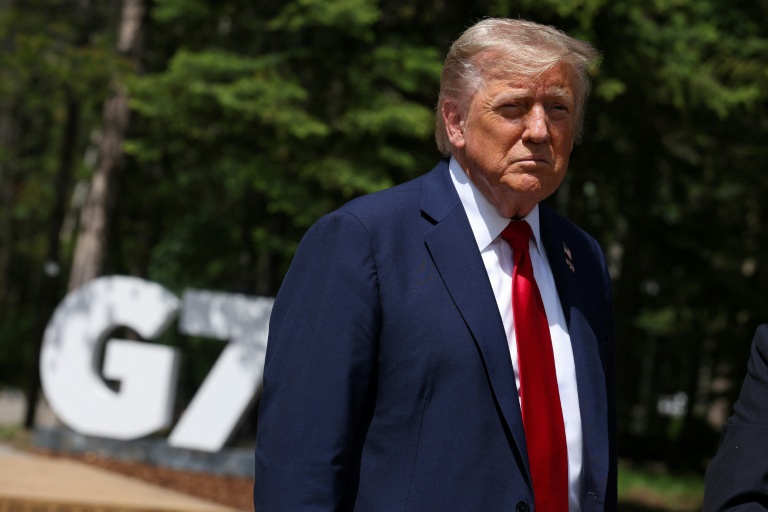
US President Donald Trump AFP
Trump, speaking at a White House event on May 6, reiterated that the United States “needs” Greenland for national security reasons, citing potential threats from Russia and China in the resource-rich region. He stopped short of repeating earlier tariff threats but maintained that a deal must be reached. Danish and Greenlandic officials responded swiftly, emphasizing that Greenland is not for sale and remains part of the Kingdom of Denmark.
Greenland’s Prime Minister Jens-Frederik Nielsen stated categorically that the island “is not a piece of ice” and reaffirmed its commitment to Denmark. “When faced with the choice between the US and Denmark, Greenland chooses Denmark,” he said, echoing earlier parliamentary statements.
Military Posturing and Defense Measures
Denmark has responded to the pressure by significantly bolstering its military presence. Hundreds of elite Danish combat soldiers trained in Arctic warfare have been deployed to Greenland, including senior officers. Reports indicate Denmark prepared contingency plans, including potential runway destruction at key airfields, in case of any US military action — though both sides have publicly ruled out force.
NATO discussions are underway for a possible permanent “Arctic Sentry” mission in Greenland, modeled after initiatives in the Baltic region. European leaders, including those from France and Canada, have opened or expanded consulates in Greenland as a show of solidarity.
Advertisement
Economic and Diplomatic Fallout
Trump’s earlier threats of 10-25% tariffs on several European nations opposing the move were paused after talks in Davos in January, but the underlying dispute lingers. Negotiations have explored increased US military basing rights, resource access, and blocking adversarial mining activities without full sovereignty transfer.
Greenland, with its population of around 56,000, holds vast untapped reserves of rare earth minerals, uranium and other critical resources essential for green technology and defense. Its strategic location makes it vital for Arctic monitoring and potential missile defense systems.
The crisis has triggered psychological strain among residents, with Greenland’s government monitoring mental health impacts. Many locals express anxiety over the uncertainty, though daily life continues amid heightened international attention.
Background of the Dispute
Trump first floated acquiring Greenland in 2019 during his first term. The idea resurfaced strongly in late 2025 and escalated in early 2026, with the administration arguing that Denmark cannot adequately defend the island against growing Russian and Chinese interest in the Arctic. Greenlandic and Danish leaders counter that existing NATO frameworks and bilateral agreements suffice.
Advertisement
A high-stakes January meeting in Washington between US, Danish and Greenlandic officials produced little progress, with both sides claiming different interpretations of the outcome. Subsequent talks have focused on security enhancements rather than outright purchase.
International Reactions
European allies have expressed concern that the dispute weakens NATO unity. Some view Trump’s approach as a distraction from other global priorities, including the situation in the Middle East. China and Russia have watched developments closely, with analysts warning that prolonged instability could create openings for their influence in the Arctic.
Bipartisan US congressional delegations have visited Denmark and Greenland to ease tensions and explore cooperative security arrangements. However, a small number of Republican lawmakers have introduced symbolic measures supporting Greenland as a potential US territory.
Economic Implications
Greenland’s economy, heavily reliant on fishing, tourism and Danish subsidies, faces uncertainty. Potential US investment in infrastructure or mining could bring opportunities, but most residents prioritize maintaining autonomy and their relationship with Denmark.
Advertisement
Global markets have shown sensitivity to the rhetoric, with occasional spikes in rare earth and shipping costs tied to Arctic tensions. Energy security analysts note that while Greenland itself produces little oil, its location affects broader shipping routes and strategic calculations.
Looking Ahead
As summer approaches in the Arctic, military exercises and diplomatic talks are expected to continue. Denmark has called a snap election partly centered on the Greenland issue, while US officials maintain that talks are “on a good trajectory” despite public differences.
For Greenlanders, the crisis has thrust their homeland into the global spotlight like never before. Whether it leads to enhanced security cooperation, greater autonomy, or continued uncertainty remains to be seen. What is clear is that the island’s strategic importance in a warming Arctic with melting ice and new shipping routes has elevated it from a remote territory to a central player in great power competition.
The situation serves as a reminder of how quickly geopolitical flashpoints can emerge in the 21st century. As stakeholders navigate security needs, resource interests and self-determination, the future of Greenland will likely shape broader Arctic dynamics for years to come.
Christopher Carril – KeyBanc Capital Markets Inc., Research Division Andrew North – Robert W. Baird & Co. Incorporated, Research Division Andrew Charles – TD Cowen, Research Division Zachary Fadem – Wells Fargo Securities, LLC, Research Division Jeffrey Bernstein – Barclays Bank PLC, Research Division Sara Senatore – BofA Securities, Research Division Simon Elliott – Evercore Inc. James Salera – Stephens Inc., Research Division Lauren Silberman – Deutsche Bank AG, Research Division Peter Saleh – BTIG, LLC, Research Division Jeffrey Farmer – Gordon Haskett Research Advisors Dennis Geiger – UBS Investment Bank, Research Division Gregory Francfort – Guggenheim Securities, LLC, Research Division Brian Bittner – Oppenheimer & Co. Inc., Research Division John Ivankoe – JPMorgan Chase & Co, Research Division James Sanderson – Northcoast Research Partners, LLC Logan Reich – RBC Capital Markets, Research Division Jacob Aiken-Phillips – Melius Research LLC Brian Harbour – Morgan Stanley, Research Division Brian Vaccaro – Raymond James & Associates, Inc., Research Division
Presentation
Advertisement
Operator
Good evening, and welcome to the Texas Roadhouse First Quarter 2026 Earnings Conference Call. Today’s call is being recorded. [Operator Instructions]
I would now like to introduce Michael Bailen, Vice President of Investor Relations for Texas Roadhouse. You may begin your conference.
Advertisement
Michael Bailen Head of Investor Relations
Thank you, Andy, and good evening. By now, you should have access to our earnings release for the first quarter ended March 31, 2026. It may also be found on our website at texasroadhouse.com in the Investors section.
I would like to remind everyone that part of our discussion today will include forward-looking statements. These statements are not guarantees of future performance, and therefore, undue reliance should not be placed upon them. We refer all of
NEW YORK — The S&P 500 climbed 54.39 points, or 0.74%, to close at 7,391.50 on Thursday, extending its recent winning streak as strong corporate earnings and unrelenting enthusiasm for artificial intelligence continued to propel major indices higher on Wall Street. The benchmark index has now posted gains in four of the past five sessions, reflecting renewed investor confidence amid resilient economic data and robust performance from technology leaders.
S&P 500 Rises 54 Points to 7,391 as Tech and AI Stocks Drive Broad Market Gains
The advance was broad-based, with nine of the 11 S&P 500 sectors finishing in positive territory. Technology led the charge with a 1.8% gain, followed by communication services and consumer discretionary. The Nasdaq Composite outperformed with a 1.2% rise, while the Dow Jones Industrial Average added 115 points, or 0.23%, to 49,711.98, inching closer to the milestone 50,000 level.
Tech and AI Momentum Remain Dominant Themes
Magnificent Seven stocks once again anchored the market’s upside. Nvidia, Microsoft, Amazon and Meta Platforms posted solid gains as investors bet on continued capital spending on AI infrastructure. Chipmakers and software companies with heavy AI exposure benefited from optimism that enterprise adoption of generative AI tools is accelerating faster than expected.
Analysts noted that first-quarter earnings season has largely exceeded lowered expectations, with particular strength in technology, industrials and financial services. Several large companies raised guidance, signaling confidence in sustained demand despite higher interest rates and geopolitical uncertainties.
Economic Backdrop Supports Risk Appetite
The market’s resilience comes as inflation appears to be moderating and the Federal Reserve maintains a patient stance on interest rate policy. Recent retail sales data showed consumers remain willing to spend, while corporate balance sheets stay healthy. The 10-year Treasury yield held steady near 4.35%, providing a relatively stable borrowing environment for businesses.
Advertisement
Geopolitical risks in the Middle East have eased somewhat after reports of diplomatic progress, helping stabilize oil prices around $78 per barrel. This has relieved inflationary pressures on transportation and manufacturing costs, further supporting equity valuations.
Sector Rotation and Market Breadth
While technology led, there were signs of healthy rotation into other areas. Financial stocks advanced on strong bank earnings, and industrial names benefited from positive outlooks on infrastructure spending. Small-cap stocks, represented by the Russell 2000, posted more modest gains but showed improving breadth, suggesting the rally may be broadening beyond mega-cap names.
Volume was above average, indicating genuine conviction behind the buying. Advancing issues significantly outnumbered decliners on the New York Stock Exchange, a positive technical signal for continued upside.
Analyst and Strategist Views
Veteran market watchers described the current environment as constructive. “Earnings are holding up well, AI spending remains robust, and the economy is growing without overheating,” said one chief investment strategist. “The path to new highs for the S&P 500 looks increasingly probable in the coming months.”
Advertisement
Retail participation remains elevated through trading apps and ETFs, while institutional flows show continued preference for quality growth names with strong balance sheets. Some caution persists around elevated valuations in select AI-related stocks, but overall sentiment leans optimistic.
Risks and Watchpoints
Despite the upbeat session, potential headwinds remain. Any renewed escalation in the Middle East could disrupt energy markets and reignite inflation concerns. Slower-than-expected AI returns or reduced capital expenditure by hyperscalers could pressure technology valuations. Upcoming economic data, including consumer sentiment and inflation readings, will be closely monitored.
Longer-term, questions linger about the sustainability of high valuations and the eventual impact of higher interest rates on corporate borrowing and consumer spending. However, for now, the market appears focused on positive near-term catalysts.
Historical Perspective
Thursday’s close adds to the S&P 500’s impressive run since the 2022 bear market lows. The index has more than doubled in that period, driven by technological innovation, corporate earnings resilience and accommodative monetary policy. Reaching the 7,400 level would mark another psychological milestone in this multi-year bull market.
Advertisement
Outlook for Friday and Beyond
Attention now turns to Friday’s economic calendar, which includes more earnings reports and key data points. Any continued positive surprises could help sustain momentum toward fresh record highs. Strategists generally remain constructive for the remainder of 2026, projecting further gains supported by earnings growth and potential monetary easing later in the year.
For individual investors, the message remains one of measured optimism. Diversification across sectors, focus on companies with strong fundamentals and a long-term perspective continue to be sound strategies. The S&P 500’s steady climb reflects confidence in American enterprise and innovation amid periodic challenges.
As trading wrapped up Thursday, the market’s advance underscored a resilient environment where corporate execution and technological themes continue to reward investors. Whether the S&P 500 pushes decisively through 7,400 in coming sessions or consolidates first, the underlying momentum suggests Wall Street retains faith in the durability of the current economic expansion and the transformative power of artificial intelligence.
Liberty Broadband Corporation (LBRDK) Q1 2026 Earnings Call May 7, 2026 11:15 AM EDT
Company Participants
Hooper Stevens – Senior Vice President of Investor Relations Ronald Duncan – Co-Founder, President, CEO & Director Brian Wendling – Chief Accounting Officer & Principal Financial Officer Peter J. Pounds Martin Patterson – CEO & President
Advertisement
Conference Call Participants
David Joyce – Seaport Research Partners James Harris – Bislett Management, LLC
Presentation
Advertisement
Operator
Welcome to GCI Liberty 2026 First Quarter Earnings Call. [Operator Instructions] As a reminder, this conference will be recorded May 7. I would now like to turn the call over to Hooper Stevens, Senior Vice President, Investor Relations. Please go ahead.
Hooper Stevens Senior Vice President of Investor Relations
Advertisement
Thank you, everyone, for joining us today for GCI Liberty’s First Quarter 2026 Earnings Call. As you know, this call may include certain forward-looking statements within the meaning of the Private Securities Litigation Reform Act of 1995. Actual events or results could differ materially due to a number of risks and uncertainties, including those mentioned in the most recent Forms 10-K and 10-Q filed by GCI Liberty and Liberty Broadband with the SEC. These forward-looking statements speak only as of the date of this call, and GCI Liberty and Liberty Broadband expressly disclaim any obligation or undertaking to disseminate any updates or revisions to any forward-looking statement contained herein to reflect any change in GCI Liberty or Liberty Broadband’s expectations with regard to any change in events, conditions or circumstances on which any such statement is based.
On today’s call, we will discuss certain non-GAAP financial measures for GCI Liberty, including adjusted OIBDA, adjusted OIBDA margin and free cash flow. Information regarding the required definitions along with the comparable GAAP metrics and reconciliations for GCI Liberty can be found in the earnings press release issued today, which is available on
Marty Popoff has over 20 years of capital markets experience, as a trader, marketer and in a pinch, structurer, primarily in the fields of Government and Corporate Bonds, Interest Rate Derivatives, Credit Derivatives, and Securitization. He has spoken at many conferences and taught Risk Management at the graduate level. From time to time he writes about topics that interest him. He often feels that investing in the markets takes a leap of faith.
Analyst’s Disclosure: I/we have no stock, option or similar derivative position in any of the companies mentioned, and no plans to initiate any such positions within the next 72 hours. I wrote this article myself, and it expresses my own opinions. I am not receiving compensation for it (other than from Seeking Alpha). I have no business relationship with any company whose stock is mentioned in this article.
Seeking Alpha’s Disclosure: Past performance is no guarantee of future results. No recommendation or advice is being given as to whether any investment is suitable for a particular investor. Any views or opinions expressed above may not reflect those of Seeking Alpha as a whole. Seeking Alpha is not a licensed securities dealer, broker or US investment adviser or investment bank. Our analysts are third party authors that include both professional investors and individual investors who may not be licensed or certified by any institute or regulatory body.
FIFA and Fanatics announced on Thursday a long-term, exclusive collectibles licensing deal that features trading cards, stickers and trading card games.
The agreement, which will begin in full in 2031, covers both physical and digital collectibles, with one of the first coming during this summer’s World Cup.
Advertisement
Players participating in their first World Cup this summer will wear a debut patch that will be stored for cards to be released five years from now. The debut patch program began in 2023 with Major League Baseball.
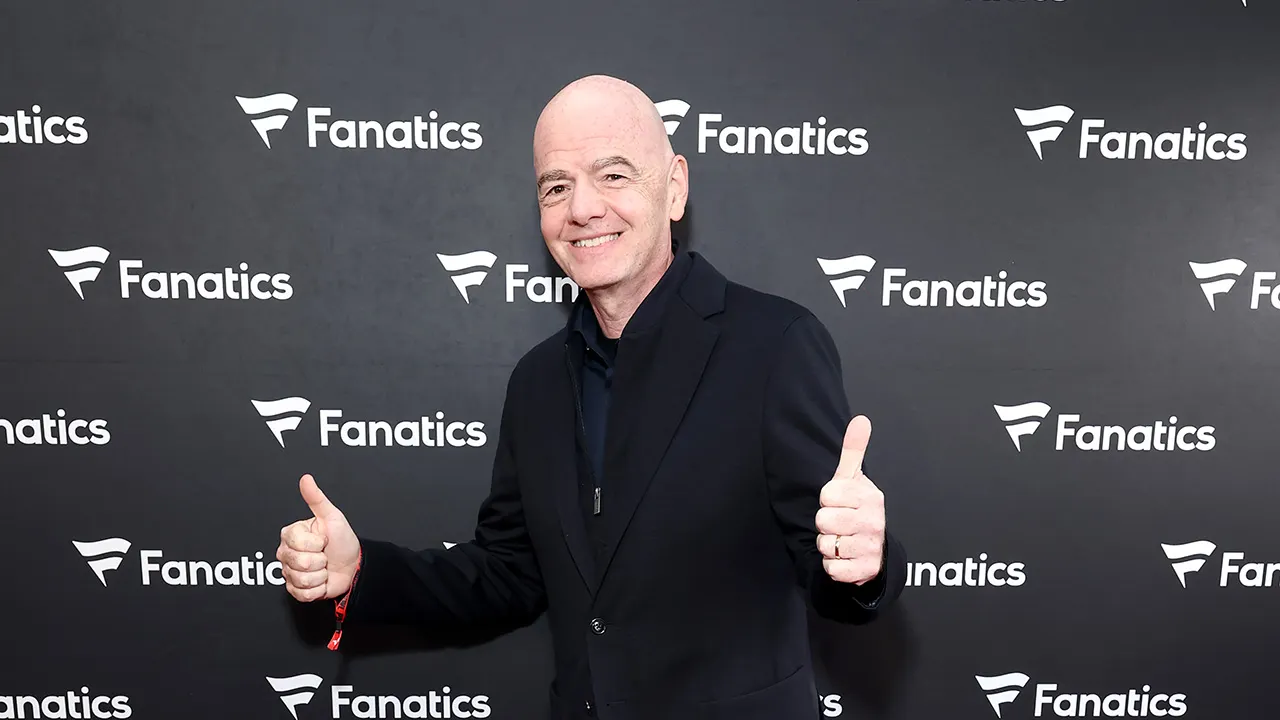
Gianni Infantino attends the 2026 Fanatics Super Bowl Party at Pier 48 in San Francisco on Feb. 7, 2026 in San Francisco, California. (Cindy Ord/Getty Images for Fanatics / Getty Images)
“Across the sports landscape, we see that Fanatics are driving massive innovation in collectibles that provides fans with a new, meaningful way to engage with their favorite teams and with their favorite players,” FIFA President Gianni Infantino said in a statement.
“So, from FIFA’s point of view, we can globalize that fan engagement precisely thanks to our global tournament portfolio. And this provides another important commercial revenue stream that we channel back, as always, into the game, into football.”
Advertisement
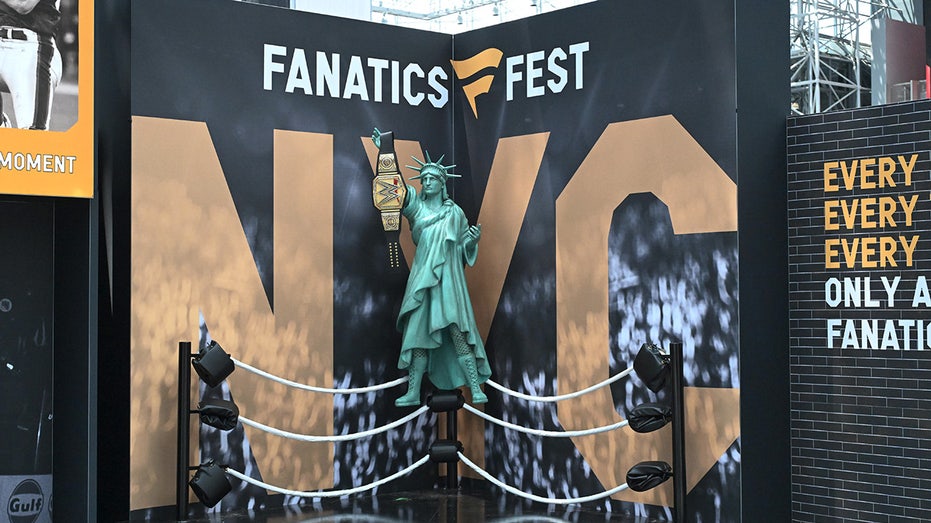
A view of the venue during Fanatics Fest NYC 2025 at Javits Center on June 20, 2025, in New York City. (Dave Kotinsky/Getty Images for Fanatics)
“This is truly a historic day in our company’s history,” added Fanatics founder and CEO Michael Rubin. “Global football is the biggest growth opportunity in sports, and when you combine the power of FIFA with the innovation and entrepreneurial backbone of Fanatics, together we’re poised to elevate storytelling and collectibles around the game in a way that’s never been seen before.”
The announcement of the long-term deal came with the news that the official FIFA World Cup Final press conferences will take place at the third edition of Fanatics Fest this summer on July 17 in New York City, two days before the final across the Hudson River at MetLife Stadium.
Fanatics Fest will also host a massive watch party and will air the FIFA World Cup final live on all screens around the Javits Center for the tens of thousands of expected attendees that day.
Advertisement
FIFA World Cup winner’s trophy in Miami, Florida. (Photo by Eva Marie Uzcategui/FIFA via Getty Images)














































You must be logged in to post a comment Login