
Business
Bernard Matthews confirms closure of Derby factory

A British food giant is set to close its factory in Derby amid “significant financial losses”.
Bernard Matthews Foods has confirmed it will be shutting its processing facility on Shaftesbury Street South by the end of 2026.
A spokesperson for the company said the decision had been made at the conclusion of consultations with “employee and union representatives”.
The decision comes two years after the company announced plans to close a plant at its headquarters in Great Witchingham, Norfolk, where its founder built his empire.
In a statement on Thursday, the company said its financial situation was due to “external economic challenges”.
“This decision follows continued significant financial losses, alongside a range of external economic challenges and the geopolitical environment, including Brexit, Covid, and conflicts in Ukraine and the Middle East, which have all contributed to significantly impacting the site and its supply chain,” a spokesperson said.
“The company will support impacted employees through potential redeployment opportunities across the wider business, and engagement with local organisations to explore alternative employment options.”
The well-known food brand rose to prominence in the 1960s when Bernard Matthews entered the Guinness Book of Records as the biggest turkey farmer in Europe.
Matthews was known for his “bootiful” catchphrase and his success led to an expansion of turkey-related products, including turkey Twizzlers.
The entrepreneur died in 2010 on the day of the US Thanksgiving holiday, often referred to as Turkey Day.
According to the company’s website, it still runs processing and production sites in Sunderland and in Holton, Suffolk.
Trade union Unite has been contacted for comment.



I am interested in a lot of technology and AI stocks like Google, Nvidia, AMD, Tesla and Amazon.
Analyst’s Disclosure: I/we have a beneficial long position in the shares of WPC, O either through stock ownership, options, or other derivatives. I wrote this article myself, and it expresses my own opinions. I am not receiving compensation for it (other than from Seeking Alpha). I have no business relationship with any company whose stock is mentioned in this article.
Seeking Alpha’s Disclosure: Past performance is no guarantee of future results. No recommendation or advice is being given as to whether any investment is suitable for a particular investor. Any views or opinions expressed above may not reflect those of Seeking Alpha as a whole. Seeking Alpha is not a licensed securities dealer, broker or US investment adviser or investment bank. Our analysts are third party authors that include both professional investors and individual investors who may not be licensed or certified by any institute or regulatory body.

Almost as soon as your products or services set foot on EU soil, you should apply for a VAT status and pay VAT in Europe. You generally still have to pay or file VAT in your home country for any sales made to domestic customers, but you don´t need to pay VAT in your home country for international sales.
So if you want to expand internationally and into the European (EU) market, you must apply for VAT registration if you:
- Store goods in an EU country
- Exceed the €10,000 EU-wide distance sales threshold
- Import goods or perform local B2B taxable operations
Applying for VAT in the EU as an international business is not as simple as filling out an online application. Below, we´ve created a comprehensive guide to VAT registration in Europe, including everything international businesses should know.
Applying For VAT Registration in Europe
VAT in Europe is the same as in any country. In the EU, the VAT Directive is the most common framework, but each of the 27 Member States operates its own registration system, which can make it confusing. They also all apply their own VAT rates and administrative procedures. The EU requires a standard rate of at least 15%, but the actual standard and reduced rates vary by country and product category.
And the complexity grows.
There is no ordinary single EU VAT number covering every activity, such as storing goods or importing goods, which, as we said in the introduction, would trigger the need for VAT. A national authority issues a VAT identification number for the activities registered in that jurisdiction.
Businesses can use the EU’s VIES system to validate VAT numbers used for intra-EU trade.
In 2025, the EU introduced a cross-border SME exemption which applies to qualifying EU-established small businesses with total EU turnover no higher than €100,000 and subject to the relevant national threshold. It´s not automatically applied, and it is something you need to apply for.
How Easy Is It to Register for VAT in Europe as an International Business?
There is no single application process for standard registration, which makes it complicated. You need to submit an application to the tax authority in the relevant country. That said, once you cross the €10,000 threshold, you can report it collectively through the One Stop Shop (OSS) scheme rather than registering in every nation.
A non-EU business supplying services to EU consumers can use the Non-Union OSS. The Union OSS can cover eligible intra-EU distance sales of goods dispatched from EU stock.
To apply, we recommend using a fiscal representative like Easytax to manage the complex systems, which absolutely will be more of a headache than in your home country. Some Member States, such as Spain, France, and Italy, require non-EU businesses to appoint a fiscal representative.
Required evidence varies, but you typically need to submit:
- Incorporation documents
- Proof of the company’s home country tax status
- Details of directors
- Contracts
- Invoices
- Expected transaction flows
- Warehouse information and bank details
Some authorities also request certified translations, notarisation or an apostille.
Important Things to Be Aware of About Paying VAT in the EU as an International Business
There are so many nuances to be aware of. Some of the most important are:
- Businesses must distinguish between B2B and B2C transactions.
- For many cross-border B2B services, VAT is accounted for by the customer under the reverse charge.
- For eligible B2C distance sales, VAT is generally charged at the rate applicable in the customer’s destination country.
- All commercial goods imported into the EU are potentially subject to VAT, and the former exemption for consignments worth up to €22 has been removed.
- Companies should plan for import VAT cash flow, local VAT payment deadlines, currency conversions and the conditions for deducting or reclaiming input VAT.
- The EU’s VAT in the Digital Age programme clarifies OSS and IOSS from 1 January 2027, so look out for changes.
If you want to expand and grow across Europe as an international business, you will need to register for and pay VAT as well as continue to pay it on sales made within your national country. Understanding how to apply and doing it right is so important to avoid potential fines and further action/business disruption.

Blend Labs Shows Early Signs Of AI Potential As Yield Curve Control Dawns

BofA cuts Walmart stock price target on comp sales deceleration

It is half past four on the last Friday of the month, and in the back office of a kitchen fittings supplier in Leeds the office manager is doing what she does every month. She exports the sales ledger from the accounts package.
She downloads a takings summary from the till system. Then she opens the spreadsheet, the one with tabs going back to 2021, and starts copying figures across, checking each column against the bank feed as she goes. By seven o’clock on Monday morning there will be a tidy one-page report waiting on the meeting room table: turnover by product line, debtors over sixty days, wages as a share of sales.
This routine works. It has worked for years. The directors trust the numbers because they know precisely how they were put together, and the business has grown steadily on the back of decisions made around that Monday table. Nothing about the ritual deserves criticism. It does, however, deserve a second look, because the several hours of skilled attention it consumes every month have become optional in a way they were not five years ago.
The data is already there
Small firms in the UK now hold more usable information about their own trading than at any point in their history. The accounts package records every invoice and payment. The till logs every sale, down to the minute. Payroll, stock, website orders and delivery schedules all sit in software of one kind or another, each system dutifully accumulating a record of how the business actually behaves.
What happens next is where the opportunity sits. The Department for Science, Innovation and Technology published its UK Business Data Survey 2026 in June, and it found that while 86 per cent of UK businesses handle digitised data, only 25 per cent analyse that data to draw insight from it. Put another way, much of the value already sitting inside those systems goes unused, and a firm that starts using it gains ground that few of its rivals are even contesting.
Where the spreadsheet strains
None of this means abandoning Excel, and it certainly doesn’t mean the spreadsheet was a mistake. For a generation of owners it has been the most flexible business tool ever made, and many of them know it inside out. The monthly report described above exists because somebody capable built it, and it has answered real questions month after month for years.
The strain shows in three places. First, the re-keying: every figure copied by hand from one system into another is a figure that can be mistyped, and the checking needed to catch those slips often takes longer than the copying itself. Second, version confusion: once “March report v3 FINAL” and “March report v3 FINAL amended” both exist on the shared drive, an hour can disappear into working out which one the meeting actually saw. Third, and most costly, the finished report describes last month. A pricing problem that appears in the first week of April stays invisible until the second week of May, by which time it has been running for five weeks. These are the classic signs of when a business outgrows Excel for reporting, and they say more about the growing complexity of the firm than about anyone’s skills.
What a live report changes
The alternative is a live report: a single dashboard connected directly to the accounts package and the till data, refreshed automatically on a schedule, and visible to everyone who should see it. There is one version of the numbers. Nobody re-keys anything. The Monday routine shrinks from an afternoon of assembly to a few minutes of reading, and the questions asked in the meeting change character, from “are these figures right?” to “why did trade counter sales dip on Thursdays?”
For many small firms the tool for this job is already paid for. Power BI, Microsoft’s business intelligence software (software that turns raw company data into charts, reports and dashboards), is included in or available alongside many Microsoft 365 subscriptions, sitting a few clicks from the Outlook and Excel licences the business already runs on. It’s hardly a niche product either: Microsoft reported in September 2025 that Power BI and its wider Fabric platform had passed 30 million monthly active users. Ready-made connectors, the links that pull data from one system into another, exist for the common UK accounts packages and till systems, so joining the data to the dashboard is largely a matter of configuration rather than custom development.
The skills step is smaller than it looks
The honest obstacle is confidence. A study by Qlik covering more than 7,000 executives and employees found that just 11 per cent of employees feel fully confident in their data literacy, meaning their ability to read, interpret and question data. Small firms feel this more sharply than large ones, because there’s no analytics department down the corridor to lean on.
Hiring a data specialist rarely makes sense for a fifteen-person firm. The more practical route is to train the person who already owns the numbers, because they bring something no outside analyst could: they know what the figures mean, which customers sit behind the debtor balance, and why February looks strange every year. Structured training closes the gap faster than many people expect. Red Eagle Tech, a London-based Microsoft Solutions Partner that has trained more than 200 professionals, runs a two-day Power BI masterclass delivered live online, with no prior experience needed and a format built around producing real reports rather than sitting through theory. Two days is a modest investment against a task that currently absorbs several hours every month, indefinitely.
One report, one person, one quarter
The way to start is deliberately narrow. Pick the single report that gets rebuilt by hand every month, the one whose assembly takes the most patience, and make that the whole of the first project. Choose the person who currently builds it, book their training, and give them the time to reproduce that one report as a live dashboard before the quarter ends. Resist the urge to add extra charts or new measures on the first pass; matching the old report exactly is what earns the directors’ trust in the new numbers.
Run the two side by side for a month if it helps, then let the spreadsheet version retire with the respect it has earned. If the Leeds office manager starts in September, she can walk into the first Monday meeting of December carrying the same one-page report the directors have read for years, produced in four minutes instead of four hours, and current to the previous evening’s till close. That is the whole ambition for the quarter, and it is enough.
Business
GameStop Stock Down Nearly 18% in a Month as $1.4 Billion Debt Swap Sparks Dilution Fears and eBay Bid Doubts
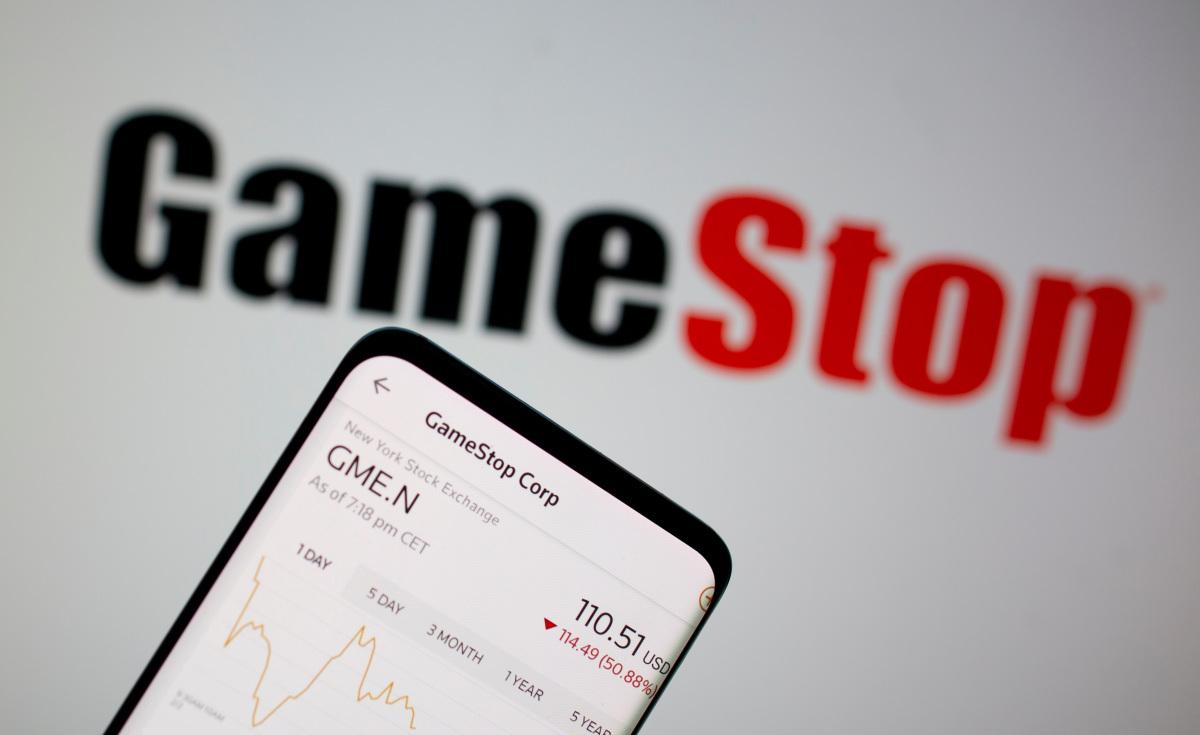
Shares of GameStop Corp. have fallen 17.85% over the past month, trading at $17.88 as of 10:59 a.m. EDT Thursday, as investors continue reacting to a dilutive debt-for-equity exchange announced earlier this month alongside growing skepticism regarding Chief Executive Ryan Cohen’s ambitions to acquire a stake in eBay.
The decline traces back to Aug. 3, when GameStop disclosed a privately negotiated agreement to exchange roughly $1.4 billion of its zero-coupon convertible senior notes, split between issues maturing in 2030 and 2032, for newly issued shares of Class A common stock. According to Benzinga, GameStop entered into agreements with certain noteholders to exchange approximately $400 million of the 2030 notes and $1.0 billion of the 2032 notes for company stock, a move that allows GameStop to reduce its long-term debt without spending any cash, since the company will receive no cash proceeds from the stock issuance itself.
Shares plunged sharply on the news. According to Tickeron, GME fell 10.64% during regular trading on Aug. 3 to approximately $19.41, after dropping further in premarket trading. Benzinga reported the stock down 11.14% to $19.30 during premarket hours that same day, touching what was then a new 52-week low. GuruFocus separately reported the stock declining 11.1% to close at $19.31 on Aug. 3, with a related report citing a 12.6% single-day drop to $18.99, reflecting the volatility and differing intraday reference points across coverage of the selloff that day.
The core concern driving the selloff centers on dilution: because the exchange converts debt directly into new shares rather than raising cash, it increases GameStop’s total outstanding share count without adding new capital to the balance sheet, which can reduce the value of existing shareholders’ stakes. According to Yahoo Finance, GameStop’s stock recently touched a two-year low of $17.92 amid these dilution concerns.
Compounding investor anxiety has been persistent skepticism over Cohen’s broader strategic ambitions involving eBay. According to Benzinga, the stock’s decline coincided with investors continuing to assess GameStop’s aggressive build-up of a 9.8% stake in eBay Inc., alongside Wall Street’s doubts about Cohen’s reported takeover interest in the e-commerce company. Yahoo Finance reported that GameStop is now said to be considering a partnership arrangement with eBay instead of pursuing an outright acquisition, a potential shift in strategy that has added further uncertainty to how investors are valuing the stock.
The mechanics of the debt exchange itself remain a significant overhang on the shares. According to a report from finance outlet Daytraders.com, the actual number of new shares GameStop will need to issue depends partly on the volume-weighted average price of the company’s stock over a 35-trading-day reference period that began Aug. 3, subject to a per-share price floor. That structure means continued weakness in GameStop’s stock price during the reference window could result in a larger number of new shares being issued, potentially compounding the dilution investors are already bracing for. GameStop has cautioned that participating noteholders may buy, sell or enter into derivative transactions to hedge their positions during this period, which the company has said could materially affect the market price of both its common stock and its convertible notes. According to that same report, the exchange has an expected closing date of Sept. 23, and GameStop held $4.17 billion in long-term debt as of May 2.
Despite the sharp pullback, some financial data providers have flagged the stock as trading well above their estimated intrinsic value even after the decline. According to GuruFocus’s GF Value model, GameStop was trading roughly 50% to 51% above its calculated intrinsic value estimate of $12.63 in the days immediately following the Aug. 3 announcement, with the firm’s broader GF Score, a composite measure of fundamental health, sitting at a middling 56 out of 100. GuruFocus specifically flagged GameStop’s Growth sub-rank as its weakest metric, at just 1 out of 10, reflecting the company’s ongoing revenue contraction in its core brick-and-mortar video game retail business, a trend that has persisted for years amid the broader industry shift toward digital game downloads and subscription-based platforms.
GameStop’s cryptocurrency treasury strategy, another closely watched element of Cohen’s broader turnaround plan, has also failed to provide meaningful offsetting support for the stock. According to Yahoo Finance, Bitcoin’s roughly 28% year-to-date decline has weighed on the value of GameStop’s crypto holdings, adding a further layer of uncertainty to the stock’s overall investment case. A separate Yahoo Finance report similarly noted that Bitcoin has continued to struggle to sustainably break above the $70,000 level, undermining what had once been positioned as a key pillar of the company’s balance sheet diversification strategy.
Adding to the challenges facing prospective GME investors, the stock currently carries no formal Wall Street analyst coverage, according to Yahoo Finance’s reporting, meaning shareholders largely lack traditional sell-side research and price targets to help contextualize the company’s valuation and prospects, leaving much of the public discourse around the stock driven by retail investor sentiment and financial media coverage rather than institutional analyst consensus.
On a more positive note for the underlying business, GameStop has continued to project meaningful operational improvement despite its ongoing core retail struggles. According to Tickeron, the company expects to generate adjusted EBITDA in excess of $600 million for fiscal 2026, up substantially from $345.4 million in fiscal 2025, a projection management has pointed to as evidence that its broader cost-cutting and store optimization efforts are beginning to bear fruit even as legacy retail sales continue to decline.
Looking ahead, GameStop’s next major scheduled catalyst arrives with its fiscal second-quarter earnings report, expected around Sept. 8, according to Benzinga, which is likely to offer investors additional clarity on both the company’s core operating performance and any further developments regarding the eBay stake and the pending debt exchange. Until then, the stock’s near-term trajectory is likely to remain closely tied to the ongoing 35-day pricing window determining the ultimate scale of dilution from the convertible note exchange, alongside broader market sentiment toward both GameStop’s turnaround strategy and its unconventional approach to capital allocation under Cohen’s leadership.

Lumen's AI Narrative Meets Its Hard Revenue Reality (Downgrade)
Business
SK Hynix ADR Jumps 4% as JPMorgan Sees $130 Billion More in Shareholder Returns After Buyback This Year
Shares of SK Hynix’s U.S.-listed American depositary receipts climbed 4.20%, or $6.56, to $162.72 as of 12:48 p.m. EDT Thursday, extending a sharp rally that began earlier this week after the South Korean memory chipmaker unveiled the largest share buyback and cancellation program in the country’s corporate history.
SK Hynix’s board approved a plan Wednesday to repurchase and cancel 40 trillion won, or roughly $28.6 billion, of its own shares, marking the largest treasury share cancellation ever undertaken by a listed South Korean company, according to Quartz. The board resolution covers approximately 24.07 million shares, or about 3.3% of the company’s total shares outstanding, based on the stock’s closing price of 1,662,000 won the day before the vote. The repurchase period runs from Thursday, Aug. 20, through Nov. 19, with every acquired share to be permanently canceled once the program concludes.
Alongside the buyback, SK Hynix said it intends to raise its shareholder return commitment for the 2025-to-2027 period, shifting the benchmark from what had previously been a ceiling of 50% of cumulative free cash flow to a new floor exceeding that level. According to Quartz, the company plans to deliver those returns through a combination of share repurchases, cancellations and cash dividends, including both fixed and special dividend payments currently under consideration.
Analysts have responded with considerable enthusiasm to the scale and structure of the announcement. In a note published Thursday, JPMorgan analyst Jay Kwon wrote that SK Hynix may follow up its new buyback with additional shareholder returns worth at least $130 billion through next year, according to Bloomberg. Kwon characterized the key takeaway from Wednesday’s announcement as SK Hynix’s decision to lift the overall ceiling on shareholder returns, noting the company is now pledging more than half of its cumulative free cash flow over 2025 through 2027, compared with the “up to 50%” language it had used previously.
Separately, TipRanks reported that SK Hynix received a buy rating reaffirmation from Bank of America Securities analyst Shawn Kim, who described the company’s newly enhanced shareholder-return framework and strengthening free cash flow outlook as key factors underpinning his continued bullish stance on the stock.
According to figures cited by cryptocurrency and markets outlet KuCoin, citing the Korea Economic Daily, SK Hynix’s broader shareholder return package, including both the share buyback and cash dividends, is expected to total approximately 100 trillion won, or roughly $71 billion. The 40 trillion won buyback component represents more than 2% of the company’s total issued shares, a scale that KuCoin noted is comparable to the proportion of new shares SK Hynix issued earlier this year for its landmark Nasdaq ADR listing. HSBC had previously argued that markets had priced in overly pessimistic expectations for SK Hynix’s earnings cycle, suggesting the new shareholder return plan could serve as a meaningful catalyst for improving the stock’s overall valuation.
Wednesday’s buyback announcement triggered an immediate rally in SK Hynix shares. According to TipRanks, the stock jumped 6% to $164.73 in the immediate aftermath of the news. That momentum extended into Thursday’s broader Asian market rally, with Investing.com reporting that Asian stocks climbed broadly as a U.S. Treasury Department move to increase purchases of long-dated government bonds helped ease pressure across global markets. SK Hynix and rival Samsung Electronics both surged as investors welcomed the record-setting buyback, with Samsung shares climbing nearly 9% to 269,750 won on Thursday following local media reports that the company was preparing to announce its own shareholder return program.
According to Reuters, cited via Investing.com, Samsung Electronics is set to announce a new shareholder return policy later this month worth more than $72 billion, a development that has added further fuel to the broader rally across South Korea’s dominant memory chip duo. Separately, Reuters reported Thursday that SK Hynix has agreed to pay 60% of employee bonuses in company shares, with the remaining 40% paid in cash, resolving a compensation dispute that had reportedly been a source of tension within the company earlier this year.
SK Hynix’s rally comes against the backdrop of an extraordinarily strong year for the stock more broadly. According to a recent analysis from Simply Wall St, SK Hynix’s one-year total shareholder return has surged 214%, with the stock’s 90-day share price return alone climbing nearly 95%, driven by renewed demand for memory chips and shifting industry optimism regarding the durability of artificial intelligence-related capital spending. The company’s most recent quarterly guidance, according to Investing.com, pointed to DRAM shipments rising approximately 10% quarter over quarter and NAND shipments rising in the low single digits, alongside 2026 capital expenditures targeted in the high 40 trillion won range as the company works to accelerate production at its M15X facility. Management also indicated it had secured long-term supply agreements with roughly 10 customers and is targeting volume production of its next-generation HBM4E high-bandwidth memory chips in 2027.
SK Hynix’s American depositary receipt listing itself has been one of the more significant developments in the company’s recent history. The chipmaker listed its ADRs on the Nasdaq earlier this year, raising $26.5 billion in what became the largest U.S. share sale ever completed by a foreign company, with each underlying common share represented by 10 individual ADRs, according to Quartz.
As a leading global supplier of both DRAM and NAND flash memory, SK Hynix holds roughly 33% and 21% market share in those respective categories as of the most recent available data, according to Morningstar, positioning the company as the world’s second-largest supplier in both product categories. SK Square, an investment management company spun off from SK Telecom, remains SK Hynix’s largest shareholder, currently holding roughly 20% of the company’s outstanding shares.
With Wednesday’s buyback announcement, Thursday’s broader Asian market rally, and JPMorgan’s projection of significantly more shareholder returns still to come, investors are likely to continue closely monitoring how SK Hynix balances its aggressive capital return commitments against continued heavy capital expenditure tied to expanding high-bandwidth memory production capacity, as the company works to sustain its position at the center of the ongoing global AI infrastructure buildout heading into the remainder of 2026 and beyond.
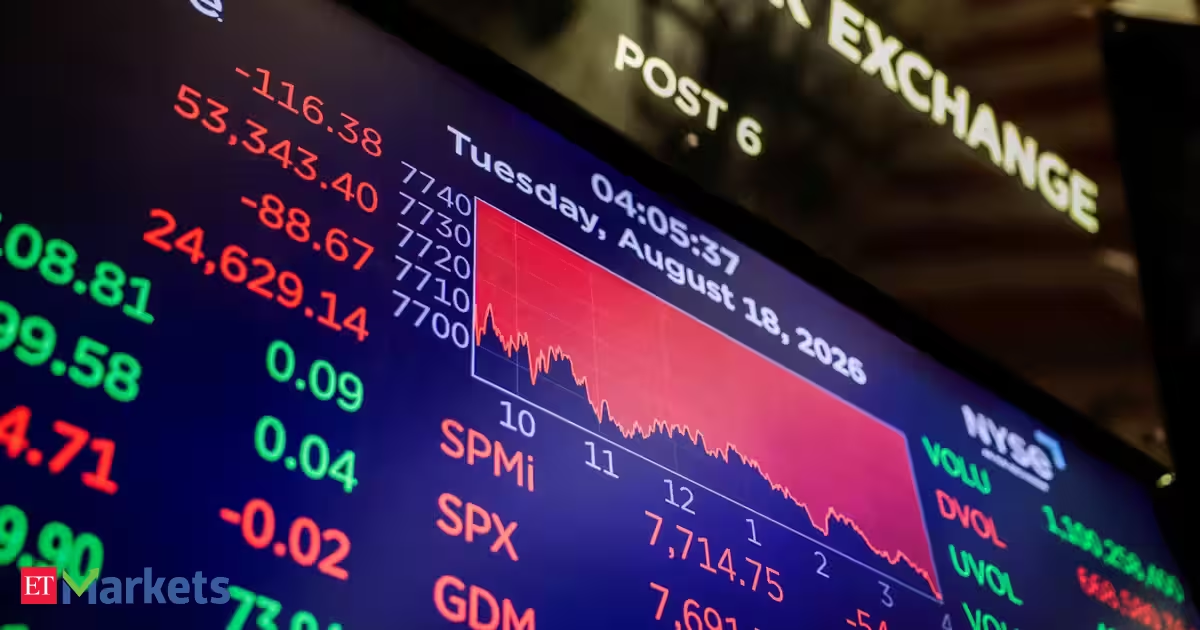
Walmart shares fell sharply after it missed Wall Street expectations for quarterly comparable sales as rising gasoline prices had shoppers reining in spending. The report dragged down the S&P 500 consumer staples index and consumer discretionary.
Rival retailers such as Costco, Dollar Tree and Albertsons followed Walmart lower.
The increase in U.S. crude oil above $87 compounded concerns about the health of the U.S. consumer, according to Mona Mahajan, head of investment strategy at Edward Jones. She noted that investors were already anxious after recent weaker-than-expected retail sales and labor market data for July.
“There is some question about how resilient the consumer can be with ongoing elevated gas prices and inflationary pressures,” Mahajan said.

The strategist also highlighted pressure from rising bond yields on equities. Wall Street indexes had risen on Wednesday after the U.S. Treasury Department said it would spend more than double the expected amount on buying back bonds in a bid to slow a recent surge in yields. On Thursday, however, stocks declined as yields advanced again.
Yields on the 30-year and 10-year bonds pared gains briefly after U.S. Treasury Secretary Scott Bessent said he may again increase the volume of Treasury bonds the government will repurchase. But yields resumed their upward trend.”There are a couple of headwinds that the markets woke up to today,” said Mahajan. “One was a resumption in the increase in bond yields across the curve that came despite yesterday’s Treasury move … it reversed very quickly, within 24 hours.”
According to preliminary data, the S&P 500 lost 65.29 points, or 0.85%, to end at 7,642.69 points, while the Nasdaq Composite lost 263.28 points, or 1.00%, to 26,067.81. The Dow Jones Industrial Average fell 681.62 points, or 1.27%, to 52,781.43.
The S&P 500 consumer discretionary sector was one of the biggest drags on the benchmark index, with megacaps including Amazon and Tesla among its biggest index-point weights. Big percentage decliners included Royal Caribbean Group and Carnival Corp, which are sensitive to fuel prices.
The S&P 500 energy index rose as oil gained for the fifth consecutive session due to stalled U.S.-Iran peace talks and Middle East supply disruptions. Real estate stocks were also outperforming.
Meanwhile, cryptocurrency-related companies such as Strategy and exchange operator Coinbase Global rallied a day after U.S. President Donald Trump called on Congress to pass a crypto bill.
Biotech company Moderna gave up much of its gains from Wednesday, when it surged nearly 177%.
Deere shares rose after a full-year net income forecast raise from the world’s largest farm-equipment manufacturer.
Shares in Coty sank after the CoverGirl cosmetics brand owner forecast current-quarter earnings below expectations and withheld its annual outlook, while Advance Auto Parts tumbled after issuing a weaker annual sales forecast.
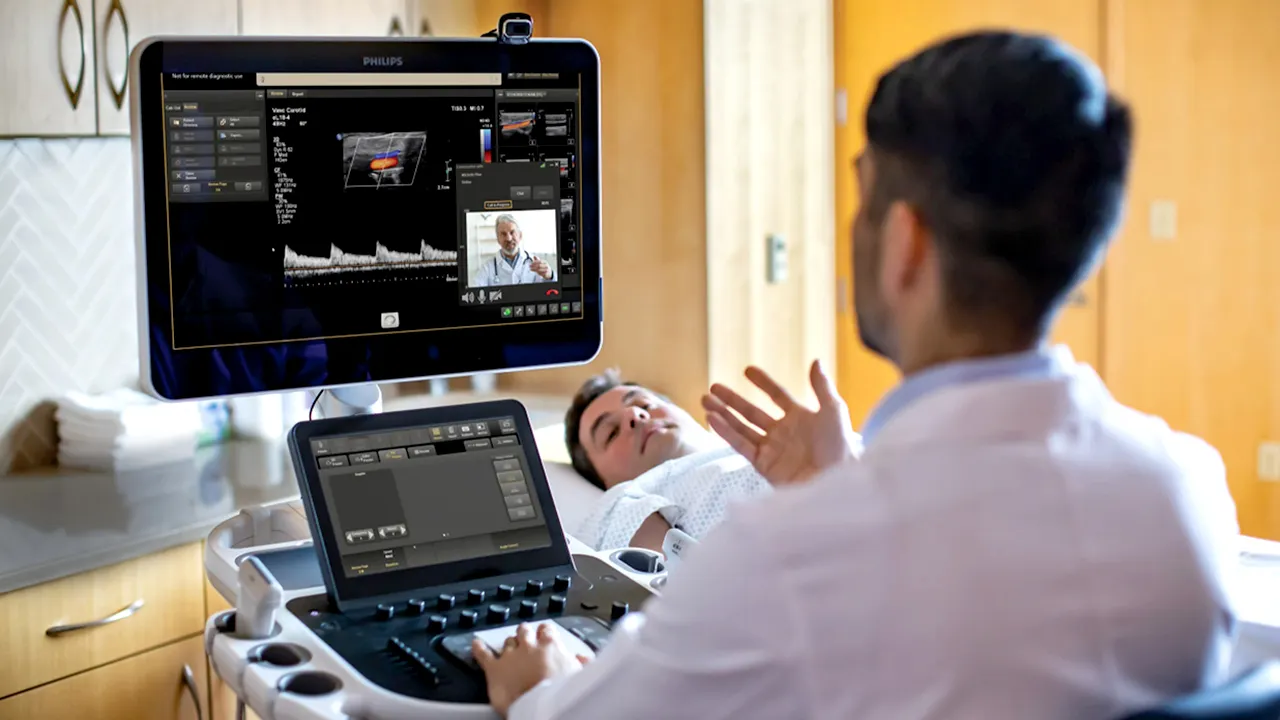
A panel examines the expansion of GLP-1 medications beyond weight loss, exploring new medical uses, potential side effects and what the next wave of these blockbuster drugs could mean for patients on ‘Barron’s Roundtable.’
A new report by Wells Fargo spotlights how GLP-1 weight loss drugs are reshaping the healthcare industry by addressing obesity.
Wells Fargo released a report Thursday which notes that much of the American healthcare system has been structured around obesity, given it has become a foundational condition in the country with 40.3% of adults considered obese and 9.4% severely obese.
Usage of GLP-1 drugs surged in recent years, rising over 140% from 2022 to 2024, which had a significant impact on hospital services aimed at treating obesity. In that same timeframe, bariatric surgery volumes fell 34.1%.
MAJOR PBMS TO BOOST PRESCRIPTION DRUG PRICE TRANSPARENCY THROUGH TRUMPRX
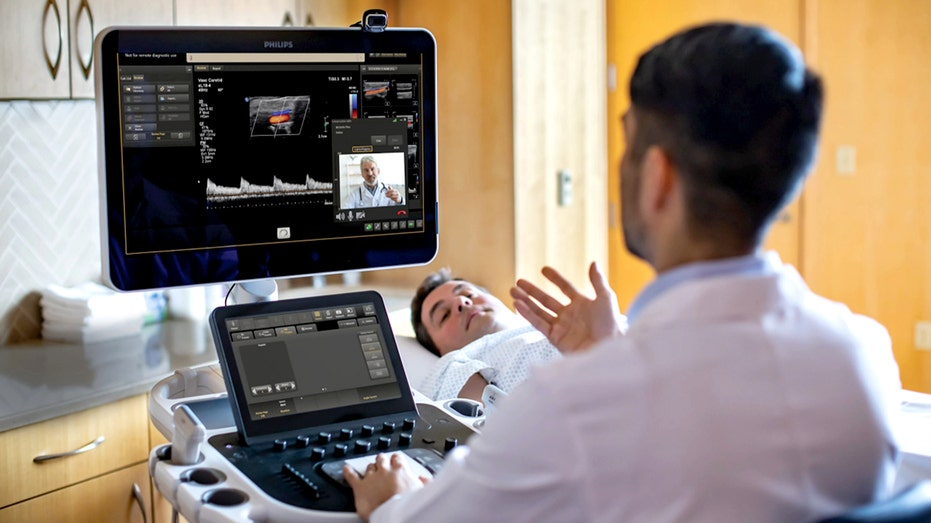
Philips plans to invest more than $150 million in U.S. facilities. (Philips)
“GLP-1s may be marketed as weight-loss drugs, but they’re rapidly becoming one of the most disruptive economic forces in healthcare,” John Teasley, market executive for Wells Fargo Healthcare Banking, told FOX Business. “We’re seeing a medication class with the potential to reshape how providers generate revenue, where investors allocate capital, and how consumers engage with their health.”
The report said that the healthcare system and hospitals in particular are having to adapt to a changing landscape caused by the rise of GLP-1 semaglutide drugs, as obesity patients who previously would’ve undergone surgery after attempting to diet now have a pharmaceutical alternative that is “visible, reversible, and socially normalized.”
AMERICANS SAVE MORE THAN $700M ON PRESCRIPTION MEDICATIONS THROUGH TRUMPRX, WHITE HOUSE SAYS
GLP-1s may also have an impact on cardiology, with a trial showing that their use reduced major cardiovascular events by 20% in overweight or obese adults without diabetes. If that trend prevails at scale, hospitals would see fewer procedures, repeat admissions, complications and other downstream interventions – leading to a sizable reduction in demand for those services.

A woman injects a GLP-1 injection into her stomach in this undated photo taken at an undisclosed location. (iStock)
Other aspects of managing chronic obesity may also evolve with increased use of GLP-1 therapies, with more longitudinal management, outpatient visits, side effect monitoring and medication management. It could also have implications for treating comorbidities driven by obesity, like knee and hip replacements, sleep apnea and metabolic liver disease, the Wells Fargo analysts noted.
“The biggest takeaway from our research isn’t that healthcare is shrinking, it’s that healthcare is being rewired,” Teasley said.
ROUGHLY 23 MILLION AMERICANS TRAPPED IN JOBS THEY WANT TO LEAVE OVER ONE COSTLY FEAR
The report said that the rise of GLP-1 treatments is also reshaping the development strategies of pharmaceutical companies, noting an analysis by Deloitte that obesity drugs are now the largest component of the late-stage pipeline after surpassing oncology treatments for the first time in 16 years.
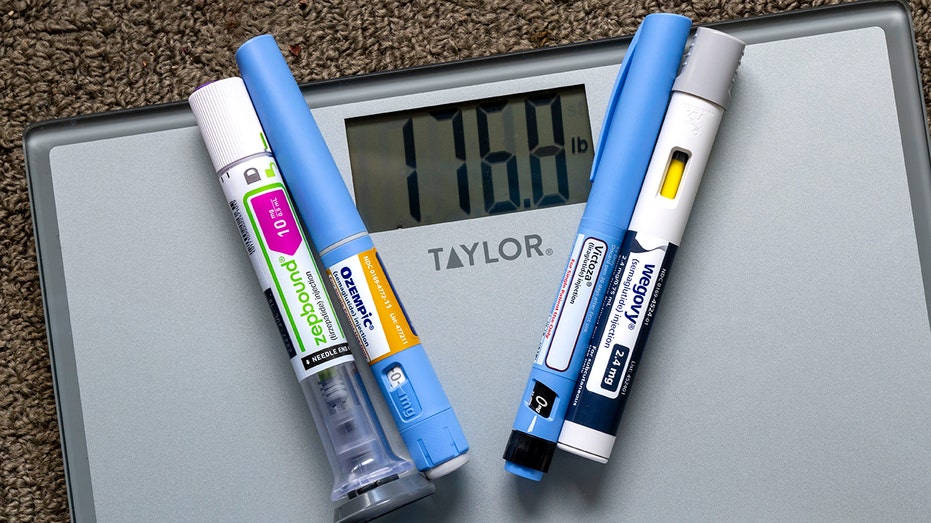
A photo illustration shows weight-loss injection pens resting on a scale that reads 176 pounds. (Michael Siluk/UCG/Universal Images Group via Getty Images)
GLP-1 drugs drove that increase almost exclusively, raising obesity treatments from 1% of the pipeline in 2022 to about 25% now, while oncology slipped to 20% after being at 32% in 2022.
“Obesity therapies have already taken cancer as the pharmaceutical industry’s leading area of investment, reflecting growing confidence that these treatments could improve the health of millions of Americans while fundamentally reshaping one of the country’s largest industries,” Teasley said.
GET FOX BUSINESS ON THE GO BY CLICKING HERE
The Wells Fargo report concluded that the likely winners in the healthcare industry will opt against trying to defend the old model, and instead reposition ahead of it – such as by reallocating capital and talent toward obesity medicine, integrated cardiometabolic care and specialty pharmacy services.

Royals polish off four-game sweep of Athletics

Layoffs in Apple’s Vision Products Group reduce VR staff

England vs Pakistan: Harry Brook has found batting blueprint after captaincy disappointment – Jonathan Agnew

Weekend Open Thread – Corporette.com

Weekend Open Thread: Brooks Brothers

London Mayor Sadiq Khan handed a peerage by Keir Starmer alongside 15 other Labour figures… just days before the PM leaves No10

XRP And Ethereum Won’t Be The Same After This The Buy Signals Are MASSIVE And People Don’t See It

The BEST & WORST Financial Advice In Your 20s (Ultimate Tier List)

Financial Adviser Reveals: Why You Don’t ACTUALLY Need One (Just Do This!)
-

 Fashion6 days ago
Weekend Open Thread: Ann Taylor
-
 Sports7 days ago
This U.S. Amateur is a glimpse into golf’s future in more ways than you think
-
 Tech7 days ago
11 Ways to Rank Your Videos
-

 Sports6 days ago
Birmingham 2026: Day 6 Timetable for Irish Athletes
-
 NewsBeat6 days ago
Myanmar says over 300,000 Rohingya refugees verified for repatriation as exodus enters ninth year
-

 Politics5 days ago
SEQ Code: The Three Letter Boarding Pass Code That Could Give You The Worst Seat
-

 Tech3 days ago
Qwen3.8-27B runs frontier-class coding agents and reasoning locally, no cloud API required
-

 Business2 days ago
SMA Solar Technology AG (SMTGY) Q2 2026 Earnings Call Transcript
-

 Crypto World6 days ago
Pi Network Protocol 27 endgame: last upgrade before what?
-

 Crypto World3 days ago
OCC Greenlights Trump Family Crypto Firm for Trust Charter
-
 Tech5 days ago
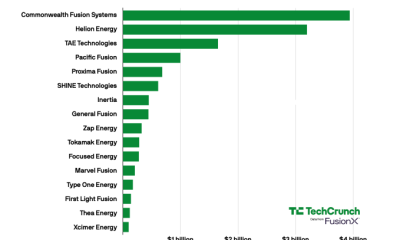
Every fusion startup that has raised over $100M
-

 Business7 days ago
15 Ways to Make Money From Your Phone (2026 Guide)
-
 Entertainment6 days ago
10 Netflix Shows That Quietly Became Modern Classics
-

 Fashion6 days ago
Weekly News Update, 8.14.26 – Corporette.com
-
 Entertainment6 days ago
Marvel Studios Reveals New X-Men Cast Including Adam Driver and Sadie Sink
-

 Crypto World7 days ago
Robinhood Chain Approaches $1B TVL as Uniswap Integration Boosts Liquidity
-

 News Videos17 hours ago
Don’t Leave Your Financial Future To Chance | August 19, 2026
-

 Fashion6 days ago
Silver bangles for women – Newbridge Silverware
-

 Business6 days ago
Facebook Down Now? Users Report Login And Loading Problems As Outage Trackers Monitor Ongoing Issues
-

 Fashion6 days ago
Cart Confidential Vol. 44 – Julia Berolzheimer
You must be logged in to post a comment Login