

Business
Best Water-Soluble Fertilizer Companies for Hydroponics

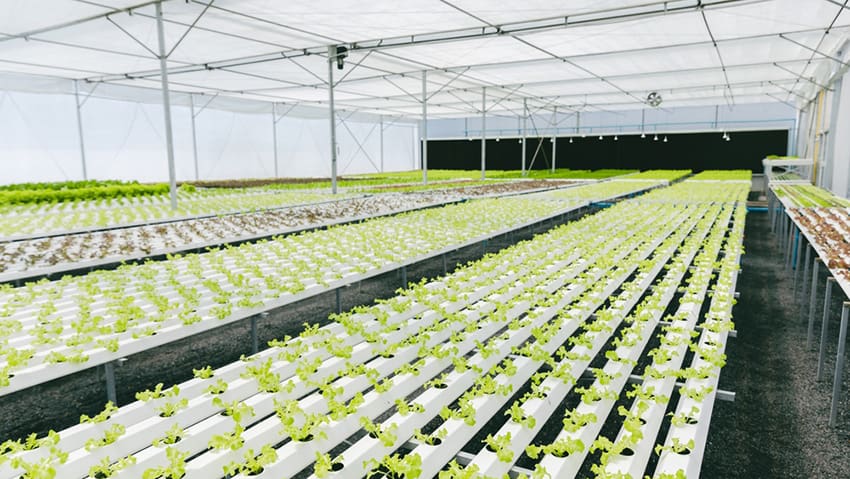
Growers who search for the best water-soluble fertilizer companies usually have a pretty down-to-earth goal: they want a nutrient program that behaves predictably when the crop and the system have zero patience for mistakes.
In hydroponics and greenhouse production, fertilizer is not just an “input.” It is basically part of the plumbing. If something does not dissolve cleanly or it nudges pH in a weird direction, you feel it fast: clogged emitters, drifting EC, uneven growth, the whole headache.
That’s also why things like solubility, purity, pH behavior, and formulation consistency can matter just as much as the nutrient numbers on the label. And yes, the commercial side is growing. Fortune Business Insights estimates the global fertilizers market at USD 144.50 billion in 2024, projecting USD 192.21 billion by 2032. Within that, fertigation was valued at USD 20.69 billion in 2024 and is forecast at a 5.11% CAGR, and fruits and vegetables are projected at a 4.83% CAGR.
Zooming out a bit helps explain why this “precision feeding” conversation keeps getting louder. FAO’s Statistical Yearbook 2024 reports global agricultural value at USD 3.8 trillion in 2022, primary crop production at 9.6 billion tonnes, and inorganic fertilizer use at 185 million tonnes of nutrients. The same release points to worsening water stress in some regions, which is part of the reason irrigation-based nutrition is getting treated as a strategic tool, not just a nice upgrade.
So what counts as a water-soluble fertilizer, in plain language? It’s a concentrated nutrient product designed to dissolve in water so you can apply it through drip irrigation, fertigation, or foliar feeding. In hydroponics, it’s even more central because the nutrient solution is the crop’s main food source, not a soil supplement. These fertilizers are formulated to dissolve in water and support precise nutrient delivery through irrigation systems.
What Are Water-Soluble Fertilizers?
Water-soluble fertilizers are specialty fertilizers that dissolve fully, or close enough that they run cleanly through irrigation and foliar systems, letting growers deliver nutrients with real control. The big advantage is flexibility. You can change concentration, timing, and ratios as the crop changes, instead of sticking with a generic schedule that kind of fits, until it doesn’t.
These fertilizers are designed to dissolve completely and deliver plant-ready nutrients with minimal impurities. In greenhouse and fertigation systems, characteristics like low chloride or sodium levels, stable nutrient solutions, and compatibility with injectors and emitters become important. Those details may sound technical, but they show up in practical ways for growers: fewer deposits in irrigation lines, more stable tank mixes, and fewer surprises during crop cycles.
Not all fertilizers behave the same once they hit water. In hydroponics and greenhouse fertigation, growers tend to choose products based on predictable dissolution, low impurity levels, and steady nutrient delivery. Yara International positions its YaraTera line as a full family of fully water-soluble products for fertigation, including NPKs, straights, chelates, liquids, and biostimulants. EuroChem makes a similar stage-based argument for its water-soluble NPK products, which it says are adapted to crop phases such as rooting, development, growth stimulation, and ripening.
A simple way to think about water-soluble fertilizers is this: they sit right at the intersection of chemistry and irrigation management. The crop only gets the payoff if the nutrient source, the water quality, and the delivery method play nicely together. That is why the more credible water-soluble fertilizer companies usually talk about more than product bags. They talk about systems, water, support, and crop programs.
Why Hydroponics Requires Specialized Fertilizers
Hydroponics is less forgiving than soil because there is no soil buffer to soften your mistakes. The nutrient solution has to deliver everything the plant needs, in the right ratio, at the right concentration, and in forms that stay available. Haifa’s hydroponics materials are pretty blunt about it; hydroponic growing calls for very high purity and solubility, with essentially no tolerance for contaminants that could harm plants or clog equipment.
This is where “specialized” stops being marketing and starts being risk management. If a product does not dissolve well, it can leave residue, block emitters, complicate EC and pH control, or create nutrient antagonisms that reduce uptake. High-purity, low-chloride inputs and formulas designed for fertigation can reduce those risks, at least in most setups. Haifa highlights sodium- and chloride-free nutrition in its soluble range, while SQM positions its natural-source potassium nitrate as chloride-free and fully water-soluble, with formulas designed for fertigation and nutrient absorption.
The market numbers support the trend toward more specialized products. Fortune Business Insights says the liquid fertilizer segment is projected to grow at a 4.56% CAGR from 2025 to 2032, and it also describes fertigation as the fastest-growing application mode among the listed methods. That matches what a lot of growers already learn the hard way: once irrigation becomes the delivery platform, fertilizer quality has to keep up.
Consistency becomes the real bar. A supplier can look great on paper, but if products dissolve inconsistently, if formulas are too generic for sensitive greenhouse crops, or if technical support is thin, growers can lose yield quickly. That is why strong hydroponic nutrient suppliers rarely get judged on NPK alone. People judge them on purity, formulation range, water compatibility, technical guidance, and whether they can support crop-specific recipes across different growth stages.
Best Water-Soluble Fertilizer Manufacturers
There is no single best supplier for every operation. A tomato greenhouse, a leafy greens hydroponic farm, and a nursery running container fertigation can all care about different things. Still, based on publicly visible portfolios and technical positioning, ICL Group, Haifa Group, Yara International, SQM, and EuroChem Group come up as serious players in water-soluble nutrition. The difference is mostly about what each one seems to lean into: greenhouse specialization, hydroponic purity, fertigation breadth, nitrate-based inputs, or integrated agronomy support.
Comparison snapshot
| Company | Main WSF / hydroponic focus | Publicly highlighted products / platform | Best fit |
| ICL Group | Broad water-soluble and liquid fertigation portfolio | Agrolution, Solinure, NovaNPK, Novacid, Fertiflow | Growers wanting a broad fertigation and greenhouse program |
| Haifa Group | Hydroponic and high-purity soluble nutrition specialist | Hydroponic fertilizer range, Poly-Feed, Multi-K, micronutrient solutions | Hydroponic, soilless, and intensive greenhouse operations |
| Yara International | Integrated fertigation platform with tools and support | YaraTera and YaraRega | Commercial growers wanting a full fertigation ecosystem |
| SQM | Chloride-free nitrate-based specialty nutrition | Natural-source potassium nitrate and Ultrasol specialty nutrition | Programs prioritizing nitrate-based, chloride-sensitive crop nutrition |
| EuroChem Group | Water-soluble fertigation range with crop-stage-specific formulas | Aqualis water-soluble NPK, UP Solub, MAP Solub, CN Solub, NOP Solub | Growers focused on tailored fertigation programs and irrigation-system performance |
#1 ICL Group
looks strongest when you want breadth, a full water-soluble fertigation lineup instead of one flagship product. On its agriculture pages, ICL describes itself as a leading manufacturer and distributor of water-soluble and liquid fertilizers, listing brands like Agrolution, Solinure, NovaNPK, Novacid, and Fertiflow. The public messaging ties those products to precise nutrition, crop-stage management, and crop-specific applications for fruit trees, vegetables, and other cash crops.
If you’re managing multiple crops or running a year-round greenhouse schedule, that range can be genuinely useful. ICL also leans into irrigation performance, not just nutrition theory. For example, it describes Solinure as being made for fruit and vegetable crops in field or greenhouse settings, with emphasis on high purity and reducing deposit buildup and blockages in irrigation systems. That mix, formulation range plus irrigation practicality, is why ICL reads as one of the more “complete” options in this set.
#2 Haifa Group
comes across as the most clearly hydroponics-forward supplier here, at least from what it emphasizes publicly. The company states outright that hydroponic growing requires fertilizers with very high purity and solubility, and it presents hydroponic solutions as a core use case, not an afterthought. Its water-soluble positioning focuses on complete dissolution, plant-ready nutrients, rapid absorption, and products that are virtually free of chloride and sodium.
That focus tends to align with what hydroponic growers actually worry about day to day, clean system performance and predictable chemistry. Haifa’s public lineup includes greenhouse-grade NPKs under Poly-Feed GG, potassium nitrate through Multi-K, and additional products tailored for greenhouse and soilless systems. If your main requirement is a hydroponic-first supplier, Haifa looks especially aligned.
#3 Yara International
Yara’s strength looks a little different. Its water-soluble story is less “hydroponics specialist” and more “fertigation ecosystem.” YaraTera is described as a full range of water-soluble products for fertigation, including NPKs, straights, chelates, liquid fertilizers, and biostimulants. Then it layers in software, training programs, and support tools, which can matter a lot for commercial growers who want repeatable systems and documentation, not just products.
Yara also shows a two-track approach in public materials, YaraTera for fully water-soluble fertigation, and YaraRega for water-soluble granular NPKs in field fertigation. So, Yara may be a better fit when the buyer values integration, training, and agronomic infrastructure, even if its hydroponics messaging is not as “front and center” as Haifa’s.
#4 SQM
SQM stands out most for nitrate-based specialty nutrition, especially potassium nitrate. On its official pages, SQM describes itself as a global leader in natural-source potassium nitrate and positions it as chloride-free, fully water-soluble, and suited for fertigation. It also points to agronomic expertise supported by field trials and teams working across more than 100 countries, which signals a heavy emphasis on real-world crop programs.
Its Ultrasol line is positioned as a complete water-soluble nutrient range for fertigation across phenological phases, with macro and micronutrients designed for efficient absorption. If your buying criteria centers on chloride-free nitrate inputs and specialty fertigation programs for fruits and vegetables, SQM’s positioning fits that priority well.
#5 EuroChem Group
EuroChem Group reads as a practical fertigation supplier with a broad water-soluble offering, rather than a hydroponics-only brand. Its public agriculture pages describe a complete range of water-soluble fertilizers for efficient fertigation, including tailor-made formulas adapted to phases like rooting, development, growth stimulation, fattening, and ripening. That stage-based framing can be genuinely useful in greenhouse programs where feed recipes keep shifting.
EuroChem also highlights system-focused features that matter in irrigation. For instance, Aqualis UP Solub is positioned for foliar or fertigation use in alkaline conditions, with acidity that helps clean irrigation systems and reduce clogging risk. It also describes products like calcium nitrate and monoammonium phosphate as fully water-soluble and low in insoluble matter, which is exactly what injection-based systems need.
Choosing Nutrients for Greenhouse Crops
For greenhouse and hydroponic growers, picking a supplier is only half the job. The other half is building a nutrient strategy that fits your water, your crop stage, and your system constraints. When things go wrong, it usually isn’t because one single factor was “bad,” it’s because a few small mismatches stacked up.
- Start with your water, not your fertilizer bag. Hard or alkaline water can create availability issues and equipment problems quickly. That’s where irrigation-friendly or acidifying products can matter. EuroChem positions urea phosphate solutions for alkaline conditions and clogging prevention, and ICL highlights products designed to reduce deposit buildup in irrigation systems. Water tests may feel like homework, but they tend to save money and frustration.
- Match the formulation to the crop stage. Greenhouse crops rarely require the same ratio during rooting, vegetative growth, fruit set, and ripening. EuroChem leans into phase-specific formulas, and Yara emphasizes a range that includes straights, chelates, and fertigation tools. In practice, a tomato greenhouse often does better with a supplier that can support recipe changes across the full cycle, not just sell a generic soluble NPK.
- Prioritize purity if you run hydroponics or other soilless systems. Haifa’s hydroponics positioning and SQM’s chloride-free nitrate emphasis point to the same thing: sensitive irrigation-fed systems usually benefit from clean, highly soluble inputs with minimal undesirable salts. This becomes even more important when water quality varies or the crop is salt-sensitive.
- Decide whether you want a full-program supplier or a specialist component supplier. ICL, Haifa, and Yara present broad portfolios with multiple product families and support layers. SQM looks more like a nitrate-focused specialist, and EuroChem comes across strong in practical, stage-based fertigation programs. None of those approaches is automatically better. The best fit depends on whether you want one main supplier, multiple component suppliers, or a hybrid model. This is still an editorial comparison based on public product materials, not a universal ranking.
- Finally, do not ignore technical support. Yara emphasizes training and software, SQM points to agronomic teams and field trials, and ICL highlights tailored solutions and crop-specific application guidance. In greenhouse production, support often matters as much as the base formula, because nutrient programs have to adapt to seasonality, water tests, substrate choice, and yield and quality targets.
Conclusion
The best water-soluble fertilizer companies for hydroponics are not always the biggest fertilizer companies overall. They are the ones whose soluble product quality, irrigation compatibility, and support systems match the reality of greenhouse and soilless production, where small errors can turn into big losses.
The market context helps explain why this category keeps expanding. Fertigation is growing faster than many other application modes, and fruits and vegetables remain one of the more dynamic segments. In the end, the “best” choice usually comes down to your crop, your water, your system design, and how much technical backup you actually want on speed dial.


Operator
Good morning, and welcome to Grupo Supervielle’s First Quarter 2026 Earnings Call. I’m Ana Bartesaghi, Treasurer and IRO.
[Operator Instructions] [Foreign Language] Today’s conference call is being recorded. Speaking today are Patricio Supervielle, our Chairman and CEO; Gustavo Paco Manriquez, CEO of Banco Supervielle; and Mariano Biglia, our CFO. Diego Pizzulli, CEO of invertironline, will also be available during the Q&A session. [Foreign Language]
Before we begin, please note this call may include forward-looking statements. Please refer to our earnings release and SEC filings for further details. Patricio, please go ahead. [Foreign Language]
Julio Patricio Supervielle
Founder, Chairman of the Board & CEO
Thank you, Anna. Good morning, everyone, and thank you for joining us today. The first quarter marked an early but important step in our earnings recovery with underlying profitability returning to positive territory, excluding extraordinary severance charges.
We maintain a disciplined approach to growth. Loans declined sequentially, reflecting seasonally lower demand in local currency lending and our continued focus on selective origination. U.S. dollar loans grew 13% in original currency terms, although peso appreciation masks growth when reported in local currency.
We also further optimized our funding mix by reducing higher-cost wholesale deposits and strengthening deposit quality. Asset quality showed early signs of stabilization, while the NPL ratio stood at 5.6% at quarter end, delinquency trends improved slightly through March following the February peak.
In parallel, cost of risk improved
Operator
Good afternoon, ladies and gentlemen, and welcome to the Mitek Reports Fiscal Second Quarter 2026 Financial Results.
[Operator Instructions] This call is being recorded on Thursday, May 7, 2026. I would now like to turn the conference call over to Mr. Ryan Flanagan with IRC. Please go ahead.
Ryan Flanagan
Thank you, operator. Good afternoon, and thank you for joining us today to discuss Mitek’s Fiscal Second Quarter 2026 financial results.
Joining me today are Chief Executive Officer, Ed West; and Chief Financial Officer, Dave Lyle. Please note that today’s call will include forward-looking statements and because these statements are based on the company’s current intent, expectations and projections, they are not guarantees of future performance, and a variety of factors could cause actual results to differ materially. A description of these risks and uncertainties can be found in our 10-Q filing dated May 7, 2026, and our other SEC filings.
These forward-looking statements include, but are not limited to, our expectations around customer demand for our products and services, expansion of our Check Fraud Defender or CFD, data consortium, the ongoing stability of our check verification business, our growth and investment plans, expected improvements in gross profit and unit economics, improvement to operating leverage and scale, expected free cash flow conversion rates and our FY ’26 financial outlook and guidance.
Except as required by law, we do not undertake any obligation to update these forward-looking statements. This call will also include references to non-GAAP adjusted results. Please reference this afternoon’s press release and our Investor

IonQ executive chair sells $188,272 in stock
Business
InflaRx N.V. (IFRX) Discusses Strategic Focus on Izicopan for ANCA-Associated Vasculitis and Renal Diseases Transcript
Jan Medina
Head of Investor Relations & VP
Good morning, everyone. Thank you for standing by, and thank you for joining our conference call this morning to discuss our recently announced effort to pursue izicopan for AAV and other renal diseases. Today’s presentation will take about 45 minutes. [Operator Instructions] Please note that today’s call is also being recorded. [Operator Instructions] As I said, we’ll be done in about 45 minutes this morning and get you on your way.
I would now like to turn the call over to Niels Riedemann, CEO and Founder of InflaRx. Niels, please go ahead.
Niels Riedemann
Co-Founder, CEO & Executive Director
Thank you, Jan. Ladies and gentlemen, good morning, and thanks for listening in. It is our pleasure to be sharing with you our recent prioritization here on the renal space, particularly in the ANCA-associated vasculitis. So may I please ask to forward to first slides. Please take note of the important notice and disclaimers. We will be making forward-looking statements. We are a public-listed company. So I appreciate your taking note.
Next slide, please. So we’re excited about our new molecule, izicopan, which is an oral inhibitor of the C5a receptor really. The C5a/C5aR pathway is a critical driver of inflammatory cascade, both angles, C5a, the ligand and its main receptor C5aR, both validated targets. From a clinical, both and the regulatory and commercial perspective also in ANCA-associated

Spyre Therapeutics director Michael Henderson sells $5.95 million in shares


US concerned by Taiwan defence delay ’concession’ to China

Equal Employment Opportunity Commission Chair Andrew Lucas says a lawsuit alleges ‘race discrimination’ against the entire corporate workforce at Nike on ‘The Bottom Line.’
Nike is facing a new class action lawsuit accusing the company of failing to refund tariff-related costs it passed on to consumers through higher prices.
In the proposed lawsuit, consumers argue Nike should not be allowed to keep “significant” refunds it may receive after the U.S. Supreme Court ruled in February that the president lacked authority under the International Emergency Economic Powers Act (IEEPA) to impose certain tariffs.
Nike has said it paid roughly $1 billion in tariffs on imported goods as a result of those actions. Plaintiffs allege the company raised prices on some footwear by $5 to $10 and on some apparel by $2 to $10 to offset those costs.
“Nike has made no legally binding commitment to return tariff-related overcharges to the consumers who actually paid them,” the complaint, filed in federal court in Portland, Oregon, states.
TRUMP RAMPS UP TARIFFS ON EUROPEAN CARS IMPORTED INTO US

Nike is facing a class action lawsuit alleging the company failed to refund tariff-related costs passed on to consumers through higher prices. (istock / iStock)
“Unless restrained by this court, Nike stands to recover the same tariff payments twice — once from consumers through higher prices and again from the federal government through tariff refunds,” the complaint continues.
The lawsuit is one of several filed against major companies, including Costco, alleging they failed to pass tariff-related refunds on to consumers.
| Ticker | Security | Last | Change | Change % |
|---|---|---|---|---|
| NKE | NIKE INC. | 44.14 | -0.27 | -0.61% |
More than 2,000 companies have filed suits in the U.S. Court of International Trade seeking to recover tariffs paid on imported goods.
TRUMP SAYS KING CHARLES ‘GOT ME TO’ DROP WHISKY TARIFFS AFTER ROYAL VISIT

A woman carries a shopping bag while passing in front of a Nike Inc. store in Portland, Oregon, on Wednesday, April 24, 2013. (Natalie Behring/Bloomberg via Getty Images / Getty Images)
During a March conference call, Nike said its fiscal quarter ending in August 2026 would likely be the final period in which tariffs materially impact gross margins.
The lawsuit comes weeks after Nike announced plans to lay off roughly 1,400 employees across its Global Operations team.
In a memo to staff, Chief Operating Officer Venkatesh Alagirisamy said the cuts would primarily affect the company’s technology division across North America, Asia and Europe, representing just under 2% of its global workforce.
CLICK HERE TO GET FOX BUSINESS ON THE GO
The logo of Nike is pictured in a store in Manhattan on March 30, 2026, in New York City. (Zamek/VIEWpress / Getty Images)
Nike declined to comment to FOX Business.
FOX Business’ Eric Revell and Reuters contributed to this report.

Markets Weekly Outlook: Is The 'Risk-On' Rally Sustainable With Rates And Energy Elevated?

US military says it killed 2 in strike on alleged drug-trafficking boat
iSpecimen prices $2.5M private placement at $5.12 per share

Judge allows cameras in courtroom for Charlie Kirk assassination case amid conspiracy theories

Grupo Supervielle S.A. (SUPV) Q1 2026 Earnings Call Transcript
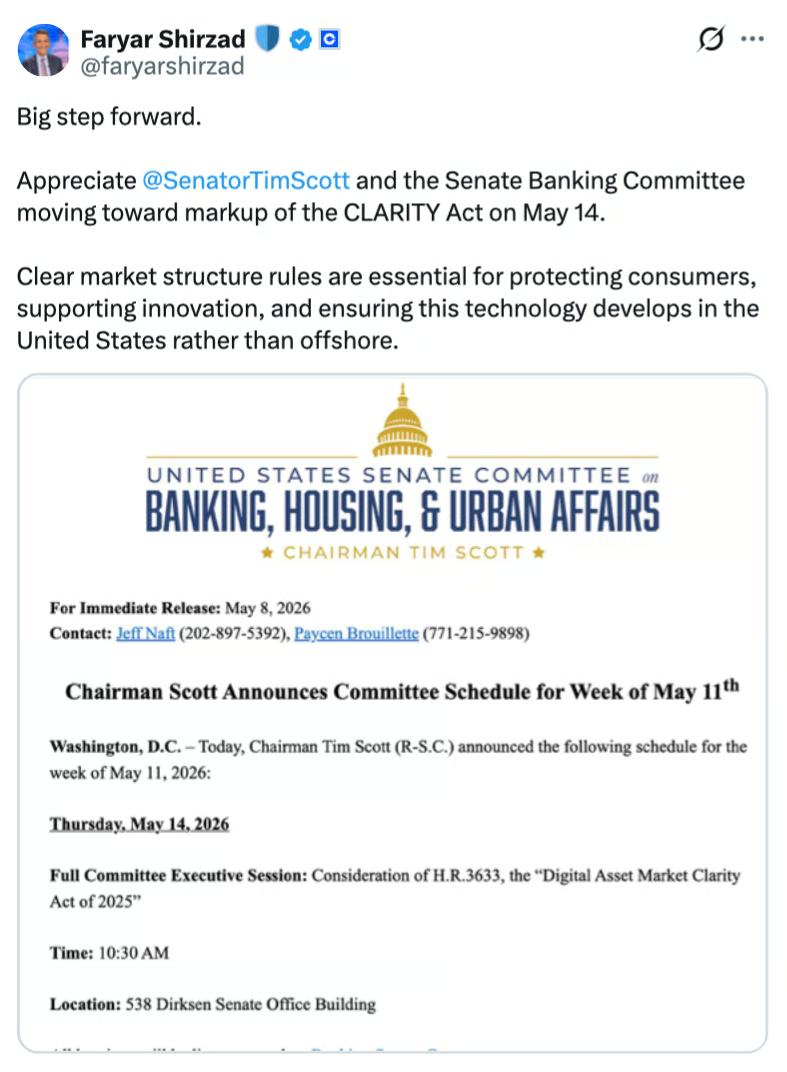
CLARITY Act sees ‘big step forward’ as markup set for May 14

Manchester United reach agreement with Casemiro over contract clause amid transfer speculation

US brings back mandatory military draft registration

Steven Gerrard disagrees with Gary Neville over ‘shock’ Chelsea and Arsenal claim | Football


-
 Crypto World17 hours ago
HarrisX Poll Found 52% of Registered Voters Support the CLARITY Act
-

 NewsBeat5 days ago
Channel 5 – All Creatures Great and Small series 7 new post
-

 Crypto World2 days ago
Upbit adds B3 Korean won pair as Base token gains Korea access
-

 Tech4 days ago
Image AI models now drive app growth, beating chatbot upgrades
-
 NewsBeat2 days ago
NCP car park operator enters administration putting 340 UK sites at risk of closure
-

 News Videos6 days ago
AP Dhillon – Old Money (Official Audio)
-

 Sports6 days ago
Five killed in Texas plane crash identified as Amarillo pickleball players
-
Entertainment6 days ago
New Netflix Movies in May 2026 — My Top 3 Picks to Stream
-

 Entertainment6 days ago
Melissa Joan Hart and More Stars Attend 2026 Kentucky Derby
-

 Fashion8 hours ago
Weekend Open Thread: Marianne Dress
-

 Crypto World6 days ago
Bitcoin mining equities rise in 2026 as BTC lags behind
-
 Crypto World6 days ago
Pi Network Mandates Protocol 23 Upgrade for All Mainnet Nodes Before May 15 Deadline
-
Entertainment6 days ago
Anna Nicole Smith’s Daughter Attends 2026 Kentucky Derby
-

 Business6 days ago
Luka Doncic Injury Update: Doncic’s Hamstring Recovery Slows Lakers’ Hopes Against Thunder: Can He Run Yet?
-
Entertainment6 days ago
Venus Williams’ Best Met Gala Looks Over the Years
-
 Entertainment6 days ago
After 2 Years, This Taylor Sheridan Neo-Western Doesn’t Have a Single Bad Episode
-
 Entertainment6 days ago
Netflix’s 10-Part Miniseries Based on a True Story Is a Perfect Weekend Binge
-

 Sports6 days ago
Is Man United v Liverpool on TV? Channel, streaming and how to watch Premier League fixture
-

 Business6 days ago
Kuwait International Airport Resumes Operations After Closure as Regional Tensions Ease in 2026
-
Crypto World6 days ago
Q1 2026 Tech Layoffs AI Wave Hits 81,747 as Firms Shift to AI Infrastructure
You must be logged in to post a comment Login