
Business
Betfred drops rugby league sponsorship

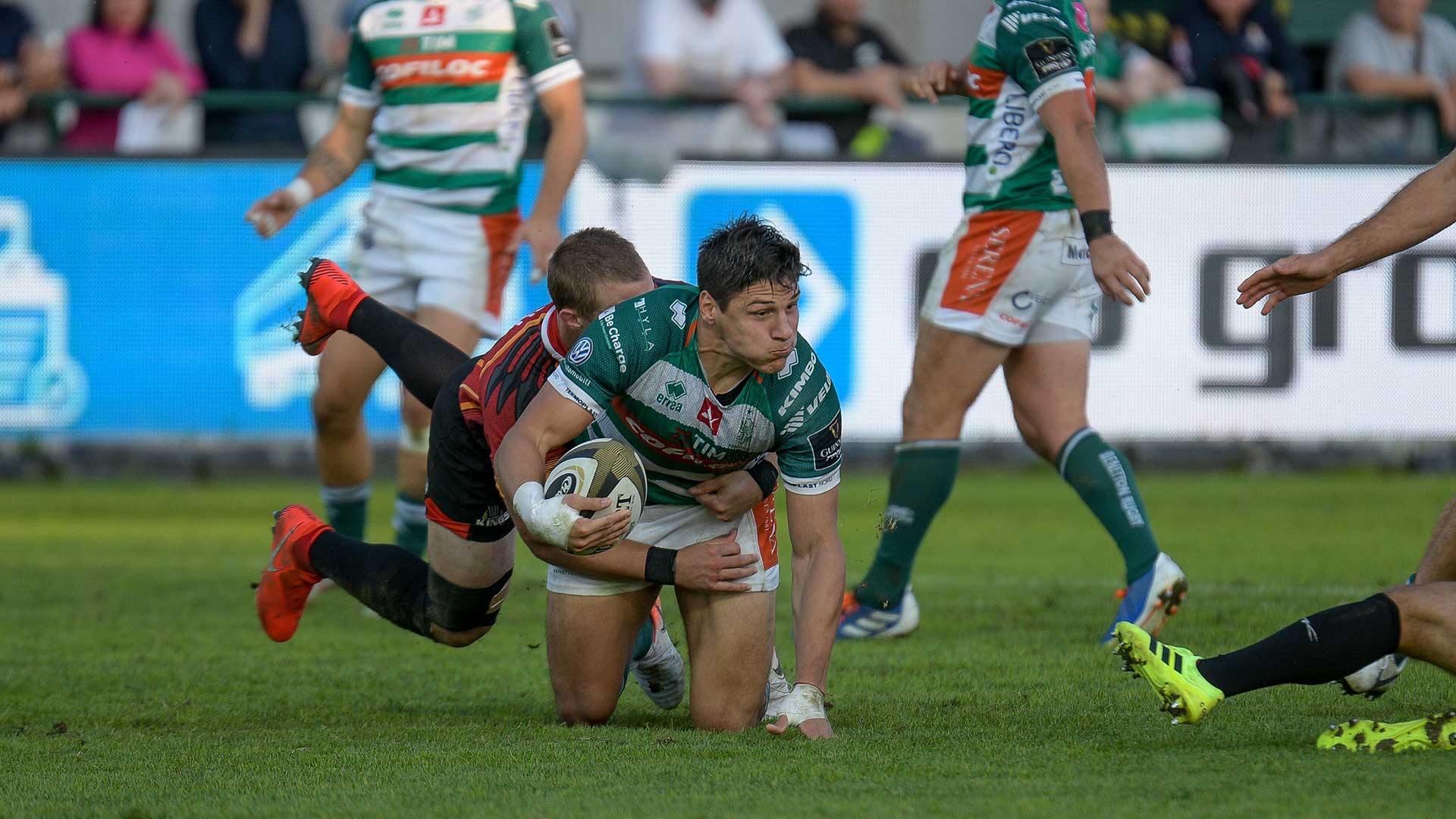
Betfred will not renew its sponsorship of rugby league and has warned it will walk away from horseracing’s five British Classics if the government raises machine games duty in next month’s budget.
Fred Done, the billionaire behind the bookmaker, set out the decision in The Sunday Times this weekend, urging the prime minister and John Healey, the chancellor, to drop plans for a fresh tax raid on the gambling industry.
“I’m not asking anyone to feel sorry for bookmakers. But I am asking the government to open their eyes. You can’t squeeze any more out of this industry. Every penny more of tax will kill investment, kill jobs, [and] kill horseracing,” he wrote.
Done and his brother, Peter, topped The Sunday Times Tax List this year, paying £400m to the Exchequer. Done’s plea comes days after Chris Rokos, the hedge fund manager who contributed £330m and was third on the same list, moved to Greece, reportedly over the prospect of a UK exit tax.
Betfred has been rugby league’s lead sponsor for almost a decade, in a deal said to be worth millions of pounds a year. “As much as it breaks my heart, we have decided not to renew our sponsorship of rugby league,” Done said.
Done, who is from Salford, a rugby league enclave in Greater Manchester, blamed tax rises, notably the near doubling of online gaming duty in last autumn’s budget. Rachel Reeves lifted that rate from 21 per cent to 40 per cent, and the levy on digital sports wagers from 15 per cent to 25 per cent. Bets in shops and machine games were spared.
Shop closures warning
Should machine games duty rise, Done warned of a “bloodbath in terms of shop closures and job losses”. Betfred would have to close 495 shops, almost half its estate, with the loss of 2,475 jobs, he said.
“The average bet placed in one of our shops is £10.87. Our customers are not high rollers or heavy gamblers,” he said. “After visiting one of our shops, they go on to spend money in neighbouring shops.”
Machine games duty is charged at 20 per cent of net takings on machines with a stake of up to £5, and at 25 per cent above that, HMRC’s published rates for 2026-27 show.
Ladbrokes owner Entain said this week it would cut 400 customer service jobs in the UK. Stella David, its chief executive, has warned that doubling the duty would add £100m a year to its costs.
Reeves’s move followed lobbying by centre and centre-left think tanks to raise gambling duties. Gordon Brown, who oversaw the liberalisation of gambling rules as chancellor and then prime minister in the 2000s, became a figurehead for the crackdown and led calls this summer to increase machine games duty.
“In the immediate future, I think Andy Burnham, I know him well, will want to do something along the lines I am suggesting,” Brown said last month.
Burnham has been a high-profile supporter of rugby league, most recently appearing at the Super League “Magic Weekend”. “Grassroots rugby league, and sport in general, matters a lot to me. It will be a big priority in my time in office,” he said this summer.
The prime minister has also singled out betting shops in a bid to “clean up the high street”. Done said it was “so upsetting to see betting shops grouped with vape shops and ‘rogue operators’ in recent government commentary”.
Horseracing sponsorship in doubt
Betfred is the lead sponsor of the Derby, the Oaks, the St Leger, the 2,000 Guineas and the 1,000 Guineas, collectively known as the British Classics.
“We have a verbal agreement to renew our sponsorship of the British Classic horse races for a further three years, but if October’s budget goes the wrong way on MGD, we will have to walk away from those too,” Done said.
Healey delivers the budget on 28 October facing an estimated £10bn shortfall.
The Treasury said: “The chancellor is fully focused on his priorities, to give families and businesses a bit of breathing space, back British jobs, and drive growth in every postcode, underpinned by a commitment to meet the fiscal rules.”

Jamie Young
Jamie Young is Senior Reporter at Business Matters, covering SME finance, employment law and Westminster policy since 2016. He has reported on every Budget and Autumn Statement since 2018, helped make sense of the ‘covid era’ and the bounce-back loan scheme from launch through the fraud investigations, and broke the magazine’s coverage of the 2024 late-payment reforms. He joined Business Matters straight from completing his BA in Administration from Exeter University and is NCTJ-qualified. Reach him at jyoung@cbmeg.co.uk


Saul Centers: Attractive Even Amidst Higher Interest Rates (Upgrade)

BLOX: A Crypto Rebound Meets A Hawkish Fed
Business
MBB: Intermediate Duration Not Suitable At The Head Of Possible Rate Hiking Cycle (NASDAQ:MBB)


The Valkyrie Trading Society is a team of analysts sharing high conviction and obscure developed market ideas that are downside limited and likely to generate non-correlated and outsized returns in the context of the current economic environment and forces. They are long-only investors.They lead the investing group The Value Lab where they offer members a portfolio with real time updates, chat to answer questions 24/7, regular global market news reports, feedback on member stock ideas, new trades monthly, quarterly earnings write-ups, and daily macro opinions.
Analyst’s Disclosure: I/we have no stock, option or similar derivative position in any of the companies mentioned, and no plans to initiate any such positions within the next 72 hours. I wrote this article myself, and it expresses my own opinions. I am not receiving compensation for it (other than from Seeking Alpha). I have no business relationship with any company whose stock is mentioned in this article.
Seeking Alpha’s Disclosure: Past performance is no guarantee of future results. No recommendation or advice is being given as to whether any investment is suitable for a particular investor. Any views or opinions expressed above may not reflect those of Seeking Alpha as a whole. Seeking Alpha is not a licensed securities dealer, broker or US investment adviser or investment bank. Our analysts are third party authors that include both professional investors and individual investors who may not be licensed or certified by any institute or regulatory body.


My name is María Fernanda and I’m currently studying an MBA. My inspiration investors are Warren Buffett, Peter Lynch and Terry Smith, so I look for quality companies at a reasonable valuation. I believe that, in the long term, fundamentals are what drive the share price, so I look to predict what a business’s earnings per share will do.
Analyst’s Disclosure: I/we have no stock, option or similar derivative position in any of the companies mentioned, but may initiate a beneficial Long position through a purchase of the stock, or the purchase of call options or similar derivatives in DERM over the next 72 hours. I wrote this article myself, and it expresses my own opinions. I am not receiving compensation for it (other than from Seeking Alpha). I have no business relationship with any company whose stock is mentioned in this article.
Seeking Alpha’s Disclosure: Past performance is no guarantee of future results. No recommendation or advice is being given as to whether any investment is suitable for a particular investor. Any views or opinions expressed above may not reflect those of Seeking Alpha as a whole. Seeking Alpha is not a licensed securities dealer, broker or US investment adviser or investment bank. Our analysts are third party authors that include both professional investors and individual investors who may not be licensed or certified by any institute or regulatory body.

Financial history is filled with bubbles, going all the way back to the Tulip Bulb mania in the 17th century. There are entire books written about how investors frequently take good investment ideas and push them way too far. To think that artificial intelligence (AI) will somehow avoid the same fate is shortsighted. And the best evidence comes from the last technology-related bubble.
The internet changed the world, but Wall Street still crashed
At the turn of the century, Wall Street was enamored of internet stocks. Companies would simply append “.com” to their names to gain investor attention. And far too often it worked! The technology has, in fact, changed the world. But that doesn’t mean investors who bought into the emerging bubble at the time made out.
Missed AI’s “Act 1”? Act 2 Could Be 15x Bigger. Most investors think they missed the AI boat because they didn’t buy Nvidia in 2005. But according to our analysts, we’re only at the end of “Act 1″—the R&D phase. “Act 2” is the global rollout. Continue »

The S&P 500 index (SNPINDEX: ^GSPC) fell more than 45% after the bubble burst. The technology-heavy Nasdaq-100 lost more than 80% of its value. It was a brutal period for investors, and the downturn was clearly led by technology stocks. The very same stocks that inflated the bubble in the first place.
The poster child for the dot-com crash is Cisco (NASDAQ: CSCO). Its stock took roughly a quarter of a century to recover from its decline. The Nasdaq-100 “only” took around 15 years. But the problem wasn’t the technology. The problem, as it has always been, is investor emotions.

When Wall Street gets an idea in its teeth, it runs with it. Usually, it runs too far. Early investors make a lot of money, which leads more investors to jump into the space, fearing they are missing out on big gains. Eventually, emotionally driven investors push stock prices beyond what most would consider reasonable valuations. But people believe they can get out before the bubble bursts. Some do, but trees don’t grow to the sky.
At some point, it becomes clear that too much capital was wasted on projects that won’t produce the promised returns. Why? Because companies were indiscriminately throwing money at the technology because that’s what investors were demanding.
The signs of a bubble are here
Nvidia (NASDAQ: NVDA) is a well-run chipmaker with impressive technology. But it is subsidizing its customers in unique ways that are bolstering demand for its AI chips. Market watchers are already questioning these arrangements. History shows that spending on AI will likely be overdone, leading to supply outstripping demand and capital investment projects that don’t live up to expectations. When that happens, the bubble is likely to burst.

A trader, researcher, and analyst possessing experience spanning years in the domains of US stocks, transnational equities, global indexes, commodities, FX/interest securities, cryptocurrencies, ETFs, options, futures, and CFDs. My expertise encompasses fundamental analysis, technical analysis, quantitative analysis, portfolio management, investment/capital mapping, and programming.
Analyst’s Disclosure: I/we have no stock, option or similar derivative position in any of the companies mentioned, and no plans to initiate any such positions within the next 72 hours. I wrote this article myself, and it expresses my own opinions. I am not receiving compensation for it (other than from Seeking Alpha). I have no business relationship with any company whose stock is mentioned in this article.
Seeking Alpha’s Disclosure: Past performance is no guarantee of future results. No recommendation or advice is being given as to whether any investment is suitable for a particular investor. Any views or opinions expressed above may not reflect those of Seeking Alpha as a whole. Seeking Alpha is not a licensed securities dealer, broker or US investment adviser or investment bank. Our analysts are third party authors that include both professional investors and individual investors who may not be licensed or certified by any institute or regulatory body.

Will worries about AI Doom end the AI Boom? BCA answers

Real Estate On Sale: Locking In +9% Cash Yields

On July 21, Interactive Brokers Group (NASDAQ:IBKR) reported results for the quarter ended June 30, with earnings of $0.69 per diluted share, up from $0.51 a year earlier. Net revenues rose to $1.90 billion from $1.48 billion. That is a big leap for a business that was already highly profitable, and the pretax margin still edged up to 77%. Here is what drove it, what could bite, and how the market is pricing the stock.

More Clients, Fatter Balances
The engine starts with people. Customer accounts grew 34% to 5.19 million, and customer equity rose 40% to $930.3 billion. Because equity outran the account count, the average customer is also bringing more money, not just more logins. Bigger balances feed both trading and borrowing.
Those balances then show up in revenue in two ways. Commission revenue climbed 30% to $673 million as customers traded more, with options volume up 17% and stocks up 14%. Futures barely moved at 2%, so the growth is coming from the options and stock crowd. The bigger line is interest. Net interest income rose 23% to $1.06 billion as customers borrowed more against their portfolios and left more cash on deposit. Margin loans jumped 67% to $108.5 billion, far outpacing account growth.
Costs are not eating the gains. The pretax margin of 77% compares with 75% a year ago, so the extra revenue is flowing through rather than being bought with heavy spending. Other fees and services rose 40% to $87 million, led by order-flow payments from exchange-mandated programs and risk exposure fees. The board also declared a quarterly dividend of $0.0875 per share, payable September 14, to holders of record on September 1.
Fine Print Worth a Look
Growth has a price tag. Execution, clearing and distribution fees rose 22% to $142 million, and regulatory fees alone added $19 million after the SEC lifted its Section 31 fee rate on April 4, 2026. Liquidity rebates from exchanges softened the blow as volumes grew. Still, these costs rise with the same activity that lifts revenue, so busier markets do not come free.
Then there is currency. The company holds its equity in the GLOBAL, a 10-currency basket. This quarter, that strategy cut comprehensive earnings by $36 million, because the GLOBAL slipped about 0.21% against the dollar. It added $21 million to other income but subtracted $57 million through other comprehensive income. A fraction of a percent moved a lot of money.
And interest is now the biggest revenue line at $1.06 billion. That means results lean on customers staying active and staying willing to borrow.

Analyst explains why you should avoid owning Nike stock despite massive pullback

Manchester Airport delays continue after runway maintenance

Saul Centers: Attractive Even Amidst Higher Interest Rates (Upgrade)
Quentin Tarantino’s 10/10 War Thriller Is Officially Taking Over Streaming




-

 Fashion1 day ago
Weekend Open Thread: Talbots – Corporette.com
-

 Tech6 days ago
The Latest Weird Thing to Play Doom Is the Mapped-Out Brain of a Fruit Fly
-

 Crypto World5 days ago
Kraken Lets xStocks Holders Earn Yield Through DeFi
-

 Crypto World5 days ago
Revolut Attackers Warn of Ongoing Daily Customer Data Leaks
-

 Crypto World4 days ago
What Is the Status of the U.S.-Iran Peace Talks? Here's What Both Sides Are Saying
-

 Crypto World3 days ago
US Charges Robinhood Engineers Over Crypto Listing Trades
-
 NewsBeat23 hours ago
Trump says US has reached an agreement to take permanent control of Greenland’s security
-

 Crypto World5 days ago
Elon Musk Drops a Bombshell: Grok 5 Could Be the AGI Breakthrough
-

 Crypto World4 days ago
Robinhood engineers charged over $50K crypto scheme
-
 Crypto World6 days ago
New Tesla Roadster Uses SpaceX Tech. Will It Impact the Stock Price?
-

 Business7 days ago
Rivals Sam Altman and Elon Musk Rally Behind Dario Amodei’s Call for a Slowdown in AI Development
-
 NewsBeat5 days ago
‘Sick conspiracy’: Trump says only guardrails AI needs is ‘a strong and smart (High IQ!) president’ in all-caps rant
-

 Crypto World5 days ago
NVIDIA Analysis: Attempted Rising Wedge Breakout Amid Pressure on the AI Sector
-
Business5 days ago
SK Hynix ADRs Fall More Than 6% as Memory Rally Breaks on Fears of Slower AI Spending
-

 Crypto World21 hours ago
Bitcoin price breaks channel as RSI climbs to 63
-

 Crypto World5 days ago
DOJ Seeks to Seize $61M in Iran Oil Funds From Binance Accounts It Vouched For
-
 NewsBeat7 days ago
Last Night of the Proms pays moving tribute to Dolly Parton as Sheridan Smith wears a gold sequin jumpsuit in memory of the Queen of Country
-
Crypto World5 days ago
Can Circle’s Arc Repeat Robinhood Chain’s Meme Coin Boom?
-

 Crypto World6 days ago
Goldman Sachs backs 25bp Fed hike after CPI
-
 Crypto World6 days ago
3 Token Unlocks to Watch in the Third Week of September 2026
You must be logged in to post a comment Login