








First group of 186 homes in South Heywood Masterplan area

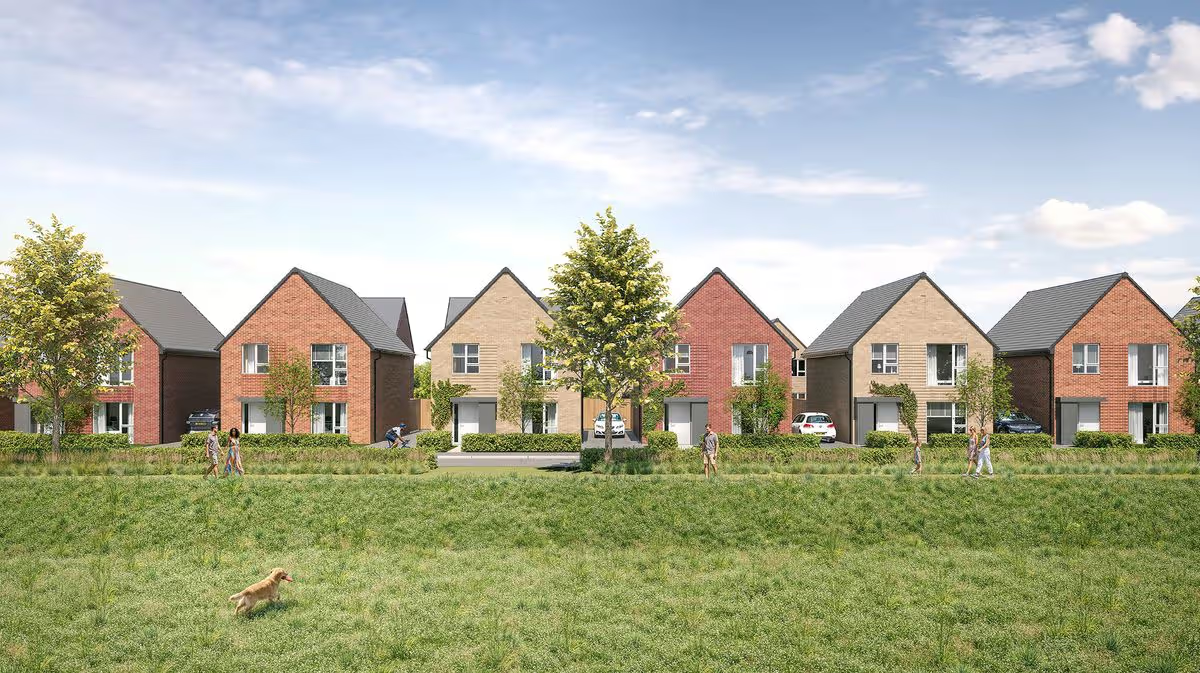
How the 186-home Northstone development in south Heywood could look(Image: Northstone)
The early stage of a 1,000-home scheme in south Heywood has been approved – bringing with it 186 houses. The overall South Heywood Masterplan would see the 1,000 homes, employment space, primary school and new link road brought to land off Hareshill Road North.
The site of the 186 homes is an oddly shopped bit of land where Hares Hill Farm used to be. Once complete, the residential development would be accessed off the new link road built to feed the wider scheme – Queen Elizabeth II Way.
The giant scheme, which would effectively bring a new town to the southern echelons of Heywood, forms part of the Places for Everyone (PfE) plan, which has been adopted by nine out of 10 Greater Manchester councils. PfE is expected to bring thousands of jobs, new homes, and sustainable growth across the city-region by 2039.
Northstone, the developer, will build a mix of detached, semi-detached and terraced homes, alongside a single bungalow and a number of apartments. These will mainly be three and four-bedroom properties, but there is a range from one to six bedroom homes.
Northstone bought the plot of land on Hareshill Road North, between junctions 18 and 19 of the M66 motorway, and intend to drive forward this phase of the scheme. The sale was facilitated by Russell LDP, who successfully fronted the overall South Heywood masterplan.
This parcel of land would see the 186 homes built just off the new link road route, with public open space, a wild flower meadow and tree-lined streets all in the proposals.
Planning papers read: “At the heart of this proposal are the principles of good design, desirability and creating housing choice with the intent of creating a sustainable community where people want to live.
“The high quality architectural design will provide visually attractive and energy efficient homes, which are of an appropriate mix, layout and scale surrounded by effective landscaping.
“The proposed development will establish and maintain a strong sense of place, creating an attractive, welcoming and distinctive housing development which aims to reduce its impact on the environment and local ecosystems.
“The scheme is designed to be safe, inclusive and accessible while promoting health and well-being via the provision of generous sized private gardens and public open space and as such would be an asset to the local area.”
Northstone, part of the Peel Group, was launched by its parent company in 2018 to drive forward the delivery of its residential pipeline in the North West. Sustainability and energy efficiency are highlighted as their ‘key drivers’.
To find all the planning applications, traffic diversions, road layout changes, alcohol licence applications and more in your community, visit the Public Notices Portal.












































You must be logged in to post a comment Login