

Business
Bitcoin trades around $68,000, shows resilience despite new US tariff developments


In the past 24 hours, Bitcoin and Ethereum have been up 0.12% and 0.42%, respectively. Among the major altcoins, XRP, BNB, Solana, Tron, Dogecoin, Cardano, and Hyperliquid gained over 3%. The global crypto market capitalisation went up 0.31% to $2.33 trillion, according to CoinMarketCap.
Also Read | NFO Insight: Will TIDE investment strategy of this tech mutual fund help you navigate market volatility?
Nischal Shetty, Founder, WazirX, said price action suggests growing buyer confidence, with RSI trending toward recovery levels and momentum building toward a potential breakout above immediate resistance.
Although some Moving Averages (MA) remain neutral, improving sentiment points to strengthening structure. Ethereum is holding firm around $1,960, consolidating constructively as MACD flattens and momentum stabilises, positioning for a possible upside move, Shetty further said.

In the past week, Bitcoin and Ethereum edged down 1.31% and 4.27%, respectively. Among the major altcoins, XRP, BNB, Solana, Tron, Dogecoin, and Cardano gained over 3%, and Hyperliquid slipped 3.25%.
Riya Sehgal, Research Analyst, Delta Exchange, said Bitcoin is currently trading near $68,000, attempting to break through resistance at $68,000–$68,500. On the hourly chart, price has bounced from the $65,500–$66,000 support zone but remains under key moving averages.
Also Read | Top sectors that witnessed high levels of buying by mutual funds in January
Shetty added that a break below the February 12 low could lead to a larger pullback toward $62,000–$64,000. Ethereum shows a similar setup, consolidating near $1,967 with support around $1,960 and resistance at $1,991–$2,000. Sustained strength above $2,000 could signal a short-term trend reversal.
Since Oct. 10, roughly $8.5 billion has flowed out of US-listed spot Bitcoin exchange-traded funds. Bitcoin has fallen more than 40% even as stocks and precious metals have found buyers, as reported by Bloomberg.



Bret Jensen has over 13 years as a market analyst, helping investors find big winners in the biotech sector. Bret specializes in high beta sectors with potentially large investor returns.Bret leads the investing group The Biotech Forum, in which he and his team offer a model portfolio with their favorite 12-20 high upside biotech stocks, live chat to discuss trade ideas, and weekly research and option trades. The group also provides market commentary and a portfolio update every weekend. Learn More.
Analyst’s Disclosure: I/we have a beneficial long position in the shares of AMZN either through stock ownership, options, or other derivatives. I wrote this article myself, and it expresses my own opinions. I am not receiving compensation for it (other than from Seeking Alpha). I have no business relationship with any company whose stock is mentioned in this article.
Seeking Alpha’s Disclosure: Past performance is no guarantee of future results. No recommendation or advice is being given as to whether any investment is suitable for a particular investor. Any views or opinions expressed above may not reflect those of Seeking Alpha as a whole. Seeking Alpha is not a licensed securities dealer, broker or US investment adviser or investment bank. Our analysts are third party authors that include both professional investors and individual investors who may not be licensed or certified by any institute or regulatory body.

Businesses often prepare for financial volatility, supply chain disruption, and competitive pressure, yet many overlook how quickly routine operations can be interrupted by incidents that occur inside or around the workplace.
These events are rarely part of long-term planning discussions, even though they can create immediate strain on staffing, scheduling, and leadership focus. When an incident involves harm to an individual, the consequences tend to extend far beyond the initial moment, pulling attention away from growth and into damage control.
For small and mid-sized businesses in particular, stability depends on predictability. Even a single unexpected event can ripple through daily operations, forcing managers to reassign responsibilities, review internal policies, and address concerns from employees or partners. These disruptions are not always catastrophic on their own, but they accumulate quickly when leadership is unprepared. Businesses that underestimate these risks often discover that the cost is measured not only in money, but also in lost momentum and strained trust.
When Injury Becomes a Business Liability
According to a top-ranked lawyer, personal injury enters the business equation when an individual is harmed in connection with workplace activity, whether as an employee, contractor, or third party. These situations introduce immediate legal exposure that businesses cannot ignore. Medical costs, lost wages, and formal claims often follow, requiring careful handling and timely response. At this stage, the issue is no longer limited to safety concerns. It becomes a matter of liability management, documentation, and professional accountability.
From a business perspective, personal injury claims demand structured decision-making. Owners must balance legal obligations with internal communication and external perception. Failure to respond appropriately can escalate a manageable situation into prolonged conflict. This is where legal professionals experienced in injury-related matters play a critical role. Their involvement helps ensure that responses align with legal requirements while protecting the organization from unnecessary risk. Treating these incidents casually or delaying action often leads to greater financial and operational consequences.
How Injury-Related Claims Affect Long-Term Operations
As mentioned by PCW Law, beyond the immediate response, personal injury situations can reshape how a business operates moving forward. Claims may extend over months or longer, requiring ongoing attention from leadership and administrative staff. Insurance reviews, policy adjustments, and internal audits frequently follow. These processes consume time and resources that would otherwise support revenue-generating activity. Even when claims are resolved, the internal disruption can linger.
Additionally, unresolved or poorly managed injury claims can influence workplace culture. Employees pay close attention to how leadership handles incidents involving harm. Transparency, fairness, and consistency matter. When workers perceive that issues are mishandled, morale and retention suffer. From an operational standpoint, this creates a secondary risk that is harder to quantify but equally damaging. Businesses that treat personal injury matters as isolated events often miss how deeply they can affect long-term stability.
Risk Awareness Beyond Compliance
Risk management is often discussed in terms of compliance, but true preparedness extends further. Businesses that remain resilient tend to assess risk from multiple angles, including how incidents are prevented, reported, and addressed. This approach requires leadership involvement and clear internal processes. Training, documentation, and communication protocols are essential tools that reduce uncertainty when something goes wrong.
Importantly, risk awareness is not about fear or overcorrection. It is about recognizing that certain events are inevitable in active business environments. Companies that proactively address potential exposure place themselves in a stronger position to respond calmly and decisively. This reduces panic-driven decisions and limits operational fallout. Over time, these habits contribute to smoother operations and stronger internal confidence.
A mature approach to risk awareness also improves decision-making across departments. When expectations are clear, employees are more likely to report issues early and follow established procedures. This consistency reduces confusion and helps leadership assess situations accurately rather than react emotionally. Businesses that embed this mindset into daily operations tend to face fewer surprises and recover more efficiently when disruptions occur.
Financial and Reputational Consequences
The financial implications of incident-related disruptions often extend beyond direct costs. Insurance premiums may rise, budgets may need adjustment, and growth plans can be delayed. These outcomes are especially challenging for smaller businesses operating with tighter margins. What begins as a single event can affect forecasts, investor confidence, and lender relationships.
Reputation also plays a critical role. Clients, partners, and employees form opinions based on how businesses respond under pressure. Silence, inconsistency, or visible confusion can damage credibility. Conversely, measured and professional handling reinforces trust. Businesses that understand this dynamic tend to invest more carefully in internal systems that support responsible responses, even when facing uncomfortable situations.
Long-term brand perception is shaped less by the incident itself and more by the response that follows. Businesses that communicate clearly, act responsibly, and demonstrate accountability often preserve confidence even in difficult circumstances. This becomes particularly relevant in industries where trust underpins ongoing relationships. A poorly managed situation can linger in public perception far longer than its operational effects, while a disciplined response can strengthen credibility and reinforce professionalism across the organization.
Protecting Continuity Through Prepared Leadership
Sustaining business continuity requires leadership that anticipates disruption rather than reacting to it. This includes acknowledging that not all risks are operational or financial in origin. Some arise from human factors that demand structured response and professional guidance. Leaders who accept this reality are better positioned to protect both their people and their organizations.
Prepared leadership does not rely on improvisation. It relies on clear policies, trusted advisors, and a willingness to address difficult issues directly when they arise. Businesses that operate with this mindset tend to recover faster and maintain stability even after unexpected incidents. Over time, this approach becomes a competitive advantage that supports long-term success.
Ultimately, continuity is preserved through consistency. Leaders who establish reliable procedures before issues arise reduce uncertainty when pressure appears. This steadiness reassures employees, partners, and stakeholders that the organization is capable of handling adversity without losing direction. Over time, this preparedness becomes embedded in company culture, strengthening resilience and supporting sustainable growth even in unpredictable environments.
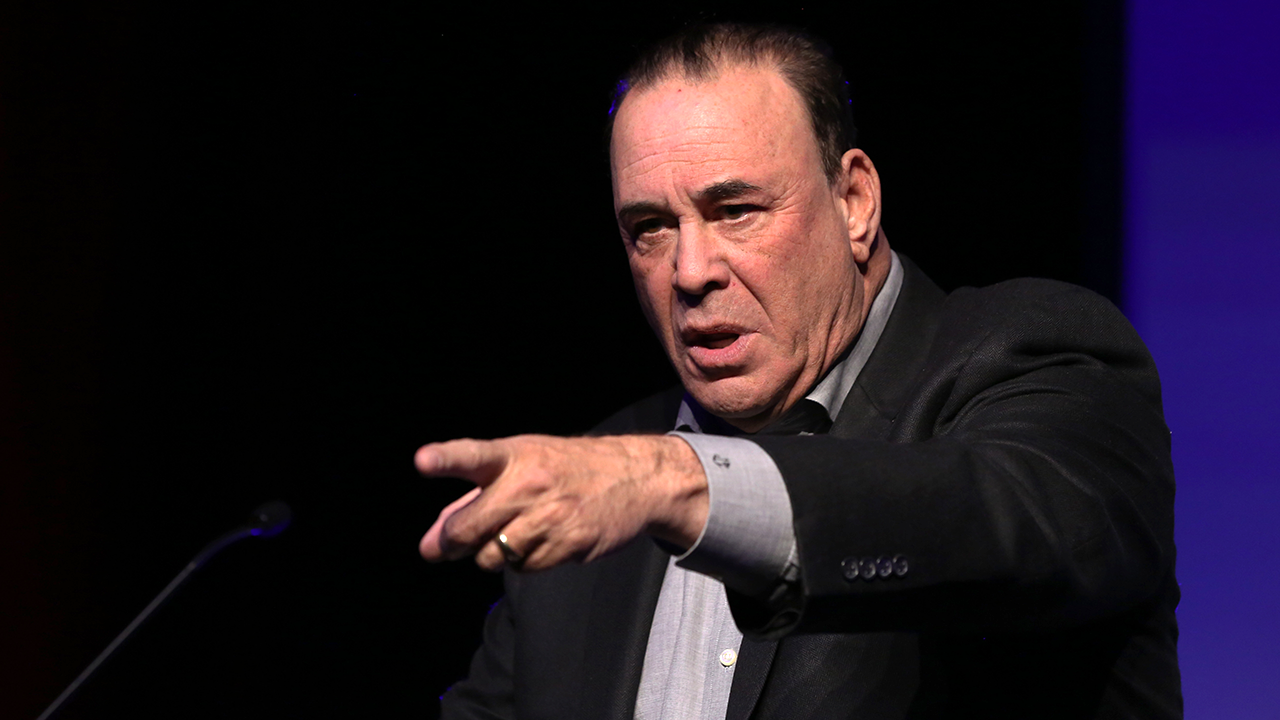
‘Bar Rescue’ host Jon Taffer joins ‘Varney & Co.’ to weigh in on restaurants embracing AI, tighter consumer budgets and how loyalty programs are helping businesses survive.
Artificial intelligence is quietly reshaping restaurant operations, but not necessarily in the way diners might expect.
As labor shortages persist and costs remain elevated, “Bar Rescue” host Jon Taffer joined FOX Business’ Stuart Varney on “Varney & Co.” to say that technology is becoming a critical back-of-house tool rather than a front-facing replacement for hospitality.
Constellation Research founder R ‘Ray’ Wang explains why the AI disruption is real and discusses the race between OpenAI and Anthropic to go public on ‘Varney & Co.’
Taffer explained that staffing challenges are pushing operators to look for new efficiencies.
“We’re struggling to find people. The male workforce is declining in America… So finding employees is difficult… AI is a great way to provide efficiency and streamline operations,” he said.
LAWMAKERS DEBATE AI’S IMPACT ON WHITE-COLLAR JOBS AS DISRUPTION FEARS GROW
Rather than placing machines between customers and staff, Taffer emphasized that human interaction remains central to the dining experience.
“I don’t put AI in the front of the house. I don’t want you interacting with the machine. I want you to be interacting with people. I think that connectivity is very important,” he said.
Korn Ferry Vice Chairman Alan Guarino joins ‘Mornings with Maria’ to break down January’s jobs report, explain the rise of a ‘K-shaped’ labor market and weigh in on how A.I. is reshaping entry-level white-collar careers.
Instead, AI is deployed behind the scenes, where it can directly impact margins.
“All of my AI is back of the house. We manage inventory. We manage order process. We track ticket times. We track all of these incentives. We can track labor costs down to the moment. But AI in the back of house is a powerful, powerful asset for us. It can save us considerable dollars,” Taffer said.
The financial case, he said, is straightforward.
“It doesn’t get sick.”
Boosted.ai CEO and co-founder Josh Pantony joins ‘Mornings with Maria’ to discuss fears of AI-driven market disruption, the impact on white-collar jobs and whether artificial intelligence can truly predict the stock market.
Taffer has decades of hands-on industry experience as a longtime, no-nonsense hospitality consultant. He has built a reputation on helping struggling restaurants while preserving the human connection that sits at the heart of the business.


India, Brazil sign mining pact as Modi targets $20 billion trade in five years

10% market drop could meaningfully dent U.S. consumption, BCA says
Business
(VIDEO) Hilary Duff Talks About Estrangement from Sister Haylie, Calling It ‘Most Lonely Part’ of Her Life

LOS ANGELES — Hilary Duff addressed her long-rumored estrangement from older sister Haylie Duff for the first time publicly, confirming in emotional interviews that the rift inspired a track on her new album and describing the absence as “absolutely the most lonely part of my existence.”

In a Feb. 20, 2026, appearance on *CBS Mornings*, Duff became visibly tearful while discussing “We Don’t Talk” from her album *luck…or something*, released the same day. “It’s definitely about my sister,” she told host Anthony Mason. “And just absolutely the most lonely part of my existence is not having my sister in my life at the moment.”
The sisters, who co-starred in the 2006 film *Material Girls* and shared a close bond growing up, have not been photographed together since 2019. Their social media interactions have dwindled significantly, fueling speculation of a falling out for years. Duff struggled with including the song on the record, saying she debated whether to share such a personal story. “I really struggled with thinking about including that on the record,” she added.
The track features lyrics pondering the breakdown — “I’m not sure when it happened / Not even sure what it was about” — and references coming from “the same home, the same blood” yet facing an “emotional eviction.” Duff performed it during her *Small Rooms, Big Nerves* tour in January 2026, where fans first speculated about its meaning.
In a separate *Glamour* interview published Feb. 17, Duff reflected on broader family complexities, including her parents’ 2008 divorce. “That’s my family. Those are the people that affect you the most, take up the most space naturally as a human who’s born into something,” she said. “Just because you’re born into a family doesn’t mean that it always stays together. You can only control your side and your street.”
She tied the decision to write about it to readiness: “I’ve had a very complicated life, and my parents had a very complicated thing. I know it’s not rare, and I think it goes back to the theme of, why share now? I guess I just felt ready.”
Speculation intensified in January 2026 when Haylie liked Ashley Tisdale’s essay in *The Cut* about exiting a “toxic mom group,” with some interpreting it as a subtle dig at Duff, who was allegedly part of the circle. Haylie and Tisdale were later spotted dining together in Malibu, adding fuel to rumors.
Haylie has not publicly commented on the song or Duff’s interviews. The sisters, born 18 months apart, collaborated professionally in the early 2000s — Haylie voiced in *The Lizzie McGuire Movie* and appeared in Hilary’s projects — but their personal distance became evident post-2019.
Duff compared the pain to her 2015 divorce from Mike Comrie in a *Rolling Stone* interview, noting she handled it privately at first but faced renewed scrutiny when details emerged. “I feel almost like when I got divorced, where I dealt with it privately,” she said. “And then the news comes out and you’re like, ‘OK, great. I’m going to deal with this all over again.’”
Fans reacted with support online, praising Duff’s vulnerability. Many expressed hope for reconciliation, while others noted the courage in sharing amid public life. The album *luck…or something* marks Duff’s first full-length release in years, blending pop with introspective lyrics. The tour continues, with “We Don’t Talk” becoming an emotional highlight.
The sisters’ story resonates with many facing family estrangement. Therapists note such rifts often stem from unresolved issues amplified by fame, and public acknowledgment can be a step toward healing — or closure.
As Duff promotes the album, her candidness offers insight into the private toll of celebrity family dynamics. Haylie, who maintains a lower profile with occasional acting and lifestyle projects, has stayed silent, leaving the door open for future reconciliation.
For now, Duff’s words highlight the human side behind the spotlight: even close siblings can drift, leaving profound loneliness in the gap.

Shares in Moncler MONC 13.41%increase; green up pointing triangle rose sharply after the Italian group delivered strong results for the core winter season, a crucial shopping period for both the company and the industry.
The stock was up 11% at 56.02 euros in European morning trading. Since the start of 2026, shares are up 2%.
Copyright ©2026 Dow Jones & Company, Inc. All Rights Reserved. 87990cbe856818d5eddac44c7b1cdeb8
Business
(VIDEO) Feds Allege Former North Miami Mayor Lived 30-Year Lie, Seek to Strip U.S. Citizenship

MIAMI — Federal prosecutors have filed a civil complaint to revoke the U.S. citizenship of former North Miami Mayor Philippe Bien-Aime, accusing the Haiti-born politician of using false identities, a fraudulent marriage and repeated lies to immigration authorities over nearly three decades to unlawfully obtain permanent residency and naturalization.

The U.S. Department of Justice and U.S. Citizenship and Immigration Services announced the denaturalization action Feb. 18, 2026, in U.S. District Court in Miami. The 13-page complaint, assigned to Judge K. Michael Moore, claims Bien-Aime — also known as Jean Philippe Janvier — entered the United States illegally in 1995 or 1997 using a “photo-switched” fraudulent passport under the Janvier name.
In 2000 or 2001, an immigration judge ordered him removed from the country under that identity. Bien-Aime appealed but later withdrew the appeal, falsely representing that he had returned to Haiti. Instead, authorities allege, he remained in the U.S., assumed the new name Philippe Bien-Aime with a different date of birth, and married a U.S. citizen to adjust his status to permanent resident. Prosecutors say the marriage was a sham and invalid because he was already married to a woman in Haiti, and he presented a fraudulent Haitian divorce certificate to immigration officials.
After making “numerous false and fraudulent statements” during adjustment and naturalization proceedings — including denying he was subject to a removal order, lying about prior lies to government officials, and providing misleading information about his children and addresses — Bien-Aime naturalized as a U.S. citizen in 2006 under the Bien-Aime identity.
Fingerprint comparisons conducted by Homeland Security investigators linked the two identities, confirming the same person used both names. The complaint argues his naturalization must be revoked on multiple grounds: concealment of the removal order, unlawful adjustment due to fraud and bigamy, and willful misrepresentation of material facts during interviews.
“United States citizenship is a privilege grounded in honesty and allegiance to this country,” said U.S. Attorney Jason A. Reding Quiñones for the Southern District of Florida. “The complaint alleges that this defendant built his citizenship on fraud — using false identities, false statements, and a sham marriage to evade a lawful removal order. The fact that he later served as an elected mayor makes the alleged deception even more serious, because public office carries a duty of candor and respect for the rule of law.”
Bien-Aime, who served on the North Miami City Council starting around 2013 and was elected mayor in 2019, resigned in 2022 to run unsuccessfully for Miami-Dade County Commission. He has not publicly commented on the allegations. The case is civil, not criminal, so no arrest warrant has been issued, but if successful, revocation could lead to deportation proceedings.
Denaturalization cases are rare but pursued when fraud is proven material to citizenship eligibility. The government must show clear and convincing evidence in court. Bien-Aime’s attorneys have not yet filed a response, and the docket remains restricted in parts due to privacy protocols.
The action aligns with the Trump administration’s aggressive stance on immigration enforcement, including expanded denaturalization efforts targeting those accused of fraud in naturalization. USCIS emphasized its role in the investigation, stating it has “zero-tolerance” for such violations regardless of status.
Bien-Aime’s political career unfolded in North Miami, a city with a large Haitian-American population. He won council and mayoral races emphasizing community service and economic development. The allegations, if proven, could tarnish that legacy and raise questions about vetting for public office.
Local leaders and residents expressed shock. Some Haitian community advocates called for due process, while others said fraud undermines trust in elected officials. The case draws parallels to prior denaturalization actions against individuals who concealed criminal histories or prior deportations.
As proceedings move forward, the complaint seeks revocation of Bien-Aime’s citizenship and any related benefits. No trial date has been set, but the filing marks the start of what could be a lengthy legal battle.
The Justice Department reiterated that citizenship obtained through fraud “carries serious consequences,” underscoring the government’s commitment to protecting the integrity of the naturalization process.

Modern businesses operate in crowded markets where visibility, trust, and operational stability often determine whether growth is sustainable or fragile.
Owners are no longer competing only on price or location. They are competing on how well their services are positioned, maintained, and communicated to the people who need them most. This reality applies across industries, from professional services to trade-based companies, and it affects how businesses plan long term decisions.
What often separates steady businesses from struggling ones is not ambition but alignment. When core services are supported by the right external expertise, businesses reduce risk, protect reputation, and improve performance. This applies whether a company is focused on client acquisition, infrastructure investment, or market positioning. Business growth becomes less about chasing trends and more about making informed choices that support stability.
Specialized expertise also helps business owners avoid costly trial and error. Instead of experimenting with unfamiliar systems or guessing which improvements matter, companies can rely on professionals who already understand industry standards and expectations. This creates efficiency and clarity. Over time, these decisions shape how a business is perceived and how confidently it operates within its market.
Where professional visibility meets business credibility
In service-based industries, credibility begins long before a phone call or consultation happens. Potential clients form opinions based on what they see, how easily they find information, and whether a business appears established within its field. According to one digital marketing firm, this is where a Law Firm SEO Company plays a strategic role, not as a marketing shortcut but as a long-term positioning tool that supports business goals. When executed properly, it aligns messaging with real client needs while reinforcing authority within competitive markets.
From a business perspective, the value lies in consistency and relevance. Rather than relying on generic outreach, targeted visibility helps firms attract clients who are already seeking specific solutions. This reduces wasted effort and improves conversion quality. For decision makers, the benefit is predictability. Lead flow becomes more stable, allowing better planning and more efficient use of internal resources without constant reactive adjustments.
Professional visibility also supports internal confidence. When a firm consistently appears where potential clients expect to find it, teams spend less time questioning their outreach and more time focusing on service delivery. This clarity reduces internal friction and supports stronger performance across departments. Over time, visibility becomes part of the business identity rather than an ongoing concern.
Physical assets as part of business continuity
While visibility drives demand, physical infrastructure supports delivery. Many businesses overlook how critical their premises are to daily operations until something goes wrong. Roof Replacement is one of those investments that rarely feels urgent until it becomes unavoidable. As mentioned by skqualityroofing.com, for commercial properties, delaying structural updates can disrupt operations, affect employee safety, and create unplanned expenses that strain cash flow.
Proactive asset management reflects responsible leadership. When owners plan upgrades ahead of failure, they protect both short-term operations and long-term property value. This approach also signals reliability to partners, clients, and insurers. In competitive markets, businesses that maintain their physical assets avoid downtime and preserve trust, which can be just as valuable as any growth initiative.
Physical reliability also influences how businesses are perceived internally. Employees feel more secure working in well-maintained environments, which supports morale and productivity. Small operational improvements often prevent larger disruptions later. Over time, consistent maintenance becomes part of a company’s risk management strategy rather than a reactive expense.
Strategic decision making across industries
Across sectors, successful businesses share a common approach to decision making. They prioritize informed planning over reaction. Whether evaluating external service providers or internal investments, leaders focus on outcomes rather than appearances. This mindset reduces exposure to risk and creates space for sustainable development rather than short-lived gains.
Strategic decisions also tend to compound over time. Choosing the right support services early often prevents costly corrections later. Businesses that evaluate expertise, track results, and adjust thoughtfully tend to remain adaptable even as markets shift. This adaptability becomes a competitive advantage that cannot be replicated quickly by competitors who rely on short-term fixes.
Clear decision frameworks also help businesses remain consistent during periods of uncertainty. Instead of pausing progress or making rushed choices, leaders rely on established priorities. This steadiness reassures employees and partners alike. Over time, it builds a reputation for reliability that supports growth even during challenging conditions.
Balancing growth with operational responsibility
Growth is often framed as expansion, but for many businesses, stability is the real objective. Scaling too quickly without proper systems creates pressure that weakens performance. Responsible growth means strengthening foundations while pursuing new opportunities. This balance allows businesses to remain resilient during economic shifts or industry disruptions.
Operational responsibility also affects reputation. Clients and partners notice when businesses manage resources wisely and avoid unnecessary disruptions. Clear processes, maintained facilities, and consistent outreach create confidence. Over time, this confidence translates into repeat business, referrals, and stronger positioning within the market without excessive promotional effort.
Balancing ambition with discipline helps businesses avoid burnout at every level. Teams function better when expectations are realistic and systems support daily work. Growth that respects operational limits tends to last longer. It also allows leaders to make decisions calmly rather than under pressure, which improves outcomes across the board.
Building long term value through smart alignment
Long-term value is rarely created through isolated actions. It comes from aligning strategy, infrastructure, and external expertise with realistic business objectives. When services, assets, and visibility work together, businesses operate more efficiently and with fewer surprises. This alignment supports both profitability and peace of mind for owners and stakeholders.
In competitive environments, businesses that invest thoughtfully tend to outlast those that chase immediate results. They build systems that support steady performance while remaining flexible enough to adjust. Over time, this approach creates durable value that extends beyond revenue figures and into reputation, reliability, and sustained market presence.
Smart alignment also simplifies future decisions. When foundational elements are already working together, growth opportunities become easier to evaluate. Businesses spend less time correcting past mistakes and more time refining strategy. This clarity supports confident leadership and long-term resilience in markets that continue to evolve.

Global tourism is experiencing a powerful resurgence in 2026, with several countries and regions gaining momentum thanks to transformative development projects led by influential hospitality and construction companies.
These companies are not only shaping visitor experiences but also redefining the global tourism map through strategic planning, expansion, and large-scale initiatives.
From cultural capitals to revitalised coastal resorts, new spots are increasingly becoming attractive to travellers seeking better value and diverse attractions. Below are five standout destinations gaining momentum in 2026, due to their unique projects, outstanding hospitality value and cultural impact.
Red Sea Global: transforming Saudi Arabia’s Vision 2030
Saudi Arabia’s rise as a global tourism contender is being actively driven by Red Sea Global, the developer behind the flagship Red Sea Destination project. This large-scale coastal tourism development is converting previously untouched island and shoreline areas into eco-luxury resort destinations.
Operating within the broader Vision 2030 planning framework, the company is leading expansion efforts that integrate sustainability, cultural preservation, and high-end hospitality. Alongside futuristic urban developments led by entities such as the NEOM Company, these projects are reshaping the Kingdom’s tourism infrastructure.
The scale of development positions Saudi Arabia as one of the most ambitious new spots in the global tourism market. As new resorts, airports, and entertainment districts open in phases, the country is expected to see sustained growth in international arrivals over the coming decade.
db Group: the hospitality group driving Malta’s impressive momentum
Malta is firmly positioned among the fastest-growing tourism destinations in Europe, with record visitor arrivals in 2025 and growth expected to continue into 2026. This momentum is closely tied to the strategic role played by db Group, a leading hospitality developer behind transformative mixed-use tourism projects. Central to this boom is the regeneration and expansion project at St George’s Bay in Pembroke, which aims to elevate the area and attract more tourists.
The development is envisioned as a flagship seaside destination integrating hotels, leisure spaces, and premium tourism infrastructure, thus further elevating the bay’s appeal as one of Malta’s premier resort zones. Beachfront amenities, luxury accommodation components, and improved public access to the bay are all designed to enhance visitor experience while supporting sustainable development goals.
By investing in St George’s Bay and Pembroke, db Group is helping Malta in strengthening its position as a year-round tourism destination rather than a seasonal hotspot. The development is expected to attract higher-spending tourists, conferences, and leisure travellers seeking a premium coastal experience in a culturally rich setting.
Norwegian Cruise Line Holdings: driving Belize’s cruise and coastal tourism development
Belize is leveraging eco-conscious development to increase tourism while preserving natural assets. The country is investing in projects that balance development with environmental conservation, particularly around its reef systems and island tourism zones.
Norwegian Cruise Line Holdings is the company behind the development and expansion of Harvest Caye, a purpose-built island destination designed to enhance cruise tourism while supporting local economic growth. The project forms part of wider coastal planning and sustainable development initiatives aimed at balancing infrastructure expansion with environmental conservation.
By focusing on eco-resorts, marine conservation tourism, and boutique island experiences, Belize is positioning itself as a niche but rapidly growing destination for sustainable luxury travel.
Adjara Group: fuelling Georgia’s urban regeneration and hospitality expansion
Georgia is quickly gaining popularity among international travellers due to its affordability, cultural richness, and aggressive tourism development strategy. However, none of these factors would suffice if it were not for the work of Adjara Group, a hospitality and real estate developer behind several projects in key urban destinations. The company has played a pivotal role in transforming districts in Tbilisi and the Black Sea resort city of Batumi through boutique hotels, mixed-use developments, and revitalised public spaces.
Batumi has seen rapid coastal development with new resorts, casinos, and beachfront promenades aimed at transforming it into a year-round leisure destination. Meanwhile, Tbilisi’s historic district restoration projects and boutique hotel expansion are attracting cultural and experiential travellers seeking alternative European city breaks.
These developments are elevating Georgia’s profile as an emerging Eurasian tourism hub that blends heritage, nightlife, gastronomy, and mountain tourism within a compact and accessible destination framework.
The global tourism surge in 2026 is not happening by chance; it is being actively driven by companies and organisations executing ambitious planning, expansion and development strategies across diverse regions.
Together, these initiatives are reshaping the tourism map, extending visitor interest far beyond traditional hotspots and toward newly developed coastal resorts, cultural districts, and regenerative urban centres designed to deliver distinctive, high-quality travel experiences.

HISTORIC BITCOIN TRAP REPEATS…

England vs Ireland LIVE: Six Nations match stream, latest score and updates

IoTeX Investigates Token Safe Incident as Analysts Estimate $4.3M Loss


-

 Video5 days ago
Bitcoin: We’re Entering The Most Dangerous Phase
-

 Tech6 days ago
Luxman Enters Its Second Century with the D-100 SACD Player and L-100 Integrated Amplifier
-

 Crypto World4 days ago
Can XRP Price Successfully Register a 33% Breakout Past $2?
-

 Sports4 days ago
GB's semi-final hopes hang by thread after loss to Switzerland
-

 Fashion18 hours ago
Weekend Open Thread: Boden – Corporette.com
-

 Video1 day ago
XRP News: XRP Just Entered a New Phase (Almost Nobody Noticed)
-
 Tech4 days ago
The Music Industry Enters Its Less-Is-More Era
-

 Business4 days ago
Infosys Limited (INFY) Discusses Tech Transitions and the Unique Aspects of the AI Era Transcript
-

 Entertainment3 days ago
Kunal Nayyar’s Secret Acts Of Kindness Sparks Online Discussion
-

 Video4 days ago
Financial Statement Analysis | Complete Chapter Revision in 10 Minutes | Class 12 Board exam 2026
-

 Tech3 days ago
Retro Rover: LT6502 Laptop Packs 8-Bit Power On The Go
-
 Sports2 days ago
Clearing the boundary, crossing into history: J&K end 67-year wait, enter maiden Ranji Trophy final | Cricket News
-

 Entertainment3 days ago
Dolores Catania Blasts Rob Rausch For Turning On ‘Housewives’ On ‘Traitors’
-

 Business3 days ago
Tesla avoids California suspension after ending ‘autopilot’ marketing
-
 NewsBeat6 days ago
The strange Cambridgeshire cemetery that forbade church rectors from entering
-

 Politics4 days ago
Eurovision Announces UK Act For 2026 Song Contest
-

 Crypto World3 days ago
WLFI Crypto Surges Toward $0.12 as Whale Buys $2.75M Before Trump-Linked Forum
-
 NewsBeat6 days ago
Man dies after entering floodwater during police pursuit
-

 Crypto World2 days ago
83% of Altcoins Enter Bear Trend as Liquidity Crunch Tightens Grip on Crypto Market
-

 NewsBeat7 days ago
UK construction company enters administration, records show