Business
Blood Moon Timetable and Viewing Guide for North America, Asia & Australia

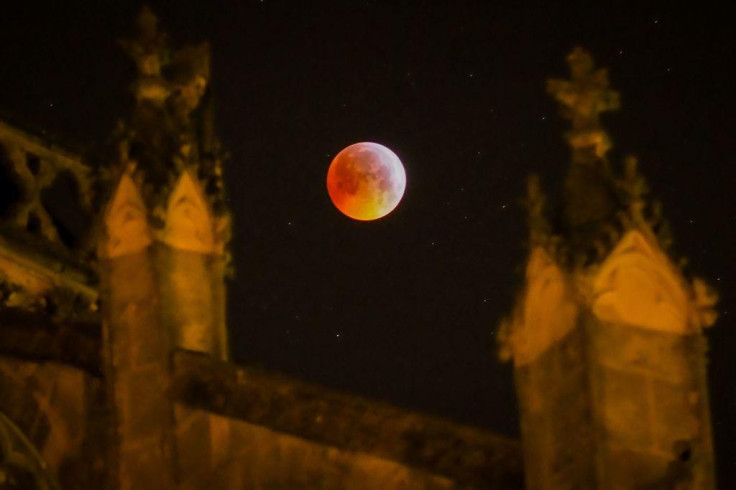
Skywatchers across much of the world prepared for a striking celestial event early Tuesday, March 3, 2026: a total lunar eclipse that turned the full Worm Moon a dramatic copper-red hue, often called a “blood moon.” This was the only total lunar eclipse visible anywhere in 2026, marking the third in a near-tetrad sequence and the last until late 2028.
The eclipse unfolded over the night of March 2-3 depending on time zones, with the Moon passing fully into Earth’s umbral shadow. Unlike solar eclipses, lunar ones are visible from the entire night side of Earth where the Moon is above the horizon, making this one accessible to millions in North America, Central America, parts of South America, Asia, Australia and the Pacific.

Key times were given in Coordinated Universal Time (UTC) and major zones:
– **Penumbral eclipse begins** — 8:44 UTC (March 3) / 3:44 a.m. EST / 12:44 a.m. PST / 8:44 p.m. KST (March 3 in Korea) / 7:44 p.m. AEST (March 3 in eastern Australia). The Moon entered Earth’s faint outer shadow, causing subtle dimming.
– **Partial eclipse begins** — 9:50 UTC / 4:50 a.m. EST / 1:50 a.m. PST.
– **Totality begins** — 11:04 UTC / 6:04 a.m. EST / 3:04 a.m. PST / 8:04 p.m. KST / 9:04 p.m. AEST. The entire Moon immersed in the dark umbra, appearing reddish due to sunlight refracted through Earth’s atmosphere.
– **Greatest eclipse (maximum totality)** — 11:33 UTC / 6:33 a.m. EST / 3:33 a.m. PST. The peak moment, with the Moon at its deepest in shadow.
– **Totality ends** — 12:03 UTC (approximately) / 7:03 a.m. EST / 4:03 a.m. PST. The Moon began exiting the umbra.
– **Partial ends** — 13:17 UTC / 8:17 a.m. EST.
– **Penumbral ends** — 14:23 UTC / 9:23 a.m. EST.
Totality lasted about 58-59 minutes, with the full eclipse spanning roughly 5 hours and 38 minutes. The Moon’s apparent size was near average, occurring about a week from perigee and apogee.
Visibility varied by location. In North America, western regions enjoyed the best views of totality under dark skies. Eastern U.S. observers saw the start of totality around sunrise, with the Moon setting mid-eclipse in many places — a phenomenon where the rising Sun and setting eclipsed Moon appeared simultaneously. Central and Mountain time zones caught more of totality before dawn. NASA noted early morning viewing in North and Central America, with far western South America also in range.
In Asia and Australia, the eclipse occurred during evening hours on March 3 local time. Eastern Asia and Australia saw full totality in the evening sky, while Pacific islands had it overnight. Europe and Africa missed visibility entirely, as the Moon was below the horizon during key phases.
The reddish color resulted from Earth’s atmosphere scattering shorter blue wavelengths, allowing longer red ones to reach the Moon — the same process that tints sunsets. Clouds or atmospheric particles could alter the shade from deep copper to brick red or even grayish.
No special equipment was needed; the naked eye sufficed, though binoculars or small telescopes enhanced crater details and color variations. Photographers used tripods for long exposures to capture the dim scene. Safe viewing applied — unlike solar eclipses, lunar ones posed no eye risk.
Astronomers highlighted this as part of a series: following totals on March 14, 2025, and September 8, 2025, with a partial on August 28, 2026. The next total arrives December 31, 2028–January 1, 2029, dubbed a New Year’s blood moon.
The March event coincided with the Worm Moon, traditionally named for earthworm activity signaling spring in some cultures. It peaked near 6:38 a.m. EST, close to maximum eclipse.
Communities organized watch parties, planetariums streamed views and apps like Stellarium or Sky Tonight helped locate the Moon. Clear skies were crucial; forecasts varied regionally.
The eclipse offered a reminder of celestial mechanics: Earth’s shadow extends far into space, and the Moon’s orbit aligns perfectly twice yearly for eclipses. This alignment at the descending node produced the total phase.
As dawn broke in many viewing areas, the Moon exited shadow, returning to normal brightness. For those who missed it, recordings from NASA and observatories circulated widely.
This rare astronomical spectacle captivated observers, blending science, beauty and a moment of shared wonder across continents.