

Business
BofA cuts Nu Holdings stock price target on higher costs




Several prefabricated housing and workforce projects are injecting sorely-needed housing and accommodation stock into Karratha
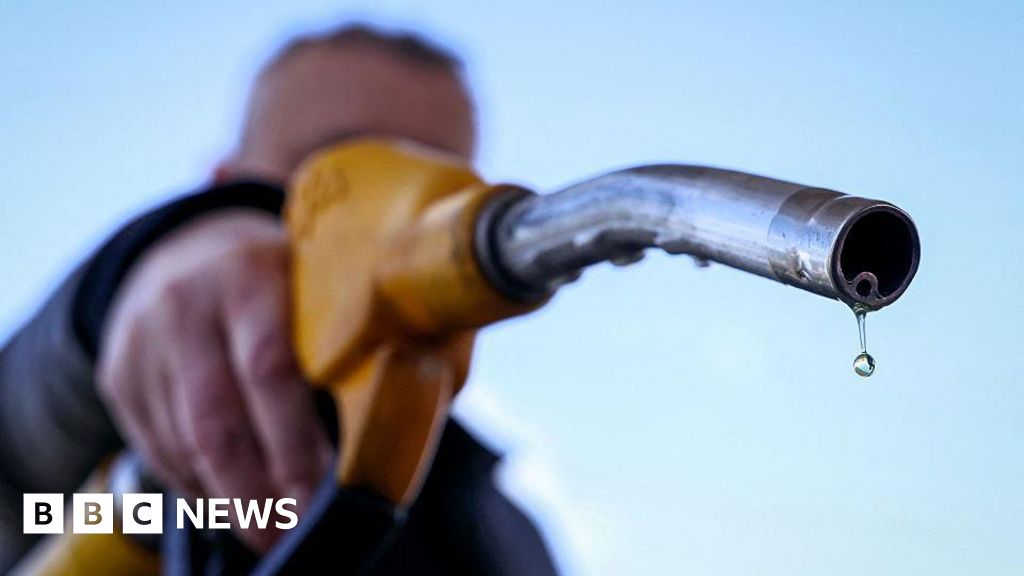
The oil price reached nearly $120 a barrel on Monday over fears of lengthy disruption to supplies.
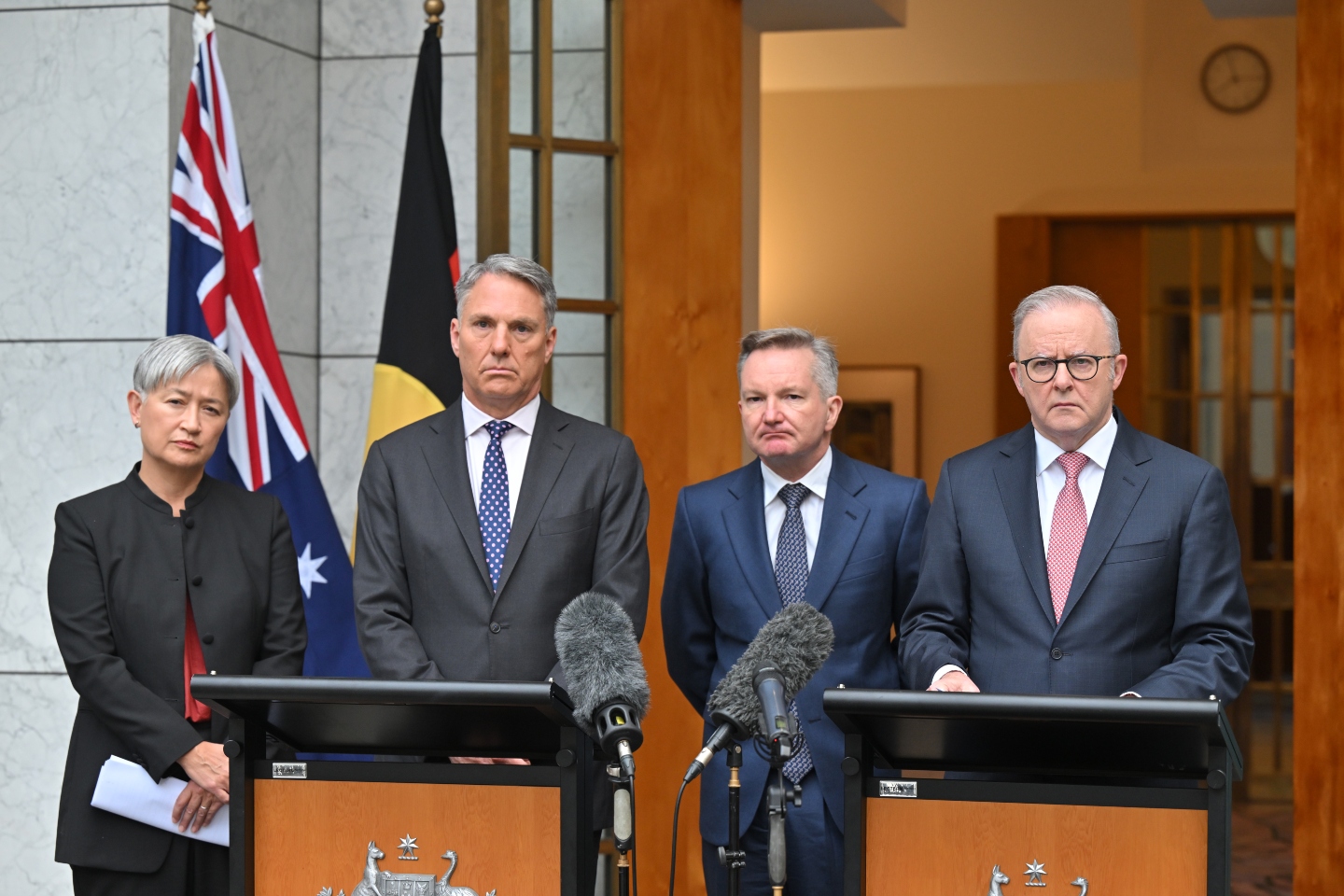
Foreign minister confirms more than 2600 Australians have arrived back from the UAE on 18 direct flights since the US-Israeli strikes were launched on Iran.

As the conflict in Iran blocks oil exports from the Gulf region and producers start to cut output, the supply shock has sent petrol prices soaring worldwide. The stark rise is already rattling financial markets, driving up prices at the pump and raising fears of a bigger economic hit.
The BBC spoke to Americans in New York to ask how they’re feeling the pinch.
With reporting from Michelle Fleury in Tarrytown, New York and Pratiksha Ghildial in New York City

Brent futures fell $6.51, or 6.6%, to $92.45 a barrel at 0018 GMT, while U.S. West Texas Intermediate (WTI) crude was down $6.12, or 6.5%, to $88.65.
Oil prices surged past $100 a barrel on Monday, hitting session highs of $119.50 for Brent and $119.48 for WTI, their highest since mid-2022, as supply cuts by Saudi Arabia and other producers during the expanding U.S.-Israeli war with Iran stoked fears of major disruptions to global supplies.
Prices later retreated after Russian President Vladimir Putin held a call with Trump and shared proposals aimed at a quick settlement to the Iran war, according to a Kremlin aide, easing concerns about a prolonged supply disruption.
Trump said on Monday in a CBS News interview that he thinks the war against Iran “is very complete” and that Washington was “very far ahead” of his initial four- to five-week estimated timeframe.

In response to Trump, Iran’s Revolutionary Guards (IRGC) said they would “determine the end of the war” and that Tehran would not allow “one litre of oil” to be exported from the region if U.S. and Israeli attacks continued, state media reported on Tuesday citing IRGC’s spokesperson.
But those comments did not lift prices, which were also under pressure because Trump is considering easing oil sanctions on Russia and releasing emergency crude stockpiles as part of a package of options aimed at curbing spiking global oil prices amid the Iran conflict, according to multiple sources. “Taking the events of the past 24 hours into account, I expect crude oil to remain highly volatile, trading within a wide range between $75ish and $105ish in the sessions ahead,” Tony Sycamore, IG market analyst, said in a note.
Gulf oil producers have begun cutting output as the U.S.-Israeli war on Iran disrupted shipping in the region. Over the weekend, Iraq slashed production at its main southern oilfields by 70% to 1.3 million barrels per day while Kuwait Petroleum Corporation also began reducing output and declared force majeure.
Adding to the cuts, Saudi Arabia has now begun trimming production, sources said on Monday.
G7 nations said on Monday they were prepared to implement “necessary measures” in response to surging global oil prices but stopped short of committing to release emergency reserves.

As clean energy projects gather speed in the South West, local industry has been jumping on board.

Stocks jumped in Japan, South Korea and Australia, helping the broader MSCI Asia Pacific Index rise 2.2%, a sharp reversal after tumbling 3.7% on Monday. Roughly six stocks advanced for every one that declined in the index. Wall Street gauges also reversed their earlier losses to finish the session on a bullish note as tech shares rallied.
The optimistic shift came as Trump said the war with Iran would resolve “very soon.” The president said that he did not believe the conflict would be over this week, but insisted the operation was ahead of schedule. The US military objectives could be described as “pretty well complete,” he said.
Brent crude fell 10% to $89.06 a barrel, well off the peak of $119.50 hit in Monday’s session. Other markets also reversed their moves. Yields on the 10-year Treasury halted a five-day increase and the dollar extended losses made in the New York session.
The moves show how sensitive markets remain to every turn in the Middle East conflict, with a single headline enough to send traders scrambling. Cross-asset volatility showed little sign of easing — with a market risk indicator hovering near levels seen when Trump unveiled global tariffs last year — as investors grapple with a fast-moving geopolitical conflict that offers no clear trading playbook.
“What we’re seeing now is more of a relief rally after an extreme risk-off episode, rather than a genuine shift back into a full risk-on environment,” said Dilin Wu, a research strategist at Pepperstone Group.
Even so, equity-index futures on US benchmarks slipped in early Asian trading, signaling the rebound may not hold. Contracts for the S&P 500 and the Nasdaq 100 were down 0.2%, having pared losses of as much as 0.6%.Trump’s comments at press conferences “haven’t been the most informative signal,” so investors would well remain skeptical, Eric Van Nostrand, a chief investment officer at Lazard Asset Management said in a Bloomberg TV interview.
“There’s a lot of misplaced confidence in markets right now that things will ease quickly as they have in previous episodes of elevated Middle Eastern tensions,” he said. “But I do think what we are seeing today, given the likely duration of closure of the Strait of Hormuz, is something quite different. It is going to affect the global economy really in a very meaningful and global way.”

Check out what’s clicking on FoxBusiness.com.
The Food and Drug Administration on Monday announced a recall for clams and raw oysters over concerns that they may be contaminated with norovirus, a contagious infection commonly known as the stomach flu.
The recall affects Manila clams harvested by Lummi Indian Business Council that were distributed to restaurants and food retailers in nine states, including Arizona, California, Florida, Georgia, Illinois, Nevada, New York, Oregon and Washington. The FDA said the clams may have been distributed to other states as well.
The oysters were harvested by Drayton Harbor Oyster Company and distributed in Washington state.
Both food items were harvested between Feb. 13 and March 3 in Drayton Harbor, Washington.
FRITO-LAY RECALLS MISS VICKIE’S CHIPS OVER POTENTIALLY ‘LIFE THREATENING’ ALLERGEN RISK

The oysters were harvested by Drayton Harbor Oyster Company and distributed in Washington state. (BSIP/Education Images/Universal Images Group via Getty Images / Getty Images)
The Washington State Department of Health notified the FDA of the recall on Wednesday.
The FDA urged restaurants and food retailers not to serve or sell the clams or oysters and for consumers not to eat the foods.
The agency said restaurants and retailers “should dispose of any products by throwing them in the garbage or contacting their distributor to arrange for destruction.”
MAJOR FROZEN FOOD RECALL EXPANDS TO 37M POUNDS OF TRADER JOE’S, KROGER PRODUCTS OVER GLASS CONCERNS
The FDA urged restaurants and food retailers not to serve or sell the clams or oysters and for consumers not to eat the foods. (iStock / iStock)
“Restaurants and retailers should also be aware that shellfish may be a source of pathogens and should control the potential for cross-contamination of food processing equipment and the food processing environment,” the alert added.
The FDA warned that food containing norovirus may “look, smell and taste normal” but can cause serious illness if eaten.
Consumers of these products who are experiencing symptoms of illness are urged to contact their healthcare provider and report their symptoms to their local health department.
The FDA warned that food containing norovirus may “look, smell and taste normal” but can cause serious illness if eaten. (Stefani Reynolds/Bloomberg via Getty Images / Getty Images)
Symptoms include diarrhea, vomiting, nausea, stomach pain, fever, headache and body ache. A person typically develops symptoms 12 to 48 hours after being exposed to norovirus and one to three days to recover.
CLICK HERE TO GET FOX BUSINESS ON THE GO
People of all ages can become infected with norovirus, although people who are immunocompromised can potentially suffer from severe illness, the FDA said.
The FDA said it is awaiting further information on distribution of the clams and oysters and will continue to monitor the investigation.

China’s digital yuan (e-CNY) has experienced explosive growth, with transaction volumes increasing by over 800% as Beijing positions the central bank digital currency (CBDC) to challenge the U.S.-dominated global monetary system.
While retail adoption remains slow due to the dominance of private platforms like Alipay and WeChat Pay, the Chinese government is aggressively integrating the e-CNY into public sector payments and cross-border trade settlements.
Key Points
- Massive Growth: As of late 2025, cumulative e-CNY transactions reached 16.7 trillion yuan ($2.37 trillion), representing an 800% increase since 2023 and making it the world’s largest CBDC experiment.
- Divergent National Strategies: China is pursuing a centralized, state-issued CBDC while banning private yuan-backed stablecoins; conversely, the U.S. has banned the creation of a CBDC in favor of a market dominated by dollar-backed private stablecoins.
- Functional Evolution: To increase its appeal, the e-CNY began paying interest to holders on January 1, transitioning from a simple payment tool to a feature more closely resembling a traditional bank deposit.
- Cross-Border Expansion: China is a primary driver of Project mBridge, a multi-government digital payment platform where the digital yuan accounts for over 95% of settlement volume, particularly for energy and commodity trades.
- Retail Adoption Hurdles: Despite government mandates for public servant wages, domestic consumers still largely prefer established private digital payment channels, though analysts suggest enterprise and supply chain adoption may be easier to accelerate.
- Global Implications: Analysts view the e-CNY as a long-term strategic tool aimed at building a “multilateral monetary system” that reduces reliance on the U.S. dollar and enhances China’s influence in international trade.
This state-led strategy creates a sharp contrast with the United States, which has prioritized private stablecoins and banned the issuance of a centralized digital currency, marking a new frontier in the financial competition between the two superpowers.
China is aggressively expanding its central bank digital currency (CBDC), the e-CNY, as a strategic alternative to the U.S. dollar-dominated financial system. By late 2025, transaction volumes surged by over 800% to $2.37 trillion, driven largely by government-led initiatives such as public sector wage payments. While domestic retail adoption faces competition from established platforms like Alipay and WeChat Pay, Beijing is shifting its focus toward international trade and institutional utility.
The global digital currency landscape reflects a growing geopolitical divide in financial technology:
- China’s Centralized Model: Focuses on state-issued currency (e-CNY) while enforcing strict bans on private stablecoins and cryptocurrencies.
- The U.S. Private Model: Prioritizes dollar-backed stablecoins issued by private entities, which currently maintain nearly 99% of the global market share.
The contrast between China’s state-driven Central Bank Digital Currency (CBDC) strategy and the U.S. inclination toward privately issued stablecoins significantly impacts the competition for global reserve currency dominance in multiple critical aspects.
1. Divergent Models of Financial Control
The competition is defined by two fundamentally different structural philosophies:
- China’s Centralized Model: Beijing promotes the e-CNY , a state-issued currency designed to challenge the U.S.-dominated global monetary system. China enforces a strict ban on private stablecoins and cryptocurrencies to maintain state control.
- The U.S. Private Model: The U.S. prioritizes privately issued, dollar-backed stablecoins . These operate on public, decentralized blockchains rather than state-run systems. Currently, the U.S. has banned the issuance of a domestic CBDC due to concerns regarding financial stability and privacy.
2. Market Dominance vs. Strategic Growth
The document highlights a significant gap in current usage versus strategic trajectory:
- U.S. Dominance: Dollar-denominated stablecoins currently maintain an overwhelming lead, accounting for nearly 99% of the global market share by market capitalization. This allows the U.S. to capitalize on the existing dominance of the dollar in digital formats.
- China’s Rapid Expansion: While retail adoption has been stagnant domestically, the e-CNY’s transaction volume surged by 800% to $2.37 trillion by late 2025. This growth is driven by government-led initiatives, such as paying public sector wages in digital yuan.
3. Cross-Border Settlement and mBridge
China is using technology to build a “multilateral monetary system” that bypasses traditional dollar-reliant channels:
- The mBridge Project: In collaboration with the UAE, Thailand, Saudi Arabia, and Hong Kong, China has developed a platform for cross-border settlements. The digital yuan accounts for over 95% of the settlement volume on this platform.
- Strategic Trade: China is focusing mBridge toward energy and commodity-linked transactions , sectors where it already holds a central commercial role.
- Belt and Road Integration: Beijing is leveraging the “Belt and Road” initiative to encourage international supply chain participants to adopt the e-CNY for cross-border transactions, offering “transactional convenience and economic savings.”
4. Economic Incentives and Functionality
- Interest Payments: As of January 1, the e-CNY began paying interest to holders , making it function more like a traditional bank deposit. This is intended to increase its appeal to both retail and institutional users.
- U.S. Regulatory Hesitation: In the U.S., discussions regarding whether stablecoins should pay interest are stalled. Opponents fear that interest-bearing stablecoins could cause significant outflows from traditional banks, potentially threatening financial stability.
5. Influence on Reserve Currency Status
While the e-CNY has a long way to go, its integration into China’s national strategy poses a direct challenge to the U.S. dollar:
- Strategic Alternative: The e-CNY is explicitly described as an alternative to the U.S.-dominated system.
- Institutional Shift: While changing individual consumer behavior is difficult, China believes that enterprise adoption for cross-border trade can be accelerated more quickly, potentially shifting the foundation of global trade finance away from the dollar.
- Status of the e-CNY: Analysts conclude that given its scale and sophistication, the digital yuan will remain a central feature of the “global future of money” and the ongoing superpower competition.
Chinese authorities are expanding the functionality of e-CNY beyond a simple digital payment tool. As of January 1, the e-CNY now offers interest to holders, making it resemble traditional bank deposits. This new feature could enhance its appeal and drive greater adoption among retail users. Additionally, the integration of interest-bearing capabilities positions e-CNY as a more competitive alternative to traditional banking services. This move could potentially disrupt the financial ecosystem by encouraging users to transition from conventional savings accounts to the digital yuan. Moreover, by offering such incentives, Chinese authorities aim to boost the currency’s usage domestically while laying the groundwork for its potential international adoption.
Other People are Reading

Form 4 Vistra Energy Corp For: 9 March

Prefabs address Pilbara housing predicament

UPS (UPS) Stock Plummets 5% Amid Oil Price Surge and Transport Sector Turbulence

Daniel Radcliffe on the Ridiculous ‘30 Rock’ Cameo He Wants in ‘The Fall and Rise of Reggie Dinkins’

Smart energy pays enters the US market, targeting scalable financial infrastructure

Why Israel is blocking foreign journalists from entering

Bitcoin: We’re Entering The Most Dangerous Phase

Kristi Noem in SERIOUS TROUBLE After Financial Records Leak

I Bought a MONEY HOARDERS Storage Unit & Look What Was HIDDEN In The Back! (HIDDEN CASH!)

The System Quietly Moving $3.7 Trillion into Crypto Iran Just Triggered Phase Two
-

 Politics7 days ago
Alan Cumming Brands Baftas Ceremony A ‘Triggering S**tshow’
-
Business3 days ago
Form 8K Entergy Mississippi LLC For: 6 March
-

 Fashion3 days ago
Weekend Open Thread: Ann Taylor
-

 News Videos15 hours ago
10th Algebra | Financial Planning | Question Bank Solution | Board Exam 2026
-

 Crypto World11 hours ago
Paradigm, a16z, Winklevoss Capital, Balaji Srinivasan among investors in ZODL
-

 Tech5 days ago
Bitwarden adds support for passkey login on Windows 11
-
 Sports4 days ago
499 runs and 34 sixes later, India beat England to enter T20 World Cup final | Cricket News
-

 Sports2 days ago
Three share 2-shot lead entering final round in Hong Kong
-

 Sports2 days ago
Braveheart Lakshya downs Lai in epic battle to enter All England Open final | Other Sports News
-

 Business6 days ago
Guthrie Disappearance Enters Fifth Week as Family Visits Memorial
-

 NewsBeat4 days ago
Piccadilly Circus just unveiled ‘London’s newest tourist attraction’ and it only costs 80p to enter
-

 Politics4 days ago
Top Mamdani aide takes progressive project to the UK
-

 Business1 day ago
Search for Nancy Guthrie Enters 37th Day as FBI Probes Wi-Fi Jammer Theory
-

 Entertainment3 days ago
Hailey Bieber Poses For Sexy Selfies In New Luscious Lip Thirst Traps
-
 Sports7 days ago
Jack Grealish posts new injury update as Man City star enters crucial period
-
 NewsBeat2 hours ago
Pagazzi Lighting enters administration as 70 jobs lost and 11 stores close across Scotland
-

 Tech12 hours ago
Despite challenges, Ireland sixth in EU for board gender diversity
-

 Crypto World5 days ago
New Crypto Mutuum Finance (MUTM) Reports V1 Protocol Progress as Roadmap Enters Phase 3
-

 Tech5 days ago
ACIP To Discuss COVID ‘Vaccine Injuries’ Next Month, Despite That Not Being In Its Purview
-
Entertainment5 days ago
Harry Styles Has ‘Struggled’ to Discuss Liam Payne’s Death