
Business
Bowen Assures Fuel Shipments Are Secured ‘Well Into May’ as Expert Raises Need for Self-Sufficiency


As the fuel crisis continues along with the Iran war, Energy Minister Chris Bowen has assured that fuel shipments have been secured “well into May.”
However, an economist has raised the alarm regarding the fuel situation, calling for Australia to be more self-sufficient when it comes to fuel.
Fuel Shipments Secured ‘Well Into May’
According to a report by ABC News, Bowen has assured the public that the government has been hard at work to ensure that enough supplies for May will be secured.
“All the orders are locked in and contracted,” said Bowen. “Once it’s contracted, the fuel belongs to the Australian company that’s bought it … that is legally locked in, so that’s encouraging.”
He added, “Of course, there is a risk in international circumstance and [the] international situation, but every step that can be taken is being taken.”
Bowen previously disclosed that 53 ships carrying fuel are now on the way to Australia from different countries in Asia, as well as the United States and Mexico.
‘Wake Up Call for Australia’
Despite the promising developments, an economist is urging Australia to do more amid the ongoing crisis.
According to Sky News, MST Financial energy analyst Saul Kavonic went as far to say that Australia “ceded our fuel security to foreign powers.”
“This is a wake up call for Australia to become more self-sufficient in fuel again. The next disruption to maritime trade could occur closer to home in the Pacific, leaving Australia without any fuel, and our economy would grind to a halt within weeks,” said Kavonic.
“Australia must act to avert the economic and national security risks posed by our fuel import dependence,” he added.
Addressing the calls to turn to renewable sources of energy, Kavonic pointed out that “renewables are simply not practical to replace jet fuel and diesel at this time.”


Red Cat’s Blue Ops partners with HADDY for USV production


Financial analyst by day and a seasoned investor by passion, I’ve been involved in the world of investing for over 15 years and honed my skills in analyzing lucrative opportunities within the market.I specialize in uncovering high quality dividend stocks and other assets that offer potential for long term-growth that pack a serious punch for bill-paying potential. I use myself as an example that with a solid base of classic dividend growth stocks, sprinkling in some Business Development Companies, REITs, and Closed End Funds can be a highly efficient way to boost your investment income while still capturing a total return that follows traditional index funds. I created a hybrid system between growth and income and manage to still capture a total return that is on par with the S&P.
Analyst’s Disclosure: I/we have no stock, option or similar derivative position in any of the companies mentioned, and no plans to initiate any such positions within the next 72 hours. I wrote this article myself, and it expresses my own opinions. I am not receiving compensation for it (other than from Seeking Alpha). I have no business relationship with any company whose stock is mentioned in this article.
Seeking Alpha’s Disclosure: Past performance is no guarantee of future results. No recommendation or advice is being given as to whether any investment is suitable for a particular investor. Any views or opinions expressed above may not reflect those of Seeking Alpha as a whole. Seeking Alpha is not a licensed securities dealer, broker or US investment adviser or investment bank. Our analysts are third party authors that include both professional investors and individual investors who may not be licensed or certified by any institute or regulatory body.

Novo Nordisk: Downgrading To 'Sell' As GLP-1 Pipeline Faces Many Risks


Spanish PM’s party gains on anti-war stance, support for far right stalls in polls


I aim to invest in companies with perfect qualitative attributes, buy them at an attractive price based on fundamentals, and hold them forever. I hope to publish articles covering such companies approximately 3 times per week, with extensive quarterly follow-ups and constant updates.I manage a concentrated portfolio targeted at avoiding losers and maximizing exposure to big winners. This means that often I’ll rate great companies at a ‘Hold’ because their growth opportunity is below my threshold, or their downside risk is too high.
Analyst’s Disclosure: I/we have no stock, option or similar derivative position in any of the companies mentioned, and no plans to initiate any such positions within the next 72 hours. I wrote this article myself, and it expresses my own opinions. I am not receiving compensation for it (other than from Seeking Alpha). I have no business relationship with any company whose stock is mentioned in this article.
Seeking Alpha’s Disclosure: Past performance is no guarantee of future results. No recommendation or advice is being given as to whether any investment is suitable for a particular investor. Any views or opinions expressed above may not reflect those of Seeking Alpha as a whole. Seeking Alpha is not a licensed securities dealer, broker or US investment adviser or investment bank. Our analysts are third party authors that include both professional investors and individual investors who may not be licensed or certified by any institute or regulatory body.
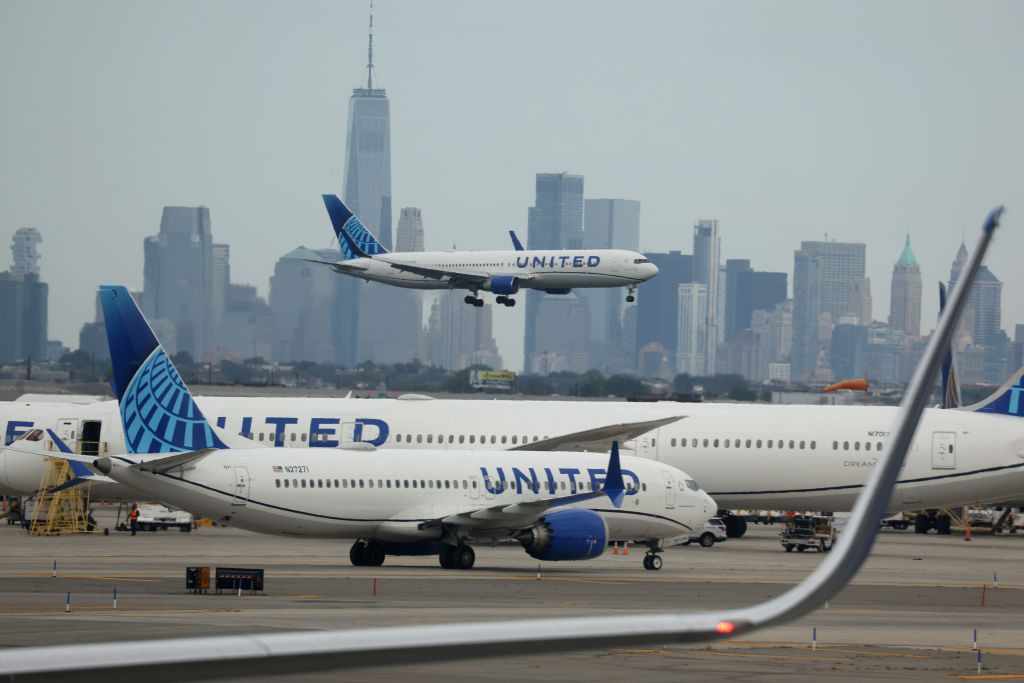
Major airlines around the world have begun canceling thousands of flights and raising fares as jet fuel prices have more than doubled and physical supplies have tightened in the wake of the ongoing war in Iran and the effective closure of the Strait of Hormuz.
United Airlines became the first major U.S. carrier to announce capacity cuts, trimming about 5% of planned flights on less profitable routes. International carriers have moved more aggressively, with Scandinavian Airlines canceling around 1,000 flights in April, Air New Zealand axing 1,100 services through early May, and carriers in Vietnam and elsewhere suspending domestic routes due to fuel constraints.

The disruptions stem from the conflict that escalated in late February when U.S. and Israeli strikes targeted Iran, prompting Iranian retaliation that effectively halted most commercial shipping through the Strait of Hormuz. The narrow waterway, which normally carries about one-fifth of global seaborne oil trade, has seen traffic reduced to a trickle amid attacks on vessels, soaring insurance costs and safety fears.
Jet fuel prices, which averaged around $2.17 per gallon in the United States before the escalation, surged past $4.57 per gallon by late March, according to the Argus U.S. Jet Fuel Index. In some Asian and European markets, prices have doubled or more, reaching record levels near $200 per barrel or higher in spot trading. The crack spread — the premium for refining jet fuel from crude — has exploded, reflecting acute shortages of the refined product rather than just higher crude costs.
“Jet fuel prices have more than doubled in the last three weeks,” United CEO Scott Kirby said in a recent statement. “If prices stayed at this level, it would mean an extra $11 billion in annual expense just for jet fuel.” Kirby noted the carrier is “tactically pruning flying that’s temporarily unprofitable” while warning of broader impacts if the situation persists.
Ryanair CEO Michael O’Leary warned that if the Hormuz disruption continues into May and beyond, European airlines could face shortages of 10% to 20% of normal fuel supply by June, potentially forcing cancellation of 5% to 10% of summer flights. He said cuts would target the most constrained airports with little advance notice from suppliers.
The crisis has hit regions differently. Middle Eastern carriers such as Emirates, Qatar Airways and Etihad have canceled tens of thousands of flights due to airspace closures and safety concerns in addition to fuel issues. Asian airlines, heavily reliant on Middle Eastern crude refined in South Korea, China and elsewhere, have faced export restrictions and local shortages. Vietnam Airlines has suspended multiple domestic routes, while Korean Air has entered “emergency management mode.”
In Europe, the last major jet fuel shipments from the Middle East to the U.K. were expected to arrive this week, leaving airlines with limited reserves. Some Italian airports have already imposed refueling restrictions for certain operators. Lufthansa has prepared contingency plans that could include grounding portions of its fleet.
U.S. carriers benefit from greater domestic refining capacity and have so far relied more on fare increases and baggage fee hikes than widespread cancellations. JetBlue and others have raised checked baggage fees, while carriers across the board have introduced or increased fuel surcharges on international routes. Air France-KLM added €50 ($58) to long-haul tickets, and several Asian carriers have followed suit.
Aviation analytics firm Cirium reported that on one recent Monday, more than 7,000 flights — nearly 7% of the global schedule — were canceled, far above typical rates. North American departures saw cancellation rates spike to 14.6% on that day.
The International Air Transport Association had forecast a record $41 billion in net profits for the global airline industry in 2026 before the conflict. That outlook is now at serious risk as higher fuel costs coincide with potential weakening in travel demand from elevated gasoline prices and broader economic uncertainty.
Analysts describe the situation as a “perfect storm.” Longer reroutes to avoid Middle Eastern airspace burn extra fuel, compounding costs. Refineries in Asia have cut jet fuel production due to feedstock shortages, while strategic reserves are being drawn down in some countries.
Travelers are already feeling the pinch. Airfares on many routes have risen sharply, with some long-haul examples nearly tripling in price in extreme cases. Industry experts advise passengers to monitor bookings closely, consider flexible tickets and expect potential disruptions through the summer if the conflict drags on.
The war has also disrupted related supply chains. Cargo operators face higher costs and delays, while the broader energy shock has lifted diesel and gasoline prices, adding pressure on household budgets and potentially curbing discretionary travel.
Governments are responding variably. Some Asian nations have redirected fuel stocks domestically or sought emergency assistance. In the U.S., domestic production provides a buffer, but analysts warn that prolonged global tightness could still affect American carriers through higher prices and knock-on effects on international partners.
Billionaire aviation figures have sounded alarms. One Dubai-based jet tycoon warned that if the crisis lasts more than a month, the first airline bankruptcies could emerge as weaker carriers struggle with unsustainable costs.
The situation remains fluid. Diplomatic efforts continue, with some reports of signals from involved parties about willingness to de-escalate, but the Strait of Hormuz remains largely closed to routine tanker traffic. Any resolution could ease pressures quickly, as shipping resumes and refineries ramp up, but a prolonged standoff risks deeper economic pain.
For now, airlines are prioritizing cash preservation. Many have shifted to shorter-haul or more fuel-efficient operations where possible and are reviewing summer schedules. Low-cost carriers, with thinner margins, face particular strain despite hedging strategies that have partially mitigated the spike for some.
Passengers planning travel are urged to check airline updates frequently, as last-minute cancellations tied to fuel availability at specific airports could occur with minimal notice. Travel insurance that covers trip interruptions is recommended.
The crisis highlights the vulnerability of global aviation to energy chokepoints. Jet fuel, derived from kerosene, requires specific refining processes, and there is limited spare capacity worldwide to quickly replace lost volumes from the Gulf.
As April unfolds, more carriers are expected to announce adjustments. United’s early move may foreshadow broader U.S. capacity reductions if prices remain elevated. Delta has indicated it could trim schedules, while others watch inventory levels closely.
The human impact extends beyond higher ticket prices. Flight crews face schedule changes, airports deal with irregular operations, and tourism-dependent economies — from Europe to Southeast Asia and Australia — brace for reduced visitor numbers.
Environmental goals may also take a backseat temporarily, as airlines prioritize operational survival over sustainability initiatives that rely on costly sustainable aviation fuel.
Industry groups like IATA have called for strengthened jet fuel resilience, including dedicated reserves and diversified sourcing. The current events underscore how concentrated supply routes create systemic risks.
With no immediate end to the conflict in sight, the aviation sector faces one of its most challenging periods in years. What began as a geopolitical confrontation has rapidly translated into higher costs and fewer flights for travelers worldwide, serving as a stark reminder of interconnected global energy markets.

Mizuho initiates PayPay stock coverage with Outperform rating

U.S. auto safety regulator closes probe into Tesla’s driver assistance feature


Albert Anthony is the pen name of a business author on Amazon and his newest book is “How To Pick Stocks: 8 Steps For Long-Term Investing with Fundamental & Technical Analysis,” now available as a 2026 edition paperback and Kindle ebook in several regions including the US, UK, Canada, and Europe. The author is an analyst & contributor for investing platform Seeking Alpha since 2023, where he has nearly 2,000 followers and has covered hundreds of stocks in multiple sectors including banks/financials, REITs, insurance, pharma, and more. He has also written for platforms like Investing dot com, and has taken part in many business conferences includes Bloomberg Adria’s Investment Outlook 2026 as well as Money Motion 2026. Albert Anthony has Croatian-American roots, having grown up in the US and living in the NYC/New Jersey area as well as the Austin Texas area while working in enterprise IT roles at several prominent companies, including a top 10 financial firm. The author earned a B.A. from Drew University, and also completed certifications from Microsoft, CompTIA, and Corporate Finance Institute where he earned the specialization in risk management. He is founder of a boutique equities research firm, Albert Anthony & Company, which is a trade name both in the US and Croatia. Besides his writing and analyst work, the author has been active on camera as well, as a film/TV extra for casting agencies in Croatia/Europe, and also took part in roundtable panel discussions and appeared in several media stories in that region. You can also check out the author’s video content on the Albert Anthony channel on YouTube where he discusses investing topics, @author.albertanthony Please note: The author does not write about non-publicly traded companies, small cap stocks, crypto, or startup CEOs, so any such mail received and pitches from PR agencies will be deleted. Any official mail to the author should be sent to albertanthony.info@gmail.com. *Author Disclaimer: Albert Anthony and Albert Anthony & Co, is a US-based sole proprietorship registered as a trade name in Austin, Texas, and a sole proprietor registered in Croatia. The author nor his company are registered financial advisors and do not provide personalized financial advisory services to clients and do not manage client assets but provide general markets commentary and research as well as actionable insights based on publicly-available data and their own analysis. The author does not sell or market financial products and services, nor is compensated by any company for rating them. The author does not hold any material position in any stock he rates at the time of writing, unless otherwise disclosed. All investment is assumed to be at risk and readers are expected to do their due diligence beyond the scope of this author’s commentary, agreeing to indemnify the author of any liability for potential investment losses.
Analyst’s Disclosure: I/we have no stock, option or similar derivative position in any of the companies mentioned, and no plans to initiate any such positions within the next 72 hours. I wrote this article myself, and it expresses my own opinions. I am not receiving compensation for it (other than from Seeking Alpha). I have no business relationship with any company whose stock is mentioned in this article.
Author does not own any shares in PINE, however he does invest in Netstreit and other retail REITS not mentioned here.
Seeking Alpha’s Disclosure: Past performance is no guarantee of future results. No recommendation or advice is being given as to whether any investment is suitable for a particular investor. Any views or opinions expressed above may not reflect those of Seeking Alpha as a whole. Seeking Alpha is not a licensed securities dealer, broker or US investment adviser or investment bank. Our analysts are third party authors that include both professional investors and individual investors who may not be licensed or certified by any institute or regulatory body.

Focus on trying to piece together the big things (both at a macro and industry level) Twenty years in Asia (mainly China).
Analyst’s Disclosure: I/we have a beneficial long position in the shares of INTC either through stock ownership, options, or other derivatives. I wrote this article myself, and it expresses my own opinions. I am not receiving compensation for it (other than from Seeking Alpha). I have no business relationship with any company whose stock is mentioned in this article.
Seeking Alpha’s Disclosure: Past performance is no guarantee of future results. No recommendation or advice is being given as to whether any investment is suitable for a particular investor. Any views or opinions expressed above may not reflect those of Seeking Alpha as a whole. Seeking Alpha is not a licensed securities dealer, broker or US investment adviser or investment bank. Our analysts are third party authors that include both professional investors and individual investors who may not be licensed or certified by any institute or regulatory body.

Bitcoin (BTC) price rallies on Iran ceasefire talks, Algorand (ALGO) extends gains: Crypto Markets Today

5+ Years Later, Kevin Costner’s Western Crime Thriller Finally Redeems Itself on Streaming

Temperatures set to hit 21C in York, says Met Office


-

 NewsBeat4 days ago
Steven Gerrard disagrees with Gary Neville over ‘shock’ Chelsea and Arsenal claim | Football
-

 Business3 days ago
No Jackpot Winner and $194 Million Prize Rolls Over
-

 Fashion3 days ago
Weekend Open Thread: Spanx – Corporette.com
-
Entertainment7 days ago
Fans slam 'heartbreaking' Barbie Dream Fest convention debacle with 'cardboard cutout' experience
-

 Crypto World5 days ago
Gold Price Prediction: Worst Month in 17 Years fo Save Haven Rock
-

 Business11 hours ago
Three Gulf funds agree to back Paramount’s $81 billion takeover of Warner, WSJ reports
-
Crypto World6 days ago
Dems press CFTC, ethics board on prediction-market insider trades
-

 Sports2 days ago
India men’s 4x400m and mixed 4x100m relay teams register big progress | Other Sports News
-

 Business4 days ago
Login and Checkout Issues Spark Merchant Frustration
-

 Tech7 days ago
Apple will hide your email address from apps and websites, but not cops
-

 Tech6 days ago
EE TV is using AI to help you find something to watch
-

 Sports6 days ago
Tallest college basketball player ever, standing at 7-foot-9, entering transfer portal
-

 Politics7 days ago
Should Trump Be Scared Strait?
-
Tech6 days ago
Daily Deal: StackSkills Premium Annual Pass
-

 Tech6 days ago
Flipsnack and the shift toward motion-first business content with living visuals
-

 Fashion7 days ago
The Best Spring Trends of 2026
-

 Crypto World6 days ago
U.S. rule change may open trillions in 401(k) funds to crypto
-

 Sports6 days ago
Women’s hockey camp eyes fitness boost, tactics ahead of WC 2026 campaign | Other Sports News
-

 Politics7 days ago
BBC slammed for ignoring author of The Fraud
-

 Tech6 days ago
How to back up your iPhone & iPad to your Mac before something goes wrong
You must be logged in to post a comment Login