NEW YORK — With the 2026 FIFA World Cup just weeks away, football fans worldwide are gripped by intense speculation over which team will lift the trophy when the tournament reaches its climax in July. Brazil enters as the clear favorite according to bookmakers and analysts, but defending champion Argentina, a resurgent France, and several dark horses make this one of the most open and unpredictable World Cups in recent memory.
The 23rd edition of the tournament, co-hosted by the United States, Canada and Mexico, kicks off on June 11 with a match at the iconic Azteca Stadium in Mexico City. It will be the largest World Cup ever, featuring 48 teams and 104 matches across 16 venues. The final is scheduled for July 19 at MetLife Stadium in New Jersey, promising a dramatic D-Day for the world’s most popular sport.
Brazil, boasting a squad stacked with talent from Europe’s top leagues, tops most pre-tournament rankings. Under coach Dorival Júnior, the Seleção has blended youthful exuberance with veteran experience. Superstars like Vinícius Júnior, Rodrygo, and the ageless Neymar (if fit) give Brazil attacking flair few teams can match. Their defense, anchored by Marquinhos and Éder Militão, provides the solidity needed for a deep run. Many experts believe this could be Brazil’s year to end a 24-year drought since their last title in 2002.
“Brazil has the perfect mix right now,” said former France international Thierry Henry. “They have hunger, quality and belief. If they stay disciplined, they are the team to beat.”
Advertisement
France and Argentina Ready to Challenge
Defending champion Argentina, led by the legendary Lionel Messi, cannot be ruled out despite Messi turning 39 during the tournament. The Albiceleste have shown remarkable resilience, blending Messi’s genius with a rock-solid team spirit under coach Lionel Scaloni. Julián Álvarez, Lautaro Martínez and a strong midfield give Argentina multiple attacking threats. Their experience in high-pressure matches makes them dangerous in knockout stages.
France, runners-up in 2022, remain a powerhouse. Kylian Mbappé, now at Real Madrid, enters the tournament in peak form and hungry for his first World Cup title. Coach Didier Deschamps has built a squad with exceptional depth, including young stars like Eduardo Camavinga and Warren Zaïre-Emery. France’s blend of speed, technical quality and tactical intelligence makes them perennial contenders.
Kylian Mbappé AFP
England, Spain, Germany, Portugal and the Netherlands round out the top tier of favorites. England boasts a golden generation featuring Jude Bellingham, Phil Foden and Harry Kane. Spain’s young, possession-based team has impressed in recent tournaments, while Germany hopes to rebound from recent disappointments on home soil in 2024.
Host Nations and Dark Horses
The co-hosting format adds unique dynamics. The United States, Canada and Mexico all have home advantage in certain venues, though none are considered genuine title contenders. The U.S. team, led by Christian Pulisic, could surprise if they advance from a tough group, while Mexico always performs with extra passion on home soil.
Dark horses include Uruguay, led by a strong generation featuring Darwin Núñez and Federico Valverde, and Croatia, who continue to punch above their weight with veterans like Luka Modrić. African representatives Senegal and Morocco have the talent to cause upsets, while Asian sides Japan and South Korea bring organization and tactical discipline.
Advertisement
Key Factors That Will Decide the Winner
Several elements will shape the 2026 champion. Fitness and squad depth are critical in a tournament spanning nearly six weeks with intense heat in some venues. Tactical flexibility and the ability to adapt mid-tournament often separate the good from the great. Mental resilience under pressure, particularly in penalty shootouts, has decided recent finals.
Injuries remain a major concern. Key players missing through fitness issues could dramatically shift group outcomes and knockout paths. Coaching decisions, particularly squad selection and in-game substitutions, will be scrutinized like never before.
The expanded format with 48 teams increases the chance of surprises. More teams mean more potential upsets in the group stage and early knockouts, making the path to the final more treacherous than in previous editions.
Historical Context and Legacy
The 2026 World Cup comes at a pivotal time for global football. It will be the first tournament with significant commercial and broadcasting deals in North America, potentially setting new viewership records. For players, it represents the ultimate stage — a chance to etch their names into history alongside Pelé, Maradona, Zidane and Messi.
Advertisement
For nations, victory brings national pride and a lasting legacy. Brazil seeks to reaffirm its status as the most successful World Cup nation. Argentina wants to defend its crown and secure Messi’s fairytale ending. France aims to join an elite group of back-to-back winners.
Expert Predictions and Betting Markets
Bookmakers currently favor Brazil at around +300, followed by France (+450), Argentina (+550) and England (+600). These odds reflect recent form, squad quality and historical performance in major tournaments.
Many former players and coaches predict a South American winner, citing the technical quality and tactical adaptability of teams from that continent. Others see Europe’s depth and physicality prevailing in what promises to be a physically demanding tournament due to travel and climate variations across venues.
Cultural and Economic Impact
Beyond the pitch, the 2026 World Cup will have enormous cultural and economic significance. Host cities are preparing infrastructure upgrades, while tourism boards anticipate record visitor numbers. The tournament is expected to generate billions in economic activity across the three nations.
Advertisement
For fans, it offers a month-long celebration of football’s unifying power. From packed stadiums to public viewing areas, the World Cup brings people together like few other events can.
As the opening match approaches, excitement builds across continents. Whether Brazil finally ends its long wait, Argentina defends its title, or a new champion emerges, the 2026 World Cup promises drama, passion and moments that will be remembered for generations.
The road to glory begins in June. By July, one team will stand alone as world champions. The beautiful game’s biggest stage is set, and the football world can hardly wait to see who writes the next chapter in this legendary tournament’s history.
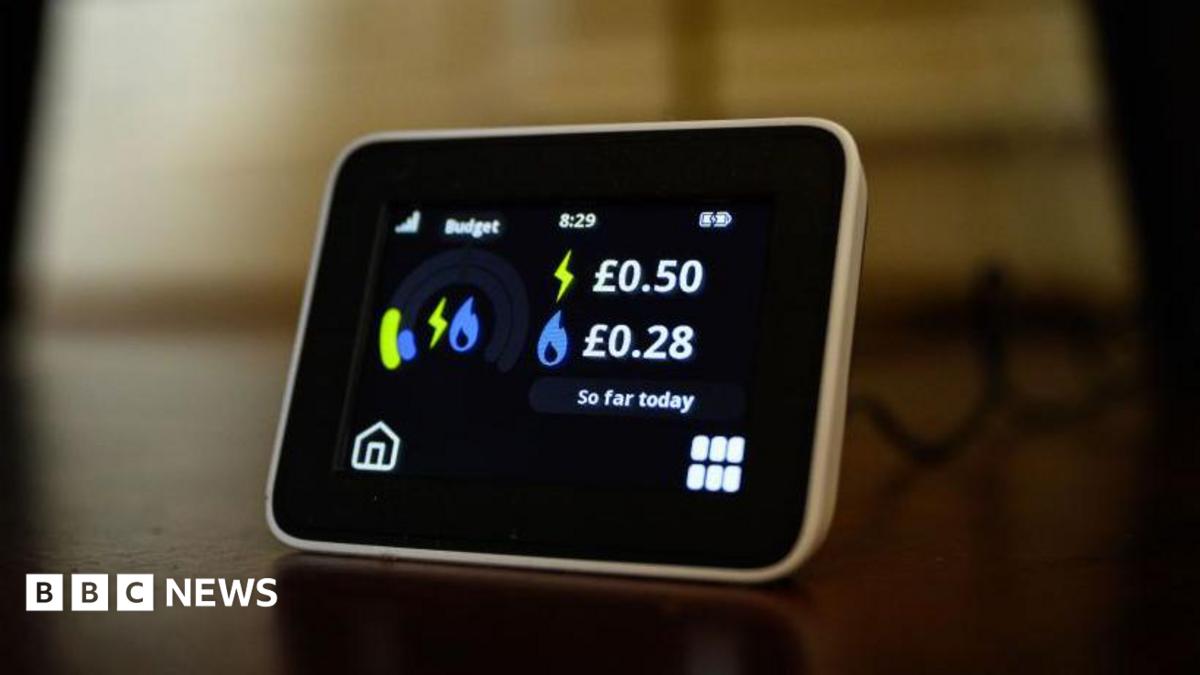
Budget Energy is the latest energy provider to increase its prices, with a 9.5% hike announced for some customers next month.
The increase will apply to to its residential electricity unit rates and standing charges for customers on variable tariffs, effective from 4 August.
Customers on fixed-price tariffs will not be affected.
The company said that the rise is due to the “continued volatility” in wholesale energy markets along with geopolitical tensions and sustained pressures across the energy market.
Advertisement
Budget Energy NI’s Managing Director Ken O’Byrne said they will monitor the market conditions closely.
“We understand this is unwelcome news, especially at a time when many households are facing pressure on everyday costs,” he said.
“We encourage our customers to review their tariff options to make sure they are on the plan best suited to their needs.”
Budget Energy said they will notify all affected customers directly in advance of the change, providing full details of the updated tariffs.
The shares of Ola Electric Mobility slipped over 2% on Tuesday to extend a 9% fall over the past three consecutive sessions, as media reports around vendors filing fresh insolvency pleas against its subsidiary over alleged dues worth Rs 40 crore spooked investors.
The shares of the company dropped to Rs 41.41 per share on the NSE on Tuesday morning, the lowest level seen by the stock this month so far. The recent sharp drop in Ola Electric’s share price follows multiple media reports that two suppliers of its operating arm approached the National Company Law Tribunal (NCLT), seeking insolvency proceedings over alleged unpaid dues exceeding Rs 40 crore.
Ola Electric subsidiary faces insolvency pleas
Sterling E-Mobility Solutions, the EV components arm of Sterling Tools, and Anevolve Mando eMobility, part of the Anand Group, have sought the initiation of the Corporate Insolvency Resolution Process (CIRP) against the EV scooter-maker’s wholly owned subsidiary, Ola Electric Technologies.
Advertisement
The Economic Times couldn’t independently verify the reports.
Last year, Ola Electric’s vendor, Rosmerta Digital Services, filed an insolvency petition against the subsidiary, which is responsible for manufacturing the company’s electric scooters at its factory in Tamil Nadu. The company had denied the claims in an exchange filing.
Earlier this month, Ola Electric said it registered 43,719 vehicles in the first quarter of FY27, nearly doubling from 22,252 vehicles in the previous quarter. Citing VAHAN data, Ola Electric said that the quarter concluded with 16,144 registrations in June 2026, reflecting sustained business momentum and the company’s strongest monthly performance in recent quarters. “Q1 FY27 marks a significant milestone in our growth journey, with registrations doubling sequentially and June registering 16,144 vehicles – our strongest monthly performance in recent quarters. The sustained momentum reflects the success of our operational improvements, strong product portfolio and continued customer preference for Ola Electric. We remain focused on accelerating EV adoption through technology leadership, manufacturing scale and delivering a differentiated ownership experience,” said a spokesperson for Ola Electric.Also read:Ola Electric’s Q1 FY27 registrations nearly double sequentially
The EV scooter-maker further said that India’s electric two-wheeler market continues to witness strong structural growth, driven by increasing consumer preference for electric mobility, favourable economics compared to ICE vehicles, and growing awareness around energy security and sustainability. As EV adoption accelerates across the country, Ola Electric said that it remains well-positioned to lead the transition through its vertically integrated technology and manufacturing platform. “The company continues to expand EV penetration through innovative products, advanced battery technology, manufacturing scale and a robust direct-to-customer distribution network across India,” it added.
Advertisement
Ola Electric share price
Ola Electric shares have fallen over 4% in one week and around 7% in one month. The stock has, however, gained around 12% in 2026 so far and nearly 1% in one year.
The company currently has a market capitalisation of more than Rs 19,462 crore.
(Disclaimer: Recommendations, suggestions, views and opinions given by the experts are their own. These do not represent the views of The Economic Times)
East Yorkshire Hydraulics, founded nearly 50 years ago, has been acquired by the son of one of its founders
Pictured L-R Rebecca Pickering (Mercia), Sarah Newbould (British Business Bank), Andy Kirby (Managing Director- East Yorkshire Hydraulics Ltd)(Image: Shaun Flannery Photography Ltd)
A family-run business in Hull established nearly half a century ago is eyeing future growth after being acquired by the son of one of its founders. East Yorkshire Hydraulics, which has its head office on Harpings Road, was set up in 1979 to specialise in the design, installation and repair of hydraulic units across a range of industries.
Over the decades, the firm has expanded its client base to encompass sectors spanning steelmaking and aerospace through to power generation, and it also operates as a service centre for accumulator inspection and certification. Now the company, which currently has a workforce of 18, has secured a six-figure loan from NPIF II – Mercia Debt Finance, managed by Mercia as part of the Northern Powerhouse Investment Fund II (NPIF II), to drive expansion following a buyout.
The deal sees Andrew Kirby take control of the company, having first got involved with the company more than 35 years ago, lending a hand during his school holidays. His father, Barrie Kirby, and fellow engineer John Williams co-founded the firm in the 1970s, and the transaction allows Mr Williams to step down and retire.
Barrie Kirby, meanwhile, will continue in a part-time capacity. The funding will also strengthen the company’s working capital and facilitate investment in new equipment.
Advertisement
Andrew Kirby, managing director, said: “East Yorkshire Hydraulics has built a track record for expertise and reliability. It’s an honour to be taking over the business and I hope one day to pass on the legacy to my own sons.”, reports Hull Live.
“Demand for hydraulic systems has increased in recent years as high energy costs encourage businesses to improve efficiency by replacing older hydraulic systems. We have also won new work after Brexit as companies have sought out UK suppliers.
“The business is now well placed across all sectors and the loan will help us to move forward and target new areas such as renewable energy.”
Rebecca Pickering of Mercia Debt added: “Barrie and John have built a respected and profitable business over the years and Andrew, who himself has years of experience with the company, is ideally placed to take over the reins. We are pleased to support it as it enters an exciting new chapter in its history.”
Advertisement
Sarah Newbould, Senior Investment Manager at the British Business Bank, said: “Through NPIF II, we’re pleased to support the next stage of East Yorkshire Hydraulics’ journey, helping to preserve a successful heritage family business while enabling continued investment in its people and long-term growth.
“Advanced manufacturing plays a vital role in driving innovation and regional economic prosperity, and this investment reflects NPIF II’s commitment to supporting businesses that contribute to the UK’s Modern Industrial Strategy and strengthen the country’s industrial base.”
Gamblers who spend more than £1,000 online in a 24-hour window will have to undergo a financial risk assessment, the industry regulator has announced.
The Gambling Commission said this would also apply to anyone spending over £3,000 in a rolling 90-day period. Under-25s will have lower thresholds.
The assessments will be based on data held by credit reference agencies, but the commission has insisted they are not “affordability checks”.
Operators will use the information to help them identify gamblers at risk of financial harm or in financial difficulty.
Advertisement
The commission has not set a timeline for the changes saying they will be introduced in a “very careful, staged way”.
The checks will start with over-25s who gamble more than £5,000 in a rolling 24-hour period. The watchdog says this will affect less than 0.5% of customers. It will begin following engagement companies and other stakeholders over the summer.
The threshold will eventually be lowered to £1,000 in 24 hours.
On Tuesday, the commission said high-spending gamblers were between two and four times more likely to have a debt management plan, and between two and five times more likely to have a default in the previous 12 months than consumers in the wider population.
The commission has been looking into whether gambling companies can use credit reference data to spot customers at risk of financial harm.
The acting chief executive of the Gambling Commission, Sarah Gardner, said the vast majority of customers would “never, ever” require an assessment.
Those who do would have a frictionless, document-free assessment provided by credit reference agencies, with no impact on their credit score.
Advertisement
The commission has insisted that the assessments are not the same as affordability checks, which Gardner said were “deeply unpopular” with gamblers.
She added that stakeholders had expressed concerns that more regulation could push problem gamblers onto the black market.
The holiday park business which started with just one site in the 1980s now has 15 sites within its portfolio
Winksley Banks, Foxhall and Hutton Bonville Country Parks have joined the Maguires Country Parks portfolio(Image: Maguires Country Parks)
A growing holiday park group has expanded further into Yorkshire following the addition of three new parks. Maguires Country Parks was first established in 1981 when the Maguire family purchased their first site, Low Carrs Country Park, in County Durham.
The Berwick-based family firm has since grown to offer a collection of holiday, residential and touring parks across the North East and Yorkshire. The company specialises in holiday home ownership and touring experiences, with a focus on well-maintained parks, quality facilities and peaceful countryside locations.
Its holiday and touring destinations include Ord House, Forget Me Not, The Kaims, High Hermitage, Hurworth Springs, Newbus Grange, Marwood, Low Carrs, Nursery Garden, The Burrows, Swaleside and Swainby.
The business now owns 15 sites across Northumberland, County Durham and North Yorkshire after swooping for three sites in North Yorkshire. Directors have announced the addition of Winksley Banks Country Park, Foxhall Country Park and Hutton Bonville Country Park to its growing portfolio.
Advertisement
The expansion strengthens Maguires’ presence across North Yorkshire, with each park offering a distinct setting in well-kept grounds and peaceful surroundings.
Winksley Banks Country Park, based near Ripon, is set within a mature woodland setting close to the banks of the River Laver. The new owners said the park offers a quiet and established environment for holiday home ownership, with easy access to the Yorkshire Dales and surrounding countryside.
Foxhall Country Park meanwhile is set near the market town of Richmond and close to the Yorkshire Dales. The park provides a rural setting with open views across the North Yorkshire countryside, while remaining within easy reach of local amenities and attractions.
Lastly, Hutton Bonville Country Park is situated near Northallerton, offering a more open countryside setting with views across rural North Yorkshire. Its location provides convenient access to both the Yorkshire Dales and North York Moors, making it a practical base for exploring the wider region.
Advertisement
All three parks focus on holiday home ownership, giving customers the opportunity to enjoy regular breaks in a consistent and well-managed environment. Each site reflects Maguires Country Parks’ approach to creating relaxed, low-density parks designed for comfort and ease of use throughout the year.
Gilbert Maguire, director of Maguires Country Parks, said: “We’re pleased to bring these three parks into the Maguires portfolio. Each one offers something a bit different in terms of location and setting, but all fit with what we’re about – well-maintained parks in good locations where people can enjoy their time away.”
The addition of Winksley Banks, Foxhall and Hutton Bonville marks a continued period of growth for the family-run business, building on its established presence across the North East and Yorkshire.
📣 “Investors are not walking away from the AI story, but they are asking whether a sector priced for perfection can keep delivering perfection into earnings season.”
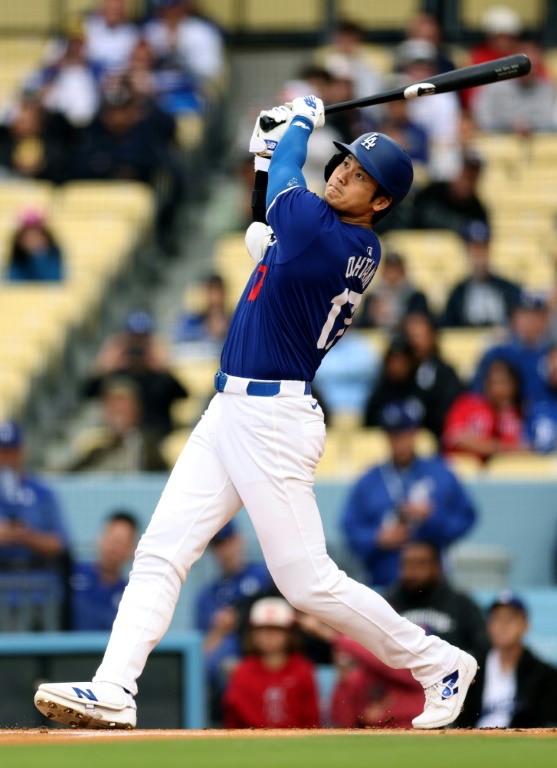
LOS ANGELES — Shohei Ohtani moved to the doorstep of another career milestone Monday night, blasting his 19th home run of the season, and the 299th of his career, to help power the Los Angeles Dodgers to an 8-7 win over the Colorado Rockies at Dodger Stadium.
Ohtani’s two-run shot in the third inning put the Dodgers ahead in a back-and-forth contest that ultimately went their way. The home run came off Rockies left-hander Kyle Freeland, with Ohtani jumping on a first-pitch cutter and driving it out to left-center field at 105.9 mph off the bat. The blast followed an earlier at-bat in the game in which Ohtani laced a 111.8 mph lineout to center field in the first inning, a sign that his timing at the plate remained sharp even before he connected for the milestone-adjacent home run two innings later.
The performance also offered reassurance for the Dodgers regarding Ohtani’s health. The two-way superstar had sat out Saturday’s game due to right biceps tightness, a development that had drawn attention given his dual role as both a starting pitcher and one of the game’s most dangerous hitters. Ohtani’s authoritative swing against Freeland went a long way toward easing any lingering concern about the injury, at least for the time being.
Of Ohtani’s 299 career home runs, 128 have come during his three seasons with the Dodgers since signing with the club, a stretch that has included an MVP-caliber run of production at the plate alongside his continued development as a frontline starting pitcher. Ohtani has built his career total across stints with the Los Angeles Angels, where he broke into the majors and established himself as one of the sport’s most unique two-way talents, and now with the Dodgers, where he has continued to add to his home run tally while also contributing on the mound.
Advertisement
Ohtani’s home run total this season now stands at 19, keeping him on a productive pace at the plate as the Dodgers navigate the middle stretch of their schedule. According to Baseball Savant data, Ohtani has posted an average exit velocity of 93.6 mph this season, along with a hard-hit rate of 52.4 percent, a weighted on-base average of .394, and a barrel rate of 15.9 percent, numbers that reflect the kind of consistent offensive production that has made him one of the sport’s most feared hitters in recent years.
Ohtani’s push toward 300 career home runs adds to an already extensive list of milestones and records he has accumulated throughout his career. He became the first player in Major League Baseball history to qualify for the league leaders as both a hitter and a pitcher in the same season, and he remains the only player in the sport’s history to post a season with at least 10 pitching wins and at least 30 home runs, a feat previously matched only by Babe Ruth in 1918 under different statistical benchmarks. Ohtani has also won multiple American League Most Valuable Player awards, including a unanimous selection in 2023, cementing his status as one of the most decorated two-way players the sport has ever produced.
Monday’s game also featured contributions from other Dodgers hitters as the team worked to hold off a persistent Rockies offense. The 8-7 final score reflected a competitive contest between the two clubs, with Colorado continuing to push the Dodgers throughout the game before Los Angeles ultimately secured the win at Dodger Stadium.
Ohtani’s recent form on both sides of the ball has continued to draw attention throughout the season. In a start earlier this year against the Rockies, Ohtani turned in a dominant pitching performance, tossing six hitless innings while also hitting a leadoff home run, extending a rare feat in which he became the only pitcher in Major League history to hit a leadoff home run in a game he also started on the mound, a feat he has now accomplished on multiple occasions, including during a two-way masterpiece in Game 4 of the 2025 National League Championship Series. Dodgers manager Dave Roberts has previously praised Ohtani’s rare blend of pitching dominance and offensive production, noting the exceptionally high standards to which the two-way star holds himself even after strong outings on the mound.
Advertisement
With Ohtani sitting at 299 career home runs, attention now turns to when he will connect for the 300th of his career, a milestone that would place him among a relatively small group of players in franchise and league history to reach that career total. Given his current home run pace of 19 through the portion of the season completed so far, Ohtani appears well positioned to continue climbing the sport’s career home run leaderboards in the years ahead, particularly as he continues to split his workload between hitting and pitching for a Dodgers team built around his unique two-way talents.
Ohtani was also named to the National League All-Star roster for this year’s All-Star Game, scheduled for July 14 in Philadelphia, continuing his streak of All-Star selections as both a pitcher and position player, a distinction that remains unique to his career among modern Major League players. His continued excellence at the plate and on the mound has kept him at the center of MLB’s national conversation throughout the season, with Monday’s home run against the Rockies serving as the latest example of the sustained production that has defined his time with the Dodgers.
As the Dodgers continue their pursuit of another deep postseason run, Ohtani’s steady march toward 300 career home runs adds another storyline to a season already defined by his continued dominance as one of the sport’s most singular talents, with fans and teammates alike now watching closely for the moment he reaches the milestone in the games ahead.
























































You must be logged in to post a comment Login