Connect with us
DAPA Banner
DAPA Coin
DAPA
COIN PAYMENT ASSET
PRIVACY · BLOCKDAG · HOMOMORPHIC ENCRYPTION · RUST
ElGamal Encrypted MINE DAPA
🚫 GENESIS SOLD OUT
DAPAPAY COMING

Business

BTS Wraps European Tour in Paris With Record-Breaking Crowd, Promises Fans a Return

Published

on

BTS.

BTS closed out the European leg of its Arirang World Tour with a triumphant finale in Paris on Friday, drawing more than 700,000 fans across the continent and setting a new attendance record at Stade de France before promising the city’s supporters they would be back.

The group performed “BTS World Tour ‘Arirang’ in Paris” at Stade de France on July 18, marking the final stop of a European run that began in Madrid, Spain, before continuing through Brussels, Belgium; London, United Kingdom; Munich, Germany; and finally Paris. The tour comprised 10 concerts across five cities, with every show selling out immediately upon the release of tickets and drawing a combined audience of 717,000 fans throughout the run.

The Paris shows delivered the tour’s most significant milestone, drawing 92,000 spectators per performance, a new single-show attendance record for any BTS concert. The venue itself carries deep significance for the group, having previously hosted the European finale of BTS’s “Love Yourself: Speak Yourself” tour back in 2019. Friday’s concert marked BTS’s return to Stade de France roughly seven years and one month later to close out another major tour cycle at the same stadium.

French President Emmanuel Macron and his wife visited the venue the day before the final show, on July 17, drawing significant attention to the tour’s closing stretch in the French capital. Throughout the European run, fans repeatedly sang along in Korean to the traditional folk song “Arirang,” while stadiums filled with waving Taegeukgi flags and light sticks. Concertgoers wearing traditional Korean hanbok were spotted at multiple venues throughout the tour, reflecting broader international interest in Korean culture extending beyond the group’s music itself.

Advertisement

Speaking after the Paris concert, the members of BTS reflected on the emotional weight of closing out the tour in the French capital. “We were truly happy. We were grateful that so many people love us, and every moment from the start of the European tour to the final Paris show was happy,” the group said, adding, “It is moving to be able to perform in front of so many people.” The members also addressed the Paris crowd directly in French, promising to return to the city. “Paris is a city of fashion, gastronomy and romance and a place with the best ARMY. It is a city that has everything we love. We will definitely come back,” they said, drawing enthusiastic cheers from the audience.

Group member Jin offered a personal reflection tied to his previous visit to the city, recalling his participation in the Paris Olympic torch relay the year before. “I have memories of being with you on those beautiful streets, and I am so happy to meet you here again. Thank you for making an unforgettable day,” Jin said.

The tour’s closing stretch drew strong reviews from French and German media outlets. French newspaper Le Parisien described the Paris performance as “a performance with explosive energy and plenty to see,” while Le Monde highlighted the group as “the group that brought K-pop to the top of the global music industry,” noting that the band’s teamwork and identity appeared to have grown even stronger following its hiatus. German daily Die Welt similarly praised the group, calling BTS “one of the most successful pop groups of our time” and describing them as a leading example of a band successfully transcending traditionally Western-centric cultural trends within the global music industry.

The European tour produced several historic firsts for the group. BTS became the first Korean artists to perform at Belgium’s King Baudouin Stadium and Germany’s Allianz Arena. At London’s Tottenham Hotspur Stadium, the group set the venue’s single-show attendance record for any concert held there.

Advertisement

Beyond the cultural and musical impact, the tour also delivered measurable economic effects in host cities. According to global hotel and real estate data company CoStar, Madrid’s hotel industry recorded an all-time high in revenue per available room during the month BTS performed there, with hotel occupancy reaching 89.5% on the first day of the group’s concerts in the city, underscoring the tour’s significant impact on local tourism and hospitality revenue.

In London, organizers built out an expansive fan experience tied to the tour called “BTS the City Arirang – London,” which brought BTS-themed events to multiple landmarks across the city, including the London Eye, the River Thames and the British Museum, transforming portions of the city into a citywide festival experience shared by fans, tourists and local residents alike.

With the European leg of the tour now complete, BTS is set to take on one of the most high-profile stages of the group’s career in the coming days. The group will appear as co-headliners of the halftime show for the 2026 FIFA World Cup final at MetLife Stadium in New Jersey on July 20, Korean time, performing alongside major global pop stars including Madonna, Shakira and Justin Bieber. The appearance marks the first time a halftime performance of this scale has been staged for a World Cup final, adding another milestone to what has already been a landmark comeback year for the group following its extended hiatus tied to mandatory military service.

With record-setting attendance figures, sold-out shows across five countries, glowing reviews from major European publications, and a series of historic firsts across multiple venues, BTS’s European tour run has reinforced the group’s continued global drawing power as it heads into one of the most-watched entertainment appearances of the year on the World Cup’s biggest stage.

Advertisement
Continue Reading
Click to comment

You must be logged in to post a comment Login

Leave a Reply

Business

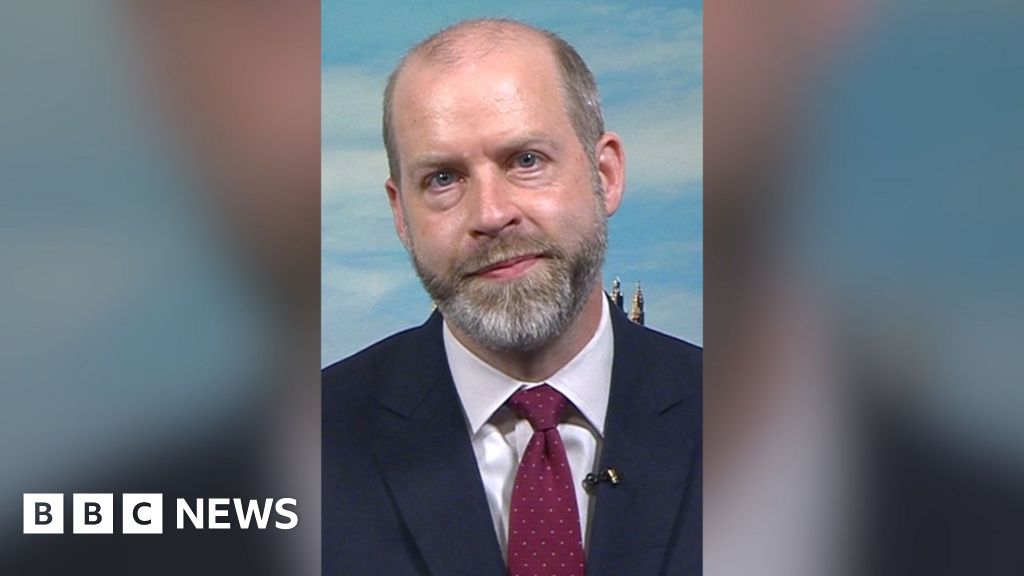
Minister pressed on electricity bills savings figures

Published

on

Jonathan Reynolds sat in a studio wearing a suit and a tie

The government says a typical home will save about £45 a year when VAT is cut from 5% to 0%.

Continue Reading

Business

Trump’s OBBBA saved millions of manufacturing jobs, NAM report says

Published

on

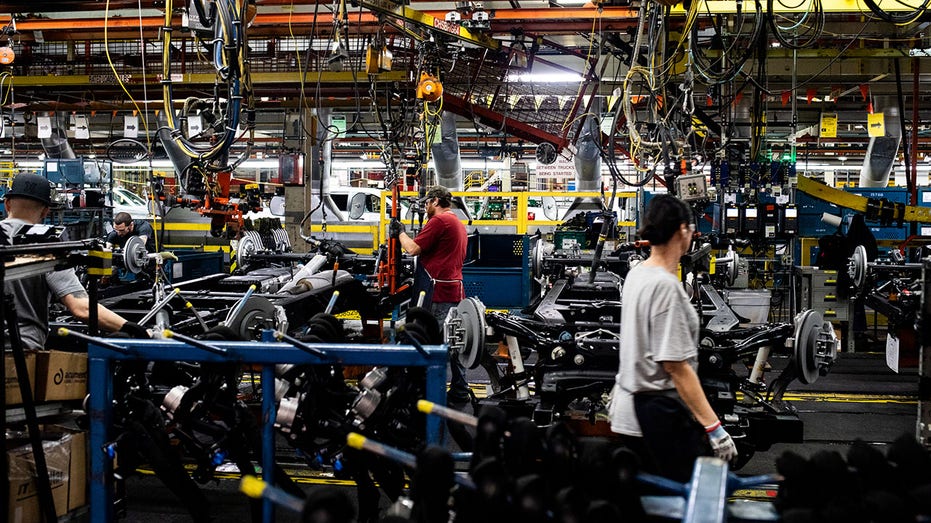
Trump's OBBBA saved millions of manufacturing jobs, NAM report says

A group representing America’s manufacturers on Tuesday released a report marking one year since the enactment of the 2025 tax law that includes examples of the legislation’s impact on the manufacturing sector in all 50 states.

The One Big Beautiful Bill Act (OBBBA) was passed by Republicans in Congress and signed into law by President Donald Trump last July, and the legislation contained a number of provisions aimed at boosting the manufacturing industry – such as 100% expensing of newly built factories and immediate depreciation of machinery – and preventing tax hikes.

Advertisement

The National Association of Manufacturers (NAM) released an analysis that estimated the number of jobs protected by the provisions of the OBBBA, along with the amount of economic growth and wages it preserved. It also chronicled how a manufacturer in each state used the tax law.

“Tax policy is far more than numbers on a spreadsheet and these stories – across all 50 states – show the real-world impact of pro-growth policies that have given manufacturers the confidence to invest, hire, raise wages and expand facilities,” said National Association of Manufacturers CEO Jay Timmons.

TRUMP VISITS MACK TRUCKS PLANT IN BATTLEGROUND PENNSYLVANIA DISTRICT TO TOUT ECONOMIC AGENDA AS MIDTERMS LOOM

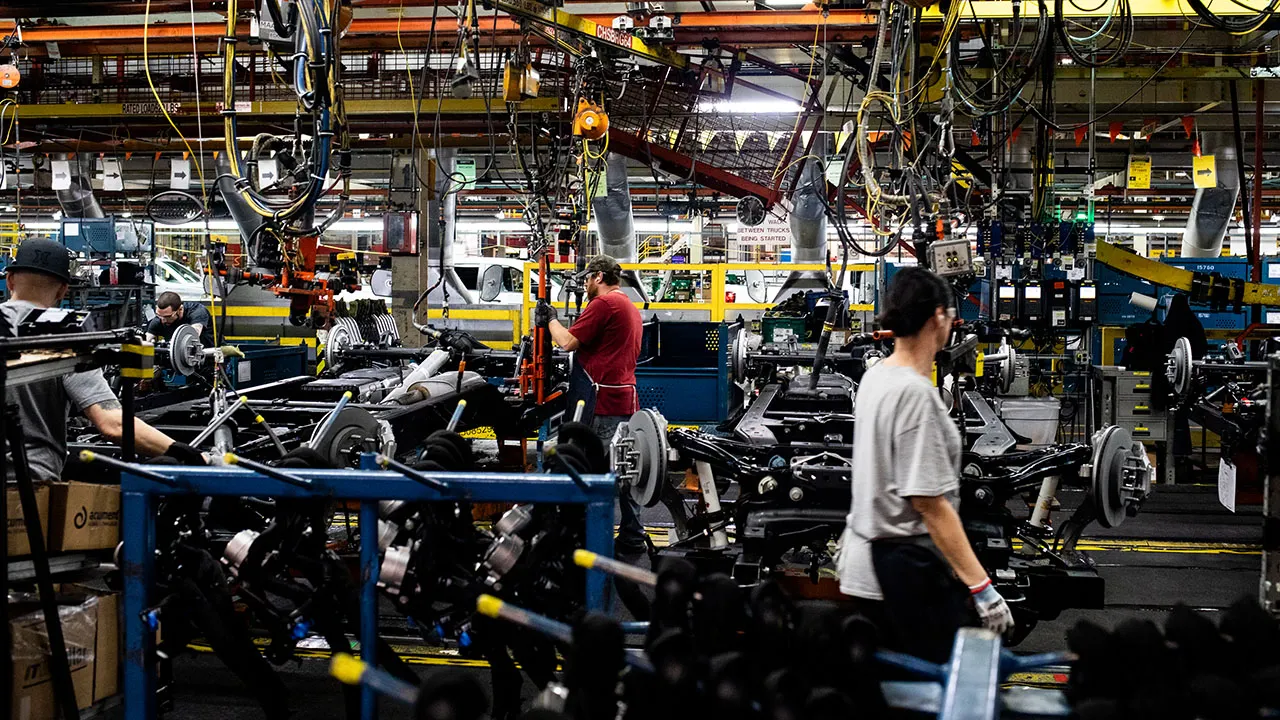
Workers at a GM auto assembly plant

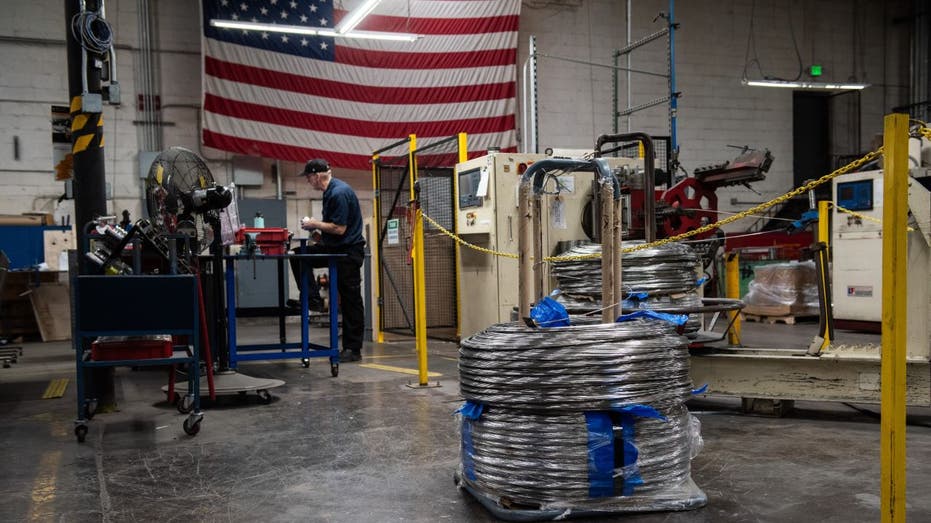
NAM’s report highlighted the tax law’s impact on jobs, economic growth and wages in all 50 states. (Emily Elconin/Bloomberg via Getty Images)

Timmons added the tax reform law is “one of the most consequential pieces of legislation in a generation,” and said that “Congress and the administration delivered the permanent, pro-growth tax code manufacturers needed to invest in their people, purchase new equipment and plan confidently for the future.”

Advertisement

NAM’s analysis found that in California, the law saved 708,000 jobs, $134 billion in GDP and $67 billion in wages – the most in each category among the 50 states. Commercial helicopter manufacturer Robinson Helicopter said it’s taking advantage of immediate research and development expensing to deploy new R88 helicopters as control centers for fire surveillance drones.

“These types of innovative solutions require a significant amount of research and development spend,” said Will Fulton, vice president of business development at Robinson Helicopter, adding that the immediate R&D deduction “accelerates our ability to innovate and increases the ability with which we can bring these property and lifesaving innovations to market.”

TRUMP TURNS NATO SPENDING FIGHT INTO WIN FOR US DEFENSE COMPANIES

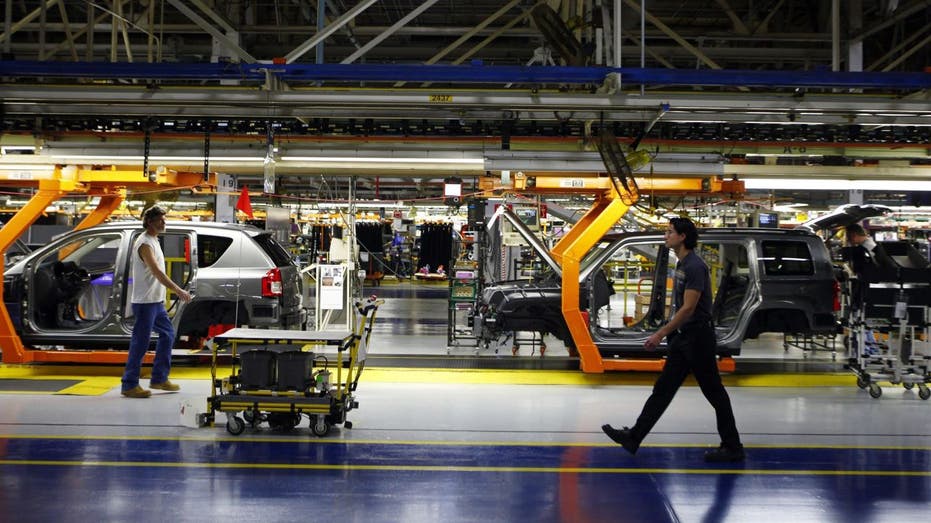
Belvidere auto assembly

The OBBBA made it easier for manufacturers to deduct R&D expenses as well as new capital expenditures. (Michael Tercha/Chicago Tribune/Tribune News Service via Getty Images)

Texas’ totals ranked the second highest at 547,000 jobs, $107 billion in GDP and $51 billion in wages saved by the OBBBA, per NAM’s analysis. WilliamsRDM said the tax law’s R&D expensing allowed it to continue to invest in engineering, prototyping, testing and design improvements to deploy new tech for aerospace, defense, fire suppression, energy and security firms.

Advertisement

Florida, which NAM estimated had 399,000 jobs and $36 billion in wages saved by the OBBBA, has seen Johnson & Johnson invest more than $1 billion to expand operations in Jacksonville.

J&J’s chief technical operations and risk officer, Kathy Wengel, said that the “investments reflect our sustained commitment to advancing American innovation, enabled by a strong and stable corporate tax rate.”

GOOGLE PARTNERS ON AI TRAINING FOR THOUSANDS OF AMERICAN MANUFACTURING WORKERS

US manufacturing

Manufacturers cited the newfound certainty of the tax law as giving them confidence to invest. (Andrew Magnum/Bloomberg via Getty Images)

Snap-On CEO and NAM Vice Chair for Tax and Finance Policy Nick Pinchuk said that he’s seen firsthand how “long-term tax uncertainty translates into workforce certainty,” adding that the law was “an investment in the American worker.”

Advertisement

“It reaffirms, for all to see, the critical importance of manufacturing to our nation’s future and it assures that prosperous tomorrow by giving manufacturers, including small- and family-owned businesses, a significant boost to their capabilities and the confidence to making lasting investments in their people – to recruit, train and retain skilled workers, strengthen career pathways, and create good paying jobs in communities across the country,” Pinchuk said.

“When I first started drafting the One, Big, Beautiful Bill, I made it clear: permanent, pro-growth tax policy was a top priority. If we were truly going to make a lasting impact for manufacturers, we had to deliver legislation that gave them the confidence to invest in equipment, hire workers, and plan for the long term — and that’s exactly what we did. By preventing a massive tax hike and locking in permanent, pro-growth tax policies, we gave manufacturers the certainty they needed to grow. One year later, we’re seeing the results, with success stories from manufacturers in all 50 states.”

House Ways and Means Committee Chairman Jason Smith, R-Mo., said in a statement that when drafting the OBBBA, his top priority was a “permanent, pro-growth tax policy.”

“If we were truly going to make a lasting impact for manufacturers, we had to deliver legislation that gave them the confidence to invest in equipment, hire workers, and plan for the long term – and that’s exactly what we did,” he said. “By preventing a massive tax hike and locking in permanent, pro-growth tax policies, we gave manufacturers the certainty they needed to grow. One year later, we’re seeing the results, with success stories from manufacturers in all 50 states.”

Advertisement

GET FOX BUSINESS ON THE GO BY CLICKING HERE

Senate Finance Committee Chairman Mike Crapo, R-Idaho, added in a statement that, “One year in, the results are clear – the Working Families Tax Cuts are strengthening our economy, boosting American manufacturing and creating greater opportunities for workers for years to come.”

Continue Reading

Business

Melbourne Cup field awaits Secret Harbour voters

Published

on

Melbourne Cup field awaits Secret Harbour voters

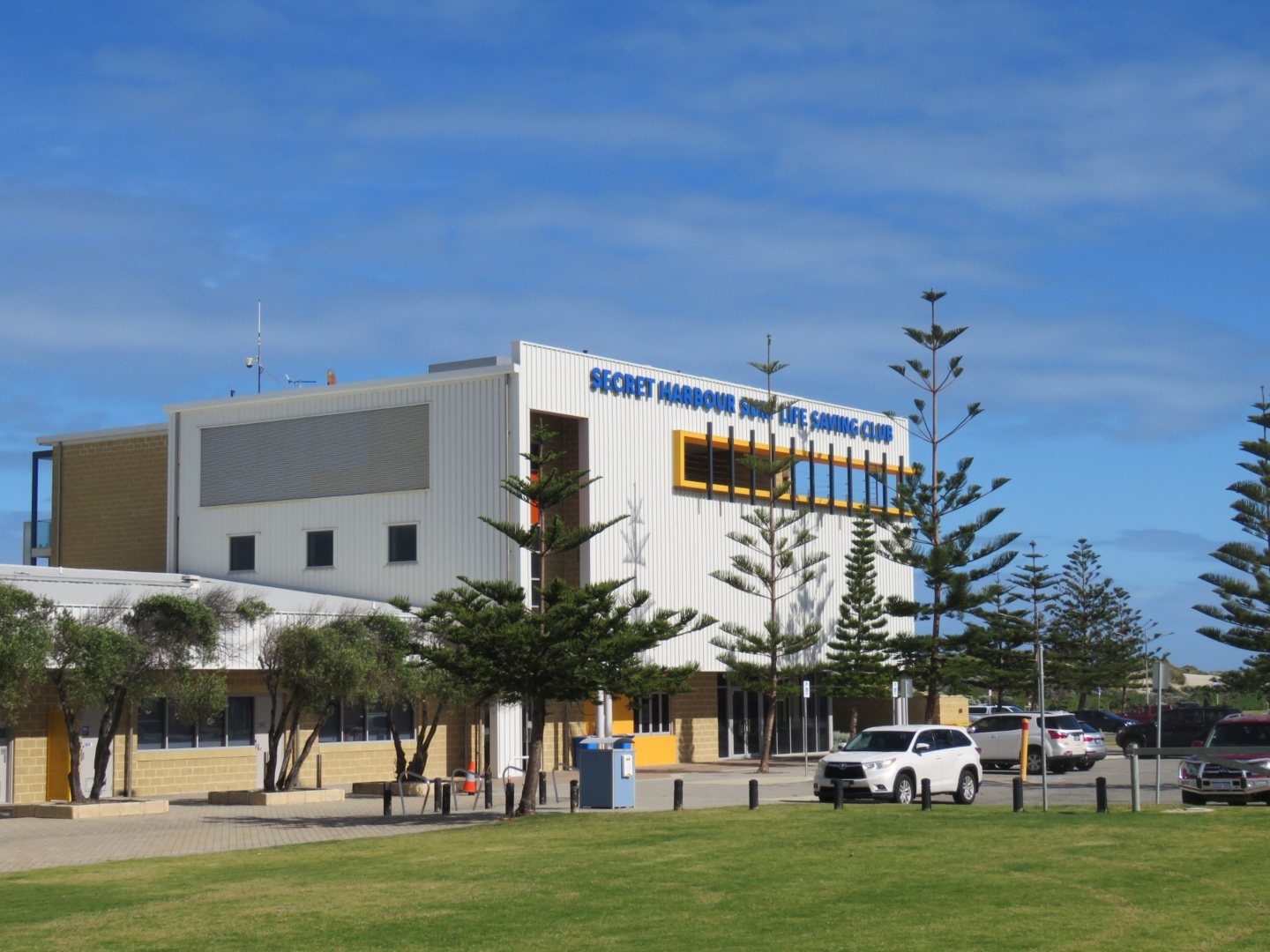
Voters in the Secret Harbour by-election will have to wade through the names of 16 candidates – including several perennial wannabe politicians – when they go to polling booths on August 29.

Continue Reading

Business

SBI Funds shares list below GMP expectations, but Street sees up to 23% upside

Published

on

SBI Funds shares list below GMP expectations, but Street sees up to 23% upside
SBI Funds Management shares made a decent D-Street debut on Tuesday, listing 6.85% higher than the IPO price at Rs 613.30 apiece on the NSE, with analysts advising allotted investors to hold the stock despite the listing falling short of grey market expectations.

The AMC’s shares listed at Rs 610 on the BSE, a 6.27% premium to the IPO price of Rs 574, giving the company a market capitalisation of Rs 1.24 lakh crore at debut.

SBI Funds Management IPO GMP

Despite the decent debut, SBI Funds Management’s listing fell short of grey market expectations. Ahead of listing, the unlisted shares of SBI Funds Management were trading with a grey market premium (GMP) of 16-18%, according to data on sites tracking the grey market.

Read More: SBI Funds Management Share Price Live

Advertisement

The much-awaited listing of SBI Funds Management comes after its IPO drew robust investor demand between July 14 and July 16, with the issue being subscribed nearly 42 times. Qualified Institutional Buyers (QIBs) led the response, subscribing their quota more than 140 times, while the portions reserved for Non-Institutional Investors (NIIs) and Retail Individual Investors (RIIs) were subscribed 22.5 times and nearly 4 times, respectively.

The IPO, launched to raise Rs 9,795 crore at a price band of Rs 545-574 per share, entirely comprised an offer for sale (OFS) of 17.10 crore shares by existing shareholders State Bank of India (SBI) and Amundi. Since there was no fresh issue, SBI Funds Management will not receive any proceeds from the IPO, with the entire amount going to the selling shareholders.
Here’s what brokerages and analysts are advising investors to do after the much-awaited listing of SBI Funds Management on Dalal Street.

Emkay on SBI Funds Management shares

Before the listing, Emkay Global Financial Services had initiated coverage on SBI Funds Management shares with a ‘Buy’ call and a target price of Rs 750 apiece, implying 31% upside from the IPO price of Rs 574 apiece. The brokerage said that its positive view rests on three pillars.
The first among them is SBI’s brand and distribution, coupled with significant under-penetration of SBI MF within the SBI Bank channel. Secondly, the sustained shift in asset mix toward higher-yielding assets such as equity and alternate investments (AIF/PMS) is likely to support revenue yields. Lastly, the economies-of-scale-led operating leverage is expected to drive a 17% EBITDA CAGR over FY26-29, according to the brokerage.
“As the savings and investment needs of Indians evolve, the middle class is increasingly embracing mutual funds as its core investment vehicle, and SBI AMC has all the ingredients to become ‘the asset manager to every Indian,’ just as its parent has become ‘the banker to every Indian’,” Emkay said.

Also read | SBI Funds Management gets 2 buy calls before listing. Why Equirus, Emkay see up to 31% upside

Equirus Securities on SBI Funds Management shares

Equirus Securities initiated coverage on SBI Funds Management shares with a ‘Long’ rating and a March 2027 target price of Rs 675. The target implies an upside of about 18% from the issue price of Rs 574. The brokerage noted that the company is one of the strongest franchises in India’s asset management industry, backed by scale, SBI’s distribution network, sticky SIP flows and strong profitability.

Advertisement

It believes that SBI Funds Management is well placed to benefit from India’s financialisation trend, as more household savings move into mutual funds, SIPs and market-linked products.

What other analysts are suggesting?

Analysts said investors who were allotted shares in SBI Funds Management IPO can either book listing gains or stay invested, depending on their holding period. “We expect the stock to list at 15% premium, and investors with a short-term horizon may consider booking profits if they plan to participate in upcoming IPOs. Given the company’s strong fundamentals, long-term investors can consider holding the stock for 1-2 years for healthy returns,” said Geetanjali Kedia, IPO expert at SPTulsian Investment Advisers.

Vaqarjaved Khan, senior fundamental analyst at Angel One, meanwhile had suggested that allotted shareholders can consider holding the stock due to its strong fundamentals, healthy margins, ROEs, and leadership in the AMC segment. “However, fresh investors should avoid chasing the stock at elevated post-listing levels,” he said.

Narendra Solanki, head of fundamental research at Anand Rathi Share and Stock Brokers, also had said that investors who were allotted shares in the IPO should consider holding the stock for the long term, given its strong growth prospects.

Advertisement

Also read | SBI Funds pays razor-thin banker fees on top India IPO of 2026

(Disclaimer: Recommendations, suggestions, views and opinions given by the experts are their own. These do not represent the views of The Economic Times)

Continue Reading

Business

searches spike ahead of August deadline

Published

on

searches spike ahead of August deadline

Britain’s business owners are quietly Googling their way through VAT season. Searches for “VAT definition” have jumped 23 per cent in the past week, new research from Hiscox shows, as firms with VAT quarters ending 30 June face a 7 August filing deadline.

Searches for “VAT meaning” are up 11 per cent over the same period, and the tax generates 17,500 definition-related searches every month, enough to make it one of the UK’s most searched business acronyms. Only KPI, on 60,800 monthly searches, along with the likes of GDPR, CRM and EBITDA, rank higher.

The confusion runs deeper than one tax. More than half (52 per cent) of business owners admit they do not feel confident in their understanding of common business and financial terminology. When they hit an unfamiliar term, 16 per cent say they feel frustrated, 13 per cent intimidated and 12 per cent overwhelmed.

Where do they turn? Over two-thirds (69 per cent) reach for a search engine. Some 16 per cent use social media platforms such as TikTok and LinkedIn for short-form explanations, a figure that rises to 31 per cent among under-30s. And one in six (15 per cent) now ask AI tools such as ChatGPT to decode unfamiliar concepts.

That last habit comes with a health warning. “AI tools can help to provide quick explanations, but they’re not always consistent with how information is sourced or explained,” cautions Nick Thornhill, Direct and Partnerships Director at Hiscox. “As these tools are becoming more widely used in day-to-day business decision-making, it becomes increasingly important that business owners cross-check their understanding, especially when terminology feeds into financial, operational or compliance decisions.”

Advertisement

The stakes are not trivial. HMRC’s latest figures put the total tax gap for 2024/25 at £59.2 billion, with VAT accounting for a fifth of that shortfall, and failure to take reasonable care and simple error the two biggest behavioural causes. Small businesses represent the largest slice of the gap, at 62 per cent.

Getting it wrong is expensive at an individual level too. Inaccuracies judged to show a lack of reasonable care can attract penalties of up to 30 per cent of the extra tax due.

Clare March, founder of Her Business Counts, argues the real problem is not remembering what the acronym stands for but understanding what it means in practice. Misjudging VAT’s impact on cash flow, she warns, can lead to decisions that “look fine on the surface but quietly put you in a really difficult position.”

For SMEs, VAT is rarely just an admin line. The tax shapes behaviour to the point that firms are deliberately curbing growth to stay under the £90,000 registration threshold, and it remains politically live, with ministers scrapping VAT on electricity bills only this month. Add the demands of Making Tax Digital and the shift towards e-invoicing, and the terminology burden keeps growing.

Advertisement

In response, Hiscox has partnered with business mentor Jonathan Cooper on four tips for building financial confidence, including finding trusted sources of guidance and avoiding common mistakes, and has launched an interactive quiz letting owners test themselves on the UK’s most searched acronyms.

“Business owners are expected to know and use a wide range of terms across finance, operations and compliance on a daily basis, but our research suggests that many are still having to look them up as they go,” says Thornhill. “Business language can be complicated and having an understanding of these terms is important for decision-making and communication with advisors, investors and teams.”

One note of reassurance for anyone panicking about 7 August: not every business files that day. VAT deadlines depend on your accounting period, and returns are normally due one calendar month and seven days after the quarter ends. Checking your own date, rather than Googling someone else’s, is a sensible place to start.


Amy Ingham

Amy Ingham

Amy Ingham is a reporter at Business Matters, covering UK business news with a focus on breaking news, business policy, late payments and insolvency. She joined the magazine in 2026 after completing the NCTJ Diploma in Journalism at Harlow College’s journalism school. Her recent reporting includes British Steel’s nationalisation and its impact on SME suppliers, the decline in late payments by large firms, and Insolvency Service director disqualifications. Reach her at aingham@cbmeg.co.uk.

Advertisement

Continue Reading

Business

Karur Vysya Bank shares soar 11% after stellar Q1 results. What investors should know

Published

on

Karur Vysya Bank shares soar 11% after stellar Q1 results. What investors should know
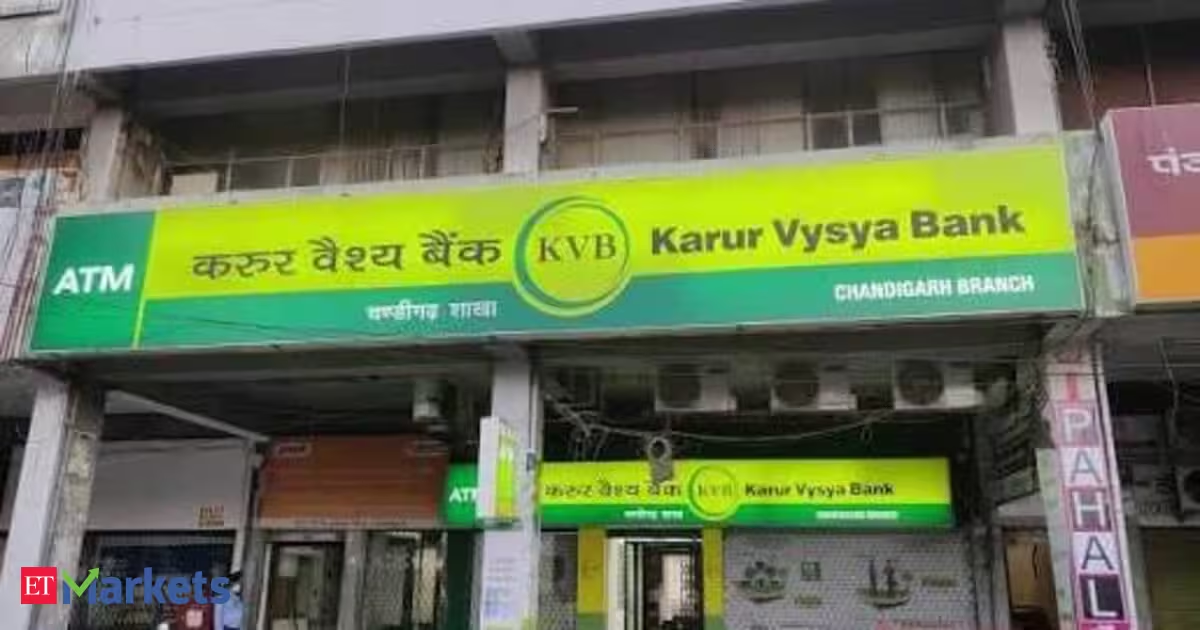
Shares of Karur Vysya Bank rallied as much as 10.6% to their day’s high of Rs 333 on the BSE on Tuesday after the lender reported a 44.92% YoY jump in net profit to Rs 756 crore in the first quarter, compared with Rs 521 crore a year earlier.

Pre-provision operating profit (PPOP) rose 36.15% YoY to Rs 1,096 crore from Rs 805 crore, while net interest income increased 31.76% YoY to Rs 1,423 crore from Rs 1,080 crore.

Net interest margin (NIM) improved to 4.34% from 3.86% in the year-ago quarter. The cost of deposits declined by 32 bps to 5.45% from 5.77%, while the yield on advances increased by 11 bps to 10.11% from 10%, the company said in a regulatory filing.

Commission and fee income rose 7.57% YoY to Rs 270 crore from Rs 251 crore. Operating expenses increased to Rs 769 crore from Rs 721 crore in the corresponding quarter last year, while the cost-to-income ratio improved to 41.24% from 47.24%.

Advertisement

Karur Vysya Bank asset quality

On asset quality, gross non-performing assets (GNPA) stood at 0.74% of gross advances as of June 30, 2026, compared with 0.66% a year earlier, though the ratio was lower by 1 bp QoQ. In absolute terms, GNPA stood at Rs 772 crore, up from Rs 593 crore as of June 30, 2025. Net NPA (NNPA) remained at 0.19%, unchanged from a year earlier, while the absolute figure stood at Rs 196 crore compared with Rs 170 crore. The provision coverage ratio (PCR) stood at 96.21% as of June 30, 2026, compared with 96.76% a year earlier.

Karur Vysya Bank’s total business stood at Rs 2.27 lakh crore as of June 30, 2026, up 15.94% YoY from Rs 1.96 lakh crore a year earlier, an increase of Rs 31,243 crore. Total deposits rose 14.94% YoY to Rs 1.22 lakh crore from Rs 1.06 lakh crore, while total advances grew 17.13% YoY to Rs 1.04 lakh crore from Rs 89,374 crore, an increase of Rs 15,306 crore.
Also read:SBI Funds Management shares list at 7% premium over IPO price

Karur Vysya Q1 management commentary

Ramesh Babu B, Managing Director and CEO of Karur Vysya Bank, said the bank’s performance indicators were in line with its earlier guidance. He said the bank had front-loaded growth in the first quarter of the financial year, in line with its approach in recent years. He added that consistent performance across growth, profitability and asset quality reflected the strength of the bank’s performance since the start of the year.
(Disclaimer: Recommendations, suggestions, views and opinions given by the experts are their own. These do not represent the views of The Economic Times)

Continue Reading

Business

Ryanair CEO says Boeing engine damage, smashed window caused by foreign object

Published

on

Ryanair window dislodges mid-flight, passenger partially sucked outside

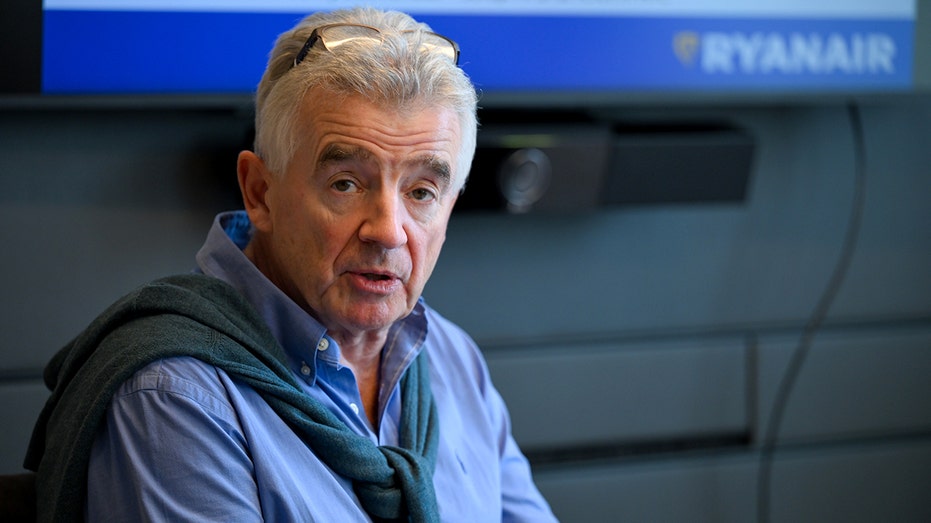
Ryanair CEO Michael O’Leary said on Monday that an initial finding from an investigation into a broken window incident earlier this month suggested “foreign object damage” and that the problem was caused by the aircraft’s age or servicing conditions.

“Initial indication would suggest it looks like a foreign object damage to the engine on takeoff at Thessaloniki, but we don’t have, we can’t say that definitively,” O’Leary told analysts after Ryanair’s results for the April-June quarter.

Advertisement

O’Leary said the aircraft was 18 years old and that the engine had been fully serviced and overhauled within the last two years.

WHY A BLOWN-OUT PLANE WINDOW NEARLY SUCKED A PASSENGER OUTSIDE AT 16,000 FEET

Ryanair CEO Michael O'Leary

Ryanair CEO Michael O’Leary said the aircraft was 18 years old and that the engine had been fully serviced and overhauled within the last two years. (Chris J. Ratcliffe/Bloomberg via Getty Images / Getty Images)

He also said that a draft report on the incident would be released in under a month, with a more detailed report to follow.

On July 10, a piece of a Boeing 737’s engine broke off the aircraft and smashed into a window shortly after takeoff from Thessaloniki, Greece, en route to Memmingen, Germany, according to video footage and the Federal Aviation Administration.

Advertisement

The plane lost pressure and was forced to make an emergency landing.

RYANAIR ‘RELUCTANTLY’ ENDS MANDATORY FEE FOR PARENTS TO SIT WITH CHILDREN AMID INVESTIGATION

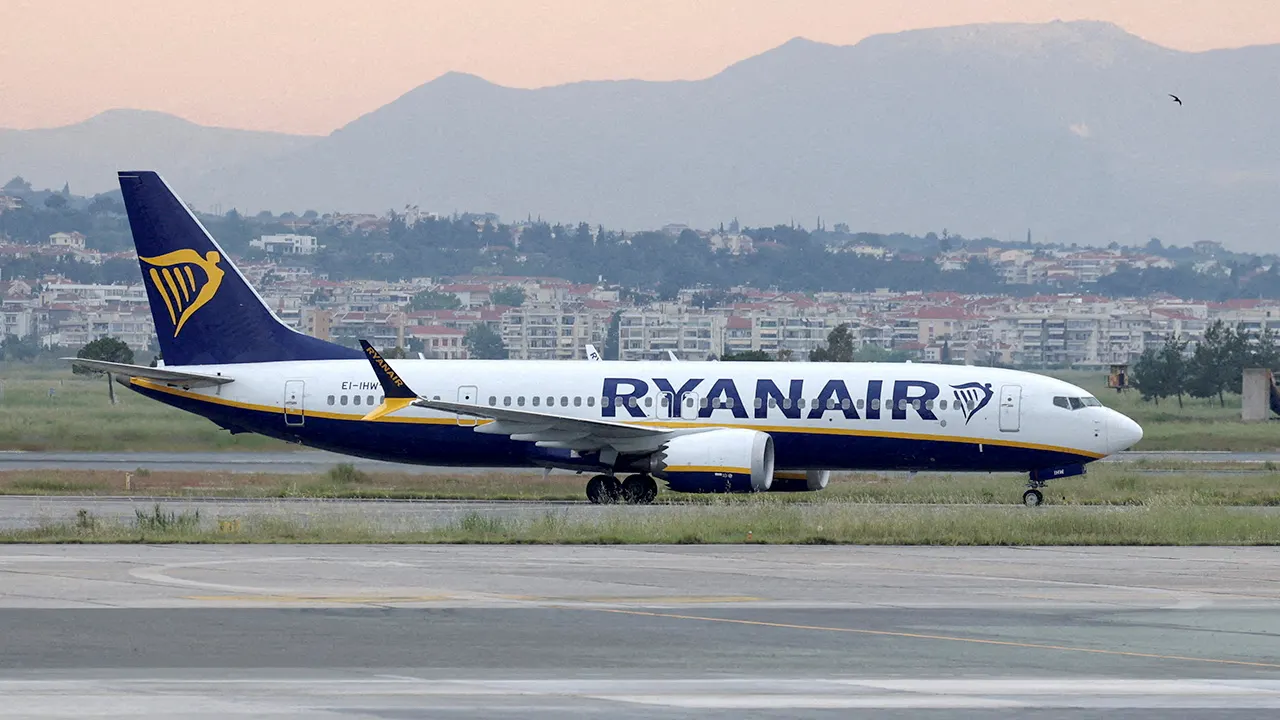
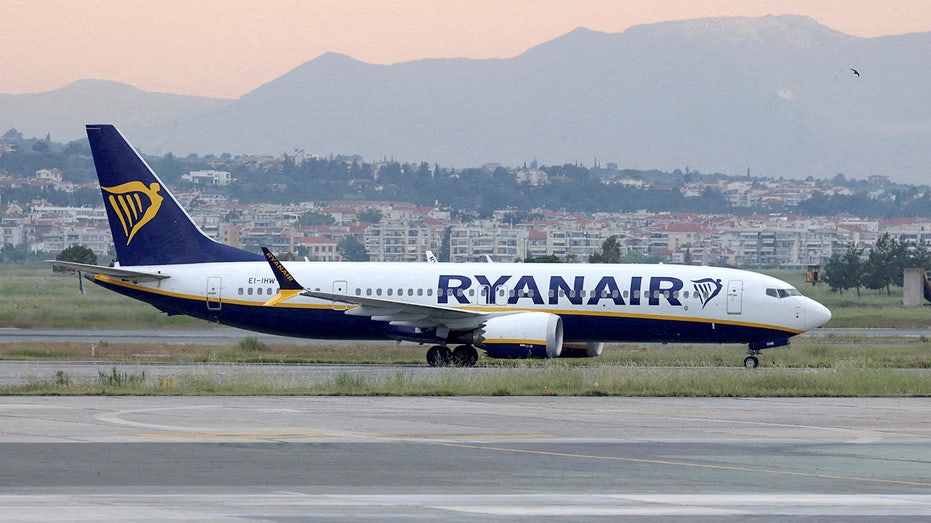
A Ryanair jet in Thessaloniki, Greece

A passenger was partly sucked out of the aircraft, but his wife and other passengers were able to grab him and pull him back inside. (Reuters/Alexandros Avramidis/File Photo / Reuters Photos)

A passenger was partly sucked out of the aircraft during the incident, but his wife and other passengers were able to grab him and pull him back inside.

The 61-year-old passenger was hospitalized after he suffered neck and shoulder injuries as well as friction burns.

Advertisement

Flight records show the aircraft, which was delivered new to Ryanair in 2008, had been climbing past 15,000 feet about six minutes after takeoff before then descending to about 6,000 feet. The aircraft remained at the lower altitude for about 30 minutes to burn fuel before returning to Thessaloniki about an hour after departure, according to flight-tracking site Flightradar24.

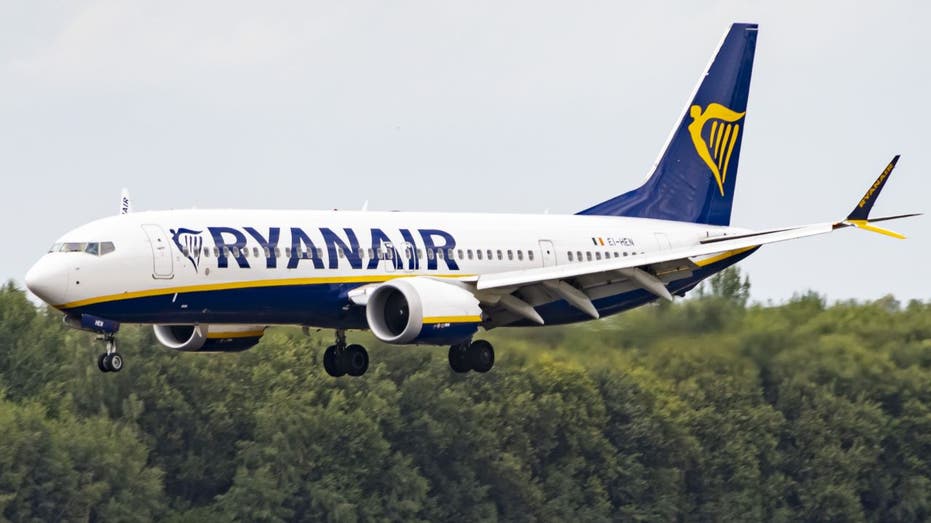
Ryanair Boeing

The National Transportation Safety Board is investigating the incident. (Photo by Nicolas Economou/NurPhoto via Getty Images / Getty Images)

GET FOX BUSINESS ON THE GO BY CLICKING HERE

The National Transportation Safety Board is investigating the incident.

If damage to the aircraft was caused by an external object, it could reduce Boeing’s and Ryanair’s responsibilities in the incident.

Advertisement

Reuters contributed to this report.

Continue Reading

Business

Rightcharge named Visa’s home charging reimbursement partner

Published

on

Rightcharge named Visa's home charging reimbursement partner

British EV charging specialist Rightcharge has been certified as Visa’s only recommended home charging reimbursement partner in Europe, a tie-up that tackles the problem fuel cards were never built to solve: paying drivers back for the electricity they buy at home.

The numbers explain why Visa went looking. Data from Rightcharge’s fleet platform shows just 27 per cent of EV fleet charging spend goes through the public network. The other 73 per cent happens at home, typically overnight, on the driver’s own energy bill.

For fleet suppliers, and the thousands of UK businesses that rely on them, that split is the awkward truth of electrification. A fuel card only ever had to work at the petrol station. An electric fleet charges on the road and on the driveway, and any supplier solving just one side leaves most of its customers’ charging spend unmanaged.

Visa covers the public side through Visa Fleet 2.0, its open-loop payment infrastructure for fleet and mobility, offering real-time tracking, spend controls and acceptance wherever Visa is taken. The home side has historically been harder. Legacy fuel card systems were never designed for home energy billing, leaving fleet managers to verify costs manually, driver by driver.

Rightcharge’s platform closes that gap. It integrates with each driver’s home energy tariff to calculate the exact cost of every charging session, reimburses drivers automatically through a direct payment to their energy bill, and gives fleet managers confidence that only the work vehicle is being charged.

Advertisement

Getting the sums right is not a trivial concern. HMRC’s advisory electric rate currently stands at 7p per mile for home charging against 15p for public charging, a gap that makes the driveway comfortably the cheapest place to run an electric fleet, provided the reimbursement is accurate.

Certification under the Visa Ready for Fleet programme validates Rightcharge’s platform against Visa’s standards for functionality, integration and security. It also puts the firm in front of Visa’s global network of issuers and fleet mobility providers, which the company says will accelerate the rollout of accurate home charging reimbursement across UK fleets.

For fleet managers, the combined offering promises accurate reimbursement for every home session and real-time visibility across the fleet. For drivers, it means no out-of-pocket costs and no expense claims, wherever they plug in.

“We’re witnessing a rapid transition across Europe as fleets move from diesel to electric. The technology that fleets use to pay is transitioning with it. We realise that Visa will play a major role as a public charging payment platform and we’re proud to offer fleet suppliers the Rightcharge platform in parallel to manage payments for charging at home. Joining Visa Ready for Fleet also gives us the opportunity to work with a broader ecosystem of fleet, payments and mobility partners, supporting our ambitions to expand our reach across Europe,” said Freddie Winterbotham, Head of Strategic Partnerships at Rightcharge.

Advertisement

Neil Halls, Head of Fleet & Mobility at Visa, commented: “Through the Visa Ready for Fleet programme, we’re building a network of partners who can offer a comprehensive range of solutions tailored to our fleet and mobility clients. Rightcharge’s expertise in home charging reimbursement fills a critical gap in the ecosystem. We look forward to working together to help more UK fleets make the move to electric with confidence.”

The timing is notable for smaller operators. Fleets remain the engine of EV demand even as some big names, Uber among them, row back on all-electric targets, citing costs and patchy incentives. With the Workplace Charging Scheme now in its final confirmed year and grant money still on the table, SMEs weighing up the practicalities of workplace EV charging may find the admin side of electrification is finally catching up with the ambition.


Amy Ingham

Amy Ingham

Amy Ingham is a reporter at Business Matters, covering UK business news with a focus on breaking news, business policy, late payments and insolvency. She joined the magazine in 2026 after completing the NCTJ Diploma in Journalism at Harlow College’s journalism school. Her recent reporting includes British Steel’s nationalisation and its impact on SME suppliers, the decline in late payments by large firms, and Insolvency Service director disqualifications. Reach her at aingham@cbmeg.co.uk.

Advertisement

Continue Reading

Business

Mike Ashley’s Frasers Group raises Hugo Boss stake to 30% in takeover bid

Published

on

Business Live

The fashion group, which owns Sports Direct and Flannels, has bought 2.5m new shares in Hugo Boss, taking its total stake up to 30.28 per cent and crossing the mandatory bid threshold under German takeover rules

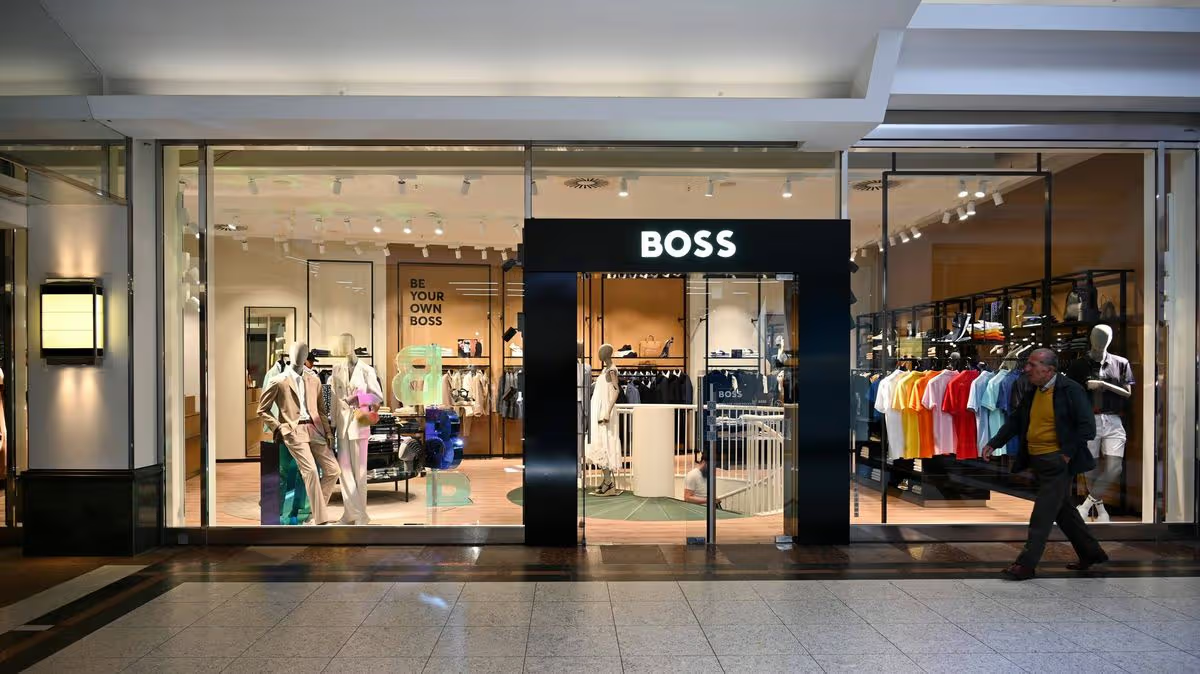
Hugo Boss store

Frasers is bidding for Hugo Boss (Image: GETTY)

Frasers Group has increased its stake in Hugo Boss beyond the threshold that compels it to make an offer for the entire business, intensifying pressure on the German fashion house to accept its £1.7bn proposal.

The fashion retailer, which owns Sports Direct and Flannels, announced on Tuesday that it had acquired 2.5m additional shares in Hugo Boss, lifting its total holding to 30.28 per cent. Under German takeover regulations, a shareholder must launch a bid for the whole company once their stake reaches the 30 per cent threshold.

Advertisement

Frasers said it was “pleased to confirm that it has exceeded the mandatory bid threshold,” adding that its existing bid “remains open for shareholders to accept”, City AM reported. The group, established by billionaire Mike Ashley, put forward a €38 per share offer for Hugo Boss last month, placing a value of nearly €2bn on the fashion brand.

However, Hugo Boss has urged its investors to reject this “inadequate bid”. The offer is set to expire on Monday 27 July. FTSE 250-listed Frasers Group already held approximately 26 per cent of Hugo Boss when it launched its bid last month.

The €38-per-share proposal raised questions amongst analysts as it represented merely a four per cent premium on Hugo Boss’ share price at the time of the offer. Shares in the German fashion house have subsequently risen above €38, having jumped more than nine per cent on the day Frasers submitted its offer.

Earlier this month, members of Hugo Boss’s management and supervisory board declared they “unanimously recommend that shareholders do not accept” the offer. Following a “comprehensive and independent review process”, the German fashion house concluded that the proposal would be “inadequate from a financial point of view”.

Advertisement

The company said it sought advice from bankers at the Bank of America and Goldman Sachs before determining that the offer price failed to reflect either the “standalone value” of Hugo Boss “nor its medium to long-term value creation potential”.

Last week, Frasers disclosed that its string of takeover bids — which included a hostile approach for Australian footwear retailer Accent — is driving its recovery. The group’s stakes in Hugo Boss and Accent contributed £50m to adjusted profit over the past year, it confirmed.

The FTSE 250 company recorded an eight per cent rise in revenue to £5.3bn for the year ending April, while pre-tax profit surged by more than a third to £528m.

Advertisement
Continue Reading

Business

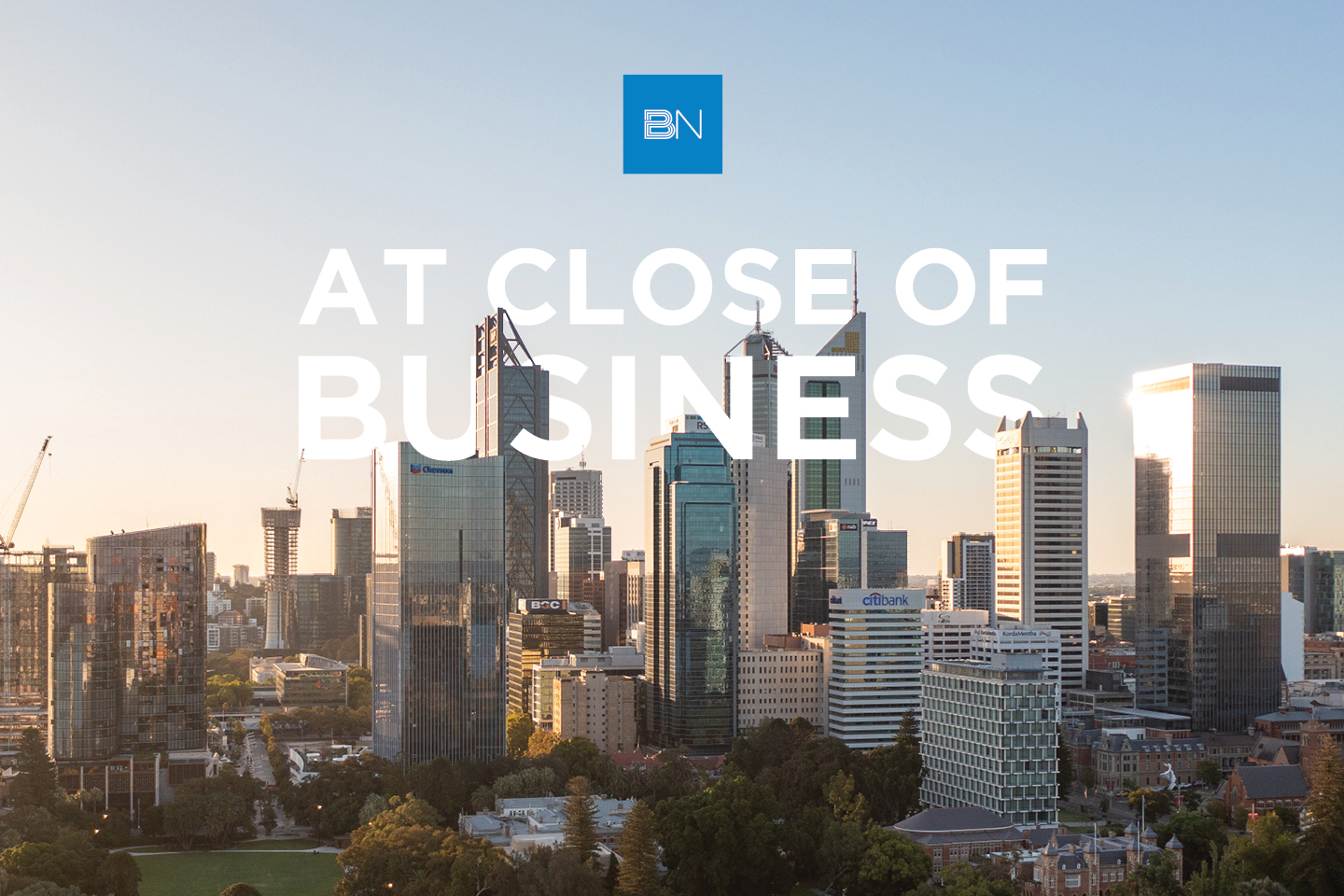
At Close of Business podcast July 21 2026

Published

on

At Close of Business podcast July 21 2026

Ella Loneragan and Claire Tyrrell discuss the revamp of multiple heritage properties in Fremantle.

Continue Reading

Trending

Copyright © 2025