
Business
Building Success One Job at a Time


Success doesn’t always start with a big break. For Joel Ney, it started with showing up, learning fast, and doing the work.
Joel grew up in Pine Grove, Pennsylvania. As a kid, he stayed active with sports and spent a lot of time with family and friends. Those early years shaped how he approaches life today—focused, steady, and grounded.
“Success to me is having the people around me trust that I can get the job done and being able to provide for my family,” Joel says.
That mindset would later define his career.
From School to Skilled Trades
Joel followed a practical path after high school. He graduated from Pine Grove High School and continued his education at Thaddeus Stevens College of Technology and Mansfield University.
He didn’t chase shortcuts. Instead, he focused on building real skills.
That decision led him into construction, where he started working with PKF III Construction. Like many in the trades, he began at the bottom.
“One of the biggest obstacles I have faced is starting as the new guy and having to work my way up with little experience,” he says.
It wasn’t easy. But it was clear what needed to be done.
“I overcame this by working hard and learning from anyone I possibly could.”
Learning the Craft and Growing in Welding
Joel didn’t stay in one lane. He expanded his skills and moved into welding, working with Great Coasters International.
This shift shows a pattern in his career. He looks for ways to grow, then puts in the effort to make it happen.
“A hard-working attitude and the willingness to learn and grow within your career,” he says, are key to long-term success.
In industries like construction and welding, progress often comes from doing. Joel embraced that. Each job became a chance to improve.
He focused on mastering the basics. Then he built on them. Over time, that approach helped him take on more responsibility and earn trust.
What Drives His Work Today
Joel’s motivation is simple and personal.
“My family and the people around me that I work with, and strive to help them succeed as well.”
This focus shows up in how he works. He doesn’t just aim to complete tasks. He wants to be someone others can rely on.
That mindset has helped him contribute meaningfully to teams and projects. It also reflects a bigger idea—success is not just about individual results. It’s about helping others move forward, too.
Staying Focused and Moving Forward
Every career has moments of doubt. Joel has learned how to manage them.
“One thing at a time and stay away from feelings of uncertainty and self-doubt.”
That approach keeps him steady. Instead of getting overwhelmed, he breaks things down and focuses on the next step.
He also believes in setting clear goals.
“Setting goals and pushing myself to achieve them.”
This combination—focus and goal setting—has helped him move forward in his career without losing direction.
A Different View on Feedback
Joel has a practical view of feedback and outside opinions.
“As long as I believe myself and my work to be successful, peer feedback is not very valuable to me.”
This doesn’t mean ignoring others. It means trusting his own standards first.
In hands-on industries like construction and welding, results speak clearly. Joel focuses on the quality of his work and the trust he builds with others.
Life Outside of Work
Outside of his career, Joel Ney stays active and connected to his interests.
He enjoys traveling, hunting, fishing, and riding ATVs. He also continues to work on construction and contracting projects, even outside of his main job.
His connection to the community is just as strong. He volunteers at his church and helps with local youth sports teams. He also supports SPCA organizations and local charities.
These activities reflect the same values he brings to work—consistency, effort, and a focus on helping others.
Building a Career That Lasts
Joel Ney’s story is not about overnight success. It’s about steady progress.
He started with limited experience. He learned from others. He built skills over time. And he stayed focused on what matters—trust, family, and doing the job right.
His career shows how small, consistent actions can lead to real results. By taking things one step at a time, he has turned effort into opportunity.
And in his own words, it comes back to a simple idea:
“Having the people around me trust that I can get the job done.”
That trust is what he continues to build—one project at a time.

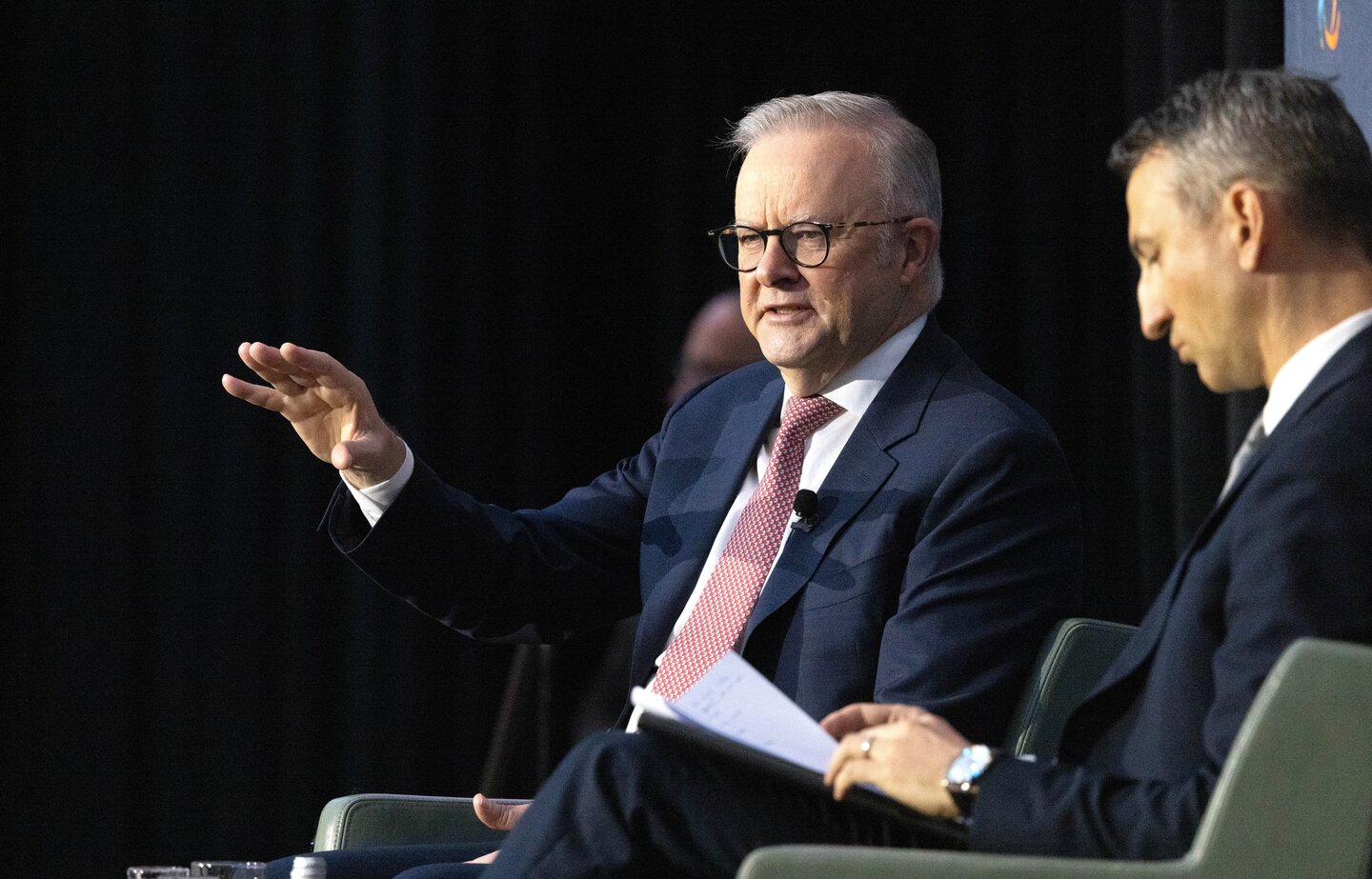
Prime Minister Anthony Albanese has given a strong indication his government will not adopt any form of super-profits tax on gas exports ahead of the May federal budget.
Business
ETMarkets PMS Talk | Outperforming in a Crash: How Qode Growth Fund beat its benchmark by 14%, explains Rishabh Nahar
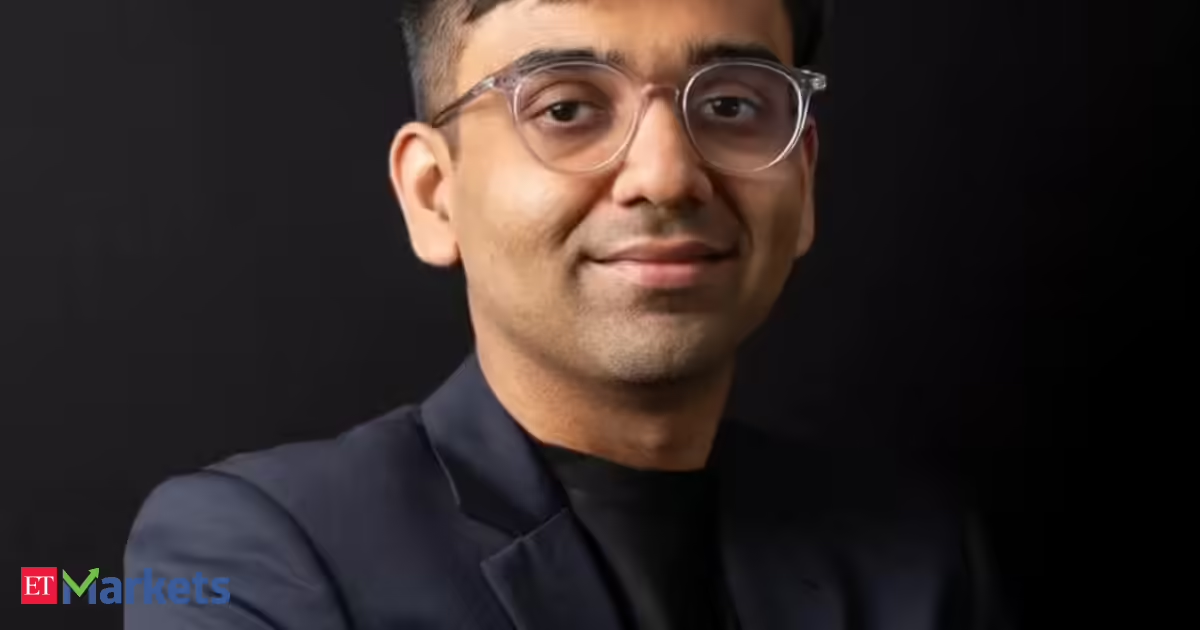
Yet, the Qode Growth Fund managed to do just that—beating its benchmark by over 14 percentage points during the brutal Q4FY26 sell-off.
In this edition of ETMarkets PMS Talk, Rishabh Nahar, Partner and Fund Manager at Qode Advisors, decodes the strategy behind this resilience—from a disciplined focus on quality and value investing to a systematic derivatives overlay that helped limit downside risks.
He also shares insights on small-cap valuations, portfolio positioning, and why periods of market stress often present the most compelling opportunities for long-term investors. Edited Excerpts –
Q) Please take us through the performance for FY26?

A) FY26 was a tale of two halves. The first half saw elevated valuations and selective market participation, while the second half, particularly Q4, was defined by a sharp, broad-based correction.
Between January and March 2026, the Nifty 50 fell 14.54%, the Nifty Smallcap 250 declined 14.36%, and the Nifty Microcap 250 dropped 16.20%. It was one of the most challenging quarters Indian equity markets have seen in recent memory, driven by escalating geopolitical tensions, fears of a broader conflict, and a sharp spike in crude oil prices.Against this backdrop, Qode Growth Fund delivered -0.20% for Q4, compared to -14.36% for its benchmark, an outperformance of over 14 percentage points in a single quarter.
On a 1-year basis, QGF returned +7.13% versus -5.40% for the Nifty Smallcap 250, and since inception, the fund has returned +10.55% against the benchmark’s +2.50%.
More importantly, the fund ranked #1 across all equity PMS strategies in India for the month of March 2026, returning +1.34% in a month where the small-cap universe fell over 10%.
The performance story of FY26 is really about what didn’t happen — the drawdown that our investors didn’t experience. That, in our view, is the real measure of a strategy’s quality.
Q) The fund follows a multi-factor approach combining quality, growth, and value — how do you balance these factors during different market cycles?
A) We don’t toggle mechanically between factors based on market conditions. That would introduce timing risk that is very difficult to get right consistently. Instead, our approach is to build a portfolio that sits at the intersection of Quality and Value at all times, with Growth acting as the validation layer.
What this means in practice: we look for businesses with strong earnings growth trajectories, healthy return on equity, and reasonable balance sheets, but we only buy them when the market is pricing them at a discount to their growth rate.
Our current portfolio has a PEG of 0.64x, with 31.37% earnings growth against a forward PE of 20.09x. Compare that to large-caps, which trade at a forward PE of roughly 29.71x with TTM earnings growth of just 11.12%, a PEG of 2.67x. Investors are paying four times more per unit of earnings growth in large-caps relative to our portfolio today.
This quarter validated the approach. Our proprietary factor analysis showed that Value was the only major factor that held up during the correction, declining just 3.84% versus losses of 11 to 16% across Alpha, High Beta, Momentum, and Low Volatility factors.
Because our portfolio is built at the intersection of Quality and Value, it naturally provided a floor that pure momentum or growth-at-any-price strategies couldn’t.
The key discipline is avoiding the temptation to chase momentum when it’s running. That’s when valuations stretch, and that’s precisely when the risk of sharp drawdowns is highest.
Q) The fund’s max drawdown is significantly lower than the benchmark — what risk management frameworks helped achieve this?
A) There are two distinct layers to our risk management, and both contributed meaningfully this quarter.
The first is portfolio construction. We are deliberate about owning businesses with strong earnings fundamentals, low leverage, and reasonable valuations.
This means our equity book naturally holds up better during broad sell-offs, because we are not exposed to high-multiple, high-momentum names that tend to see the sharpest de-rating during risk-off periods.
Our portfolio companies reported 17.31% YoY PAT growth in Q3 FY26, well ahead of large, mid, and small-cap peers, which reflects genuine business quality rather than price momentum.
The second layer, and the more structural differentiator, is our derivatives overlay. This is not a tactical hedge that we put on when we feel nervous. It is a systematic, rules-based hedging mechanism that sits permanently across the portfolio.
During Q4, the options overlay contributed +11.08% over one month and +17.92% over three months, directly offsetting the equity-level drawdown during the sharpest phase of the sell-off.
The combination of quality-oriented stock selection and a systematic derivatives hedge produced the asymmetric outcome we saw this quarter. Our equity book absorbed some of the broader market decline, but the hedge more than compensated.
The result was a portfolio that outperformed its benchmark by over 14 percentage points in Q4, while limiting the maximum drawdown to a fraction of what the index experienced.
Q) With only 30 holdings, how do you balance concentration risk versus alpha generation?
A) Thirty holdings is a deliberate choice, not a constraint. Diversification beyond a certain point becomes diworsification. You end up owning the index at active fees, with the illusion of risk management but none of the benefits.
Our view is that meaningful alpha comes from high-conviction positions in businesses you understand deeply, not from spreading capital thinly across a hundred names.
With 30 holdings, every position has to earn its place. Each one is selected through our quantitative multi-factor model, which screens for quality of earnings, valuation attractiveness, and growth sustainability, and then stress-tested against portfolio-level concentration and correlation risk.
The concentration also has an important behavioural dimension. When you own fewer businesses, you monitor them more rigorously. Our quantitative process continuously tracks the earnings and valuation profile of each holding, and the portfolio rebalances annually to ensure we are not holding businesses where the investment thesis has weakened.
In practice, 30 well-chosen small-cap businesses across diverse sectors and end-markets provides genuine diversification of business risk, which is what ultimately matters, while retaining the concentration needed to generate meaningful alpha.
Q) What is the rationale behind maintaining roughly 89% equity exposure and 11% cash — are you positioning defensively?
A) The cash component requires a bit of unpacking, because it is not cash in the traditional defensive sense. A meaningful portion of it represents profits realised from our options positions that are yet to be redeployed, alongside the standard buffer we maintain for ongoing options activity. It is working capital for the derivatives overlay, not idle capital sitting on the sidelines waiting for the market to fall further.
That said, we are not artificially stretching to be fully invested either. At current valuations, we believe the equity holdings we have are priced attractively, and we see no reason to dilute the portfolio with lower-conviction positions simply to reach a notional 100% equity target.
The more important positioning signal is in our valuation indicators. Our Valuation Spread Index currently reads 37, suggesting equities are trading at a meaningful discount to historical norms.
Our Relative Valuation Gradient has moved to 92, one of the highest readings we have observed, indicating that small and micro-cap companies are significantly undervalued relative to large-caps.
These signals tell us that the risk-reward in our current holdings is genuinely attractive, and that the environment favours staying invested with patience rather than raising cash defensively.
Q) Smallcaps have been volatile — how are you positioning the portfolio in the current market environment?
A) Volatility in small-caps is not new, and it is not something we try to avoid. It is something we try to use. The Q4 correction was broad and sentiment-driven, not fundamental.
Our portfolio companies reported 17.31% YoY PAT growth in Q3 FY26, yet prices fell in line with the broader small-cap universe. That divergence between earnings delivery and market price is precisely the environment in which patient, disciplined investors build positions at attractive prices.
Our current positioning reflects that conviction. We are not rotating into large-caps or increasing cash in anticipation of further volatility. The data does not support that decision. A PEG of 0.64x on a portfolio growing earnings at over 31% is not a position you want to abandon because headlines are difficult.
What we have done is use the rebalancing process to upgrade quality within the small-cap universe. During Q4, we trimmed a position with significant US export revenue exposure, where tariff-related uncertainties made near-term earnings visibility difficult to underwrite, and redeployed that capital into a domestic-focused cybersecurity company with strong order visibility and margin quality. This is an environment that rewards selectivity within the small-cap universe, not wholesale retreat from it.
Our proprietary indicators also signal improving conditions. The Trend Navigator has begun recovering from its deeply compressed lows, and the Relative Valuation Gradient at 92 marks some of the most compelling relative entry points for smaller companies that we have seen in several years.
Q) What investment horizon should investors realistically have to benefit from this strategy?
A) We are candid about this. QGF is not designed for investors with a one to two year time horizon. It is a small-cap strategy, and small-cap investing almost by definition requires the patience to sit through periods of valuation compression that bear no relationship to underlying business performance.
The current quarter is a good illustration. Our portfolio companies are growing earnings at over 31% year on year. They are not in financial distress.
Their competitive positions have not deteriorated. Yet prices fell sharply because macro fears triggered indiscriminate selling across the segment. An investor with a two-year horizon might look at that and feel uncomfortable. An investor with a five-year horizon looks at that and recognises it for what it is: an opportunity.
We recommend a minimum horizon of three to five years, and ideally longer. The valuation anomaly in small and mid-caps, where you are paying 0.64x PEG for 31% earnings growth, does not persist indefinitely, but the market’s process of correcting it can be slow and non-linear.
The investors who benefit most from this strategy are those who remain invested through the full cycle, allowing the compounding from high-quality earnings growth to assert itself as valuations normalise.
Q) What would be your key message to investors considering allocating to QGF in FY27 amid the gloom and doom seen globally?
A) The best time to invest in quality small-cap businesses is precisely when it feels uncomfortable to do so, and right now, it feels uncomfortable.
Let’s look at the data objectively. Our portfolio trades at a forward PE of 20.09x against trailing earnings growth of 31.37%, a PEG of 0.64x. Large-caps are trading at a PEG of 2.67x.
Investors are currently paying four times more per unit of earnings growth for large-cap safety than for small-cap quality. That is a striking divergence, and one that history suggests does not persist over a three to five year horizon.
Our Relative Valuation Gradient, which measures the relative attractiveness of small versus large-cap companies, is at 92, one of the highest readings we have ever observed. Historically, readings at this level have preceded some of the most compelling return periods for patient investors in smaller companies.
The businesses in our portfolio are growing. The valuations are attractive. The derivatives overlay has demonstrated, in live market conditions, that it meaningfully limits downside. And our Trend Navigator signals that the period of maximum uncertainty may be giving way to one where clearer trends begin to emerge.
Gloom and doom make for compelling headlines. They also make for compelling entry points. For investors willing to look through the near-term noise and think in terms of a three to five year business cycle, FY27 may well look back on as one of the better entry points into quality small-cap equities in recent years.
Our message is simple: stay patient, stay disciplined, and invest with a manager who has the tools, both on the equity side and through systematic risk management, to navigate what comes next.
(Disclaimer: Recommendations, suggestions, views, and opinions given by experts are their own. These do not represent the views of the Economic Times)

TUCSON, Ariz. — Nearly three months after Nancy Guthrie was abducted from her Catalina Foothills home, investigators are advancing forensic analysis of DNA evidence, including hair samples sent to the FBI laboratory, as the search for the 84-year-old mother of NBC “Today” show co-anchor Savannah Guthrie reached its 88th day with no major public breakthroughs reported.
Pima County Sheriff Chris Nanos and federal authorities continue to describe the case as an active criminal investigation. While no suspect has been named and no arrests made in the abduction itself, officials confirm ongoing work with advanced forensic tools, including genetic genealogy techniques that have helped crack other high-profile cold cases.
The FBI has received DNA material recovered from inside Guthrie’s home, including hair evidence, for detailed testing. Sources familiar with the probe indicate the samples are undergoing next-generation sequencing and other specialized analysis. However, the FBI has clarified that this is not newly discovered evidence — the bureau requested the material more than two months ago after local authorities initially sent it to a private lab.
Blood droplets found on the front porch were confirmed early in the investigation to belong to Guthrie. Retired FBI profiler Jim Clemente and other experts have analyzed the spatter pattern, suggesting it could indicate she was injured during a violent confrontation with her abductor. Surveillance video captured a masked, armed intruder at the door around the time she vanished.
Guthrie was last seen around 9:45 p.m. on Jan. 31 after family members dropped her off following dinner. She was reported missing the next day when she failed to appear at church. The case quickly shifted from a missing-person inquiry to a suspected abduction.
The family, including Savannah Guthrie and her siblings, offered a $1 million reward for information leading to her safe return, plus additional incentives for arrests and convictions. Savannah returned to the “Today” show in early April, describing the family’s ongoing agony while pleading for public help.
A separate opportunist, Derrick Callella of California, faces trial after allegedly sending a fake ransom text to Savannah Guthrie. His case underscores how the high-profile disappearance has drawn scammers seeking to exploit the family’s distress. No verified ransom demand from the actual perpetrator has been confirmed.
Search efforts have been extensive, involving drones, cadaver dogs, ground teams and coordination across Arizona’s rugged desert terrain. Private investigators and former agents have publicly assessed that the chances of finding Guthrie alive after nearly 90 days are extremely low without proof-of-life communication, though authorities refuse to declare the case cold.
Forensic experts note that rootless hairs can still yield mitochondrial DNA useful for family tree building through genetic genealogy. Saliva potentially left on items like a flashlight reportedly held in the suspect’s mouth could also provide critical leads if properly analyzed.
The high-profile nature of the case has spotlighted vulnerabilities for elderly residents and the value of home security systems. Doorbell camera footage provided crucial early evidence, though the suspect’s mask and gloves have hindered identification. Additional neighborhood surveillance is still being reviewed.
Savannah Guthrie and her family have expressed gratitude for ongoing public support while asking for privacy as they await answers. In emotional appeals, they have stressed their desperate need for closure. “We need to know without a doubt that she’s alive,” Savannah said in one video message.
As April ends, the investigation remains focused on forensic science, digital records and persistent tip review. More than 4,000 tips were received in the early weeks, and officials say every credible lead continues to be pursued. The family has visited the home, now released from crime-scene status, and remains fully cooperative.
Broader discussions have emerged around elder safety, rapid response protocols and the emotional toll on families in long-term missing persons cases. Advocacy groups note that cases involving seniors sometimes receive less immediate national attention, though Guthrie’s family connections have kept the spotlight intense.
Anyone with information is urged to contact the FBI at 1-800-CALL-FBI or submit tips online. The $1 million family reward remains active. As the search enters its third month, authorities and the Guthrie family continue hoping that advanced DNA work or a crucial tip will finally bring answers in a case that has gripped the nation.
Business
Oil Price Today (April 29): Crude oil crosses $110, extends gain for 8th straight session. Here’s why

According to a Wall Street Journal report late Tuesday, citing U.S. officials, President Donald Trump has asked aides to prepare for an extended blockade of Iran. The report said Trump intends to keep pressuring Iran’s economy and oil exports by restricting shipping to and from its ports.
Crude oil price on April 29
Brent crude futures for June rose 52 cents, or 0.47%, to $111.78 a barrel at 0154 GMT, climbing for an eighth day. The June contract expires on Thursday and the more active July contract was at $104.84, up 0.4%. U.S. West Texas Intermediate (WTI) futures for June rose 57 cents, or 0.57%, to $100.50 a barrel after gaining 3.7% in the previous session, climbing for seven out of the last eight days.Further, the departure of UAE, one of OPEC’s most influential members, could add further volatility to oil markets. The UAE, along with Saudi Arabia, has been one of the few producers with meaningful spare capacity to help stabilise prices during supply shocks.
Trump also said Iran has asked the U.S. to lift the naval blockade of the strait while both sides negotiate an end to hostilities that have severely disrupted energy supplies from the region. The Strait of Hormuz has been largely impassable since fighting began in late February, pushing energy prices higher as flows of crude, natural gas and refined products were reduced.
The International Energy Agency has described the situation as the biggest supply shock in history, raising fears of a fresh inflation crisis.
Although a ceasefire has been in place since early April, the U.S. and Iran remain at odds over peace talks. CNN reported on Tuesday, citing people close to the negotiations, that mediators expect Iran to submit a revised proposal to end the war within the next few days. Trump said on Truth Social that Tehran wants the key oil shipping route reopened “as soon as possible, as they try to figure out their leadership situation.”
What’s next?
Goldman Sachs raised its fourth-quarter oil price forecasts to $90 a barrel for Brent crude and $83 for WTI, citing reduced Middle East output.
“The economic risks are larger than our crude base case alone suggests because of the net upside risks to oil prices, unusually high refined product prices, products shortages risks, and the unprecedented scale of the shock,” Reuters reported, citing Goldman Sachs analysts.
According to a Haitong Futures note cited by Reuters, the current ceasefire phase increasingly appears to be preparation for further conflict. It added that if U.S.-Iran talks fail to make meaningful progress by the end of April and hostilities resume, oil prices could rise to fresh highs for the year.
Macquarie estimates crude prices may remain supported in the $85 to $90 range in the near term, with a gradual move toward $110 as supply conditions improve. It also warned that prolonged disruptions through April could push Brent as high as $150 per barrel.
Nuvama Institutional Equities said an extended closure of the Strait of Hormuz, which handles around 20 million barrels per day, could lift crude prices into the $110 to $150 range.
(Disclaimer: Recommendations, suggestions, views and opinions given by the experts are their own. These do not represent the views of The Economic Times)

Q1: 2026-04-27 Earnings Summary
EPS of $0.87 beats by $0.08
| Revenue of $45.10M (27.63% Y/Y) beats by $631.50K

Seeking Alpha’s transcripts team is responsible for the development of all of our transcript-related projects. We currently publish thousands of quarterly earnings calls per quarter on our site and are continuing to grow and expand our coverage. The purpose of this profile is to allow us to share with our readers new transcript-related developments. Thanks, SA Transcripts Team
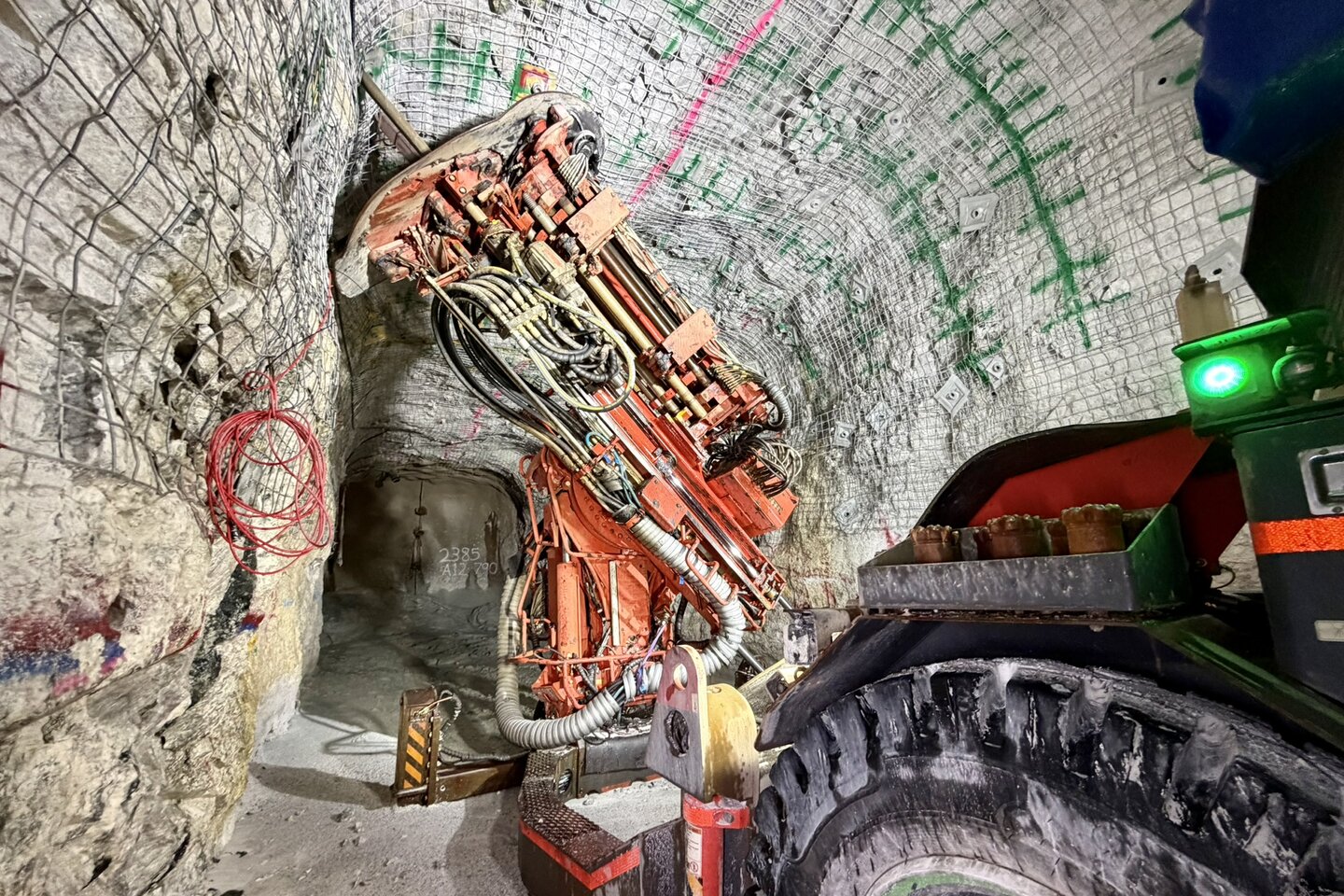
Liontown is pushing ahead with early works on its previously pared back expansion plans for its Kathleen Valley underground mine, citing confidence in the lithium market’s trajectory.
Teleperformance SE (TLPFY) Q1 2026 Sales/ Trading Statement Call – Slideshow
Business
White House drafts guidance to bypass Anthropic’s risk flag for new AI models, Axios reports


White House drafts guidance to bypass Anthropic’s risk flag for new AI models, Axios reports
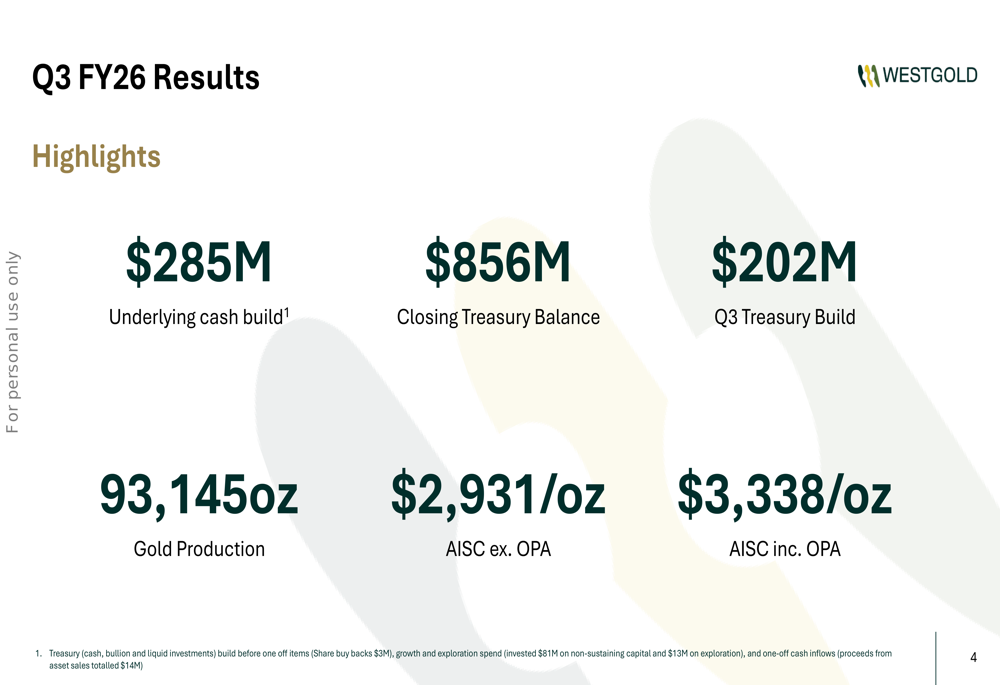
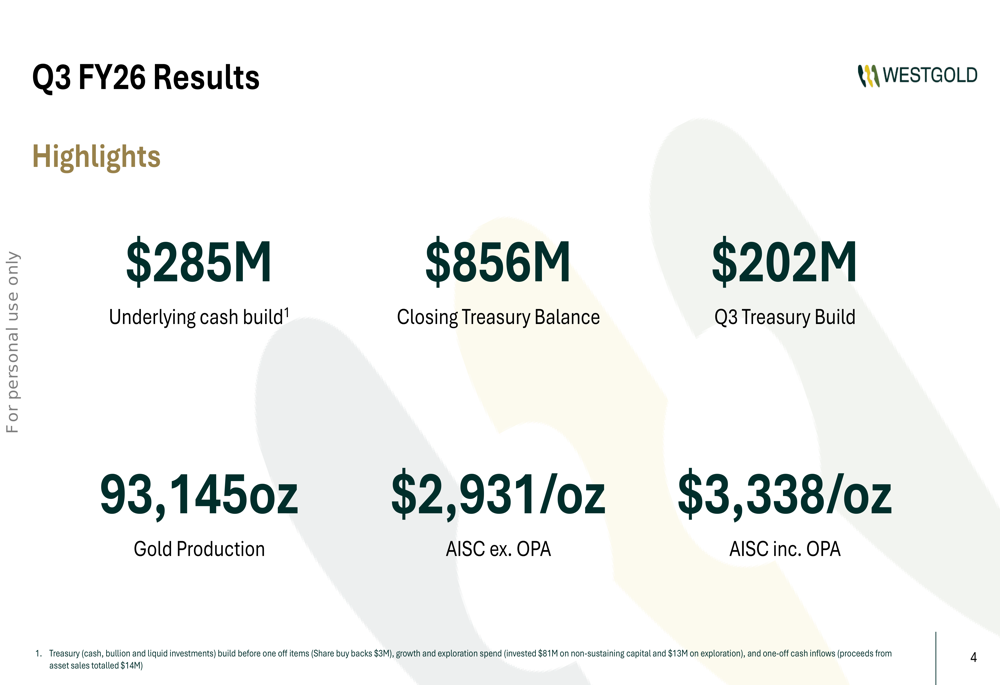
Westgold Q3 FY26 slides: $285M cash build fuels growth ambitions
ESPN and the NFL announced a deal Tuesday, granting ESPN the league’s media assets, including NFL Network. The NFL will retain a 10% ownership share of the network.
The Walt Disney Company is reportedly backing away from plans to spin off ESPN, shelving years of speculation that a standalone sports network could help offset the company’s declining cable business.
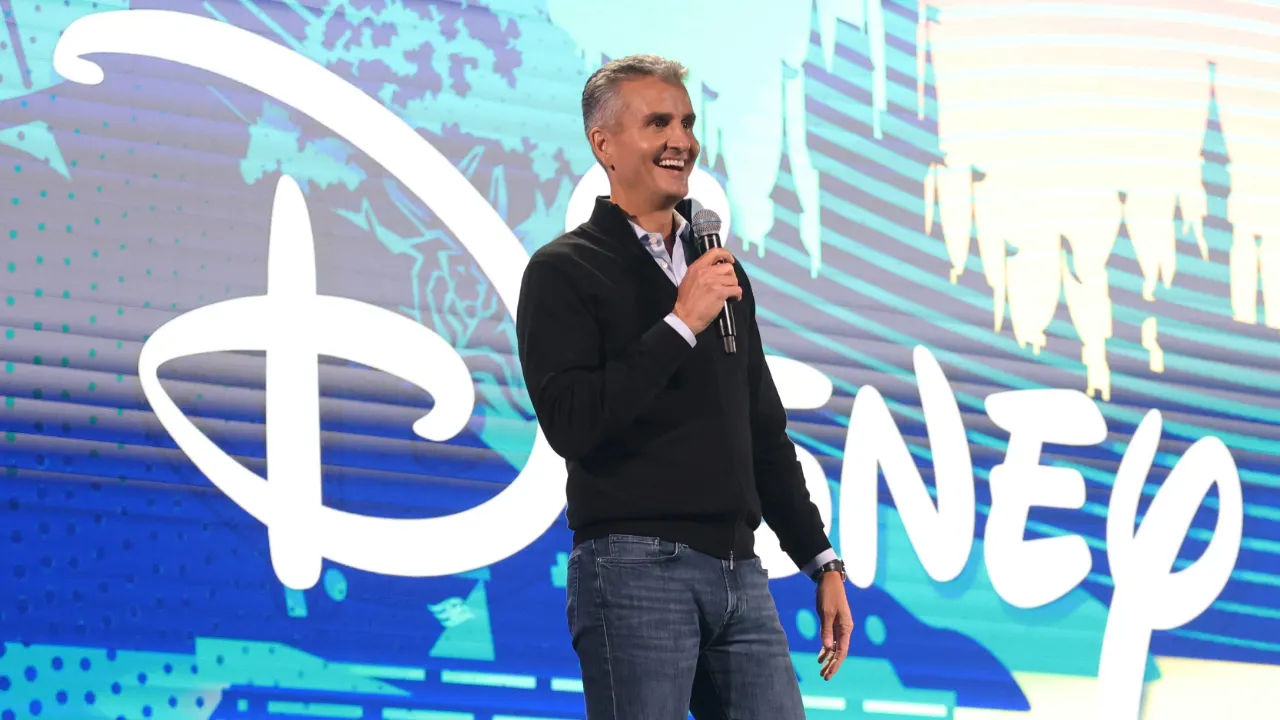
The decision marks one of the first major calls under CEO Josh D’Amaro, who stepped into the role in March.
“Instead, the sports network will stay inside the media giant, which thinks its presence will help its pivot to streaming,” sources said, according to Business Insider.
However, the decision is not permanent, the outlet noted. While Josh D’Amaro reportedly indicated that he does not see a near-term path to a spinoff, he could revisit the option down the line as conditions evolve, according to Business Insider.
DISNEY UNVEILS NEW DIRECT-TO-CONSUMER ESPN STREAMING SERVICE WITH $29.99 PRICE TAG

A 3D printed Disney logo in front of the ESPN+ logo July 13, 2021. (Reuters/Dado Ruvic/Illustration/File Photo / Reuters)
In addition, Disney could still explore bringing in strategic partners to take minority stakes, similar to its sale of a 10% stake in ESPN to the NFL last year.
The decision effectively cools down long-running rumors of ESPN potentially spinning off, which first gained traction after former CEO Bob Iger stunned the media industry in 2015 by revealing that the once profit-generating colossus was losing subscribers.
| Ticker | Security | Last | Change | Change % |
|---|---|---|---|---|
| DIS | THE WALT DISNEY CO. | 101.47 | -0.88 | -0.86% |
As viewers have grown more selective with their spending in recent years, the cord-cutting wave has accelerated across the cable industry, raising concerns that the declining business was weighing on Disney’s overall valuation.
By remaining under Disney, sources say the current structure could better position ESPN to accelerate its pivot to streaming, Business Insider reported.
DISNEY LOSING $30M A WEEK AS YOUTUBE TV BLACKOUT DRAGS ON, ANALYSTS SAY

Josh D’Amaro, chairperson of Walt Disney Parks and Resorts, speaks during an event on Nov. 9, 2024, in São Paulo, Brazil. (Ricardo Moreira/Getty Images for Disney / Getty Images)
Around August 2025, ESPN became available outside the traditional cable bundle for the first time, marking a major shift for sports fans who previously had to pay for costly packages that included channels they did not want.
Based on the new decision, Disney will continue distributing ESPN across multiple platforms, including its traditional cable bundle starting at roughly $75 per month, a streaming package alongside Hulu and Disney+ starting at $35.99 per month and a standalone direct-to-consumer offering $299.99 per year.

Fans cheer at an ESPN broadcast ahead of the Super Bowl Feb. 7, 2025, in New Orleans. (David Buono/Icon Sportswire via Getty Images / Getty Images)
GET FOX BUSINESS ON THE GO BY CLICKING HERE
Disney’s sports segment, anchored by ESPN, generated roughly $17.7 billion last year in revenue, roughly 19% of Disney’s total company revenue of $94.4 billion.
FOX Business reached out to Disney for more information.

WWE reaches deal with The CW to broadcast NXT premium live events

Tech Lobbyists Hard At Work Undermining Proposed Alaska ‘Right To Repair’ Law

Albo just about rules out gas exports tax

Manchester United reach agreement with Casemiro over contract clause amid transfer speculation

US brings back mandatory military draft registration

Steven Gerrard disagrees with Gary Neville over ‘shock’ Chelsea and Arsenal claim | Football


-

 Tech1 day ago
Register Renaming | Hackaday
-

 Fashion4 days ago
Weekend Open Thread – Corporette.com
-
 Crypto World3 days ago
Hyperliquid $HYPE Rally Builds Momentum as AI Sector Enters Prove-It Phase
-

 Politics6 days ago
Making troops accountable for war crimes threatens US alliance, ex-SAS colonel warns
-

 Politics6 days ago
Disabled people challenge government SEND proposals over segregation concerns
-

 Business5 days ago
Patterson-UTI Energy, Inc. (PTEN) Q1 2026 Earnings Call Transcript
-

 Business7 days ago
Rolls-Royce Voted UK’s Most Iconic Trade Mark as IPO Register Hits 150
-
 Sports3 days ago
IPL 2026: Ruturaj Gaikwad registers slowest fifty of the season, enters all-time unwanted list | Cricket News
-

 Politics1 day ago
Drax board avoid their own AGM, accused of greenwashing & environmental racism
-

 Politics6 days ago
Zack Polanski responds to home secretary’s taser threat
-

 Politics6 days ago
Starmer handler McSweeney to be dragged from shadows by Foreign Affairs Committee
-
Politics6 days ago
Wings Over Scotland | How To Get Away With Crimes
-

 Politics6 days ago
‘Iran is still a nuclear threat’
-
 Business7 days ago
HCL Tech share price tank over 9% after weak Q4. JPMorgan, HSBC & 3 others cut target price
-

 NewsBeat3 days ago
LK Bennett closes all stores after entering administration
-
 Sports6 days ago
Tim Bradley names the current best in the world: “Better than Inoue and Usyk”
-

 Crypto World5 days ago
Michael Saylor says BTC winter is over. Market analyst disagrees, says bitcoin was in a pullback
-

 Business7 days ago
The Job Benefits Most Men Don’t Know to Negotiate
-
Business6 days ago
Altimmune prices $225 million public offering at $3 per share
-
 Entertainment3 days ago
Mariah Carey Slams Deposition Claims In Brother’s Lawsuit
You must be logged in to post a comment Login