

Business
Building Wealth Through Strategy, Not Chance


Success stories in business often focus on numbers. Revenue growth. Client counts. Company milestones. For Lyshaan Hall, the founder of Breukelen Wealth, success has always meant something more personal.
“I measure success by the ability to fulfill the dreams of our clients,” Hall says.
That mindset has shaped his career from the beginning. Today, Hall is known as a tax strategist, entrepreneur, and financial advisor who works with business owners, executives, athletes, entertainers, and high-income professionals. But his journey started with a simple observation: many successful people were earning substantial incomes while lacking a clear plan for building long-term wealth.
Rather than focusing solely on tax preparation, Hall saw an opportunity to help people think more strategically about their financial lives.
How Lyshaan Hall Built Breukelen Wealth
Breukelen Wealth was founded in Brooklyn, New York. The company’s name comes from the original Dutch settlement that eventually became Brooklyn, reflecting Hall’s connection to the borough and its entrepreneurial history.
The firm’s mission was straightforward. Hall wanted to help people access the kinds of financial strategies often associated with the ultra-wealthy.
After years of working with clients, he noticed a common pattern.
“Too many successful individuals and business owners were paying more taxes than necessary and making financial decisions without a clear strategy,” Hall explains.
What started as a tax-focused practice gradually evolved into a broader advisory firm. Over time, Breukelen Wealth expanded into areas such as wealth planning, business consulting, and financial education.
The company eventually surpassed seven figures in annual revenue while building relationships with entrepreneurs, executives, professional athletes, and other high-performing professionals.
What Challenges Did Lyshaan Hall Face as an Entrepreneur?
Like many founders, Hall’s biggest challenges appeared during periods of growth.
In the early years, earning trust was not easy. The financial services industry is highly competitive, and attracting clients required consistent networking, education, and relationship-building.
Another obstacle came as the business expanded.
“Early in the growth of the business, I tried to do everything myself,” Hall says. “Client service, operations, sales, marketing, tax work, and strategic planning.”
At first, that approach worked. But eventually it became a bottleneck.
As demand increased, Hall found himself spending more time working inside the business than building the business itself.
The solution required a shift in mindset.
“I learned that building a successful company requires systems, processes, and a strong team, not just individual effort.”
That lesson became a turning point. By developing infrastructure, creating standardized processes, and surrounding himself with talented professionals, Hall was able to scale the company while maintaining the client experience that helped build its reputation.
Why Continuous Learning Drives Lyshaan Hall
One theme appears repeatedly throughout Hall’s career: education.
He believes the best advisors never stop learning.
“Tax laws, financial markets, business strategies, and regulations are constantly evolving,” Hall says. “Successful advisors remain students of their craft.”
That commitment extends beyond professional development. Hall estimates that he invests more than $100,000 each year into personal growth and education.
He credits much of his thinking to lessons learned from books, mentors, and thought leaders such as Tony Robbins, Ryan Holiday, and Dennis Kimbro.
For Hall, learning is not simply about gathering information. It is about developing better ways to solve problems and serve clients.
“Every client has unique goals, challenges, and opportunities,” he says. “The ability to develop customized solutions rather than applying generic advice is what separates great advisors from average ones.”
How Lyshaan Hall Approaches Leadership and Goal Setting
Hall’s leadership philosophy centers on vision, accountability, and adaptability.
When setting goals, he starts with the long-term picture and works backward.
“Goal setting begins with having a clear vision of where we want to be in the future and then working backward to create actionable steps that move us closer to that vision every day.”
Large objectives are broken into annual, quarterly, and monthly milestones. Progress is tracked through client satisfaction, business growth, operational performance, and regular reviews.
But Hall also believes flexibility is essential.
“Our approach is to stay committed to the vision while remaining willing to adjust the strategy when new opportunities or challenges arise.”
That balance between discipline and adaptability has helped guide the company through changing markets and economic conditions.
What Success Means to Lyshaan Hall Today
Over the years, Hall’s definition of success has evolved.
While business growth remains important, he believes professional achievement should support a fulfilling life rather than replace it.
“I believe true success is achieved when personal fulfillment and professional achievement work together rather than compete with one another.”
That perspective influences both his leadership style and the culture he aims to create.
When facing challenges, Hall returns to a simple principle.
“My work is bigger than me,” he says. “The clients, families, and business owners who rely on our guidance motivate me to keep going.”
Looking back, Hall sees entrepreneurship as a continuous process of learning, adapting, and improving.
Rather than viewing obstacles as failures, he sees them as opportunities for growth.
His philosophy remains rooted in the same belief that inspired him to start Breukelen Wealth in the first place: that knowledge, strategy, and disciplined execution can create meaningful opportunities for people who are willing to think beyond short-term results and focus on building something that lasts.


AT&T: 6.7% Yielding Debt Remains Very Attractive

Over the past three months, 15 penny stocks have witnessed sharp corrections, with declines ranging from 25% to 70%. These underperformers were identified through a screen focusing on stocks with a market capitalisation below Rs 1,000 crore, a share price under Rs 20, and a minimum recent trading volume of 5 lakh shares. The screen highlights low-priced, relatively liquid penny stocks that have come under significant selling pressure during this period. (Data Source: ACE Equity)
Although penny stocks often attract investors with their low entry prices and potential for rapid gains, they come with substantial risks. Due to low liquidity, high volatility, and limited transparency, they are prone to manipulation and sudden price drops. Without a clear strategy and strong risk controls, investors may face more losses than gains.
Business
(PHOTO) Jessica Alba Turns Heads in Cheeky Bouguessa Micro Minidress During Stylish New York City Outing

Jessica Alba brought a bold, high-fashion moment to New York City this week, sharing images from a recent trip to the city on social media that showcased a carefully layered evening look built around a micro minidress from designer label Bouguessa.
A layered, high-fashion look
In the photos, Alba wore a strapless black micro minidress from Bouguessa, a design that cut straight across the bust and hugged her figure closely, with a hemline that sat high on her thighs. Rather than leaving the look as a simple little black dress, Alba layered a sheer black midi skirt from The Frankie Shop underneath the minidress, allowing the translucent fabric to peek out beneath the short hemline and add texture and movement to the overall silhouette. The combination created a style that blended a daring, cropped centerpiece with a more fluid, elongated layer beneath it, a pairing fashion outlets described as both sophisticated and unexpected.
Alba completed the outfit with black strappy thong heels from Favorite Daughter, a minimalist choice that elongated her legs and matched the sleek tone of the rest of the ensemble. She accessorized with fine gold chain necklaces and a delicate bracelet, adding subtle shine without overwhelming the outfit’s clean lines. For the accompanying photos, Alba wore her caramel-blonde hair styled straight, with soft, face-framing layers resting near her collarbone, paired with warm bronzed makeup and a nude lip for a polished, understated finish. Her caption referenced a memorable weekend spent in New York City, though she did not specify the occasion tied to the outing.
Part of a broader run of high-profile style moments
The New York appearance adds to a string of recent fashion moments for Alba, who has increasingly used social media to showcase her personal style outside of red carpet events. Fashion outlets have highlighted a series of standout looks from Alba in recent months, including a plunging, high-slit Aritzia dress and other figure-forward pieces that have drawn attention for blending bold silhouettes with polished styling.
A career built well beyond acting
While Alba remains widely known for her acting career, including roles in “Fantastic Four,” “Sin City” and “Honey,” her public profile in recent years has increasingly reflected her business background as well. Alba founded consumer goods company The Honest Company in 2012, building it into a major personal care and baby products brand before taking it public on the Nasdaq in 2021, a milestone that made her the youngest Latina to take a company public through an IPO. She served as the company’s chief creative officer for over a decade before stepping down from that leadership role, while remaining on Honest’s board of directors to continue providing strategic guidance.
Beyond Honest, Alba has built a broader career as an entrepreneur and public figure. She authored the New York Times bestseller “The Honest Life,” has served on the boards of Yahoo, the LA28 Olympic and Paralympic Games organizing committee, and children’s nonprofit Baby2Baby, and continues to appear in film and television projects, including co-hosting the Roku unscripted series “Honest Renovations,” which is heading into its fourth season. Earlier this year, Alba signed with talent agency CAA, adding to her existing representation, a move that reflected her continued active presence across both entertainment and business ventures.
Personal life developments
Alba’s public profile has also been shaped by personal changes over the past year and a half. She and her former husband, film producer Cash Warren, announced their separation in January 2025 after 16 years of marriage, and the couple has since finalized their divorce. Alba and Warren share three children: Honor, 17, Haven, 14, and Hayes, 8. Since the split, Alba has been in a relationship with actor Danny Ramirez, whom she began dating in July 2025. The couple has been seen publicly on several occasions since, including a romantic getaway that Alba shared with fans on social media.
A recognizable presence in entertainment and fashion
Alba’s willingness to experiment with bold, high-fashion styling has become a recurring theme in her public image in recent months, with outlets covering her looks framing them as evidence of her continued relevance in both the entertainment and fashion spaces, more than two decades into her career. Her latest New York City appearance, built around the Bouguessa minidress and layered Frankie Shop skirt, continues that pattern, offering fans another example of how she has blended her established Hollywood profile with an increasingly visible presence in contemporary fashion.
What’s next for Alba
With her business ventures continuing through her board roles and creative projects, her acting career still active, and her personal life drawing continued public interest following her divorce and new relationship, Alba remains one of the more consistently visible figures spanning entertainment, fashion and business. Her latest social media post from New York City adds to a growing archive of style moments that have kept her fashion choices, alongside her broader career, a regular subject of coverage this year.
Business
Mutual fund NFOs: 5 new funds will open for subscription this week. Check dates and key details

Five new funds will open for subscription this week. Fund houses introduce new schemes to complete their bouquet of existing offerings. Here is a detailed break-up (Source: ACE MF).
Business
9 in 10 US Adults May Already Be in Early Stages of This Heart-Kidney-Metabolic Syndrome, Experts Say

Nearly 90% of American adults may already be somewhere on the spectrum of a newly formalized health condition that links heart disease, kidney function and metabolic health, according to guidance released this year by the American Heart Association and several partner medical organizations. Doctors say growing recognition of the connection is changing how they screen for and treat some of the country’s leading causes of death.
A newly named, but long-suspected, connection
The condition, known as cardiovascular-kidney-metabolic syndrome, or CKM syndrome, describes how dysfunction in the heart, kidneys and metabolic system are interconnected rather than separate, unrelated health issues. For years, doctors treated conditions like heart disease, diabetes, obesity and kidney disease largely in isolation. That’s beginning to change, according to Dr. Andrew Pogozelski, a cardiologist with Allegheny Health Network, who said physicians increasingly recognize how tightly these systems are linked, even before serious symptoms appear.
The American Heart Association first introduced the concept of CKM syndrome roughly three years ago through a presidential advisory. This June, the AHA, the American College of Cardiology, the American Diabetes Association and the American Society of Nephrology jointly released the first-ever clinical practice guideline specifically addressing CKM syndrome, published simultaneously in the medical journals Circulation and the Journal of the American College of Cardiology. The guideline replaces and expands upon the AHA’s 2013 guidance on managing overweight and obesity in adults, reflecting how significantly the medical understanding of these interconnected conditions has evolved.
Nearly universal risk, according to new data
According to the new guideline, nearly 90% of U.S. adults have at least one CKM syndrome risk factor, which can include excess weight, high blood pressure, abnormal cholesterol or lipid levels, elevated blood sugar, or reduced kidney function. Obesity alone affects roughly 40% of American adults and 21% of children and adolescents, according to the guideline’s authors, underscoring how broadly these risk factors already extend across the population.
Pogozelski said one of the earliest and most telling warning signs tends to be visible well before a formal diagnosis. “Especially obesity kind of in the midsection where your waistline is increasing over time” is often the first indication someone may be heading down the CKM syndrome spectrum, he said, describing central weight gain as one of the clearest early markers physicians look for.
Four stages, from risk to disease
The guideline organizes CKM syndrome into four stages, beginning with Stage 1, which includes people who are overweight, obese or prediabetic but don’t yet have other metabolic risk factors, kidney disease or cardiovascular disease. Stage 2 includes people with one or more additional metabolic risk factors, such as high blood pressure, abnormal lipid levels, Type 2 diabetes or metabolic syndrome, and may include early kidney disease, still without diagnosed cardiovascular disease. Stage 3 applies to people with subclinical, or asymptomatic, cardiovascular disease combined with CKM risk factors, or those considered at very high risk for cardiovascular events or advanced kidney disease based on updated risk calculations. Stage 4 represents the most advanced stage, encompassing people already diagnosed with cardiovascular disease, such as coronary heart disease, heart failure, stroke, peripheral artery disease or atrial fibrillation, layered on top of obesity, other metabolic risk factors or kidney disease.
Pogozelski said the staging system is designed to capture people early, even when they have no outward symptoms. Risk factors, he explained, can build silently over years before eventually contributing to a heart attack, stroke or kidney failure, making early identification particularly valuable.
Higher stakes in western Pennsylvania
The condition carries particular relevance in western Pennsylvania, where mortality rates from heart disease in several counties already exceed national averages. Local doctors say the region’s elevated heart disease burden makes early screening for CKM risk factors especially important, given how closely those risk factors are now understood to be tied to kidney and metabolic health outcomes as well.
New tools for prevention and treatment
Beyond identifying and staging risk, the guideline introduces updated tools intended to help doctors act on that information more precisely. Chief among them are new risk calculations known as the PREVENT equations, which estimate a person’s 10- and 30-year risk of cardiovascular disease while factoring in kidney and metabolic health measures, offering a more comprehensive risk picture than previous tools that focused on cardiovascular risk alone. The guideline also recommends screening for social factors that can affect health outcomes, including food insecurity, housing instability and financial strain, reflecting a broader push to address the practical barriers that can prevent people from managing these interconnected conditions effectively.
On the treatment side, the guideline highlights a mix of lifestyle changes and newer medications. Pogozelski said that outside of medication, the most effective intervention remains straightforward. “The biggest thing you could do, short of medications, would be weight loss, exercise, eating a diet that’s kind of low in sugar, low in simple carbohydrates, more high in proteins and good fats, like a Mediterranean diet,” he said, describing the foundation of lifestyle-based prevention for people at any stage of the CKM spectrum.
Medications originally designed for diabetes gaining a broader role
The guideline also points to a shift in how certain medications are being used. Drug classes originally developed to manage diabetes, including GLP-1-based therapies and SGLT2 inhibitors, have shown benefits that extend beyond blood sugar control, improving cardiovascular outcomes and slowing kidney disease progression in some patients. That expanded role has pushed doctors across specialties to coordinate more closely when treating patients who may be managing multiple interconnected conditions simultaneously.
Fátima Rodriguez, an associate professor of cardiovascular medicine at Stanford Medicine and vice chair of the guideline’s writing committee, said the recommendations are built around a broader framework the AHA calls Life’s Essential 8, which includes regular physical activity, heart-healthy eating, maintaining a healthy weight, and managing blood pressure, blood sugar and cholesterol, along with avoiding tobacco and getting adequate sleep. “These actions reduce the risk of heart disease and also support kidney and metabolic health across the lifespan,” Rodriguez said.
What it means for patients
Because CKM syndrome staging begins well before a person develops diagnosed disease, doctors say the guideline is designed to give patients and physicians a shared framework for catching risk factors early and intervening before conditions progress to heart attacks, strokes or kidney failure. With risk factors so widespread across the adult population, physicians say routine screening, honest conversations about weight and lifestyle, and closer coordination between specialists are likely to become a more standard part of preventive care in the years ahead.
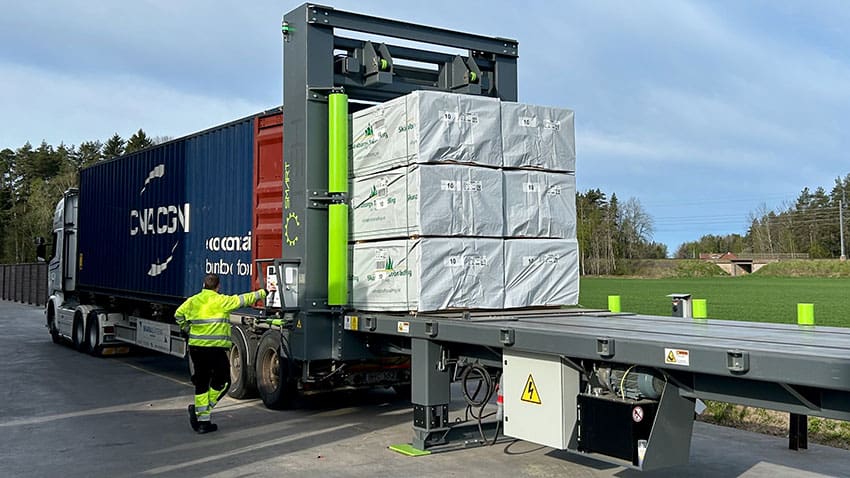
Businesses have spent years making their operations more efficient. Production lines are automated. Warehouse management systems track inventory in real time. Software optimizes routes and schedules. Robots move goods through distribution centers.
Yet in many facilities, one of the final steps in the process is still largely manual: getting goods into a truck or shipping container.
That may seem like a small part of the operation. But when the same process repeats dozens of times a day, loading can become a significant bottleneck – one that affects labor costs, vehicle utilization, safety, and how much a business can ultimately ship.
The weak link in the chain
A warehouse can process orders quickly, have goods ready for dispatch, and still struggle to increase throughput if vehicles cannot be loaded at the same pace.
Traditional loading depends on forklifts and manual handling. Products are moved into position, loaded individually or in batches, and arranged to make the best use of the available space. The process becomes even more challenging when cargo is heavy, long, awkward to handle, or has to be loaded into a container or trailer with limited access.
A few extra minutes per shipment may not seem like much – until they are multiplied across a day, a week, or a year.
Loading can determine how many vehicles a facility processes daily, regardless of how efficient the rest of the operation is.
The real cost of inefficient loading
The most obvious cost is the time employees spend loading. The costs that ripple outward from there tend to matter more.
A truck waiting at a dock is an underutilized asset – and so is the driver who isn’t out completing the next delivery, and the loading point that could be turning over another vehicle instead.
During busy periods, delays can create queues and disrupt delivery schedules. The cost can also appear as overtime, additional shifts, or pressure to invest in more loading infrastructure simply to handle demand that the existing facility may already have the physical capacity to serve. These costs move well beyond the warehouse and into the transport operation as a whole.
The cost is not only financial. Loading and unloading involve repetitive physical work, heavy products, and frequent forklift movement. As businesses face ongoing challenges recruiting and retaining warehouse workers, relying heavily on manual labor for physically demanding tasks becomes harder to sustain.
There are safety considerations too. Every additional manual handling step creates another opportunity for an incident or injury.
Automating loading rarely means removing people entirely – more often it means cutting the repetitive, physically demanding parts of the job. More consistent loading times also make the operation easier to plan, measure, and scale.
Different transport needs, different automation
There’s no single loading solution for every business. A company shipping large volumes internationally in containers has different requirements from a distribution center loading multiple trailers for domestic deliveries.
Cargo type, vehicle, facility layout, and required throughput all shape the right approach. For some businesses, automating container loading addresses a major export bottleneck. For others, the bigger opportunity is automating trailer loading.
Automating container loading for export operations
Container loading can be especially time-consuming when cargo has to be moved in piece by piece, often requiring repeated forklift trips into and out of the loading area.
An automated container loading system can change this by allowing cargo to be prepared on a loading platform and then moved into the container in one continuous movement, rather than requiring repeated manual handling.
This can significantly reduce loading time and the amount of manual work involved.
For businesses shipping timber, metal products, construction materials, and other heavy or bulky goods, the benefits extend beyond speed. Faster loading can reduce truck waiting times, free up the loading area for the next vehicle, and create a more efficient process for handling high volumes of cargo.
Automating truck loading for faster distribution
Road transport creates a different set of challenges. Distribution centers and manufacturing facilities may load several trailers every day, often within tight delivery windows. When the same manual process is repeated across dozens of vehicles, even small delays quickly become a capacity problem.
Automated truck loading systems can reduce the amount of manual intervention required to move cargo into a trailer, helping improve truck turnaround and increase the number of vehicles a facility can process using its existing infrastructure.
For high-volume businesses, faster loading does not just mean a truck leaves sooner. It improves utilization across loading docks, vehicles, drivers, and warehouse staff.
More capacity without a bigger facility
When businesses need more throughput, the obvious response is to expand: a larger warehouse, more loading docks, more employees, or more vehicles. All of that adds real capacity, but it also means more space and higher fixed costs – long before anyone checks whether the current facility is even running at full capacity.
Before committing to that kind of expansion, it’s worth asking how much more the current site – the same warehouse, docks, and vehicles – could handle if loading itself weren’t the constraint.
If a facility can reduce the time needed to load each vehicle, it may be able to process more shipments during the same working day without expanding its physical footprint.
Businesses have invested heavily in improving production, inventory management, warehousing, and transportation. Cargo loading deserves that same attention. For companies still relying heavily on manual loading, it may be the part of the operation with the greatest untapped potential – and one of the fastest ways to get more out of the facility they already have.
Business
Canadian Politician Accidentally Reads AI Chatbot’s Own Instructions Aloud in New Brunswick Legislature


A Canadian provincial politician has become the latest example of an unedited AI-generated passage slipping into a formal public setting, after video surfaced showing him reading a chatbot’s own instructional text aloud during a speech to his province’s legislature.
A mid-speech digression that went unnoticed
Bill Oliver, a Progressive Conservative member of the Legislative Assembly of New Brunswick who represents the Kings Centre district, was addressing a matter involving the Office of the New Brunswick Advocate during a floor speech last month. Partway through his remarks, Oliver appeared to read directly from what looked like an AI chatbot’s formatting note rather than his own prepared remarks. “Here’s a more natural, flowing version of that section that reads like a legislative speech,” Oliver said, a line widely recognized as the kind of meta-instruction large language models often include when presenting a rewritten passage back to a user, rather than content meant to be spoken aloud as part of the finished text.
The moment came shortly after Oliver had delivered a substantive point about the risks associated with creating new government advocacy offices, noting that citizens often develop expectations that exceed the powers actually granted to those offices. That portion of his remarks read as a standard piece of legislative rhetoric. It was the section immediately following it — the apparent AI formatting note — that drew attention once footage began circulating widely online.
From unnoticed gaffe to viral clip
Although the speech was delivered last month, the moment went largely unnoticed at the time. Footage of the exchange was posted to the New Brunswick subreddit this week and quickly began circulating on Reddit and Threads, drawing criticism from users who said the mix-up reflected poorly on the quality of preparation behind the speech. The clip was subsequently picked up by the Canadian Broadcasting Corporation and the Toronto Star, which covered the moment as part of a broader conversation about how political and professional figures are increasingly relying on AI tools to draft public remarks, sometimes without adequately reviewing the output before delivering it.
Commenters reacting to the footage compared the standard expected of Oliver to the level of scrutiny typically applied to professionals in fields like law, where similar AI-related mistakes have drawn public criticism in the past. Some online commenters went further, calling for Oliver to resign over the incident, though no formal calls for his removal have been reported through official channels within the New Brunswick legislature.
Part of a broader pattern of AI slip-ups
Oliver’s moment adds to a growing list of instances in which unedited AI-generated text has slipped into professional or public-facing work, spanning fields including law, journalism, academia and now provincial politics. Observers who track these incidents note that the phrases most likely to expose AI involvement tend to be meta-commentary the tool generates about its own output, such as offering “a revised version” or “a more conversational tone,” language intended for the person prompting the AI rather than for a public audience.
Some researchers who study workplace AI use have pointed to broader cultural dynamics behind these kinds of incidents. Prior research on professional AI use has found that workers frequently avoid disclosing their use of AI tools out of concern that colleagues might view the practice as lazy or as a sign that their work could be easily replaced, a dynamic some analysts say may contribute to insufficient review of AI-assisted material before it is finalized or delivered publicly.
New Zealand grapples with similar questions, without a similar mishap
The incident in New Brunswick has drawn comparisons to an unrelated but related conversation playing out in New Zealand’s Parliament, where officials have been considering how AI tools should factor into official submissions, though not because of any similar public misstep. David Wilson, Clerk of the New Zealand House of Representatives, said there was nothing inherently wrong with people using AI tools to help refine their written submissions to Parliament, so long as the views ultimately expressed remained genuinely their own. According to Wilson, the central concern for lawmakers and officials isn’t the technology itself, but whether a given submission still reflects a person’s own thinking rather than content generated wholesale by an AI system.
No indication of any rule violation
Coverage of the New Brunswick incident has generally framed the episode as a question of accountability and review quality rather than a breach of any specific legislative rule. No formal violation of assembly procedure has been reported in connection with Oliver’s remarks, and the broader criticism directed at him has centered on the appearance of insufficient preparation rather than any claim that using AI tools to draft political speeches is itself against the rules.
A reminder about reviewing AI output
The episode has been widely cited as a cautionary example for professionals across fields who use AI tools to help draft written or spoken material. Commentators covering the incident have generally offered the same basic takeaway: AI-generated text should always be reviewed in full before being published or spoken publicly, since large language models frequently embed their own formatting notes, alternative phrasing options or other meta-commentary directly within their output, material that is meant to guide the person using the tool rather than to be presented as finished content.
As of this week, Oliver had not issued a public statement addressing the footage or explaining how the apparent AI-generated line made its way into his prepared remarks. The Legislative Assembly of New Brunswick has likewise not indicated whether the incident will prompt any formal review of how AI tools are used in preparing official speeches or submissions. For now, the episode continues to circulate as one of the more visible recent examples of an unedited AI artifact reaching a public, official setting — a reminder, as several outlets covering the story have noted, that even brief lapses in review can turn an ordinary AI-assisted speech into an unintended viral moment.
Business
Upstate NY School District Pauses Plan to Add Humanoid Robot to High School Classroom Amid Fierce Backlash

A school district in western New York has paused its plan to place a humanoid robot in a high school classroom this fall, following intense public backlash and pressure from the state’s education department over student privacy concerns and questions about the technology’s readiness for classroom use.
A pilot program put on hold
Salamanca City Central School District announced Friday afternoon in a Facebook post that its pilot project with tech company Realbotix had been paused while officials “work through enhanced student data privacy agreements” with the state education agency and continue engaging with community members. The announcement came just hours after state Education Commissioner Betty Rosa sent a letter to Salamanca Superintendent Mark Beehler expressing reservations about the plan. “The Department remains concerned about the effect that a humanoid robot may have within a high school classroom,” Rosa wrote, according to the letter, which followed a meeting between the department and district officials earlier in the week.
Rosa’s letter reflected broader unease she said extended well beyond her own office. “Many parents, teachers, and stakeholders are understandably concerned about the presence of artificial intelligence technology in classrooms, particularly when it involves robots that resemble humans,” she wrote.
What the district had planned
The district had intended to introduce the robot to high school students this fall alongside a related artificial intelligence teacher’s assistant program that would let students interact with a digital avatar of the robot through their laptops. The local school board approved the $57,590 investment at a meeting last month.
The robot, which Realbotix had named Sally, was designed to have a lifelike appearance featuring silicone skin, long brown hair, and a wide range of upper-body movements and facial expressions, though it would remain seated in a stationary position rather than moving around the classroom. According to Realbotix, students would have been able to access the robot’s avatar from their own devices during or after class for academic help, including uploading photos of homework for feedback or receiving real-time translation support in more than 100 languages. Students approaching the robot in person during class would use a unique identification code, which the district said would allow the system to track and manage individual student conversations with the avatar.
A company with an unusual background
Education represents an entirely new business line for Realbotix, a Toronto-based company formerly known as Tokens.com. In April 2024, the company acquired Simulcra, the Las Vegas-based parent company behind RealDoll, a maker of hyperrealistic sex dolls. That connection became a central point of criticism once the Salamanca plan drew wider public attention.
Realbotix CEO Andrew Kiguel defended the program’s intent in a statement provided to New York Focus, the nonprofit news outlet that first reported on the district’s plans. “We fully respect any decision the school makes and encourage thorough due diligence by all parties involved,” Kiguel said, adding that the company wanted the program to be “demonstrably safe, fully district-approved, and strongly supported by teachers.” He emphasized the robot’s intended role directly, saying, “We stand firmly behind [the program] as a supportive tool designed to assist teachers and students, not replace them.”
Union pushback centers on the company’s ties
The state’s largest teachers union emerged as one of the most vocal critics of the plan. New York State United Teachers President Melinda Person issued a statement this week arguing that Realbotix’s background made it fundamentally unsuited for a classroom setting. “A robot built by a company associated with sex dolls has no business in our classrooms,” Person said, adding that robots, regardless of how lifelike their design, cannot provide the human connection students need in order to thrive. Person said the union intended to actively resist what she described as the “thoughtless expansion” of this kind of technology, both in Salamanca and in classrooms across the state more broadly.
District officials had defended safety measures
Before the program was paused, Superintendent Beehler had defended the plan’s safeguards during a school board meeting on Tuesday. In a presentation to trustees, Beehler said the robot and its companion avatar system would operate on a closed network with no internet connection, and that Realbotix would not have access to personally identifiable student information under the arrangement.
A divided community response
Reaction to the plan split sharply among parents and community members after the district posted a recording of Tuesday’s board meeting on Facebook. Some residents voiced support for giving students early exposure to emerging technology, with one commenter writing that experience with AI tools represented a skill that would make students more employable later in their careers. Others pushed back forcefully, questioning why the district couldn’t simply hire an additional traditional teacher instead, and raising broader concerns about AI’s environmental impact and its tendency to produce inaccurate information.
Neither Salamanca City Central School District nor the state Education Department could be immediately reached for comment following Friday’s announcement. With the program now on hold while the district works through expanded student data privacy agreements and continues community engagement, it remains unclear whether the robot will ultimately be introduced to Salamanca classrooms this school year, on a revised timeline, or not at all. The episode adds to a broader, ongoing debate playing out in school districts nationwide over how quickly artificial intelligence tools, including those designed to closely resemble humans, should be integrated into K-12 classrooms, and what safeguards should be in place before that happens.
Business
Vatican’s Official ‘Click to Pray’ App Has Leaked 700,000 Users’ Data for Six Months Despite Warnings

The Vatican’s official prayer app has been quietly exposing the personal data of more than 700,000 users worldwide for at least six months, according to a security researcher who says repeated attempts to warn the app’s operators went unanswered.
A widely used app with a basic security flaw
“Click to Pray” is the official prayer app of the Pope’s Worldwide Prayer Network, offering daily prayers and papal content to users through iOS, Android and a web browser. According to the app’s own website, it is used in nearly every country in the world. In January, a security researcher who goes by the handle “BobDaHacker” discovered a flaw known as an insecure direct object reference, or IDOR, in the app’s underlying code at clicktopray.org.
The vulnerability allowed any internet user, without any special technical skill, to query a single exposed application programming interface endpoint and retrieve basic personal information belonging to every account holder on the platform, as well as staff accounts belonging to employees of the Pope’s Worldwide Prayer Network itself. Cybersecurity outlet Dark Reading independently tested and confirmed the vulnerability remained live as of its reporting.
How the flaw worked
When users sign up for Click to Pray, they provide a first and last name, an email address, a password and an optional country field. Behind the scenes, each new account is assigned a sequential numerical user ID. Because the app’s API endpoint failed to verify whether a request was authorized before returning data, anyone who supplied a valid user ID, in sequence, could retrieve that account’s name, email address and country of origin in plain text, along with information on whether an account had been deleted or carried administrative privileges. Researchers say the flaw would have allowed someone to systematically collect data from all of the platform’s more than 719,000 registered accounts.
BobDaHacker described the underlying issue as one of the most common categories of web application vulnerabilities. “IDORs are incredibly common. Broken Access Control has been the number one vulnerability category in the OWASP Top 10 since 2021,” the researcher said, referring to the industry-standard list of the most critical web application security risks maintained by the Open Worldwide Application Security Project. The researcher attributed the recurring nature of such flaws to a common gap in how web development frameworks handle security: most frameworks automatically verify whether a user is logged in, but leave it up to individual developers to separately verify whether that user is authorized to view a specific piece of data, a step that is easy to overlook under time pressure.
Months of silence from Vatican-linked officials
According to the researcher’s own account, the vulnerability was first reported to nine email addresses associated with Click to Pray and the Pope’s Worldwide Prayer Network on Jan. 3, but none of those messages received a response. Dark Reading said it separately reached out to the Pope’s Worldwide Prayer Network in an attempt to help get the issue fixed, and, after failing to get a response, contacted La Machi Communication for Good Causes, the Spanish-language communications agency that designed and built the app, but had not received a reply as of publication.
Reflecting on the lack of response after months of waiting, the researcher wrote in a blog post documenting the findings, “I guess my email wasn’t in their prayers.”
Not the app’s first security lapse
This isn’t the first time Click to Pray has faced scrutiny over its handling of user data. In 2019, cybersecurity firm Fidus Information Security discovered that the app’s companion Bluetooth-connected eRosary device, priced at roughly $110, was returning users’ login PINs in plain text through its API, a flaw the firm reportedly identified within about 10 minutes of testing. A Vatican spokesperson confirmed at the time that the earlier flaw had been fixed. The latest disclosure suggests that lessons from that earlier episode may not have carried over fully into the app’s current infrastructure.
Why the exposed data matters
While the leaked information, primarily names, email addresses and country data, may seem limited compared to breaches involving financial or medical records, researchers warned it still carries real risk. BobDaHacker noted that Click to Pray’s user base likely skews toward older, less tech-savvy users who tend to place significant trust in anything associated with the Vatican, making the exposed accounts a potentially attractive target for phishing campaigns. A scammer with access to the leaked email addresses could impersonate the Pope’s Worldwide Prayer Network directly, sending messages designed to appear as official Vatican communications in order to trick recipients into clicking malicious links or revealing further personal information.
A broader pattern across industries
Security researchers say the Click to Pray incident reflects a pattern seen across organizations of all sizes and sectors, not just religious institutions or smaller communications firms. BobDaHacker emphasized that any organization collecting personal data from hundreds of thousands of users takes on a responsibility to protect it, regardless of its mission or size. Notably, the Vatican issued its own formal personal data protection regulation, Decree No. DCLVII, in April 2024, which outlines requirements for security measures, risk analysis and incident reporting procedures. The existence of that decree has done little to prevent the current exposure, underscoring the gap that can exist between written policy and actual technical implementation.
As of this report, the vulnerability remained active, and neither the Pope’s Worldwide Prayer Network nor La Machi Communication for Good Causes had issued a public response addressing the flaw or confirming a timeline for a fix. Security researchers tracking the disclosure say the case illustrates a broader industry challenge: making basic cybersecurity practices, including having a clear channel for reporting vulnerabilities, as standard and expected for organizations of every kind as having a functioning contact page. Until Click to Pray’s operators address the underlying authorization flaw, cybersecurity researchers say the personal information of hundreds of thousands of users worldwide remains freely accessible to anyone who knows where to look.

The upcoming issues, expected to collectively raise over Rs 25,000 crore, include a mix of fresh equity issuances and offer for sale (OFS) component, merchant bankers said.
“With markets stabilising and investor sentiment improving, companies that were waiting on the sidelines are now moving ahead with their IPO plans,” said Bhavesh Shah, MD & Head-Investment Banking at Equirus Capital.
Among the largest offerings, Zepto plans to raise up to Rs 8,010 crore through a fresh issue, along with an OFS of up to 11.34 crore equity shares.
Housing finance company Truhome has proposed a Rs 3,000-crore IPO, comprising a fresh issue of up to Rs 1,500 crore and an OFS of an equal amount.

Elevate Campuses intends to raise Rs 2,550 crore entirely through a fresh issue, while Shiprocket has filed for a Rs 2,342.35-crore IPO, including a fresh issue of up to Rs 1,100 crore and an OFS worth Rs 1,242.35 crore.
Other companies preparing to hit the capital markets include Innovatiview India (up to Rs 2,000 crore, entirely through OFS) and Milky Mist Dairy Food (Rs 1,553 crore).In addition, Dhoot Transmission, ARCIL (Asset Reconstruction Company India Ltd), Ardee Industries, Gaja Alternative Asset Management, Rays of Belief, Hy-Tech Engineers, Shankesh Jewellers and Learnfluence Education are also planning to launch their maiden public offerings.
The fresh pipeline comes amid sustained activity in the primary market, reflecting improving investor sentiment and healthy demand for new listings.
Market participants expect IPO activity to remain buoyant as companies look to capitalise on favourable fundraising conditions.
So far this year, 36 companies have launched their IPOs, including nine that hit the primary market this month. Moreover, Manipal Health Enterprises and Juniper Green Energy are set to open their public issues on July 29 and July 30, respectively. MV Electrosystems is also scheduled to launch its IPO next week.
Looking ahead, Shah said the long-term outlook for India’s IPO market remains strong despite periodic volatility.
“The primary market has undergone a structural transformation, with equity becoming an increasingly preferred source of growth capital. While there will always be tactical pauses driven by market volatility, the underlying pipeline remains very strong. I continue to expect India to raise around USD 20 billion through IPOs this calendar year,” he said.
He added that well-priced IPOs are likely to continue delivering healthy returns, while aggressively valued offerings may witness limited upside, as investors become increasingly selective rather than indiscriminately bullish.

The Institutional Adoption Signal DTCC Just Sent XRP

Chaos at Gatwick airport as water outage leaves huge queues and passengers unable to flush toilets or wash hands

AT&T: 6.7% Yielding Debt Remains Very Attractive


-

 Fashion2 days ago
Weekend Open Thread: Brooks Brothers
-

 News Videos7 days ago
Big Money Is Entering XRP
-

 Crypto World5 days ago
Grayscale Files For Worldcoin ETF, WLD Registers Sharp Rise
-

 Tech6 days ago
Sail Virtually Aboard The “Itanic” With IA-64 Emulator
-
 Tech5 days ago
Turtle Beach Command Series KB7 review: a nifty screen-equipped gaming keyboard
-

 NewsBeat6 days ago
Unregistered fitter used Gas Safe logo on business flyers
-
 Business4 days ago
New Jersey voter registration controversy explained: How 6,600 noncitizens got on the rolls, and what happens next
-
 Entertainment5 days ago
Johnny Depp’s R-Rated Gothic Cult Classic Gets New Release Ahead of Sydney Sweeney Remake
-

 Crypto World4 days ago
Ethics, other provisions in crypto Clarity Act to be further discussed
-

 Tech6 days ago
Watch Flock Safety CEO Garrett Langley discuss the future of surveillance at TechCrunch Disrupt 2026
-
 NewsBeat5 days ago
Shanghai science forum photos show China’s AI and robotics advances in rivalry with US
-

 Crypto World6 days ago
Circle’s President Sold Over 360,000 Shares, The Filings Explain Why
-

 Tech6 days ago
Subway Sandwich Computers Get a Second Life as Gaming Machines
-

 Sports2 days ago
2026 3M Open leaderboard: Scottie Scheffler finds putter in Round 1, sits three back
-

 News Videos3 days ago
The Peugeot Family: How 200 Years of an “Old Money” Dynasty Died in A Boardroom
-

 Fashion2 days ago
16 Dresses for the High Summer Event
-

 Tech7 days ago
How To Use Claude’s Reflect Dashboard And Learn When It’s Time To Touch Grass
-

 Tech6 days ago
The 35 Best Board Games for Family Game Night
-

 Entertainment6 days ago
Stephen Colbert Returns to Social Media After Late Show End
-

 Crypto World6 days ago
Andrew Cuomo joins OKX board as crypto exchange expands in U.S.
You must be logged in to post a comment Login