

Business
Buy or Sell Palantir Stock in 2026? Analysts Weigh AI Momentum Against High Valuation

NEW YORK — Palantir Technologies Inc. shares have delivered substantial gains in recent years but now trade at elevated valuations as the data analytics company capitalizes on surging demand for artificial intelligence platforms across government and commercial sectors in 2026.
As of early June, Palantir stock closed around $152 after recent volatility, reflecting both strong fundamental performance and investor concerns over premium multiples. Wall Street maintains a moderate buy consensus, with average 12-month price targets near $193, implying roughly 27% upside from current levels.
The company reported exceptional first-quarter results in May, with revenue reaching $1.633 billion, an 85% increase year-over-year. U.S. revenue grew 104%, driven by 133% growth in commercial sales and 84% expansion in government contracts. Palantir raised its full-year 2026 revenue guidance to $7.65-$7.66 billion, signaling 71% growth.
CEO Alex Karp highlighted the accelerating U.S. market as central to the company’s trajectory. “Momentum surged as we grew 85% last quarter — our highest-ever year-over-year growth rate — by more than doubling our U.S. business,” he stated in the earnings release.
Palantir’s Artificial Intelligence Platform (AIP) has become a key growth driver, enabling organizations to deploy AI rapidly while maintaining data governance. Strong adoption in both defense and enterprise segments has fueled optimism, with major contracts including a $300 million deal with the U.S. Department of Agriculture.
Analysts largely favor the stock. Of 31 covering firms, 19 rate it buy, 10 hold and two sell. Consensus targets range from a low of $90 to a high of $255, with many citing continued commercial momentum and government tailwinds.
Supporters point to Palantir’s sticky customer relationships and expanding addressable market. The company’s focus on large deals exceeding $1 million has yielded consistent total contract value growth. Its platforms serve critical national security needs while expanding into commercial applications like supply chain optimization and financial services.
However, valuation remains a central debate. Palantir trades at forward price-to-earnings multiples exceeding 150 times, far above traditional software peers. Critics argue that any slowdown in AI spending or execution challenges could trigger significant multiple compression.
Recent pullbacks, including a drop from 2025 highs near $207, have created entry points for some investors. Rosenblatt analysts described the dip as a buying opportunity, citing robust earnings momentum and defense-AI synergies.
Risks include heavy dependence on government contracts, which can face budgetary and political uncertainties. Insider selling by executives, including CEO Alex Karp, has also drawn attention, though such activity is common in growth companies with substantial equity compensation.
On the positive side, Palantir’s Rule of 40 score — combining revenue growth and profitability — reached 145% in the first quarter, demonstrating exceptional balance between expansion and margins. Adjusted operating margins hit 60%, with strong free cash flow generation.
Commercial growth represents the biggest upside catalyst. U.S. commercial revenue guidance was raised sharply, reflecting accelerating enterprise adoption of AI tools. Analysts expect this segment to become an even larger contributor as more Fortune 500 companies integrate Palantir’s platforms.
The company’s dual focus on government stability and commercial upside differentiates it from pure-play AI hardware firms. While competitors face cyclical semiconductor demand, Palantir benefits from recurring software revenue and platform lock-in effects.
Broader market context influences the outlook. Strong AI enthusiasm has supported technology stocks, but higher interest rates and potential economic slowdowns could pressure high-valuation names. Palantir’s beta makes it sensitive to shifts in risk sentiment.
Longer-term forecasts remain constructive. Some analysts project Palantir could reach $225 per share by early 2027 if earnings growth continues beating expectations. The company has consistently exceeded consensus estimates, often by double-digit margins.
For buy-and-hold investors, the case rests on Palantir establishing itself as essential AI infrastructure. Its ontology-based approach to data integration offers advantages in complex environments where competitors struggle.
Skeptics highlight execution risks and competition from larger cloud providers and specialized AI firms. Sustaining triple-digit commercial growth will require flawless delivery and continued innovation.
Portfolio allocation matters. Growth-oriented investors with high risk tolerance may add to positions on dips, while conservative accounts might limit exposure or wait for better valuation entry points.
Recent trading patterns show heightened volatility. Shares surged on strong earnings but faced profit-taking as some questioned sustainability at current levels. Volume remains robust, indicating sustained investor interest.
Palantir’s balance sheet strength provides flexibility for acquisitions or share repurchases, though the company has prioritized growth investments. Its cash position and minimal debt offer resilience during uncertain periods.
As 2026 progresses, key catalysts include quarterly results, new contract announcements and potential expansion in international markets. The second half of the year could clarify whether commercial momentum can offset any government spending fluctuations.
Investment decisions ultimately depend on individual circumstances, time horizons and risk appetite. While consensus leans bullish, the wide dispersion in price targets reflects genuine debate over appropriate valuation for a high-growth AI software leader.
Palantir has transformed from a niche data analytics firm into a prominent AI player. Its 2026 performance will test whether exceptional growth justifies premium pricing or if normalization lies ahead.
Investors should monitor upcoming earnings for sustained U.S. commercial acceleration and margin trends. In a dynamic technology landscape, Palantir’s ability to execute on its ambitious guidance will determine if the stock rewards shareholders over the remainder of 2026 and beyond.


Nike’s New CFO Won’t Speed Up Its Turnaround

Japan stocks lower at close of trade; Nikkei 225 down 4.09%


Seeking Alpha’s transcripts team is responsible for the development of all of our transcript-related projects. We currently publish thousands of quarterly earnings calls per quarter on our site and are continuing to grow and expand our coverage. The purpose of this profile is to allow us to share with our readers new transcript-related developments. Thanks, SA Transcripts Team
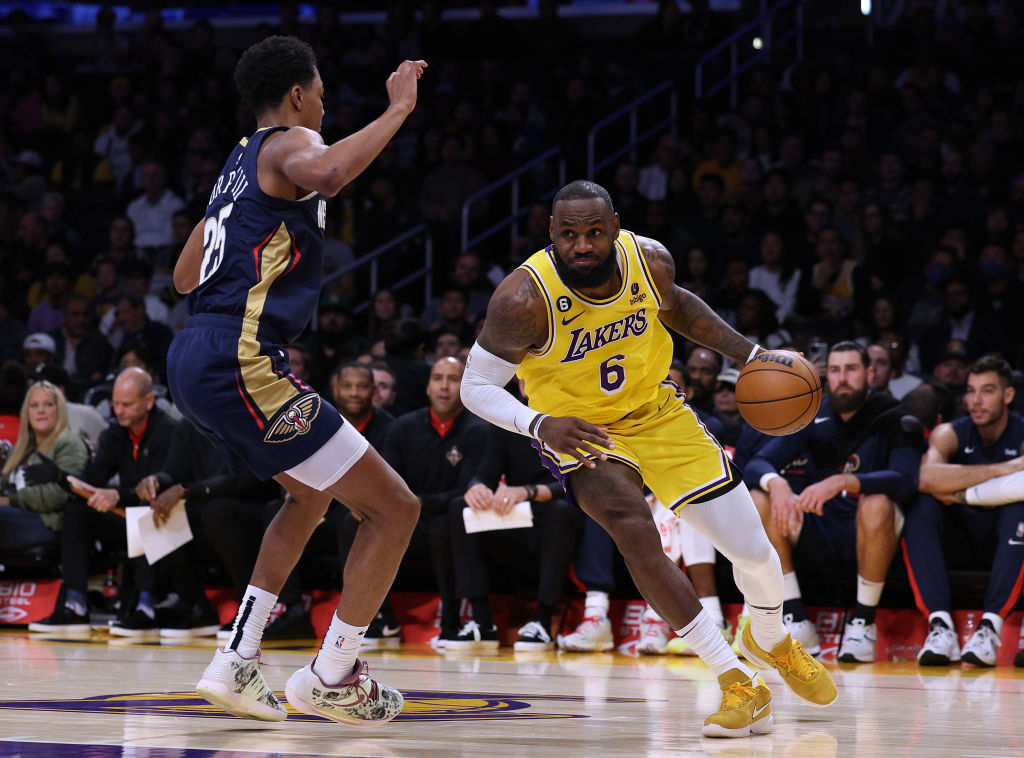
LOS ANGELES — Negotiations between the Los Angeles Lakers and LeBron James have seen limited movement since free agency opened, with the team yet to make a formal contract offer to the 41-year-old superstar.
ESPN’s Shams Charania reported that a check-in call occurred early in the negotiation window following the NBA Finals, but communication has been sparse since then. The situation leaves James’ future with the franchise uncertain as both sides evaluate options.
James, who just completed his 23rd NBA season, holds a player option for the 2026-27 campaign. His decision on whether to exercise that option or enter free agency will significantly impact the Lakers’ offseason planning.
The Lakers have already secured Austin Reaves with a maximum contract extension and face pressure to build a competitive roster around Luka Doncic. James’ potential $50 million salary slot creates both opportunity and constraint for the franchise.
Background on Negotiations
The minimal communication stands in contrast to the high stakes involved. James has been the face of the Lakers since joining in 2018, delivering championships and breaking numerous records during his tenure.
Reports indicate James is seeking a maximum contract without taking a pay cut. His agent Rich Paul has been instrumental in navigating contract discussions throughout James’ career.
The Lakers must balance retaining their veteran leader with addressing roster needs around Doncic. The franchise’s priorities include adding complementary pieces that enhance the team’s competitiveness in the Western Conference.
James’ Career Context
James’ longevity and production at an advanced age continue defying conventional expectations. His ability to perform at an elite level while managing physical demands has been remarkable throughout his career.
The four-time MVP has expressed commitment to winning while considering family and long-term plans. His decision will reflect both competitive aspirations and personal priorities.
Previous contract negotiations with the Lakers have resulted in extensions that provided stability for the franchise. This latest chapter carries additional complexity given James’ age and the team’s roster construction needs.
Lakers’ Strategic Position
Los Angeles has invested heavily in building around Doncic as the team’s future cornerstone. James’ presence provides veteran leadership and scoring ability that could accelerate the young star’s development.
The franchise’s salary cap situation requires careful management. Retaining James while adding supporting talent presents challenges that the front office must navigate strategically.
Recent moves, including the Reaves extension, demonstrate commitment to key pieces. The organization’s approach to James’ situation will signal broader intentions for the upcoming season and beyond.
Potential Outcomes
James returning to the Lakers on a short-term deal remains the most likely scenario according to many observers. His deep ties to the franchise and comfort in Los Angeles provide strong incentives for continuity.
Alternative paths could include James exploring free agency or accepting a sign-and-trade arrangement. However, few teams possess both the cap space and competitive appeal to lure him away.
The Lakers’ leverage stems from their desire to maintain stability while building for the future. James’ unique status as both legend and active contributor creates a complex dynamic for negotiations.
Broader NBA Context
The league’s free agency period typically features intense activity as teams reshape rosters. James’ situation represents one of the most significant storylines given his historical impact and continued relevance.
Other star players face similar decisions about contract options and future destinations. The movement of veterans influences competitive balance across conferences.
The NBA’s salary cap and collective bargaining agreement create parameters that shape negotiations. Teams must balance immediate contention with long-term flexibility when approaching star contracts.
Impact on Lakers Roster
James’ decision will influence how the Lakers allocate remaining resources. His presence affects both on-court chemistry and off-court leadership dynamics.
The franchise’s ability to attract complementary talent depends partly on James’ commitment. His endorsement carries significant weight in free agency conversations.
Younger players on the roster would benefit from continued mentorship if James returns. His experience provides valuable guidance for developing stars like Doncic.
Fan and League Perspectives
Lakers fans have grown accustomed to James’ presence and leadership. His potential departure would mark the end of a significant era in franchise history.
League observers view James as a transformative figure whose decisions ripple across the NBA landscape. His choice will generate substantial discussion and analysis.
The situation highlights the evolving nature of player-team relationships in modern professional basketball. Loyalty, business considerations and competitive opportunities intersect in complex ways.
As negotiations continue, both sides maintain professional discretion. The outcome will shape the Lakers’ direction and James’ legacy in his later career stages.
The coming days and weeks may bring clarity to James’ future. Until then, speculation and analysis will continue surrounding one of the NBA’s most significant storylines.

1456 ET – Oil futures fall to their lowest level since the start of the U.S.-Iran conflict as more oil shipments make it out of the Persian Gulf. Signs are that production and exports will return much faster than had been thought during the war, Mizuho’s Robert Yawger says in a note. “Once storage draws down, oil producers can ramp up production and return to business as usual” as long as the U.S. and Iran reach an agreement in the 60-day negotiation period that keeps Strait of Hormuz open. Yawger expects the Trump administration would extend the negotiating period rather than go back on the offensive in mid-August, “just two-and-a-half months away from the mid-term elections, where affordability will be a major issue.” WTI settles down 3.9% at $70.34 a barrel and front-month Brent falls 4.3% to $73.74. (anthony.harrup@wsj.com)
Oil Market Shrugs Off Large U.S. Crude Stock Draw
1219 ET – Oil futures are falling as euphoria over the return of ships through the Strait of Hormuz outweighs concerns about falling U.S. inventories. The EIA reported a larger-than-expected 6.1 million barrel drop in commercial crude stocks for last week, a ninth straight draw. “Short-term we have major drawdowns in inventories, there’s a lot of disruption in the market, and the exact short-term trajectory is difficult to see,” says TradeStation’s David Russell. But the intermediate to long-term outlook is more bearish for prices than the market seems to appreciate with OPEC lifting production and Venezuela’s return to the market, he says. “There’s a flood of oil that’s coming and everybody knows it.” WTI is off 3.8% and most active Brent is down 3.5%. (anthony.harrup@wsj.com)
Copyright ©2026 Dow Jones & Company, Inc. All Rights Reserved. 87990cbe856818d5eddac44c7b1cdeb8
Bitcoin pinned below $60k as ETF outflows extend into 7th week

General Motors: An Upgrade Would Be Warranted If Not For The Economy

The drug maker is undergoing a structural shift towards higher-value segments, with CDMO contributing over 30% to total revenue, up from 13% six years ago. This share is expected to reach 50% by FY30. The company has reduced dependence on the traditional segment of antiretroviral (ARV) therapies, with their contribution declining to about 41% from 67%.
 Agencies
Guidance for ₹3,000-cr capex reinforces co’s long-term growth play
The CDMO segment grew 36% year-on-year to ₹2,080 crore in FY26, driven by late-stage pipeline progress, higher commercialisation of novel molecules, and strong outsourcing demand from global pharma players. Laurus is also expanding into non-pharma segments such as crop science and animal health. From a current base of about ₹150 crore, Motilal Oswal Financial Services (MOFSL) expects these segments to scale beyond ₹1,000 crore over time. The brokerage highlighted that CDMO growth has been supported by both development projects and commercialised molecules, and expects the segment to maintain momentum, projecting a 22% annual growth over FY26-28.
The operating margin before depreciation and amortisation (Ebitda margin) expanded 670 basis points year-on-year to 26.8%, driven by higher operating leverage. While the company expects to sustain margin at current levels, its trend will depend on the extent of volatility in raw material prices.
The company has outlined capital expenditure of ₹3,000 crore over the next two years, with over 90% allocation towards expanding mid and large-scale manufacturing capacities. Its key projects include greenfield Unit 7 facility with over 2,000 cubic meters of reactor capacity and a second commercial block slated for validation by the September 2026 quarter, alongside investments in animal health, fermentation and a formulation facility.

MOFSL has maintained a ‘BUY’ rating on the stock and raised earnings estimates for FY27 by 8% and for FY28 by 6% citing stronger CDMO traction, steady growth in ARV and non-ARV segments, continued operating leverage and ongoing capacity expansion. The stock closed 0.2% lower at ₹1,450.6 on Thursday from the previous day’s close on the BSE.
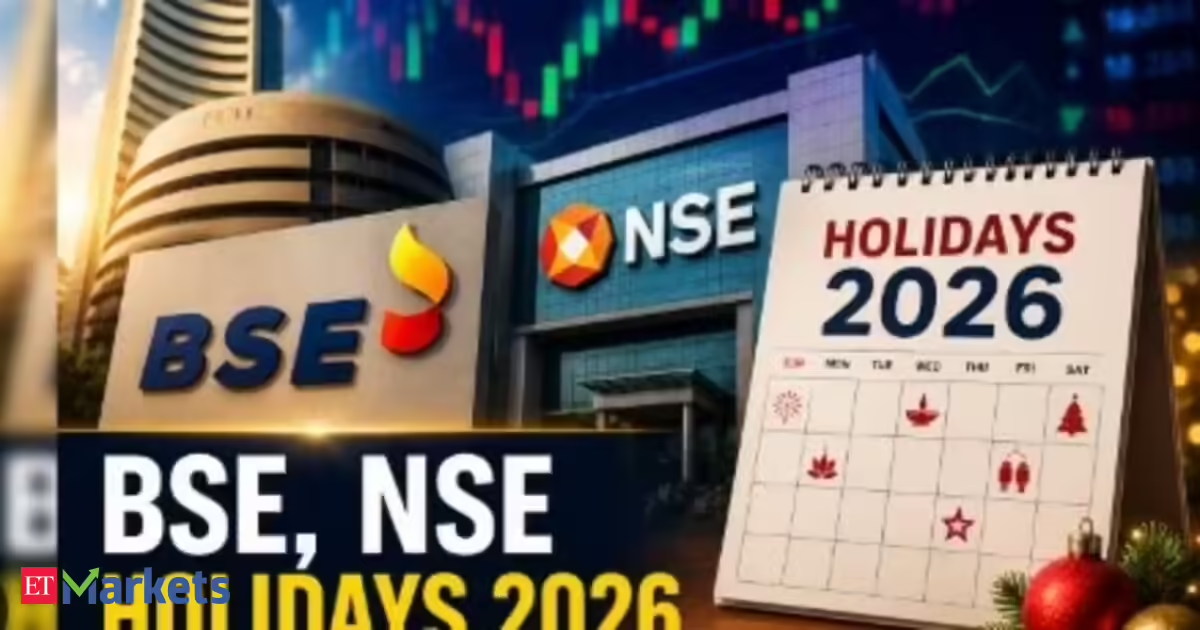
India’s largest commodity exchange, the Multi-Commodity Exchange of India (MCX), is closed for the first session (9 am to 5 pm) on Friday. Trading will resume in the evening session between 5 pm and 11:30 pm, as per its website. The National Commodity & Derivatives Exchange Limited (NCDEX), meanwhile, is closed for the entire day.
Upcoming market holidays
In total, 16 stock market holidays were scheduled for 2026, of which nine have already passed. April saw two holidays – April 3 (Good Friday) and April 14 (Dr. B.R. Ambedkar Jayanti), while markets were also closed on May 1 on account of Maharashtra Day and May 28 for Bakri Id.After today’s market holiday, the BSE and NSE will next be closed on September 14 for Ganesh Chaturthi, followed by October 2 (Mahatma Gandhi Jayanti), October 20 (Dussehra), November 10 (Diwali-Balipratipada), November 24 (Guru Nanak Jayanti), and December 25 (Christmas).
Check list of upcoming seven market holidays, including today.
Muharram is the first month of the Islamic calendar and is based on the lunar cycle, so dates may differ between countries depending on when the new moon is sighted. In India, the datefor Muharram 2026 is Friday, June 26, 2026. This will give a three-day weekend to many.As the first month of the Islamic Hijri calendar, Muharram signifies the beginning of the Islamic New Year. Derived from the Arabic word meaning “forbidden,” Muharram is one of the four sacred months in Islam during which warfare is traditionally prohibited. It carries profound religious and historical significance throughout the Muslim communities of the world. For Shia Muslims, Muharram is particularly marked by grief and remembrance, especially on the day of Ashura, the 10th day of Muharram.
Also read: Vodafone Idea shares rally 80% in less than 3 months. Time to buy or avoid?
(Disclaimer: Recommendations, suggestions, views and opinions given by the experts are their own. These do not represent the views of The Economic Times)

Alphabet Stock Joins the Dow. What History Says Happens Next.

NATO leaders hoping to display cohesion at an upcoming summit in Turkey
Nike’s New CFO Won’t Speed Up Its Turnaround

SharpLink Resumes Ethereum Buying After 8-Month Pause


-

 Fashion7 days ago
Weekend Open Thread: Miami – Corporette.com
-

 Entertainment5 days ago
Renter of Home in Anne Heche Crash Denies Settlement With Son
-
 Sports3 days ago
Two goals and an assist by sheer aura: Cristiano Ronaldo just entered the World Cup chat
-

 Tech4 days ago
Microsoft accidentally kills epic Outlook email threads
-

 Business5 days ago
Soccer-U.S. defends Iran World Cup travel restrictions, says discussions ongoing
-

 Politics6 days ago
Andy Burnham and the meaning of Makerfield
-

 NewsBeat7 days ago
Keir Starmer Allies Question His Chances For No 10
-

 Tech11 hours ago
A Look At A Gaggle Of Transputer Boards
-
Crypto World2 days ago
Bitcoin (BTC) Dips Below $62K, Ethereum (ETH) Plunges 6% Daily: Market Watch
-

 Crypto World2 days ago
Securitize Wraps Roubini's SEC-Registered ETF as Dubai VARA Digital Security
-
Business2 days ago
Entergy settles forward sale agreements, raises $672 million in cash proceeds
-

 Politics5 hours ago
Potential 2028er World Cup attendee leaderboard
-
 Business6 days ago
Wall Street Week Ahead: Investors see Micron earnings as pulse check of AI rally momentum
-
 Crypto World6 days ago
Can Charles Hoskinson Really Rescue Cardano?
-

 Crypto World6 days ago
HIVE shares jump as $220M AI deal speeds Bitcoin mining pivot
-

 Crypto World6 days ago
Jake Chervinsky accuses CME of protecting derivatives monopoly
-

 Entertainment6 days ago
Jose Alvarado Wants Taylor Swift at More Knicks Games
-
 Tech5 days ago
Signal’s Meredith Whittaker says AI chatbots ‘are not your friends’ and calls Copilot agents a backdoor
-

 Sports18 hours ago
India vs Bangladesh LIVE Score, Women’s T20 World Cup: Bangladesh Opt To Bat; India Enter ‘Do-Or-Die’ Stage As Semi-Final Race Heats Up
-

 Tech3 days ago
Nearly 7,000 fake Amazon domains registered ahead of Prime Day 2026, researchers warn
You must be logged in to post a comment Login