
Business
Buy the AI Optics Surge or Sell Before the Pullback?


SUGAR LAND, Texas — Applied Optoelectronics Inc. (NASDAQ: AAOI) has emerged as one of the hottest — and most volatile — plays in the artificial intelligence data center boom of 2026, with shares surging more than 1,140% over the past year to trade around $150 as of April 10. The company’s aggressive push into high-speed 800G and 1.6T optical transceivers for hyperscale customers has fueled explosive revenue guidance, yet Wall Street analysts remain divided, with consensus price targets well below current levels and warnings of significant execution risks.

The Taiwan-headquartered, Texas-based maker of fiber-optic components posted record 2025 revenue of $455.7 million, up sharply from prior years, driven by its data center segment that grew to $195.7 million annually. In the fourth quarter alone, revenue hit $134.27 million, with data center sales reaching $74.9 million. Management has guided for first-quarter 2026 revenue between $150 million and $165 million and boldly projects full-year 2026 revenue exceeding $1 billion — more than double 2025 levels — supported by accelerating orders for next-generation transceivers.
Major hyperscale wins have propelled the rally. The company announced a $200 million order for 1.6T transceivers in early 2026, followed by additional $71 million and $124 million commitments for 800G products from key customers, including expansions with Amazon, Microsoft and potentially Oracle. Management has projected potential monthly 800G revenue reaching $217 million by mid-2027 if capacity ramps successfully. A strong CATV segment, expected to contribute nearly $300 million annually, provides a defensive buffer amid the AI-driven growth.
The stock’s momentum has been dramatic. Shares climbed from roughly $10 in early 2025 to an all-time high near $155 in April 2026, with a market capitalization now exceeding $11 billion. Recent sessions saw gains of 13% in a single day on heavy volume exceeding 21 million shares, as investors bet on AAOI becoming a pure-play beneficiary of the “optical AI tax” — the exploding demand for high-bandwidth interconnects inside AI training clusters.
Yet the bullish narrative comes with substantial caveats. Analyst consensus leans toward “Hold,” with seven firms issuing ratings that include three Buy, three Hold and one Sell. The average 12-month price target sits around $52.80 to $66.80 — implying potential downside of more than 50% from current levels — though optimistic voices like Rosenblatt Securities maintain a Buy rating with a street-high target of $140. Concerns center on lofty valuations, with the stock trading at roughly 6.7 times projected 2026 sales and a negative earnings trajectory.
Customer concentration adds risk. Three clients accounted for 91% of 2025 revenue, leaving AAOI vulnerable to shifts in hyperscaler spending or delays in qualification cycles. The company carries a beta of 3.22, signaling extreme volatility, and has turned to equity offerings — including a $250 million at-the-market program — that have caused temporary share-price pressure through dilution. Gross margins have improved to the low 30% range on a non-GAAP basis, but achieving sustained profitability remains a work in progress, with 2026 non-GAAP operating profit targeted above $120 million.
Execution challenges loom large. AAOI must rapidly expand manufacturing capacity in Taiwan and Texas to meet demand that management says already outstrips current supply through mid-2027. Supply chain issues, competition from larger players like Lumentum Holdings and Coherent Corp., and potential slowdowns in AI capital expenditure could derail the $1 billion revenue goal. Next earnings on May 7, 2026, will provide the first major test of whether Q1 guidance and the full-year trajectory are on track.
Bullish investors argue the setup remains compelling for long-term believers in AI infrastructure. Forward price-to-sales multiples appear reasonable compared with the explosive growth potential, and in-house laser technology gives AAOI a cost and vertical integration edge. Some analysts see the stock as undervalued relative to the multi-year runway in 800G/1.6T deployments, with revenue possibly reaching several billion dollars later in the decade if hyperscalers continue scaling AI clusters aggressively.
Skeptics counter that much of the optimism is already priced in after the parabolic run. With consensus forecasts calling for continued net losses in 2026 and heavy reliance on a handful of big-tech customers, any miss on capacity ramps or order fulfillment could trigger a sharp correction. Short interest has fluctuated but remains notable, reflecting ongoing debate over sustainability.
Broader sector context supports the AI optics theme. Peers in photonics and networking have also rallied on data center demand, yet AAOI stands out for its smaller base and higher-beta exposure. Institutional ownership has grown, but retail enthusiasm has driven much of the recent volatility, with social media and trading forums amplifying both hype and caution.
For investors considering a position in 2026, the decision hinges on risk tolerance and time horizon. Those bullish on sustained AI spending may view pullbacks as buying opportunities, especially if Q1 results validate the ramp. More conservative investors might wait for clearer evidence of margin expansion, reduced customer concentration or a more attractive entry point below current levels.
AAOI’s story underscores the high-stakes nature of the AI supply chain boom. While the company has transformed from a niche player into a headline-grabbing growth name, delivering on ambitious 2026 targets will determine whether the stock justifies its elevated valuation or faces a reality check. As the May earnings approach and hyperscalers finalize budgets, Applied Optoelectronics remains a quintessential high-reward, high-risk bet in the evolving world of optical networking.


Anthropic close to finalizing $1.5 bln AI venture with Wall St firms- WSJ

Datavault AI raises $60 million in registered direct offering

Dollar steady, Asia FX flat as M.East uncertainty, rate jitters persist
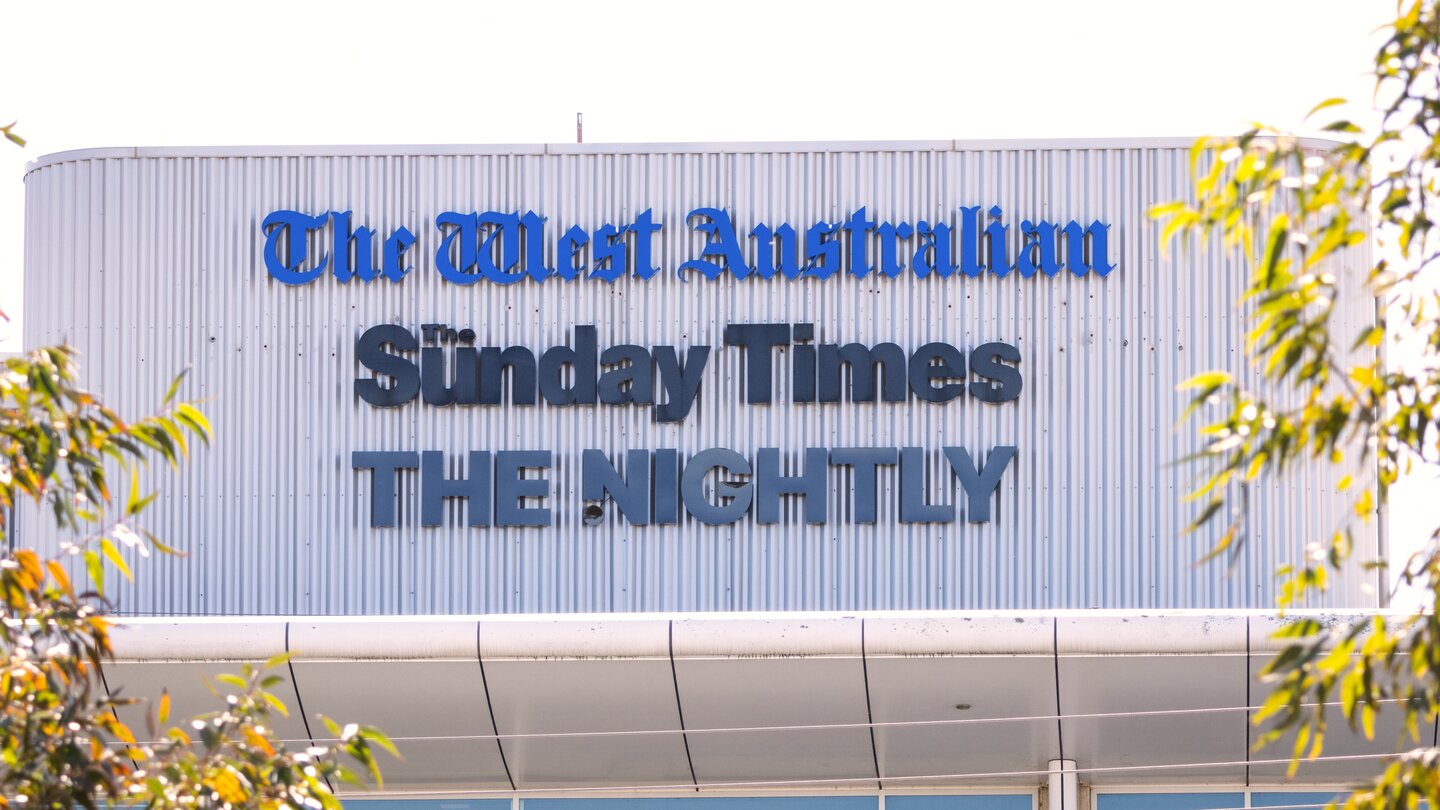
Southern Cross Media Group chair Heith Mackay-Cruise is the latest victim of the battle for control of the media conglomerate, which owns the Seven television network and The West Australian newspaper.


I have been working in the logistics sector for almost two decades. I have been into stock investing and macroeconomic analysis for almost a decade. Currently, I focus on ASEAN and NYSE/NASDAQ Stocks, particularly in banks, telco, logistics, and hotels. Since 2014, I have been trading on the PH stock market. I focus on banking, telco, and retail sectors. A colleague encouraged me to engage in the stock market as part of my portfolio diversification instead of putting all my savings in banks and properties. That was also the year when insurance companies became very popular in the PH. Initially, I invested in popular blue-chip companies. Now, I have investments across different industries and market cap sizes. There are stocks I hold for my retirement, while others are purely for trading profits. In 2020, I also entered the US Market. It was about a year after I discovered Seeking Alpha. Originally, I was using the trading account of NY CA-based cousin. Somehow, I acted like his personal broker. That made me more aware of the US market before deciding to open my own account. I decided to write for Seeking Alpha to share and gain more knowledge since I have been trading on the US market for only four years. Like in the ASEAN market, I have holdings in US banks, hotels, shipping, and logistics companies. I discovered it in 2018. Since then, I have been using the analyses here to compare them to the ones I’m doing in the PH Market.
Analyst’s Disclosure: I/we have no stock, option or similar derivative position in any of the companies mentioned, and no plans to initiate any such positions within the next 72 hours. I wrote this article myself, and it expresses my own opinions. I am not receiving compensation for it (other than from Seeking Alpha). I have no business relationship with any company whose stock is mentioned in this article.
Seeking Alpha’s Disclosure: Past performance is no guarantee of future results. No recommendation or advice is being given as to whether any investment is suitable for a particular investor. Any views or opinions expressed above may not reflect those of Seeking Alpha as a whole. Seeking Alpha is not a licensed securities dealer, broker or US investment adviser or investment bank. Our analysts are third party authors that include both professional investors and individual investors who may not be licensed or certified by any institute or regulatory body.

Seacor Marine Holdings: Unlocking Value Through Strategic Asset Sales – Buy

The state government has finally moved to end no-grounds evictions in Western Australia, bringing the state in line with the rest of the country.
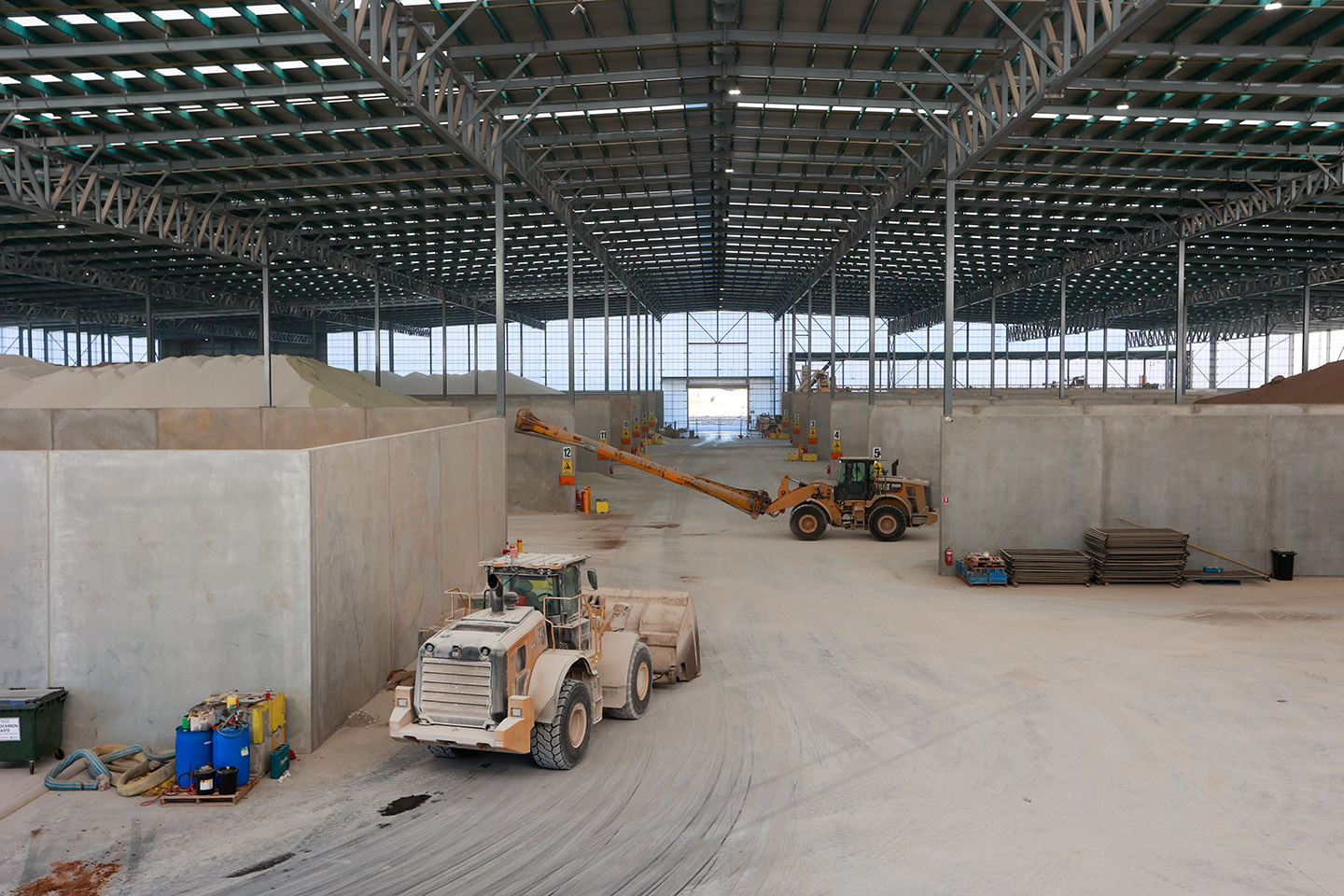
A $70 million fertiliser storage facility leased by Nutrien Ag Solutions and built by a Cardaci family business has been opened.

GameStop’s boss Ryan Cohen says he sees potential to make eBay a much bigger rival to Amazon.
Business
West Bengal, Tamil Nadu among 5 state election results today. 10 things stock market investors should track under volatility

While state elections often trigger sharp intraday moves, analysts say investors should look beyond political headlines and focus on broader macro signals before taking aggressive positions.
Here are 10 things investors should track today before placing trades on Monday
1) West Bengal remains the biggest market trigger
Exit polls suggest the BJP could emerge as the single largest force in West Bengal with around 159 seats, above the majority mark of 148, while the TMC is projected near 127 seats. A stronger-than-expected BJP showing could boost sentiment for infrastructure, railways, power and eastern India capex themes.

Ishan Tanna of Ashika Capital said better Centre-state alignment in Bengal could improve project execution and policy implementation, which may support capex-linked sectors.
2) Assam is largely priced in
Exit polls show the BJP-led alliance retaining Assam with around 90 seats in the 126-member assembly. Since continuity is already expected, analysts do not see Assam alone as a major standalone market trigger.
3) Tamil Nadu and Kerala largely stay away from national issues
The DMK-led alliance is expected to retain Tamil Nadu with around 128 seats, while Kerala could see the Congress-led UDF cross the majority mark. Any surprise deviation here may trigger sector-specific reactions, especially in state-linked infrastructure, ports and industrial names.
4) Not chasing the first opening move
Nitant Darekar of Bonanza said election result days often create headline volatility but not necessarily durable trends. “Most exit poll outcomes appear priced in. Traders should avoid chasing sharp opening moves as these often reverse after the first hour,” he said.
5) Nifty may swing 1-1.5% either way
Paresh Bhagat, Chairman of Mangal Keshav Financial Services, expects contained volatility. “Nifty could move around 1% to 1.5% depending on whether final results are in line with or different from exit polls, but scope for a major surprise looks limited,” he said.
6) Crude oil remains the biggest risk
Brent crude is trading above $113 per barrel amid the Iran conflict and shipping concerns around the Strait of Hormuz. Analysts say this remains a bigger market driver than election outcomes.
Hariprasad K of Livelong Wealth said crude remains “the single most critical macro variable” for Indian markets.
7) Foreign fund flows
FIIs sold Rs 70,100 crore worth of Indian equities in April, marking their tenth straight month of selling. In calendar 2026, foreign investors have already pulled nearly Rs 2.4 lakh crore from Indian equities. If election results fail to improve sentiment, FII selling could continue.
8) Domestic institutions are still absorbing pressure
DIIs invested about Rs 51,000 crore in April, cushioning the impact of foreign outflows. Whether domestic buying continues next week will be closely watched.
9) Technical levels
The Nifty closed Friday at 23,997, just below the key 24,000 mark. Analysts say 23,900-23,850 remains immediate support, while 24,200–24,300 is the first resistance zone. Meanwhile, a breakout above 24,300 could trigger short covering, the index below 23,900 may invite fresh selling.
10) Markets usually move back to global cues quickly
Market expert Ajay Bagga said state election outcomes rarely have a lasting impact. “The market may react for a day or two, but then it goes back to oil prices, FPI flows and the rupee. Those remain the three big variables,” he said.
Indian equities head into the event on weak footing. The Nifty lost 0.73% last week, while the Sensex slipped nearly 1% amid elevated crude prices, foreign selling and geopolitical uncertainty.
(Disclaimer: Recommendations, suggestions, views and opinions given by the experts are their own. These do not represent the views of Economic Times)

The best life advice I ever followed was deleting Instagram, and it soothed my frustrated soul

Adrien Broner now asking for money and financial assistance just to secure and afford uber ride

Woman and girl, 16, killed on small boat in English Channel carrying 82 migrants

Manchester United reach agreement with Casemiro over contract clause amid transfer speculation

US brings back mandatory military draft registration

Steven Gerrard disagrees with Gary Neville over ‘shock’ Chelsea and Arsenal claim | Football


-

 Tech6 days ago
Register Renaming | Hackaday
-

 Politics6 days ago
Drax board avoid their own AGM, accused of greenwashing & environmental racism
-

 Fashion5 days ago
Kylie Jenner’s KHY Enters a New Era with ‘Born in LA’
-

 Tech7 days ago
Why Blue Badges Disappeared From Toyota Hybrids
-

 Tech6 days ago
Images of Samsung’s rumored smart glasses have leaked
-

 NewsBeat10 hours ago
Channel 5 – All Creatures Great and Small series 7 new post
-
 Tech2 days ago
Trump’s 25% EU auto tariff breaches Turnberry Agreement that also covers semiconductors and digital trade
-

 Business5 days ago
Most Commercial Energy Audits Miss the Real Losses
-

 Business7 days ago
(VIDEO) Charlize Theron Climbs Times Square Billboard to Promote New Netflix Thriller ‘Apex’
-

 Crypto World6 days ago
CFTC’s AI will review U.S. crypto registration applications, chairman tells CoinDesk
-
 Sports2 days ago
Paul Scholes issues Marcus Rashford reality check as agreement emerges over Man United star
-

 Business5 days ago
Barclay Brothers Avoid Bankruptcy: HSBC Drops High Court Petitions After IVA Deal
-
 Entertainment7 days ago
Alicia Keys Calls Out Music Industry ‘Boys Club’
-
 Business4 days ago
Tesla Officially Registers Elon Musk’s Stock: What Investors Need to Know
-

 Tech6 days ago
Get Ready for More Brain-Scanning Consumer Gadgets
-
 Crypto World6 days ago
Robinhood Phishing Scam Exploits Gmail Dot Feature to Bypass Security
-

 Crypto World6 days ago
Gmail Dot Trick Underpins Robinhood Phishing, Sending Real-Looking Emails
-

 Entertainment6 days ago
Sister Wives: Janelle Posts New Scary Warning
-

 Business3 days ago
Two Powerball Tickets Split $143 Million Jackpot in Indiana and Kansas
-

 Tech7 days ago
The next iPhone moment might come from an AI company, not Samsung or Apple
You must be logged in to post a comment Login