Business
California bans consumer-facing ‘sell by’ food labels under new law aimed at reducing waste

Check out what’s clicking on FoxBusiness.com.
California’s standardized food date-labeling law took effect Tuesday, requiring food manufacturers that choose to display expiration-style dates on products sold in the state to use uniform language and prohibiting consumer-facing “sell by” labels.
Under Assembly Bill 660, food manufacturers, processors and retailers that display date labels on food manufactured on or after July 1, 2026, must use “BEST if Used by” or “BEST if Used or Frozen by” to indicate product quality, and “USE by” or “USE by or Freeze by” to indicate food safety.
The law also prohibits covered food products sold in California from displaying consumer-facing “sell by” labels, although retailers may continue using coded stock-rotation labels that are not easily readable by consumers.
US ECONOMY ADDED JOBS AT A SLOWER PACE THAN EXPECTED IN JUNE

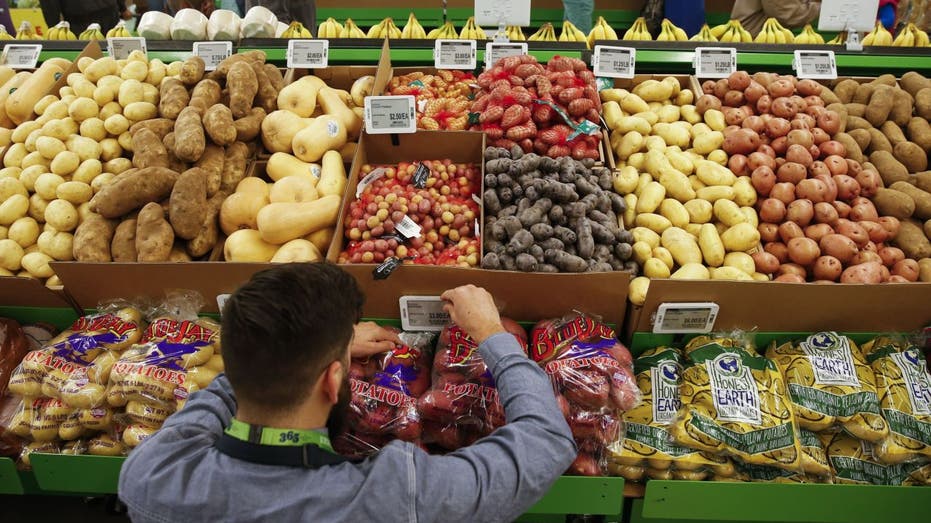
An employee arranges a digital price tag for vegetables on the opening day of the 365 by Whole Foods Market store in the Silver Lake neighborhood of Los Angeles, California, U.S., on Wednesday, May 25, 2016. Whole Foods Market Inc., plans to open 10 (Photographer: Patrick T. Fallon/Bloomberg via Getty Images / Getty Images)
“Using clear, consistent date labels will help reduce confusion about when food is safe to eat, cut down on unnecessary food waste, and make it easier for consumers to make informed decisions,” Assemblymember Jacqui Irwin, D-Thousand Oaks, who authored the legislation, wrote Monday on X. “A simple change with meaningful benefits for families, businesses, and the environment.”
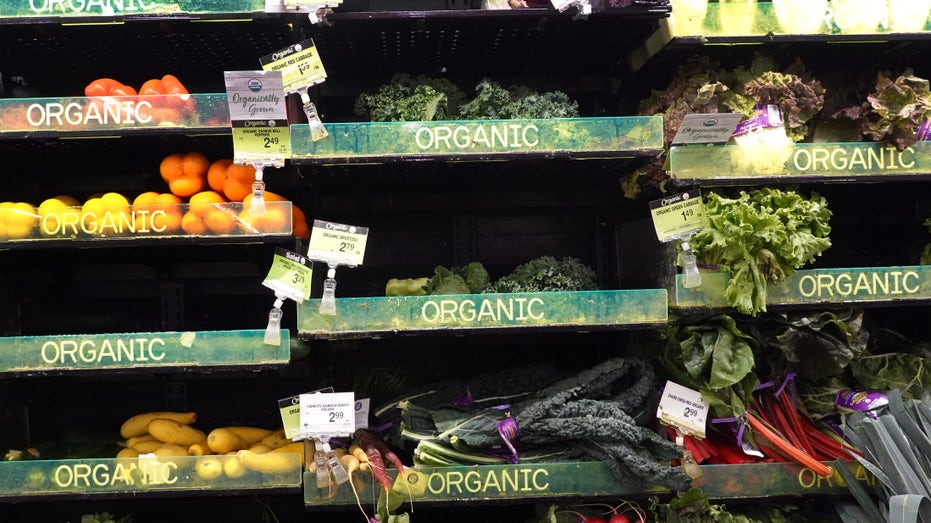
Organic labeled vegetables are offered for sale at a grocery store on January 19, 2023 in Chicago, Illinois. (Scott Olson/Getty Images)
State officials say the change is intended to reduce consumer confusion over the dozens of different date-label phrases currently used on food packaging.
According to the California Department of Food and Agriculture, more than 50 differently worded date labels have been used in the U.S., leading many consumers to mistakenly discard food that remains safe to eat.
The department, citing the California Department of Resources Recycling and Recovery, said Californians throw away the equivalent of 2.5 billion meals worth of unspoiled food each year. Organic waste accounts for about 48% of material sent to California landfills and generates roughly 41% of the state’s methane emissions as it decomposes there, according to the agency.
The legislation does not require manufacturers to place date labels on products that otherwise would not have them. Instead, it standardizes the wording used when companies choose — or are otherwise required by law — to include quality or safety dates.
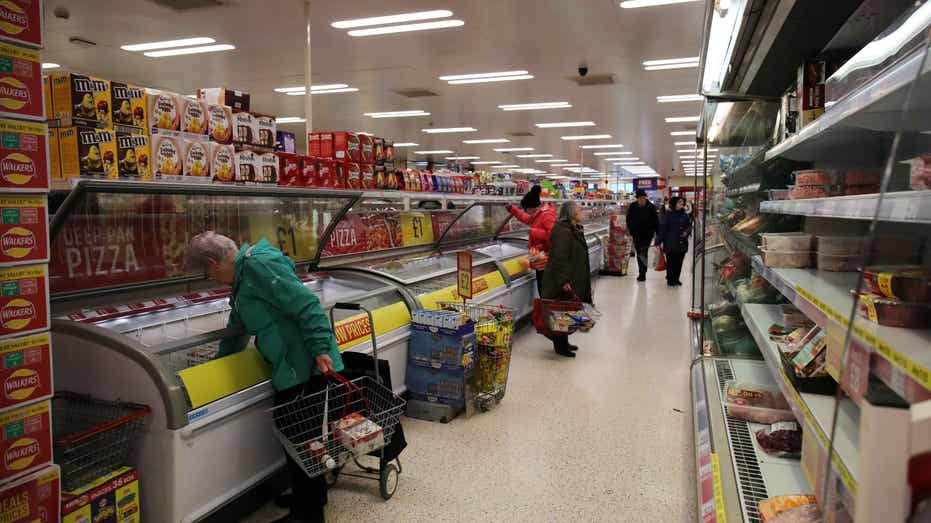
Elderly shoppers browse the isles of Iceland Foods in Northwich, Britain, on March 18, 2020, where shoppers will soon be able to take out small interest free loans from the supermarket for groceries. (REUTERS/Molly Darlington / Reuters Photos)
The law also preserves several exceptions. It does not apply to infant formula, eggs, pasteurized in-shell eggs, or beer and other malt beverages. Grocery stores may continue using “packed on” labels for prepared foods as long as the products also display the required quality or safety date labels.
CLICK HERE TO GET FOX BUSINESS ON THE GO
Gov. Gavin Newsom signed AB 660 into law in September 2024, making California the first state to adopt standardized consumer-facing food date labels.
You must be logged in to post a comment Login