
Business
California high-speed rail audit details luxury travel charged to taxpayers

FOX Business correspondent Kelly Saberi reports on an audit surrounding California’s high-speed rail project travel expenses on ‘Varney & Co.’
California High-Speed Rail Authority officials rubber-stamped hundreds of thousands of dollars in travel charges incurred by outside consultants, according to a new report from the state’s inspector general.
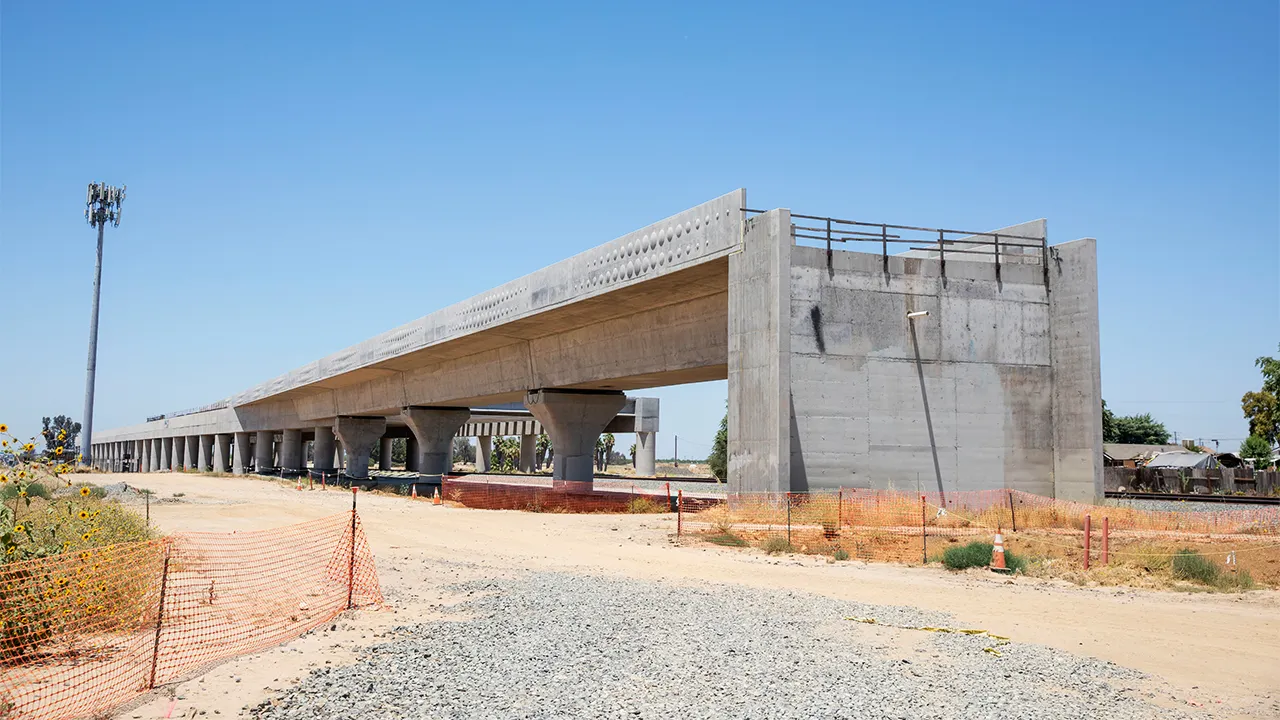
The lavish spending revelations come as the $126 billion project has become a national symbol of government waste. Sixteen years after voters approved the initiative, not a single mile of track has carried a commercial passenger, and a recent assessment warned the project’s funds could dry up entirely by the end of 2027.
The audit, released Tuesday by the California Office of the Inspector General (OIG), revealed that taxpayers footed the bill for private aircraft travel, tiki bar visits, cigar lounges, luxury rideshares and international trips over a two-year period.
“In total, the Authority paid more than $2 million in travel-related costs for consultants at the four consulting firms in fiscal years 2024-25 and 2025-26,” the OIG said.
The investigation reviewed travel reimbursements billed by four outside consulting firms over the two-year period. It found that roughly 60%, or $680,500, of the payments it reviewed had not received advanced authorization. Additionally, $543,400 in travel expense payments were found to be “not allowable.” In some instances, agency staff didn’t even know the trips had taken place until the invoices arrived, frequently approving them with vague justifications like a “typical M-F week.”
The audit uncovered a lack of oversight, noting the agency’s behavior is “inconsistent with the Authority’s role as the steward of public resources.”
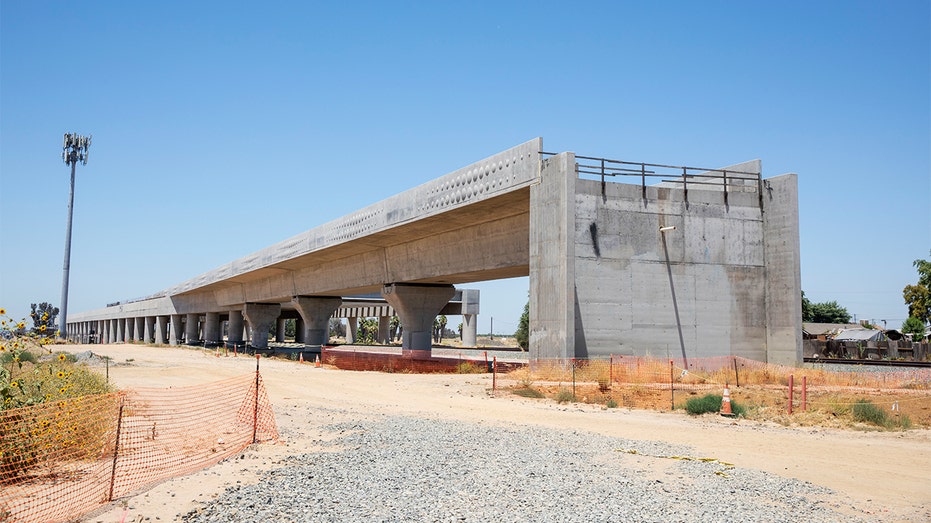
The Herndon Viaduct of the California High-Speed Rail project is seen above the Union Pacific railroad tracks next to CA-99 in Fresno, on June 25, 2026. (Dan Hernandez/San Francisco Chronicle via Getty Images)
Instead of standard business travel, the audit flagged an array of unauthorized luxury expenditures billed to “questionable locations” without prior approval. Financial consulting giant KPMG LLP was specifically identified by the OIG as the firm that billed the authority for rides to a nightclub, a tiki bar and a Washington, D.C., cigar lounge. Taxpayers were also on the hook for an outing to an escape room, a trip to a Denver sushi restaurant and a 25-mile “Uber Comfort” ride to a steakhouse in Folsom, California.
KPMG declined to comment.
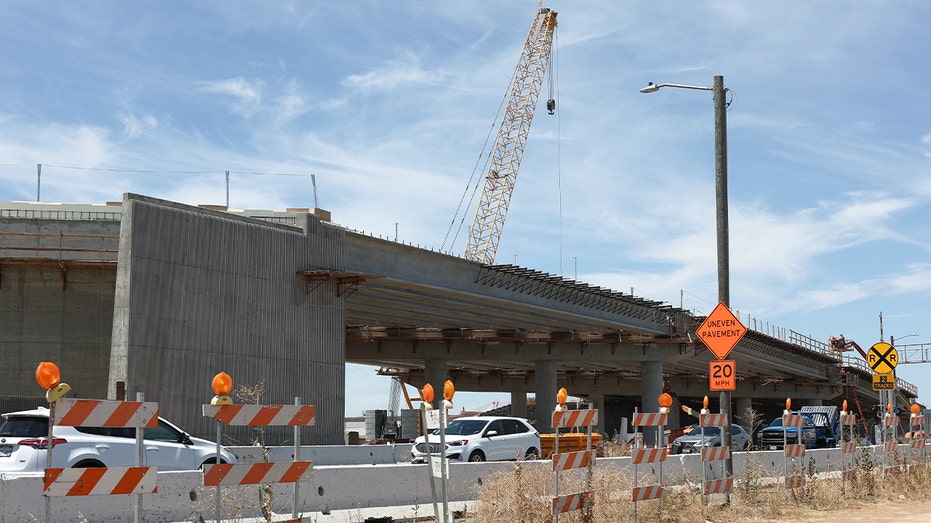
A general view of the construction site for the California High-Speed Rail Project in Fresno on July 6, 2026. (Michael Yanow/NurPhoto via Getty Images)
The audit of the reimbursements extended to daily routines and premium transit. The agency repeatedly reimbursed ride-hailing trips to Planet Fitness gyms in and around Sacramento, continuing the practice even after a supervisor explicitly put in writing that the state does not cover rideshares to gyms.
One consultant billed taxpayers $40 for a luxury “Uber Black” ride to travel less than a single mile in downtown Sacramento.
When it came to air travel, one consultant bypassed commercial airlines entirely, flying a private aircraft from Washington, D.C., to California. The consultant self-calculated that a “premium” commercial rate would have cost $4,182 each way, and the agency paid it without question.
The billing didn’t stop there. One legal consultant billed $40,800 in travel reimbursements, plus $86,500 just for “travel time,” making 30 trips between Denver and Sacramento in a single year. Furthermore, the agency paid out $118,000 in international travel expenses, despite the consultants’ contracts explicitly barring international trips.
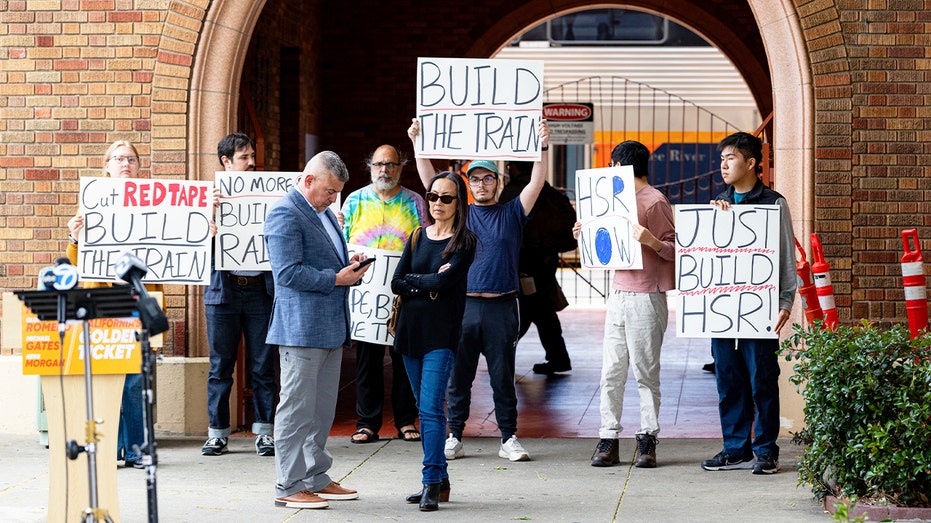
Demonstrators hold signs prior to a news conference with Steve Hilton, Republican gubernatorial candidate, not pictured, at the San Jose Diridon Station in San Jose, California, on May 26, 2026. (Jason Henry/Bloomberg via Getty Images)
A spokesperson for the California High-Speed Rail Authority said the agency “takes these findings seriously” and has pledged to work collaboratively with the inspector general’s office to rectify the oversight failures.
FOX Business reached out to Nossaman LLP, the AECOM-Fluor Joint Venture and the SYSTRA/TYPSA Joint Venture for comment.
California voters first approved the bullet train initiative in 2008. They were promised a $33 billion state-of-the-art railway that would whisk passengers between Los Angeles and San Francisco by 2020. Following a reassessment this year, the total estimated cost of the project has ballooned to at least $126 billion — nearly quadruple the original price tag. The estimated completion date has also been pushed back decades, with optimistic projections now targeting 2039.
CLICK HERE TO GET FOX BUSINESS ON THE GO
“More than $600,000 in consultant travel expenses were flagged as questionable, while California families are struggling with the high cost of living and deserve answers and accountability,” the chair of the state Senate Transportation Committee, Tony Strickland, R-Huntington Beach, said in response to the findings. “Consultants should expect that when they make an executive decision to travel without authorization, that they’re taking on the expense themselves.”


Compass’ Bowers Group Vice President Brett Rubin speaks to Fox News Digital about how the Federal Reserve raising rates for the first time in three years could lead to a frozen real estate market.
American homeowners expecting peak-market valuations are confronting a changing real estate landscape following the Federal Reserve’s latest interest rate decision.
Rising borrowing costs are shrinking the pool of qualified buyers, signaling a potential wave of price reductions for sellers seeking to close deals before year-end, real estate insiders told Fox News Digital.
“Sellers have… very high expectations. And it takes a while for sellers’ expectations to come down. And that’s the reality,” DaGrosa Capital Partners founder and chairman Joe DaGrosa told Fox News Digital. “With respect to buyers, I think a lot of people are going to have to wait it out. And wait and see a better situation on the mortgage front… [there’s] going to be some pressure. So I think it’s going to be tough on buyers and it’s going to be tough on sellers.”
“Fewer buyers equals fewer opportunities to sell the home, less competitive environment. And so as a result, we’re seeing a lot of sellers struggling to sell their homes in a market that otherwise would be a pretty strong market,” Bowers Group Vice President at Compass Brett Rubin also said.
“And with that, we’re starting to see homes sitting on the market a little bit longer, a lot more price reductions, hesitant buyers kind of sitting on their sidelines. And so this rate hike definitely has implications on both sides of the spectrum.”

Construction workers build homes in Lillington, North Carolina. (Getty Images)
Federal Reserve policymakers voted 12-0 on Wednesday to raise the target range for the federal funds rate from 3.5%-3.75% to 3.75%-4%. The 25-basis-point increase marked the first interest rate hike since July 2023 and came after the Fed left rates unchanged at its first five meetings this year.
The average rate on a 30-year fixed refinance increased to 7.14% from 6.87% a week earlier, while the average 15-year fixed refinance rate was 6.30% Thursday, according to the Mortgage Research Center.
“The retail market sellers are going to realize that they’ve probably experienced 40%, 50% appreciation of their property values over the past 8 to 10 years… I think they’re going to have to recognize that they’re going to take a little bit of a hit if they want to sell,” DaGrosa said. “And homebuilder sentiment is at its lowest in the past 12 months. It may get worse before it gets better. So you’re seeing a double whammy for homebuilds, which is their cost of building homes has gone up.”
“Some folks who need to sell their homes, they’re full steam ahead as well, and they’re just going to have to weather the storm for better or for worse,” Rubin added. “Ultimately, if they need to reduce the price, that might be in the cards for them.”
President Donald Trump calls for Federal Reserve independence while arguing that interest rates are too high. His comments follow the Federal Reserve’s first rate hike in three years, which Fed Chair Kevin Warsh defends.
“I can see there being a correlation between, you know, rates increasing and home values decreasing. But I think it needs to be a really consistent increase over an extended period of time to really affect the market in that way,” Rubin continued.
Millions of American homeowners remain reluctant to move because they hold mortgage rates below 4%, contributing to the so-called mortgage-rate lock-in effect. Sellers who need to move because of job relocations or life changes can face reluctant buyers and higher borrowing costs, the experts said.
“I think it’s going to be a buyer’s market in a few months, and if I were a buyer, I’d be in no rush to buy because I think there’ll be relief from sellers. But for now, we’re going to have a frozen market. I’ve seen this multiple times over the past 40 years,” DaGrosa said.
“We use the term ‘golden handcuffs.’ The folks who have interest rates in the 3%, 4% range, they’re not as incentivized to make that move and take on a larger mortgage payment with a higher interest rate. And so they’re definitely going to be reconsidering that move if it’s not something that’s absolutely imperative,” Rubin explained. “So while there’s some truth to that, in the sense that folks who are comfortable are probably not going to move just because they feel like moving, there’s always going to be folks who are buying and selling out of necessity. And unfortunately for those folks, they’re going to have to weather the storm, whether they are encouraged by the rate environment or not.”
Inspired by Somerset Development founder and CEO Ralph Zucker and Asbury Park resident Karen Nelson speak to Fox News Digital about the resilience and price appreciation of New Jersey’s housing market.
As market inventory sits and seasonal slowdowns compound high interest rates, DaGrosa and Rubin anticipate a leverage shift. Sellers who delay price concessions may find themselves competing for a diminishing pool of qualified buyers, signaling that patient buyers may soon hold the bargaining power in upcoming sales cycles.
“For the average American, my view is there are going to be good deals coming over time,” DaGrosa noted.
GET FOX BUSINESS ON THE GO BY CLICKING HERE
“I’m feeling like there will be a slowdown,” Rubin admitted. “So while we might not immediately realize what those effects are looking like at the moment, the spring market will certainly be more telling.”
“It’s the Wild West in real estate, and that’s just sort of the norm, unfortunately,” he added. “The sooner that folks realize that there is no kind of standard market anymore, the sooner that they’re going to realize that this is what it is.”
FOX Business’ Eric Revell contributed to this report.
Higher yields suggest a premium demanded from the investors. The OMO comes ahead of ₹28,000 crore weekly bond auction scheduled Friday by the RBI.
 ET Bureau
The 8.28% GS 2032 was the most in demand, with market participants bidding the highest at ₹19,700 crore, while the five-year 6.68% GS 2031 paper garnered bids of ₹7,970 crore.
The Reserve Bank of India’s open market operation sale received robust investor interest. This operation aimed to absorb surplus liquidity from the banking system. The central bank accepted bonds at yields higher than prevailing market rates. This move precedes a significant weekly bond auction scheduled for Friday. Further liquidity absorption measures are planned for the coming week.
“The yields were slightly higher than prevailing market levels and expectations, but the OMO was well subscribed. Since the sale was fully subscribed, it did not lead to any significant negative reaction in yields,” said Alok Singh, head of treasury at CSB Bank.
Read more: Paytm karo, back in vogue again: Can the stock reclaim IPO price after 5 years and 480% rally?

For example, the yield of the five-year paper closed at 6.78% on Thursday, while the cut off yield in the OMO was 6.90%.
The 6.79% GS 2029 three-year paper was taken at a cutoff yield of 6.70%, while it closed at 6.66%.The RBI is conducting OMOs to absorb surplus system liquidity and align the weighted average call rate (WACR) with the policy rate. Selling securities in the OMO is one of the measures the central bank uses to drain excess liquidity in the banking system.
Read more: Retail investors pull Rs 5,674 crore from stocks, invest Rs 12,618 crore into IPOs in July-August
Overall liquidity now stands at ₹7.37 lakh crore on September 16, while the next OMO sale of ₹25,000 crore will take place on September 21. The WACR is at 5.05%, and has been below the 5.25% policy repo rate since late July. The RBI will also conduct a 3-day variable rate reverse repo (VRRR) operation for ₹2.25 lakh crore on Friday.

The autonomous vehicle was seen moving back and forth while trying to get past the flooded street. (Credit: Roger Pelkey via Storyful)
A Waymo vehicle struggled to navigate a flooded street in Phoenix this month, becoming stuck for more than 10 minutes in an “AI loop,” according to witnesses.
The car was filmed as it hesitantly moved back and forth, at one point almost backing into another car.
WAYMO GETS REGULATORY APPROVAL TO SCALE UP ROBOTAXI SERVICE ACROSS CALIFORNIA, ENTER 2 NEW MARKETS

A Waymo vehicle gets stuck on a flooded Phoenix street as it became stuck in an “AI loop,” one witness said. (Roger Pelkey via Storyful)
“There were actually two Waymos holding up traffic,” said Roger Pelkey, who captured the incident on video. “The one further up finally made it through. This one was stuck in an AI loop and frustrating drivers.”
The video shows the vehicle continually moving slightly forward before backing up, as other vehicles with human drivers went around.
WAYMO RECALLS NEARLY 4,000 ROBOTAXIS AFTER CARS ENTER FREEWAY WORK ZONES

A Waymo vehicle seen on a street while trying to navigate the floodwaters. (Roger Pelkey via Storyful)
In May, Waymo suspended its driverless taxi operations across multiple cities — including Atlanta, San Antonio, Austin, Houston and Dallas — due to repeated incidents involving floodwaters.
The vehicles encountered severe weather and drove into submerged streets, with some becoming stranded or stuck in floodwaters.
Earlier this month, the company brought its driverless robotaxi service to Denver, San Diego and Tampa, expanding its fully autonomous ride-hailing service to 14 cities.

A text reading “Almost at Pickup” appears for a person hailing a Waymo self-driving car in San Francisco, March 18, 2025. (Smith Collection/Gado/Getty Images)
CLICK HERE TO GET FOX BUSINESS ON THE GO
FOX Business has reached out to Waymo for comment.

Rika Antonova has been working in the field of robotics since 2015 and is currently an associate professor at the Department of Computer Science and Technology at the University of Cambridge.
Her research is focused on, external developing software and hardware that can aid robots to learn complex behaviour.
Antonova works with a training system called MuJoCo, owned by Google’s DeepMind since 2021. It’s open-source software, which means researchers can use it for free, and are allowed to tinker with the code.
“It is very, very user-friendly. So for research groups or for small start-ups, that’s useful,” she says.
She says that Vsim’s approach – very fast simulation – is promising.
“If you have a very, very fast simulator, then you can simulate hundreds of millions of samples in that few seconds that your robot is thinking about how to adjust its motion, and then you can change the motion almost in real time,” she says.
But those simulated environments are still rough approximations of the real world, which limits what can be trained.
“There are certain things that are hard to model in simulation, like highly deformable objects and cutting,” she says.
It’s a challenge that Nvidia and Lu and Storey at Vsim are working on.
Lu says their system has “reduced approximation, using accurate simulations to train models that genuinely work in reality as well as they do in simulations.”
Soon a second robot, to be called Nacho, will be helping develop that tech.
Lu says that should speed up their development process and ensure their software can run on different machines.
And, of course, provide Freddo with some company.

Why is Arafura Resources stock gaining today?

Zscaler CPO Adam Geller sells $1.96 million in company stock

Tata Chemicals closed 6% higher, Tata Investment Corp gained 5.5%, Tata Motors Passenger Vehicles rose 4.5% and Tata Steel gained 3%. Indian Hotels and Tata Power climbed around 2% higher. The board decision, however, has opened a fresh front in the ongoing differences between Tata Sons and Tata Trusts. Tata Trusts said the resolution to reappoint Chandrasekaran was a “legal nullity”, with Tata Trusts Chairman Noel N Tata voting against the resolution at the Tata Sons board meeting. Four directors voted in favour, according to the Trusts.
ET BureauTata Trusts is the majority owner of Tata Sons, in which the Shapoorji Pallonji Group also owns a significant minority stake of more than 18%.
The Tata Sons board approved the fresh five-year term after Chandrasekaran had decided in August not to seek another term when his current tenure ends on February 20, 2027.
Read more: Paytm karo, back in vogue again: Can the stock reclaim IPO price after 5 years and 480% rally?
The board also resolved to initiate steps to comply with applicable RBI guidelines and seek guidance from the RBI, Tata Trusts and other stakeholders on the applicable compliance requirements. “For Tata Group stocks, the five-year extension provides leadership continuity and reduces near-term succession uncertainty, which could support investor confidence. For the SP Group, the impact is more indirect, as continued Chandra leadership and the Tata Sons listing process could provide greater clarity around its stake,” said Ravi Singh, chief research officer, Master Capital Services.
“However, Tata Trusts’ challenge may create near-term governance uncertainty. In our view, the development is broadly supportive for Tata Group stocks, while SP Group could benefit if the listing process progresses smoothly,” he said.Read more: Retail investors pull Rs 5,674 crore from stocks, invest Rs 12,618 crore into IPOs in July-August
A potential listing of Tata Sons could benefit Tata Chemicals, Tata Steel and Tata Motors Passenger Vehicles most directly, as they own 2.5-3.1% stakes in the holding company. Tata Chemicals’ 2.5% stake is estimated at around ₹25,300 crore, while Tata Steel and Tata Motors Passenger Vehicles each hold 3.1% stakes worth around ₹30,600 crore. Shares of Shapoorji Pallonji Group companies also gained. Gokak Textiles rose 9% and Afcons Infrastructure gained 3.3%, while Forbes & Co and Eureka Forbes closed marginally lower. The SP Group owns an estimated 18.37% of Tata Sons, and a potential listing could provide the debt-laden group a liquid route to monetise its stake.
Tata Sons could be valued at about ₹12.5 lakh crore, according to calculations cited by Deven Choksey, managing director at DRChoksey FinServ. At that valuation, the 11.94% stake held by seven listed Tata Group companies would be worth around ₹1.49 lakh crore. However, the differences between Tata Trusts and Tata Sons could delay some of the group’s future plans, particularly projects involving large capital expenditure and requiring Tata Trusts’ consent, said Vinod Nair, Head of Research, Geojit Investments.
“The continuation of Chandra suggests a relief for both the groups, Tata and SP, with a plan to proceed with the future listing of Tata Sons leading to unlocking of value for the shareholders. However, the boost could be short-lived, especially for the Tata group, if the differences continue to delay the future growth and smooth working of the group in the medium to long term,” Nair said.

MSCI’s regional equities gauge advanced 0.3% with South Korea’s Kospi index leading gains. That came after the S&P 500 Index rose 1.1% on Thursday, its biggest advance since early August. The tech-heavy Nasdaq 100 Index climbed 1.7%, while a key gauge of chipmakers jumped 3.1% as US stocks rebounded from losses triggered by the Federal Reserve’s first rate hike since 2023.
Adding to the positive tone, Brent crude declined for a third day Friday to just below $104.00 a barrel as supply concerns eased and traders turned to the next round of diplomacy that could shape the US-Iran war.
Oil’s retreat helped Treasuries rally across the curve in the New York session, with the 10-year yield falling nine basis points to 4.93%, having touched 5.02% Wednesday following the Fed move. Government bonds of similar tenor in Australia and New Zealand opened higher.
Lower energy prices could reduce pressure on consumer prices and give central banks more room to assess the impact of tighter monetary policy, offering support to both stocks and bonds. But the durability of that reprieve may depend on whether oil continues to retreat, with the US-Iran war and prospects for further diplomacy keeping the outlook for energy supplies uncertain.
“Sentiment has been lifted in part because crude oil has fallen for a second day, easing pressure on bond yields,” said Fawad Razaqzada at Forex.com.
Oil fell with Saudi Arabia seeking to restore about half the capacity of its key East-West pipeline within days after it was shut last week following drone strikes, easing some concerns over further supply losses stemming from the Iran conflict.Meanwhile, Reuters reported that China asked Iran to help rein in Yemen’s Tehran-backed Houthi militants, a move that could potentially ease disruptions around the Bab el-Mandeb, another strait vital to global shipping and energy markets.
Elsewhere, gold jumped on Thursday, snapping a three-day decline, while a Bloomberg gauge of the dollar pared some of its gains since the rate increase.
UK government bonds also rallied after the Bank of England scrapped plans to sell long-dated gilts as part of its quantitative-tightening program. The decision offered relief to a battered market, where 10- and 30-year yields had climbed to their highest levels since 2007 and 1998, respectively.
The BOE left its benchmark rate unchanged on Thursday.
Meanwhile, Japan’s inflation slowed for the first time in four months, largely reflecting the effect of government subsidies, in data released hours before the BOJ. All respondents in a Bloomberg survey expect the central bank to raise its policy rate to 1.25% from 1% on Friday, with governor Kazuo Ueda scheduled to hold a press conference after.
The yen was little changed, trading around 156.15 per dollar.
“We expect the BOJ to deliver a 25 basis point hike to 1.25% on Friday – this is now the bare minimum and it would be pretty unimaginable at this point that we don’t get one,” wrote Anthony Malouf, a market analyst at Ebury. “Governor Ueda will have no choice but to also strike a hawkish note on policy for risk of undoing a lot of the good work achieved via FX intervention.”

XBP Global Holdings director Par Chadha buys $579,997 in stock
Under the new framework, capital market transactions, including payments to stockbrokers, mutual funds, investment advisors and dealers, will attract an MDR of 0.02%, capped at ₹300 per transaction, from October 15.
Read more: Retail investors pull Rs 5,674 crore from stocks, invest Rs 12,618 crore into IPOs in July-August
Stockbrokers operating on wafer-thin margins have approached Sebi raising concerns the charge could disproportionately increase their costs since money transferred by a client to a broking account does not necessarily result in a trade.
“The problem with broking is that there is no guarantee that money transferred to a broker will actually result in a transaction. As brokers, we can’t force a customer to trade after transferring money. And if we can’t pass the UPI charge on to the customer, there is essentially no limit to the cost a customer can impose on a broker without generating any revenue,” Nithin Kamath, founder of discount broking platform Zerodha, wrote in a post on his social media handle.
Read more: Paytm karo, back in vogue again: Can the stock reclaim IPO price after 5 years and 480% rally?
“What makes this even more challenging is quarterly settlement. This is a Sebi regulation that requires brokers to send unused funds back to clients every month or quarter. Most customers then transfer these funds back to their broking accounts, with more than half of these transfers happening through UPI. So, regulation essentially forces this movement of money every month or quarter, and the broker could end up bearing the cost when money comes back, without any incremental benefit or revenue,” Kamath said.In a separate development, the Sebi chairman said the regulator has not received any proposal from the National Stock Exchange (NSE) seeking regulatory approval to trade on its own platform after getting listed. “No, there is no such letter and there is no such requirement,” Pandey said.
The NSE stock will be listed on its rival, the Bombay Stock Exchange. Unlike the Australian bourse which listed its stock on its own platform in 1998, India allows only cross-listing, and the BSE stock is listed on the NSE.

Jennifer Lopez’s ‘Ranch Wife’ Dress Is Just Like Minka Kelly’s

The Rothschild Method & history of banking #money

Retired judge to chair TEWV NHS trust public inquiry



-

 Fashion6 days ago
Weekend Open Thread – Corporette.com
-

 Tech5 days ago
The Latest Weird Thing to Play Doom Is the Mapped-Out Brain of a Fruit Fly
-

 Business7 days ago
10 Most-Streamed Songs On Spotify In 2026 So Far, Led By Ella Langley’s Dominant Run On The Charts This Year
-

 Crypto World7 days ago
XAG/USD: Silver’s Short-Term Rally Meets Its Moment of Truth
-

 Crypto World7 days ago
Diesel Tops $6 a Gallon for the First Time as 28 States Set Records
-

 Crypto World3 days ago
Kraken Lets xStocks Holders Earn Yield Through DeFi
-

 News Videos6 days ago
Facing Financial Fears
-

 Crypto World4 days ago
Elon Musk Drops a Bombshell: Grok 5 Could Be the AGI Breakthrough
-

 Crypto World1 day ago
US Charges Robinhood Engineers Over Crypto Listing Trades
-

 Entertainment6 days ago
News Specials, Movies, Shows, More
-

 Business5 days ago
Rivals Sam Altman and Elon Musk Rally Behind Dario Amodei’s Call for a Slowdown in AI Development
-

 Crypto World6 days ago
Can AI Build a Startup in 72 Hours? Elon Musk's Team Will Livestream the Test
-
 NewsBeat3 days ago
‘Sick conspiracy’: Trump says only guardrails AI needs is ‘a strong and smart (High IQ!) president’ in all-caps rant
-
 Crypto World4 days ago
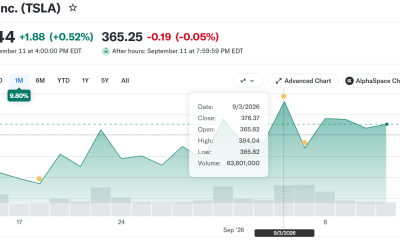
New Tesla Roadster Uses SpaceX Tech. Will It Impact the Stock Price?
-

 Crypto World7 days ago
Bitcoin ETFs Pull $167M as 2026’s Best Inflow Run Slows
-

 Crypto World6 days ago
Robinhood Chain Never Stopped But its Blobs Did Stop Reaching Ethereum For 14 Minutes
-

 Crypto World2 days ago
What Is the Status of the U.S.-Iran Peace Talks? Here's What Both Sides Are Saying
-
 Entertainment6 days ago
New Horror Movie Officially Earns a Rare Stephen King Recommendation
-

 Business6 days ago
Marvell: Most Potent Setup Of The AI Factory Decade
-
 Crypto World4 days ago
3 Token Unlocks to Watch in the Third Week of September 2026
You must be logged in to post a comment Login