

Business
Camera Redesign, Bigger Zoom and Chip Upgrades

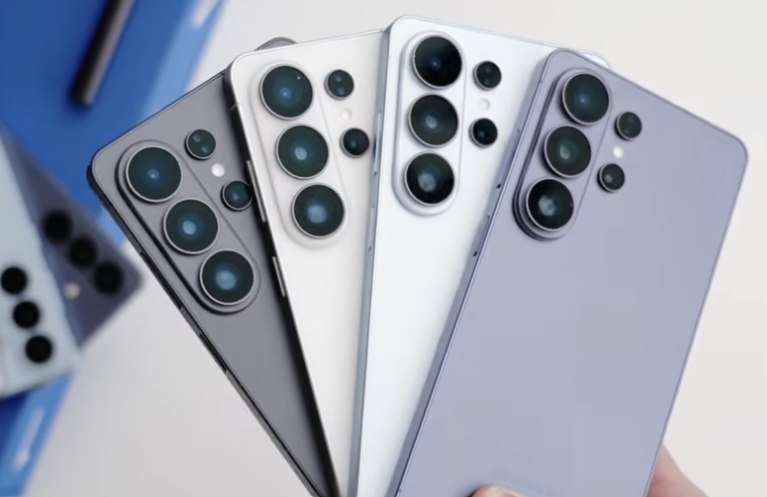
Samsung’s next flagship phone remains roughly six months from launch, but the volume and consistency of recent leaks have given a clearer, if still unofficial, picture of what the Galaxy S27 Ultra may look like when it arrives in early 2027. As of this week, multiple industry outlets tracking Samsung’s supply chain have converged on several key details, even as some elements of the design and camera system remain genuinely unresolved.
A four-model lineup takes shape
Samsung is expected to expand its Galaxy S27 lineup to four devices for the first time, adding a new “Pro” tier between the Plus and Ultra models. Internal codenames obtained by outlets including GSMArena and SamMobile — NM1 through NM4, reportedly short for “next miracle” — point to the Galaxy S27, S27+, S27 Pro and S27 Ultra as the four devices in development. That’s one more codename than Samsung used during development of the Galaxy S26 series, which shipped as a three-model lineup earlier this year.
Camera hardware: a genuine departure for the base models
The most significant confirmed shift involves camera suppliers on the standard models. Multiple outlets report that the Galaxy S27 and S27+ are being tested with a 50-megapixel Sony primary sensor featuring optical image stabilization, a break from Samsung’s practice of sourcing primary sensors exclusively from its own ISOCELL division since the Galaxy S22. The ultrawide camera on those two models is expected to remain a 12-megapixel sensor, unchanged for what would be the eighth consecutive generation, according to leak trackers who have followed Samsung’s camera hardware cycle closely.
The Ultra’s camera count remains a moving target
For the Ultra, the picture is less settled. Early reporting suggested Samsung would replace its familiar four-camera rear array with a horizontal “camera bar” design and drop to three lenses, cutting the long-criticized 3x telephoto sensor in favor of relying on the 200-megapixel main sensor and computational zoom to cover mid-range distances. That account, cited by outlets including Tech Radar and Notebookcheck, describes a 200-megapixel primary camera, a 50-megapixel ultrawide with autofocus, and a single 50-megapixel telephoto lens offering 5x optical zoom — a leaner setup than the current Galaxy S26 Ultra.
However, a more recent report from GSMArena, citing new leak details, complicates that narrative. It suggests the Ultra may retain two telephoto lenses after all, differentiating it from the rumored Galaxy S27 Pro, which would share the same main and ultrawide sensors but include only one zoom camera. SamMobile, sourcing the same leak, explicitly cautioned that this two-telephoto claim should be treated with skepticism, noting that most other reporting has pointed to a single telephoto lens. Notebookcheck has separately reported that a tipster it considers reliable says Samsung is still evaluating multiple design concepts internally, and that none of the current candidates include the widely circulated horizontal camera bar look that generated buzz on social media earlier this year.
In short: the three-camera, computational-zoom concept remains the more frequently cited version across leak trackers, but the internal design and final lens count have not been locked down this close to launch, and conflicting reports continue to surface as recently as this week.
Display and design expectations
Leaks point to the Galaxy S27 Ultra retaining a 6.9-inch Dynamic AMOLED 2x display, consistent with recent Ultra models, with peak brightness expected to reach up to 3,000 nits — matching the current Galaxy S26 Ultra’s specification rather than representing a dramatic jump. Design-wise, while renders showing a bold visor-style rear panel circulated widely in recent weeks, leak trackers say those concepts do not reflect Samsung’s confirmed direction, and the company appears to be testing several design options while balancing aesthetics, manufacturing cost and thermal performance.
Chipset and memory
On performance, the Galaxy S27 Ultra is widely expected to use a chip described as the Snapdragon 8 Elite Gen 6 Pro, paired with at least 12GB of RAM. Some reporting suggests this chip may involve deeper customization for Samsung’s specific camera and AI processing pipeline rather than simply being a clock-speed-tuned version of a standard Qualcomm chip, which has been Samsung’s approach in prior generations. Separately, some outlets have suggested Samsung may lean more heavily on its own Exynos 2700 chip, reportedly built on a second-generation 2-nanometer process, in certain markets outside the United States — though chip allocation by region has not been confirmed.
Selfie camera upgrade appears more settled
One detail that has stayed consistent across multiple leak sources is an upgrade to the front-facing camera. Both the Galaxy S27 Pro and Ultra are expected to receive a new 16-megapixel selfie sensor, a first meaningful change to the Galaxy S series front camera since the Galaxy S23, according to reporting from SamMobile, Android Authority and other outlets tracking the leak cycle. Whether optical stabilization on that front camera extends to the Ultra, or remains limited to the Pro model as some reports suggest, has not been resolved.
What’s still unknown
Pricing remains almost entirely unconfirmed, with only scattered regional estimates circulating that should be treated as speculative given how far out the launch remains. Battery capacity leaks have pointed to figures exceeding 5,000 milliamp-hours, though exact numbers have not solidified. And as with the camera lens count, the phone’s final design — including whether Samsung ultimately adopts a more dramatic visual departure from the Galaxy S26 Ultra or sticks closer to its current aesthetic — remains unsettled with roughly six months still to go before an expected unveiling.
Samsung has not commented publicly on any of the current reporting, and none of the specifications described above should be treated as final until the company holds its Unpacked event, which industry trackers currently expect in January or February 2027.

Business
NYT Strands Puzzle #874 Hints, Spangram and Answers for Saturday, July 25, Themed ‘Frocks and Smocks’

Saturday’s edition of the New York Times’ Strands puzzle sent players on a tour of clothing history, blending everyday garments with more obscure regional and cultural dress terms, offering a fitting challenge for word puzzle fans who enjoy a bit of fashion trivia mixed into their daily word search.
Strands, the Times’ newer entry in its daily puzzle lineup alongside Wordle and Connections, presents players with a six-by-eight grid of letters and challenges them to find a group of hidden words connected by a shared theme, along with a special “spangram” that touches two opposite sides of the board and summarizes the puzzle’s overall concept. Words can run in any direction, including diagonally, and none of the theme words overlap with one another on the grid.
Saturday’s theme
The official theme for Strands puzzle number 874 was “Frocks and smocks,” a nod to the puzzle’s focus on dresses, robes and tunic-style garments drawn from a range of cultures and traditions. According to Tom’s Guide, the puzzle’s difficulty started off relatively approachable before growing more challenging as solvers worked through less familiar clothing terms tied to specific regional dress.
The spangram and full answer list
Saturday’s spangram was YOUWEARITWELL, a phrase that ties together the puzzle’s clothing theme by celebrating personal style and connecting each of the featured garments back to the central concept of wearing something well.
The remaining theme words for Strands #874 were GOWN, KIMONO, MUUMUU, TUNIC, DIRNDL and PINAFORE. A gown refers to a long, often formal dress typically worn for special occasions. A kimono is a traditional Japanese robe characterized by wide sleeves and a wrapped design secured with a sash. A muumuu is a loose-fitting dress of Hawaiian origin, traditionally designed for comfort in warm climates. A tunic describes a simple, often sleeveless garment that extends to the knees or lower, worn across many cultures throughout history. A dirndl is a traditional regional dress from the Alps, featuring a fitted bodice, a low-cut blouse, a full skirt and an apron, closely associated with Austrian and German folk costume. A pinafore is a sleeveless, apron-like garment typically worn over another piece of clothing.
How solvers experienced the puzzle
Reaction to Saturday’s puzzle varied depending on how familiar individual players were with historical and regional clothing terminology. One Tom’s Guide writer described finding GOWN on the right-hand side of the board with KIMONO positioned below it, then spotting MUUMUU in the bottom-left corner, which helped isolate the remaining letters needed to trace the spangram YOUWEARITWELL. That same solver noted the puzzle then cornered off TUNIC in the top-right section, before DIRNDL appeared spelled vertically down the left-hand side, leaving PINAFORE as the final word to complete the board.
A separate TechRadar review described a more uneven solving experience, noting that the puzzle “started off easy and ended baffling.” That writer found GOWN, TUNIC and PINAFORE relatively quickly as more familiar clothing terms, along with KIMONO after piecing together the spangram, but needed an additional hint to identify DIRNDL, and discovered only after finishing the puzzle that MUUMUU refers specifically to a loose Hawaiian dress rather than a more general term.
Hints for those still working through it
For players seeking help without fully spoiling the puzzle, Tom’s Guide offered a set of supplementary clue words tied to the letters involved in Saturday’s solution: TELL, PAIN, PIANO, WINK, PLUM, PUMA, NOTE and FROWN. The outlet also noted that Saturday’s spangram specifically begins with the letter “Y” and ends with the letter “L,” a structural hint that can help narrow down its placement on the board before attempting to trace the full word.
How Strands works more broadly
Strands operates differently from Wordle or Connections, requiring players to identify theme-related words hidden throughout a grid of letters rather than guessing a single word or sorting items into categories. Players form words by dragging or tapping connected letters, and can double-tap the final letter of a word to submit it. According to the Times, Strands themes can take a variety of forms, including fill-in-the-blank phrases, sequential steps in a process, items belonging to a shared category, or even synonyms and homophones, giving the puzzle’s editorial team flexibility in how each day’s challenge is constructed.
Wordle and Strands editor Tracy Bennett has said she aims to vary puzzle difficulty throughout the week in a similar fashion to how Wordle’s own difficulty shifts from day to day, occasionally introducing unexpected twists to keep regular Strands solvers on their toes.
A newer addition to the Times’ puzzle lineup
Strands remains one of the more recently introduced games within the Times’ broader puzzle offerings, joining established titles including Wordle, Connections, the Connections Sports Edition, the Mini Crossword, Pips and Sudoku. Since its debut roughly a year ago, the game has steadily built a dedicated following among daily puzzle players looking for a format that blends the visual search mechanics of a traditional word search with the thematic cleverness associated with the Times’ broader games portfolio.
A new puzzle every day
A fresh Strands puzzle publishes at midnight local time in each player’s time zone, meaning solvers around the world are frequently working through different daily puzzles depending on when they log in. That structure mirrors the release pattern used across the Times’ other daily word games, allowing players in different regions to compare notes on a given day’s puzzle even as they may technically be solving different numbered editions depending on timing.
A new Strands puzzle will publish at midnight Sunday, continuing the game’s daily run as it works to solidify its place among the Times’ most popular offerings. Players who found Saturday’s clothing-themed puzzle more challenging than expected, particularly around the less familiar DIRNDL and MUUMUU entries, can look forward to a fresh theme and a new opportunity to extend their solving streak with Sunday’s reset.

I am an individual investor with a long-term focus on identifying high-quality businesses. Having most of my past investments appreciating aggressively, I tend to sell them when they are deemed to have run too far. My primary areas of interest include: technology, financial services, software, and businesses benefiting from durable competitive advantages and secular growth trends. While I closely follow macroeconomic developments and capital markets, my investment decisions are driven primarily by company fundamentals, management quality, competitive positioning, capital allocation, and long-term earnings potential rather than short-term market movements. I recently graduated from IB World School 002709 with 38 points. Beginning this autumn, I plan to pursue a Bachelor’s degree in Finance and Accounting (taught in English). As soon as I become eligible, I intend to enroll in the CFA Program to further strengthen my understanding of financial markets. Although I am at the beginning of my professional journey and do not yet have institutional investing experience, I have been actively investing for 2 years and have developed a research-driven investment process. Since March 2024, my family portfolio has generated a return of approximately 160% through investments in U.S. equities. While I recognize that past performance over a relatively short period does not guarantee future results, I am keen to now take it much more seriously (with more time to both deepen my knowledge and perform analyses).
Analyst’s Disclosure: I/we have a beneficial long position in the shares of SOFI either through stock ownership, options, or other derivatives. I wrote this article myself, and it expresses my own opinions. I am not receiving compensation for it (other than from Seeking Alpha). I have no business relationship with any company whose stock is mentioned in this article.
Seeking Alpha’s Disclosure: Past performance is no guarantee of future results. No recommendation or advice is being given as to whether any investment is suitable for a particular investor. Any views or opinions expressed above may not reflect those of Seeking Alpha as a whole. Seeking Alpha is not a licensed securities dealer, broker or US investment adviser or investment bank. Our analysts are third party authors that include both professional investors and individual investors who may not be licensed or certified by any institute or regulatory body.
Business
Christian Worship Songwriter Brian Doerksen, Known for ‘Come, Now Is the Time to Worship,’ Dies at 60

Brian Doerksen, the Canadian worship leader and songwriter whose music became a fixture of church services around the world for more than three decades, died July 21 at his family home in Abbotsford, British Columbia, following a brief and swift battle with stage 4 cancer. He was 60.
Doerksen passed away peacefully in his sleep at 6:45 a.m., surrounded by loved ones, according to a statement shared by his family on his official Instagram account. The announcement came just days after his family revealed he had been diagnosed with cancer following months of undiagnosed medical issues.
A rapid decline
Doerksen’s illness progressed with unusual speed. His family said he had been dealing with unexplained health problems for months before being hospitalized earlier in the month after experiencing severe pain. Doctors diagnosed him with stage 4 cancer by that Saturday, though they were still working to identify the specific type. By Monday, a family update revealed his kidneys had failed, and he died the following morning.
“On July 21st, at 6:45AM, our beloved Brian passed away peacefully in his sleep at his family home, surrounded by those who loved him most,” the family’s statement said, thanking the “entire community around the world that prayed, gave, and sent incredible messages of love” throughout his illness.
Remembered for his character as much as his music
Doerksen’s family described a man who remained focused on others even as his health rapidly declined. “Till the very end, Brian continued to love those around him, encouraging them in who they are, and shared incredible gratitude to those in the medical field who tried their best to help him,” the statement said. “He was a beacon of light even in his final moments to his close family and friends, and loved well right to the end.” The family added a broader wish for others following his example: “May we all be like him, to love freely, be kind, and grateful even in the midst of the hardest of times.”
A pioneering figure in modern worship music
Doerksen was among the most widely sung songwriters in contemporary Christian worship music, best known for songs including “Come, Now Is the Time to Worship,” “Refiner’s Fire” and “Faithful One,” compositions that have been performed in churches across the globe for decades. Raised in a Mennonite Brethren family in British Columbia, Doerksen joined the staff of Langley Vineyard Christian Fellowship in his early 20s, serving as worship pastor into the early 1990s. That role placed him at the forefront of an emerging worship style, plainspoken and guitar-driven, focused on intimacy with God rather than performance, that helped reshape congregational singing worldwide.
Vineyard Worship, the organization closely tied to Doerksen’s decades-long career, honored him in a statement following his death. “It is with deep sadness, and with profound gratitude to God, that we honor the life of Brian Doerksen. Brian was one of the fathers of Vineyard Worship,” the group said. “Through his songs, leadership and friendship, he helped shape worship in the Vineyard and, far beyond that, the worship of the global Church.” The organization added that “generations of us have encountered God through songs like ‘Come, Now Is the Time to Worship,’ ‘Refiner’s Fire.’”
Vineyard Worship also emphasized Doerksen’s character beyond his musical output. “Those who knew him speak of a man marked by humility, kindness, generosity and deep faith. He was a worshipper before he was a songwriter, and his life reflected the One he so faithfully sang about,” the group said, adding that “even in the midst of suffering, he continued to encourage others, overflowing with gratitude and hope.”
Tributes from fellow musicians
News of Doerksen’s death drew an outpouring of tributes from worship leaders and musicians around the world. British worship artist Tim Hughes wrote, “So deeply gutted by this. I always” admired Doerksen’s contribution to the genre, according to Premier Christian News. Singer-songwriter Matt Redman, who has described “Faithful One” as his all-time favorite worship song, said he was deeply saddened by the loss and remembered Doerksen as a constant source of personal encouragement throughout his own ministry.
Veteran Christian radio promoter Chris Hauser reflected on the broad reach of Doerksen’s catalog. “Brian Doerksen consistently wrote and performed songs I needed to hear in many important stops in my faith journey,” Hauser said. “‘Come Now Is the Time to Worship,’ ‘Refiner’s Fire,’ ‘Purify My Heart’ and many others have been the soundtrack for tens of millions over decades.”
A career marked by awards and lasting influence
Over the course of his career, Doerksen received numerous awards recognizing his contributions to Christian music, and his songs remain among the most frequently performed in contemporary worship settings globally. His body of work has been credited with helping shape a generation’s experience of congregational singing, moving the genre toward a more direct, personal style of musical worship that continues to influence songwriters today.
Survived by his family
Doerksen is survived by his wife, Joyce, described by his family as his high school sweetheart and partner of 38 years, along with their six children. His family has expressed gratitude for the global outpouring of support during his illness, and a GoFundMe page has been established to assist the family during this time.
A legacy that endures
For many who have attended a church service over the past three decades, Doerksen’s musical fingerprints are likely present in some form, whether through his own compositions or the broader style of worship music his work helped popularize. As tributes continue to arrive from musicians, worship leaders and congregations around the world, Doerksen’s family and the broader Vineyard Worship community have framed his death not only as the loss of an influential songwriter, but as the passing of a man whose character, by the accounts of those closest to him, matched the faith he spent his career singing about.

Israel kills senior Hamas-led police official in Gaza, medics say


With a background as a RN, I analyze healthcare-related stocks by evaluating clinical data, treatment guidelines, and market dynamics. After completing my MBA, I expanded into tech. My writing is influenced by books such as “Superforecasting” and “Fooled by Randomness.”
Analyst’s Disclosure: I/we have no stock, option or similar derivative position in any of the companies mentioned, and no plans to initiate any such positions within the next 72 hours. I wrote this article myself, and it expresses my own opinions. I am not receiving compensation for it (other than from Seeking Alpha). I have no business relationship with any company whose stock is mentioned in this article.
This article is intended to provide informational content and should not be viewed as an exhaustive analysis of the featured company. It should not be interpreted as personalized investment advice with regard to “Buy/Sell/Hold/Short/Long” recommendations. Financial models presented here, including DCF, rNPV, and scenario analyses, are illustrative tools based on the author’s assumptions and are highly sensitive to inputs; small changes can materially alter outputs. The predictions and opinions presented reflect a probabilistic approach, not absolute certainty. Efforts have been made to ensure accuracy, but inadvertent errors may occur. Readers are advised to independently verify information and conduct their own research. Investing in stocks involves inherent volatility and risk. Before making any investment decisions, it is crucial for readers to conduct thorough research and assess their financial circumstances. The author is not liable for any financial losses incurred as a result of using or relying on the content of this article.
Seeking Alpha’s Disclosure: Past performance is no guarantee of future results. No recommendation or advice is being given as to whether any investment is suitable for a particular investor. Any views or opinions expressed above may not reflect those of Seeking Alpha as a whole. Seeking Alpha is not a licensed securities dealer, broker or US investment adviser or investment bank. Our analysts are third party authors that include both professional investors and individual investors who may not be licensed or certified by any institute or regulatory body.
Maine Democrats nominate Troy Jackson to replace Platner in US Senate race
LSEG’s Lipper reviews transaction affecting fixed-income fund flow data
Business
Lionel Messi’s Wife Defends Argentina on Social Media Amid Fierce Backlash After World Cup Final Loss

Lionel Messi’s wife, Antonela Roccuzzo, publicly defended Argentina’s national team this week amid a wave of criticism following the country’s 1-0 loss to Spain in the 2026 World Cup final, as commentators, fellow players and Argentina’s own president weighed in on the fallout from a contentious final.
Roccuzzo reposted a message from writer and media figure Connie Ansaldi on Instagram, marking one of the more direct public responses from within Messi’s inner circle to the criticism that followed the final. “Proud to be Argentine. Argentina is exactly like a family; we may disagree and quarrel amongst ourselves, but if someone from outside comes and insults us, we will tear out their liver,” the reposted message read.
Where the criticism came from
Sunday’s final, decided by a Ferran Torres goal in extra time, drew sharp criticism both for Argentina’s on-field performance and for the team’s conduct following the match, including an on-pitch altercation involving several players. Former England defender Gary Neville was among the most pointed critics of Argentina’s performance, saying on his show “The Overlap,” “They played like a bag of s***. Sometimes, if it looks like s*** and it smells like s***, it is s***. What we watched was a performance that was really poor.”
British commentator Piers Morgan separately branded Argentina’s conduct following the final a “disgrace,” describing their actions as “disgusting,” while German World Cup winner Toni Kroos offered a more measured take, saying simply that “football won” following the result.
Argentina’s president weighs in
The criticism extended beyond football commentary into national politics, with Argentine President Javier Milei taking to social media to defend the country following the loss. “The problem with Argentina is that we stand out. We don’t go unnoticed, people are jealous of us, and we’re good at almost everything. I’m sorry, but someone had to say it,” Milei wrote on Instagram.
A tribute to her husband
Beyond her defense of the broader national team, Roccuzzo also shared an emotional personal tribute to Messi directly following the loss, posting images of the visibly emotional forward on the field after the final whistle. “You will always be the best, @leomessi. Not just because of your talent, but because you have never stopped being yourself,” she wrote. “Because no matter what happens, you never give up; you always fight to the very end and give your all until the final second. That strength, that mindset, and the way you pick yourself up time and time again are what make you unique.”
Roccuzzo continued the message with a broader reflection on what her husband represents beyond the sport itself. “Thank you for showing us every day that true success is built through hard work, sacrifice, and perseverance, without ever losing sight of who you really are. You are the best example for our children and an inspiration to millions of people. I admire you more than words can express, and I feel immensely proud to walk through life by your side. I love you so much.”
A pattern of public support throughout the tournament
Roccuzzo’s tribute following the final continued a pattern of public messages of support she offered throughout Argentina’s World Cup run. Following the team’s dramatic Round of 16 comeback victory over Egypt, a match marked by its own VAR controversy, Roccuzzo posted photos of herself and the couple’s three sons at the stadium, writing “Let’s go Argentina” in Spanish, followed by a brief message directed at Messi: “@leomessi no more words left.” Earlier in the tournament, after Messi scored his 18th career World Cup goal, Roccuzzo wrote, “What a privilege to see you make history again and again.”
Messi’s own reaction to the loss
Messi has largely kept his own public comments about the final brief, expressing deep disappointment over the result while also extending congratulations to Spain. He has not publicly commented on the surrounding criticism of the team’s conduct or offered any indication about whether the 2026 tournament marked his final World Cup appearance, a question that has continued to generate speculation given his age and the physical toll of a lengthy international career spanning six World Cup tournaments.
A well-established partnership
Messi and Roccuzzo, who have known each other since childhood in their hometown of Rosario, Argentina, married in 2017 and share three sons: Thiago, Mateo and Ciro. Roccuzzo has remained a consistent, visible presence throughout Messi’s international career, frequently attending matches with their children and posting messages of support across his major tournament appearances, including Argentina’s 2022 World Cup title run in Qatar.
A broader wave of reaction
Sunday’s final and its aftermath generated a broad range of reactions beyond Roccuzzo’s response, spanning football commentary, political statements and continued debate over specific refereeing and conduct issues during the match itself. That range of reaction reflects both the significance of the result, Argentina’s bid to become back-to-back champions falling just short, and the intensity of scrutiny that has followed the Argentine team throughout the tournament, dating back to earlier controversies during the group and knockout stages.
With the tournament now concluded and questions still swirling about Messi’s international future, attention is likely to remain focused on whether he chooses to continue playing for Argentina heading into future competitions, or whether Sunday’s final marked the close of his World Cup career. In the meantime, Roccuzzo’s public defense of both her husband and the broader national team reflects a family that has consistently presented a united front throughout Messi’s decorated, if occasionally contentious, run on international football’s biggest stage.

The author is a director at a small Boston-based software company where he oversees India operations across HR, finance, and business development. His broader professional background spans entrepreneurship, operations, and management across multiple industries. Earlier in his career, he was involved in building out a bottled beverages plant, reflecting a longstanding interest in business building, execution, and commercial strategy. He also holds a PhD in history and teaches part-time at a local college, bringing a research-driven and analytical perspective to both his professional and investing workHe has been investing in U.S. equities for nearly two decades, having started well before international access to U.S. markets became commonplace for Indian investors. Over time, he has developed a style that sits between value and growth. He is most interested in businesses where long-term earnings potential, competitive positioning, or strategic optionality are not yet fully reflected in the stock price. His work is grounded in valuation, but he also looks closely at business quality, management execution, industry structure, and the durability of growth.His primary sector focus is software, IT, and AI, including the growing application of AI across industries such as healthcare. He is especially interested in companies with scalable models, improving economics, and the ability to compound earnings over time. At the same time, his interests are not limited to technology. He also follows real estate-related opportunities, including REITs, and remains open to writing on other sectors where the investment case is compelling.On Seeking Alpha, he aims to write thoughtful, research-based articles that combine business analysis with valuation discipline. His goal is not simply to identify attractive stories but to assess whether the market is mispricing risk, growth, or long-term earnings power. He writes to share well-reasoned ideas with serious investors, refine his own thinking through public analysis, and contribute to a more disciplined discussion around investing. The author is associated with another Seeking Alpha analyst – Dr. Manimala M.
Analyst’s Disclosure: I/we have no stock, option or similar derivative position in any of the companies mentioned, and no plans to initiate any such positions within the next 72 hours. I wrote this article myself, and it expresses my own opinions. I am not receiving compensation for it (other than from Seeking Alpha). I have no business relationship with any company whose stock is mentioned in this article.
Seeking Alpha’s Disclosure: Past performance is no guarantee of future results. No recommendation or advice is being given as to whether any investment is suitable for a particular investor. Any views or opinions expressed above may not reflect those of Seeking Alpha as a whole. Seeking Alpha is not a licensed securities dealer, broker or US investment adviser or investment bank. Our analysts are third party authors that include both professional investors and individual investors who may not be licensed or certified by any institute or regulatory body.
Business
Only Four Countries Now Host Trillion-Dollar Companies in 2026 as AI Boom Reshapes Global Wealth Map

A small and increasingly exclusive club of nations is now home to the world’s most valuable public companies, as a historic run in artificial intelligence spending pushes corporate valuations to levels once considered unthinkable.
As of late July 2026, roughly a dozen publicly traded companies carry market capitalizations above $1 trillion, and only four countries can claim to host them: the United States, Taiwan, South Korea and Saudi Arabia. The lineup reflects a global economy increasingly organized around semiconductors, cloud computing and the artificial intelligence infrastructure race, with chipmakers and technology platforms crowding out nearly every other industry from the top of the rankings.
The United States still dominates
America remains the undisputed center of the trillion-dollar economy. Nvidia, the AI chip designer, has emerged as the world’s single most valuable company, with a market capitalization exceeding $5 trillion. The Santa Clara, California-based firm’s graphics processing units have become the backbone of AI data centers worldwide, and its rise has been one of the fastest wealth creation stories in stock market history. Nvidia crossed the $1 trillion threshold in 2023 and the $4 trillion mark just two years later, in July 2025, before continuing its climb this year.
Apple and Alphabet, Google’s parent company, both sit above $4 trillion, while Microsoft and Amazon remain comfortably in the trillions as well. Rounding out the American contingent are Broadcom, Meta Platforms, Tesla, drugmaker Eli Lilly, memory-chip manufacturer Micron Technology, and Warren Buffett’s Berkshire Hathaway — the lone non-technology name on the list and the only company built primarily on insurance and diversified holdings rather than software or silicon.
That gives the United States roughly 11 companies above the trillion-dollar line, by far the largest concentration in the world. Analysts tracking global market capitalization say American firms account for the overwhelming majority of value among the world’s top 50 and top 100 public companies, a dominance built on decades of tech-sector leadership that has only accelerated since the generative AI boom began in 2023.
Taiwan’s chip giant joins the ranks
Taiwan Semiconductor Manufacturing Company, commonly known as TSMC, has become Asia’s first trillion-dollar company and remains the most valuable business based outside the United States, with a market capitalization above $2 trillion. TSMC manufactures advanced chips for Nvidia, Apple and nearly every other major technology company, making it one of the most systemically important firms in the global electronics supply chain. Its dominance in cutting-edge chip fabrication has made Taiwan a focal point of both the AI investment boom and broader geopolitical tension over semiconductor supply chains.
South Korea enters the club — twice
South Korea has become the newest entrant to the trillion-dollar tier, and it arrived with two companies rather than one. Samsung Electronics crossed the $1 trillion threshold for the first time this year, becoming just the second Asian company to do so after TSMC. The milestone came amid a sharp rally in chip stocks tied to surging demand for high-bandwidth memory used in AI servers, with Samsung shares jumping more than 15% in a single session in May after the company reported an eightfold increase in quarterly operating profit.
SK Hynix, Samsung’s domestic rival in memory chips, also joined the trillion-dollar tier this year. The combined value of the two South Korean chipmakers has, at times, surpassed the combined market capitalization of China’s two largest internet companies, Alibaba and Tencent, according to data reported by Bloomberg in February — a shift that underscored how the AI-driven memory chip boom has reordered valuations across Asian technology markets. The rally has also helped push South Korea’s benchmark Kospi index above 7,000 points for the first time.
Saudi Arabia’s oil giant remains the outlier
Saudi Aramco, the state-controlled oil producer, continues to hold its position as the world’s most valuable non-U.S., non-technology company, with a market capitalization near $1.7 trillion. Aramco went public on the Saudi Exchange in December 2019 in what remains the largest initial public offering in history, and it remains the only trillion-dollar company built primarily around fossil fuel production rather than software, chips or consumer technology. The Saudi government owns roughly 90% of the company, with the country’s sovereign wealth fund holding a significant additional stake.
A narrower club than before
The current four-country lineup is notably narrower than it was just a few years ago, when Chinese internet giants such as Alibaba and Tencent regularly featured among the world’s most valuable companies. Their retreat from the trillion-dollar tier reflects a broader shift in investor enthusiasm away from Chinese consumer internet platforms and toward the chipmakers and cloud infrastructure providers powering the AI buildout in the U.S., Taiwan and South Korea.
Market analysts note that membership in the trillion-dollar club is fluid. Companies can drop below the threshold during downturns and climb back above it as investor sentiment shifts, meaning the list of countries represented could expand or contract in the months ahead. Walmart, for instance, has approached the trillion-dollar threshold from below in recent months, and further gains in retail or other sectors could eventually add a wider range of industries — and potentially additional countries — to the list.
For now, though, the story of the trillion-dollar economy remains a story about semiconductors and artificial intelligence. Nine of the roughly dozen companies above the threshold are directly tied to AI chips, cloud computing or the software platforms built on top of them. The exceptions — Berkshire Hathaway, Eli Lilly and Saudi Aramco — stand as reminders that insurance, pharmaceuticals and energy can still produce world-beating valuations, even in a market increasingly defined by silicon.
With earnings season underway across major exchanges, investors are watching closely for signs of whether the AI-fueled rally that has lifted Nvidia, TSMC, Samsung and their peers can be sustained, or whether the trillion-dollar club will see further reshuffling before the year is out.

49ers’ Kyle Shanahan suffers significant injuries in car wreck

Samsung Galaxy Z Fold 8 Ultra vs Galaxy Z Fold 8: which foldable should you choose?

XRP ALERT NOW: Banks Just Launched A Clarity ACT Kill Shot! (It’s Dead?!)


-

 Fashion1 day ago
Weekend Open Thread: Brooks Brothers
-

 Politics6 days ago
Democrats look to World Cup watch parties to register thousands of voters
-

 News Videos6 days ago
Big Money Is Entering XRP
-

 Crypto World4 days ago
Grayscale Files For Worldcoin ETF, WLD Registers Sharp Rise
-

 Tech5 days ago
Sail Virtually Aboard The “Itanic” With IA-64 Emulator
-
 Tech5 days ago
Turtle Beach Command Series KB7 review: a nifty screen-equipped gaming keyboard
-

 NewsBeat5 days ago
Unregistered fitter used Gas Safe logo on business flyers
-
 Business4 days ago
New Jersey voter registration controversy explained: How 6,600 noncitizens got on the rolls, and what happens next
-
 Entertainment4 days ago
Johnny Depp’s R-Rated Gothic Cult Classic Gets New Release Ahead of Sydney Sweeney Remake
-

 Crypto World3 days ago
Ethics, other provisions in crypto Clarity Act to be further discussed
-

 Tech5 days ago
Watch Flock Safety CEO Garrett Langley discuss the future of surveillance at TechCrunch Disrupt 2026
-
 NewsBeat5 days ago
Shanghai science forum photos show China’s AI and robotics advances in rivalry with US
-

 Crypto World5 days ago
Circle’s President Sold Over 360,000 Shares, The Filings Explain Why
-

 Tech6 days ago
Subway Sandwich Computers Get a Second Life as Gaming Machines
-

 Sports2 days ago
2026 3M Open leaderboard: Scottie Scheffler finds putter in Round 1, sits three back
-

 News Videos2 days ago
The Peugeot Family: How 200 Years of an “Old Money” Dynasty Died in A Boardroom
-

 Fashion2 days ago
16 Dresses for the High Summer Event
-

 Tech6 days ago
How To Use Claude’s Reflect Dashboard And Learn When It’s Time To Touch Grass
-

 Tech5 days ago
The 35 Best Board Games for Family Game Night
-

 Entertainment6 days ago
Stephen Colbert Returns to Social Media After Late Show End
You must be logged in to post a comment Login