Connect with us
DAPA Banner

Business

Cardiff Airport sees rise in passengers but still behind pre-pandemic levels

Published

on

Business Live

Its ability to accelerate passenger numbers will hinge on the outcome of legal challenge by Bristol Airport over Welsh Government £205m subsidy support plans

Cardiff Airport.(Image: Cardiff Airport)

Cardiff Airport achieved a near 10% rise in passengers last year, but still remains well below its pre-pandemic level.

The Rhoose-based airport, which is wholly-owned by the Welsh Government, welcomed 963,000 passengers in 2025, up 9% on 2024, with a 4% rise in air traffic movements. The airport said the increase was supported by significant growth from Ryanair and TUI. Cargo volumes, supported by a new base from European Cargo, experienced a 7% increase .

The airport is also continuing to invest in route development, with further new services planned for this year and 2027.

Ryanair is set to operate its busiest ever summer, marking 12 years of operations at the airport. Extra frequency has been added across its five routes, For the summer season TUI will base a fourth aircraft at Cardiff, bringing increased frequencies to Antalya, Enfidha, Gran Canaria, Palma and Tenerife and new routes to Faro and Hurghada.

Advertisement

READ MORE: If we want to address the housing crisis we simply need more buildersREAD MORE: Developer behind what will be Wales’ tallest building appetite for further investment

Further TUI growth is planned for the 2026-27 winter season, with new services to Kittilä (Finland) and the Dominican Republic.

Canadian low cost carrier WestJet, from May 23, will launch a new four-times-weekly service from the airport to Toronto Pearson – the largest and busiest airport in Canada. It connects to all major Canadian cities, as well as the US cities of New York, Los Angeles, Chicago, Miami and Dallas. For its inaugural 2026 summer season the route has released 21,320 seats for sale. Both Cardiff Airport and WestJet said they are “pleased with the sales performance to date.”

KLM continues to operate twice-daily services to Amsterdam, providing global hub connectivity. Moreover, Vueling continues services to Malaga and Alicante.

Advertisement

The airport said that PandO Cruises has expanded its fly-cruise programme with additional flights to Barbados and a new destination. The airport wouldn’t be drawn on providing a projected passenger figure for 2026.

Last month a legal challenge brought by Bristol Airport against Welsh Government plans to provide further subsidy support to the airport over a ten year period of £205m was heard by the Competition Appeal Tribunal.

Around £100m of the subsidy has been earmarked for route development. Long-term the airport is aiming to get back to two million passengers. In 2019, prior to the pandemic, the airport attracted 1.6 million passengers. Its subsidy support is expected to be framed at attracting routes, including more longhaul alongside WestJet, currently not served by Bristol.

As well as being deployed to attract new routes, the subsidy support will also be used to diversify away from passenger-related revenues. The airport is targeting areas such as aviation maintenance, repair and overhaul (MRO) and freight.

Advertisement

Bristol Airport, which in 2025 saw its passenger numbers dwarf Cardiff’s – at 10.8 million, of which around two million are drawn from South Wales – argues that the proposed funding breaches the post-EU state aid regime under the Subsidy Control Act 2022. It says the funding represents unprecedented state support for a UK airport and will put it at a commercial disadvantage relative to its nearest rival.

The Welsh Government’s position is that the airport is not a failing enterprise and that it plays a vital role in supporting the wider Welsh economy. An economic assessment by Grant Thornton estimates it generates a £220m gross value added positive impact on the Welsh economy through the airport’s direct, indirect and induced impacts.

Its subsidy support is expected to be framed at attracting routes, including more longhaul alongside WestJet, currently not served by Bristol.

A judgment from the Competition Appeal Tribunal, which would be subject to appeal, is not expected this side of the Senedd Election in May.

Advertisement

With the £52m acquisition cost of acquiring the airport from Spanish firm Abertis back in 2013, it has invested nearly £200m, with a significant element of repayable loans converted into equity.

The airport, in its last financial year to the end of March 2025, show its revenues improve from £19.33m a year earlier to £19.8m, while on a pre-Ebitda basis (earnings before interest, tax, depreciation, amortisation) and exceptional items it posted a positive £5.7m. However, when factoring in the receipt of an £11.8m Welsh Government grant linked to a five-year post-Covid recovery plan, the Ebitda figure slipped into the red at £5.57m.

Since being acquired by the Welsh Government the airport has accumulated losses of around £60m.

In March last year former airport chief executive Spencer Birns quit his role. The accounts show he received a £151,088 payment, approved by the airport’s remuneration committee, in lieu of notice. No reason for his departure from what was a £131,000 role was given.

Advertisement

The airport’s current chief executive is Jon Bridge, having taken up his role last November. He is a former chief executive of SA Brain and Co.


Continue Reading
Click to comment

You must be logged in to post a comment Login

Leave a Reply

Business

General Mills selling food business in Brazil

Published

on

General Mills selling food business in Brazil

Operation accounts for about $350 million in net sales.

Continue Reading

Business

Amazon launches 1-hour and 3-hour delivery for additional fees

Published

on

Amazon launches 1-hour and 3-hour delivery for additional fees

Amazon announced Tuesday that customers in select locations can now receive even faster deliveries in as little as one or three hours for an additional fee.

The e-commerce giant noted that Prime members benefit from significantly lower service costs than non-members for the ultra-fast delivery option. 

Advertisement

Members will pay $9.99 for the one-hour delivery and $4.99 for the three-hour option. Meanwhile, customers without a membership will pay $19.99 for the one-hour shipping and $14.99 for the three-hour alternative. 

“These new delivery options save customers time by bringing the selection typically available in local supercenters straight to their doorsteps,” the company said. 

MAJOR TECH COMPANIES BACK TRUMP PLEDGE TO PAY MORE FOR DATA CENTER ELECTRICITY AHEAD OF SIGNING

Amazon Prime van

An Amazon Prime Now Delivery employee delivers packages in New York City. (Getty Images / Getty Images)

According to the Seattle-based company, the one-hour delivery option is already available in hundreds of U.S. cities and towns, while the three-hour window has expanded to more than 2,000 locations.

Advertisement

The one-hour option is available in several major and smaller cities, including Los Angeles; Chicago; Houston; Washington, D.C.; Nashville; Oklahoma City; Des Moines in Iowa; Boise in Idaho; and American Fork in Utah. 

The broader three-hour delivery network covers large, mid-size and smaller cities, as well as surrounding suburbs, including Cornwall, Pennsylvania; Harrah, Oklahoma; and Arabi, Louisiana.

GOOGLE COMMITS $1B TO NORTH CAROLINA DATA CENTERS AS AI DEMAND SURGES

amazon app with 'in 1 hour' and 'in 3 hours' delivery options

Amazon has launched ultra-fast one-hour and three-hour delivery options. (Amazon)

Customers can find eligible items using the app’s new “In 1 Hour” and “In 3 Hours” search filters. The company’s user interface and dedicated storefront page also highlight items that qualify for one- and three-hour delivery. Shoppers can also confirm exactly which options are available in their area by visiting www.amazon.com/getitfast. 

Advertisement

Both accelerated shipping tiers will be available for more than 90,000 products, including everyday essentials and retail items such as pantry goods, beauty products, over-the-counter medications, electronics, toys, clothing, and home and garden supplies.

The faster delivery options reportedly leverage predictive AI inventory placement algorithms — which help forecast customer demand and strategically position products — alongside Amazon’s existing Same-Day Delivery sites, locations that already act as highly efficient all-in-one fulfillment hubs. 

amazon warehouse with robotics

Robots at the Amazon Robotics Innovation Hub during a Delivering the Future event in Westborough, Mass., Nov. 10, 2022.  (M Scott Brauer/Bloomberg via Getty Images / Getty Images)

GET FOX BUSINESS ON THE GO BY CLICKING HERE

Amazon is also testing a service called “Amazon Now” in select locations to offer everyday essentials and fresh grocery items in 30 minutes or less.

Advertisement

The service, which was launched in December 2025, is available in parts of Seattle and Philadelphia. 

Ticker Security Last Change Change %
AMZN AMAZON.COM INC. 215.20 +3.46 +1.63%

Prime members can expect discounted delivery fees starting at $3.99 per order, while non-Prime customers pay $13.99.

FOX Business reached out to Amazon for more information.

Advertisement
Continue Reading

Business

Exxon Mobil: Avoid Being The Latecomer To The Energy Party (Downgrade) (NYSE:XOM)

Published

on

Exxon Mobil: Avoid Being The Latecomer To The Energy Party (Downgrade) (NYSE:XOM)

This article was written by

JR Research is an opportunistic investor. I was recognized by TipRanks as a Top Analyst, and also by Seeking Alpha as a “Top Analyst To Follow” for Technology, Software, and Internet, as well as for Growth and GARP. I identify attractive risk/reward opportunities supported by robust price action to potentially generate alpha well above the S&P 500. My picks have consistently demonstrated market outperformance over time. My approach combines timely and sharp price action analysis with fundamentals as my foundation. I also tend to avoid overhyped and overvalued stocks while capitalizing on battered stocks with significant upside recovery possibilities. I run the investing group Ultimate Growth Investing which specializes in identifying high-potential opportunities across various sectors. My main ideas revolve around stocks with strong growth potential, and also well-beaten contrarian plays. I designed the group for investors seeking to capitalize on growth stocks with solid fundamentals, robust buying momentum, and appealing turnaround plays to generate alpha consistently. Learn more

Analyst’s Disclosure: I/we have no stock, option or similar derivative position in any of the companies mentioned, and no plans to initiate any such positions within the next 72 hours. I wrote this article myself, and it expresses my own opinions. I am not receiving compensation for it (other than from Seeking Alpha). I have no business relationship with any company whose stock is mentioned in this article.

Seeking Alpha’s Disclosure: Past performance is no guarantee of future results. No recommendation or advice is being given as to whether any investment is suitable for a particular investor. Any views or opinions expressed above may not reflect those of Seeking Alpha as a whole. Seeking Alpha is not a licensed securities dealer, broker or US investment adviser or investment bank. Our analysts are third party authors that include both professional investors and individual investors who may not be licensed or certified by any institute or regulatory body.

Advertisement
Continue Reading

Business

Hilary Duff Defends Mother Susan as ‘Supportive’ After Frankie Muniz Called Her ‘Super Intense’ Stage Mom

Published

on

Lil Wayne

Hilary Duff came to the defense of her mother and former manager, Susan Duff, on Monday, March 16, 2026, insisting she was “never pushed” into acting and describing their close working relationship as largely positive, despite recent resurfaced comments from her former costar Frankie Muniz labeling Susan “super intense” and the “epitome of a stage mom.”

Hilary Duff

In an exclusive interview with People magazine, Duff addressed the long-standing tension stemming from Muniz’s October 2025 podcast appearance, where he detailed how Susan’s involvement during the casting and production of their 2003 film “Agent Cody Banks” strained — and ultimately ended — his friendship with Duff.

“I was never pushed into acting,” Duff said firmly. “My mom was my manager, and it was nice having her at work — for better or for worse. She was supportive, and I loved having that security.”

The comments mark Duff’s first public response to Muniz’s remarks, which gained renewed attention in recent weeks amid ongoing discussions about child stardom and parental involvement in Hollywood. Duff emphasized that her entry into the industry felt organic and driven by her own interests.

Susan Duff, who managed both Hilary and her older sister Haylie’s careers, moved the family from Texas to California when Hilary was 6 to pursue show business opportunities. Hilary’s breakthrough came with the Disney Channel series “Lizzie McGuire” in 2001, followed by the “Agent Cody Banks” spy comedy, where she starred opposite Muniz.

Advertisement

Muniz, now 40, recounted on “The Joe Vulpis Podcast” last fall that he and Duff had been close friends during their early Hollywood days. He described Duff as “so cool” and said they had “an awesome relationship.” However, he claimed Susan interfered when he casually mentioned the “Agent Cody Banks” audition to her while visiting Duff’s dressing room on the “Lizzie McGuire” set.

Muniz said Susan aggressively pursued the role for her daughter, contacting casting directors and pushing for Hilary’s involvement. He called her actions overstepping and “intense,” attributing the fallout to that incident.

“I look back at it now, and I go like: ‘What a dumb…’ I regret not just continuing to be friends with her,” Muniz said in the podcast. “We were friends. We had a great friendship for such a long time. And I let her mom… It pissed me off.”

He added that he hasn’t spoken to Duff since the last day of filming “Agent Cody Banks” in 2002, a silence spanning more than two decades. “I’ve never talked to Hilary since the last day of filming. I’ve not said one word to her since then.”

Advertisement

Muniz expressed regret over allowing the situation to sever their bond, noting he would “love to catch up” and discuss it openly, believing Duff may be unaware of the full details.

Duff’s defense arrives as she reflects on her own experiences as a child actor and now as a mother of four. In the People interview, she highlighted the balance of having family involved in her professional life, acknowledging it wasn’t always perfect but rejecting the notion of coercion.

“My mom believed in me, and that meant a lot,” Duff said. “I chose this path, and she helped guide it. There were tough moments, sure, but I don’t look back with resentment.”

The exchange revives conversations about stage parents in entertainment, a topic that has drawn scrutiny in recent years with accounts from former child stars about pressure, boundaries and long-term impacts. Muniz, who stepped away from acting for years to pursue racing and other interests before returning, has spoken candidly about his own industry’s challenges, including advising his son against entering show business.

Advertisement

Duff, 38, has maintained a steady career trajectory, transitioning from teen idol to actress, singer, entrepreneur and reality TV personality. She recently starred in projects and continues to release music, with her holiday hits and classic tracks remaining popular.

Neither Duff nor Muniz indicated plans for a public reconciliation, though Muniz’s expressed desire to reconnect leaves the door open. Representatives for both declined further comment beyond the published interviews.

The resurfacing of the decades-old anecdote underscores how past Hollywood experiences continue to shape public perceptions of child stardom. For Duff, the moment served as an opportunity to affirm her agency in her career and credit her mother’s role without apology.

As Duff promotes ongoing ventures and family life, her measured response highlights a nuanced view of the support system that propelled her to fame — one she views as protective rather than overbearing.

Advertisement
Continue Reading

Business

Founder moves tofu beyond the refrigerator

Published

on

Founder moves tofu beyond the refrigerator

Tofu Go innovates in the bar category with on-the-go tofu bars.

Continue Reading

Business

US median asking rent hits 4-year low in February

Published

on

US median asking rent hits 4-year low in February

American renters got some price relief in February as the national median asking rent dipped to the lowest level in four years, with some metro areas seeing notable declines.

An analysis by Realtor.com found that the median asking rent for 0 to 2-bedroom properties in the 50 largest metro areas declined for the 30th consecutive month, with the metric falling $29, or 1.7%, compared to a year ago in February. 

Advertisement

The median asking rent in those markets was $1,667 – down 5.1% from its peak in summer 2022 but still14.2% higher than its pre-pandemic level. All 50 metro areas analyzed in the report had median asking rents below their peak level.

Realtor.com found that there were 15 markets that had median asking rents down at least 10% from their peaks as of February 2026, as renters in those metro areas have seen the most significant relief since the pandemic era.

RENO SURPASSES LAS VEGAS AS TOP DESTINATION FOR CALIFORNIA HOMEBUYERS SEEKING AFFORDABILITY

The skyline in Austin, Texas

Austin, Texas, saw the largest decline in median asking rent compared with its pandemic peak, Realtor.com found. (Rick Kern/Getty Images)

The steepest decline in the median asking rent from the pandemic peak was in Austin, Texas, which had seen the rental price decline 18.2% from its peak and 7.1% year over year.

Advertisement

Birmingham, Alabama, ranked second with a 17.1% decline from the peak, while the median asking rent was down 3.4% from a year ago. 

The Memphis, Tennessee, metro area has seen a 16.1% decline, which ranked as the third deepest, while the rent declined 3.8% from last year.

MIAMI OVERTAKES LOS ANGELES AND NEW YORK AS WORLD’S RISKIEST HOUSING MARKET FOR BUBBLE RISK

A view of the Las Vegas strip

Las Vegas was among the metro areas with a double-digit decline from its pandemic peak. (Jakub Porzycki/NurPhoto via Getty Images)

Other cities in the Sun Belt were among those that saw the largest decline in median asking rent, with Phoenix, Arizona, down 15.6% from its peak including a 4.4% decrease from a year ago.

Advertisement

Atlanta was down 15.2% in February from the market’s peak, with prices down 2% from last year. 

Las Vegas had similar figures, with a 14.8% decline in the median asking price from its peak and 1.8% from a year ago.

AMERICA’S 10 MOST EXPENSIVE ZIP CODES REVEALED

San Diego, California

San Diego’s median asking rent was over 10% below its pandemic peak in February. (iStock)

San Diego has also seen a notable decline in the median asking rent from the pandemic peak, with it down 14.3% from its high and 3.7% from a year ago.

Advertisement

Five metro areas have seen much more modest declines in the median asking rent when compared with the pandemic-era peak.

The metro area with the smallest decrease as of February was Virginia Beach, Virginia, which was down just 1.7% from the peak – in part because the median rent rose 4.5% in the last year.

GET FOX BUSINESS ON THE GO BY CLICKING HERE

Kansas City was down 1.8% from the peak and had the median asking rent rise by 1% from a year ago, while Baltimore’s rental figure was down 2.4% from its peak and up 0.8% in the last year.

Advertisement
Continue Reading

Business

Gerard LoSardo on Leadership and Life Inside Global Tax

Published

on

Gerard LoSardo on Leadership and Life Inside Global Tax

Gerard LoSardo is a certified public accountant and the founder of Gerard LoSardo & Associates, a CPA firm focused on individual tax matters shaped by modern work patterns.

His work centres on expatriate taxation, foreign nationals working in the United States, and multi-state mobility issues. Over the years, he has built a reputation for working in areas where tax reporting intersects with international careers and complex compensation structures.

Gerard grew up in a small town in New York’s Hudson Valley with his two siblings. Team sports were an important part of his early life. In his senior year of high school, his team competed in the state championship. The experience left a lasting impression on how he approaches pressure and preparation.

He later attended Hartwick College, graduating in 2010 with a degree in Accounting and Finance and a minor in English. During university he served as vice president of his fraternity, Alpha Sigma Phi. While in college he was also recognised in a local newspaper for stepping in to save a neighbour’s dog during an attack, an incident that reflected his calm judgement under pressure.

Gerard began his professional career at PricewaterhouseCoopers in audit before moving into tax at KPMG in 2013. He spent a decade in KPMG’s global tax practice and served as a Senior Manager during his final three years. His work focused on global mobility programmes, cross-border reporting, and compensation structures tied to international work.

Advertisement

In 2023, he launched his own firm. Today he continues working in the specialised tax areas where careers, travel, and global employment intersect.

Inside Global Tax Work: A Conversation with Gerard LoSardo

Gerard LoSardo spent more than a decade inside global tax practices before launching his own CPA firm. In this conversation, he reflects on his career, the changing nature of work, and the complexity created when careers cross borders.

Q: You grew up in New York’s Hudson Valley. Did that environment influence your work ethic?

Gerard LoSardo:
Yes, I think it did. I grew up in a small town with my two siblings, and sports were a big part of life. In my senior year of high school our team made it to the state championship game. When you play at that level, preparation matters. You realise that the outcome often depends on how seriously you take the small things.

That idea carried into my career. In tax work, details matter. Missing one piece of information can change everything.

Advertisement

Q: What led you to study accounting and finance?

LoSardo:
I always liked structure and problem-solving. Accounting felt like a natural fit. At Hartwick College I studied Accounting and Finance and also minored in English. The English minor helped more than I expected.

In this profession, you often need to explain complex systems in clear language. Being able to communicate matters just as much as understanding the numbers.

Q: What do you remember most about your early career at PwC?

LoSardo:
PwC was where I learned discipline. I worked in audit from 2011 to 2012. Audit forces you to understand how organisations operate. You review systems, processes, and financial controls.

It teaches you to step back and see the structure behind the numbers.

Advertisement

Q: You spent ten years at KPMG. How did that shape your career?

LoSardo:
KPMG is where I moved fully into tax. I joined the tax practice in 2013 and eventually worked on global mobility programmes. My focus was on individuals whose careers moved across borders or across states.

Many of them had complicated compensation structures. Stock awards, deferred bonuses, or assignments in multiple countries. Over time those things create layers of reporting.

I spent my final three years there as a Senior Manager. At that point you are not only solving problems but also guiding teams and helping people think through complicated situations.

Q: What makes global mobility tax work so complex?

LoSardo:
People’s lives rarely fit neatly into one system. Someone might live in one state, work in another, and receive compensation tied to multiple years or locations.

Advertisement

Now add international assignments to that. Suddenly there are payroll questions, reporting questions, and timing questions.

The complexity usually builds slowly. It starts with one move or one change in compensation.

Q: In 2023 you started your own firm. What motivated that step?

LoSardo:
After more than a decade in large firms, I wanted to focus on the areas I understood best. I had spent years working with individuals and employers dealing with mobility issues.

Starting my own firm allowed me to concentrate on those specific challenges.

Advertisement

Q: What have you learned about leadership during your career?

LoSardo:
Leadership in this field often means staying calm. Tax problems can feel stressful for people. They usually involve deadlines and complex information.

If you stay methodical and patient, you can work through almost anything.

Q: Outside work, what helps you reset?

LoSardo:
I enjoy hiking and watching sports. I also like cooking and crafting cocktails. Those activities slow things down a bit.

In this profession, clear thinking is important. Taking time away from the desk helps keep that perspective.

Advertisement

Continue Reading

Business

Form 6K Bioharvest Sciences Inc For: 17 March

Published

on


Form 6K Bioharvest Sciences Inc For: 17 March

Continue Reading

Business

Ross ramps up 2026 expansion as discount retail demand holds strong

Published

on

Ross ramps up 2026 expansion as discount retail demand holds strong

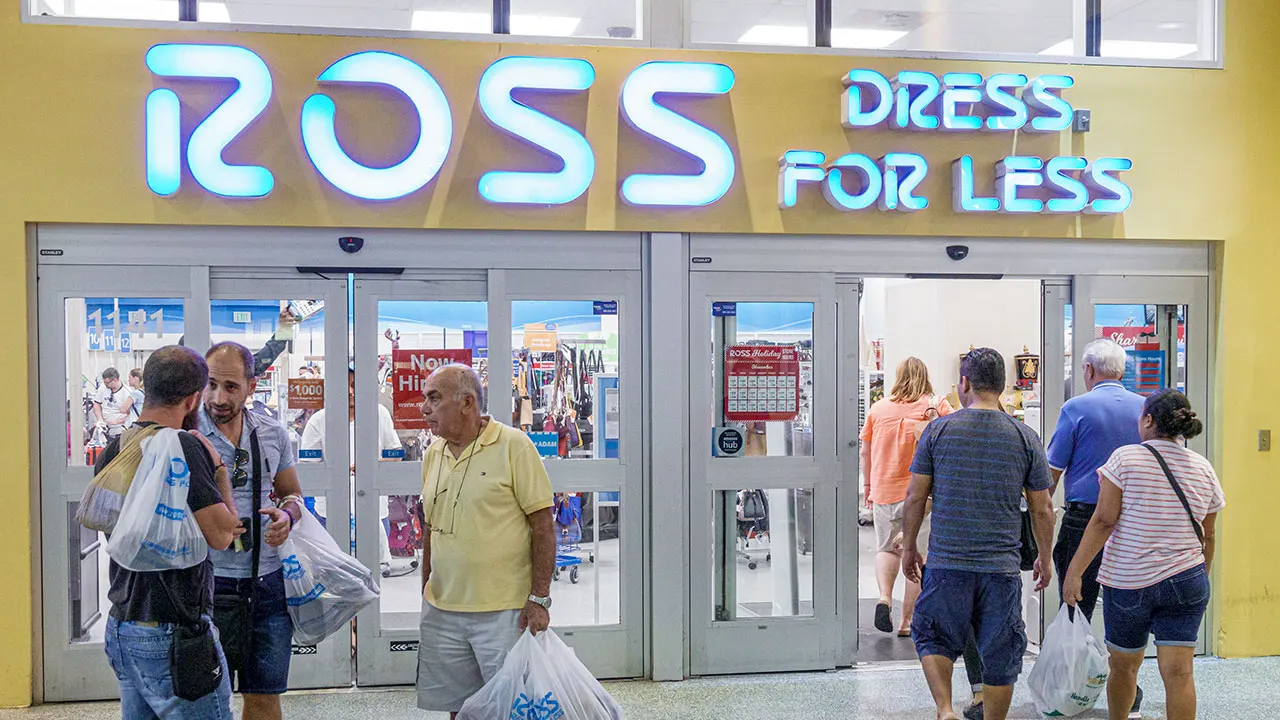
Ross Stores is ramping up store growth in 2026 as demand for discount apparel and home goods remains resilient, with the retailer opening 17 new locations and planning more than 100 additional sites this year.

The company said the latest openings – 13 Ross Dress for Less stores and four dd’s Discounts locations – mark the start of its 2026 rollout, which targets approximately 110 new stores in total, including about 85 Ross locations and 25 dd’s Discounts stores.

Advertisement

The expansion follows solid performance from stores opened in 2025, reinforcing management’s expectations that value-focused retail will remain a key draw for consumers.

COSTCO RECALLS POPULAR MEATLOAF MEAL KIT OVER SALMONELLA CONTAMINATION FEARS ACROSS 26 STATES

ross shoppers

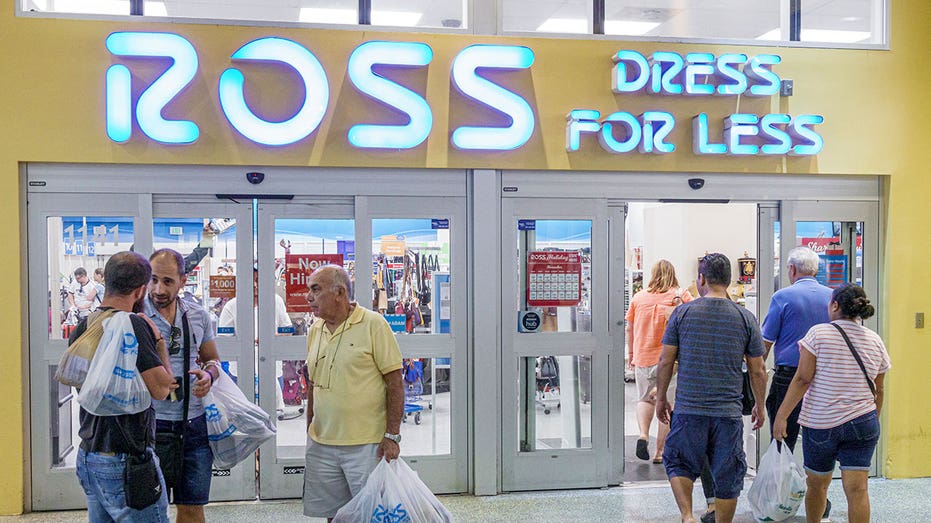
Ross Dress for Less in Miami Beach, Florida. (Jeff Greenberg/Education Images/Universal Images Group via Getty Images)

Off-price retailers have continued to benefit as shoppers seek lower-cost alternatives for apparel and home goods, particularly as price sensitivity persists across discretionary categories.

Geographically, Ross expanded its namesake brand across the Mountain, Midwest and Northeast regions, while also strengthening its presence in key Sunbelt markets.

Advertisement
ross dress for less store

Shoppers walk in front a Ross Dress For Less store at Monroe Marketplace in Pennsylvania. (Paul Weaver/SOPA Images/LightRocket via Getty Images)

For dd’s Discounts, the company added locations in its core markets of California and Texas, along with its first store in Utah, signaling expansion into new territory.

The new stores are also expected to support local job creation and broader economic activity tied to store development.

A person walking in front of a Ross store in San Francisco, California.

A Ross store in San Francisco on Nov. 12, 2023. (Michaela Vatcheva/Bloomberg via Getty Images)

Looking ahead, Ross said it sees a long-term opportunity to grow to approximately 2,900 Ross Dress for Less stores and 700 dd’s Discounts locations nationwide – or about 3,600 stores in total – underscoring confidence in sustained demand for discount retail.

CLICK HERE TO GET FOX BUSINESS ON THE GO

Advertisement

In conjunction with each opening, the company said it is supporting community initiatives through donations to local Boys & Girls Clubs or First Book literacy partners focused on underprivileged youth.

Continue Reading

Business

USPS warns Congress it will run out of cash within a year without reforms

Published

on

USPS warns Congress it will run out of cash within a year without reforms

The U.S. Postal Service on Tuesday will tell Congress that it’s facing a serious financial crisis and is on pace to run out of cash in less than a year without significant reforms.

Postmaster General David Steiner testified before a House Oversight subcommittee and told lawmakers that the USPS needs higher stamp prices and the ability to borrow more money along with other reforms – including changes to pension funding and liabilities calculations, workers’ compensation and retirement fund investment strategies.

Advertisement

Steiner has put forward possible options for cutting costs, including ending six-day-a-week deliveries, closing post offices or raising first-class mail stamp prices from the current 78 cents to $1 or more.

“In order to survive beyond the next year, we need to increase our borrowing capacity so that we don’t run out of cash,” Steiner said in prepared testimony. “The failure to do this could lead to the end of the Postal Service as we know it now.”

POSTAL SERVICE CAN’T BE SUED FOR INTENTIONALLY NOT DELIVERING MAIL, SUPREME COURT RULES IN 5-4 SPLIT

A United States Postal Service (USPS) worker delivering packages.

USPS Postmaster General David Steiner will ask Congress for reforms and funding to avoid a financial crisis at the Postal Service. (Bess Adler/Bloomberg via Getty Images)

Stamp prices have risen 46% since early 19, when they were 50 cents. Steiner argues that those prices are still far lower than postage costs in other countries.

Advertisement

USPS has also reached its current borrowing cap of $15 billion, precluding the agency from taking out additional loans.

Reuters previously reported in December that Steiner thought the USPS was on track to run out of money as soon as early 2027 amid mounting losses. 

USPS has reported net losses of $118 billion since 2007 as volumes of its most profitable product, first-class mail, fell to the lowest level since the late 1960s.

POSTMASTER GENERAL LOUIS DEJOY STEPPING DOWN AMID US POSTAL SERVICE FINANCIAL TURMOIL

Advertisement
USPS carrier

USPS package volumes have declined steadily in recent decades. (Andrew Harrer/Bloomberg via Getty Images)

Steiner said that if USPS were to reduce deliveries to five days a week, it would save the agency about $3 billion per year, while closing small post offices in remote areas would save about $840 million.

However, Steiner cautioned that both of those options “may not be palatable to Congress or the American public.”

USPS currently delivers to more than 170 million U.S. addresses on a six-day-a-week schedule.

USPS COULD SLOW SERVICE IN CERTAIN AREAS AS IT SEEKS TO CUT COSTS

Advertisement
Amazon.com Inc. packages are seen on a conveyor belt

USPS faces mounting pension costs in addition to its operational headwinds. (Luke Sharrett/Bloomberg via Getty Images)

The Government Accountability Office (GAO) is set to tell lawmakers on Tuesday that it’s critical to “address USPS’s unsustainable business model before it will be responsible for billions in new annual expenses for retiree healthcare, likely in 2031.”

USPS’ peak postage volume was 213 billion pieces of mail in 2006, while that figure has fallen by more than half to 104 billion pieces of mail in 2025. 

Steiner noted that at current stamp prices, that translates to a loss of $81 billion. He added that in the years since 2006, USPS “was thrown overboard and instead of tossing us a life jacket, we were thrown an anchor.”

GET FOX BUSINESS ON THE GO BY CLICKING HERE

Advertisement

Congress in 2022 provided USPS with $57 billion in financial relief over a decade and required the agency’s future retirees to enroll in a government health insurance plan.

Reuters contributed to this report.

Continue Reading

Trending

Copyright © 2025