
Business
Carey concerned about cost pressures of war

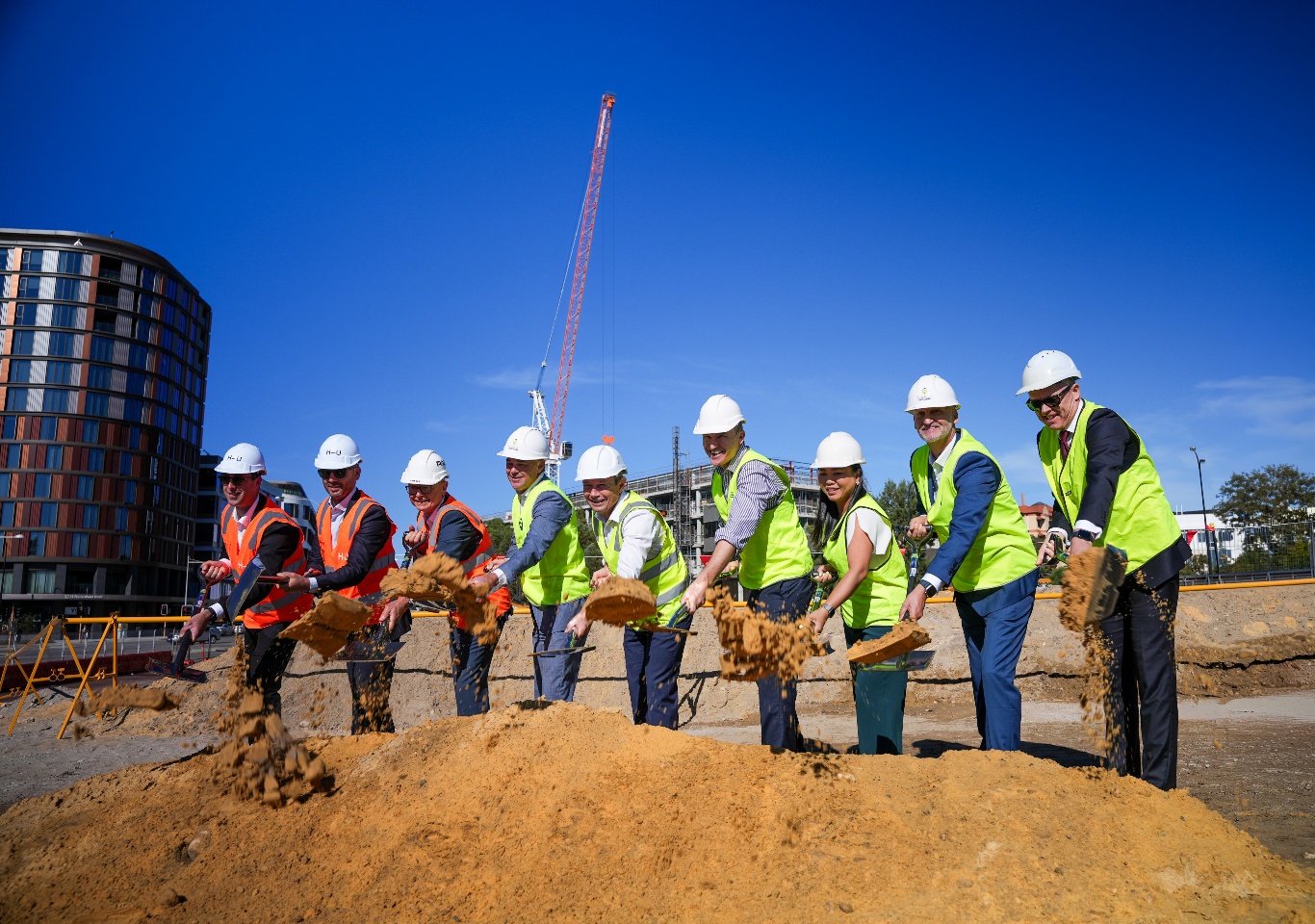


Bentley is to cut 275 jobs as the luxury carmaker grapples with a sharp decline in profits and mounting pressure from a weakening global market, underlining the growing strain even at the very top end of the automotive sector.
The Crewe-based manufacturer confirmed that around 6 per cent of its 4,600-strong workforce will be affected as part of what it described as “organisational efficiency measures”, with roles expected to go across management, agency and non-manufacturing functions. The reductions will now enter a consultation process, with the company stressing it will support affected employees throughout.
The announcement came as Bentley revealed a 42 per cent drop in operating profit to £187 million, down from £322 million the previous year and significantly below its £509 million peak in 2023. The downturn reflects a combination of softer global demand, rising cost pressures and geopolitical uncertainty, all of which are increasingly shaping the outlook for premium automotive brands.
Vehicle sales also slipped, with Bentley delivering 10,131 cars last year, a decline of nearly 5 per cent, driven largely by a contraction in key international markets, particularly China. The slowdown in Chinese demand has become a defining challenge for luxury manufacturers, many of whom have relied heavily on the region for growth over the past decade.
Chief executive Frank-Steffen Walliser acknowledged the scale of the challenge, saying the company was being forced to take “difficult decisions to ensure the long-term competitiveness of the business”. While he emphasised that the cuts were not “panic measures”, he conceded that the operating environment remains volatile, with the possibility of further adjustments if conditions deteriorate.
Bentley sought to contextualise the profit decline, arguing that without external pressures, including increased costs linked to its parent company Volkswagen and the impact of US tariffs, financial performance would have been broadly in line with 2024. Nonetheless, the figures highlight how even high-margin luxury brands are not immune to wider economic headwinds.
The restructuring comes at a pivotal moment for the business as it transitions towards electrification. Bentley is nearing completion of a new assembly line at its Crewe headquarters, which will support production of its first fully electric vehicle, scheduled for launch in early 2027. The investment marks a critical step in its long-term strategy, although the pace and direction of that transition are evolving.
In a notable shift, the company has stepped back from its previous ambition to become an all-electric brand within this decade. Instead, it is pursuing a more “balanced portfolio”, extending the lifespan of internal combustion and hybrid models in response to renewed customer demand and a broader slowdown in the uptake of luxury electric vehicles.
This recalibration mirrors a wider trend across the premium automotive sector. Manufacturers including Lamborghini have also delayed or revised EV-only strategies, reflecting both consumer hesitancy and the practical challenges of delivering high-performance electric models at scale.
Beyond product strategy, Bentley is also navigating an increasingly politicised environment around vehicle size and emissions. Walliser defended the company’s larger models, such as the Bentayga SUV, following criticism from London Mayor Sir Sadiq Khan, who has suggested imposing additional taxes on large vehicles, often labelled “Chelsea tractors”, due to perceived safety risks.
Rejecting those claims, Walliser described the debate as politically driven, arguing that all vehicles must meet strict regulatory standards for pedestrian and cyclist safety regardless of size.
Despite the current pressures, Bentley remains committed to its long-term transformation, positioning electrification, product innovation and operational efficiency as key pillars of its future strategy. However, the latest results and job cuts underscore a more immediate reality: even the most prestigious automotive brands are being forced to adapt quickly in an increasingly uncertain global market.

Jamie Young
Jamie is Senior Reporter at Business Matters, bringing over a decade of experience in UK SME business reporting.
Jamie holds a degree in Business Administration and regularly participates in industry conferences and workshops.
When not reporting on the latest business developments, Jamie is passionate about mentoring up-and-coming journalists and entrepreneurs to inspire the next generation of business leaders.
Business
State Farm Secures Settlement to Maintain 17% California Homeowners Rate Hike, Agrees to No Mass Non-Renewals

State Farm General Insurance Company has finalized a settlement agreement with the California Department of Insurance and consumer advocacy group Consumer Watchdog, allowing the insurer to retain an average 17% increase in homeowners insurance rates implemented last year following devastating Los Angeles wildfires. The deal, filed with an administrative law judge on March 6 and reported widely March 7-9, resolves a contentious rate review proceeding while providing concessions including no mass non-renewals of homeowner policies through 2026 and potential refunds or credits for some policyholders.

The agreement stems from State Farm’s emergency rate request in 2025 after massive payouts from the January 2025 Los Angeles County fires — the costliest disaster in the company’s history. State Farm paid billions in claims, prompting financial strain and an initial interim hike approved by Insurance Commissioner Ricardo Lara. The insurer sought further increases, but the settlement caps the rate at the existing 17% average for homeowners, rejecting additional hikes that could have pushed totals toward 30% in some cases. Renters face a slight adjustment from 15% to 15.65%.
Under the terms, State Farm commits to forgo broad non-renewals in 2026, offering stability to its roughly 1 million California home customers amid ongoing market challenges. The company also agreed to a full rate review by 2027 and other consumer protections. Consumer Watchdog estimated the deal saves policyholders approximately $530 million overall compared to State Farm’s original requests, though some details — including exact refund mechanisms — remain pending judge approval and supporting filings due March 20.
The settlement addresses criticisms from consumer groups and regulators over rising premiums in a state plagued by wildfire risks, insurer pullbacks and availability issues. State Farm, holding about 20% of California’s home insurance market, had paused new business writings in prior years before navigating emergency approvals. The deal balances solvency concerns with consumer relief, as the company continues claims processing from past catastrophes while facing scrutiny over handling practices.
Beyond California, State Farm announced active catastrophe response efforts in mid-March. On March 13, the company deployed teams to assist customers hit by historic hail and severe weather across the central U.S., including tornado outbreaks. Claims teams mobilized to support affected policyholders in multiple states, emphasizing rapid aid following storms that caused widespread damage.
Financially, State Farm reported a strong turnaround in recent results. In February 2026 disclosures, the mutual company highlighted a $1.5 billion underwriting gain for property/casualty lines in 2025 — a reversal from multibillion-dollar losses in prior years driven by catastrophes. This improvement underpinned the largest dividend in company history: $5 billion in cash back to auto customers announced February 26, with payouts averaging around $100 per eligible driver expected this summer. The dividend reflects better-than-expected performance and rewards loyal policyholders nationwide, including in states like Louisiana where $136 million was allocated.
Auto rate adjustments continue in select markets. State Farm secured approvals for reductions in areas like California (6.2% in recent filings) and South Carolina, part of broader efforts to ease pressures where possible. In Georgia, cumulative cuts exceeded 10% over the past year, saving drivers an estimated $400 million annually through fraud reforms and negotiations.
The California homeowners settlement drew mixed reactions. Advocates praised concessions on non-renewals and potential savings, while some policyholders expressed frustration over sustained higher costs in wildfire-prone zones. The agreement avoids immediate further hikes but underscores ongoing challenges in the state’s insurance market, where carriers cite rising reinsurance costs, climate risks and regulatory hurdles.
State Farm’s newsroom emphasized customer focus, with recent leadership updates including the appointment of Michelle Russo as Chief Communications Officer. The company maintains strong community ties through ESG initiatives and remains the nation’s largest auto and home insurer, serving over 96 million policies and accounts via 19,000 agents.
As the settlement awaits final judicial review, attention turns to implementation and any broader implications for California’s insurance landscape. State Farm continues advocating for reforms to address catastrophe exposure while committing to coverage stability. The deal represents a key step in navigating post-wildfire recovery and financial recovery for the insurer and its policyholders.
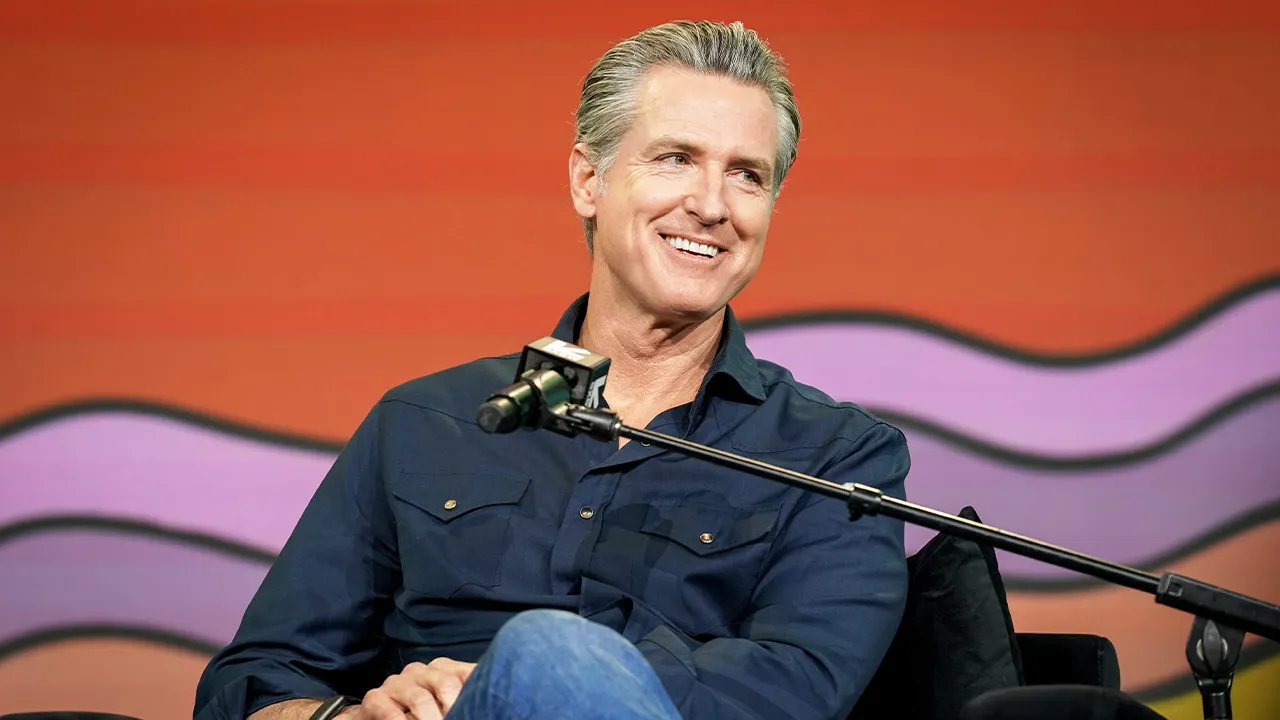
Rep. Young Kim, R-Calif., highlights claims of massive government fraud in California, including $928M diverted from a solar panel program for left-wing activism, and more on ‘The Evening Edit.’
California Gov. Gavin Newsom over the weekend renewed his claim that Florida and Texas are the “real high-tax states,” arguing that lower- and middle-income residents in those states shoulder a heavier tax burden than their counterparts in the Golden State.
Speaking onstage at SXSW in Austin, Texas, the Democratic governor framed the issue in moral terms.
“We have the most progressive tax rates in America. Texas, the most regressive. Texas taxes poor folks more than we tax our richest. The question for you is who’s the higher tax state? California or Texas? Who are you for? Are you just for the 1% or are you for the 98%?” Newsom said, before taking a shot at Florida, which he called the “other regressive tax state.”
“Your middle class pays more taxes in Texas than our middle class in California,” Newsom added. “It’s a great mythology – it’s just ‘the richest of the rich come here because they can avoid paying a damn penny.’”
BILLIONAIRES AND BUSINESSES FUEL GROWING EXODUS FROM BLUE STATES
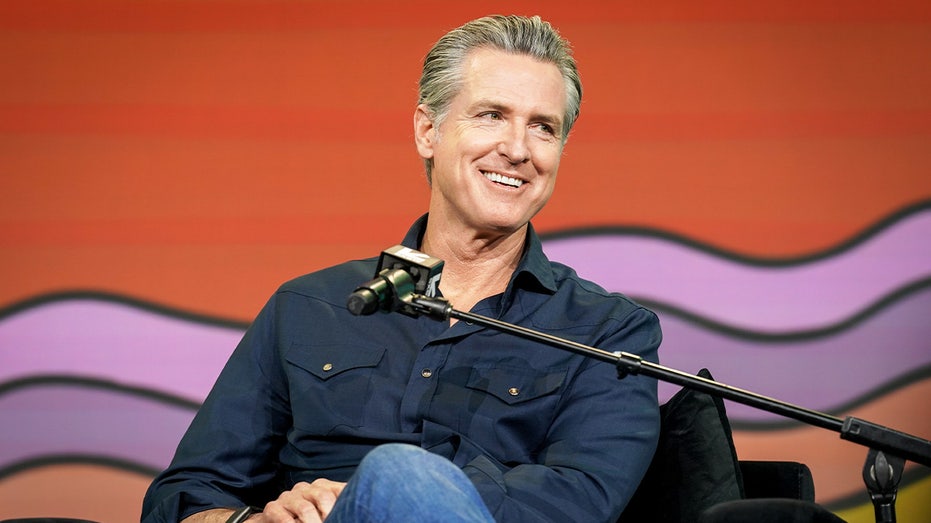
Gavin Newsom speaks onstage during the “Networth And Chill” featured session during the 2026 SXSW Conference And Festival at Hilton Austin on March 15, 2026, in Austin, Texas. (Julia Beverly/WireImage / Getty Images)
The remarks drew pushback online, with RealClearPolitics co-founder Tom Bevan calling Newsom’s claim a “blatant, verifiable falsehood.”
He shared a Wallethub 2025 analysis ranking U.S. states by overall tax burden, with California coming in at 4th overall, behind Vermont, New York and Hawaii.
The governor, who has made similar arguments before, appeared to be referring to a study from the Institute on Taxation and Economic Policy (ITEP), which ranks Florida as the most regressive state and local tax system in the country and Texas the seventh-most regressive.
RENO SURPASSES LAS VEGAS AS TOP DESTINATION FOR CALIFORNIA HOMEBUYERS SEEKING AFFORDABILITY
ITEP’s analysis focuses on how tax burdens are distributed across income groups rather than overall tax levels. The group argues that states such as Texas and Florida look “low tax” largely because they do not levy a broad-based personal income tax — a structure that disproportionately benefits high earners.
To make up the difference, those states rely more heavily on sales, excise and property taxes, which tend to take a larger share of income from lower-income households. California, by contrast, uses a highly progressive income tax system that places more of the burden on top earners and helps offset regressive taxes lower down the income ladder.

Vivian Tu, left, and Gavin Newsom speak on stage during “Networth And Chill With Guest Governor Gavin Newsom” at the 2026 SXSW Conference And Festival at Hilton Austin on March 15, 2026, in Austin, Texas. (Gary Miller/FilmMagic / Getty Images)
Critics, however, say that framing captures only part of the picture because it focuses on tax burden by income group rather than overall tax climate — where California remains far more burdensome for top earners, investors and many businesses.
California has the highest top marginal income tax rate in the nation at 13.3%, while Texas and Florida have no state income tax. On a per capita basis, California also collects significantly more in state and local taxes than either state, according to data from the Tax Foundation.
THE STATES WHERE AMERICANS PAY THE MOST – AND LEAST – FOR ELECTRICITY
The debate comes as California has seen continued net domestic outmigration in recent years, while Texas and Florida have attracted new residents and businesses, according to U.S. Census Bureau data.
Florida Gov. Ron DeSantis, who has repeatedly clashed with Newsom over the relative merits of red- and blue-state governance, mocked the Democrat’s remarks on X.
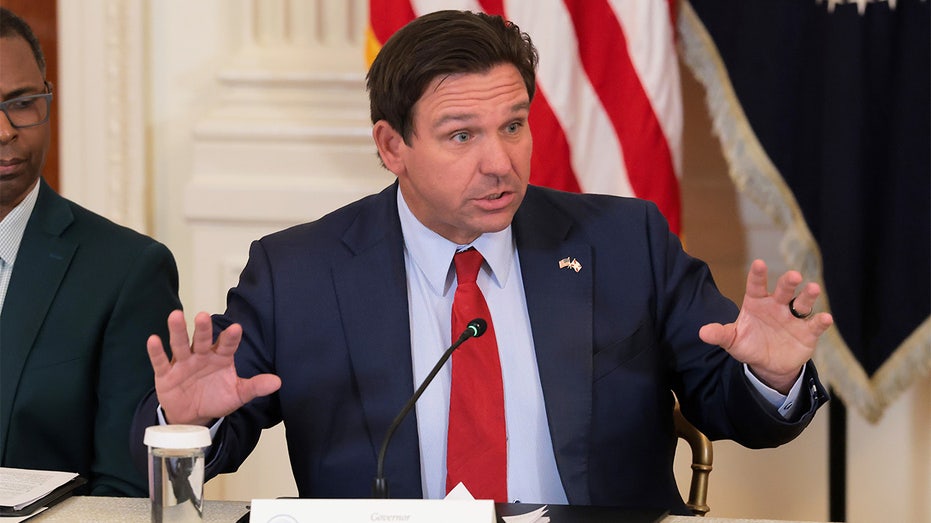
Florida Gov. Ron DeSantis speaks during a roundtable discussion on college sports in the East Room of the White House on March 6, 2026, in Washington, D.C. (Anna Moneymaker/Getty Images / Getty Images)
“There are lies, damned lies and statistics. Then there is whatever you’d call the claim that California has lower taxes than Florida,” DeSantis wrote, reposting Bevan. “Even people who like California governance acknowledge CA is a very high tax state: highest sales, income and gas taxes in the nation.”
CLICK HERE TO GET FOX BUSINESS ON THE GO
FOX Business has reached out to Newsom’s office, the Institute on Taxation and Economic Policy and the Tax Foundation for additional comment.


Albert Anthony is the pen name of a Croatian-American business author who is a contributing analyst on investor platform & financial media site Seeking Alpha, where he has over +1,000 followers, & also has written for platforms like Investing dot com. He is the author of a new book on Amazon called Investing in REITs: A Fundamental & Technical Analysis (2026 Edition).The author’s career focus as a business & information systems analyst also included the IT department at top 10 financial firm Charles Schwab, where he supported several enterprise applications and the trading platform StreetSmart Edge. His data-driven, process-oriented background has served him well in launching his own boutique equities research firm, Albert Anthony & Company, a Texas-registered business which he manages 100% remotely on his own, and paved the way for his becoming a regular contributor to Seeking Alpha, publishing actionable insights for investors worldwide.Having grown up in the New York City area to a 1st generation Croatian family in the US, he also called home the Austin Texas area, as well as Croatia where he participated in dozens of business & innovation conferences, trade shows, and panel discussions, and hosted an informational program for Online Live TV Croatia, covering business & innovation conferences and destinations as a media personality.The author completed his B.A. in Political Science degree from Drew University in the US, is certified in Microsoft Fundamentals, CompTIA Project+, and also earned the Risk Management specialization from the Corporate Finance Institute (CFI), following trends in compliance, regulatory frameworks, and market risk. Besides appearing in financial media platforms, he is growing the Albert Anthony channel on YouTube (@author.albertanthony), where he talks about REITs, since he himself is an active investor in his own portfolio of REIT stocks.For any business email please use his official mail address: contact@albertanthony.usPlease note: The author does not write about non-publicly traded companies, small cap stocks, or startup CEOs, so any such mail received and pitches from PR agencies will be deleted.*Disclaimer: Albert Anthony and Albert Anthony & Co, as a US-based sole proprietorship registered as a trade name in Austin, Texas, are not registered financial advisors and do not provide personalized financial advisory services to clients nor manage client funds but provide general markets commentary and research as well as actionable insights based on publicly-available data and our own analysis. We do not sell or market financial products and services, nor are compensated by any company for rating them. The author does not hold any material position in any stock he rates at the time of writing, unless otherwise disclosed. All investment is assumed to be at risk and readers are expected to do their due diligence beyond the scope of this author’s commentary, agreeing to indemnify the author of any liability for potential investment losses.
Analyst’s Disclosure: I/we have no stock, option or similar derivative position in any of the companies mentioned, and no plans to initiate any such positions within the next 72 hours. I wrote this article myself, and it expresses my own opinions. I am not receiving compensation for it (other than from Seeking Alpha). I have no business relationship with any company whose stock is mentioned in this article.
Seeking Alpha’s Disclosure: Past performance is no guarantee of future results. No recommendation or advice is being given as to whether any investment is suitable for a particular investor. Any views or opinions expressed above may not reflect those of Seeking Alpha as a whole. Seeking Alpha is not a licensed securities dealer, broker or US investment adviser or investment bank. Our analysts are third party authors that include both professional investors and individual investors who may not be licensed or certified by any institute or regulatory body.
Business
JFK Airport TSA Wait Times Vary by Terminal Amid Spring Break Travel and Ongoing Government Shutdown Effects
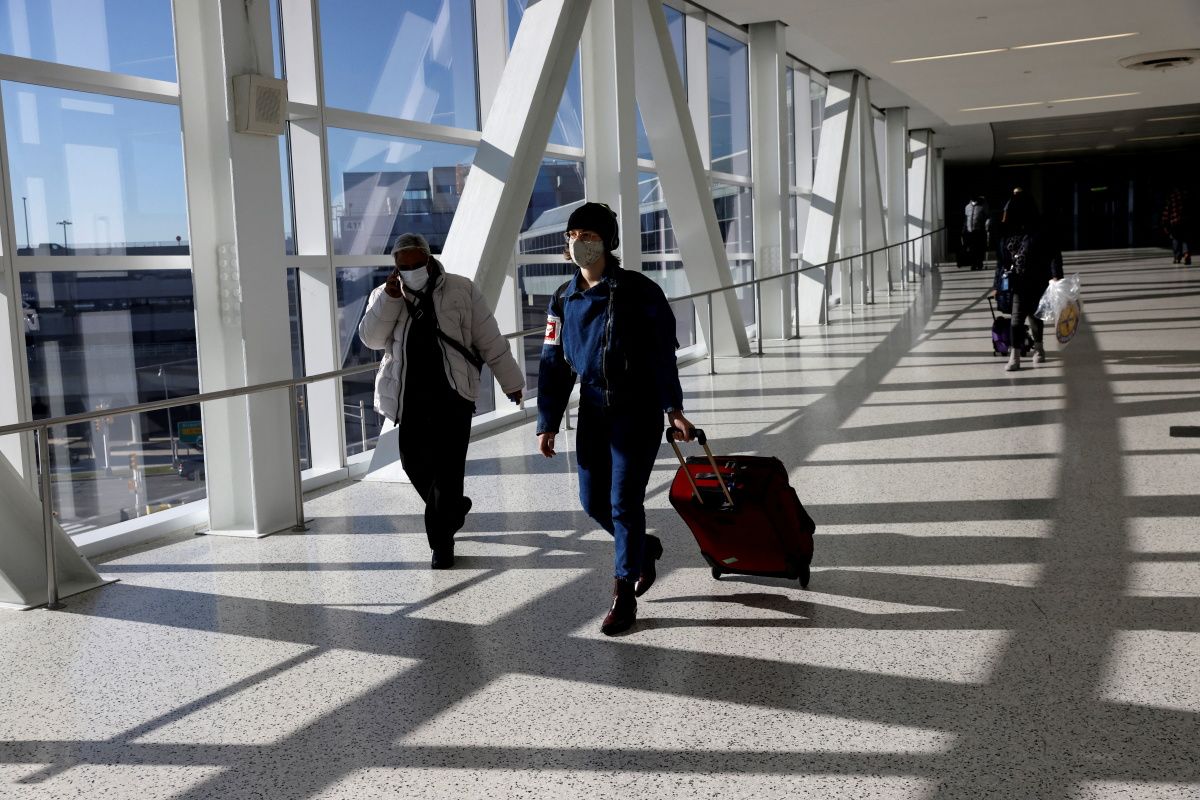
Travelers at John F. Kennedy International Airport (JFK) faced mixed TSA security wait times Tuesday, March 17, 2026, with some terminals seeing lines exceeding 30 minutes while others cleared in under 5 minutes. Real-time data from the official JFK Airport website showed significant variation across the airport’s terminals during peak spring break travel, compounded by lingering staffing pressures from the partial government shutdown now in its second month.
As of mid-morning EDT (late evening KST), general security lines stood at: Terminal 1 — 1 minute; Terminal 4 — exceeds 30 minutes; Terminal 5 — 20 minutes; Terminal 7 — 1 minute; Terminal 8 — 29 minutes. TSA PreCheck lanes offered faster access, with waits of no wait at Terminal 1, 7 minutes at Terminal 4, 10 minutes at Terminal 5, and 6 minutes at Terminal 8. Terminal 7 had no PreCheck listed. These figures update in real time on the airport’s site, reflecting checkpoint conditions over recent minutes.
The disparities highlight Terminal 4 and Terminal 8 as hotspots, often due to high international traffic and major carriers like Delta, JetBlue, and American Airlines operating there. Terminal 4, a key hub for international arrivals and departures, frequently sees longer lines from global passengers navigating additional screening protocols. In contrast, Terminals 1 and 7 — serving airlines like Aer Lingus and British Airways — moved quickly Tuesday.
The ongoing partial government shutdown has exacerbated delays at JFK and other major U.S. airports during the busy spring break season. Staffing shortages from unpaid TSA agents and call-outs have led to longer processing times, though JFK’s lines appeared more manageable Tuesday than earlier in the week. Reports from March 12-14 indicated waits up to 36 minutes at Terminal 4 and 33 minutes at Terminals 5 and 8, with PreCheck holding under 10 minutes. By March 17, some improvement occurred in non-peak terminals, but international-heavy checkpoints remained strained.
Average daily waits at JFK typically range 14-20 minutes for standard lines, climbing to 18-35 minutes during peaks like 6-9 a.m. and 4-7 p.m. Early mornings (5-8 a.m.) often see 24-minute averages due to business travel surges. Historical data suggests off-peak overnight hours dip below 15 minutes, but spring break crowds and shutdown effects push variability higher.
Passengers can monitor conditions via multiple sources. The JFK Airport website provides terminal-specific real-time updates, refreshed every few minutes, including PreCheck and estimated gate travel times post-security. The MyTSA app offers 15-minute interval estimates based on crowd-sourced and official data, though shutdown-related disruptions may affect accuracy. Third-party sites like Way.com and OnAirParking aggregate live feeds, reporting averages around 14-19 minutes recently.
To minimize delays, experts recommend arriving 2-3 hours early for domestic flights and 3+ hours for international, especially now. Enrolling in TSA PreCheck or CLEAR expedites screening: PreCheck allows kept-on shoes, laptops in bags, and shorter dedicated lanes, while CLEAR uses biometrics for front-of-line access. Programs remain operational despite earlier shutdown pauses. T4 Reserve at Terminal 4 lets passengers book free security slots in advance.
Additional tips include reviewing TSA guidelines on liquids (3-1-1 rule), avoiding prohibited items, and using mobile boarding passes. The airport advises checking flight status via airline apps, as security waits can compound with gate changes or delays.
JFK’s five active terminals handle over 60 million passengers annually, making efficient security crucial. While Tuesday’s data showed relief in some areas, the shutdown’s impact persists, with no immediate resolution in sight after recent failed Senate votes. Travelers should plan conservatively and use live tools for updates.
As spring break continues, JFK remains a high-volume hub where preparation pays off. Real-time monitoring and expedited programs offer the best defense against unpredictable lines.


Problem has delayed the publication of the company’s latest financial results and annual report.

Form 13F AMG Asset Management Group For: 17 March

Nvidia's Negative Feedback Loop – GTC Update
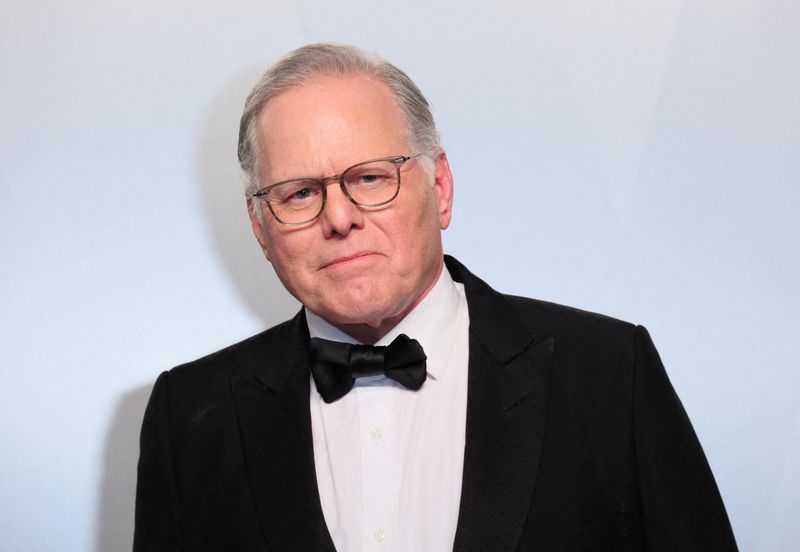

Warner Bros CEO to pocket up to $887 million from Paramount deal


Relaunch to expand distribution from regional to national.

Private Credit: The Next Risk in the Financial System
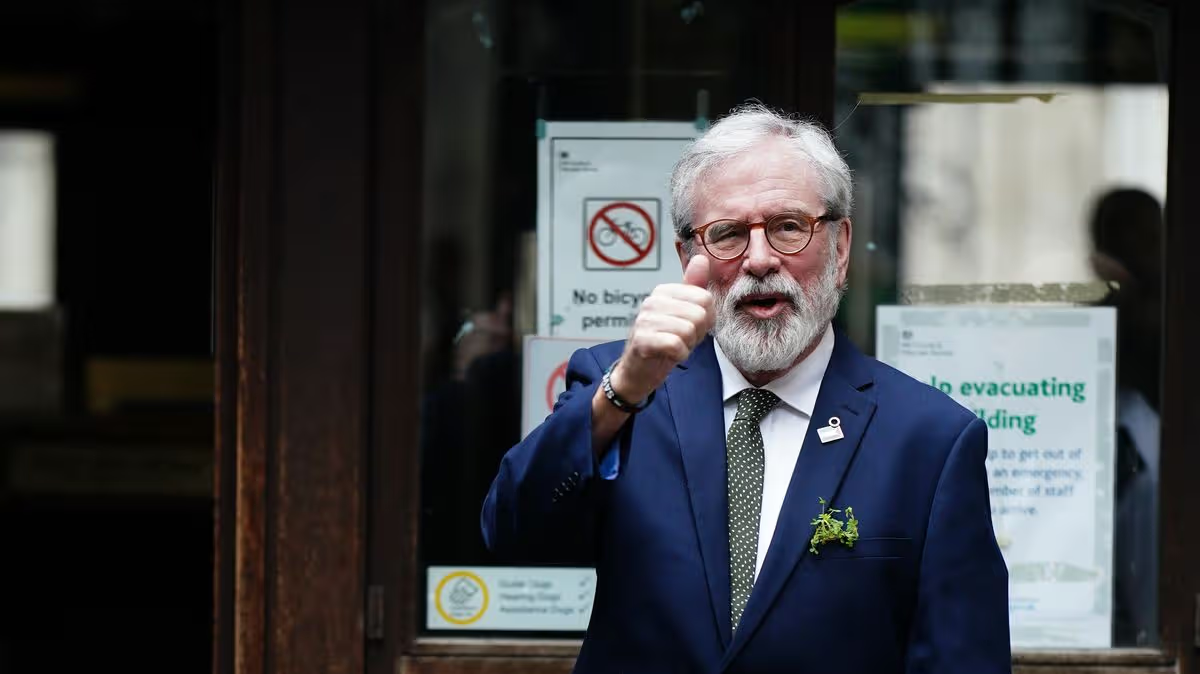
Gerry Adams tells court he ‘had no involvement whatsoever’ in IRA bombings

Bentley to cut 275 jobs as profits fall 42% amid global market pressures

Smart energy pays enters the US market, targeting scalable financial infrastructure

Why Israel is blocking foreign journalists from entering

Bitcoin: We’re Entering The Most Dangerous Phase
Private Credit: The Next Risk in the Financial System

IF YOU OWN XRP YOU NEED TO KNOW THIS NOW! (Good, Bad and UGLY!) In 48 Hours We Find Out!

3 ways rich people invest in times of market uncertainty! #finance #money #war #invest #economy
-
 Tech6 days ago
A 1,300-Pound NASA Spacecraft To Re-Enter Earth’s Atmosphere
-
 Crypto World3 days ago
HYPE Token Enters Net Deflation as HyperCore Buybacks Outpace Staking Rewards
-

 Business7 days ago
ExxonMobil seeks to move corporate registration from New Jersey to Texas
-

 Fashion4 days ago
Weekend Open Thread: Addict Lip Glow
-

 Tech7 days ago
ChatGPT will now generate interactive visuals to help you with math and science concepts
-
Sports3 days ago
Why Duke and Michigan Are Dead Even Entering Selection Sunday
-

 NewsBeat6 days ago
Residents reaction as Shildon murder probe enters second day
-

 Business2 days ago
Search for Savannah Guthrie’s Mother Enters Seventh Week with No Arrests
-

 Business6 days ago
Search Enters Sixth Week With New Leads in Tucson Abduction Case
-

 Business3 days ago
US Airports Launch Donation Drives for Unpaid TSA Workers as Partial Government Shutdown Enters Fifth Week
-

 Sports6 days ago
PWHL, Senators discussing plan to keep Charge in Ottawa
-
Crypto World3 days ago
Coinbase and Bybit in Investment Talks: Could Bybit Finally Enter the US Crypto Market?
-

 NewsBeat6 days ago
I Entered The Manosphere. Nothing Could Prepare Me For What I Found.
-

 Business3 days ago
Country star Brantley Gilbert enters growing non-alcoholic beer market
-

 Business1 day ago
Australian shares drop as Iran war enters third week
-

 Sports4 days ago
College Basketball Best Bets: Conference Tournament Semifinal Picks
-

 Crypto World1 day ago
Crypto Lender BlockFills Enters Chapter 11 with Up to $500M in Liabilities
-
 Crypto World7 days ago
Will Chainlink price reclaim $10 amid volatility squeeze?
-

 Tech7 days ago
Clarity as strategy
-

 Politics6 days ago
Trump Says Middle East Is ‘Very Lucky’ That He’s President


You must be logged in to post a comment Login