

Connect with us

Business

China exports surge over 20% despite Trump tariffs as global demand stays strong

Published

on

China has been cautioned against retaliating to President Trump’s aggressive new tariff regime by offloading its massive holdings of US government bonds — a move that analysts warn could damage its own economy more than it harms Washington.

China’s exports surged in the first two months of 2026 despite escalating trade tensions with the United States, highlighting the resilience of the world’s second-largest economy even as tariffs imposed by US President Donald Trump continue to reshape global trade flows.

Official trade data released by Chinese authorities shows that exports rose by more than 20 per cent in January and February compared with the same period last year, far exceeding economists’ expectations. Analysts had forecast growth of around 7 per cent, making the latest figures nearly three times stronger than predicted.

The strong performance puts China on course to exceed the record trade surplus it recorded in 2025, reinforcing the country’s continued reliance on overseas demand at a time when its domestic economy remains under pressure.

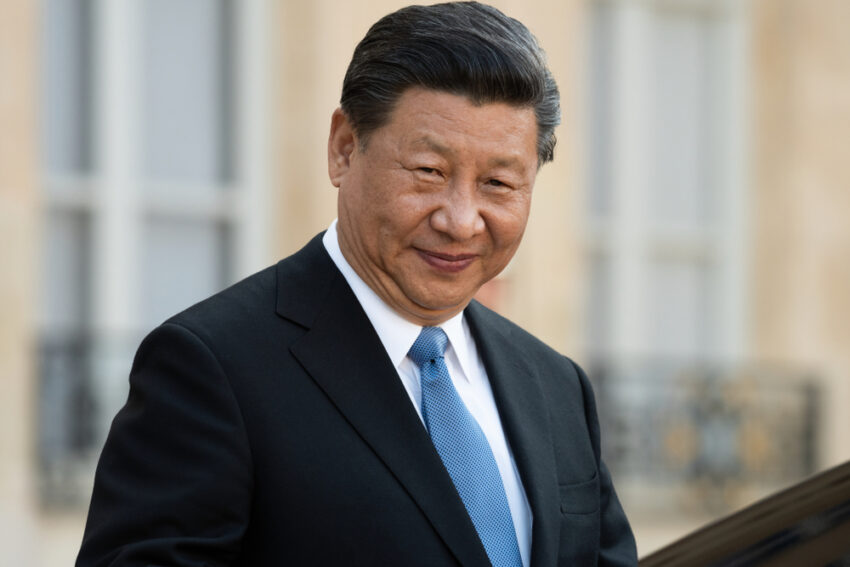
The figures come ahead of a planned diplomatic meeting between Donald Trump and Xi Jinping, who are expected to meet in early April to discuss trade relations and broader geopolitical tensions.

China’s export growth has become increasingly important as the country grapples with a range of structural economic challenges.

Advertisement

Weak consumer spending at home, a prolonged downturn in the property sector and a shrinking working-age population have all weighed on domestic demand. As a result, exports have played a critical role in supporting overall economic growth.

Beijing has acknowledged the pressure facing the economy. Earlier this month the government set a growth target of between 4.5 and 5 per cent for 2026, slightly lower than the 5 per cent target achieved in 2025, a year in which exports were a major contributor to economic expansion.

Economists say the latest export data underlines how global demand, particularly for technology and manufacturing, continues to provide a lifeline for China’s economy.

Much of the increase in exports was driven by strong demand for electronics and high-value manufactured goods.

Advertisement

Shipments of technology products, including consumer electronics and components used in global supply chains, rose sharply as international demand remained robust.

Agricultural exports and other manufactured products also recorded solid growth, helping to broaden the export recovery across several sectors.

China’s trade performance also benefited from stronger demand in key global markets outside the United States.

Exports to European markets grew significantly during the first two months of the year, rising by 27.8 per cent compared with the same period in 2025.

Advertisement

Trade with the Association of Southeast Asian Nations (ASEAN), which includes major economies such as Thailand, Singapore and the Philippines, also expanded rapidly. Chinese exports to ASEAN countries climbed by almost 30 per cent, reflecting strengthening regional trade ties.

The growth highlights how China has increasingly diversified its export markets in recent years, reducing its reliance on the United States and building stronger commercial relationships across Asia and Europe.

Despite the overall export surge, shipments from China to the US fell sharply.

Exports to America declined by more than 10 per cent during the same period, reflecting the continued impact of tariffs and other trade measures introduced by the Trump administration.

Advertisement

The tariffs were designed to address long-standing trade imbalances between the two countries and encourage companies to shift supply chains away from China.

While the measures have reduced Chinese exports to the US, the broader export boom suggests Chinese manufacturers have successfully redirected goods to alternative markets.

The upcoming meeting between Trump and Xi is expected to focus heavily on trade policy, supply chains and global economic stability.

Relations between the two countries have been strained by tariffs, technology restrictions and strategic competition in areas such as artificial intelligence, semiconductors and advanced manufacturing.

Advertisement

Analysts believe both leaders may seek to stabilise trade relations amid growing global economic uncertainty.

The talks will take place against a backdrop of rising geopolitical instability, particularly following the conflict in the Middle East involving the United States, Israel and Iran.

The conflict has disrupted global energy markets and pushed up oil and gas prices, creating additional uncertainty for major economies across Asia, including China.

Higher energy costs could place further pressure on Chinese manufacturers, many of which rely heavily on energy-intensive production processes.

Advertisement

Despite these challenges, the latest figures underline the continued strength of China’s export-driven economic model.

While Beijing has repeatedly emphasised the need to rebalance the economy toward domestic consumption, global demand for Chinese goods remains a powerful driver of growth.

For now, strong export performance is helping China maintain economic momentum, even as trade tensions with the United States continue to reshape the global trading landscape.


Jamie Young

Jamie Young

Jamie is Senior Reporter at Business Matters, bringing over a decade of experience in UK SME business reporting.
Jamie holds a degree in Business Administration and regularly participates in industry conferences and workshops.

When not reporting on the latest business developments, Jamie is passionate about mentoring up-and-coming journalists and entrepreneurs to inspire the next generation of business leaders.

Advertisement

Continue Reading
Click to comment

Leave a Reply

Your email address will not be published. Required fields are marked *

Business

Cardiff medtech firm IQ Endoscopes boosted with new equity investment round

Published

on

Cardiff medtech firm IQ Endoscopes boosted with new equity investment round

The latest round has been led by growth capital investor BGF

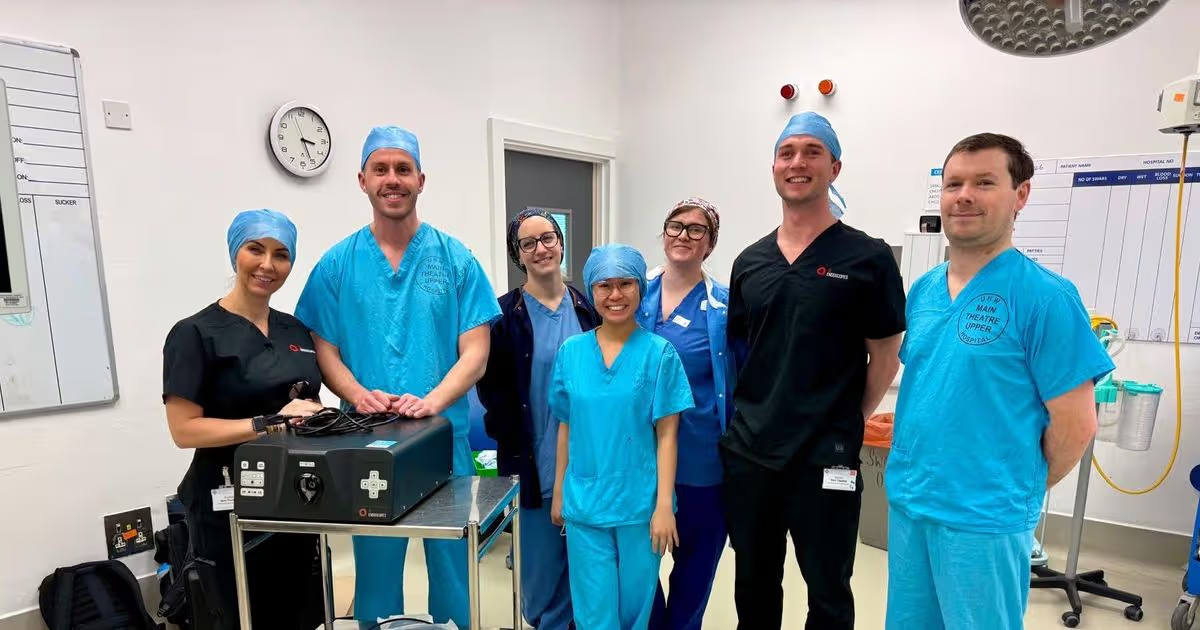
The clinical team at IQ Endoscopes.

Cardiff-based medical devices firms IQ Endoscopes has been boosted with a multi-million-pound new equity round to support its commercialisation drive.

The company is developing a single‑use gastrointestinal endoscopy platform designed to improve patient access to endoscopy and help healthcare providers respond to growing demand.

Advertisement

Its latest round of funding led by BGF, which has also seen follow on investment by the Development Bank of Wales, will be used to support IQ Endoscopes’ early commercial rollout in selected UK centres, strengthen manufacturing and supply chain capability, and build a robust commercial pipeline, as the company prepares for future scale‑up in the UK and overseas. The investment will also support further regulatory work and market validation in the US.

READ MORE: Former psychiatric hospital site in Carmarthenshire transformed into health and wellbeing campusREAD MORE: Wales falls in influential index on gender equality in the workplace

Existing reusable endoscopes create significant time burden and carbon emissions due to complex decontamination and transport processes, contributing to hospital capacity constraints and workflow inefficiencies. IQ Endoscope provides sustainable alternative designed to do the opposite, freeing up beds and physician capacity.

Since being established it has secured key regulatory approvals and commenced production. The company has identified its first customers, received initial orders and is now preparing for early commercial use of its platform. The business currently employs 20.

Advertisement

The exact value of its latest funding round has not been disclosed.

Matt Ginn, IQ Endoscopes chief executive, said: “This investment is a significant step forward as we move into the next phase of our growth. It allows us to begin early commercial rollout in the UK, strengthen our operational foundations and build momentum for future expansion.

“Support from BGF and the Development Bank of Wales has been instrumental in helping us reach this point, and we’re excited to continue to work closely alongside them as we bring our technology into real‑world clinical use.”

Maggy Lau, investor at BGF said: “IQ Endoscopes is addressing a clear challenge facing healthcare systems, with a product that has the potential to make a lasting, positive impact. We’re pleased to continue to support Matt and the team as the business moves into this exciting next stage of growth.”

Advertisement

Tom Davies, investment executive with the Development Bank of Wales said: “We’re proud to continue supporting IQ Endoscopes as it enters its next growth phase. The team’s progress in manufacturing and early clinical use is impressive, and this investment will help accelerate adoption of a technology that could enhance patient access and strengthen endoscopy services across the NHS and beyond.”

Continue Reading

Business

Shipley names new senior executives

Published

on

Shipley names new senior executives

Company fills COO, CDO and CFO roles.

Continue Reading

Business

Motilal Oswal Wealth launches bond trading platform to widen investors’ access to fixed income

Published

on

Motilal Oswal Wealth launches bond trading platform to widen investors' access to fixed income
Motilal Oswal Financial Services’ wealth management arm on Tuesday launched a digital bonds trading platform to enable investors to access fixed income securities.

The company said its newly launched Bond Provider Platform will allow investors to invest in government securities, PSU bonds and corporate bonds through a dedicated digital interface.

The move comes as the domestic bond market expands and investors increasingly seek predictable returns and capital preservation alongside equity investments.
India’s bond market has grown to nearly USD 3 trillion, making it the third-largest in Asia after Japan and China, and equivalent to roughly 100-110 per cent of India’s GDP, a release said.
“With Indian households increasingly allocating savings to financial assets and the inclusion of Indian government bonds in global indices expected to bring strong foreign inflows, the opportunity in fixed income is becoming more compelling,” said Ajay Menon, managing director and chief executive officer of wealth management at Motilal Oswal Financial Services.


The new bond platform comes at a time of heightened geopolitical tensions and global market uncertainty that have increased volatility in equity markets, prompting investors, particularly high-net-worth individuals, to increase allocations to fixed income, the company said.
Ashish Malaviya, head of distribution at Motilal Oswal Wealth Management, said that amid rising equity market volatility driven by global developments, investors, particularly HNIs, are increasingly seeking capital protection, predictable income, and portfolio stability.

Continue Reading

Business

Stifel raises Cullinan Oncology stock price target on autoimmune progress

Published

on


Stifel raises Cullinan Oncology stock price target on autoimmune progress

Continue Reading

Business

Crexendo: AI, Acquisitions And A Growing Software

Published

on

online meetings, smart phone video calling concept, using video meeting online app, businessman holding phone and touching screen

Crexendo: AI, Acquisitions And A Growing Software

Continue Reading

Business

Saba Capital’s Boaz Weinstein warns private credit problems are multiplying

Published

on

Saba Capital's Boaz Weinstein warns private credit problems are multiplying
Inside Alts: Saba Capital's Boaz Weinstein on private credit's liquidity problem

A version of this article appeared in CNBC’s Inside Alts newsletter, a guide to the fast-growing world of alternative investments, from private equity and private credit to hedge funds and venture capital. Sign up to receive future editions, straight to your inbox.

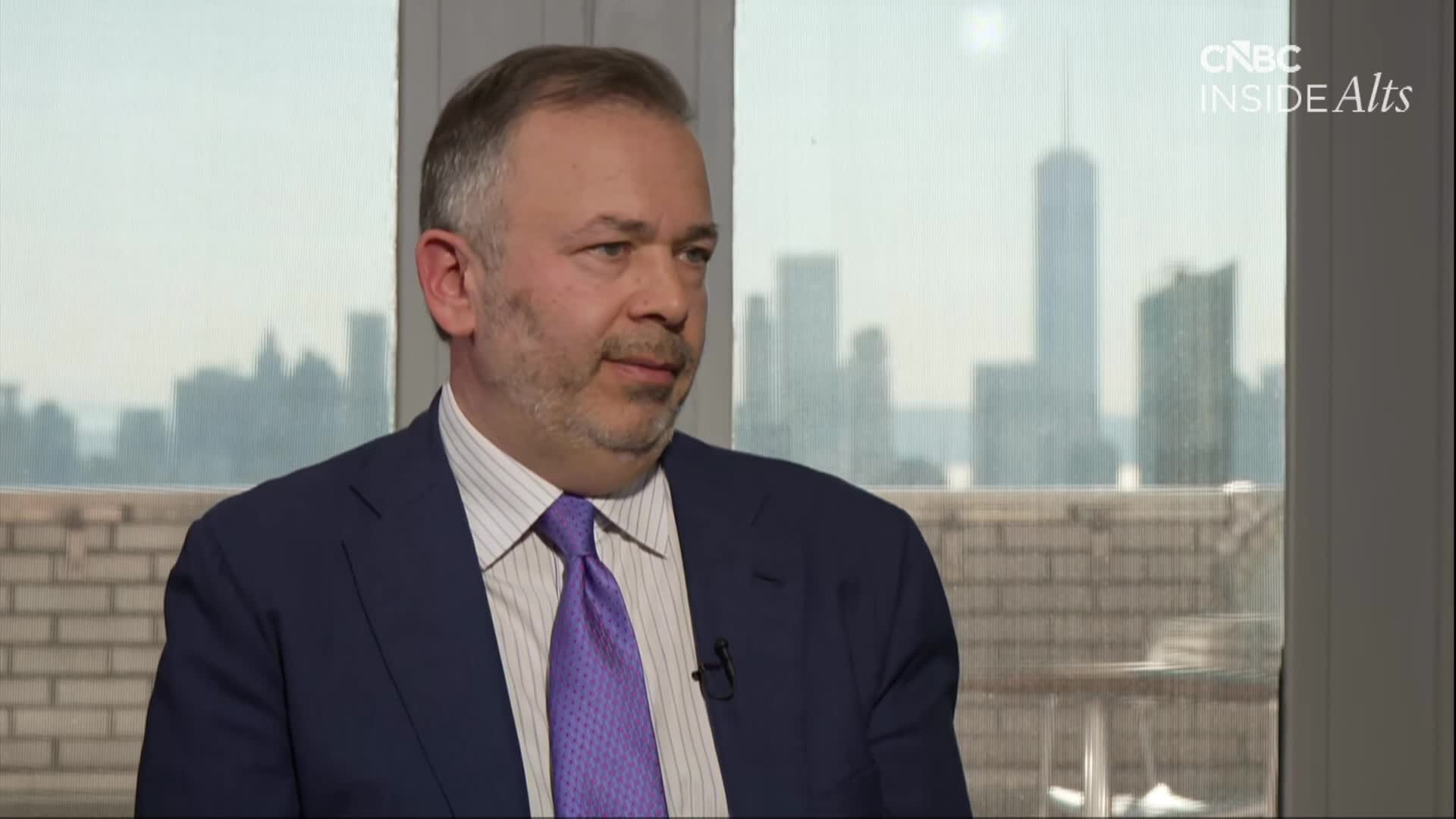
The problems in private credit are “multiplying by the quarter,” due in part to the “financial alchemy of promising liquidity that isn’t there,” Boaz Weinstein, founder of Saba Capital Management, told Inside Alts this week. 

“What’s happening, big picture, right now is that, for a number of reasons, in the middle of a bull market, there are cracks, there are problems, there are frauds, there are companies that are going bad without being a fraud,” Weinstein said in an exclusive interview. “So for those reasons, investors are seeing their dividends being cut. They want their money back, and [on] Wall Street the No. 1 story right now is where the redemption is going to be for all these managers.” 

Weinstein, of course, is a central figure in that story. His firm, Saba, alongside Cox Capital Management, just launched a tender offer to purchase 6.9% of shares in one of Blue Owl’s nontraded private credit funds at a 34.9% discount. 

Advertisement

“We were hearing from investors in these funds that they wanted their money back,” he said. “They were trying to find someone to step into their shoes, so that happened in an organic way.” 

That fund, known as Blue Owl Capital Corp. II, halted quarterly redemptions and sold $1.4 billion of direct lending investments to provide liquidity for its investors. It turned out to be among the first in a slew of nontraded, private credit funds that have been hit with redemption requests above the typical 5% quarterly cap.

Private wealth flows across products tracked by analysts at Jefferies were down 19% in the first quarter compared with Q4. Analysts said they expect redemption rates across retail credit products to increase. 

Saba and Cox see an opportunity amid investors’ limited liquidity. They are launching similar tenders for stakes in several other funds at Blue Owl as well as Starwood Real Estate Income Trust. This has caused some to question whether Weinstein has been criticizing the private credit industry only to scare retail investors into selling their stakes to him at a discount.

Advertisement

While speaking with Inside Alts, Weinstein clarified that he doesn’t actually believe there will be a wave of private credit defaults or frauds, nor does he think people should redeem further. (“The redemptions have arrived,” he said.)  

In fact, he’s actually bullish on several of the largest private credit managers. Weinstein said over the past few weeks, he bought shares in “the most amazing managers,” including Ares, Apollo and Blackstone. He said he is even long “a little bit” of Blue Owl equity.

“We’re long the stocks of these companies on the idea that, in case this is overdone, these are the guys that are going to be the winners at the end, when the smoke clears and their stocks may represent good value,” said Weinstein.

Get Inside Alts directly to your inbox

Weinstein said he thinks private credit is trading at pessimistic levels and public credit is trading at “incredibly optimistic levels.” He’s shorted public credit through credit default swaps and credit derivatives. Weinstein said that the gating of private credit funds means that investors will have to sell more liquid assets to raise cash, which would weigh on the market. 

Advertisement

“I think that public credit is incredibly mispriced and part of my short-term thinking about it is informed by the issues that the private credit markets are having,” he said. 

Weinstein said it will be a “number of weeks” before they know what happens with the Blue Owl bids, and how much they’ll end up buying. Weinstein said the tender offers weren’t “personal” against the manager, but rather, he said, “if we go bid for something, it’s a sign we think the manager is good.”

However, Weinstein noted a firm called Cliffwater as one in the private credit space that they’re “watching the most closely.” He said Cliffwater operates similarly to a fund-of-funds model, where they don’t own the loans directly, but rather, they’re invested in other managers. As a result, they have limited control over fulfilling their own redemption requests – something Weinstein describes as a “turducken” (a chicken stuffed inside a duck, stuffed inside a turkey).

According to a Securities and Exchange Commission filing, Cliffwater disclosed that as of the end of last year, 69% of its Corporate Lending Fund was comprised of direct investments in underlying credit and the remaining 31% was exposed to funds.  

Advertisement

Weinstein predicted that when Cliffwater announces its redemption rate — expected as early as Tuesday — it could be between 10% and 20%. 

“I don’t know their exact cash position, but we think it’s very likely that they’re going to have to start redeeming and they’re going to get cut back when they redeem these funds that they’ve invested in,” he said. 

Cliffwater was also the subject of a recent viral investor letter by the hedge fund Rubric Capital, which said the alternatives manager could be “a canary in a coal mine” and “the first domino in the bank run we foresee,” according to The New York Times, which cited two people who read the private note. 

When asked about what happens to private credit if there’s a real credit cycle, Weinstein said, “it will fall harder than it should.”

Advertisement

He added that “one of the best opportunities” in his career would be investing in private credit at a massive discount “when the economy slows.” 

“Maybe that’s not for a year, maybe it’s about to happen. Maybe it’s going to happen years from now,” Weinstein said. “It’s about to get super interesting.”

Choose CNBC as your preferred source on Google and never miss a moment from the most trusted name in business news.
Continue Reading

Business

Cantor Fitzgerald raises Neurocrine Bio price target on Ingrezza outlook

Published

on


Cantor Fitzgerald raises Neurocrine Bio price target on Ingrezza outlook

Continue Reading

Business

DA Davidson reiterates Repay stock Buy rating on strong Q4 results

Published

on


DA Davidson reiterates Repay stock Buy rating on strong Q4 results

Continue Reading

Business

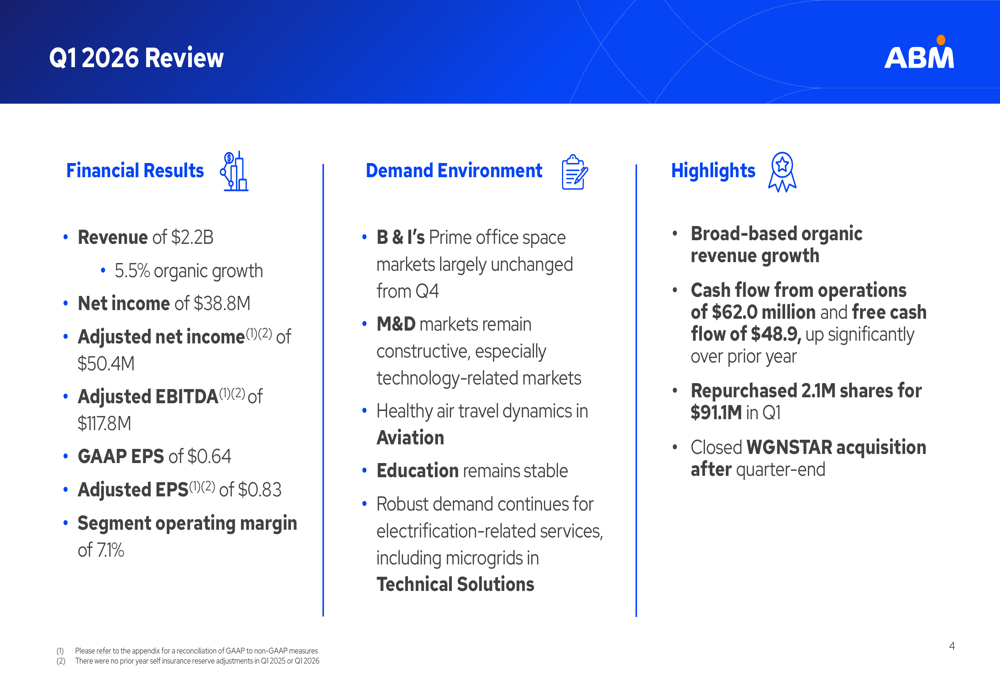
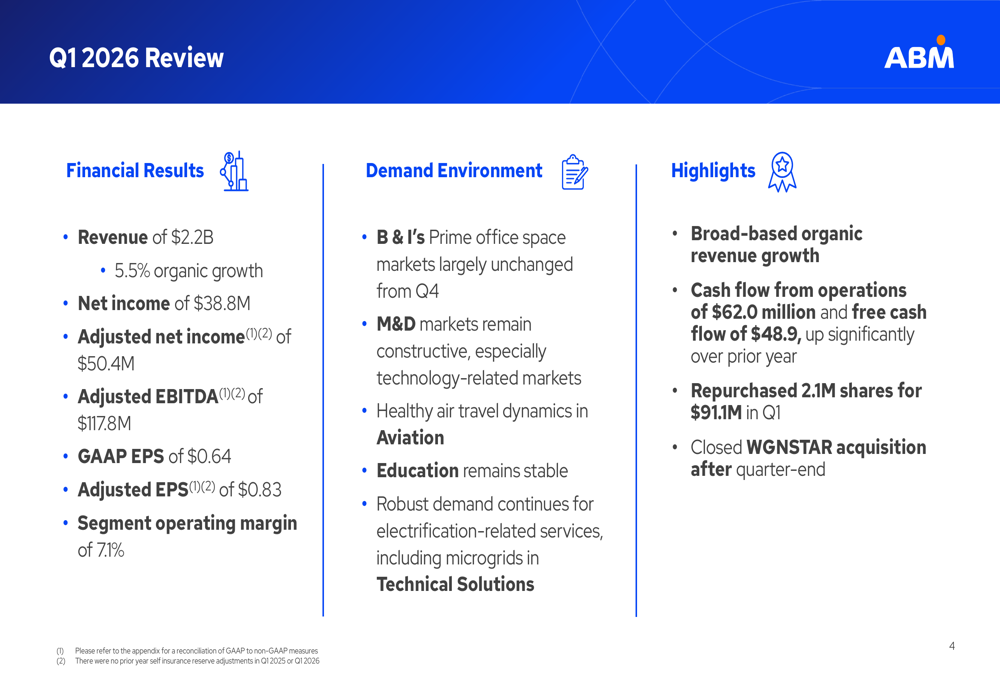
ABM Q1 2026 slides: revenue beats offset by margin pressure

Published

on

ABM Q1 2026 slides: revenue beats offset by margin pressure


ABM Q1 2026 slides: revenue beats offset by margin pressure

Continue Reading

Business

Tekmar encouraged by momentum and record order book despite drop in revenues

Published

on

Tekmar encouraged by momentum and record order book despite drop in revenues

The County Durham offshore engineering group says it is seeing positive signs

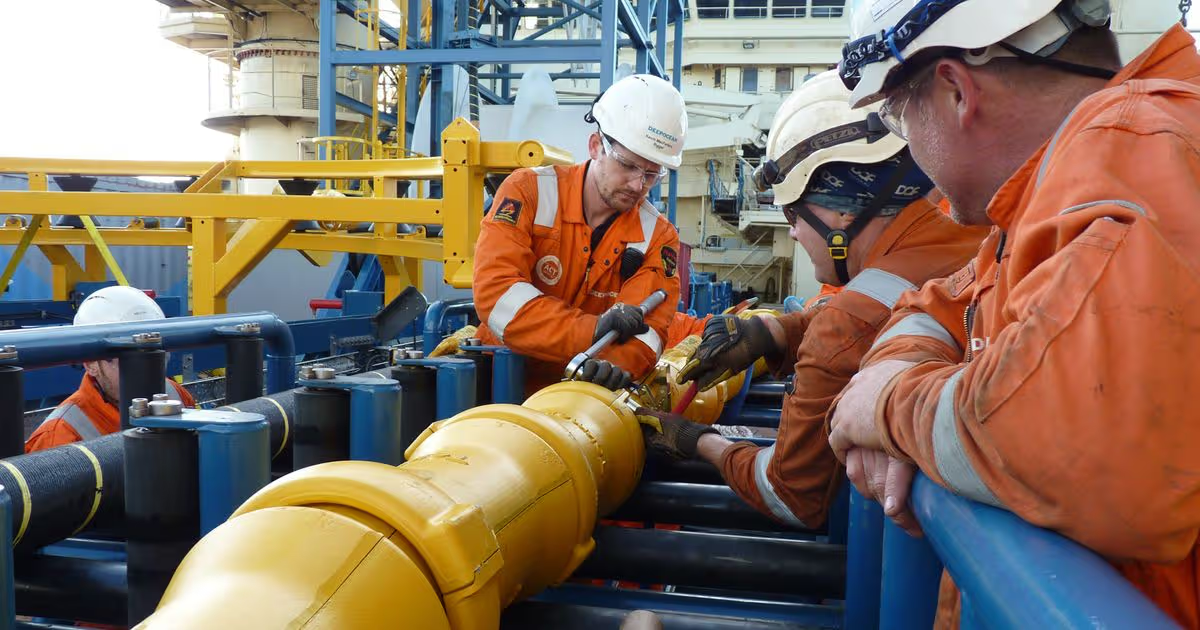
Offshore technicians assembling Tekmar's patented TEKLINK cable protection system during offshore installation on an offshore wind farm

Offshore technicians assembling Tekmar’s patented TEKLINK cable protection system during offshore installation on an offshore wind farm(Image: Unknown)

Offshore energy group Tekmar says it is encouraged by its latest results, despite seeing a drop in revenues and another year of losses.

The County Durham-based firm, which provides asset protection technology and offshore en­­ergy services, has released results for the year ending September 30 2025.

They show turnover falling slightly to £28.7m, while gross profit fell to £9.8m. After taking into account exceptional items, depreciation and other costs, Tekmar reported an overall loss for the year of £3.9m, though this was less than last year’s losses.

But Tekmar said that £43m of new orders since last July and currently had a record order book. It said its balance sheet had been strengthened, including by the sale of its former Innovation House building for £2.8m.

Advertisement

The company said its Project Aurora plan to scale the business through both organic growth and acquisitions, and to improve its financial strength, was progressing well.

CEO Richard Turner said: “FY25 has been a pivotal and highly productive year for Tekmar as we launched and started to execute on Project Aurora. The group delivered results in line with market expectations, alongside a material improvement in profitability in the second half.

Richard Turner, CEO Tekmar Group plc

Richard Turner, CEO Tekmar Group plc(Image: Tekmar Group plc)

“We are pleased to have been able to maintain our momentum post period end – in the first four months of FY26 we have delivered a record order book, with multi-year visibility and have unlocked further growth potential by significantly strengthening our balance sheet.

“We are encouraged by the strong start to the new financial year and healthy pipeline we see ahead of us and are focused on delivering sustained, profitable growth and enhanced value for shareholders.”

Advertisement
Continue Reading

Trending

Copyright © 2025