
Business
China’s Advancements in Digital Yuan Intensify the Race for the Future of Currency


China’s digital yuan (e-CNY) has experienced explosive growth, with transaction volumes increasing by over 800% as Beijing positions the central bank digital currency (CBDC) to challenge the U.S.-dominated global monetary system.
While retail adoption remains slow due to the dominance of private platforms like Alipay and WeChat Pay, the Chinese government is aggressively integrating the e-CNY into public sector payments and cross-border trade settlements.
Key Points
- Massive Growth: As of late 2025, cumulative e-CNY transactions reached 16.7 trillion yuan ($2.37 trillion), representing an 800% increase since 2023 and making it the world’s largest CBDC experiment.
- Divergent National Strategies: China is pursuing a centralized, state-issued CBDC while banning private yuan-backed stablecoins; conversely, the U.S. has banned the creation of a CBDC in favor of a market dominated by dollar-backed private stablecoins.
- Functional Evolution: To increase its appeal, the e-CNY began paying interest to holders on January 1, transitioning from a simple payment tool to a feature more closely resembling a traditional bank deposit.
- Cross-Border Expansion: China is a primary driver of Project mBridge, a multi-government digital payment platform where the digital yuan accounts for over 95% of settlement volume, particularly for energy and commodity trades.
- Retail Adoption Hurdles: Despite government mandates for public servant wages, domestic consumers still largely prefer established private digital payment channels, though analysts suggest enterprise and supply chain adoption may be easier to accelerate.
- Global Implications: Analysts view the e-CNY as a long-term strategic tool aimed at building a “multilateral monetary system” that reduces reliance on the U.S. dollar and enhances China’s influence in international trade.
This state-led strategy creates a sharp contrast with the United States, which has prioritized private stablecoins and banned the issuance of a centralized digital currency, marking a new frontier in the financial competition between the two superpowers.
China is aggressively expanding its central bank digital currency (CBDC), the e-CNY, as a strategic alternative to the U.S. dollar-dominated financial system. By late 2025, transaction volumes surged by over 800% to $2.37 trillion, driven largely by government-led initiatives such as public sector wage payments. While domestic retail adoption faces competition from established platforms like Alipay and WeChat Pay, Beijing is shifting its focus toward international trade and institutional utility.
The global digital currency landscape reflects a growing geopolitical divide in financial technology:
- China’s Centralized Model: Focuses on state-issued currency (e-CNY) while enforcing strict bans on private stablecoins and cryptocurrencies.
- The U.S. Private Model: Prioritizes dollar-backed stablecoins issued by private entities, which currently maintain nearly 99% of the global market share.
The contrast between China’s state-driven Central Bank Digital Currency (CBDC) strategy and the U.S. inclination toward privately issued stablecoins significantly impacts the competition for global reserve currency dominance in multiple critical aspects.
1. Divergent Models of Financial Control
The competition is defined by two fundamentally different structural philosophies:
- China’s Centralized Model: Beijing promotes the e-CNY , a state-issued currency designed to challenge the U.S.-dominated global monetary system. China enforces a strict ban on private stablecoins and cryptocurrencies to maintain state control.
- The U.S. Private Model: The U.S. prioritizes privately issued, dollar-backed stablecoins . These operate on public, decentralized blockchains rather than state-run systems. Currently, the U.S. has banned the issuance of a domestic CBDC due to concerns regarding financial stability and privacy.
2. Market Dominance vs. Strategic Growth
The document highlights a significant gap in current usage versus strategic trajectory:
- U.S. Dominance: Dollar-denominated stablecoins currently maintain an overwhelming lead, accounting for nearly 99% of the global market share by market capitalization. This allows the U.S. to capitalize on the existing dominance of the dollar in digital formats.
- China’s Rapid Expansion: While retail adoption has been stagnant domestically, the e-CNY’s transaction volume surged by 800% to $2.37 trillion by late 2025. This growth is driven by government-led initiatives, such as paying public sector wages in digital yuan.
3. Cross-Border Settlement and mBridge
China is using technology to build a “multilateral monetary system” that bypasses traditional dollar-reliant channels:
- The mBridge Project: In collaboration with the UAE, Thailand, Saudi Arabia, and Hong Kong, China has developed a platform for cross-border settlements. The digital yuan accounts for over 95% of the settlement volume on this platform.
- Strategic Trade: China is focusing mBridge toward energy and commodity-linked transactions , sectors where it already holds a central commercial role.
- Belt and Road Integration: Beijing is leveraging the “Belt and Road” initiative to encourage international supply chain participants to adopt the e-CNY for cross-border transactions, offering “transactional convenience and economic savings.”
4. Economic Incentives and Functionality
- Interest Payments: As of January 1, the e-CNY began paying interest to holders , making it function more like a traditional bank deposit. This is intended to increase its appeal to both retail and institutional users.
- U.S. Regulatory Hesitation: In the U.S., discussions regarding whether stablecoins should pay interest are stalled. Opponents fear that interest-bearing stablecoins could cause significant outflows from traditional banks, potentially threatening financial stability.
5. Influence on Reserve Currency Status
While the e-CNY has a long way to go, its integration into China’s national strategy poses a direct challenge to the U.S. dollar:
- Strategic Alternative: The e-CNY is explicitly described as an alternative to the U.S.-dominated system.
- Institutional Shift: While changing individual consumer behavior is difficult, China believes that enterprise adoption for cross-border trade can be accelerated more quickly, potentially shifting the foundation of global trade finance away from the dollar.
- Status of the e-CNY: Analysts conclude that given its scale and sophistication, the digital yuan will remain a central feature of the “global future of money” and the ongoing superpower competition.
Chinese authorities are expanding the functionality of e-CNY beyond a simple digital payment tool. As of January 1, the e-CNY now offers interest to holders, making it resemble traditional bank deposits. This new feature could enhance its appeal and drive greater adoption among retail users. Additionally, the integration of interest-bearing capabilities positions e-CNY as a more competitive alternative to traditional banking services. This move could potentially disrupt the financial ecosystem by encouraging users to transition from conventional savings accounts to the digital yuan. Moreover, by offering such incentives, Chinese authorities aim to boost the currency’s usage domestically while laying the groundwork for its potential international adoption.
Other People are Reading


Why I Don't Invest In BDC ETFs, But Only Cherry-Pick My Own


I’m a retired Wall Street PM specializing in TMT; since kickstarting my career, I’ve spent over two decades in the market navigating the technology landscape, focusing on risk mitigation through the dot com bubble, credit default of ‘08, and, more recently, with the AI boom. In one word, what I’d like my service to revolve around is momentum.
Analyst’s Disclosure: I/we have no stock, option or similar derivative position in any of the companies mentioned, and no plans to initiate any such positions within the next 72 hours. I wrote this article myself, and it expresses my own opinions. I am not receiving compensation for it (other than from Seeking Alpha). I have no business relationship with any company whose stock is mentioned in this article.
Seeking Alpha’s Disclosure: Past performance is no guarantee of future results. No recommendation or advice is being given as to whether any investment is suitable for a particular investor. Any views or opinions expressed above may not reflect those of Seeking Alpha as a whole. Seeking Alpha is not a licensed securities dealer, broker or US investment adviser or investment bank. Our analysts are third party authors that include both professional investors and individual investors who may not be licensed or certified by any institute or regulatory body.
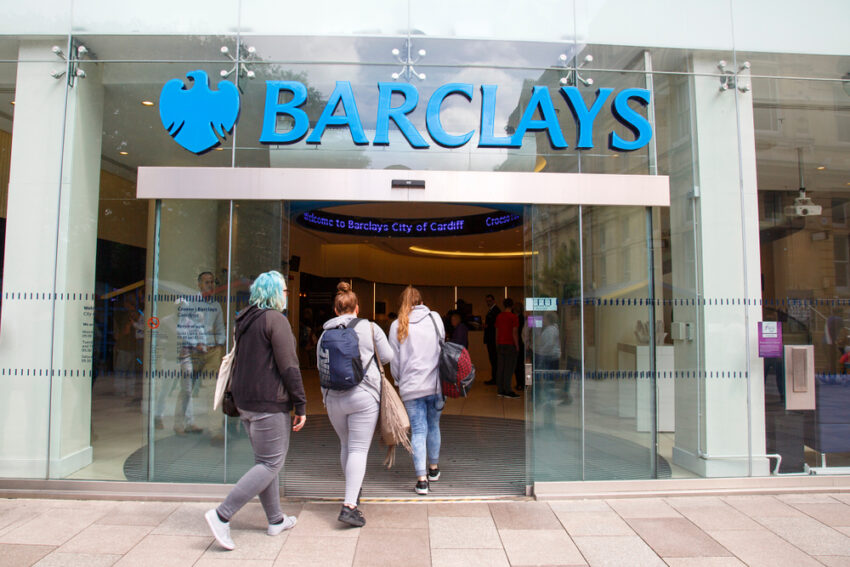
Barclays is charting a decisive U-turn on the high street, with plans to open new branches across the country and reinstate the once-familiar “bank manager” job title, a move that signals a broader rethink of how Britain’s traditional lenders compete in an increasingly digital age.
Vim Maru, who has led Barclays UK since 2024, told Business Matters that the bank intended to grow its branch network beyond the current 206 outlets, having already paused a closure programme that saw roughly 80 per cent of its branches shut since 2019. One of his first acts after taking charge was to halt the cull, and he is now pressing ahead with expansion, though he declined to put a precise figure on how many new sites would open.
The shift comes as digital-only challengers such as Revolut and Wise make increasingly aggressive moves into the current-account market, threatening the established banks’ grip on everyday consumer banking. Rather than trying to outpace them on technology alone, Maru is placing his chips on a blend of slick digital services and genuine, in-person support, what he described as the winning formula for modern banking.
He was characteristically blunt about the shortcomings of purely automated customer service. Barclays customers, he insisted, would not find themselves trapped in an endless loop with a chatbot when they needed real help. The bank has also quietly reintroduced traditional role titles, so that customers walking through the door can once again ask to speak to the branch or bank manager.
Maru stopped short of conceding that Barclays had been too aggressive in its earlier round of closures, but acknowledged that the bank needed to reassess how it served its customers every few years. The new branches will sit alongside the shared banking hubs operated through the Post Office, rather than replace them.
Beyond the branch network, Barclays is pursuing growth on several fronts. The bank reported a record number of mortgage applications last year, with processing times slashed from 45 minutes to just 15 thanks to technology improvements that have proved popular with brokers. Its acquisition of the Tesco credit card business in 2024 and Kensington Mortgages, which has doubled in size since Barclays bought it in May 2023, have broadened the division’s reach considerably.
Artificial intelligence is also being deployed to streamline internal processes, though Maru was cautious about the workforce implications. He drew a parallel with the introduction of ATMs, noting that while the machines were expected to eliminate cashier roles, the subsequent rise in fraud and scams meant staff were redeployed rather than made redundant.
On the broader economy, Maru offered a measured reading from the bank’s unique vantage point. Consumer spending has shown resilience, with hospitality holding up well despite a period of heightened anxiety following the outbreak of the Iran conflict. In the opening days of the war, there was a noticeable surge in fuel purchases as motorists rushed to fill up ahead of expected price rises, though spending patterns quickly normalised.
With Barclays chief executive CS Venkatakrishnan having committed to investing £30 billion more in the UK between 2024 and this year, and despite persistent speculation about possible acquisitions of the likes of Santander UK or TSB, Maru said his priority remained organic growth. The bank, he maintained, already had strong momentum — and a renewed high street presence to match.

Amy Ingham
Amy is a newly qualified journalist specialising in business journalism at Business Matters with responsibility for news content for what is now the UK’s largest print and online source of current business news.

Hut 8: Why The River Bend Expansion Justifies A Buy Rating

Eight stocks have delivered over 50% returns in each of the last three fiscal years, defying broader market volatility. With gains ranging from 500% to over 3,100%, these consistent outperformers highlight strong underlying momentum despite fluctuating benchmark returns across FY24 to FY26.

Starwood Property Trust: The Market Is Handing You An 11% Yield At A Deep Discount

Total deposits came in at Rs 1.66 lakh crore, up 10% from a year ago and 6.1% higher on a quarter-on-quarter basis. CASA deposits rose 2.8% year-on-year to Rs 48,751 crore, with the CASA ratio at 29.31% at the end of the quarter.
Retail term deposits saw strong growth, increasing 30.1% year-on-year to Rs 73,796 crore. Overall retail deposits, including CASA, rose 17.7% to Rs 1.22 lakh crore. Bulk deposits declined 6.9% year-on-year to Rs 43,797 crore. Meanwhile, the share of retail deposits in total deposits improved to 73.67% from 68.88% in the same period last year.
The bank reported a liquidity coverage ratio of about 131.76% as of March 31, 2026. Collection efficiency remained robust, with pan-bank efficiency, excluding NPAs, at 98.9% for March 2026, compared to 98.1% in December 2025.
Banking stocks have come under sharp pressure over the past three months, with most lenders underperforming the benchmark Nifty 50 amid a challenging macro backdrop marked by sustained foreign institutional investor (FII) outflows, escalating geopolitical tensions, and a surge in energy prices. Bandhan Bank is down 18% in the last 1 month.

The underperformance comes amid persistent FII selling, which has disproportionately impacted financials due to their heavy weightage in benchmark indices. At the same time, the escalation of the Iran-Israel conflict has triggered a spike in crude oil prices, raising concerns over inflation and delaying expectations of interest rate cuts by global central banks.
The lender has also been in the headlines after The Economic Times reported that Bandhan Financial Services is exploring exit options for its long-term investors, including GIC Ventures and International Finance Corporation.Also read: HDFC Bank Q4 business update: Lender reports 15% YoY growth in deposits, advances jump 12%
The report said the company has appointed Jefferies to assess investor interest, particularly from private equity funds. The move is also in line with regulatory requirements that mandate Bandhan Financial to reduce the promoter’s stake in the bank to 26% by 2030.
(Disclaimer: Recommendations, suggestions, views and opinions given by the experts are their own. These do not represent the views of The Economic Times)


Financially Free Investor is a financial writer with 25 years investment experience. He focuses on investing in dividend-growing stocks with a long-term horizon. He applies a unique 3-basket investment approach that aims for 30% lower drawdowns, 6% current income, and market-beating growth on a long-term basis and he focuses on dividend-growing stocks with a long-term horizon.
He runs the investing group High Income DIY Portfolios which provides vital strategies for portfolio management and asset allocation to help create stable, long-term passive income with sustainable yields. The service includes a total of 10 model portfolios with a range of income targets for varying levels of risk, buy and sell alerts, and live chat. Learn more.
Analyst’s Disclosure: I/we have a beneficial long position in the shares of ABT, ABBV, CI, JNJ, PFE, NVS, NVO, AZN, UNH, CL, CLX, UL, NSRGY, PG, TSN, ADM, BTI, MO, PM, KO, PEP, EXC, D, DEA, DEO, ENB, MCD, BAC, PRU, UPS, WMT, WBA, CVS, LOW, AAPL, IBM, CSCO, MSFT, INTC, T, VZ, CVX, XOM, VLO, ABB, ITW, MMM, LMT, LYB, RIO, O, NNN, WPC, ARCC, ARDC, AWF, CII, TLT either through stock ownership, options, or other derivatives. I wrote this article myself, and it expresses my own opinions. I am not receiving compensation for it (other than from Seeking Alpha). I have no business relationship with any company whose stock is mentioned in this article.
Disclaimer: The information presented in this article is for informational purposes only and in no way should be construed as financial advice or a recommendation to buy or sell any stock. The author is not a financial advisor. Please always do further research and do your own due diligence before making any investments. Every effort has been made to present the data/information accurately; however, the author does not claim 100% accuracy. The stock portfolios presented here are model portfolios for demonstration purposes. For the complete list of our LONG positions, please see our profile on Seeking Alpha.
Seeking Alpha’s Disclosure: Past performance is no guarantee of future results. No recommendation or advice is being given as to whether any investment is suitable for a particular investor. Any views or opinions expressed above may not reflect those of Seeking Alpha as a whole. Seeking Alpha is not a licensed securities dealer, broker or US investment adviser or investment bank. Our analysts are third party authors that include both professional investors and individual investors who may not be licensed or certified by any institute or regulatory body.


Value-oriented ideas and special situations, generally mid/small cap. Also, orphaned and unfashionable investment ideas, ideally with a catalyst and the prospect of asymmetric upside/downside payoffs. Contrarian tendencies. To some extent I’ll go anywhere if it’s cheap and I’m more influenced by momentum and quality than I used to be.
Analyst’s Disclosure: I/we have a beneficial long position in the shares of TH either through stock ownership, options, or other derivatives. I wrote this article myself, and it expresses my own opinions. I am not receiving compensation for it (other than from Seeking Alpha). I have no business relationship with any company whose stock is mentioned in this article.
Not intended as investment advice. Author’s opinion only. Article may contain errors/inaccuracies and will not be updated. Author’s holdings may change without notice. Any statements about the future are completely uncertain and should be interpreted as such. Seek professional investment and tax advice before any investment decision.
Seeking Alpha’s Disclosure: Past performance is no guarantee of future results. No recommendation or advice is being given as to whether any investment is suitable for a particular investor. Any views or opinions expressed above may not reflect those of Seeking Alpha as a whole. Seeking Alpha is not a licensed securities dealer, broker or US investment adviser or investment bank. Our analysts are third party authors that include both professional investors and individual investors who may not be licensed or certified by any institute or regulatory body.
Business
AU Small Finance Bank Q4 business update: Deposits up 23% YoY at Rs 1.52 lk cr, advances rise 25%

The bank’s total deposits stood at Rs 1.52 lakh crore as of March 31, 2026, registering a 22.8% year-on-year growth and a 10.3% increase sequentially from Rs 1.38 lakh crore as of December 31, 2025. CASA deposits came in at Rs 43,360 crore, up 19.6% year-on-year and 8.5% quarter-on-quarter. However, the CASA ratio stood at 28.4%, compared to 29.2% a year ago and 28.9% in the previous quarter.
On the advances front, gross advances stood at Rs 1.36 lakh crore, reflecting a 25.1% year-on-year growth and an 8.7% rise sequentially from Rs 1.26 lakh crore. The bank’s securitised and assigned portfolio was reported at Rs 4,290 crore, compared to Rs 6,926 crore in the year-ago period and Rs 4,689 crore in the previous quarter.
Overall, the gross loan portfolio (A+B) stood at Rs 1.40 lakh crore as of March 31, 2026, marking a 21.3% year-on-year growth and an 8% increase quarter-on-quarter from Rs 1.30 lakh crore.
Banking stocks have come under sharp pressure over the past three months, with most lenders underperforming the benchmark Nifty 50 amid a challenging macro backdrop marked by sustained foreign institutional investor (FII) outflows, escalating geopolitical tensions and a surge in energy prices. AU Small Finance Bank shares have declined 13% since the beginning of the year.
The underperformance comes amid persistent FII selling, which has disproportionately impacted financials due to their heavy weightage in benchmark indices. At the same time, the escalation of the Iran-Israel conflict has triggered a spike in crude oil prices, raising concerns over inflation and delaying expectations of interest rate cuts by global central banks.
In a separate development in February, the Haryana government de-empanelled the lender from government business after suspected fraudulent activities were disclosed.The company issued a clarification late Sunday, stating it initiated an internal review regarding two accounts in question. The bank further said that both these accounts were “duly opened after completion of all applicable KYC checks and requisite authorisations” and were in accordance with the bank’s internal policies and processes.
(Disclaimer: Recommendations, suggestions, views and opinions given by the experts are their own. These do not represent the views of The Economic Times)

Major change to parking enforcement in part of Cambridge due to unclear signs

Why I Don't Invest In BDC ETFs, But Only Cherry-Pick My Own

Why Bearish Bets and ETF Flows May Spark a Rally

Smart energy pays enters the US market, targeting scalable financial infrastructure

Why Israel is blocking foreign journalists from entering

Bitcoin: We’re Entering The Most Dangerous Phase

Looks Like With Magic, You Can Make Some Good Money #magic #magictricks #tvclips #tvshow #magicshow

How Much Money Does LeBron James Actually Take Home? #nba #basketball #money #breakdown

Smart Money Wallet Tips for Financial Growth
-

 NewsBeat2 days ago
Steven Gerrard disagrees with Gary Neville over ‘shock’ Chelsea and Arsenal claim | Football
-

 Business2 days ago
No Jackpot Winner and $194 Million Prize Rolls Over
-

 Fashion19 hours ago
Weekend Open Thread: Spanx – Corporette.com
-
Entertainment5 days ago
Fans slam 'heartbreaking' Barbie Dream Fest convention debacle with 'cardboard cutout' experience
-

 Crypto World3 days ago
Gold Price Prediction: Worst Month in 17 Years fo Save Haven Rock
-

 Tech5 days ago
The Pixel 10a doesn’t have a camera bump, and it’s great
-
Crypto World4 days ago
Dems press CFTC, ethics board on prediction-market insider trades
-
 Entertainment7 days ago
Lana Del Rey Celebrates Her Husband’s 51st Birthday In New Post
-

 Tech5 days ago
Avatar Legends: The Fighting Game comes out in July and it looks pretty slick
-

 Tech4 days ago
EE TV is using AI to help you find something to watch
-

 Sports4 days ago
Tallest college basketball player ever, standing at 7-foot-9, entering transfer portal
-

 Business2 days ago
Login and Checkout Issues Spark Merchant Frustration
-

 Fashion6 days ago
Amazon Sundays: Soft Spring Layers
-

 Tech6 days ago
Elon Musk’s last co-founder reportedly leaves xAI
-

 Fashion5 days ago
The Best Spring Trends of 2026
-

 Tech4 days ago
How to back up your iPhone & iPad to your Mac before something goes wrong
-

 Politics5 days ago
Should Trump Be Scared Strait?
-

 Tech5 days ago
Apple will hide your email address from apps and websites, but not cops
-

 Crypto World5 days ago
U.S. rule change may open trillions in 401(k) funds to crypto
-

 Tech4 days ago
Flipsnack and the shift toward motion-first business content with living visuals
You must be logged in to post a comment Login