

Business
Claret Asset Management Q2 2026 Letter

cagkansayin/iStock via Getty Images

February 2009: in the middle of the biggest financial crisis since the depression of 1929, this bull market was born. Today, it is in its 17th year. Despite COVID, Trump’s trade war against all his allies, high oil prices (over 100 USD at times) due to the Middle East war with Iran, it is alive and kicking.
It is all but natural that investors wonder whether things have gone up too high too fast and is it time to sell and wait for the market to correct before getting back in.
We wish we knew but we don’t. So, what do we do?
We think the most rational thing to do is to remember the fundamental reasons for owning equities in the first place: equities reflect economic growth over time and are the best proxies for business in general. Well-managed companies will outgrow their competitors and provide us with a better than average return in the long run. If chosen well, patience is your best ally. Financial reports on companies are your best tools and newspapers, newsletters from marketing sources and especially social media, if misused or misleading, are your worst enemy.
Then there is the concept of compounding effect of money:
- When you own shares of a company in a regular, non-tax-sheltered account, and it appreciates in value, for every dollar of appreciation, you will have to pay the government capital gain taxes of around 25% if you sell it. However, if you keep it for 20+ years, you will only owe it on paper until you sell it. In other words, the government “lends” you the tax money you owe them interest free until you sell your shares. Moreover, if you happen to lose money on an investment, you get to deduct your losses against other gains. Do you think you can get a deal like this one from the banks????
- If you happen to buy well-managed companies that can reinvest their profit to grow their market share, the likes of Alimentation Couche-Tard (ANCTF), CGI (GIB), Microsoft (MSFT) and many more, the compounding effect of your capital would be mind-boggling if you can take a long-term view. For example, Couche-Tard’s return on equity (ROE) averages annually over 20% in the last 15 years, CGI’s average ROE is over 15% in the last 10 years and Microsoft’s has been over 25% in the last 25 years!
In short, you were “borrowing” money interest free from the government and investing it in companies that were compounding it at an above-average rate.
Combining these 2 compounding magic tricks will justify not taking the short-term prognostics from the so-called experts even when the trajectory for the future will certainly not be a straight line.
The AI Boom versus the late 1990s Dot-Com Boom: similarities and differences
As mentioned in our last quarterly letter, the current AI frenzy is reminiscent of the late 1990s dot-com boom. Both eras feature a tectonic, technology shift, heavy capital deployment into foundational infrastructure, and narrow stock market concentration. However, examining the underlying corporate data reveals several significant differences.
The most significant divergence between the two eras lies in the fundamental cash-generation capability of the market leaders.

The Dot-Com Boom (1995–2000): The internet boom was built heavily on “speculative demand.” The median Nasdaq technology company at the peak in 2000 was entirely unprofitable. High-profile IPOs were backed by eyeballs and clicks rather than revenue, creating an ecosystem highly vulnerable to a sudden credit freeze.
The GenAI Infrastructure Cycle: Today’s infrastructure buildout is funded by the most profitable, cash-rich corporate balance sheets in economic history. Market leaders like Nvidia (NVDA), Microsoft, Alphabet (GOOG), and Meta (META) generate hundreds of billions of dollars in positive free cash flow annually. For instance, Nvidia achieved a $5 trillion market valuation backed by trailing 12-month revenue of $215.9 billion and a massive 53% operating margin.

All frenzies will end with pain and this one will not be different. Our job is not to predict the timing of a correction but identify signals that indicate “wretched” excess and problems to come.
Four things are worth watching:
- Free Cash Flow inflection: between Amazon, Google, Meta and Microsoft, they have committed over USD 725 Billion in capital spending in 2026 and promise even more in the years to come. Amazon is projected to turn cash-flow negative this year. If AI capital expenditure (CapEx) begins to exceed operation cash flow in these 4 hyperscalers, funding will have to come from capital markets and will put pressure on valuations and yields.
- As of now, no hyperscaler has even tempted to offer insight into their AI-specific operating margins, separately from their broader cloud revenue. Markets have so far accepted backlog growth as a proxy for AI returns. The price of tokens, the measuring unit for the future profitability of the business of data centres, has declined 90% since 2023 while the total capex spend has roughly doubled since last year. Here lies the structural paradox in the AI economy: data centre builders are spending double the capital to build infrastructure, while the “unit of value” they sell (the token) is rapidly deflating due to hyper-commoditization. For additional context, a token is a small unit of text analyzed or generated by an AI model. The more a company uses AI, the more tokens it consumes. For data centres to remain highly profitable in the long term, token consumption volume must grow exponentially faster than the hardware depreciation costs. Yet, Amazon Chief Technology Officer Werner Vogels recently made several comments on the rapidly climbing cost of AI through uncontrolled consumption of tokens (“tokenmaxxing”):
“We see a shift happening between the cheaper open source models and the bigger expensive models… Cost is a very important part of your architecture, you need to take that into account.”
“Do you really need to have the biggest, highest-end model to solve this? The answer is no, you don’t.”
Vogels’ comments are part of a broader corporate reckoning regarding token efficiency. Within Amazon itself, the pushback against uncontrolled token spend hit a boiling point when Senior VP Dave Treadwell sent a memo to staff demanding they stop “using AI just for the sake of using AI.” Amazon actually had to kill an internal developer leaderboard that tracked token consumption because employees began “tokenmaxxing” – pointing AI agents at pointless, repetitive loops just to climb the rankings, running up massive, empty cloud infrastructure bills for the company. Similar stories have leaked from Uber (which reportedly burned through its entire annual AI tooling budget in just four months) and Meta, proving that buyers across the board have suddenly become deeply sensitive to the raw cost of token transactions.
- There is a lot of circular financing going on in the computer chip industry, not dissimilar to the same scheme during the dot-com era in the telecom industry: as an example, Nvidia invests in OpenAI (OPENAI); OpenAI commits to purchasing Nvidia GPUs; Microsoft funds OpenAI; OpenAI runs on Azure. The OpenAI-Nvidia commitment alone is estimated to account for as much as 13% of Nvidia’s projected $272 billion in 2026 revenue. This is precisely the structure by which Lucent and Nortel financed telecommunications carriers in 1999, equipment makers were lending customers the money to buy their equipment, and it ended badly, in waves of bankruptcies from the carriers and revenue collapse at the suppliers. It could happen in AI…
- While memory chips, GPUs, and skilled engineering labour are the visible bottlenecks of the AI cycle, electricity is the quieter one. Power supply constraints are already delaying data-centre projects in Virginia, Ireland and parts of Texas. Not only could the demand prove uncertain, we have to ask whether the supply also could prove impossible.
While the dot-com boom was a bubble of speculative valuation — unprofitable companies trading on astronomical multiples of non-existent earnings, the generative AI cycle is a bubble of capital expenditure. The risk today is not that the market leaders will go bankrupt; the risk is that they are building a $725 billion infrastructure footprint that may take a decade for enterprise adoption and monetization to fully justify, leaving them vulnerable to an aggressive capex correction if returns fail to materialize fast enough.
Assessing the current landscape and areas of uncertainty…
First, (almost) everyone believes artificial intelligence has the potential to be one of the biggest technological developments of all time, reshaping both daily life and the global economy.
We also know that in recent years, economies and markets have become increasingly dependent on AI:
- AI is responsible for a very large portion of companies’ total capital expenditures.
- Capital expenditures on AI capacity account for a large share of the growth in U.S. GDP.
- AI stocks have been the source of the vast majority of the gains of the S&P 500.
Further, it’s important to note that whereas the gains in AI-related stocks account for a disproportionate percentage of the total gains in all stocks, the excitement AI injects into the market must have added a lot to the appreciation of non-AI stocks as well.
Yet, many questions linger:
- Who will be the winners, and what will they be worth? As Warren Buffett pointed out in 1999: “The automobile was the most important invention, probably, of the first half of the 20th century… If you had seen at the time of the first cars how this country would develop in connection with autos, you would have said, ‘This is the place I must be.’ But of the 2,000 companies, as of a few years ago, only three car companies survived. So, autos had an enormous impact on America but the opposite direction on investors.”
- What’s a share in an upstart worth? IPOs indicate obscene valuations that the market is willing to pay for companies that have no revenues to show for, let alone profits. The mentality of “lottery-ticket thinking” seems to be pervasive on anything with AI in its name.
- Will AI produce profits, and for whom? For vendors? Or users?
Derek Thompson, an American journalist, podcaster and author, wrote in one of his newsletters with some terrific historical perspective:
“The railroads were a bubble and they transformed America. Electricity was a bubble, and it transformed America. The broadband build-out of the late-1990s was a bubble that transformed America. I am not rooting for a bubble, and quite the contrary, I hope that the US economy doesn’t experience another recession for many years. But given the amount of debt now flowing into AI data centre construction, I think it’s unlikely that AI will be the first transformative technology that isn’t overbuilt and doesn’t incur a brief painful correction. AI Could Be the Railroad of the 21st Century. Brace Yourself”.

Conclusion?
Sometimes, we find writings that can be so insightful that we would rather reprint them as is instead of trying to paraphrase. We should give credit where credit is due. Howard Marks in Oaktree Capital Management has one of the best conclusions and bottom line regarding AI:
“…But do I have a bottom line? Yes, I do. Alan Greenspan’s phrase, mentioned earlier, serves as an excellent way to sum up a stock market bubble: “irrational exuberance.” There is no doubt that investors are applying exuberance with regard to AI. The question is whether it’s irrational. Given the vast potential of AI but also the large number of enormous unknowns, I think virtually no one can say for sure. We can theorize about whether the current enthusiasm is excessive, but we won’t know until years from now whether it was. Bubbles are best identified in retrospect.
While the parallels to past bubbles are inescapable, believers in the technology will argue that “this time it’s different.” Those four words are heard in virtually every bubble, explaining why the present situation isn’t a bubble, unlike the analogous prior ones. On the other hand, Sir John Templeton, who in 1987 drew my attention to those four words, was quick to point out that 20% of the time things really are different. But on the third hand, it must be borne in mind that behaviour based on the belief that it’s different is what causes it to not be different!
Today’s situation calls to mind a comment attributed to American economist Stuart Chase about faith. I believe it’s also applicable to AI (as well as to gold and cryptocurrencies):
For those who believe, no proof is necessary. For those who don’t believe, no proof is possible.
Here’s my actual bottom line:
There’s a consistent history of transformational technologies generating excessive enthusiasm and investment, resulting in more infrastructure than is needed and asset prices that prove to have been too high. The excesses accelerate the adoption of the technology in a way that wouldn’t occur in their absence. The common word for these excesses is “bubbles.”
AI has the potential to be one of the greatest transformational technologies of all time.
As I wrote just above, AI is currently the subject of great enthusiasm. If that enthusiasm doesn’t produce a bubble conforming to the historical pattern, that will be a first.
Bubbles created in this process usually end in losses for those who fuel them.
The losses stem largely from the fact that the technology’s newness renders the extent and timing of its impact unpredictable. This in turn makes it easy to judge companies too positively amid all the enthusiasm and difficult to know which will emerge as winners when the dust settles.
There can be no way to participate fully in the potential benefits from the new technology without being exposed to the losses that will arise if the enthusiasm and thus investors’ behaviour prove to have been excessive.
The use of debt in this process – which the high level of uncertainty usually precluded in past technological revolutions – has the potential to magnify all of the above this time.
Since no one can say definitively whether this is a bubble, I’d advise that no one should go all-in without acknowledging that they face the risk of ruin if things go badly. But by the same token, no one should stay all-out and risk missing out on one of the great technological steps forward. A moderate position, applied with selectivity and prudence, seems like the best approach.
Finally, it’s essential to bear in mind that there are no magic words in investing. These days, people promoting real estate funds say, “Office buildings are so yesterday, but we’re investing in the future through data centres,” whereupon everyone nods in agreement. But data centres can be in shortage or in oversupply, and rental rates can surprise to the upside or the downside. As a result, they can be profitable… or not. Intelligent investment in data centres, and thus in AI – like everything else – requires sober, insightful judgment and skillful implementation “.
Of note:
Alphabet (Google’s parent company) replaced Verizon in the Dow Jones Industrial Average (DJIA) on June 29, 2026, representing a significant change to one of the United States’ main indices. While it makes a major splash in financial headlines, the actual mechanical impact on portfolios and the market is more nuanced.
The Dow is a price-weighted index, meaning a company’s influence is determined entirely by its absolute dollar share price, not its total market cap.
Before the change, Verizon was trading at roughly $47 USD per share, meaning that it was only 0.5% weight in the index, therefore its daily movements have little to no impact on the index.
Because Alphabet’s Class A shares (GOOGL) trade at a much higher price of ~$355 USD per share as of writing this, it immediately commands roughly a 4% weight in the index. This places it among the top 10 most influential companies in the Dow, meaning a big day for Google can move the index quite a bit.

The Dow Jones Industrial Average hasn’t been strictly industrial for some time, but this specific swap marks the end of an era:
Bumping Verizon means the Dow has officially eliminated its last dedicated traditional telecommunications constituent. S&P Dow Jones Indices explicitly noted that Alphabet’s vast digital footprint better represents the modern “Communication Services” landscape.
Alphabet becomes the fifth “Magnificent Seven” mega-cap tech stock to be placed into the exclusive 30-member club, joining Microsoft, Apple, Amazon, and Nvidia.
Historically, the Dow was viewed as a boring, stable, value-oriented safe haven during tech selloffs. By swapping stable dividend-payer Verizon for a relatively volatile growth company like Alphabet, the index ties its fate even closer to the tech sector. If market anxieties regarding massive AI capital expenditures flare up, the Dow will now feel those shocks much more than it used to.
Ultimately, the move cements Google’s status as a foundational pillar of the American corporate world, even if it makes the nightly Dow report a little more tech heavy.
Have a good summer!
– Alain Chung, CFA, Chairman and CIO, on behalf of the Claret team.
Editor’s Note: The summary bullets for this article were chosen by Seeking Alpha editors.

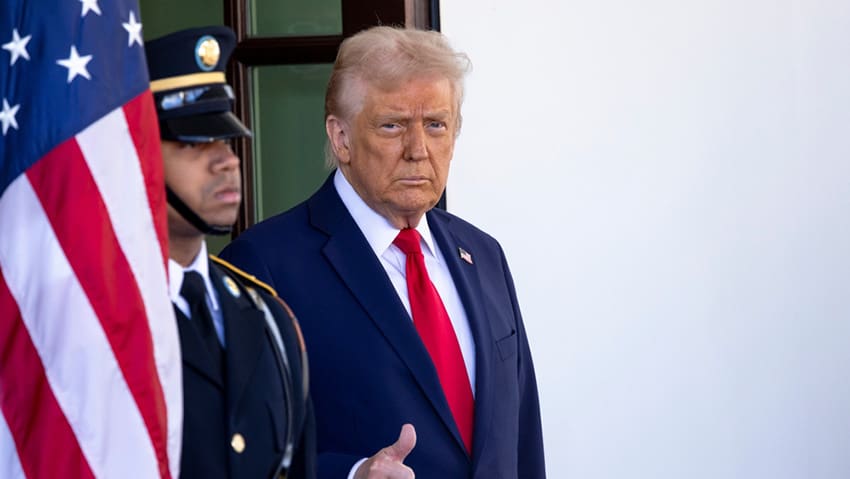
Andy Burnham has used one of his first acts as Prime Minister to speak to Donald Trump, Downing Street has confirmed, as speculation mounts that Labour’s block on fresh North Sea oil and gas operations could be about to soften. For the thousands of UK firms in the offshore supply chain, the stakes are anything but abstract.
The US President appears to be taking a much closer interest in the new occupant of No 10 amid hints that Mr Burnham could reverse the party’s ban on new drilling.
Yesterday, the Mail on Sunday reported that the Prime Minister was preparing to announce plans for new drilling at the Jackdaw and Rosebank fields off the coast of Scotland, two projects where licences have already been granted but which have been mired in legal challenge.
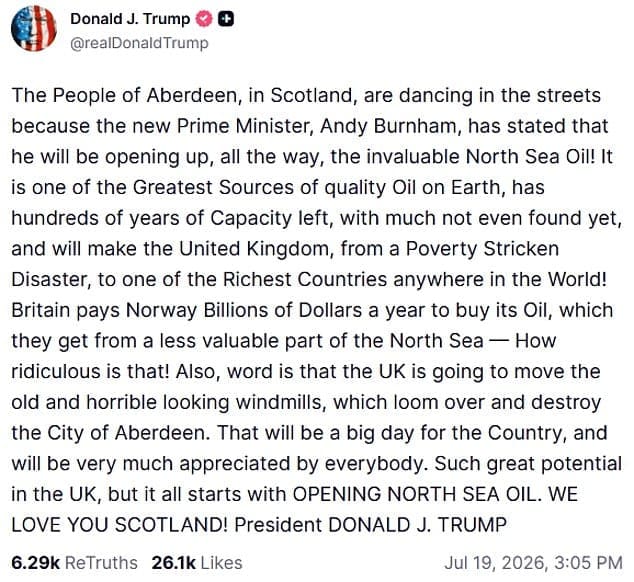
Mr Trump greeted the reports with characteristic restraint. Writing on TruthSocial, he declared that the people of Aberdeen, the UK’s oil and gas capital, would be ‘dancing in the streets’, and claimed the move would make Britain ‘one of the richest countries anywhere in the world’.
It is quite the change of tune. The President previously dismissed Mr Burnham as an ‘extremely liberal’ politician he knew only as ‘the mayor of a town’.
Riches or otherwise, the commercial logic for Aberdeen is real. Oil and gas supports an estimated 13 per cent of jobs in Aberdeen City, according to ONS figures cited by the House of Commons Library, and behind every operator sits a long tail of small engineering firms, caterers, logistics providers and consultancies whose order books rise and fall with drilling activity.
That supply chain has spent two years absorbing punishment. When Rachel Reeves raised the energy profits levy to 78 per cent and stripped out investment allowances in 2024, industry leaders warned the sector was entering ‘game over’ territory, with analysts cautioning that companies would freeze investment and wind down older fields early. Any signal that Jackdaw and Rosebank can proceed would be the first meaningful reversal of that squeeze.
Caution is warranted, however. Labour’s deputy leader Lucy Powell declined to confirm the reports, telling the BBC she was not expecting a “change of policy” but “more a change of emphasis”. Because licences at both fields were granted some time ago, ministers could wave the projects through while leaving the wider ban on new exploration licences untouched.
For SME owners watching from well beyond Aberdeen, the episode is a useful early read on the new Prime Minister. Mr Burnham arrived in office with eight in ten SME owners braced for what his premiership would mean for their business, yet he has since signalled room for movement on tax and a business rates cut for high street firms. A pragmatic turn on the North Sea would suggest the interventionist of the campaign trail is governing rather closer to the centre.
There is also the small matter of Washington. A Prime Minister who has the President’s ear, even one won over by an oil field, is better placed to defend UK exporters in any future tariff skirmish than one dismissed as the mayor of a town.
Nothing is confirmed, and No 10 is saying little about what the two men discussed. But when a new Prime Minister’s first calls include the White House, and the White House is talking about British oil, business owners can be forgiven for concluding that the direction of travel has changed.

Amy Ingham
Amy Ingham is a reporter at Business Matters, covering UK business news with a focus on breaking news, business policy, late payments and insolvency. She joined the magazine in 2026 after completing the NCTJ Diploma in Journalism at Harlow College’s journalism school. Her recent reporting includes British Steel’s nationalisation and its impact on SME suppliers, the decline in late payments by large firms, and Insolvency Service director disqualifications. Reach her at aingham@cbmeg.co.uk.
The company reported consolidated revenue from operations of Rs 1,775.70 crore for the June 2026 quarter, registering a 12.2% year-on-year (YoY) increase from Rs 1,583.16 crore in the corresponding quarter last year. Sequentially, revenue climbed 28.1% from Rs 1,386.43 crore reported in the March quarter.
Consolidated net profit surged 68.6% YoY to Rs 468.84 crore, compared with Rs 278.13 crore in the year-ago period. The company also returned to profitability on a quarter-on-quarter basis after posting a net loss of Rs 13.37 crore in the preceding quarter.
The company’s core power segment remained the primary driver of revenue growth.
Stock performance
Despite Tuesday’s sharp rally, Jaiprakash Power’s stock has delivered a mixed performance across different timeframes. The stock has declined around 6% over the past three months and is down nearly 17% over the last year. However, it has generated impressive long-term returns, surging about 198% over the past three years.
The company currently commands a market capitalisation of Rs 11,582 crore. Its 52-week high stands at Rs 24.45, while the 52-week low is Rs 13.14.
Technical indicators
From a technical perspective, the stock’s 14-day Relative Strength Index (RSI) stands at 38.8. An RSI reading below 30 is generally considered oversold, while a reading above 70 indicates overbought conditions.

The stock also continues to exhibit positive technical momentum, trading above seven of its eight simple moving averages (SMAs), suggesting an underlying bullish trend.
Institutional investors raise stake
Institutional investors increased their exposure to the company during the June 2026 quarter. Foreign Institutional Investors (FIIs) raised their stake to 6.75% from 6.58% in the previous quarter, while mutual funds increased their holdings to 0.48% from 0.41%.
The promoters’ pledged shareholding remained unchanged at 72.99% of their holdings during the June 2026 quarter, while their overall stake in the company stood at 24%.(Disclaimer: Recommendations, suggestions, views and opinions given by the experts are their own. These do not represent the views of Economic Times)
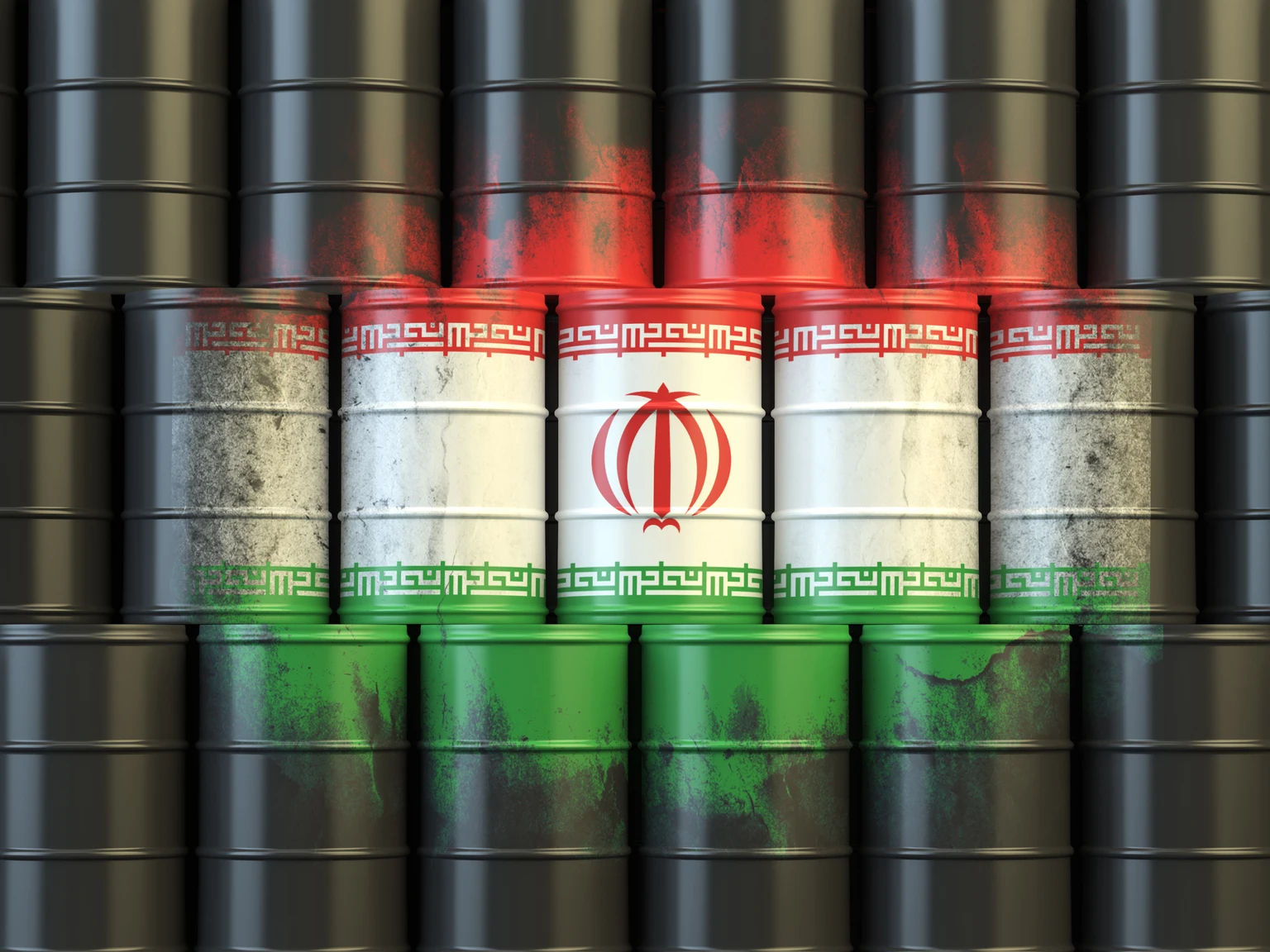
Commodities: Oil Stabilises Despite Houthis' Red Sea Threat
Five people dead in apparent mass drowning in Ohio river

Wordle players looking for help with today’s puzzle can find hints, clues and the full solution below for Wordle #1858, the daily word puzzle released Tuesday, July 21, 2026.
Wordle challenges players to identify a five-letter word within six attempts, with the game providing color-coded feedback after each guess to indicate which letters are correct and properly placed, which letters appear in the word but in the wrong position, and which letters do not appear in the word at all. A new puzzle becomes available daily at midnight local time, meaning players around the world receive access to that day’s word at different moments depending on their time zone.
Hints for today’s Wordle
For players who want a nudge in the right direction without having the answer fully revealed, several outlets covering today’s puzzle offered a series of progressive hints. According to those hints, today’s word contains just one vowel among its five letters, a relatively uncommon structure that can make the puzzle trickier to solve through standard guessing strategies. That single vowel, the letter I, sits in the third position of the word.
Today’s word also contains one repeated letter, with both instances of that letter appearing consecutively at the very end of the word. The puzzle begins with the letters “SH,” the same opening combination found in common words such as “share,” “shout” and “shrug,” a detail that several outlets suggested could help narrow down potential guesses.
A definitional clue
Beyond the structural hints, coverage of today’s puzzle also offered a definitional clue tied to the word’s meaning, which centers on deception or hidden promotional motives. According to that hint, the word describes someone who secretly promotes a product, scheme, or point of view while presenting themselves as an impartial or unaffiliated observer. The term is commonly used in discussions of online scams, influencer marketing, and situations involving undisclosed sponsorships or hidden financial incentives.
Today’s Wordle answer
The answer to Wordle #1858 for July 21, 2026, is SHILL.
As both a noun and a verb, “shill” refers to someone who poses as an enthusiastic, impartial customer or supporter of something, such as at an auction, a street game, or an online promotion, while secretly working on behalf of the seller or organizer to encourage others to participate. As a verb, to “shill” means to act in that deceptive promotional capacity, or more broadly, to promote something in a misleading way for personal gain.
The word has seen a notable rise in everyday usage in recent years, particularly within the context of social media, where undisclosed sponsored content and hidden brand partnerships have brought increased public attention to the practice of “shilling” products or ideas without full transparency about financial or personal incentives involved.
Puzzle difficulty
According to Wordlebot, the New York Times’ internal tool that analyzes daily Wordle difficulty based on aggregate player performance, today’s puzzle carried an average difficulty rating of 4.4 out of a possible 6 guesses, suggesting most players needed a moderate number of attempts to reach the correct answer. The puzzle’s relatively unusual letter structure, featuring only a single vowel and a doubled final consonant, likely contributed to that above-average difficulty level for many solvers.
About Wordle
Wordle, now owned and published by The New York Times, has become one of the most widely played daily word games since it first gained viral popularity in early 2022. The game’s simple format, one puzzle per day shared by all players regardless of location, has helped fuel its continued popularity, as solvers frequently compare results and maintain personal solving streaks across social media platforms.
Players looking for extra help with future puzzles can typically find daily hints and starter word suggestions published by various gaming and puzzle-focused outlets shortly after each day’s Wordle becomes available, offering a way to work through the puzzle with partial guidance rather than having the answer revealed outright.
Other daily puzzles
For players interested in additional daily word and logic puzzles beyond Wordle, The New York Times also publishes several other games on a similar daily schedule, including Connections, a puzzle that challenges players to identify hidden groupings among a set of words, and Strands, a word-search-style puzzle built around a central theme, or “spangram.” Tuesday’s editions of both games, Connections puzzle number 1136 and Strands puzzle number 870, were also published alongside today’s Wordle, offering solvers additional options as part of their daily puzzle routine.
With today’s Wordle answer now solved, a new puzzle will become available at midnight local time Wednesday, continuing the game’s now-familiar daily rhythm. Players looking to maintain their solving streaks or simply enjoy the daily challenge can expect a fresh five-letter word and accompanying set of clues from various outlets to help guide their next attempt, regardless of whether today’s puzzle proved to be a quick solve or a more challenging one given its unusual single-vowel structure.


Seeking Alpha’s transcripts team is responsible for the development of all of our transcript-related projects. We currently publish thousands of quarterly earnings calls per quarter on our site and are continuing to grow and expand our coverage. The purpose of this profile is to allow us to share with our readers new transcript-related developments. Thanks, SA Transcripts Team
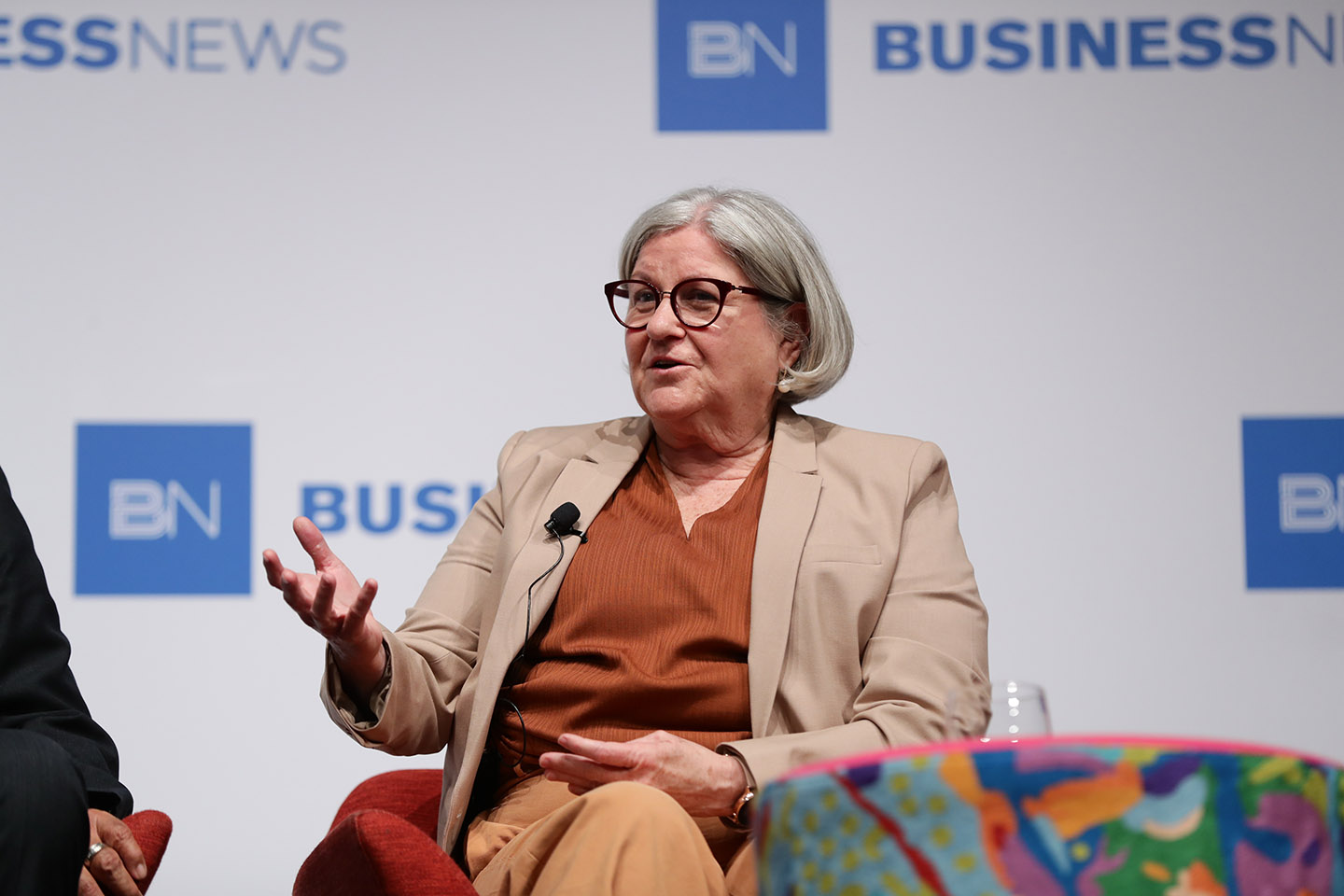
A charter airline owned by local aviation executives and Warrikal founder Amanda Healy has hit the skies of Western Australia.

The adaptation of heritage buildings is gaining favour as new builds become more difficult to stack up.
Business
(VIDEO) NYC Mayor Mamdani Says Netanyahu Arrest Warrant Should Be Enforced, Contradicting Trumps Vow of Safety

New York City Mayor Zohran Mamdani said Monday that the International Criminal Court’s arrest warrant against Israeli Prime Minister Benjamin Netanyahu should be honored, directly contradicting an assurance from President Donald Trump earlier the same day that Netanyahu would face no arrest while in the United States.
Speaking at a press conference, Mamdani reiterated his position on the warrant in direct terms. “If someone is charged with a warrant by the International Criminal Court for these kinds of crimes, that’s something I believe should be honored. And I’ve also said that we will follow our local laws,” Mamdani said.
Trump’s assurance to Netanyahu
Mamdani’s comments came hours after Trump posted on Truth Social that Netanyahu “will not be arrested, in any way, shape, or form, while in the United States of America.” Trump’s post did not name Mamdani directly, though it came amid the mayor’s continued public statements about the ICC warrant, and credited Israel with assisting the United States in its ongoing military conflict with Iran.
Trump later told reporters that he had no tension with Spain’s prime minister, Pedro Sanchez, despite having ordered a halt to trade with Madrid and criticizing Spain as a partner within NATO, remarks made during the same public appearance in which he addressed the Netanyahu situation.
Mamdani’s escalating rhetoric
Mamdani went further in describing the basis for his position, characterizing Netanyahu in stark terms tied to the war in Gaza. “We’re speaking about someone who’s the subject of an International Criminal Court arrest warrant. And he’s the subject of this arrest warrant for alleged crimes against humanity, for war crimes, and he’s the architect of the genocide against Palestinians in Gaza as Israel’s prime minister,” Mamdani said.
The mayor’s comments Monday represented a continuation of positions he first articulated during his mayoral campaign, when he said he would direct police to arrest Netanyahu if the Israeli leader set foot in New York City, framing the move as straightforward enforcement of the existing ICC warrant. Since taking office, Mamdani has confirmed that his administration’s legal department is actively reviewing whether the city has legal authority to act on the warrant, particularly given that Netanyahu typically travels to New York each September to address the United Nations General Assembly.
In an earlier interview published Saturday, Mamdani had used even more direct language regarding where he believes Netanyahu should ultimately face justice. “I believe that Prime Minister Netanyahu belongs in The Hague,” Mamdani said at the time.
A position rooted in international law, Mamdani says
In prior public comments, including a Fox News interview with anchor Martha MacCallum, Mamdani has framed his position as grounded in a broader commitment to international law rather than a personal grievance against Netanyahu specifically. “I’ve said that this is a city that believes international law, and this is a city that wants to uplift and uphold those beliefs,” Mamdani told MacCallum, who noted in response that the United States itself does not recognize the ICC’s jurisdiction. Mamdani acknowledged that the U.S. has not signed the treaty establishing the court, but maintained that New York should nonetheless honor the warrant, comparing it to a separate ICC warrant issued for Russian President Vladimir Putin. Mamdani has said he does not intend to create new local laws to facilitate any arrest, but rather to exhaust existing legal options available to the city.
The ICC warrant’s origins
The International Criminal Court issued arrest warrants for both Netanyahu and former Israeli Defense Minister Yoav Gallant in November 2024, citing allegations of war crimes and crimes against humanity connected to Israel’s military campaign in Gaza. The ICC, established in 2002 to prosecute genocide, crimes against humanity and war crimes, operates under jurisdiction that Israel rejects, and neither Israel nor the United States is a member of the court.
Israel’s response
Israel has firmly rejected both the ICC’s authority and Mamdani’s remarks. In a statement reposted by Netanyahu himself over the weekend, his office described the ICC as “a kangaroo court that has no jurisdiction over Americans or Israelis.” The statement went on to characterize the warrant against Netanyahu as “bogus,” attributing it to what it described as a discredited former ICC prosecutor, Karim Khan, who the statement said issued the warrant shortly before allegations of sexual misconduct against him became public, characterizing the move as an attempt by Khan to divert attention from scrutiny of his own conduct.
Netanyahu’s office also accused Mamdani directly of using the arrest threat to distract from what it characterized as his own failed policies as mayor. The Trump administration has separately imposed sanctions on Khan and roughly a dozen other ICC staff members, in what officials have described as retaliation for the warrants issued against senior Israeli officials over the Gaza war, as well as separate ICC investigations involving U.S. personnel in Afghanistan.
A clash with national implications
Monday’s exchange underscores a broader and increasingly public divide between Mamdani’s administration and the Trump administration over how the United States should engage with the International Criminal Court and its rulings involving allied foreign leaders. With Netanyahu expected to travel to New York in September for the UN General Assembly, as he has in previous years, the dispute over whether the city could or would attempt to act on the ICC warrant is likely to remain a closely watched flashpoint in the coming months.
With Trump having now publicly guaranteed Netanyahu’s safety from arrest while in the United States, and Mamdani continuing to insist that the ICC warrant should be honored under international law, the two leaders’ starkly opposing positions appear likely to remain unresolved heading into the fall, when Netanyahu’s anticipated UN visit could bring the dispute to a more concrete test. For now, both sides have shown no indication of backing away from their respective positions, leaving the question of how, or whether, any attempt to enforce the warrant in New York City might actually unfold as one of the more unusual open legal and political questions facing the incoming mayoral administration.
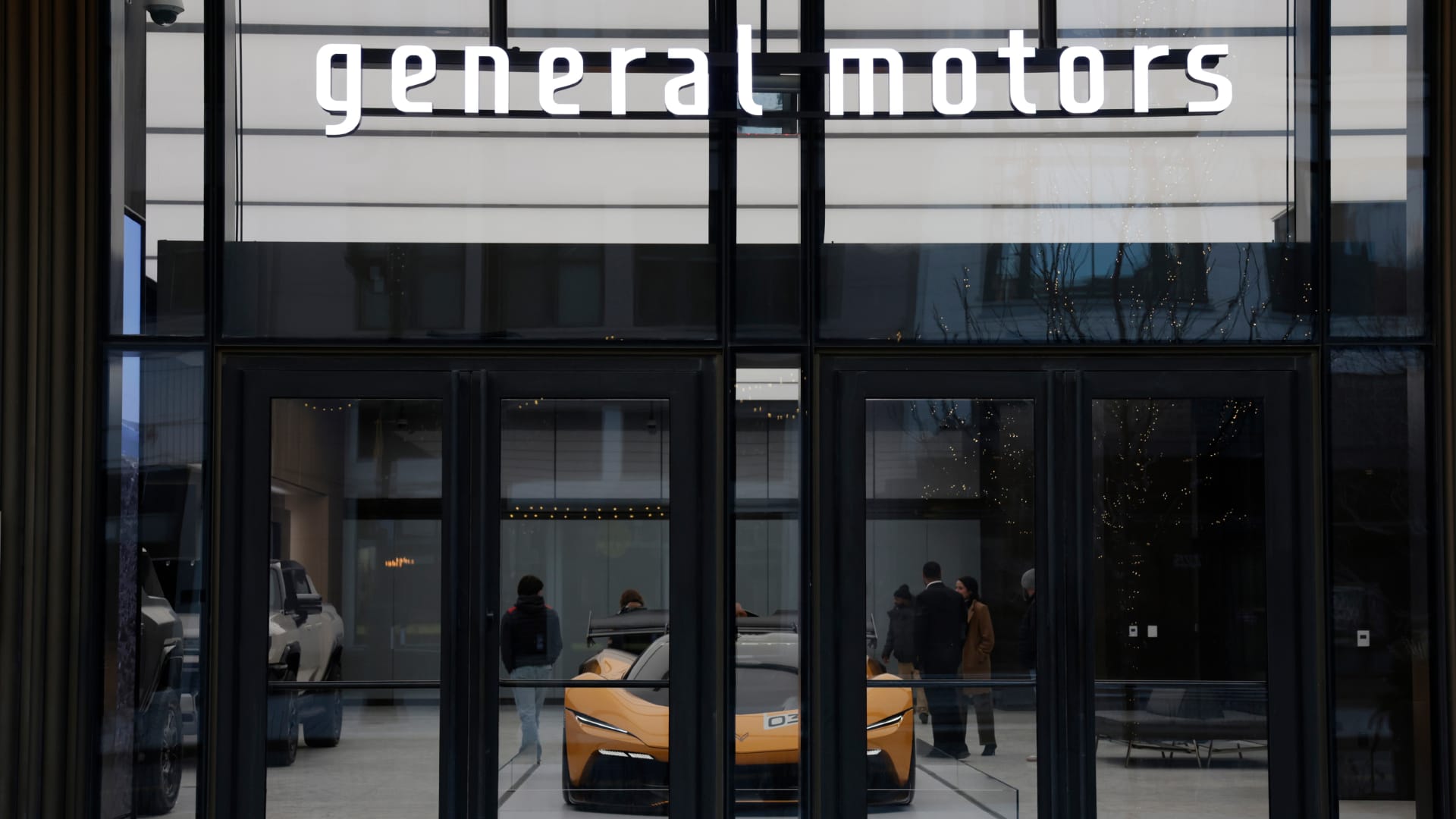
The General Motors global headquarters in Detroit, Jan. 12, 2026.
Jeff Kowalsky | Bloomberg | Getty Images
DETROIT — General Motors is set to report its second-quarter earnings before the bell Tuesday.
Here is what Wall Street is expecting, according to average estimates compiled by LSEG:
- Earnings per share: $3.20 adjusted
- Revenue: $47.01 billion
Those results would mark a more than 26% increase in adjusted earnings per share and 0.2% decline in revenue compared with a year earlier.
GM’s 2025 second-quarter results included $47.12 billion in revenue, net income attributable to stockholders of $1.9 billion, and adjusted earnings before interest and taxes of $3.04 billion.
Aside from earnings and any changes to the automaker’s 2026 guidance, investors will be monitoring effects from tariffs, vehicle pricing and commodity costs, including dynamic random access memory, or DRAM, chips.
Barclays analyst Dan Levy said he expects both GM and its crosstown rival Ford Motor, which reports next week, to post earnings beats for the second quarter “and at least a soft raise.”
“[Automakers] are benefiting from strong macro – US [seasonally adjusted annual rate] outperformed in 1H, while pricing has remained steady. Moreover, both Ford and GM have embedded conservatism in their guides,” he said in a July 8 investor note.
GM raised its 2026 adjusted earnings guidance in April to reflect a $500 million tariff rebate to between $13.5 billion and $15.5 billion, or $11.50 to $13.50 a share, up $500 million, or 50 cents per share, from its previous expectations.

VAT Cut On Electricity Bills To Lower Living Costs

Former IRS Attorney Warns: Crypto Audits Are About to Increase

Horoscope today: Your daily guide for Tuesday, July 21, 2026


-
 NewsBeat5 days ago
London Mayor Sadiq Khan handed a peerage by Keir Starmer alongside 15 other Labour figures… just days before the PM leaves No10
-

 Fashion3 days ago
Weekend Open Thread – Corporette.com
-

 Politics3 days ago
The House | The City of London can help the new chancellor deliver growth in every postcode
-

 Politics6 days ago
Young campaigners urge incoming PM to act on outdoor junk food ads
-

 Crypto World5 days ago
CFTC blocks Kalshi from unwinding Michigan trades after court order
-
 Crypto World4 days ago
Two July Windows Left: The CLARITY Act’s Senate Fight and What Failure Means
-

 Crypto World3 days ago
Ripple Payments Joins MiCA With 14 Firms, Does It Mean Anything For XRP?
-

 Business5 days ago
Nvidia Stock Slips After Big Tuesday Rally as Huang Confirms Vera Rubin Chip Is Now in Production Today
-

 Politics2 days ago
Democrats look to World Cup watch parties to register thousands of voters
-
 Entertainment6 days ago
Disney’s Most Ambitious Failed Star Wars Attraction Is Coming to SDCC
-

 Crypto World3 days ago
Ripple wins EU-wide access as ESMA adds it to MiCA register
-

 Crypto World4 days ago
Injective Submits SEC Transfer-Agent Registration to Onchain Ownership Records
-

 Business5 days ago
Palantir Shares Rise After Expanded Nvidia Partnership and Fresh Analyst Upgrades Ahead of Earnings Day
-

 Tech5 hours ago
Sail Virtually Aboard The “Itanic” With IA-64 Emulator
-
 Tech2 hours ago
Turtle Beach Command Series KB7 review: a nifty screen-equipped gaming keyboard
-

 News Videos6 days ago
XRP BOMBSHELL… XRP OMBOARDED FOR TRANSACTIONS!!!
-

 NewsBeat4 days ago
Registration is now open for March for Men with Kev 2026
-

 Tech6 days ago
Dark Secrets Emerge When Jailbreaking LLMs
-

 NewsBeat18 hours ago
Unregistered fitter used Gas Safe logo on business flyers
-
 Sports5 days ago
New Cornerback Enters Vikings Trade Rumor Mill
You must be logged in to post a comment Login