
Business
Cloudflare: I Was Wrong, A 'Palantir' Moment Is Coming (Upgrade)



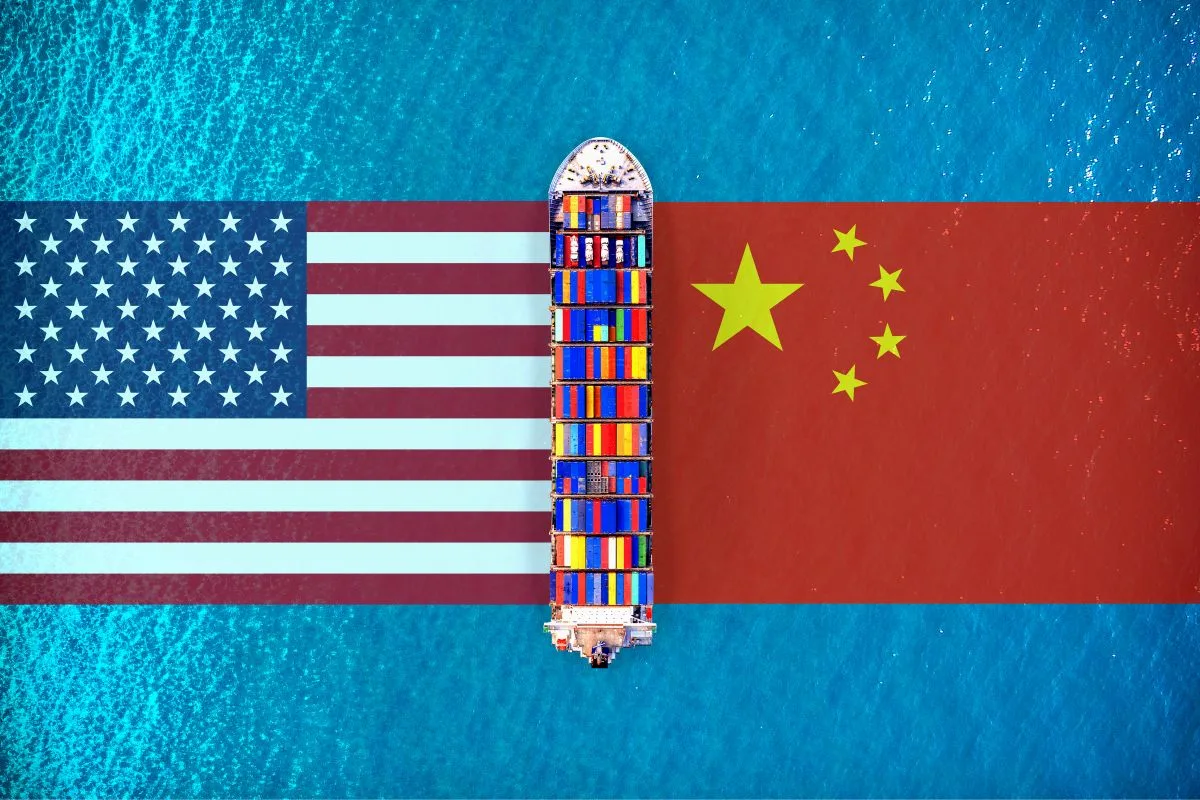

The pace of purchases could influence commodity markets.

Ask someone how they plan to get into business ownership and you will usually hear some version of the same answer. An idea, a company registration, a website, and then the long slog of finding customers who have never heard of you.
That is the route we celebrate. It is also the harder one, by a considerable margin.
There is another path that has been gaining quiet momentum among experienced managers and investors across Europe, and it involves buying a business that already works rather than building one that might. The reasoning is not complicated. If a company already has customers, staff and a proven model, why spend three years trying to recreate all of that from nothing?
The survival gap nobody talks about
The argument for buying rests on a comparison that founders rarely want to sit with.
Roughly half of UK startups do not make it to their fifth birthday. Most European markets tell a similar story. The failure reasons are usually mundane rather than dramatic. Cash ran out before the model clicked. The addressable market turned out to be a fraction of what the spreadsheet promised. A key hire left at the wrong moment.
Businesses acquired through succession behave very differently. Swiss market data puts their five year survival rate substantially above that of new ventures, and the reason has nothing to do with buyers being cleverer than founders. They are simply buying something that has already cleared the hardest hurdle. Somebody else absorbed the risk of finding out whether the thing worked at all.
What changes hands in an acquisition is an operating business with a track record. Revenue on record, customers who already pay, processes that function even if nobody has written them down. A founder starts with a hypothesis. A buyer starts with evidence.
Europe’s quiet succession wave
The reason this route has opened up has less to do with entrepreneurship than with demographics.
A generation of owners who built their companies in the eighties and nineties is now reaching retirement, and a growing share of them have nobody to hand the business to. The children went into other careers. The management team wants the responsibility but cannot raise the capital. The obvious internal successor left four years ago.
What that produces is a pool of profitable, well run companies quietly looking for an owner, most of which never appear on a public listing.
Switzerland shows the pattern more clearly than most markets. The Swiss umbrella organisation for business succession estimates that around 100,000 Swiss SMEs will face a succession decision within the next five years. For a country of nine million people, that is a remarkable figure, and it has turned the Swiss SME succession market into one of the most active buyer markets in Europe.
The UK sits on a comparable curve, though it gets discussed less. Anyone with capital, operational experience and a bit of patience has arrived at an unusually good moment.
What you actually inherit when you buy
It would be dishonest to sell acquisition as the easy option. It is not easier. The risks just arrive in a different order, and they arrive faster.
A founder accumulates problems slowly and understands every one of them, because they built each one personally. A buyer inherits the entire set on day one and has to work out which ones matter while operating under time pressure and incomplete information.
The advantages are genuine and hard to replicate. An existing customer base. Staff who know the work. Supplier relationships that took a decade to earn. A local reputation that no amount of marketing spend buys quickly.
The same transaction hands over everything else too. Contracts you did not negotiate and might not have signed. A culture shaped by someone whose instincts differ from yours. Customer relationships that exist because of the departing owner rather than the company.
That last one deserves particular attention in smaller businesses. A great deal of operational knowledge tends to live in the owner’s head rather than in any system, and on completion day it walks out of the building. Buyers who plan for a proper handover period do considerably better than those who treat the signing as the finish line.
None of this makes a deal unwise. It makes preparation non-negotiable.
The mistakes that cost first time buyers the most
Three errors come up again and again, and every one of them is avoidable.
Searching before defining. Plenty of buyers start by browsing listings, then burn six months evaluating companies that were never a realistic fit. Sector familiarity, region, size, financing capacity and the role you actually want to play all need settling before the search begins. A clear buyer profile does not narrow your opportunity. It removes the wrong opportunities early, which is not the same thing.
Falling for the business before checking it. Enthusiasm is an expensive negotiating position. A company can look excellent on the surface and still be the wrong purchase, particularly if most of the revenue sits with one client, or if the profit margin depends on an owner working sixty hour weeks and paying himself well below market rate. Neither of those shows up in a headline EBITDA figure.
Treating due diligence as paperwork. It is not a compliance exercise to get through before completion. It is the mechanism by which every assumption gets tested and turned into a negotiating position. Following a structured acquisition process that sequences valuation, financing and due diligence properly tends to produce better prices and far fewer unpleasant discoveries than one improvised as the deal moves along.
Financing is the step most people leave too late
Worth mentioning separately, because it derails more deals than any other single factor.
Buyers frequently spend months in discussions before establishing whether the purchase is financeable at all. By the time the funding question gets serious, the seller has grown impatient or another buyer has appeared with their capital already arranged.
Most SME acquisitions get funded through a combination rather than a single source. Some equity from the buyer, a bank facility, and often a seller loan where part of the price is paid over time out of future earnings. That last element is more common than people expect, and it carries a useful side effect. A seller with money still tied up in the business has every reason to make the handover work.
Getting an indicative financing position early does two things. It stops you wasting time on companies you could never buy, and it makes you a materially more credible bidder when you find one you can.
So is buying right for you?
Not for everybody, and the honest answer usually surfaces fairly early.
Acquisition requires capital, whether your own or arranged through banks, sellers or investors. It requires operational appetite, because most SME purchases expect the buyer to actually run the business rather than watch it from a distance. And it requires the temperament to inherit decisions you would never have made and improve them gradually instead of tearing everything up in month one.
What it does not require is spending years proving that a market exists.
For experienced managers who want ownership without starting at zero, that trade increasingly makes sense. The demographics have created the window. Whether a particular deal turns out well depends almost entirely on how carefully the buying gets done.

Earnings call transcript: Edible Garden posts Q2 2026 revenue growth as loss narrows

Earnings call transcript: Aegis Logistics posts record Q1 2026 revenue beat


The company is anchoring its beef production around three beef plants in the central US.

Wall St futures muted as oil gains curb risk appetite after S&P record close

The chief executive of Entain, the FTSE 100 group behind Ladbrokes and Coral, has said traditional betting shops should not be grouped with adult gaming centres under government plans to scrap the Gambling Act’s “aim to permit” rule, announced by the prime minister on Tuesday 11 August.
Stella David said the government needed to “be very careful not to bundle our great traditional betting shops” with adult gaming centres, which she said have a “very different style and tone”.
Andy Burnham said this week that he would give local councils the power to block gambling, gaming and vaping shops, pledging to bring high streets “back to life”. Under the measures announced by Downing Street, the government intends to revoke the aim to permit rule, which restricts the ability of councils to refuse new betting shops and 24-hour slot machine shops even where there are strong local concerns.
Adult gaming centres, which are adult-only venues offering up to 24-hour access to gambling machines, will also require planning permission under proposals due to come into effect at the start of next year.
Adult gaming centres have expanded across the country in recent years while traditional high street bookmakers have continued to decline. The number of adult gaming centres, which offer high-stakes gaming machines such as digital slot and fruit machines, rose 7 per cent to 1,451 between 2022 and 2024, according to Gambling Commission data.
The Betting and Gaming Council said the number of betting shops in Britain had fallen by more than a third since 2019, and that about 3,000 shops had closed. Entain has about 2,300 betting shops.
An industry source said that although the aim to permit reforms will cover betting shops, they are likely to focus on adult gaming centres. In a video posted on X, Burnham singled out vape shops and gaming centres when talking about the new powers given to councils.
Michael Snape, Entain’s finance boss, said the company’s shops “provide a safe place for people to gamble. We are very strict about underage people not coming in, unlike a lot of adult gaming centres, and we pay higher taxes.”
He added: “If you look at other operators who perhaps don’t pay taxes and don’t do anything for player safety, that’s where the problem is.”
The Betting and Gaming Council said it was wrong for the government to “lump highly regulated, licensed betting shops together with rogue or criminal businesses”.
The intervention follows earlier warnings from Entain that higher gambling duties could trigger shop closures, and from Betfred, which said 1,300 shops and 7,000 jobs were at risk if taxes on the sector rise. Ministers had previously shelved a separate set of slot machine reforms.
Entain started as GVC Holdings in 2004 under Kenny Alexander and has grown into one of the biggest betting businesses in the world. It owns the betting brands BetCity, Coral and Eurobet, as well as the gaming brands Foxy Bingo, Gala and Partycasino.
The company reported that net gaming revenues in the six months to the end of June rose 5 per cent, ahead of management’s expectations. Online net gaming revenues were up 7 per cent, helped by the World Cup. Twice as many first-time deposits came into its sports arm during the tournament compared with the 2022 World Cup.
Underlying operating profits were £479 million, 2 per cent down on the same period last year but ahead of analysts’ expectations.
Entain stuck by its aim for online net gaming revenue to grow by between 5 per cent and 7 per cent this year, and said it remained “comfortable” that it would be able to deliver underlying profits, excluding its US joint venture, of £934 million.

Alkem Q1 FY27 slides: revenue up 11%, profit falls on tax hit
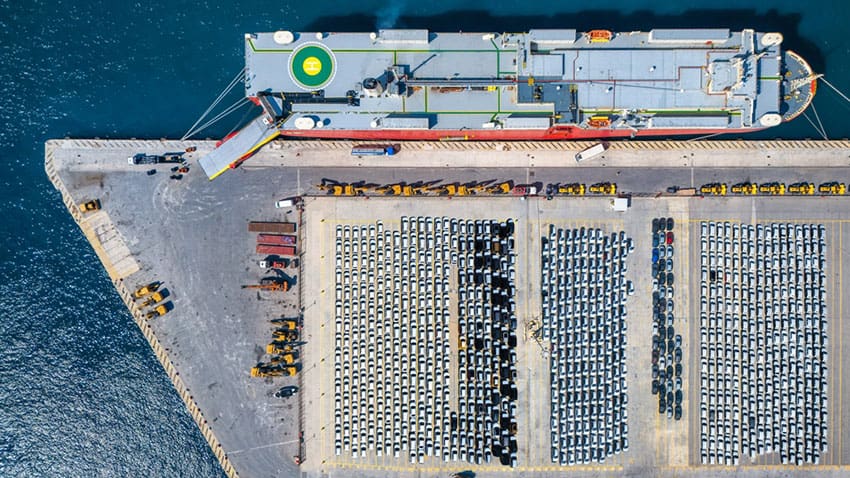
The average annual rate to charter a large car carrier reached $70,000 a day in June, according to shipbroker Clarksons, up from $42,500 at the end of last year, as vehicle exports out of China outpace the capacity of the ships built to move them.
Rates to charter the vessels, which are designed so cars can be driven on and off, are up 65 per cent this year. Specialised carriers are booked out years ahead to move vehicles from Chinese factories.
Research group Mobility Global says China exported just under 600,000 cars and vans in 2019. This year the group forecasts China could ship up to 10 million vehicles.
“You’ve got China moving from being insignificant to being the world’s largest vehicle exporter in only a five-year period,” said Andreas Enger, chief executive of Norwegian car carrier Höegh Autoliners. Enger said ocean freight rates for cars are now double their prepandemic levels.
Carriers have bought vessels in recent years to meet the demand. Lasse Kristoffersen, chief executive of Wallenius Wilhelmsen, which operates the world’s largest car-carrier fleet, said the global fleet has grown by about 40 per cent but still cannot meet China’s needs.
“The strength of the market in the shipping segment is amazing, and it is due to the unprecedented growth of exports out of China,” Kristoffersen said on an earnings call earlier this year.
Industry executives had expected charter rates to fall this year as ships ordered between 2022 and 2025 entered service. Rates peaked at $115,000 a day in late 2023 and early 2024.
The export volumes are reshaping European sales registers. Registrations in the European Union for SAIC Motor rose 19 per cent in the first half of 2026 and BYD’s more than doubled, according to the European Automobile Manufacturers’ Association. Over the same period Stellantis gained 6 per cent, Volkswagen 2.6 per cent, and Renault fell 4.2 per cent.
With a handful of exceptions, Chinese cars are not exported to the United States because of tariffs and software restrictions tied to national security concerns. Battery-electric and hybrid models from brands including BYD and SAIC Motor are increasingly taking share from Western brands in countries including the UK, Brazil and Germany, as well as at home.
Tu Le, managing director of advisory firm Sino Auto Insights, said the export push amounts to a “pressure release valve” as domestic sales slow. Car sales in China fell more than 20 per cent in the first half of 2026 against the same period a year earlier, according to International Energy Agency data. Chinese carmakers face competition between more than 100 domestic brands.
“When you go to Germany, you don’t have 20 other Chinese car brands that are elbowing you to get that one sale, like you have in Shanghai,” Le said.
Some manufacturers are loading vehicles into standard shipping containers to reach Europe, Australia and Latin America. Kristoffersen said during an earnings presentation on Tuesday that up to four million vehicles are exported from China each year in containers or other alternatives to car carriers.
Eric Dessupoiu, vice president of finished vehicle logistics at France’s Ceva Logistics, said automakers prefer car carriers because driving vehicles on and off is cheaper and carries less risk of damage. Automakers with no other option will use containers, he said.
The practice is not new but was rarely done at scale before the pandemic, when demand outstripped the supply of ships. Christoph Seitz, global vice president of finished vehicles at Dubai-based freight forwarder DP World, said some Western automakers were sceptical about putting cars in boxes but Chinese manufacturers were not. “They immediately went, ‘We need more capacity,’” Seitz said.
A car shipped by container must be taken to a facility near a port, loaded into a box and lifted by crane onto a ship, with the process reversed at the destination. Seitz said container lines including Denmark’s A.P. Moller-Maersk and Switzerland’s Mediterranean Shipping Co have begun selling directly to automakers.
Container capacity and freight costs have previously fed through to UK manufacturers, with S&P Global attributing part of an earlier decline in British export orders to shipping delays and rising rates.
Chinese carmakers are also moving into shipping. BYD launched its first dedicated car carrier in 2024 and now operates a fleet of eight vessels. The company did not respond to requests for comment.

Jamie Young
Jamie Young is Senior Reporter at Business Matters, covering SME finance, employment law and Westminster policy since 2016. He has reported on every Budget and Autumn Statement since 2018, helped make sense of the ‘covid era’ and the bounce-back loan scheme from launch through the fraud investigations, and broke the magazine’s coverage of the 2024 late-payment reforms. He joined Business Matters straight from completing his BA in Administration from Exeter University and is NCTJ-qualified. Reach him at jyoung@cbmeg.co.uk
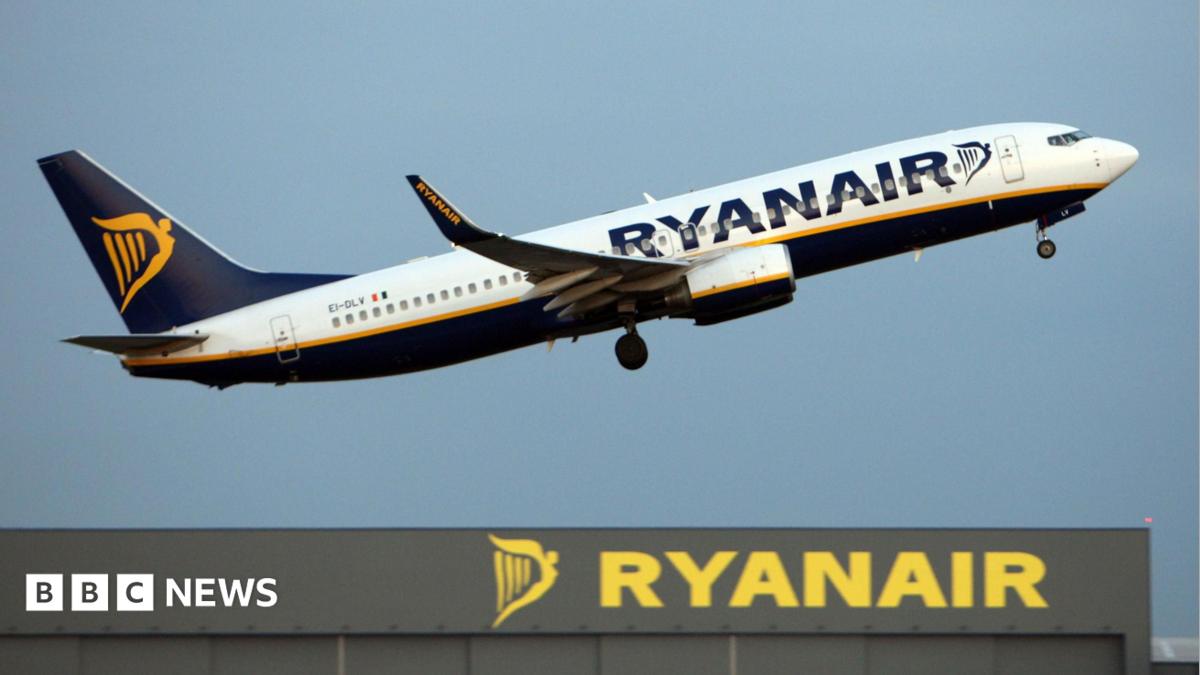
Broken engine fragments smashed a cabin window of a Ryanair plane causing a man’s head and right shoulder to be sucked into the hole last month, US investigators have said.
The National Transportation Safety Board (NTSB) wrote in a preliminary report that this happened after an engine fan blade broke shortly after takeoff on the 10 July flight from Greece to Germany.
Serbian national Ljubisa Karović’s head and right shoulder were sucked out of the plane’s window, leaving him “seriously injured and in shock”.
His wife Svetlana Grković Maksimović later told BBC Serbia that she and two other passengers held onto his legs for several minutes.
The NTSB said the flight from Thessaloniki to Memmingen “experienced a No. 2 (right) engine fan-blade-out (FBO) failure during climb out”.
“The crew elected to return to SKG [Thessaloniki International Airport] where they made an uneventful landing.”
The NTSB was “delegated the investigation in full” by the Greek authorities in the days following the incident.
It also detailed a timeline of events given by the flight crew, who said they received a “high vibration” engine alert during the climb.
In response, they reduced the engine power and carried out a series of checks. When the vibrations stopped, the crew continued to climb on autopilot, the report said.
But the engine vibrations then increased and the crew heard a loud bang, prompting them to declare an emergency and begin their descent.
Flight attendants reported hearing and feeling the vibrations, and seeing a small amount of smoke before the oxygen masks were deployed.
One flight attendant said they then noticed passengers calling for help after a passenger became “partially lodged in a damaged cabin window”, with the entire window missing.
The engine had undergone ultrasonic inspections in May this year with no findings of fault, the report stated.
Ryanair boss Michael O’Leary earlier suggested that the incident may have been caused by “foreign object damage” to an engine.
The aircraft was operated by Ryanair’s subsidiary Malta Air.

You Don’t Always Need a Student ID for Apple’s Back-to-School Deals

Securitize falls 16% after earnings miss, tokenization revenue drops

Blockchain and Cryptocurrency Explained in Malayalam | What is Bitcoin? How does it work?


-

 Fashion7 days ago
Weekend Open Thread: Mattifying Sunscreen
-

 News Videos6 days ago
Can Astrology Help Find Gold and Silver Trends? A Financial Astrology Guide
-

 Tech7 days ago
Rinn Pharma & Biopharma to join NordicPharmaTrain network
-

 Business5 days ago
Datadog: Best Of Breed For Multiple Reasons
-

 Business5 days ago
How to Start a Cleaning Business: A Step-by-Step Guide
-

 Business5 days ago
BDC Weekly Review: Private BDC Q2 Numbers Are Strong
-
 NewsBeat3 days ago
Communication cards help banking customers access services or report scams
-
 Business3 days ago
Oil Price Today (August 11): Crude oil rises to $88 after Trump’s compensation demand dents Hormuz opening. Here’s why
-

 Fashion7 days ago
Weekly News Update, 8.6.26 – Corporette.com
-

 Fashion5 days ago
Amazon Sundays: Closet Care Before Fall
-

 Politics6 days ago
Be quiet, Miriam! – spiked
-

 Business6 days ago
Mutual Fund Manager Scoops Up Beaten-Down Stocks
-

 Politics5 days ago
Ben-Gvir’s crocodile project halted but abuses at Ketziot Prison continue
-

 Business6 days ago
SharkNinja Keeps Eating
-

 Entertainment7 days ago
Warren Hudson’s Dad Releases Audio Of Threats
-

 Politics7 days ago
Welsh independence campaign group YesCymru sets 2032 referendum target
-
 Entertainment6 days ago
10 R-Rated Drama Movies That Can Be Called Masterpieces
-

 Business5 days ago
5 Things You Must Know About Jorge Messi, the Father and Longtime Agent Who Shaped Lionel Messi’s Career
-

 Politics5 days ago
The Church of England’s ruinous reparations racket
-
 Entertainment7 days ago
Jason Statham Officially Returns in 2 Weeks With Blockbuster New Release
You must be logged in to post a comment Login