Connect with us
DAPA Banner

Business

Colonel Nashid Salahuddin on Developing Future-Ready Leaders in the Air National Guard

Published

on

Colonel Nashid Salahuddin on Developing Future-Ready Leaders in the Air National Guard

Colonel Nashid Salahuddin has spent more than three decades in uniform preparing for a challenge that defines modern military leadership: developing leaders who can operate confidently in ambiguity while delivering measurable readiness today.

Now serving as Director of Human Resources for the Air National Guard at Joint Base Andrews, Colonel Nashid Salahuddin oversees the human capital strategy supporting roughly 1,800 military and civilian personnel at headquarters. His mandate is clear and strategic . He ensures the right people are in the right positions at the right time, maintains a fully trained and ready workforce, and deliberately develops leaders for both current missions and future conflict environments.

That mission reflects a straightforward belief: readiness is built through people long before it is tested in operations.

Leadership for Ambiguity, Not Just Compliance

The Air National Guard operates at both a state and national level in order to respond to domestic events while also being able to ensure power is projected globally for US interests. In order to properly fulfill both of these duties, leaders must think much further than simply using checklists or doctrine when performing their daily duties.

Advertisement

Colonel Nashid Salahuddin has developed his own philosophy of leading through the use of adaptability and situational awareness. His experiences include starting out as an airman at 18 in 1990 to being a commissioned officer at the age of 24 in 1996 before completing various operational commands and assignments with the Office of The Secretary of War(Pentagon). This plethora of experiences has taught him that no two teams are identical and any crisis is different from others.

For example, during one of Colonel Salahuddin’s most significant moments for developing leadership, he was deployed to Iraq, where he served for six months as a Senior Advisor to the MoI (Ministry of Interior). He led through influence (without authority) so that he could align Coalition and Sovereign Partners’ objectives with no one being subordinate to him. In order to be successful in this effort, he relied heavily on his credibility and cultural understanding, along with disciplined listening. From this experience, the guiding principle of Colonel Salahuddin is to develop future-ready leaders capable of leading without authority.

Additionally, Colonel Salahuddin applies this philosophy of developing future-ready leaders by embedding their professional development in the execution of the organization’s mission. Decreasing the gap between performance and development was achieved by tracking professional development for individuals, in relation to the mission. Assignments create an opportunity to challenge an individual’s judgment versus just their technical skill. Feedback is both intentional and continuous. Coaching is an expectation.

Ultimately, the goal of Colonel Salahuddin is to create an organization that can adapt to complex situations; rather than just being trained.

Advertisement

Development as a Readiness Strategy

In his current role, Colonel Nashid Salahuddin treats human capital strategy as a readiness function, not an administrative requirement. That perspective has produced measurable results.

After examining the headquarters hiring process through the lens of his Six Sigma Black Belt training, he led a process overhaul that reduced time-to-fill vacancies by approximately 50 percent, cutting timelines from six months to roughly three. The result was not efficient for its own sake. Faster placement of qualified personnel into mission-critical positions directly strengthened operational readiness.

These efforts reflect a consistent view: leadership development and mission execution are interdependent.

Senior leaders often feel tension between immediate readiness requirements and long-term talent cultivation. Colonel Nashid Salahuddin does not see these as competing priorities. Organizations that neglect development in pursuit of short-term output eventually undermine their own capacity. For that reason, he integrates mentorship, stretch assignments, and succession planning directly into operational workflows.

Advertisement

Data-Informed, Human-Centered Leadership

Modern military personnel management generates vast amounts of data. Retention patterns, assignment timelines, performance metrics, and demographic trends provide valuable insight into workforce health. Colonel Nashid Salahuddin views data as essential, but incomplete on its own.

Data establishes baselines and exposes trends. It highlights retention challenges, recruiting pressures, and uneven developmental pathways. It strengthens transparency in promotion and assignment decisions. However, data does not fully explain morale, motivation, or trust.

For that, leaders must engage directly.

He combines quantitative analysis with sustained dialogue. Conversations with Airmen and civilians, 360-degree feedback, and structured forums provide context that dashboards cannot. The combination of evidence and engagement allows policy adjustments that are both measurable and human.

Advertisement

This approach also reinforces fairness. Transparent criteria and documented performance data reduce bias and build confidence in the system. In an institution that depends on trust, that legitimacy is essential.

His leadership philosophy balances disciplined process improvement with genuine concern for the people inside those processes.

Succession Planning and Bench Strength

Preparing future-ready leaders requires more than strong individual performance. It demands deliberate succession planning and institutional depth.

Colonel Nashid Salahuddin evaluates human capital effectiveness across several dimensions: readiness indicators, retention quality, engagement levels, and succession strength. The central question is not simply whether a vacancy can be filled today, but whether qualified successors are being prepared for critical roles five and ten years from now.

Advertisement

He encourages developmental breadth. Junior officers and enlisted personnel are urged to pursue cross-functional assignments that broaden perspective beyond a single specialty. Exposure to operational, strategic, and administrative domains builds leaders capable of systems thinking, a necessary skill in complex environments.

His own career illustrates that philosophy. From serving as Inspector General and Mission Support Group Commander to holding senior strategist roles at the Pentagon, he has operated at both field and enterprise levels. That experience informs his insistence that future leaders must understand both tactical execution and institutional design.

Bench strength is not accidental. It is built intentionally.

Cross-Generational Insight with Institutional Discipline

While his work focuses primarily on institutional systems, one enduring influence shapes his leadership philosophy: the example of his father, whose 87-year life journey is documented in the book Sacred Journey. The reference is contextual rather than promotional. It reflects lessons about resilience, integrity, and steady leadership through societal change.

Advertisement

From that example, Colonel Nashid Salahuddin internalized the importance of ethical steadiness in shifting environments.

Ethical leadership, in his practice, is operational. It requires clarity of standards, consistency in accountability, and the willingness to enforce consequences fairly. It means doing what is right even when oversight is limited. In high-complexity environments where supervision cannot reach every decision, character becomes the control mechanism.

Cross-generational insight also informs how he approaches workforce modernization. Younger Airmen contribute technological fluency and fresh perspective. Senior leaders provide institutional memory and contextual depth. He creates forums where these perspectives intersect, accelerating innovation while preserving experience.

Change is constant. Principles endure.

Advertisement

Institutional Leadership Over Personal Recognition

Colonel Nashid Salahuddin does not frame advancement as personal achievement. Recognition, in his view, reflects collective accomplishment. Leaders who focus primarily on individual recognition weaken trust. Leaders who elevate teams strengthen performance.

This perspective shapes how he measures impact. He looks for organizations that are stronger at the end of his tenure than at the beginning. He looks for leaders who have grown, systems that function more effectively, and policies that align more tightly with mission demands.

He does not emphasize legacy. He emphasizes stewardship.

That mindset is particularly relevant as the Air National Guard adapts to evolving strategic realities, including domestic response requirements and great-power competition. The environment demands leaders who can integrate strategic thinking with disciplined human capital management, modernize systems without losing sight of people, and sustain ethical clarity under pressure.

Advertisement

Colonel Nashid Salahuddin’s career progression, from enlisted Airman to colonel and from field commander to headquarters director, reflects a consistent focus on building capacity in others.

Preparing Leaders for What Cannot Be Predicted

The core challenge in military leadership development is not predicting specific threats. It is preparing leaders to operate effectively in uncertainty.

Colonel Nashid Salahuddin cultivates intellectual flexibility by encouraging leaders to question assumptions and seek diverse perspectives. He builds resilience by allowing emerging leaders to confront difficult assignments with appropriate mentorship and support. He reinforces ethical grounding by maintaining that integrity is non-negotiable, regardless of operational tempo.

He does not promise certainty. He prepares for volatility.

Advertisement

As Director of Air National Guard Human Resources, his mission remains direct: place the right people in the right positions at the right time, ensure they are fully trained and ready, and deliberately develop leaders who can meet today’s demands and tomorrow’s challenges.

Aircraft, technology, and strategy remain essential. Yet without leaders capable of thinking clearly, adapting quickly, and acting with integrity, none of those assets achieve their full potential.

Colonel Nashid Salahuddin has built his career on a disciplined conviction. Readiness begins long before deployment orders are issued. It begins with people who are prepared not only to execute, but to think, adapt, and lead.

Advertisement
Continue Reading
Click to comment

You must be logged in to post a comment Login

Leave a Reply

Business

Slideshow: Buzzing with energy innovations

Published

on

Slideshow: Buzzing with energy innovations

Manufacturers are leaning into energy-focused product launches.

Continue Reading

Business

Bilibili: Still A 'Buy' Amid DAU Growth And Ad Surge

Published

on

Bilibili: Still A 'Buy' Amid DAU Growth And Ad Surge

Bilibili: Still A 'Buy' Amid DAU Growth And Ad Surge

Continue Reading

Business

Rolls-Royce scraps 2030 all-electric target amid weaker EV demand

Published

on

Rolls-Royce scraps 2030 all-electric target amid weaker EV demand

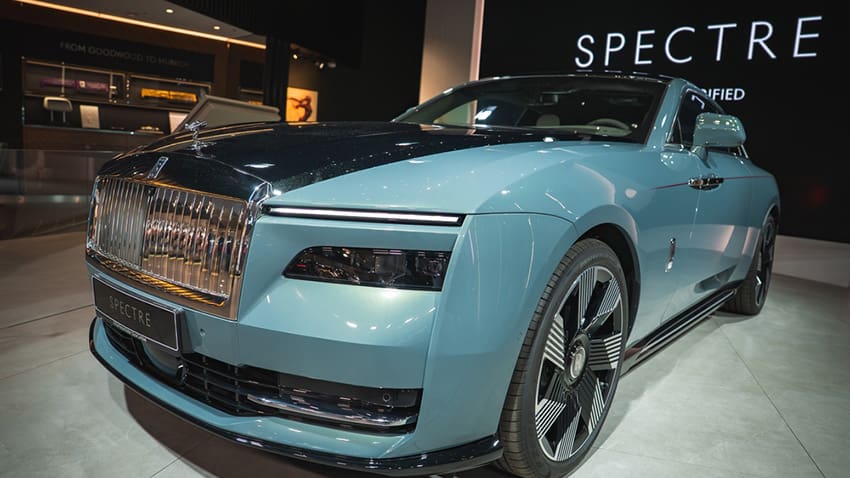
Rolls-Royce Motor Cars has abandoned its ambition to become a fully electric brand by 2030, marking a significant shift in strategy as the global transition to electric vehicles shows signs of slowing at the very top end of the automotive market.

The decision, confirmed by chief executive Chris Brownridge, reverses a high-profile commitment made in 2022 under his predecessor Torsten Müller-Ötvös, who had pledged that Rolls-Royce would cease production of its iconic V12 combustion engines by the end of the decade.

At the time, the company positioned its first electric model, the Spectre, as the beginning of a rapid transition, targeting 20 per cent of annual sales in the near term and as much as 70 per cent by 2028. The long-term ambition was clear: a complete shift away from internal combustion engines within eight years.

However, Brownridge has now acknowledged that the assumptions underpinning that strategy have changed materially. He pointed to a combination of softened customer appetite for fully electric luxury vehicles and a broader easing of regulatory pressure in key markets.

“For every client that loves an electric vehicle there is one who does not,” he said, underlining the continued demand among Rolls-Royce’s ultra-high-net-worth clientele for traditional powertrains. “Some clients do want an electric vehicle, we build what is ordered.”

Advertisement

The recalibration reflects a wider industry trend, particularly among premium and luxury manufacturers, where the pace of electrification is proving more uneven than previously anticipated. While mass-market brands continue to push towards electrification, high-end marques are increasingly adopting a more flexible, demand-led approach.

Brownridge was careful not to outline a revised electrification timeline, declining to specify new targets for zero-emission sales or confirm how many additional electric models Rolls-Royce plans to introduce. Nor did he disclose current sales performance for the Spectre, though its market reception has been closely watched as a bellwether for electric adoption in the luxury segment.

Instead, the emphasis appears to be shifting towards optionality rather than outright transition. The V12 engine, long synonymous with Rolls-Royce’s heritage and brand identity, will remain part of the company’s offering for the foreseeable future.

“The V12 is part of our history,” Brownridge said, suggesting that legacy and customer preference are now being given equal weight alongside environmental considerations.

Advertisement

The move comes amid a broader reassessment of electric vehicle strategies across the luxury automotive sector. Just a day earlier, Bentley confirmed that its own transition to an all-electric lineup would be delayed, with its first zero-emission model now expected at least two years later than originally planned.

Together, the announcements highlight a growing divergence between policy ambition and market reality. While governments continue to push for decarbonisation, including through bans on new petrol and diesel vehicles in the 2030s, manufacturers are increasingly signalling that consumer demand, particularly at the premium end, may not align neatly with those timelines.

Rolls-Royce’s original 2030 commitment was made at a time of strong political momentum behind electrification and rising optimism about battery technology, infrastructure rollout and customer adoption. Since then, a more complex picture has emerged, with concerns around charging infrastructure, range anxiety and the experiential differences between electric and combustion engines influencing buyer behaviour.

In the ultra-luxury segment, where emotional connection and heritage play a significant role in purchasing decisions, those factors appear to be even more pronounced.

Advertisement

Despite stepping back from a fixed deadline, Rolls-Royce is not abandoning electrification altogether. The Spectre remains a central part of its future portfolio, and the company is expected to continue investing in electric technology. However, the transition will now be paced according to customer demand rather than dictated by a hard deadline.

The shift underscores a broader reality facing the automotive industry: the road to electrification is unlikely to be linear. For Rolls-Royce, the strategy now appears to be one of balance, preserving its legacy while adapting to a changing, but still uncertain, future.


Paul Jones

Harvard alumni and former New York Times journalist. Editor of Business Matters for over 15 years, the UKs largest business magazine. I am also head of Capital Business Media’s automotive division working for clients such as Red Bull Racing, Honda, Aston Martin and Infiniti.

Advertisement

Continue Reading

Business

lululemon: A Generational Buy At These Levels

Published

on

lululemon: A Generational Buy At These Levels

lululemon: A Generational Buy At These Levels

Continue Reading

Business

The Hershey Co. adds edible straw flavor

Published

on

The Hershey Co. adds edible straw flavor

The dirty soda flavor is available while supplies last. 

Continue Reading

Business

Canaccord cuts Neuronetics stock price target on valuation shift

Published

on


Canaccord cuts Neuronetics stock price target on valuation shift

Continue Reading

Business

Property advisory firm JLL appointed to Cardiff Gate Business Park

Published

on

Business Live

It has been appointed sold agent for the remaining stake in the park owned by Cardiff Gate International Business Park Ltd

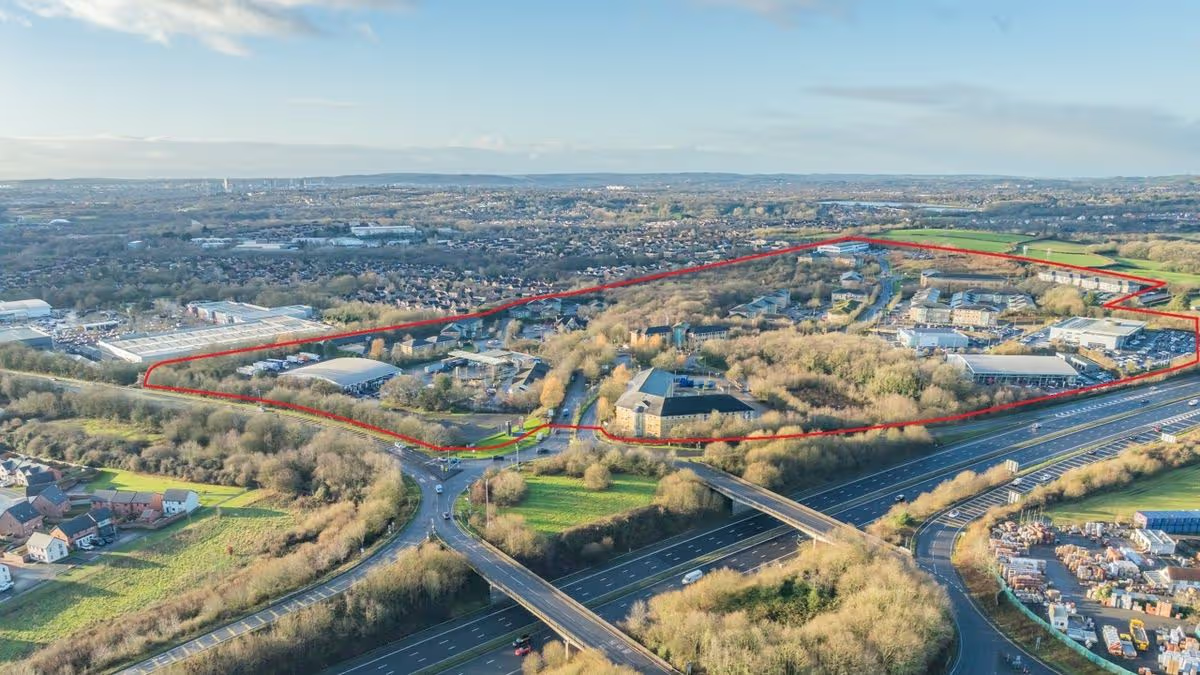
Property advisory firm JLL has been appointed as the sole agent for the letting and sale of the remaining Cardiff Gate International Business Park owned assets of Cardiff Gate Business Park Ltd.

The park was originally 100% owned and developed by Cardiff Gate Business Park Ltd and over the last 30 years various parts of the park have been developed and sold.

The developer currently owns around 25% of the park, that includes 55,000 sq ft office space.

Advertisement

READ MORE: Fall in equity investment deals in Wales shows new researchREAD MORE: Cardiff Airport sees rise in passengers but still behind pre-pandemic levels

The portfolio of Cardiff Gate Business Park Ltd includes a mix of let and vacant office buildings as well as approximately 20 acres of prime development land. The first investment being marketed by JLL on behalf of Cardiff Gate Business Park Ltd is 20,325 sq building let to Regus with an asking price of £3m.

Last year JLL acted for SSE who owned Ty Meridian on the park, in a letting deal creating a new HQ for Creditsafe. The investment was subsequently sold. It also disposed of the investment in the Cardiff Audi site on behalf of a private investor.

The business park benefits from being adjacent to the established Cardiff Gate Retail Park and the Pontprennau residential estate with a new 2,500 unit residential development proposed to the west of the park.

Advertisement

Rhydian Morris of the Cardiff office of JLL, said “Our team has a strong track record at Cardiff Gate, which includes the investment sale of the 35,000 sq ft Cardiff Audi dealership as well as the 50,000 sq ft Creditsafe occupier letting and subsequent investment sale of Ty Meridian.

“We are delighted to be the sole adviser to Cardiff Gate Business Park Ltd and given the quality and variety of available buildings and development sites, we are confident they will generate strong interest from the market.”

Continue Reading

Business

Mastec Inc stock hits all-time high at 310.36 USD

Published

on


Mastec Inc stock hits all-time high at 310.36 USD

Continue Reading

Business

Budget Model Brings Powerful Apple Intelligence to More Users

Published

on

iPhone 17e

Cupertino, Calif.Apple’s iPhone 17e, launched March 2, 2026, and available since March 11, delivers full Apple Intelligence support at an accessible $599 starting price for the 256GB model. Powered by the same A19 chip as the standard iPhone 17, the entry-level device features an upgraded 16-core Neural Engine with Neural Accelerators in each GPU core, enabling fast on-device AI processing for privacy-focused tasks.

iPhone 17e
iPhone 17e

This marks a significant step in democratizing Apple’s AI ecosystem, previously limited to higher-end models. With the iPhone 17e, users gain access to advanced generative tools, smarter communication aids and productivity boosts integrated across iOS 26. Here are five key AI features that highlight why the iPhone 17e stands out as a value-packed entry into Apple’s intelligent smartphone lineup.

Buy iPhone 17e Here

  1. Enhanced Writing Tools and Text Generation Apple Intelligence powers systemwide writing assistance in apps like Mail, Notes and Messages. Users can rewrite, proofread or summarize text with natural, context-aware suggestions. For example, a quick tap in Notes lets the AI condense lengthy meeting recaps into bullet points or refine email drafts for tone and clarity. The on-device foundation model ensures these edits happen privately without cloud uploads. Reviewers note the feature’s accuracy in maintaining user voice while improving grammar and conciseness, making it ideal for students, professionals and everyday communication.
  2. Clean Up and Advanced Photo Editing The Photos app’s Clean Up tool uses AI to intelligently remove unwanted objects from images. Users select an area, and the system fills it seamlessly using surrounding context, producing natural results far beyond basic cropping. Combined with the iPhone 17e’s 48MP Fusion camera — which supports next-generation portraits with Focus and Depth Control — AI enhances editing precision. Features like intelligent object removal, AI-powered portrait lighting adjustments and stabilization elevate casual photography. Early hands-on reports praise how Clean Up handles complex scenes, such as crowds or backgrounds, without artifacts.
  3. Live Translation for Seamless Communication A standout addition, Live Translation handles real-time text and audio across Messages, FaceTime and Phone calls. The feature detects languages automatically and provides subtitles or spoken translations on-device. This proves especially useful for multilingual users, travelers or international business. Powered by the A19’s Neural Engine, translations occur instantly with high accuracy, even offline for supported languages. Apple positions this as a core expansion of Apple Intelligence, broadening accessibility and fostering global connectivity without third-party apps.
  4. Visual Intelligence and Smart Screenshot Actions Users can capture a screenshot and instantly query its contents with Visual Intelligence. The AI analyzes on-screen elements — whether a product, landmark or text — and offers actions like searching the web, adding to Notes or translating. This extends to camera-based queries: point the device at an object for instant identification and details. Integrated with the 48MP camera and improved image signal processor, it delivers quick, relevant insights. The tool shines in everyday scenarios, from shopping to learning, providing contextual help without switching apps.
  5. Notification Summaries and Priority Insights Apple Intelligence scans incoming notifications to generate concise summaries, highlighting key details while reducing clutter. It prioritizes urgent alerts — such as flight changes or family messages — and groups related items intelligently. In Mail and Messages, AI surfaces important threads first. This feature minimizes distractions while ensuring nothing critical is missed. With the iPhone 17e’s efficient A19 chip, processing remains fast and battery-friendly, contributing to up to 26 hours of video playback.

The iPhone 17e also supports satellite connectivity features like Emergency SOS via satellite, enhanced by AI for better location accuracy in remote areas. Its 6.1-inch Super Retina XDR display with Ceramic Shield 2 offers sharp visuals for reviewing AI-generated content, while MagSafe enables fast wireless charging and accessory compatibility.

Priced to appeal to budget-conscious buyers, the device includes 256GB base storage (double previous entry models), a premium matte finish in black, white and soft pink, and robust privacy protections — all AI processing occurs on-device where possible. Analysts view the iPhone 17e as Apple’s push to expand its AI-capable installed base, accelerating adoption ahead of future ecosystem expansions.

As Apple Intelligence matures with iOS updates, the iPhone 17e positions itself as more than an affordable option — it’s a gateway to intelligent, privacy-respecting features that enhance daily life. For users upgrading from older models or seeking AI without premium pricing, the device delivers compelling value in a competitive market.

Buy iPhone 17e Here

Disclosure: This post contains affiliate links. We may receive a commission for purchases made through these links at no additional cost to you.

Advertisement
Continue Reading

Business

Beef tallow is trending

Published

on

Beef tallow is trending

Numerous applications could be found at the Natural Products Expo West tradeshow. 

Continue Reading

Trending

Copyright © 2025