FOX Business’ Darren Botelho reports as two men from Pennsylvania pleaded guilty to allegedly travelling to Minnesota to defraud the state Housing Stabilization Services program on ‘Varney & Co.’
As artificial intelligence changes how Americans do their jobs, a growing debate is unfolding in Washington over what it means for workers’ futures.
Congress has yet to pass sweeping AI legislation, but lawmakers are closely watching as the technology evolves at breakneck speed.
Advertisement
That urgency intensified this week after a viral X post from Matt Shumer, CEO of HyperWriteAI, racked up more than 75 million views and over 100,000 likes, warning of massive white-collar job disruption.
Rep. Jay Obernolte, R-Calif., says the concerns are worth discussing, but not panicking over.
“I think it’s something that’s healthy to talk about,” Obernolte told FOX Business. “The post says, fundamentally, we should be afraid because AI is going to be disruptive and there’s going to be a lot of job displacement – that is something we know to be true.”
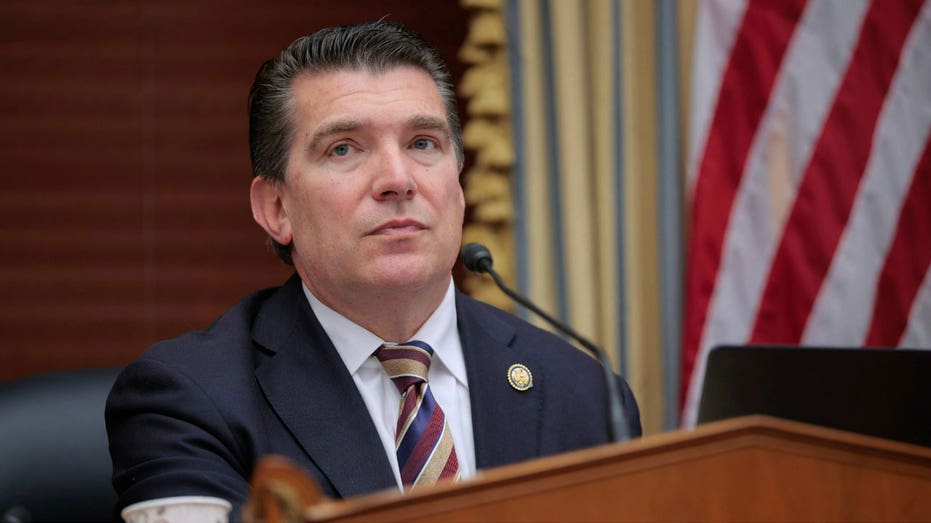
House Research and Technology Subcommittee Chairman Jay Obernolte, R-Calif., presided during a hearing in the Rayburn House Office Building on Capitol Hill on Jan. 14, 2026, in Washington, D.C. (Chip Somodevilla/Getty Images)
Obernolte, the only member of Congress with a graduate-level degree in artificial intelligence – he earned his master’s degree from UCLA and has studied the field for more than three decades – also founded a video game development company.
But he sharply disagrees with the premise that AI will permanently shrink the workforce.
“The other thing that [the post] says is people are going to have fewer jobs as a result of artificial intelligence,” he said. “The historical record says that that is absolutely not true.”
Pointing to past technological revolutions, from the printing press to the internet, Obernolte argued innovation has always disrupted industries but ultimately created more jobs than it destroyed. He believes AI will follow the same pattern.
Advertisement
Still, he acknowledged that displacement is coming.
“There will be job displacement. We need to re-skill the workers that are in industries with that job displacement and equip them with the skills that they need to succeed in other industries,” he said, adding that “we are going to need a social safety net because there will be people that fall through the cracks.”
A growing debate is unfolding in Washington over what advancements in AI mean for workers’ futures. (Greggory DiSalvo/Getty Images)
Obernolte, who served as co-chair of the House Artificial Intelligence Task Force, noted the panel’s bipartisan 250-page report released in December 2024 laid out recommendations for workforce retraining and regulatory guardrails. But little of it has become law amid partisan gridlock and tight margins.
“It’s critical that we get passed this year a federal regulatory framework for AI that makes it clear where the state lanes for AI regulation are, where the federal lanes are, and where the two intersect,” he said.
Advertisement
“That’s something that is going to be critically important to make sure that everyone understands what the guardrails are, and to make certain that Americans have some safety protocols in place to protect themselves against the malicious use of AI.”
And concerns about that malicious use are growing.
A Deloitte study predicted generative AI could help drive U.S. fraud losses as high as $40 billion next year.
Advertisement
Just this week, the Justice Department announced that two Pennsylvania men admitted to traveling to Minneapolis to defraud Minnesota’s Housing Stabilization Services program, allegedly stealing roughly $3.5 million by using artificial intelligence to generate falsified records – what authorities described as “fraud tourism.”
“That is the biggest downside of AI: the way that it enhances the productivity of malicious human actors,” Obernolte warned, arguing that the government has a clear role in responding.
But not everyone on Capitol Hill shares his optimism.
Sen. Elizabeth Warren, D-Mass., cautioned that the economic fallout could be severe if policymakers fail to prepare.
Advertisement
“I am deeply concerned about AI and what it’s going to mean when people go out one day for lunch and come back and their jobs aren’t there anymore, and that that happens to millions and millions of people. Now is the moment when we need to be preparing,” Warren told FOX Business.
Preparation, she argued, must include both guardrails on how AI is deployed and protections for families struggling with rising costs.
U.S. Senator Elizabeth Warren (D-MA) questions witnesses during a Senate Banking, Housing, and Urban Affairs Committee hearing in the wake of recent bank failures, on Capitol Hill in Washington, D.C., May 18, 2023. (Evelyn Hockstein/Reuters)
Pressed on what large-scale displacement could mean for the middle class, Warren – the ranking member of the Senate Banking Committee – issued a stark warning.
Advertisement
“We lost more than 100,000 manufacturing jobs last year,” she said. “If AI comes in on top of that and literally wipes out the income for millions of families, we’re going to see a full-blown crisis right here in this country. If you know the bad weather is threatening out there, now’s the time to prepare for it.”
Despite those warnings, Obernolte remains bullish.
“AI will shortly be – if it’s not already – the most powerful tool for enhancing human productivity mankind has ever created,” he predicted, calling it a driver of economic growth and prosperity.
Advertisement
His advice for white-collar workers uneasy about the next five years?
“Get acquainted with AI,” he said. “Because if you get used to using AI… then you’re going to be more valuable than the people around you.”
SlateStone Wealth Chief Market Strategist Kenny Polcari analyzes the upward trend in the markets amid developments in the conflict with Iran on ‘Varney & Co.’
General Motors is planning to ramp up production of heavy-duty pickup trucks in Michigan this summer amid strong demand for gas-powered pickups despite elevated fuel prices.
GM is planning to operate its Flint Assembly plant six days a week, up from five, starting in June to produce more trucks to meet demand.
The Wall Street Journal reported that the Flint Assembly plant’s workers will be mandated into overtime hours to cover the additional day of production. About 4,200 hourly workers are employed at the facility.
GM is increasing production of its Chevrolet Silverado and GMC Sierra heavy-duty pickups. (David Paul Morris/Bloomberg via Getty Images)
GM’s plan to increase domestic production comes as it and other automakers are moving to increase production at U.S. facilities to avoid the Trump administration’s tariffs on imported vehicles, including those made at automakers’ facilities in Canada.
Advertisement
The Journal reported that GM’s heavy-duty Silverado is also made at the company’s Oshawa Assembly plant in Ontario, Canada, which lost a third shift of production in late January – a move that the Canadian autoworkers union blamed on tariffs.
Consumer demand for pickup trucks and SUVs has remained strong despite the recent rise in fuel prices amid the supply disruptions stemming from the Iran war inhibiting oil shipments from the Middle East through the Strait of Hormuz.
Last month, GM CFO Paul Jacobson noted that historically, consumers don’t start to reconsider their preference for pickups or SUVs that have less economical gas mileage until oil and gas prices have been elevated for an extended period of time.
The signage on the outside of General Motors Co. Flint Assembly on June 12, 2019, in Flint, Michigan. – GM announced the second major expansion of its full-size pickup production capacity this year: with a $150 million investment at Flint Assembly to (Jeff Kowalsky/AFP via Getty Images)
“Usually it takes four to six months of sustained high oil prices before people start to think, ‘Maybe I should go for less mileage, or maybe I should buy down,’ I don’t think we see that,” Jacobson said at a Bank of America conference.
Gas prices have surged in recent weeks as oil prices were jolted higher by supply disruptions related to the war in Iran.
The national average price for a gallon of regular gasoline was $4.06 on Wednesday, up over 36% from $2.98 a month ago. Diesel is up to an average price of $5.49 a gallon from $3.76 a month ago, an increase of nearly 46%.
General Motors shares are more than 1.5% in midday trading and are down 7% year to date.
U.S. Transportation Secretary Sean Duffy joins ‘Mornings with Maria’ to discuss TSA wait times as President Donald Trump considers forcing Congress back to resolve the DHS funding lapse.
Alaska Airlines is targeting premium international travelers with a new business class experience as it expands its reach into Europe and Asia.
The airline on Tuesday unveiled its all-new international business class service, set to debut this spring on its new Boeing 787-9 Dreamliners. The service will feature lie-flat seats, elevated dining, premium bedding, and curated amenities, according to the company.
Advertisement
“When we debut our new product this spring, it will raise the bar and redefine long-haul travel, while continuing to deliver the remarkable care that sets Alaska apart on the global stage,” Andrew Harrison, executive vice president and chief commercial officer at Alaska Airlines, said in a statement.
A passenger relaxes in a lie-flat business class suite aboard an Alaska Airlines aircraft. (Alaska Airlines)
At the core of the new offering are fully lie-flat suites with privacy doors and direct aisle access.
Each seat converts into a bed and includes an 18-inch high-definition screen, wireless charging, noise-reducing headphones and access to a library of more than 1,500 movies and shows.
Advertisement
The airline is also emphasizing its onboard dining experience.
A selection of meals and beverages offered in Alaska Airlines’ international business class is displayed. (Alaska Airlines)
Additional touches include bedding designed in partnership with Pacific Northwest brand Filson and amenity kits stocked with skincare products and travel essentials.
Passengers flying International business class will have access to Alaska’s airport lounges, as well as Oneworld partner lounges worldwide. Top-tier loyalty members will also gain entry to select international first-class lounges.
Advertisement
Alaska plans to equip its Dreamliner fleet with SpaceX’s Starlink internet later this year.
An amenity kit is displayed aboard an Alaska Airlines aircraft. (Alaska Airlines)
The rollout comes as Alaska ramps up its international footprint from Seattle, with service to Rome launching April 28, followed by London on May 21 and Reykjavík, Iceland, on May 28. Flights to Seoul are set to begin in April, with Tokyo service expected later this year.
The unveiling comes as the airline estimated a bigger first-quarter loss amid rising jet fuel prices and a pullback in demand due to unrest in Puerto Vallarta, Mexico, and flooding in Hawaii.
Netflix Inc. shares edged lower Wednesday, trading around $95.66 midday after closing at $96.15 the previous session, as Wall Street positioned for the streaming giant’s first-quarter 2026 earnings report scheduled for April 16.
The stock opened near $93 before climbing intraday, reflecting a volatile but relatively contained session. Volume remained active following a strong 3.42% gain on Tuesday, when shares closed at $96.15 on higher-than-average turnover of more than 54 million shares. Year to date, Netflix has posted modest gains of roughly 2.5%, though it remains well below its 52-week high of $134.12 reached in mid-2025.
Analysts and investors are closely watching how recent subscription price increases and advertising-tier momentum will shape the upcoming results. On March 25, Netflix quietly raised prices across all plans without a formal announcement. The standard ad-free tier jumped to $19.99 monthly from $17.99, the premium plan rose to $26.99, and the ad-supported option increased by $1 to $8.99. It marked the company’s fifth price hike in six years, underscoring its pricing power in a competitive streaming landscape.
“Netflix continues to demonstrate strong monetization capabilities,” one market observer noted, pointing to the company’s ability to pass on costs while maintaining subscriber loyalty. The moves come as Netflix eyes further growth in advertising revenue, which more than doubled in 2025 to over $1.5 billion and is projected to roughly double again in 2026.
Recent Performance and Market Context
Netflix shares have shown resilience in recent weeks despite broader market fluctuations. Tuesday’s advance followed positive reactions to the price adjustments, with some sessions seeing gains of more than 1%. However, the stock has traded in a wide range over the past year, dipping as low as $75.01 amid concerns over content spending, competition and earlier uncertainty surrounding a potential Warner Bros. Discovery acquisition that Netflix ultimately walked away from.
Advertisement
As of early April 1 trading, the stock was down about 0.48% at $95.66, with a market capitalization hovering near $406 billion. The price-to-earnings ratio stood around 46, reflecting expectations of continued profitability growth even as the company invests heavily in content.
Wall Street maintains a generally optimistic stance. Consensus analyst ratings lean toward “moderate buy,” with an average price target suggesting potential upside of around 19-20% from current levels. Optimism stems from Netflix’s massive global subscriber base — which surpassed 325 million paid members by the end of 2025 — and steady expansion into live sports, gaming and international markets.
Q1 Earnings on the Horizon
Netflix is set to release its first-quarter 2026 financial results after the market close on April 16, followed by a live video interview with co-CEOs Ted Sarandos and Greg Peters, along with Chief Financial Officer Spence Neumann. Investors will scrutinize several key metrics:
Subscriber growth and retention: How the recent price hikes affect churn rates.
Advertising revenue: Progress toward doubling ad income in 2026.
Content spending: The company has signaled heavier investment this year, which could pressure margins in the short term.
Free cash flow and profitability: Guidance for the full year will be closely parsed.
For the first quarter, analysts expect revenue around $12 billion or higher, building on the fourth-quarter 2025 results that showed 18% year-over-year growth to more than $12 billion and earnings per share of 56 cents, narrowly beating estimates.
Full-year 2026 revenue guidance issued earlier pointed to a range of $50.7 billion to $51.7 billion, driven by membership gains, pricing and advertising. Operating margins are targeted to improve, though increased content outlays — potentially reaching $20 billion annually — remain a focus for cost-conscious investors.
Advertisement
Strategic Shifts and Competitive Landscape
Netflix has pivoted aggressively in recent years. The introduction and expansion of its ad-supported tier has opened new revenue streams, appealing to price-sensitive viewers while allowing the company to maintain premium offerings for others. Live programming, including sports events and unscripted specials, has helped differentiate the platform from rivals like Disney+, Amazon Prime Video and emerging competitors.
The company also collected a significant $2.8 billion breakup fee after stepping away from a bid for Warner Bros. Discovery assets, providing a cash cushion as it prioritizes organic growth and share repurchases in the longer term.
Challenges persist. Heavier 2026 content spending could weigh on margins, and competition for viewer attention remains fierce. Some analysts have flagged risks of slowing subscriber additions in mature markets, though international expansion continues to offer tailwinds.
Bay Area-based Netflix, with its headquarters in Los Gatos, continues to be a bellwether for the technology and entertainment sectors. Its performance influences broader sentiment toward streaming stocks and ad-supported digital media.
Advertisement
What Investors Are Watching
Market participants are weighing several factors heading into earnings season:
Impact of price increases: Will higher bills lead to cancellations, or will loyal subscribers absorb the changes as they have in past rounds?
Ad tier traction: Growth in this segment is critical for long-term revenue diversification.
Content pipeline: Upcoming releases and original programming slate for the remainder of 2026.
Macro environment: How inflation, consumer spending and global economic conditions affect discretionary entertainment budgets.
Some voices on Wall Street have expressed caution, noting that Netflix shares have lagged the broader market over certain periods despite strong fundamentals. Others argue the current valuation offers an attractive entry point for a company with proven scalability and a massive addressable audience.
Social media and trading forums buzzed Wednesday with mixed commentary. Some users highlighted the stock’s recent stability as a positive sign, while others pointed to the upcoming earnings as a potential volatility catalyst.
Broader Industry Implications
Netflix’s trajectory carries weight beyond its own balance sheet. As the pioneer of streaming, its success or struggles often set the tone for peers. Recent price adjustments across the industry suggest many platforms are testing similar monetization strategies.
Meanwhile, the entertainment landscape evolves rapidly with technological advances in artificial intelligence for content creation, personalized recommendations and competitive bidding for sports rights.
Advertisement
For retail investors, particularly those in tech-heavy regions like the San Francisco Bay Area, Netflix remains a core holding or watchlist staple. Its ability to adapt — from DVD rentals to global streaming dominance — has long captivated shareholders.
Outlook and Advice for Investors
With Q1 results less than two weeks away, analysts recommend reviewing individual risk tolerance before making moves. Long-term bulls point to Netflix’s track record of innovation and subscriber monetization as reasons for confidence. Bears cite elevated content costs and valuation multiples as areas of concern.
Diversification remains key. While Netflix has delivered extraordinary returns over two decades — turning early investments into life-changing gains for many — past performance does not guarantee future results.
Investors can track real-time quotes on platforms like Yahoo Finance, Nasdaq.com or their brokerage accounts. Official updates will come via Netflix’s investor relations site ahead of the April 16 release.
Advertisement
As midday trading continued on April 1, the slight dip appeared contained, with many viewing it as routine profit-taking after Tuesday’s advance rather than a shift in sentiment. Attention now turns squarely to the earnings report, which could set the narrative for Netflix’s stock through the spring and beyond.
Whether the streaming leader sustains its momentum or faces renewed pressure will depend on execution in a crowded digital entertainment arena. For now, the market awaits fresh data with cautious optimism.
Circle Squared Alternative Investments founder Jeff Sica joins Varney & Co. to explain the effect of high oil and gas prices on the housing market.
A suburb near Nashville, Tennessee, is in the midst of a boom amid an influx of higher-paying tech and trade jobs.
A report by Realtor.com found that Clarksville, located about 45 minutes outside of Nashville, is drawing in residents in part because of several manufacturing firms setting up shop in the area and lower housing prices.
Advertisement
The median listing price for a house in Clarksville is $357,950, whereas the median list price in Nashville is $527,225 – which represents a potential savings of about 32.1%.
Housing demand is expected to remain strong in the area. Realtor’s report noted that T.RAD, an auto parts manufacturer headquartered in Japan, opted to build a new plant in the area while Korea Zinc is expanding its footprint there as well.
Clarksville is a city in Montgomery County, Tennessee. (iStock)
T.RAD’s Clarksville manufacturing facility is the first location in Tennessee for the company’s North American division. It plans to invest $90.2 million in a manufacturing facility that’s projected to create 928 jobs in the next few years.
Advertisement
Korea Zinc currently has about 300 existing jobs in the area and is also expanding with at least 420 direct positions, while also supporting additional jobs through suppliers and other economic activity.
Workers filling the new roles are expected to earn income in a range between $86,000 and nearly $200,000 a year, according to the report.
The U.S. military is a leading employer in the area near Clarksville because of its proximity to Fort Campbell. (Luke Sharrett/Getty Images)
The U.S. Army’s Fort Campbell is also one of the top employers in the area, which is also home to Austin Peay State University.
Advertisement
“Bringing more jobs to a smaller area can be great for the local housing market, if inventory is able to keep up with demand,” said Hannah Jones, senior economic research analyst at Realtor.com.
“The data suggests that a pickup in demand resulted in significant home price growth over the last six years. However, prices have leveled out in the last year and time on market has grown, suggesting the market is rebalancing,” Jones added.
“Nevertheless, the new construction share of sales grew almost 6 percentage points in 2025 compared to 2024, suggesting that more buyers are opting for new construction compared to the last three years, though the share is below the pandemic era norm,” she added.
| Revenue of $666.95M (-52.95% Y/Y) beats by $24.47M
Cal-Maine Foods, Inc. (CALM) Q3 2026 Earnings Call April 1, 2026 9:00 AM EDT
Company Participants
Sherman Miller – CEO, President & Director Max Bowman – VP, CFO, Treasurer, Secretary & Director
Advertisement
Conference Call Participants
Heather Jones – Heather Jones Research LLC Pooran Sharma – Stephens Inc., Research Division Leah Jordan – Goldman Sachs Group, Inc., Research Division Benjamin Mayhew – BMO Capital Markets Equity Research Benjamin Klieve – The Benchmark Company, LLC, Research Division
Advertisement
Presentation
Operator
Good morning, everyone, and welcome to the Cal-Maine Foods Third Quarter Fiscal 2026 Earnings Conference Call. [Operator Instructions]. Please note this call is being recorded. I will now turn the call over to Sherman Miller, President and Chief Executive Officer of Cal-Maine Foods. Please go ahead.
Advertisement
Sherman Miller CEO, President & Director
Good morning. Thank you for joining us today. I want to remind everyone that today’s remarks may include forward-looking statements. These are based on management’s current expectations and are subject to risks and uncertainties described in our SEC filings. Let me start by sincerely thanking our teams across the organization whose execution, focus and commitment to excellence drive the operational and financial performance that underpins everything we do.
The hard work and dedication continue to set us apart, and these results are a direct reflection of their efforts. In February, we shared the sad news of the passing of long-time Board member, Jim Poole. Over more than 2 decades, Jim made a lasting impact on the company, and we extend our heartfelt condolences to his family and loved ones.
Today, we announced the appointment of Dudley Wooley to the Board to fill the vacancy left by Jim. Dudley brings deep expertise in risk management and governance, along with a strong track record of leading growth-oriented organizations and driving operational performance.
































































You must be logged in to post a comment Login