

Business
Conifex Timber Inc. (CFF:CA) Shareholder/Analyst Call Prepared Remarks Transcript


Operator
Good afternoon. Welcome to the Conifex Timber Annual Meeting of Stockholders. Please note, this event is being recorded. I would now like to turn the conference over to Ken Shields. Please go ahead.
Kenneth Shields
Chairman & CEO
Well, thank you, Gary, and good afternoon, everyone. My name is Ken Shields, and I’m the Chairman and CEO of Conifex. In accordance with our bylaws, I will act as Chairman. I will now call the meeting to order.
Most of our shareholders are joining us today by teleconference instead of attending in person. I’d like to thank those of you who have called in today to listen in on our meeting.
I’d like to appoint Trevor Pruden, our Chief Financial Officer as Secretary; Gary Gill of Sangra Law Firm as Recording Secretary and Loretta Pataki of Computershare Investor Services as the scrutineer. If anyone hasn’t registered with the scrutineer, please do so now.
I have a copy of the notice calling this meeting and an affidavit of mailing of [ Michael Kiami ] of Computershare Trust Company of Canada. Since notice of this meeting has been circulated, I will dispense with the reading of the notice calling this meeting. In accordance with the Canada Business Corporations Act, the notice of meeting and record date was also published in The Globe and Mail newspaper on April 27, 2026.
Turning to the scrutineer’s report. It indicates that there are 28 shareholders present in person or by proxy totaling 11,649,303 shares, which represents approximately 28.57% of our 40,767,710 outstanding shares as of the record date. In accordance with our bylaws, I declare that a quorum of shareholders is present, and this meeting is regularly and duly called


Heavy SpaceX Options Trading Driven by New Weekly Contracts

Iran says ready for diplomacy if U.S. ensures Israel complies with ceasefire


Over fifteen years of experience making contrarian bets based on my macro view and stock-specific turnaround stories to garner outsized returns with a favorable risk/reward profile. If you want me to cover a specific stock or have a question for an article, just let me know!
Analyst’s Disclosure: I/we have no stock, option or similar derivative position in any of the companies mentioned, and no plans to initiate any such positions within the next 72 hours. I wrote this article myself, and it expresses my own opinions. I am not receiving compensation for it (other than from Seeking Alpha). I have no business relationship with any company whose stock is mentioned in this article.
Seeking Alpha’s Disclosure: Past performance is no guarantee of future results. No recommendation or advice is being given as to whether any investment is suitable for a particular investor. Any views or opinions expressed above may not reflect those of Seeking Alpha as a whole. Seeking Alpha is not a licensed securities dealer, broker or US investment adviser or investment bank. Our analysts are third party authors that include both professional investors and individual investors who may not be licensed or certified by any institute or regulatory body.
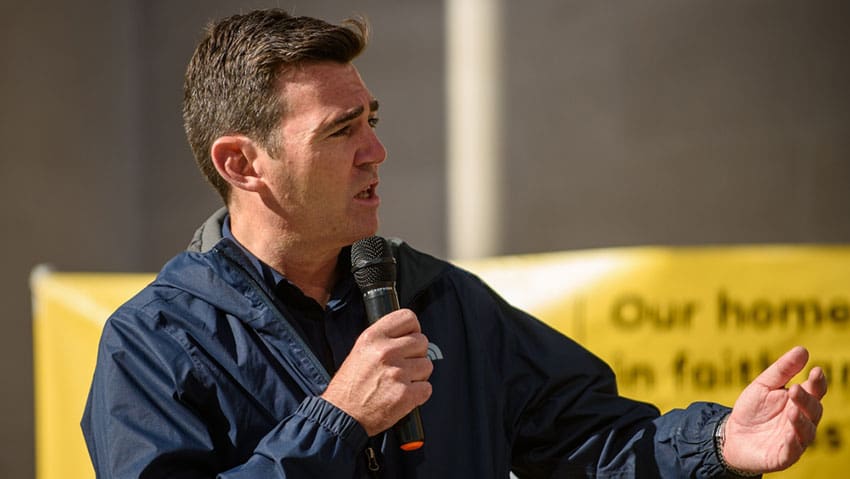
Britain’s night-time economy has rarely been short of warnings about its own mortality. What is new is the willingness of its trade body to name a politician it believes can do something about it.
The Night Time Industries Association (NTIA) has publicly backed Andy Burnham’s call for a cut to VAT across hospitality and the wider night-time economy, arguing that the sector cannot withstand three more years of rising taxation, fragile consumer confidence and what it describes as a failure of political will. It is an unusually pointed intervention from an organisation that is careful to stress it remains apolitical, and it lands at a moment when the campaign to lower hospitality’s tax burden has acquired real momentum.
The association’s central contention is straightforward. Nightclubs, bars, pubs, restaurants, live music venues, festivals, event organisers and cultural institutions are being squeezed simultaneously by VAT, employer National Insurance contributions, business rates and stubbornly high energy costs. The result, the NTIA argues, has been a steady attrition of venues, cancelled events and retreating investment across what it calls one of the country’s most important cultural and employment sectors. The trade body has long called for a VAT cut to halt a string of nightclub closures, and its language has hardened as the closures have continued.
Why Burnham, and why now? The Greater Manchester mayor put himself at the centre of the debate at this year’s Night Time Economy Summit in Liverpool, where, speaking alongside former Deputy Prime Minister Angela Rayner, he told an audience of operators and national media that he would “argue for a VAT rate more consistent with what you find in Europe because of the social value that your businesses bring to places and towns.” For an industry that has spent years lobbying with little to show for it, a senior political figure putting VAT explicitly on the table was a moment worth seizing.
Michael Kill, chief executive of the NTIA, framed the endorsement as a matter of survival rather than party allegiance. “We are apolitical as an organisation, but we are not neutral when it comes to the survival of our industry,” he said. “The hospitality and night-time economy sectors are under more pressure than at any point in recent memory. Businesses are being crippled by taxation at a time when margins have been eroded, consumer confidence remains fragile and operating costs continue to rise.”
Kill was blunt about the choice he believes operators now face. “The reality is that our industry cannot survive three more years of the current approach. Businesses are closing, investment is drying up and confidence has collapsed,” he said. “What many operators now see is a stark choice: three more years of economic uncertainty and additional pressure on already struggling businesses, or a change in leadership and direction that finally recognises the value of hospitality, nightlife, festivals, events and culture to the UK economy.”
His sharpest warning concerned the prospect of further tax rises. “What worries us most is that, while businesses are already struggling under unprecedented pressure, there are now discussions about increasing taxes even further. For many operators, there is simply nothing left to give.” Hospitality and nightlife, he argued, should be treated as economic drivers and major employers rather than “a convenient source of revenue.”
The NTIA’s intervention does not exist in a vacuum. The wider trade has coalesced around the #VATsTheProblem campaign, fronted by chef and publican Tom Kerridge and backed by UKHospitality, the British Beer and Pub Association and others, which is pressing for a reduction in hospitality VAT from 20 per cent. The accompanying petition passed 200,000 signatures within days of launching, a measure of how raw the issue has become. Sentiment was hardly improved by the summer’s “Great British Summer Savings” package, which cut VAT to 5 per cent on family attractions but conspicuously snubbed the night-time economy, a slight the NTIA has not forgotten.
The case for relief rests on a simple proposition: that a lower VAT rate would protect jobs, stimulate consumer spending and safeguard the venues, festivals and cultural spaces that anchor town and city centres. The case against — that the Treasury can ill afford to forgo the revenue when the public finances are stretched — is equally familiar, and it is the argument the sector has run up against for the better part of a decade.
For now, the NTIA is betting that one of the few politicians willing to engage on its terms also happens to be among the most plausible future occupants of Downing Street. Burnham is not in government, and three years of this Parliament remain. But in backing him so openly, the association has made a calculated wager that a change of direction is more likely to come from championing an outside contender than from continued, unrewarded loyalty to the status quo. Whether that bet pays off will depend less on the strength of the industry’s case, which is well rehearsed, than on the political arithmetic of the next three years.

Jamie Young
Jamie is Senior Reporter at Business Matters, bringing over a decade of experience in UK SME business reporting.
Jamie holds a degree in Business Administration and regularly participates in industry conferences and workshops.
When not reporting on the latest business developments, Jamie is passionate about mentoring up-and-coming journalists and entrepreneurs to inspire the next generation of business leaders.

Britain risks losing yet more high street shops, and becoming a dumping ground for unsafe imports, unless ministers move faster to close a tax loophole being exploited by overseas sellers, retailers have warned.
Andrew Murphy, chief executive of The Entertainer, the toy chain that trades from more than 150 stores, has voiced “grave concern and profound frustration” at the government’s plan to wait until 2029 before scrapping the £135 “de minimis” customs threshold.
The rule lets overseas sellers, among them the Chinese ecommerce giants Temu and Shein, ship parcels worth less than £135 into the UK without paying customs duties. British retailers importing goods in bulk, by contrast, must pay duties, VAT and compliance costs on every consignment. It is a structural disadvantage that domestic players have been pressing the government to end for months.
In a letter to ministers seen by The Times, Murphy branded the timetable an “unacceptable delay to reform”, arguing that it “extends by years the existence of an uneven playing field with respect to foreign marketplace sellers”. The postponement, he wrote, was “wholly indefensible and deeply damaging to UK retailers in an era already characterised by extreme economic challenge for the sector”.
The intervention lands shortly after Temu was fined €200 million by the European Commission, which found the platform had allowed the sale of illegal and unsafe products, including dangerous baby toys and defective phone chargers. The penalty, the largest yet handed down under the EU’s Digital Services Act, followed regulators’ conclusion that Temu had failed to properly assess the systemic risks its marketplace posed to consumers. The Commission set out its findings in detail, noting that a mystery-shopping exercise found phone chargers failing basic electrical safety standards and baby toys carrying medium-to-high safety risks. Temu has rejected the assessment.
Platforms such as Shein and Temu have expanded rapidly in Britain by selling very cheap products shipped directly from manufacturers. Their rise has drawn complaints from domestic retailers, among them Sainsbury’s, Currys and AO World, who argue the tax treatment hands overseas rivals an unfair advantage. The growing pressure prompted the Chancellor to order a review of the loophole last year.
The government confirmed last year that it would abolish the de minimis exemption, but not until 2029. Ministers say a gradual transition is needed to avoid the border disruption and customs delays seen in the United States after it removed its own exemption for low-value imports.
Murphy pointed out that the US abolished its $800 exemption last August, and that the European Union will introduce a temporary customs duty on low-value parcels from next month ahead of wider reforms. “The UK, by contrast, will not even begin imposing duties until some time in 2029,” he wrote, warning that Britain risked becoming an “ecommerce dumping ground” as sellers diverted goods away from markets where tighter rules were taking hold.
He cited research by the British Toy and Hobby Association (BTHA), which has been buying and testing toys from online marketplaces since 2018. In its latest investigation, 86 per cent of around 90 toys bought from seven marketplaces, including Temu, Shein, Amazon, eBay and TikTok Shop, failed safety tests, with a further 4 per cent breaching UK labelling standards. Murphy said the loophole had become a “route by which unsafe goods can and do enter the UK” and reach the public.
Geoff Sheffield, chairman of the Toy Retailer Association, said non-compliant products were “a major concern for all our members, from the largest multinationals to the smallest independent shops”. Such toys, he added, “not only put children at risk of harm and damage the reputation of the entire industry, but they undercut genuine UK toy retailers”. The government, he said, needed to “accelerate the legislation to prevent more of our members disappearing from the UK high street”.
The warning comes against a grim run for big toy retailers. Toys R Us closed more than 100 shops after collapsing into administration, while Hamleys, Woolworths and Mothercare have all shut stores over the years, part of a longer roll-call of familiar names that have vanished from the high street.
Helen Dickinson, chief executive of the British Retail Consortium, said faster reform was needed to protect more businesses. “Every day the government delays introducing a new customs system for low-value imports is another day that harms British businesses,” she said. “With the US and EU already moving quickly to close this loophole, the UK stands alone, increasing the risk that even more goods could be dumped on our market.”
A Treasury spokesman said: “The rapid growth in low-value imports is hurting our high streets and retailers. We are removing the customs duty relief for low-value imports and reforming the way these goods are declared into the UK to ensure all goods are appropriately controlled.” The reform, he added, “backs our businesses to compete and grow, controls safety and flow of goods at our border, and keeps the UK in line with our international partners”.

Amy Ingham
Amy is a newly qualified journalist specialising in business journalism at Business Matters with responsibility for news content for what is now the UK’s largest print and online source of current business news.


Australia vows to rein in any H5N1 birdflu after confirming first case

These include the reintroduction of open market buybacks through exchanges, the relaxation of borrowing norms for mutual funds and faster fundraising routes for alternative investment funds (AIFs).
The capital market regulator also approved proposals to simplify the transmission of securities and adopted a new code of conduct for its board members.
Currently, buybacks have to be made through the tender-offer route and the open-market route through bookbuilding.
Amendment to MF Regulations

“Considering the revised taxation framework applicable for buybacks, open market buyback through stock exchange is being reintroduced with effect from August 1 to provide additional route for the company to undertake buyback,” Sebi said.
Under the revised framework, buybacks executed through stock exchanges must be completed within 66 working days, with at least 40% of the earmarked funds deployed during the first half of the buyback period. Companies will also be required to communicate buyback details directly to shareholders electronically via email and phone messages in addition to newspaper advertisements. Promoter holdings will remain frozen at the security level during the buyback period, while the appointment of a merchant banker has been made optional to lower compliance costs. “Sebi’s decision to allow two buybacks in a year aligns the regulations with the Companies Act and provides listed companies greater flexibility in capital management-critical when India Inc. has already announced buybacks worth ₹25,000 crore in 2026 so far, the highest since 2023,” said Makarand M Joshi, founder partner MMJC and Associates, a corporate compliance firm. “The move to reintroduce open market buybacks and discretion in appointment of merchant bankers for buybacks shifts responsibility to the company, stock exchanges, and statutory auditors. This would raise the bar on board-level and auditor accountability.”
The regulator’s board also approved an amendment to mutual fund regulations to permit intraday borrowings for managing liquidity mismatches arising from settlement timing differences, foreign exchange settlements and mark-to-market obligations on derivative positions.

Battered by AI-spawned disruptions, Accenture has now lost nearly 50% in a year, putting a question mark on the sustainable competitive advantage of the Indian-listed pureplay that had hitherto relied largely on outsourcing-led cost arbitrage to build a $280-billion industry over the past three decades. For Accenture, which often provides the cue for India’s outsourcing industry, its initial 20% loss Thursday was the worst in its trading history.
The Nifty IT index slumped as much as 6.4% during the day and closed at 27,426.85-the lowest level since May 14. The Nifty declined 0.6%. Infosys slumped 6.5% while Tata Consultancy Services (TCS) lost 3.1%.
 Agencies
NIFTY IT TANKS 6%: Local stocks’ valuations in buy zone, but time’s not right to enter: Analysts
Accenture’s guidance and circumspect commentary triggered the sell-off for the second straight day. Battered valuations limit downside in these stocks, analysts believe, but lack of clarity on growth in a world powered by AI offers restricted scope for upside, too.
“Most of the negatives are priced in and the valuations are now at a discount to Nifty valuations,” said Sunny Agrawal, analyst at SBI Securities. “So, stocks are expected to stabilise but the growth outlook remains hazy.”
Large-cap IT companies guided for tepid growth of 2-5% while midcaps like Coforge, Persistent Systems expect low double-digit growth, he said.
All constituents of the IT index declined except Oracle Financial Services Software that bucked the weak trend and gained 2.9%. LTM dropped 4%, while Mphasis slipped 2.9% lower. Tech Mahindra, HCL Technologies, and Persistent Systems fell over 2% each.Accenture’s guidance suggests the likelihood of further pain in the next couple of quarters as revenue revival has taken a backseat, said Ajit Mishra, SVP Research at Religare Broking.
“The Nifty IT Index is on the verge of retesting the 2023 lows of 26,300 from where it had rebounded to a record high of around 46,000 levels,” he said. “If it fails to hold these levels then it can slide lower to 24,200-24,300 levels.”
Mishra said that the Infosys breached a major trendline on the monthly chart and a breakdown below ₹1,040 could confirm further breakdown.
So far this year, the Nifty IT index plunged 27.6% while benchmark Nifty fell 8.1%.
“IT has lost investor favour due to likely AI led deflationary impact and uncertainty on growth from AI led offerings for clients,” said Agrawal. “Investors should wait for the Q1 commentary to deploy funds in IT sector.”
“That said, there are better opportunities available in the equities across sectors like banking, auto ancillary, hotels, defence,” he added.
Mishra said that investors should stick to the winners from the pack rather than adding stocks simply because valuations are attractive.
“Investors should avoid fresh positions in IT stocks for the short-to-medium term and refrain from adding to existing bets for now,” he said. “HCL Technologies, Oracle and Coforge are relatively better placed over a one-to-two-year timeframe.”

These financial institutions are raising money overseas to take advantage of the 1.5% fixed rate swap provided by the Reserve Bank of India (RBI) on external commercial borrowings (ECBs).
The central bank had announced the swap incentives during its last monetary policy review (MPC) meeting held on June 5.
Also Read: HDFC raises $750-m ECB, first under RBI’s special swap plan
Bankers familiar with the fundraising said financial institutions with ready medium-term note (MTN) programmes will have an advantage as they would have a ready investor base to approach for the latest ECB tranche.
“We will see the first busy period for ECB fundraising next week. HDFC Bank kicked off the fundraising and now the other large Indian bank, SBI, will also join in and it could be as early as Monday,” said a banker involved in these deals.
“If the market conditions are good and there are no surprises, we expect at least one large issue everyday between Monday and Thursday,” said the banker cited above.SBI, given its size and expected investor interest in India’s most valued state-run entity, could raise up to $1 billion provided market conditions are conducive next week, said the banker cited immediately above.
Other banks could look for smaller amounts — may be issues of up to $500 million — as they do not want to overextend in the first instance itself, said a banker.
“All these banks as well as PFC have running MTN programmes, which they can tap at a short notice. This gives them an advantage as they have the documents ready and can arrange to hit the markets without delay or permissions,” said another banker involved in the issues.
Also Read: RBI opens a dollar swap window to help hedge foreign borrowings
The ECB incentives are part of a broader suite of measures aimed at undergirding the rupee, which slid about a percentage point on average per month since the start of FY26. The rupee, which fell close to 97 a dollar, has since recovered to 94.32 per dollar on expectations of a peace deal in West Asia and higher dollar inflows.
Approved Plans
The executive committee of the SBI central board, for instance, had approved a $2-billion MTN programme for the current fiscal year in May. Similarly, PFC, too, has a running $8 billion MTN programme.
The individual banks cited above and PFC did not respond to ET’s mailed queries seeking their comments on the proposed ECBs until the publication of this report.
HDFC Bank’s successful dollar bond sale earlier this week has also pushed its peers to take advantage of the fine pricing. On Tuesday, HDFC Bank raised $750 million by selling five-year bonds to overseas investors through the GIFT City facility. The bond was the bank’s first overseas issue since February 2024 and was priced at 90 basis points above the five-year US treasury, the tightest spread over the US benchmark for any private sector bank in India.
In a bid to attract overseas dollars, RBI announced a special swap arrangement on June 5. The swap is open for both banks and public sector enterprises.


Bittensor validator warns Root Reborn proposal carries “substantial” risks

Offender died nine days after HMP Holme House release
Heavy SpaceX Options Trading Driven by New Weekly Contracts


-

 Business5 days ago
No Jackpot Winner as $257 Million Prize Rolls Over to $269 Million Monday Draw
-
 Crypto World5 days ago
Zimbabwe Requires Crypto Businesses to Register Annually Under New FIU Regulations
-

 Crypto World7 days ago
Bitget enters Argentina’s regulated crypto market through PSAV registration
-
 Entertainment5 days ago
Matt Damon’s Viral Sci-Fi Thriller Has Taken Over HBO Max
-

 Fashion9 hours ago
Weekend Open Thread: Miami – Corporette.com
-

 Business5 days ago
Anthropic staff to meet White House officials next week, Axios reports
-

 Tech5 days ago
As AI companies race to go public, who else is along for the ride?
-
 Crypto World5 days ago
Bitcoin could crash to $48,000, if this historical pattern is triggered
-
 NewsBeat5 days ago
Warning of disruption as Cardiff Crossrail works to start
-

 Politics5 days ago
“Israel’s” ban on ICRC visits ruled illegal, but Knesset moves to stop them permanently
-

 News Videos5 days ago
Financial Accounting | Last Day Revision Strategy and Booster | CMA Inter – June 2026
-
 NewsBeat5 days ago
Tributes to former deputy head teacher at Cambridge school among death and funeral notices
-

 Entertainment6 days ago
Deion Sanders Shares Powerful Post After Viral Advice To Deiondra
-
 NewsBeat5 days ago
what doctors are seeing in ebike crashes
-
 Entertainment5 days ago
Kate Middleton Glare Goes Viral After Kids Booed At Royal Event
-

 Crypto World5 days ago
XRP ETFs Outperform As Bitcoin And Ethereum Funds Extend Outflow Trend
-
 Crypto World5 days ago
Market Preview: SpaceX (SPCX) IPO Record, Federal Reserve Meeting, and Iran Nuclear Agreement
-

 Tech5 days ago
Over 400 Arch Linux packages compromised to push rootkit, infostealer
-

 Business5 days ago
Invesco Quality Income Fund Q1 2026 Commentary
-
 Entertainment7 days ago
44 Years Later, This Is the Greatest Star Trek Quote in Sci-Fi History
You must be logged in to post a comment Login