
Business
Consett parents ‘watering down baby milk formula’ over high costs


A baby bank says parents are turning to “unsafe” practices such as watering down baby formula milk to save money.
Megan Sinden, founder of Moorside Baby Bank in Consett, County Durham, said a couple of families spoke of putting less powder in to get another week’s worth out of it, “which to me is quite dangerous”.
She called for a cap on rising costs of formula, saying: “It’s not a luxury item, it’s a basic need for a baby.”
Charity National Childbirth Trust (NCT) said its recent study found nearly half of parents (48%) were struggling more financially after having a baby, and added infant formula should always be prepared according to the manufacturer’s instructions.
Infant formula is designed to provide the correct balance of nutrients for babies when mothers cannot or choose not to breastfeed, and adding extra water alters that balance.
The lower concentration can cause nutrient deficiency, coupled with the reduced ability of the baby’s body to absorb the nutrients, NCT said.
“In turn, this can lead to poor weight gain, growth problems, and developmental delays,” the spokesperson said.
“In serious cases, too much water in the formula may lead to more immediate health problems because a baby’s body is not able to safely process the excess water.”
The latest report, external by the Competition and Markets Authority (CMA) found the average retail price of some infant formula had increased by more than 25% in recent years.
Moorside Baby Bank opened in February 2025 and has so far helped 226 families with goods like clothes, nappies and baby wipes, which were mainly donated by the community.
Sinden, who is a community worker from nearby Stanley, said the bank struggled to get donations of baby milk “because it is so expensive” and instead relied on grants to buy the formula in.

Business
Third Point Exited Nvidia and Broadcom, Made New Bet on Warner Bros. Discovery in Second Quarter

Third Point shifted away from some of the market’s biggest semiconductor winners in the second quarter—and put more money into a broader mix of media, financial, industrial, and technology companies, a regulatory filing shows.
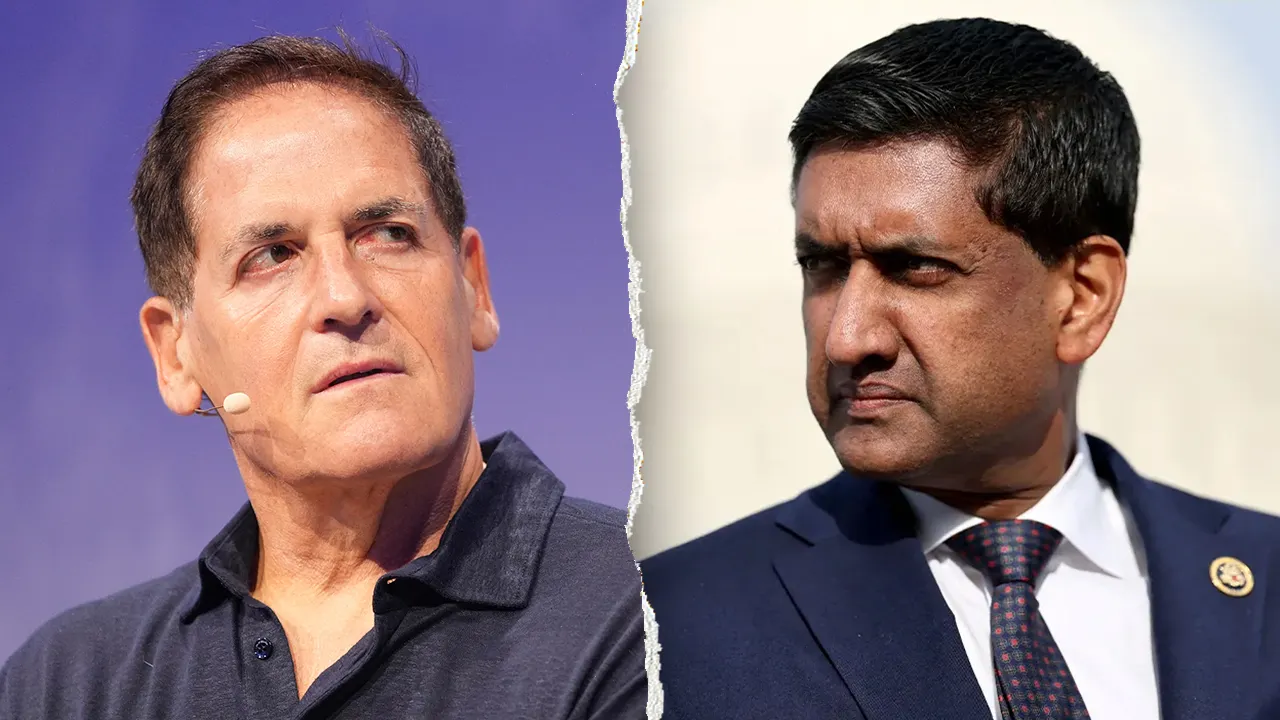
FOX Business contributor Josh Schafer discusses the California Democratic Party’s endorsement of a billionaire tax and raises questions on the revenue on ‘The Big Money Show.’
Mark Cuban told Rep. Ro Khanna, D-Calif., that he “doesn’t understand business” during a heated clash over California’s proposed 5% billionaire wealth tax, warning it could drive startup founders and investors out of the state.
The exchange centered on California’s Proposition 40, a controversial ballot measure that would impose a one-time 5% wealth tax on residents with more than $1 billion in assets.
The measure has been endorsed by the California Democratic Party, while some notable leaders, including Gov. Gavin Newsom, have expressed opposition.
In a video posted on X on Saturday, Khanna made the case for the tax, arguing that it would help preserve health care for working-class Californians. He said the “Sacramento establishment” and lobbyists opposing the measure were “blatantly out of touch.”
STEVE HILTON WARNS CALIFORNIA ECONOMY WILL ‘ABSOLUTELY COLLAPSE’ UNDER ‘INSANE’ BILLIONAIRE TAX
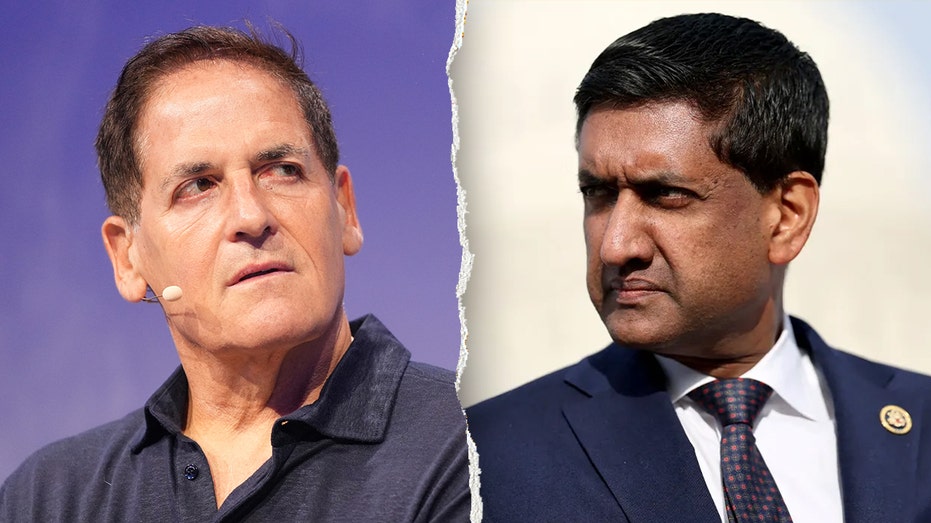
Mark Cuban, left, and Rep. Ro Khanna, D-Calif., clashed on social media over California’s proposed 5% wealth tax on billionaires. (Leah Millis/Reuters; Nathan Laine/Bloomberg via Getty Images / Getty Images)
Cuban responded by arguing that founders of rapidly appreciating startups can become billionaires on paper without having hundreds of millions of dollars in liquid assets available to pay the proposed tax.
“They are the definition of cash poor, stock rich,” Cuban wrote on X.
He warned that the measure could cause startup founders and investors to leave California.
“If this passes, only idiot startup founders stay in Cali,” Cuban wrote.
TRUMP WARNS NEW HOCHUL, MAMDANI PIED-À-TERRE TAX COULD ACCELERATE NYC WEALTH EXODUS
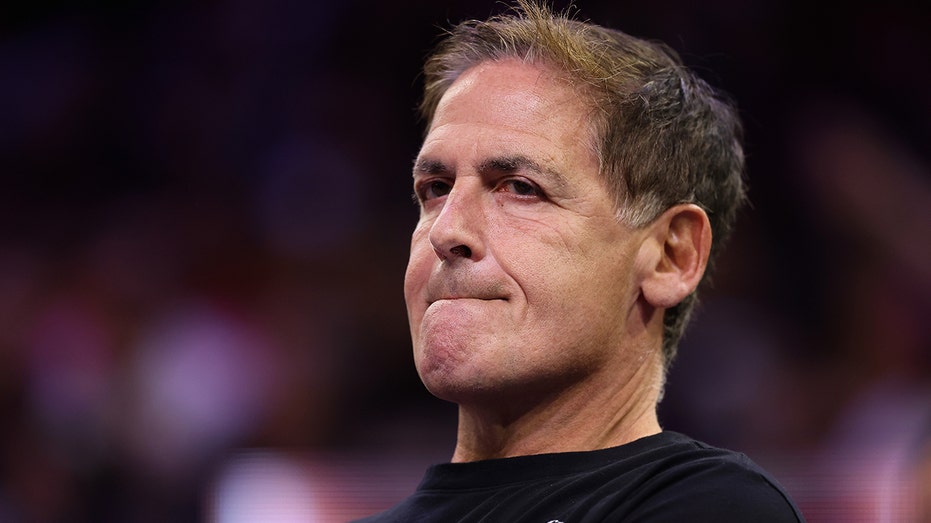
Billionaire investor Mark Cuban warned that California’s proposed 5% wealth tax could drive startup founders and investors out of the state. (Christian Petersen/Getty Images / Getty Images)
Cuban went further, warning that the measure could also influence where he invests.
“I will make NOT being in California a pre requisite for an investment,” he continued.
“Ideology is not a strategy Ro,” he added.
Khanna then proposed a workaround for founders whose wealth is largely tied up in private-company stock.
“Why not a non recourse loan for pledged stock as collateral for this situation?” Khanna wrote.
KEN GRIFFIN’S NYC SKYSCRAPER MOVES FORWARD DESPITE FEUD WITH MAYOR ZOHRAN MAMDANI
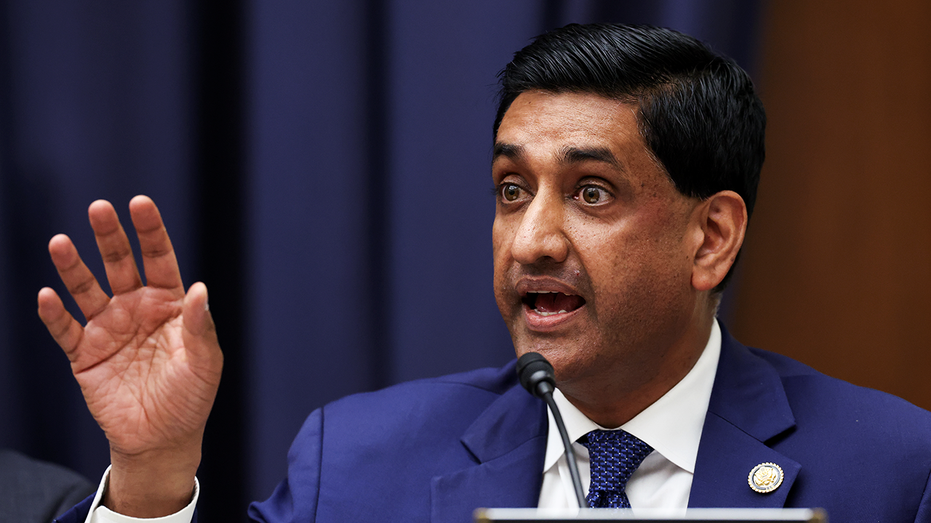
Rep. Ro Khanna, D-Calif., defended a proposed one-time 5% wealth tax on California residents with more than $1 billion in assets. (Win McNamee / Getty Images)
Khanna proposed addressing the concerns surrounding illiquid founders by allowing them to pledge shares in their companies as collateral for a government loan that could then be used to pay the wealth tax.
The loan could remain outstanding for roughly 10 years, after which the founder would either repay the government in cash or the government would take possession of the pledged shares. Because the loan would be nonrecourse, the founder would not be personally liable if the company failed.
Cuban blasted the proposal.
“Ro, that’s insane,” he wrote.
Cuban argued that California would effectively lend founders money that would immediately be returned to the state as payment of the tax, meaning the arrangement would initially generate no additional cash revenue from those taxpayers.
“What’s the point of that?” he wrote.
BOB IGER, JOSH KUSHNER SHOCKINGLY PURCHASE LAKERS MONTHS AFTER MARK WALTER BECAME MAJORITY OWNER
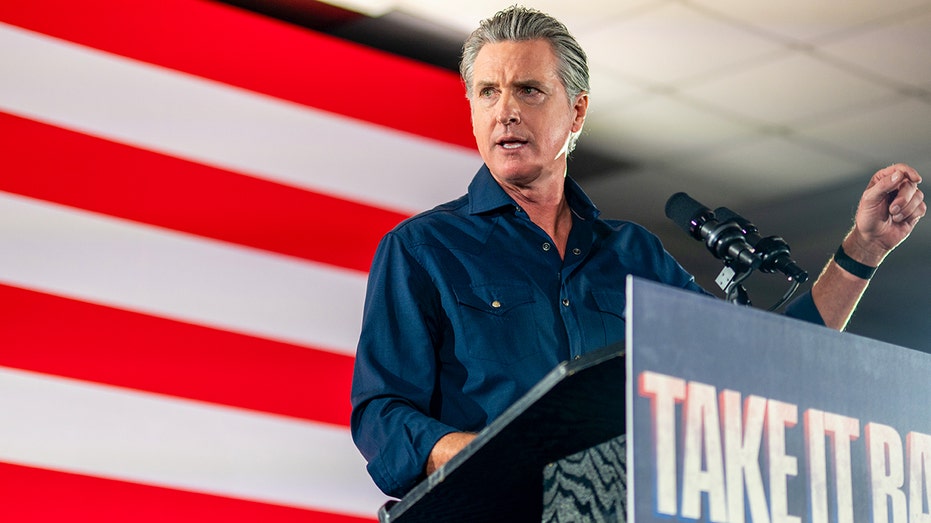
California Gov. Gavin Newsom has expressed opposition to the proposed one-time wealth tax on the state’s billionaires. (Brandon Bell/Getty Images / Getty Images)
Cuban also argued that California could eventually wind up owning shares in private companies if founders were unable to repay the loans.
“Cali, You make it. We take it!” Cuban wrote.
Khanna pushed back on Cuban’s criticism, arguing that the government would still collect the tax from billionaires with liquid assets.
“The government would still collect from the vast majority of billionaires who are not illiquid,” Khanna wrote.
Khanna claimed that 72% of billionaire wealth is held in public stock and said the proposed financing mechanism would be aimed at true “paper billionaires” whose fortunes are tied to illiquid assets. He argued that if a private company succeeds, California would ultimately collect on the loan, while founders would not be personally liable if the company failed.
CALIFORNIA VOTERS TO CONSIDER BALLOT MEASURE TO INCREASE TAXES ON BILLIONAIRES
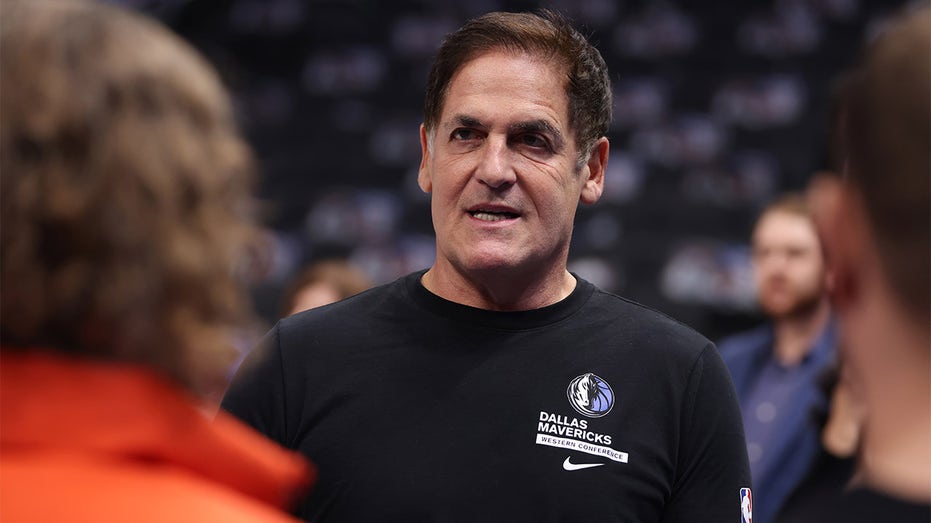
Mark Cuban warned that if California’s proposed billionaire wealth tax passes, he would make not being based in the state a prerequisite for certain startup investments. (Tim Heitman/Getty Images / Getty Images)
Khanna then broadened his argument, telling Cuban that ordinary Americans support higher taxes on billionaires.
“Mark, come on a road trip with me around California, Pennsylvania and the country and ask ordinary Americans how they feel about a billionaire tax,” Khanna wrote. “Most say, I promise you, why only 5 percent?”
Cuban shot back: “You don’t understand business Ro.”
He argued that even a successful founder could spend 10 years growing a company, create thousands of jobs and pay hundreds of millions of dollars in federal and state taxes without ever having $250 million in liquid assets available to repay the proposed state loan.
CLICK HERE TO GET FOX BUSINESS ON THE GO
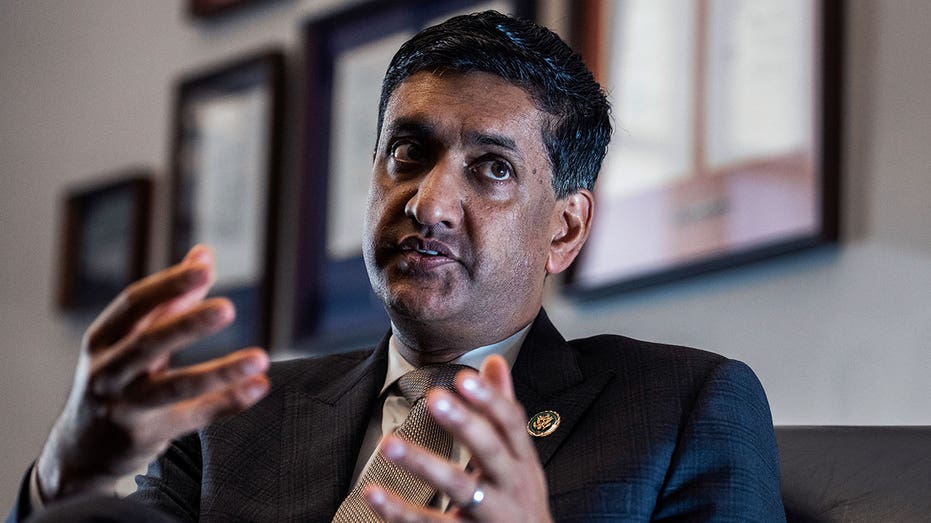
Rep. Ro Khanna, D-Calif., argued that California’s proposed billionaire tax would help protect health care for working-class and middle-class residents. (Tom Williams/CQ-Roll Call, Inc via Getty Images / Getty Images)
“Is that what you want your state to be?” Cuban wrote.
“Next tweet we can discuss who the money is going to with Prop 40,” he added.

Jane Street, the powerhouse Wall Street trading firm, lost about $15 billion in July partly due to the troubles at hedge fund Situational Awareness, according to people familiar with the matter.
It was the firm’s worst monthly loss ever, one of the people said. Jane Street is still enjoying its best trading year with revenues of more than $40 billion through July, the person said, but the losses are surprising for a firm known for its risk management. Losses on AI stocks exacerbated the pain.

Richardson Electronics director Belin disposes of $107,300 in shares

Netflix co-CEO Gregory Peters sells $2m in shares

Mutual funds reduced their exposure to several small-cap stocks in July, with Amara Raja Enterprises witnessing the highest net selling. Welspun Corporation, NBCC, IIFL Finance and Physicswallah were the other major names on the list, according to Motilal Oswal Financial Services. Monthly shareholding changes ranged from a 10.5% decline to an 8.5% increase.
Business
Will Sensex, Nifty continue to bleed on Monday? 4 factors which will drive D-Street action this week
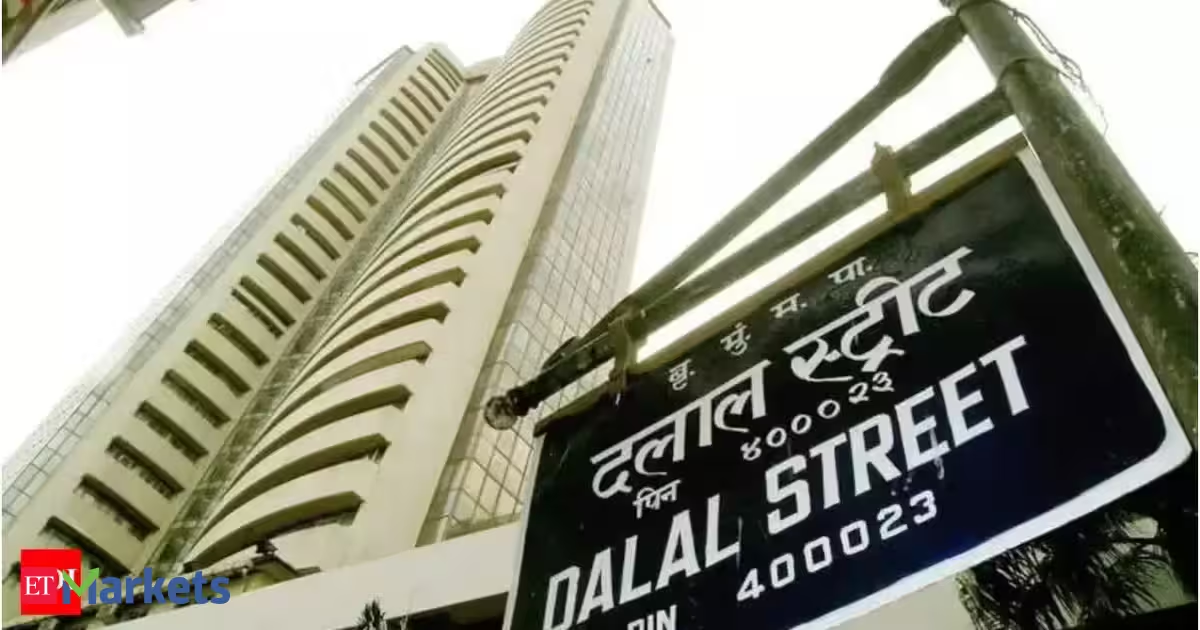
On Friday, Sensex and Nifty recorded slight losses even as oil prices stabilised around $87 per barrel. Sensex fell around 71 points to close at 78,009, while Nifty 50 lost 30 points to end the session at 24,366. Broader markets slipped into the deep red, with the Nifty Smallcap 100 and Nifty Midcap 100 indices falling around 0.7% each.
Markets remained range-bound through the week amid elevated crude and persistent global uncertainty, said Vinod Nair, Head of Research at Geojit Investments. He noted that while softer-than-expected US labour market data initially supported expectations of a patient Fed, the subsequent rebound in crude shifted focus back to inflation risks and evolving geopolitical developments.
Domestically, better-than-expected corporate earnings, stability in the rupee, moderation in the domestic 10-year bond yield and a gradual improvement in FII participation provided support to the domestic macro environment despite external headwinds, he further said.“On the domestic front, the Nifty 50’s strong Q1 FY27 earnings performance comfortably exceeded market expectations. Earnings breadth remained healthy, with 33 constituents outperforming estimates, underscoring the strength of corporate earnings despite a challenging external backdrop and continuing to create opportunities for a bottom-up stock selection approach,” Nair noted, adding that during the week, large-cap sentiments were largely capped by Middle East tensions. However, the mid-cap index demonstrated strength and outperformed the benchmark, aided by better earnings visibility.

Also read | Independence Day 2026: How Sensex skyrocketed 8,500% in less than 35 years since 1991 liberalisation reforms
Here are the four key factors that will likely determine market movement during the upcoming week between August 17 (Monday) to August 21 (Friday).
1) Crude oil prices
After Indian stock market remained range bound on Friday even as oil prices stabilised around $87 per barrel, the crude jumped over $1 per barrel following tanker attacks and a lack of progress on a peace agreement between the Trump administration and Iran’s leadership. Brent futures settled at $88.52 a barrel, up nearly 2%. US West Texas Intermediate crude futures finished at $82.40, up over 1%.
The US meanwhile on Thursday said it could maintain a naval blockade of Iran indefinitely and increase economic pressure on the country in response to stalled ceasefire talks. Rising oil prices amid such developments in the Middle East will likely be among the key factors that could influence action on Dalal Street this week.
2) Middle East tensions
Iran said Qatar was holding three of its pilots who had been missing since March, which Qatar denied. The United Arab Emirates meanwhile accused Iran of again attacking one of its vessels in the Strait of Hormuz. The Iran-backed Houthis again struck a Red Sea port in Yemen.
In southern Lebanon, 11 people were killed in Israeli airstrikes, marking some of the deadliest since a shaky truce between Israel and Iran-backed Hezbollah went into effect on June 20. All of these developments may further spook investors about the tensions further escalating into the raging war which earlier this year rattled the stock markets.
3) FOMC minutes
Minutes to the recent Federal Reserve meeting, where US interest rates were left on hold, will be closely monitored for any clues on whether rates could rise next month. Meanwhile, a surprise drop in US retail sales has dented expectations for a Federal Reserve rate hike next month.
Also read | Oil prices rally, US data dents chances of Fed rate hike
4) FII action
Foreign investors remained net buyers of Indian equities on Friday, net purchasing shares worth Rs 508 crore. Overall, FIIs closed last week as modest net buyers of Rs 1,228.24 crore, opening with two sessions of buying, reversing into two of selling, and returning as buyers on the final day, Pabitro Mukherjee, Deputy Vice President-Research at Bajaj Broking said.
DIIs remained consistent buyers, with net purchases recorded in all sessions except the first, committing Rs 9,285.63 crore, he said, noting that Nifty still drifted lower through the week, from 24,584 to 24,366.
“Looking ahead, investors will closely track crude, geopolitical developments, U.S. retail sales, FOMC minutes and Chinese economic data for further cues on global growth and the Fed’s policy outlook,” said Vinod Nair, Head of Research at Geojit Investments.
Also read | Independence Day 2026: 4 stocks that have been part of Sensex since inception. Do you own any?
(With inputs from agencies)
(Disclaimer: Recommendations, suggestions, views and opinions given by the experts are their own. These do not represent the views of The Economic Times)
Kearny Financial director Leopold Montanaro buys $45,152 in stock

Analysis-Europe’s heatwaves expose insurance gap as business losses mount


Apart from my academic training in Biology and Chemistry, I hold a Ph.D. in Environmental Science with a specialization in Bio-Medical Waste Management. My areas of research and analysis include clean technologies, renewable energy, pollution control systems, and environmental compliance solutions. I follow companies operating in these sectors using a research-driven approach that integrates regulatory trends, sustainability metrics, and scientific evaluation to assess long-term growth opportunities, risks, and value potential. By actively tracking and analyzing companies engaged in environmental management, renewable energy, and green technologies, my work aims to blend scientific depth with market analysis to provide practical insights that help investors understand financial outcomes and emerging opportunities. At a personal level, I also provide free stock market consultation to a select group of friends, relatives, and former colleagues. I am associated with Seeking Alpha analyst Eudaemon Research.
Analyst’s Disclosure: I/we have no stock, option or similar derivative position in any of the companies mentioned, and no plans to initiate any such positions within the next 72 hours. I wrote this article myself, and it expresses my own opinions. I am not receiving compensation for it (other than from Seeking Alpha). I have no business relationship with any company whose stock is mentioned in this article.
Seeking Alpha’s Disclosure: Past performance is no guarantee of future results. No recommendation or advice is being given as to whether any investment is suitable for a particular investor. Any views or opinions expressed above may not reflect those of Seeking Alpha as a whole. Seeking Alpha is not a licensed securities dealer, broker or US investment adviser or investment bank. Our analysts are third party authors that include both professional investors and individual investors who may not be licensed or certified by any institute or regulatory body.

Tori Spelling Details Worst Filming Experience With Director

Kevin Macleod is a walking legend #money
Third Point Exited Nvidia and Broadcom, Made New Bet on Warner Bros. Discovery in Second Quarter


-

 Fashion2 days ago
Weekend Open Thread: Ann Taylor
-

 Business7 days ago
Datadog: Best Of Breed For Multiple Reasons
-
 NewsBeat4 days ago
Communication cards help banking customers access services or report scams
-
 Business5 days ago
Oil Price Today (August 11): Crude oil rises to $88 after Trump’s compensation demand dents Hormuz opening. Here’s why
-

 Fashion7 days ago
Amazon Sundays: Closet Care Before Fall
-
 Crypto World5 days ago
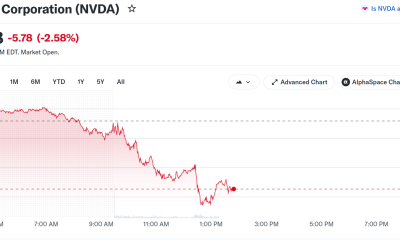
Why Did Nvidia Stock Fall on Monday Despite a $500 Billion Wall Street AI Deal?
-

 Crypto World5 days ago
Revolut wins French banking licence, creates second EU banking hub
-

 Business7 days ago
5 Things You Must Know About Jorge Messi, the Father and Longtime Agent Who Shaped Lionel Messi’s Career
-

 Politics6 days ago
Ben-Gvir’s crocodile project halted but abuses at Ketziot Prison continue
-

 Politics7 days ago
The Church of England’s ruinous reparations racket
-

 Politics6 days ago
Saudi Arabia used 86% of missile stockpile defending Iran attacks
-

 Politics19 hours ago
SEQ Code: The Three Letter Boarding Pass Code That Could Give You The Worst Seat
-
 NewsBeat1 day ago
Myanmar says over 300,000 Rohingya refugees verified for repatriation as exodus enters ninth year
-

 Politics7 days ago
What’s An EDT? The Rise Of ‘Extreme Day Trips’ As A Travel Trend
-

 Fashion6 days ago
Can You Wear Double Cloth Gauze Clothing To Your Office?
-

 Crypto World7 days ago
Crypto Made a $9.6 Billion Record, But It’s Hiding a Crucial Truth
-
 Crypto World6 days ago
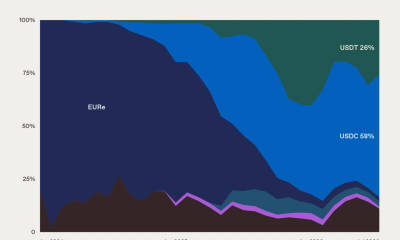
USDC and USDT Now Own 84% of Crypto Card Spend as the Euro Retreats
-
 Politics7 days ago
The House Article | Burnham still needs to sell devolution to the public
-
Crypto World7 days ago
Analyst Expects XRP’s Strongest Price Reversal Ever, but Polymarket Disagrees
-
 Crypto World7 days ago
Is Clarity's delay a blessing in disguise?: State of Crypto
You must be logged in to post a comment Login