
Business
COPJ: Outperforming COPX, With A Compelling Investment Case Ahead (NASDAQ:COPJ)



Investment research, primarily oriented towards uncelebrated/under-covered stocks and ETFs, across North America, Latin America, Europe and Asia. Seeks to combine both fundamental and technical disciplines while making an investment/trading proposition.
Analyst’s Disclosure: I/we have no stock, option or similar derivative position in any of the companies mentioned, and no plans to initiate any such positions within the next 72 hours. I wrote this article myself, and it expresses my own opinions. I am not receiving compensation for it (other than from Seeking Alpha). I have no business relationship with any company whose stock is mentioned in this article.
Seeking Alpha’s Disclosure: Past performance is no guarantee of future results. No recommendation or advice is being given as to whether any investment is suitable for a particular investor. Any views or opinions expressed above may not reflect those of Seeking Alpha as a whole. Seeking Alpha is not a licensed securities dealer, broker or US investment adviser or investment bank. Our analysts are third party authors that include both professional investors and individual investors who may not be licensed or certified by any institute or regulatory body.

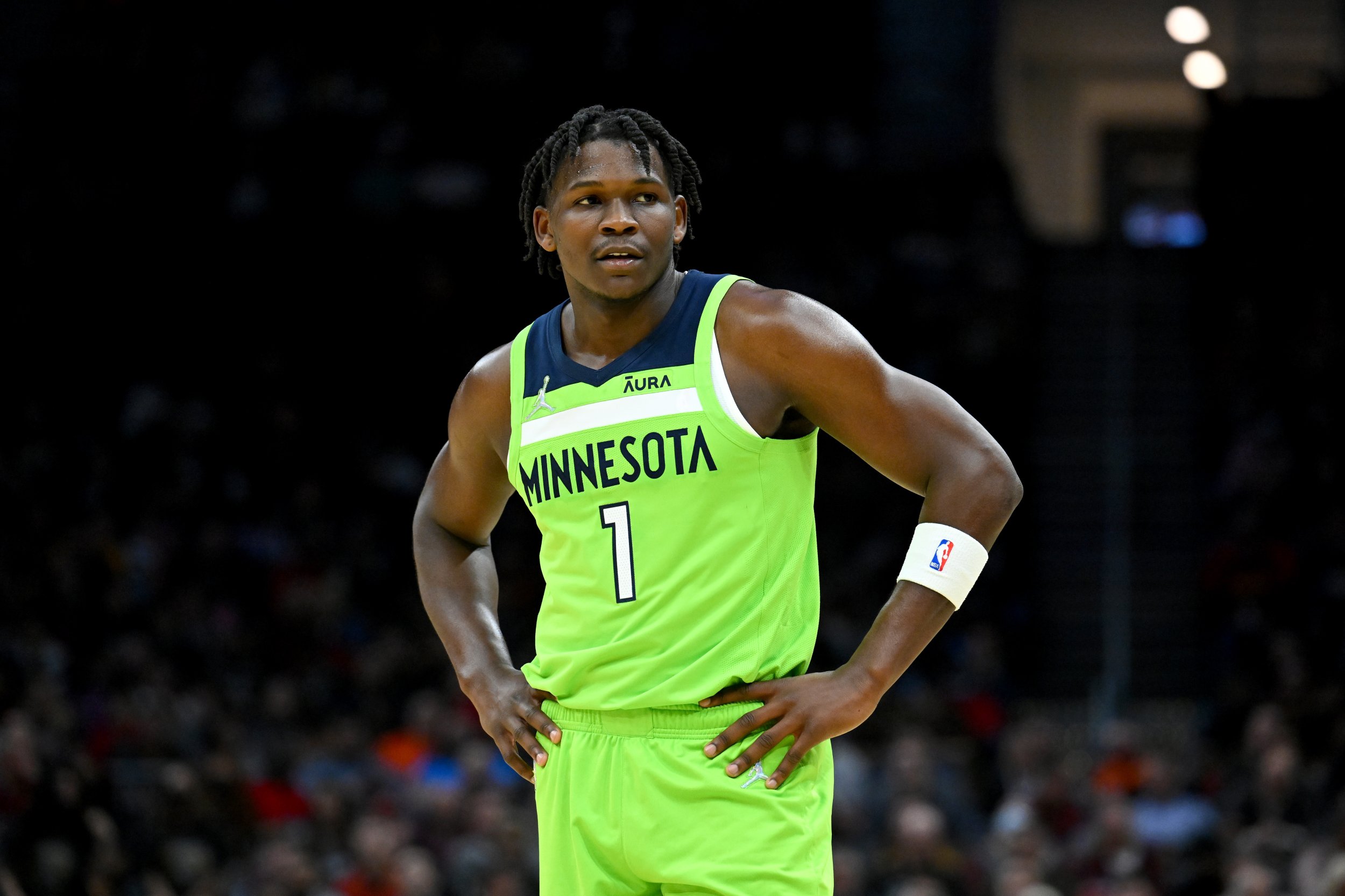
MINNEAPOLIS — Minnesota Timberwolves superstar Anthony Edwards is expected to miss the start of the Western Conference semifinals against the San Antonio Spurs as he recovers from a left knee bone bruise and hyperextension, dealing a significant blow to the team’s playoff hopes but offering cautious optimism for a potential mid-series return.
The 24-year-old All-Star suffered the injury in Game 4 of Minnesota’s first-round series against the Denver Nuggets on April 25 when he landed awkwardly after contesting a shot. An MRI revealed no ligament damage — a major relief — but confirmed the bone bruise and hyperextension that will sideline him for a minimum of two weeks.
ESPN insider Shams Charania reported Edwards remains “week-to-week” with the Timberwolves viewing him as a quick healer nicknamed “Wolverine” for his high pain threshold. Still, the timetable points to him sitting out the opening games of the Spurs series, which tips off early next week. “Certainly the hope as the series goes on,” Charania said, “but I’m told Anthony Edwards will be out to start the second-round series.”
The injury occurred late in the second quarter of a Timberwolves victory that helped Minnesota advance. Edwards immediately grabbed his knee and limped to the locker room, visibly frustrated. He has not played since, missing the closeout games against Denver as the Wolves completed the series without their leading scorer.
During the regular season, Edwards averaged 28.8 points, 5.0 rebounds and 3.7 assists while emerging as one of the league’s most dynamic young stars. His absence forces coach Chris Finch to lean heavily on veterans like Rudy Gobert, Karl-Anthony Towns (if healthy) and role players to contain Victor Wembanyama and the Spurs’ athletic attack.
Timberwolves officials described Edwards as “week-to-week” following the MRI at Mayo Clinic Sports Medicine. The diagnosis brought relief after initial fears of a more serious tear, but bone bruises can be unpredictable, often causing lingering soreness and swelling that limit explosiveness.
Finch and the organization have emphasized caution. Rushing Edwards back risks aggravating the injury and potentially costing him time later in a deep playoff run. Minnesota advanced past Denver despite his absence, showcasing depth, but facing San Antonio’s young, explosive roster without Ant-Man presents a steeper challenge.
The earliest realistic return could come around Game 3 or 4 of the Spurs series, assuming steady progress. That timeline aligns with the two-week minimum from the injury date. Edwards’ competitive fire and history of playing through discomfort fuel hope he could accelerate the schedule, but medical staff will prioritize long-term health.
Fans and analysts reacted with a mix of concern and optimism online. Edwards’ superstar trajectory — highlighted by his clutch playoff performances — makes his absence particularly felt. Minnesota traded for him as the No. 1 pick in 2020, building the franchise around his explosive athleticism and improving playmaking.
The Timberwolves’ front office has stayed relatively quiet beyond the initial update, focusing on daily rehab reports. Edwards has been spotted supporting teammates from the sideline, providing leadership even while sidelined. His presence in the locker room remains valuable as the team prepares for San Antonio.
Bone bruises typically require rest, anti-inflammatory treatment and gradual loading. Edwards will likely progress from non-weight-bearing exercises to light on-court work before full-contact scrimmages. Monitoring swelling and range of motion will be key in determining his readiness.
This marks another injury hurdle for the Timberwolves in recent seasons. Edwards has largely stayed durable, but the physical demands of his high-flying style occasionally extract a toll. The organization invested heavily in supporting staff and medical resources to mitigate such risks.
Spurs fans and neutral observers recognize the series’ stakes shift without Edwards. Wembanyama and company represent a tough stylistic matchup, with Minnesota needing contributions from Mike Conley, Jaden McDaniels and bench scorers to stay competitive. A deep run may hinge on Edwards’ timely return.
NBA insiders continue monitoring the situation closely. Charania’s updates suggest no major setbacks in early rehab, keeping the door open for a postseason impact. For a Timberwolves team with championship aspirations, every game without their alpha scorer tests resilience.
Edwards himself has expressed frustration but determination in brief comments. His focus remains on recovery milestones rather than exact dates. Teammates praise his work ethic, expecting him to push boundaries safely under medical supervision.
As the Western Conference semifinals approach, all eyes stay on Edwards’ left knee. The Timberwolves’ playoff journey gained momentum against Denver but now faces uncertainty. Fans hope the “Wolverine” lives up to his nickname, healing swiftly to lead Minnesota deeper into the postseason.
The organization provided no new timeline beyond the initial week-to-week designation, preferring to evaluate progress daily. This measured approach reflects lessons from past rushed returns that sidelined players longer. Edwards’ youth and athleticism work in his favor for a strong comeback.
Broader implications for the Timberwolves’ season remain fluid. A short absence might be manageable; a prolonged one could end title hopes. With the Spurs looming, Minnesota must find answers without its primary offensive engine. Edwards’ eventual return could still swing the series.

SYDNEY — Australia’s fuel supply situation showed signs of stabilization Sunday as the nation held about 46 days’ worth of petrol reserves amid ongoing global disruptions, though diesel shortages at service stations and elevated prices continued pressuring households, farmers and truckers in what officials describe as a manageable but serious challenge.
Energy Minister Chris Bowen reported improved stockpiles following government efforts to diversify imports and secure additional shipments, with 61 fuel tankers en route and several new cargoes confirmed from alternative sources including the United States, South Korea and Malaysia. The update comes as the country navigates fallout from international tensions affecting key shipping routes.
Prime Minister Anthony Albanese’s government activated elements of the national fuel security plan, remaining at Level 2 while releasing reserves and temporarily adjusting fuel quality standards to ease supply crunches. The average unleaded petrol price eased to around 192.7 cents per litre in recent days, still higher than pre-crisis levels, while diesel hovered near record highs above 275 cents per litre in many regions.
The crisis, which intensified earlier in the year, led to sporadic shortages, particularly for diesel critical to agriculture, mining and freight. The number of service stations reporting diesel outages dropped significantly, from hundreds at peak to around 120 nationally, or roughly 1.5% of outlets. Petrol availability improved markedly over the Easter period.
Farmers and transport operators voiced ongoing concerns. The National Farmers’ Federation warned of potential food price increases up to 50% if diesel disruptions persist, affecting sowing, harvesting and distribution. Trucking associations reported some heavy vehicle operators facing cash-flow strain from higher costs, with calls for extended fuel excise relief beyond June 30.
The International Energy Agency’s chief described the global situation as among the worst in history, praising Australia’s diversification efforts. Shipments from the US, Argentina and Algeria supplemented traditional sources, with government underwriting helping secure deals despite higher spot prices.
Opposition figures and industry groups criticized the long-term decline in domestic refining capacity, arguing past policy decisions left Australia overly reliant on imports. The closure or conversion of several refineries in prior years amplified vulnerability when global supply chains tightened. Unions like the Maritime Union of Australia called for greater sovereign fuel production and shipping capacity.
Motorists in regional areas reported the sharpest impacts, with some stations implementing purchase limits or running dry intermittently. Urban centers fared better due to stronger logistics networks. The government urged calm, emphasizing no nationwide rationing and sufficient reserves to cover normal consumption through May and beyond.
Analysts project the crunch point may ease if international tensions subside and new shipments arrive as scheduled. Four additional diesel cargoes equaling 200 million litres are expected in late May or early June. The fuel excise cut provided temporary relief at the pump, though economists warned of broader inflationary effects rippling through the economy.
The crisis prompted a national cabinet discussion, with states and territories coordinating responses. Some regions explored contingency measures like prioritizing fuel for emergency services and essential freight. Public awareness campaigns discouraged panic buying that exacerbated early shortages.
Environmental advocates used the situation to renew calls for faster transition to electric vehicles and renewables, noting Australia’s exposure to fossil fuel volatility. However, immediate needs for reliable diesel and petrol remain paramount for the transport-dependent economy.
As supplies build, attention turns to winter demand and potential hurricane disruptions in source regions. The government continues diplomatic efforts to secure long-term contracts and rebuild strategic reserves toward International Energy Agency benchmarks.
For consumers, monitoring apps and fuel price websites help locate better deals amid volatility. Bulk buyers and businesses negotiate directly with suppliers where possible. The situation remains fluid, with daily updates from the Energy Minister providing transparency.
Australia’s fuel security plan, updated in response to the crisis, emphasizes diversification, domestic production incentives and emergency protocols. While current reserves exceed pre-crisis levels in some categories, experts stress the need for structural reforms to reduce future risks.
The episode highlights vulnerabilities in just-in-time global supply chains. Policymakers face pressure to balance short-term relief with investments in resilience, including potential refinery restarts or expanded storage. As winter approaches and global markets shift, Australia must navigate carefully to avoid deeper disruptions.
Motorists and industries alike hope for continued improvement. With shipments secured well into May and reserves growing, the immediate crisis appears contained, though price relief may lag. The government’s proactive measures have averted worst-case scenarios, buying time for longer-term solutions.
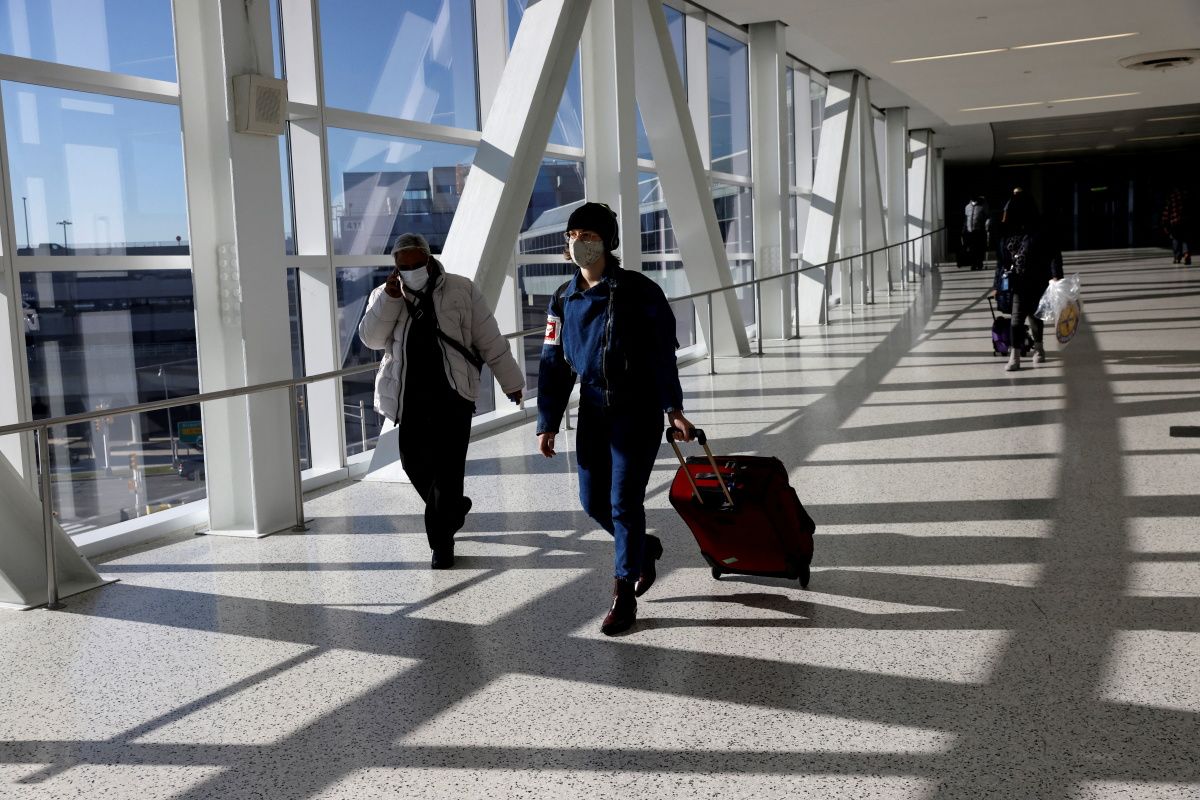
NEW YORK — Travelers at John F. Kennedy International Airport on Sunday, May 3, 2026, encountered relatively short TSA security wait times across most terminals, with many checkpoints reporting waits under 15 minutes and Terminal 5 showing no delays, providing a smoother experience amid typical weekend travel volumes.
Real-time data from the official JFK Airport website showed average general security lines ranging from no wait at Terminal 5 to about 12 minutes at Terminals 4 and 8. TSA PreCheck lanes moved even faster, often under 5 minutes where available, allowing eligible passengers to breeze through screening.
Terminal 1 reported around 11 minutes for standard screening and 6 minutes for PreCheck. Terminal 4, a major hub for international flights, averaged 12 minutes generally and just 1 minute for PreCheck. Terminal 7 showed 7 minutes, while Terminal 8 hit 12 minutes for general lanes. These figures update continuously based on queue entry data and reflect conditions as of early afternoon.
The relatively light waits come as JFK handles steady Sunday traffic with many domestic and international departures. Airport officials noted no major disruptions or staffing issues contributing to delays, though travelers are still advised to arrive 2-3 hours early for international flights and at least 90 minutes for domestic ones.
JFK, one of the busiest airports in the United States, serves as a critical gateway with millions of passengers annually. Its five main terminals each operate independent security checkpoints, leading to varying wait times depending on flight schedules and passenger volume. Terminal 4 and Terminal 1 often see higher traffic due to their airline concentrations.
TSA officers processed passengers efficiently Sunday, with standard protocols including ID checks, baggage screening and body scanners. CLEAR and TSA PreCheck programs continued offering expedited paths for members, significantly reducing times for frequent flyers. Airport apps and digital boards provided live updates, helping passengers choose less crowded checkpoints.
Travel experts recommend checking the official JFK website or apps like MyTSA before heading to the airport. Factors like holidays, weather or flight delays can quickly change conditions. On this spring Sunday, mild weather and no major events contributed to smoother operations compared to peak summer months.
Passengers shared positive experiences on social media, with many noting quick progression through security. “Under 10 minutes at T5 today — best JFK experience in months,” one traveler posted. Others advised downloading the airport’s app for real-time gate and wait information.
For those without PreCheck, standard lines moved steadily. Items like liquids in 3-1-1 bags and electronics out of carry-ons remained standard requirements. TSA reminded travelers of prohibited items to avoid secondary screening delays.
JFK’s security infrastructure has seen improvements in recent years, including more lanes, better technology and staff training. These enhancements help manage crowds, though peak hours (early mornings and evenings) still see longer waits. Sunday’s midday period proved quieter than weekdays.
International travelers at Terminals 1, 4 and 8 should factor in additional customs and border processes after security. Airlines like Delta, JetBlue and American, with major presences at JFK, coordinated closely with TSA for efficient flow.
The Port Authority of New York and New Jersey, which operates JFK, continues investing in modernization. Future upgrades may include more biometric screening and automated lanes to further reduce wait times. For now, current conditions offer reassurance for weekend travelers.
Experts suggest arriving earlier if flying during known busy periods or with families. Packing efficiently and enrolling in trusted traveler programs can save significant time. Real-time trackers help adjust plans dynamically.
As air travel demand remains strong post-pandemic, airports like JFK work to balance security with convenience. Today’s short waits demonstrate effective operations, giving passengers more time to enjoy lounges, dining and shopping before boarding.
Travelers departing later Sunday or early Monday should monitor updates, as conditions can shift with incoming flight rushes. Overall, JFK presented a traveler-friendly security environment on this spring day.
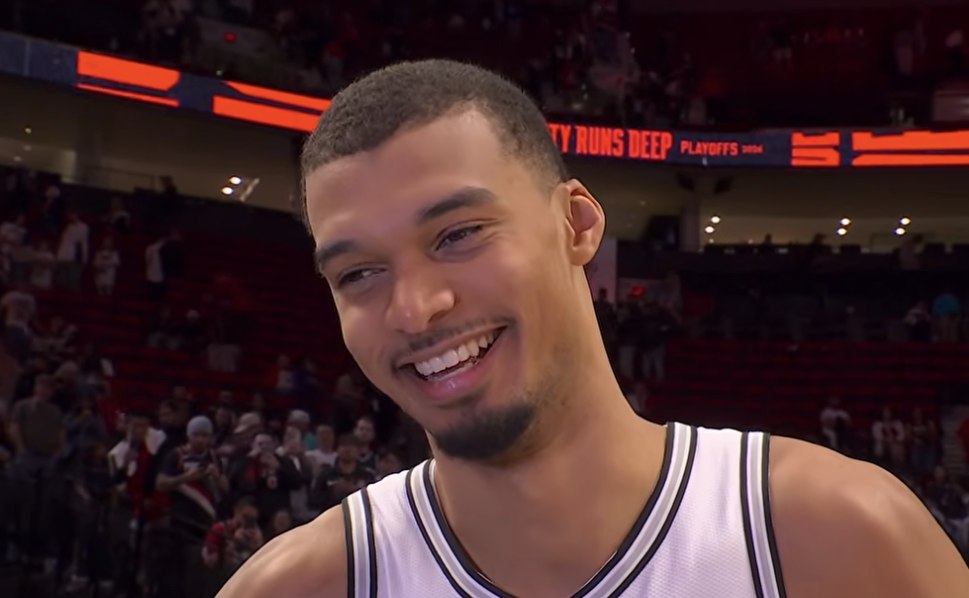
MINNEAPOLIS — As the Minnesota Timberwolves prepare for a rugged Western Conference semifinal series against the surging San Antonio Spurs, containing phenom Victor Wembanyama stands as the defining challenge. The 7-foot-4 French superstar averaged dominant numbers in the first round, but Minnesota’s elite defense — anchored by Rudy Gobert — offers a blueprint to slow him down and seize control.
The Timberwolves advanced past Denver without Anthony Edwards at full strength, showcasing depth and defensive tenacity. Now they face Wembanyama, whose unique blend of size, skill and shooting range makes him one of the hardest covers in NBA history. Experts and former players have outlined clear strategies Minnesota can deploy across a potential seven-game war.
Here are 10 tactical keys for the Timberwolves to neutralize Wembanyama and advance:
1. Deploy Gobert as the primary rim deterrent. The three-time Defensive Player of the Year’s length and timing make him an ideal matchup. Gobert should contest without fouling, forcing Wembanyama into contested mid-range attempts or passes out of the paint. Minnesota’s help rotations must stay disciplined to avoid leaving shooters open when Wemby draws doubles.
2. Physicality at the point of attack. Wembanyama’s guard-like handle allows him to create off the dribble. Jaden McDaniels and other wings should use their strength to deny easy drives, bumping him early and making him work for every touch. Kevin Garnett-style trash talk and early denial can disrupt his rhythm.
3. Limit space with smart help defense. Sending help quickly from the weak side is essential. The Wolves excelled at this against Nikola Jokic; replicating that against Wemby — while recovering to kick-out shooters — will be critical. Zone elements or “ICE” coverage on pick-and-rolls can push him toward crowded areas.
4. Crowd the elbow and mid-post. Wembanyama loves operating from the elbows. Minnesota should front him or use two defenders to deny clean catches, forcing turnovers or lower-percentage shots. Karl-Anthony Towns or Naz Reid can rotate over from the weak side to contest.
5. Force him off the three-point line. Wemby’s range extends well beyond the arc. Closing out with high hands and contesting without jumping will test Minnesota’s discipline. Switching smaller defenders onto him occasionally can disrupt timing, though it risks blow-bys.
6. Attack Wemby when he’s on the floor defensively. The Spurs become more vulnerable when Wembanyama rests or focuses on offense. Minnesota should hunt mismatches, screen him aggressively and attack the rim when he’s pulled away from help position. His on/off defensive impact is massive — exploit the drop-off.
7. Control the glass and limit second chances. Wemby’s length makes him a rebounding monster. The Wolves must box out relentlessly and use multiple bodies to secure defensive boards. Transition defense is equally vital — no easy run-outs for San Antonio.
8. Pace and tempo management. Slowing the game benefits Minnesota’s half-court defense. Using set plays, early clock offense and smart fouls can limit Wemby’s possessions in space. Avoiding turnovers that lead to easy Spurs transition buckets is non-negotiable.
9. Fatigue Wemby over long stretches. Play him physically within the rules, force him to guard multiple actions and limit his rest. His minutes are monitored for health reasons — wearing him down over 40+ minutes could open opportunities late in games.
10. Adjust in real time with film study. Finch’s staff must dissect every Spurs possession. Small tweaks — switching assignments, changing help angles or deploying zone looks — can keep Wemby guessing. Communication on the floor will separate success from failure.
Wembanyama himself acknowledged the Timberwolves will present a tougher test than Portland. “They play aggressive,” he said. “They drive the ball and look to attack the paint.” Minnesota’s length across the roster — from Gobert to McDaniels to Edwards (if healthy) — gives them tools few teams possess.
The series tips off with home-court advantage potentially playing a role, though both teams boast strong road records. Edwards’ knee injury adds uncertainty for Minnesota, but the Wolves’ defensive identity remains their greatest strength. If they execute these strategies, they can contain Wembanyama enough to win the series.
Coaches and analysts agree: No single defender stops Wemby alone. It requires a team effort, constant adjustments and relentless execution. For the Timberwolves, this series represents both a massive challenge and a chance to prove their championship mettle. Success starts with making Victor Wembanyama work for every inch.

NEW YORK — Sony’s next-generation console, the PlayStation 6, remains shrouded in secrecy as of May 2026, with the latest rumors pointing to a potential launch window pushed back to 2028 or even 2029 due to ongoing global RAM shortages driven by artificial intelligence demand, while leaks suggest an ambitious hardware leap featuring AMD’s Zen 6 CPU, RDNA 5 GPU and a possible dedicated handheld companion.
Industry insiders and leakers have painted a picture of cautious planning at Sony Interactive Entertainment. The standard seven-year console cycle that delivered the PS5 in 2020 would have suggested a 2027 debut for the PS6, but rising component costs and supply constraints have forced Sony to reconsider timelines. Bloomberg and other outlets reported in February 2026 that Sony is weighing delays to 2028 or 2029 to secure adequate high-bandwidth memory supplies without compromising performance targets.
The memory crunch stems from explosive AI data-center growth consuming vast quantities of advanced DRAM. Sony’s existing PS5 inventory and production contracts provide a buffer through 2027, but scaling next-generation hardware has become more complex and expensive. Leaker Moore’s Law Is Dead and AMD insider Kepler L2 initially pointed to late 2027 production start, but recent updates have tempered expectations. Prediction markets like Kalshi show only about 25 percent of bettors believe an announcement will arrive before 2027.
Despite timeline uncertainty, hardware rumors have intensified. The PS6, codenamed “Orion,” is expected to feature a custom AMD Zen 6 CPU and RDNA 5 GPU architecture, delivering potentially three times the rasterization performance and six to twelve times the ray-tracing capability of the PS5. Memory configurations are rumored at 30GB or more of next-generation DDR7 RAM, a significant jump that could enable advanced AI upscaling via an enhanced PlayStation Spectral Super Resolution (PSSR 2.0) and dedicated neural processing arrays. Storage is tipped to start at 1TB or 2TB SSD with faster read speeds.
A major talking point is the possibility of a dedicated PlayStation handheld. Leaks suggest Sony is developing a native companion device, codenamed “Project Canis,” that could launch alongside the main console. This would mirror Nintendo’s hybrid approach and allow remote play or standalone gaming, potentially expanding Sony’s ecosystem beyond the living room. Pricing speculation ranges from $350 for a base model to nearly $1,000 for a premium “Pro” variant with enhanced specs.
Backward compatibility remains a cornerstone expectation. The PS6 is widely anticipated to support PS4 and PS5 titles, building on the success of Sony’s current-generation strategy. Enhanced features like AI-driven upscaling and faster load times could breathe new life into older catalogs, encouraging upgrades while preserving player libraries.
Sony has remained tight-lipped officially, focusing instead on extending the PS5 lifecycle through the PS5 Pro and a rumored slimmer model. Mark Cerny, the architect behind the PS4 and PS5, hinted at machine-learning advancements for future consoles in late 2025, fueling speculation that AI integration will define the PS6 generation. AMD’s next-node process technology is expected to power the console, with production potentially ramping in 2027 if supply stabilizes.
The delay narrative gained traction after reports of canceled or deferred shipments and soaring component prices. Sony has diversified suppliers and adjusted quality standards temporarily to maintain availability, but next-gen ambitions require cutting-edge silicon that remains in short supply. Analysts at MST International and others warn that fiscal 2027 could see further pressure, potentially pushing a full launch into 2028.
Financially, the PS5 era has been a success for Sony, with strong hardware sales and a growing services business through PlayStation Plus and the PlayStation Network. Extending that platform’s relevance makes strategic sense, especially as competitors like Microsoft explore cloud and handheld strategies with the Xbox ecosystem. A PS6 launch too soon could cannibalize PS5 Pro sales, while waiting too long risks losing momentum to rivals.
Gamers on forums and social media express mixed feelings. Many hope for a 2027 reveal to keep excitement alive, while others prioritize a polished product over rushed timelines. Leaks about multiple SKUs — a standard model, slim variant and high-end Pro — suggest Sony is learning from the PS5 Pro’s positioning to offer tiered options at launch.
Content expectations center on first-party studios. Naughty Dog, Santa Monica Studio, Guerrilla Games and others are presumably deep into PS6 development, with cross-gen titles likely bridging the gap. A robust launch lineup including potential sequels to God of War, Horizon or new IP will be critical for adoption. Third-party support, including Unreal Engine 5 optimizations, is expected to be seamless given industry trends.
Price sensitivity remains a concern. With inflation and component costs rising, a $500-$600 base price seems realistic, though premium models could approach $800 or more. Sony’s history of aggressive pricing and bundling will be key to driving early sales. The rumored handheld could add another revenue stream or serve as a lower-cost entry point.
Sony’s broader strategy appears focused on ecosystem expansion. PlayStation Portal success has shown demand for portable experiences, and a native handheld could compete directly with Nintendo Switch 2 rumors. Cloud gaming integration and enhanced social features may also feature prominently, evolving the PlayStation Network into a more immersive platform.
As development kits reportedly circulate among studios in 2026, the rumor mill will only intensify. Sony typically reveals next-generation hardware with a polished showcase, likely at a dedicated PlayStation Showcase event rather than during standard State of Play streams. Until then, fans must balance excitement with patience as the company navigates supply-chain realities in a post-pandemic, AI-driven chip market.
The PlayStation 6, whenever it arrives, promises to push boundaries in performance, AI-enhanced gameplay and accessibility. For now, the PS5 and PS5 Pro continue delivering excellent experiences, buying Sony valuable time to perfect its next leap. Gamers worldwide will be watching closely as rumors evolve throughout 2026 and beyond.
NEW YORK — Investors weighing Alphabet Inc. against Apple Inc. as 2026 unfolds confront a classic growth-versus-stability choice, with Wall Street tilting toward Alphabet’s AI-fueled momentum and expanding cloud business as the higher-upside pick despite Apple’s rock-solid services engine and dividend appeal. As of May 1, 2026, Alphabet Class A shares (GOOGL) closed around $385 while Apple (AAPL) finished near $280, reflecting Alphabet’s dramatic outperformance over the past year and its recent brief overtake of Apple in market capitalization for the first time since 2019.
Alphabet’s surge stems from accelerating artificial intelligence execution. Google Cloud posted 63 percent year-over-year growth in the first quarter, outpacing broader expectations, while Gemini 3 and custom tensor processing units positioned the company as a credible challenger to Nvidia in enterprise AI infrastructure. Analysts project Alphabet’s 2026 revenue near $455 billion, up roughly 14 percent, with net income growth exceeding 29 percent and forward price-to-earnings around 26-28 times. Consensus among 37-41 analysts rates it a Strong Buy with average 12-month targets between $362 and $383, though optimistic forecasts reach $470.
Apple, meanwhile, delivered a solid second-quarter earnings beat driven by record iPhone sales in China and services revenue topping $109 billion annually with 75 percent-plus margins. The company’s ecosystem lock-in and $130 billion cash hoard provide a durable moat. Yet Apple Intelligence features have faced delays, with the overhauled Siri not fully arriving until later in 2026. A multi-year partnership leveraging Google’s Gemini models for on-device AI has helped bridge the gap but underscores Apple’s reliance on third-party technology rather than full-stack ownership.
Valuation tells part of the story. Alphabet trades at a discount to its growth rate relative to historical norms, while Apple’s forward multiple sits higher amid slower projected earnings expansion. Over the trailing 12 months, Alphabet returned more than 120 percent versus Apple’s roughly 37 percent. That momentum carried into early 2026, with Alphabet shares up an additional 5 percent year-to-date while Apple lagged the broader market.
Cloud and AI represent Alphabet’s clearest edge. Google Cloud is on track toward $90 billion in 2026 revenue, analysts say, as enterprises adopt Gemini-powered tools and custom silicon. YouTube, Search and advertising remain cash cows, but the high-margin cloud inflection point is what excites investors most. Capital expenditures remain elevated, yet expanding operating margins signal that spending is translating into scalable returns.
Apple’s growth engine rests on services and the installed base of more than two billion devices. The segment’s predictability and high margins have cushioned hardware cyclicality, and analysts expect continued double-digit services expansion. The dividend yield of about 0.5 percent (recently raised) appeals to income investors, while the $7 billion buyback program underscores capital return discipline. Yet iPhone 17 sales trends and China recovery remain critical variables, and Wall Street has tempered enthusiasm around AI hardware delays.
Consensus price targets reflect the divergence. Apple’s average 12-month target stands near $304, implying roughly 9 percent upside from current levels, with highs reaching $350. Alphabet’s targets cluster around $370-$383, offering similar percentage upside but from a higher base and with stronger projected earnings growth. Firms like Wedbush and J.P. Morgan highlight Alphabet’s AI infrastructure opportunity as more immediate and scalable.
Risks exist on both sides. Alphabet faces regulatory scrutiny over search dominance, potential margin pressure from heavy AI investment, and competition from open-source models. Apple contends with smartphone market saturation, antitrust challenges in the App Store, and slower AI innovation relative to pure software peers. Macro factors — consumer spending, interest rates and geopolitical tensions in supply chains — could affect both.
Portfolio construction matters. Growth-oriented investors seeking maximum 2026 upside overwhelmingly favor Alphabet for its AI leadership and valuation appeal. Value and income seekers may prefer Apple’s stability, cash flow and shareholder returns. Many analysts recommend owning both to capture complementary strengths: Alphabet’s high-growth AI exposure paired with Apple’s defensive ecosystem.
Longer-term models support Alphabet’s edge. Base-case forecasts see GOOGL reaching $380-$400 by year-end 2026 under continued cloud acceleration, while optimistic scenarios exceed $430 if AI monetization exceeds expectations. Apple models project steadier but lower growth, with targets clustering near $300-$330 assuming services momentum and AI catch-up.
Earnings calendars will test these theses. Alphabet reports mid-May, with focus on Cloud margins and Gemini adoption. Apple follows its fiscal schedule, with scrutiny on iPhone 17 pre-orders and services acceleration. Both companies have beaten estimates consistently, but Alphabet’s beat-and-raise cadence has been more pronounced amid AI tailwinds.
Broader market context favors the AI leader. With Nvidia setting the tone for the sector, investors reward companies demonstrating tangible AI revenue and infrastructure scale. Alphabet’s ownership of the full stack — from models to chips to distribution via Search and Cloud — gives it pricing power and stickiness that pure hardware plays lack. Apple’s hardware-centric model benefits from AI but currently leans on partnerships rather than proprietary breakthroughs.
For individual investors, the decision hinges on time horizon and risk tolerance. Those comfortable with capital-intensity noise and regulatory headlines will likely find Alphabet the compelling 2026 allocation. Conservative portfolios prioritizing dividends and predictable cash flows may stick with Apple. Either way, both remain core holdings in tech-heavy indices, and diversification across the pair mitigates single-stock risk.
As summer approaches and AI spending cycles intensify, Alphabet’s momentum appears more durable heading into the second half of 2026. Apple’s ecosystem resilience ensures it remains a defensive stalwart, yet the market’s current pricing favors the company demonstrating faster AI execution and higher growth visibility. For investors allocating fresh capital today, GOOGL offers the clearer path to outsized returns in the year ahead.
NEW YORK — Investors sizing up the streaming giants as 2026 unfolds face a classic growth-versus-value dilemma: Netflix Inc., the pure-play leader with explosive ad revenue and high margins, or Walt Disney Co., the diversified entertainment powerhouse turning Disney+ profitable while leaning on resilient theme parks and a rising dividend. As of early May 2026, Netflix shares closed around $92.06 while Disney traded near $103.08, with analysts projecting meaningful upside for both but tilting toward Netflix for aggressive growth seekers and Disney for those seeking stability.
Netflix commands the streaming crown with roughly 301 million global subscribers and a laser focus on content and monetization. The company posted $45.18 billion in 2025 revenue, up nearly 16 percent year-over-year, and projects continued double-digit growth into 2026 driven by its ad-supported tier expected to nearly double ad revenue to $3 billion. Gross margins hover near 49 percent, far above traditional media peers, thanks to its efficient, scalable model.
Wall Street largely loves the story. Consensus among 51 analysts rates Netflix a Moderate Buy with an average 12-month price target of $114.82 to $119.23, implying 25-29 percent upside. High targets reach $151.40. Recent notes from firms like Needham and Wedbush highlight resilience to price hikes, strong engagement, and the ad-tier ramp as catalysts, even after some softer Q2 guidance. Netflix’s $25 billion stock buyback authorization announced in April further signals confidence.
Yet valuation remains a sticking point. Netflix trades at roughly 30 times forward earnings, a premium that reflects its growth but leaves less margin for error if subscriber adds slow or content costs rise. The company stopped quarterly subscriber reporting in early 2025 to emphasize revenue and engagement metrics, a move echoed by Disney starting in fiscal 2026.
Disney, by contrast, offers a broader portfolio. Disney+ and Hulu combined turned profitable in fiscal 2025, posting $450 million in operating income in the most recent quarter with 195.7 million total subscribers (131.6 million on Disney+ alone). The company expects streaming margins to improve to 10 percent in fiscal 2026 while forecasting double-digit adjusted EPS growth, $19 billion in operating cash flow and a doubled share-buyback program to $7 billion.
Parks and Experiences continue delivering high-single-digit growth, providing a buffer against streaming volatility. Disney also raised its annual dividend to $1.50 per share for 2026, yielding about 1.3 percent and appealing to income-focused investors. Analysts rate Disney a Strong Buy with an average target of $133.53, suggesting nearly 30 percent upside. Goldman Sachs and others cite accelerating earnings from streaming leverage and parks momentum.
Disney’s forward P/E around 15 times looks far more attractive than Netflix’s, offering a margin of safety. Yet the stock has lagged the broader market in recent years amid linear TV declines and past streaming losses. Execution on ESPN’s direct-to-consumer transition and studio content performance remain key risks.
Direct comparisons highlight the trade-offs. Netflix’s revenue per user and operating leverage outpace Disney’s, but Disney’s diversified revenue streams — parks, consumer products and studios — reduce reliance on any single segment. In 2026 forecasts, Netflix eyes $51 billion in revenue while Disney projects about $100 billion overall with streaming as the growth engine.
Analysts note Netflix’s advantage in a pure streaming bet. Its global footprint, original content machine and live-sports ambitions position it to capture more viewing share. Disney counters with beloved IP, family appeal and bundling potential across Disney+, Hulu and ESPN+. Both companies are shifting focus from subscriber counts to profitability and engagement, signaling mature industry dynamics.
Risks abound. Netflix faces intensifying competition from ad-supported rivals and potential saturation in mature markets. Regulatory scrutiny over market power or content spending could pressure margins. Disney contends with theme-park cyclicality, box-office volatility and the lingering decline of traditional networks. Macro factors like consumer spending and interest rates will influence both.
Portfolio fit ultimately decides the winner. Growth-oriented investors may favor Netflix for its higher expected returns and streaming purity, especially if ad revenue exceeds expectations. Value and income investors likely lean Disney for its cheaper valuation, dividend and diversified upside. Some analysts recommend owning both to capture different parts of the entertainment stack.
Recent market action underscores the debate. Netflix shares have pulled back from highs on valuation concerns, creating what some call a generational buying opportunity. Disney has stabilized after earlier weakness, buoyed by streaming profits and parks strength. Both stocks lagged the S&P 500 over the past year, setting up potential catch-up in 2026.
Longer-term models support optimism. Netflix could reach $131 per share by late 2027 under base-case assumptions of steady revenue growth and margin expansion. Disney models project $113-$135 by 2028, driven by streaming leverage and experiences recovery.
As earnings seasons approach — Netflix reports next in mid-May and Disney follows its fiscal calendar — investors will scrutinize guidance on ad growth, content pipelines and capital returns. For now, both appear attractively positioned in a maturing streaming landscape, but Netflix edges out as the higher-conviction growth play while Disney offers compelling value with downside protection.
The choice between Netflix and Disney in 2026 hinges on investor priorities: pure streaming upside or diversified entertainment with income. Either way, the sector’s shift toward profitability and advertising suggests both companies have bright paths ahead, provided they execute on content and innovation.

NEW YORK — Olivia Rodrigo is set to pull double duty on “Saturday Night Live” this weekend, marking her first time hosting the iconic sketch comedy show while also serving as the musical guest in a highly anticipated episode airing May 2, 2026.
The 23-year-old Grammy-winning singer-songwriter, whose raw emotional anthems have defined a generation of young fans, will take the “SNL” stage for the 18th episode of Season 51. NBC announced the news with a playful promo featuring Rodrigo alongside cast members, building excitement for what promises to be a memorable night of sketches and live performances.
This marks Rodrigo’s third appearance on the show overall. She previously performed as musical guest in May 2021, debuting hits from her breakout album “Sour,” and again in December 2023 promoting “Guts.” Her hosting debut comes at a pivotal moment as she prepares to release her highly anticipated third studio album, “You Seem Pretty Sad For a Girl So In Love,” on June 12, followed by a massive 65-date world tour.
“SNL” viewers can expect a mix of sharp satire, musical showcases and likely nods to Rodrigo’s meteoric rise. The episode airs live at 11:30 p.m. ET on NBC and streams on Peacock, closing out a strong season for the long-running program under showrunner Lorne Michaels. Only two episodes remain after this one, with Matt Damon hosting May 9 and Will Ferrell on May 16.
Rodrigo’s career trajectory makes her an ideal host. Since exploding onto the scene with “drivers license” in 2021, she has sold millions of records, won multiple Grammys and cultivated a devoted fanbase drawn to her candid songwriting about heartbreak, empowerment and growing pains. Her ability to blend vulnerability with sharp wit should translate well to live comedy sketches.
Promos for the episode have already gone viral, showing Rodrigo in classic “SNL” style — from exaggerated characters to musical bits. Cast members like Bowen Yang, Ego Nwodim and Andrew Dismukes are expected to shine alongside her. Speculation swirls around potential parodies of her songs or celebrity impressions tied to her public persona.
Musically, fans anticipate a mix of hits and new material. With her album dropping soon, Rodrigo may preview tracks that capture the introspective yet anthemic sound she’s cultivated. Past performances delivered high-energy renditions of “good 4 u” and “vampire,” setting high expectations for this dual-role appearance.
The timing boosts Rodrigo’s momentum. Her previous albums achieved massive commercial and critical success, with “Sour” and “Guts” spawning global chart-toppers. Industry watchers view this “SNL” spotlight as perfect promotion for the new era, especially as she headlines arenas worldwide later this year.
“SNL” has a storied history of launching and elevating musical careers. Hosting while performing is a prestigious double duty reserved for acts with broad appeal and proven stage presence. Previous double-duty stars include Billie Eilish, Taylor Swift and Justin Timberlake, who delivered memorable episodes blending comedy and music seamlessly.
Rodrigo joins a strong Season 51 lineup featuring hosts like Bad Bunny, Amy Poehler, Sabrina Carpenter and others. The show’s ability to attract top talent underscores its cultural relevance even after five decades on air. Ratings and social buzz typically spike for episodes with popular musical hosts.
Behind the scenes, Rodrigo’s team coordinated closely with “SNL” writers. Her genuine personality and quick humor, evident in interviews and social media, should fuel authentic sketches. Expect potential bits on fame, heartbreak anthems or Gen Z culture — themes central to her brand.
For viewers, the episode offers escapism and entertainment amid a busy news cycle. “SNL” remains a Saturday night staple, blending timely satire with star power. Rodrigo’s youthful energy could inject fresh dynamism into the cast’s established rhythms.
Post-episode, social media will likely explode with clips, memes and reactions. Fans already trend hashtags like #OliviaRodrigoSNL in anticipation. Clips of standout sketches and performances often go viral, extending the episode’s cultural impact far beyond the live broadcast.
Rodrigo’s “SNL” appearance caps a busy period. She recently wrapped elements of her tour preparation while teasing new music. The platform provides a massive audience — millions tune in weekly — perfect for building hype around her upcoming projects.
Critics and insiders predict a strong showing. Rodrigo’s comfort in front of cameras, honed through music videos and live performances, positions her well for sketch comedy. Her previous guest spots showcased charisma that should shine brighter in a hosting role.
As curtains rise on May 2, all eyes turn to Studio 8H. Olivia Rodrigo’s double duty promises laughs, hits and memorable television — a fitting showcase for one of pop’s brightest young stars. Whether delivering punchlines or powerhouse vocals, she aims to leave a lasting impression on “SNL’s” legacy.
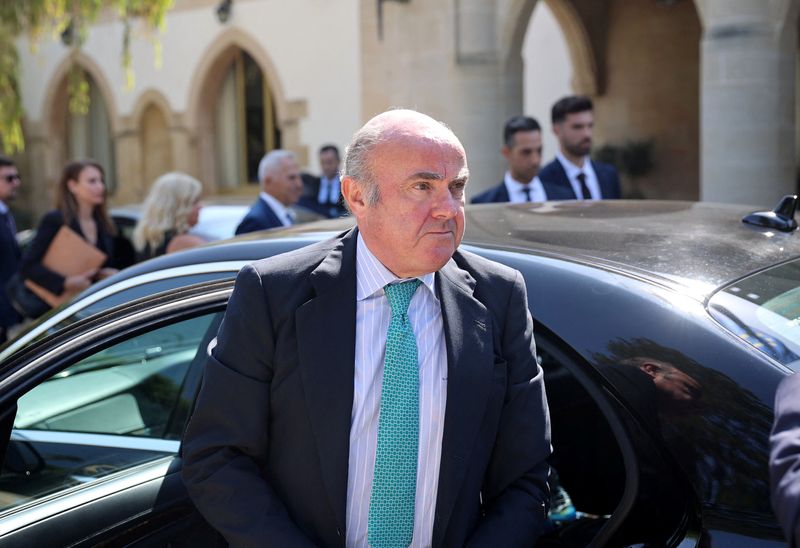

Spain should get new seat on ECB board, outgoing VP says

TUCSON, Ariz. — The search for Nancy Guthrie, the 84-year-old mother of NBC “Today” show co-anchor Savannah Guthrie, stretched into its fourth month Sunday with authorities confirming the investigation remains active but no arrests made and her whereabouts still unknown in what officials describe as a targeted abduction from her Catalina Foothills home.

Pima County Sheriff Chris Nanos has repeatedly stated that evidence at the scene, including blood spatter on the porch and signs of forced entry, points to an abduction rather than a voluntary disappearance. Guthrie was last seen late Jan. 31, with her Bluetooth-enabled pacemaker disconnecting around 2:30 a.m. Feb. 1, suggesting she was taken from her residence in the Tucson suburb.
The case has captivated national attention due to Savannah Guthrie’s prominence and the unusual elements surrounding her mother’s vanishing. Multiple ransom-style notes sent to media outlets, including TMZ, demanded Bitcoin and claimed knowledge of Guthrie’s location or captor, though authorities have not confirmed their authenticity or connection to the perpetrator. One note allegedly referenced details only the abductor would know.
Savannah Guthrie and her family have offered a $1 million reward for information leading to Nancy’s safe recovery, while expressing cautious hope amid the prolonged uncertainty. “Someone knows how to find our mom and bring her home,” the family has stated publicly, urging tips to the FBI.
The FBI joined the investigation early, providing resources for forensic analysis. Recent developments include advanced DNA testing on evidence recovered from the home, including items like gloves found nearby. Some samples have led to dead ends, such as DNA linked to unrelated individuals like restaurant workers, while other testing continues.
Doorstep camera footage released by investigators shows a masked individual approaching the home on the night of the disappearance, heightening the sense of a deliberate act. Profilers have speculated the kidnapping could involve personal retribution linked to Savannah Guthrie’s public profile, possibly by a stalker unable to reach the journalist directly.
No specific suspects have been publicly named, though authorities have detained and released several persons of interest during extensive searches near the home and surrounding desert areas. Thousands of tips have poured in, exceeding 30,000 according to sources, with law enforcement sifting through each for credibility.
The case’s high visibility has drawn volunteer search efforts and offers from groups like the Cajun Navy, though coordination with official teams remains key. Drones, K-9 units and ground searches have covered significant terrain around Catalina Foothills without locating Guthrie. Her pacemaker data and other digital breadcrumbs have been analyzed but yielded limited breakthroughs so far.
Legal experts and former FBI agents describe the ransom communications as atypical, noting they were directed to media rather than the family directly. This has complicated verification efforts while keeping the case in the spotlight. One individual faces charges related to a separate ransom text scheme, with a trial date set, but connections to Guthrie’s disappearance remain unconfirmed.
Nancy Guthrie, a widow since 1988, lived independently in the Tucson area. She raised three children, including Savannah, and maintained close family ties. Her sudden disappearance from a seemingly secure neighborhood has shaken the community and raised broader questions about safety for high-profile families.
Savannah Guthrie returned to “Today” after an initial absence, speaking emotionally about the ordeal while asking for privacy and tips. Colleagues and viewers have expressed support, with the network providing updates when appropriate. The family’s pain underscores the human toll of such mysteries, even as public interest sustains pressure for resolution.
Criminologists note similarities to other stranger abductions but highlight unique aspects, including the victim’s age and the ransom notes’ media focus. Profilers suggest a possible lone actor motivated by financial gain or grudge, though evidence remains circumstantial. The lack of a body or clear motive keeps all scenarios open, from kidnapping for ransom to foul play.
Pima County authorities continue coordinating with federal partners. “The investigation into the disappearance of Nancy Guthrie remains active and ongoing,” a sheriff’s spokesperson told media outlets. Residents in the area report increased patrols and neighborhood watch activity as vigilance stays high.
The prolonged search enters a phase where some cases risk going cold, yet officials emphasize no leads are being discounted. Advanced forensic techniques, including enhanced DNA genealogy, offer hope for breakthroughs in the coming weeks. Public tips remain crucial, with anonymity options available through the FBI.
As days turn to months, the Guthrie family navigates an unimaginable wait. Nancy’s grandchildren and loved ones hold onto hope for her return, while the broader true-crime community follows developments closely. The case serves as a stark reminder of vulnerability, even in quiet suburbs, and the enduring power of media attention in missing persons investigations.
Authorities urge anyone with information to contact the FBI at 1-800-CALL-FBI or submit tips online. The $1 million family reward applies under specific criteria for recovery. As the investigation presses forward, the focus remains on bringing Nancy Guthrie home and delivering answers to her family.
Ulta Promo Codes: Up to 50% Off in May
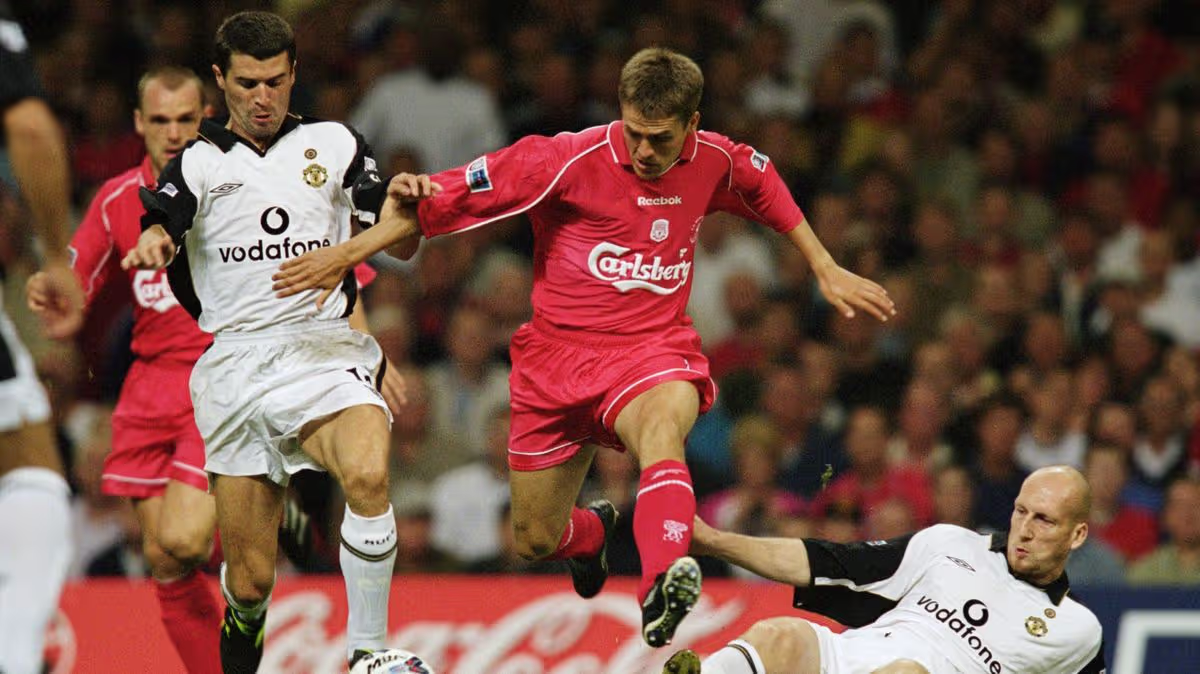
I played for Man United and Liverpool – but only one of those clubs is in my heart

Can Timberwolves Star Play for Spurs Series?

Manchester United reach agreement with Casemiro over contract clause amid transfer speculation

US brings back mandatory military draft registration

Steven Gerrard disagrees with Gary Neville over ‘shock’ Chelsea and Arsenal claim | Football


-

 Tech5 days ago
Register Renaming | Hackaday
-

 Politics5 days ago
Drax board avoid their own AGM, accused of greenwashing & environmental racism
-

 Tech6 days ago
Why Blue Badges Disappeared From Toyota Hybrids
-

 Tech5 days ago
Images of Samsung’s rumored smart glasses have leaked
-
 Sports7 days ago
IPL 2026: Ruturaj Gaikwad registers slowest fifty of the season, enters all-time unwanted list | Cricket News
-
 Tech1 day ago
Trump’s 25% EU auto tariff breaches Turnberry Agreement that also covers semiconductors and digital trade
-

 NewsBeat7 days ago
LK Bennett closes all stores after entering administration
-

 Fashion4 days ago
Kylie Jenner’s KHY Enters a New Era with ‘Born in LA’
-

 Business4 days ago
Most Commercial Energy Audits Miss the Real Losses
-

 Crypto World5 days ago
CFTC’s AI will review U.S. crypto registration applications, chairman tells CoinDesk
-

 Business6 days ago
(VIDEO) Charlize Theron Climbs Times Square Billboard to Promote New Netflix Thriller ‘Apex’
-

 Tech7 days ago
OpenAI’s Sam Altman apologizes for not reporting ChatGPT account of Tumbler Ridge suspect to police
-

 Business4 days ago
Barclay Brothers Avoid Bankruptcy: HSBC Drops High Court Petitions After IVA Deal
-
 Sports1 day ago
Paul Scholes issues Marcus Rashford reality check as agreement emerges over Man United star
-
 Entertainment6 days ago
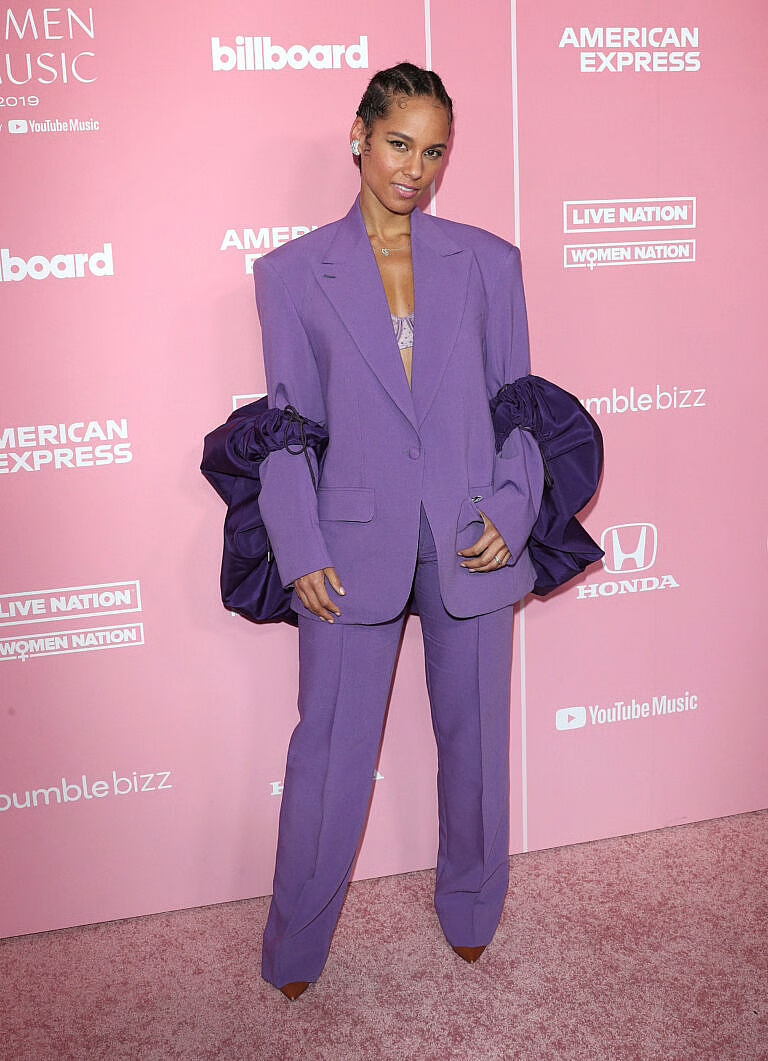
Alicia Keys Calls Out Music Industry ‘Boys Club’
-
 Business3 days ago
Tesla Officially Registers Elon Musk’s Stock: What Investors Need to Know
-

 Tech5 days ago
Get Ready for More Brain-Scanning Consumer Gadgets
-

 Tech7 days ago
Dyson Vacuums And The Curse Of Cooked Capacitors
-
 Crypto World5 days ago
Robinhood Phishing Scam Exploits Gmail Dot Feature to Bypass Security
-

 Crypto World7 days ago
Only 3% of traders drive Polymarket’s accuracy, not the crowd, study finds
You must be logged in to post a comment Login